
A few days ago I came across a GLP1Forum thread with the fairly unambiguous title “Fake Hospira Purchased.”
The story initially looked straightforward. A buyer said they’d received three Hospira-labelled 30 mL bacteriostatic water vials from PeptideTest that were suspected of being counterfeit. PeptideTest had apparently identified a problem before the parcel even arrived, contacted the customer and offered either a refund or replacements. The customer chose replacements.
At that point you could quite easily look at the comparison photographs, see the differences and conclude that somebody had found fake Hospira, end of story. Except the more I looked into it, the less straightforward it became. They posted side to side photos of the suspect Hospira vial and a genuine vial. I can just about make out the identification on the vial; NDC 0409-3977-01, lot RH7241, expiry 31MAR2028 and artwork code RL-7705. Those four details became the centre of the investigation.
The First and Strongest Red Flag: The Crimp
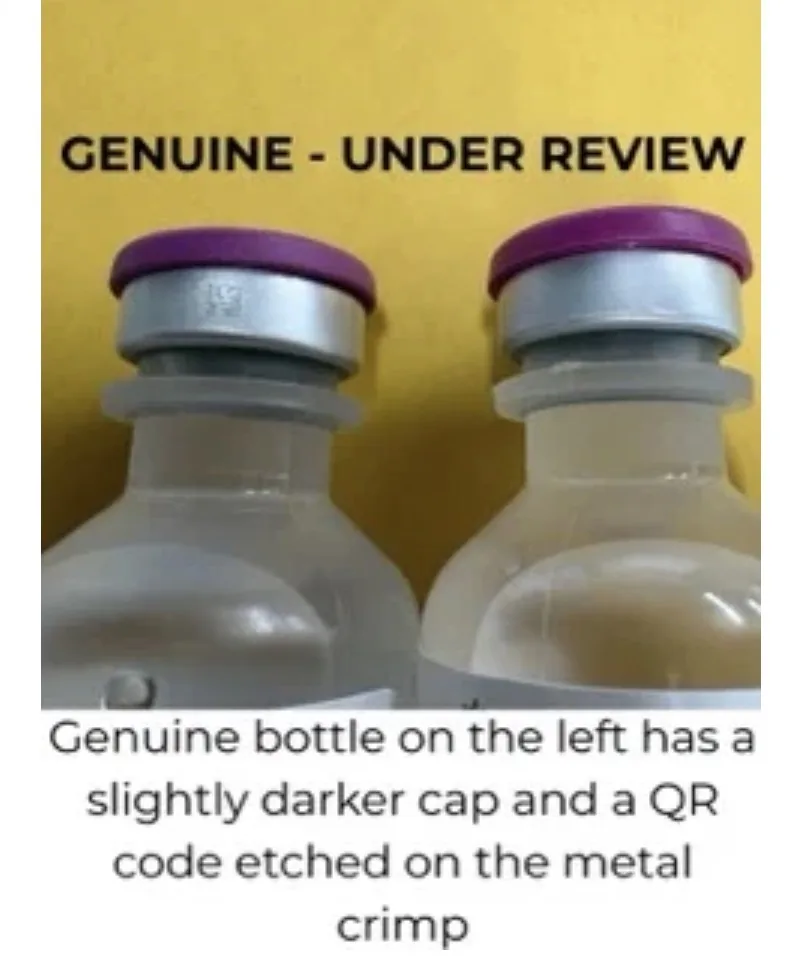
One of the most noticeable differences was on the silver crimp around the top of the vial. The genuine vial has a QR code on the crimp, the other one doesn’t. The shade of the purple cap also appeared slightly different. At first glance, the combination looked convincing. The buyer also checked other Hospira they already had and said those vials, along with the replacements sent by PeptideTest, carried the little crimp marking, while the suspect stock didn’t.
The Second Red Flag: The Label Layout
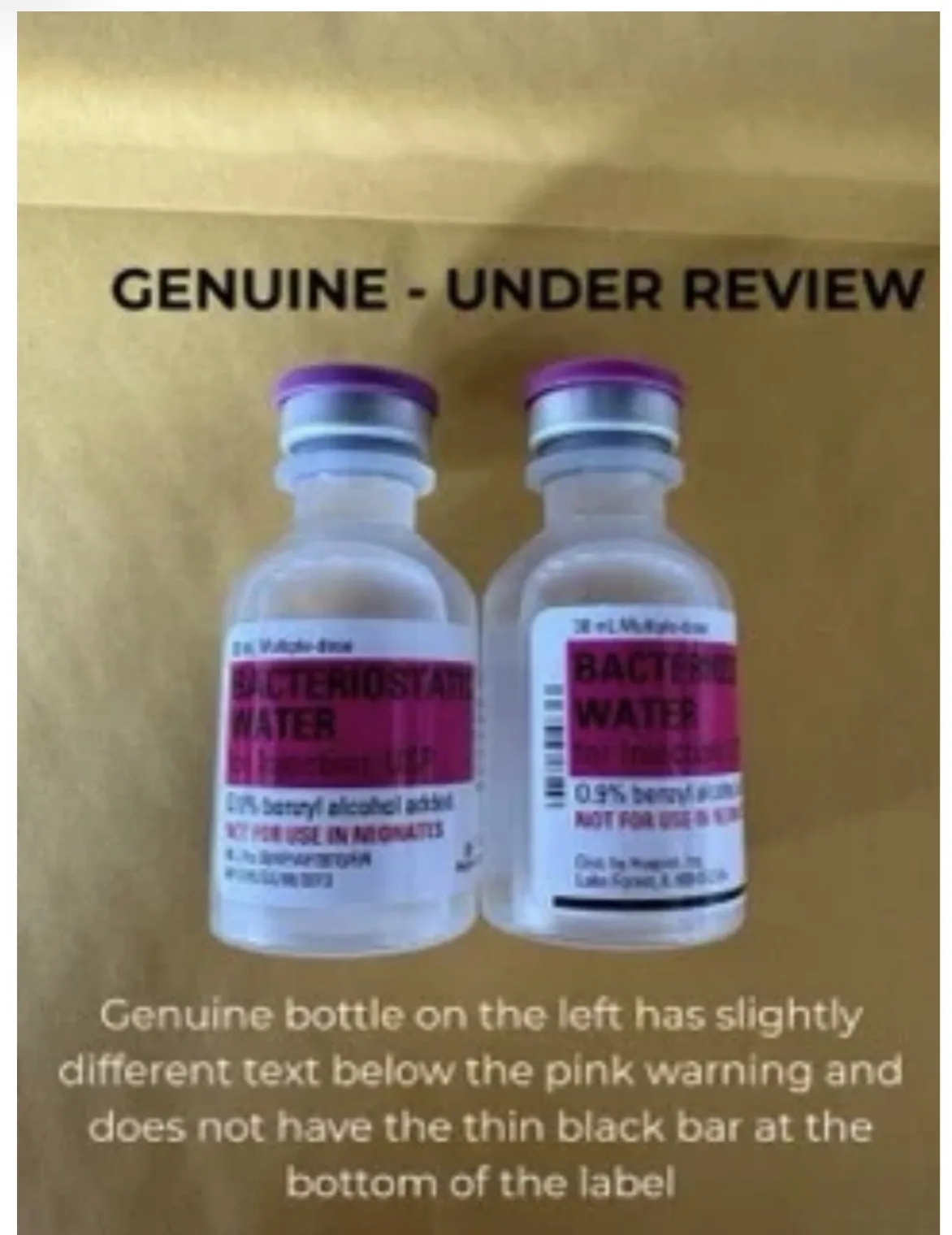
The suspect vial has a noticeably different label design from the comparison vial. The text beneath the pink warning panel is arranged differently, and the suspect vial has a thin black line running along the bottom of the label which the genuine one doesn’t have.
The Third Red Flag: The Lot and Expiry date
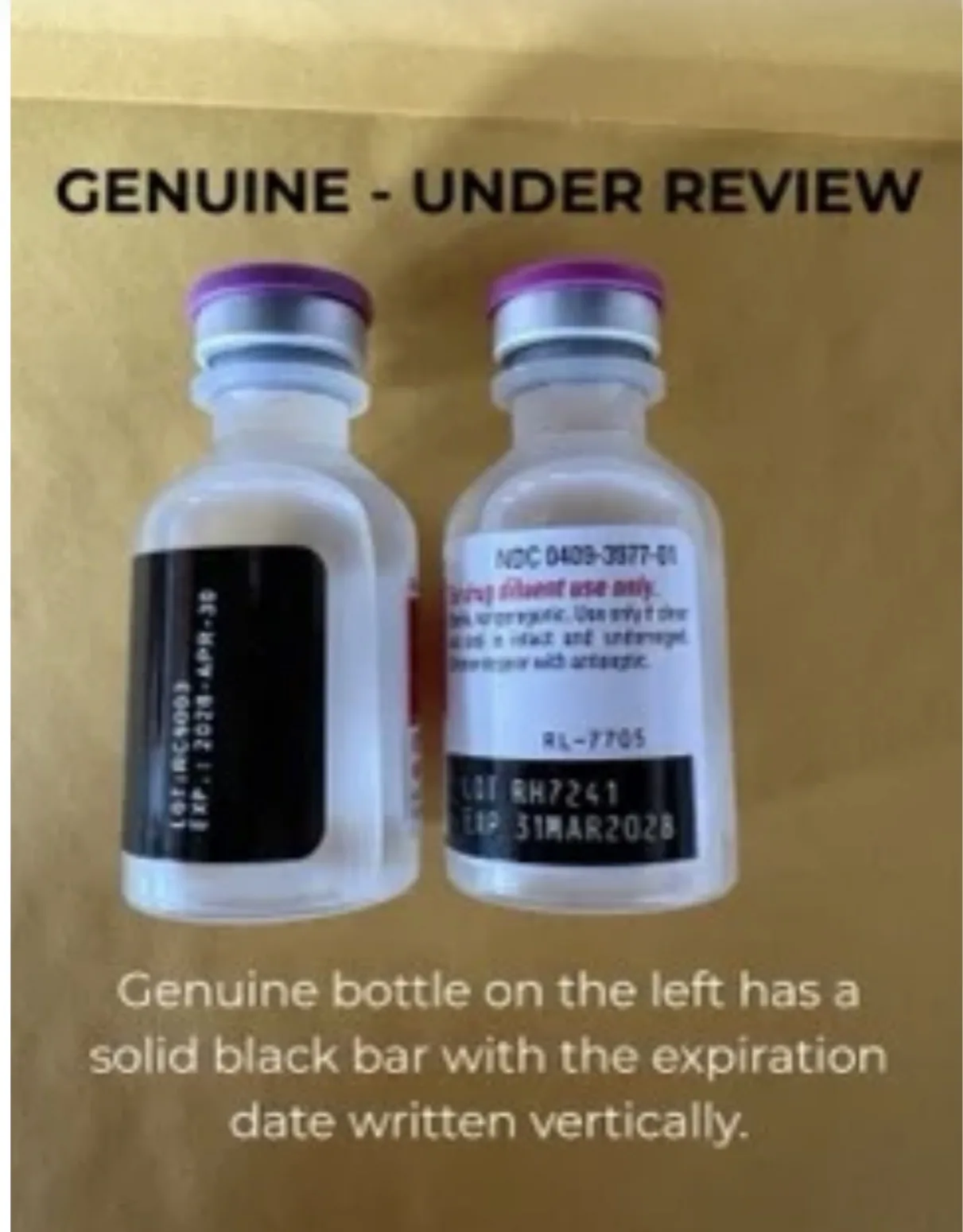
The suspect vial uses a noticeably different lot and expiry layout. The comparison bottle has a large solid black panel with the information printed vertically, while the RH7241 vial has a smaller horizontal black panel showing LOT RH7241 / EXP 31MAR2028.
Hospira Apparently Has More Than One Look
Once I started comparing documented Hospira and Pfizer bacteriostatic-water packaging from different sources, the simple visual rules became much less reliable. Legitimate examples show substantial variation in labels, market-specific packaging, repackaged products and older vials without the crimp marking. Some features that initially looked suspicious also turned out to have straightforward explanations.
For example, the suspect vial carries NDC 0409-3977-01, while Hospira trays are commonly associated with 0409-3977-03. That looks odd until you account for different package-level NDCs: the individual vial and the 25-vial tray can legitimately use different endings. Horizontal lot and expiry printing also has documented precedent, and Pfizer/Hospira packaging has changed over time and between markets. So neither the -01 versus -03 NDC, horizontal printing nor a different label layout is enough on its own to identify a counterfeit.
The crimp marking remains more interesting, particularly because the suspect vial expires in March 2028. In a video investigating genuine and counterfeit Hospira bacteriostatic water, Aminos.com focuses on the bottle itself and identifies the small QR-like etching on the silver crimp as one of the more useful features on newer Hospira vials. The presenter says that, based on his own research, the etching should be present on bottles with expiry dates after February 2027. That puts RH7241 firmly into the period he’s talking about. Its expiry is 31 March 2028, yet no etching is visible on the photographed faces of the crimp. If Aminos’s proposed cut off is correct, that makes the missing marking considerably more interesting than differences in cap shade or label layout.
Then the story became considerably more interesting.
During my search for the exact identifiers on the suspect vial, I found a Reddit post dated 29 August, before the GLP1Forum thread began on 1 September. The Reddit photographs show another Hospira-labelled bottle carrying the same combination: RH7241, RL-7705, 31MAR2028
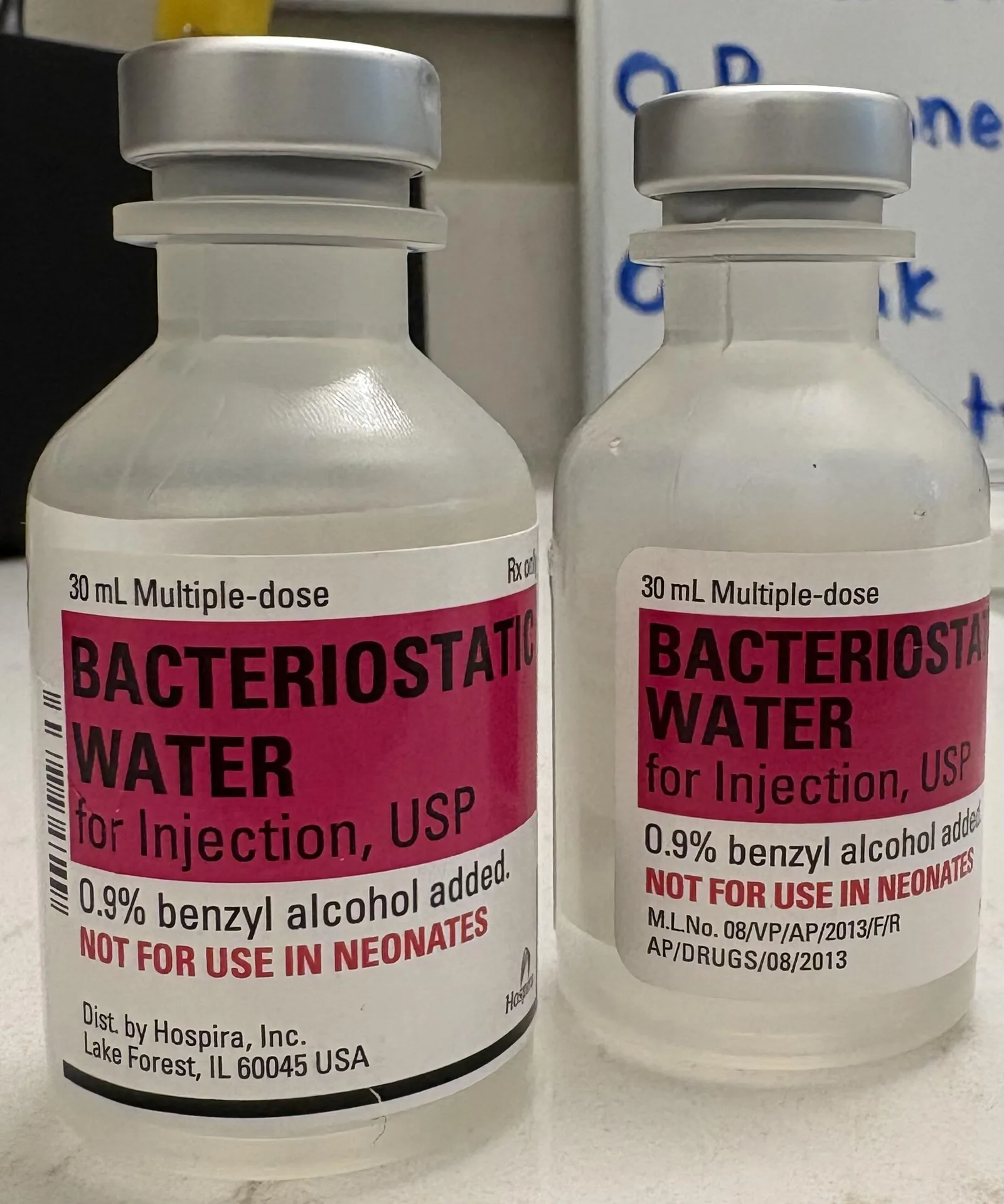
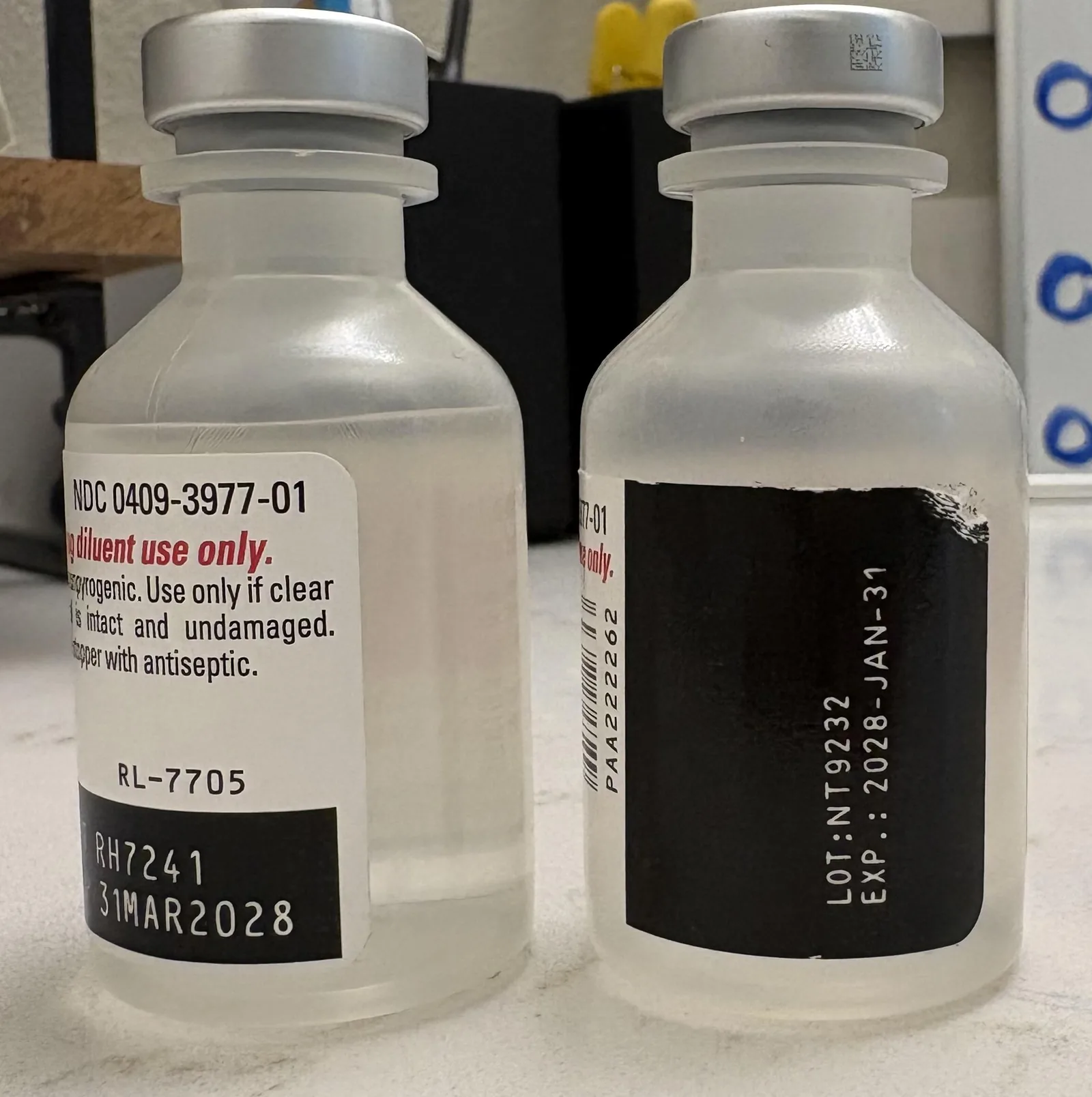
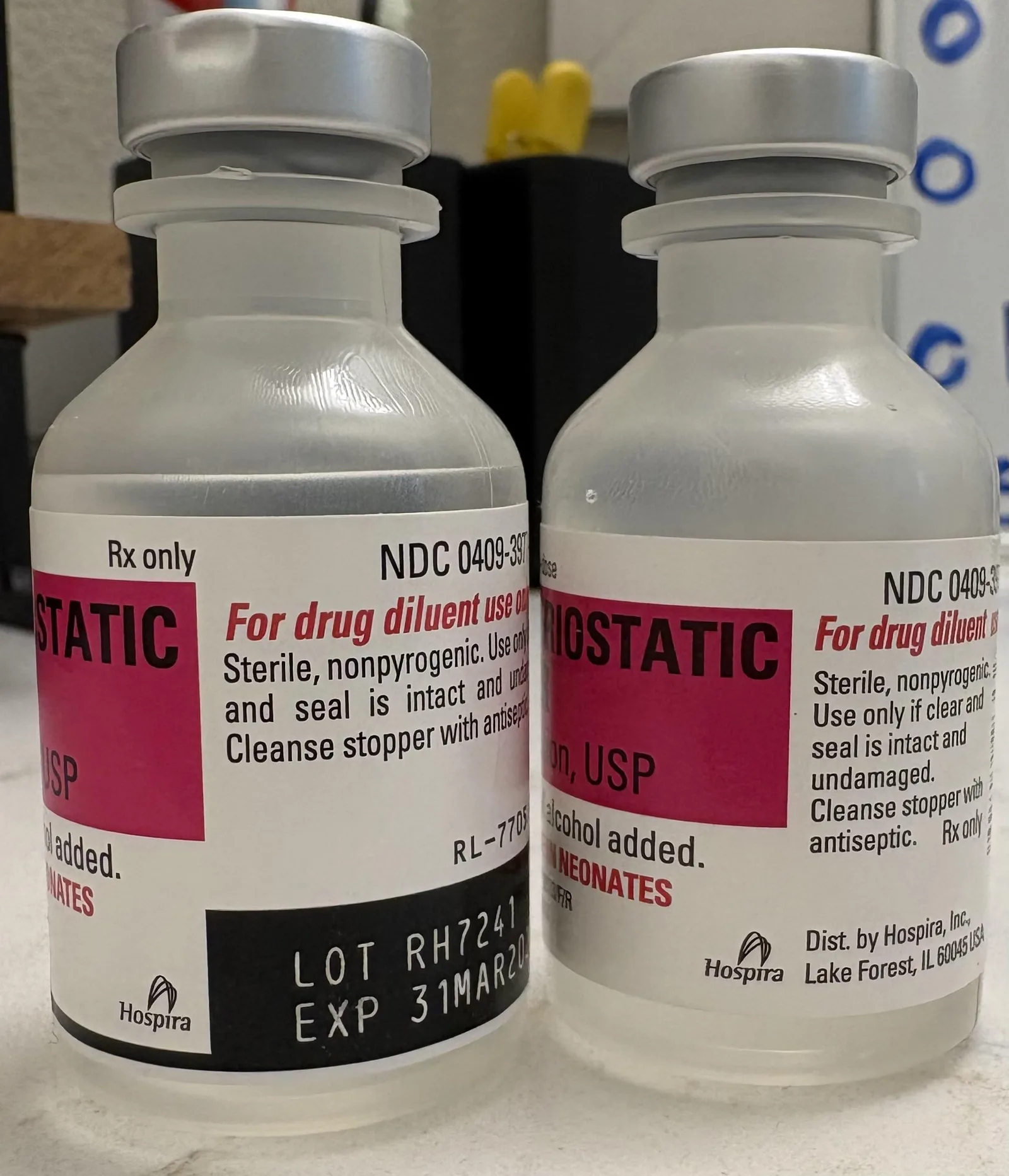
The buyer had noticed the difference in appearance to his previous Hospira vials and was concerned this was a fake one. The buyer said the two pictured bottles came from different vendors and a later reply suggests the poster had originally named at least one of them, but those earlier comments have since been removed and I couldn’t recover the vendor’s identity. So there’s no evidence that the Reddit RH7241 vial came from PeptideTest, or that it came through the same supply chain at all. It does, however, mean that RH7241 wasn’t merely some random number added to this suspect vial.
And Then Someone Produced a Pfizer Certificate
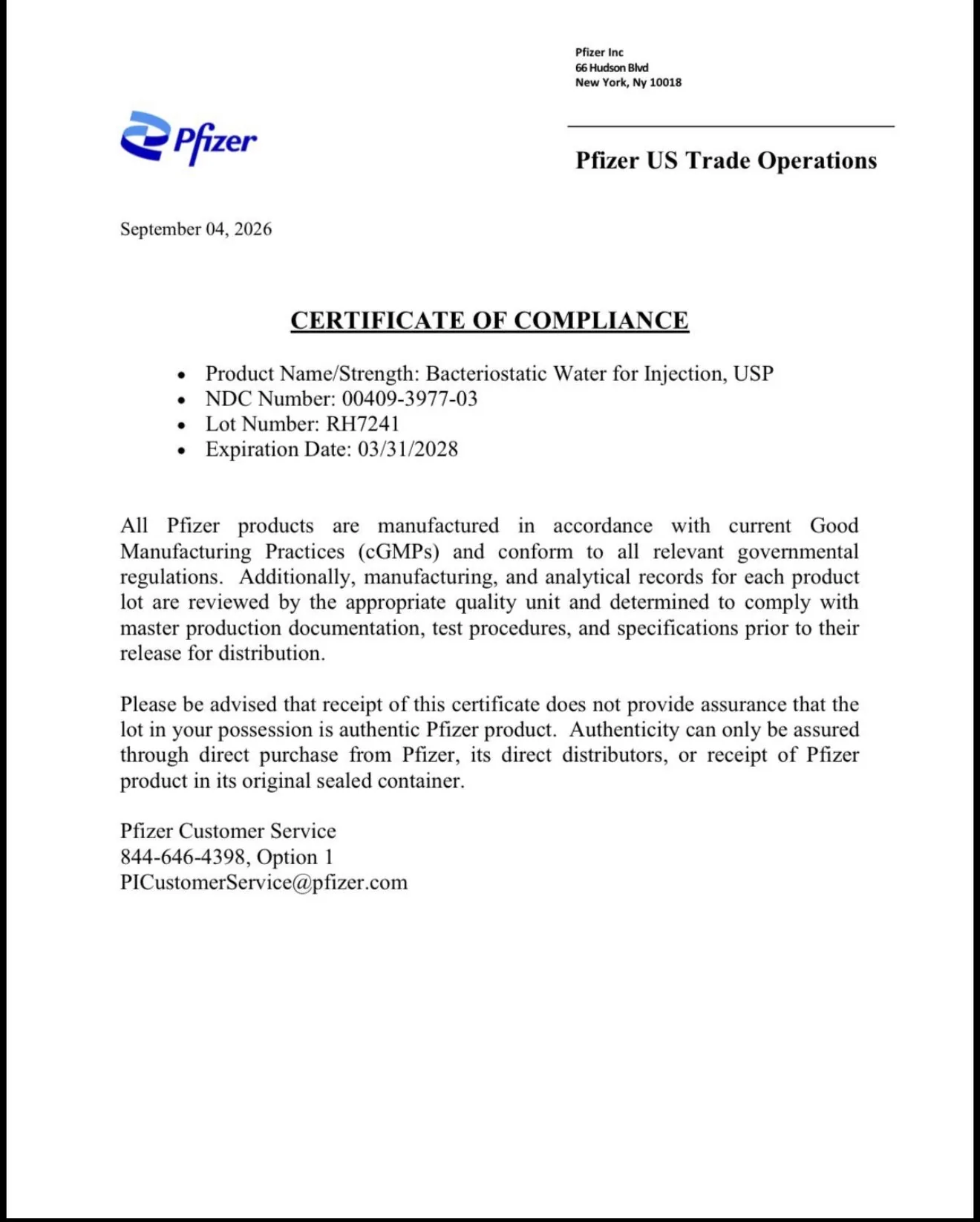
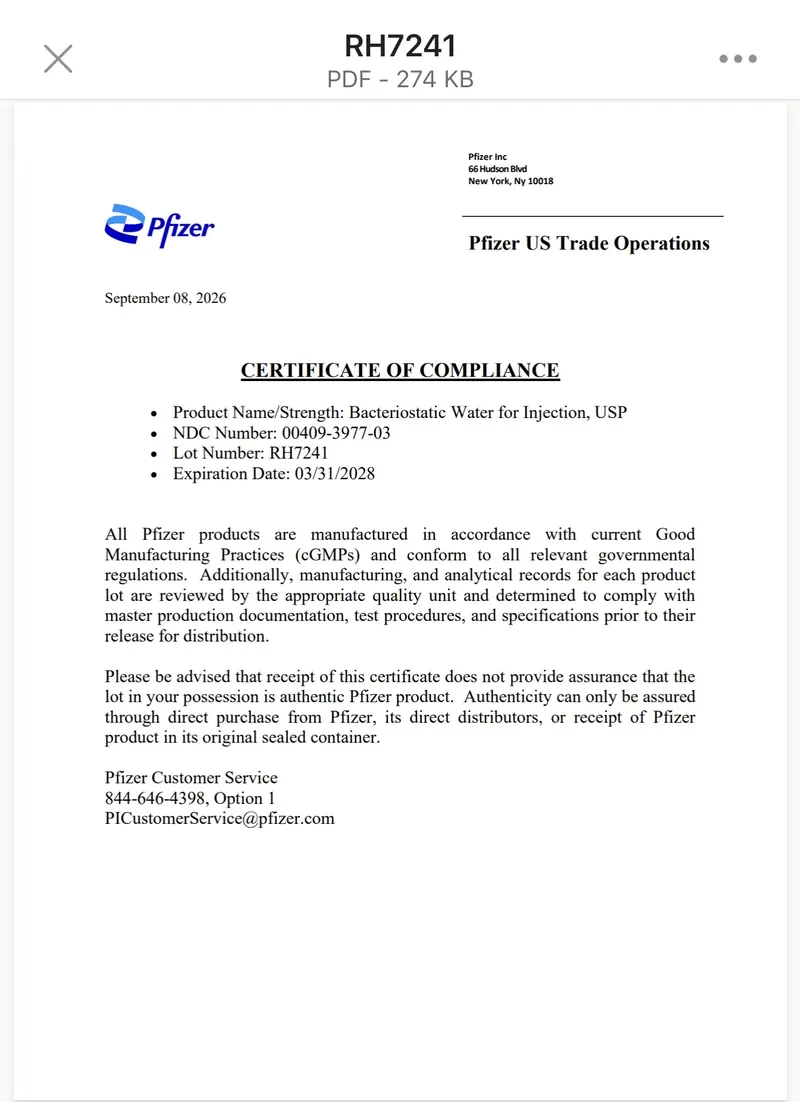
The Reddit discussion produced another twist. A Certificate of Compliance from Pfizer was posted with the same Lot number RH7241 with an expiry of 31 March 2028. The contact details on the document match Pfizer’s published US Hospital Business Unit contact details, which adds credibility to it. Interestingly, the certificate itself warns that it doesn’t prove a product in someone’s possession is authentic Pfizer stock. A counterfeiter doesn’t need to invent a fake lot number. In fact, using information belonging to a genuine batch would be considerably more convincing than inventing something that immediately fails a manufacturer lookup.
So even if RH7241 proves to be a genuine Pfizer lot, the next question would still be whether the pictured vials actually originated from that production run.
Putting the Aminos Checks Against RH7241
Aminos approached the problem from the bottle itself rather than the label. In his comparison of genuine and suspected counterfeit Hospira bacteriostatic water, he highlighted several physical features he believes are useful: the shape and shade of the purple cap, the silver crimp, the bottle mould seams, the plastic bottle body, the underside moulding and the label layout.
As mentioned earlier, his strongest point was the QR-like etching on the silver crimp. Based on his own research, he says that newer Hospira bottles should carry this marking and that it should be present on vials with expiry dates after February 2027.
Cap colour
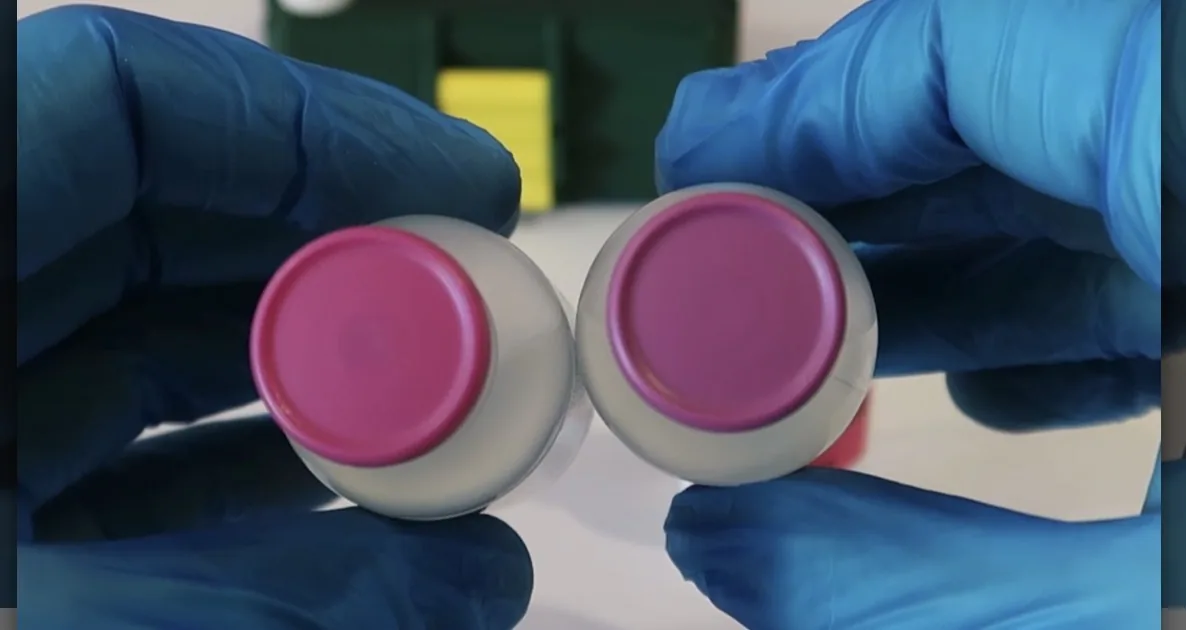
Both are legit so cap colour is inconclusive.
Bottle moulding: At least one of the seams Aminos describes is visible.
Bottle base:
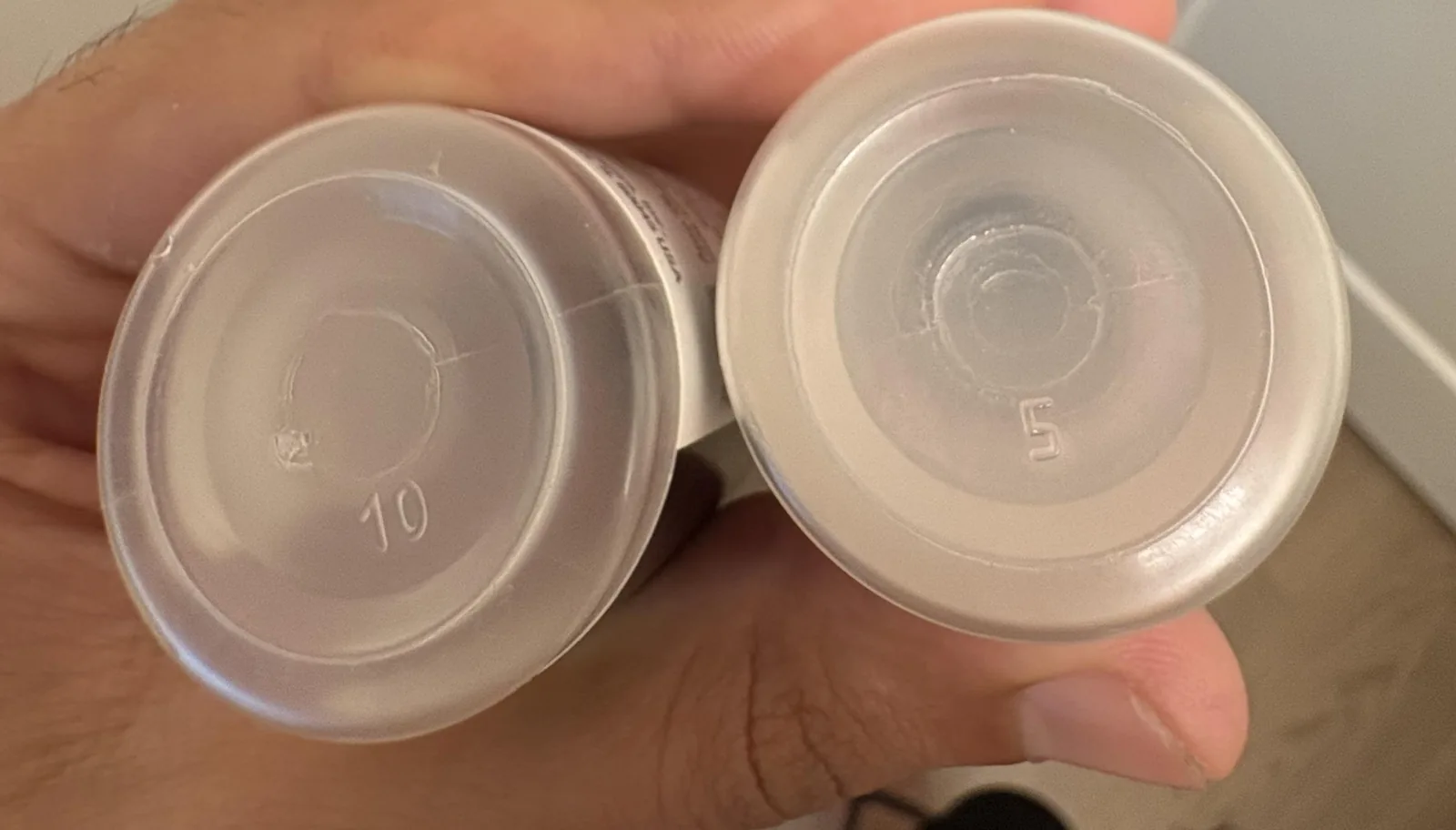
The Reddit photos broadly resemble the base shape shown in his reference examples.
Expiry panel: The RH7241 layout is clearly different from the larger black panel shown in his post-2027 example.
So the comparison didn’t produce a clean answer. Some features look unusual, particularly the missing visible crimp etching, but others are either broadly consistent or impossible to judge properly from photographs. There’s an important limitation, however. Aminos describes the findings as his own research, and I couldn’t find a Pfizer specification confirming that every genuine Hospira vial expiring after February 2027 must carry the etching. So the Aminos investigation provides a good reason to treat the missing marking as a red flag, but not enough to call the vial counterfeit.
The Seller’s Behaviour Is Worth Separating From the Authenticity Question
There’s another part of this story that could easily get muddled with the counterfeit question. PeptideTest appears to have acted on the concern. Below is the email sent by PeptideTest
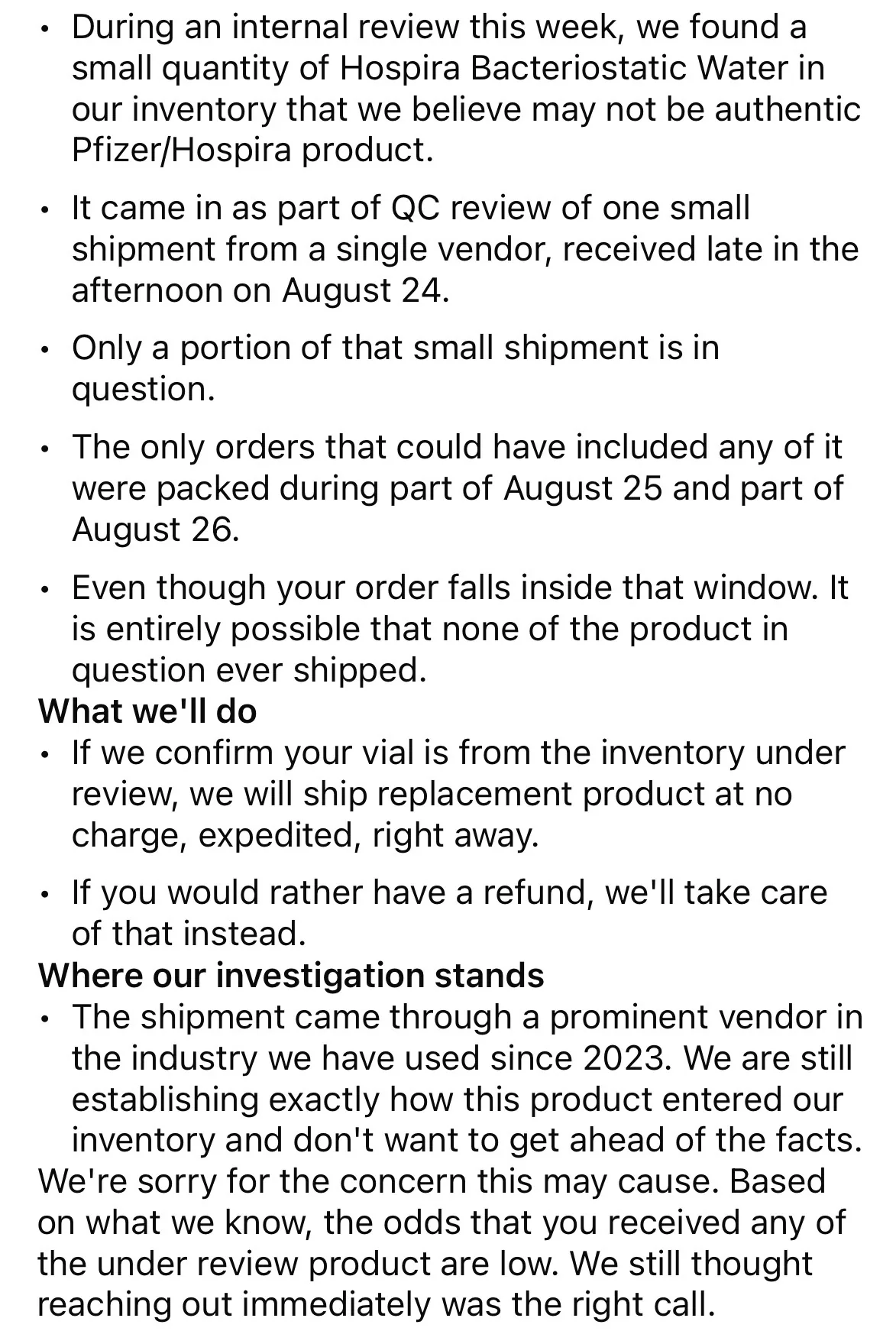
That tells us PeptideTest had enough concern to take action, but it’s not a message direct from Pfizer.
How Many People Actually Received Them?
We’ve only one clearly identified first-hand buyer saying they received suspect PeptideTest Hospira and the Reddit buyer, whose source is unknown.
What We Can Say
After the research I did, there are several things I think can now be stated reasonably confidently. The RH7241 bottles photographed online are real objects carrying a consistent set of Hospira-labelled identifiers. The suspect vial has genuine-looking Hospira branding and several physical features resembling documented Hospira bottles. But there are also visible differences from other Hospira examples. Some of those differences, including NDC packaging levels, horizontal printing and label variation, have legitimate precedents. The missing crimp etching remains interesting post-February-2027 cut off hasn’t been confirmed by Pfizer.
So Is It Fake Hospira?
I don’t know, and after spending considerably longer looking at bacteriostatic-water bottles than I ever imagined I would, I don’t think anybody outside Pfizer has yet produced evidence strong enough to answer that question. The next useful answer isn’t going to come from another photograph, it needs to come from Pfizer. Until then, the fake Hospira remains a fake Hospira mystery.
I Asked Pfizer Directly
Because the online evidence could only take this so far, I submitted a Certificate of Compliance request directly through Pfizer’s official system for Bacteriostatic Water for Injection, USP, NDC 00409-3977-03, lot RH7241, expiry 03/31/2028. Pfizer has accepted the submission and responded: “Thank you for your submission” and said that a Customer Service Team Member would be in touch within 24 hours. At the time of writing, Pfizer hasn’t yet confirmed the lot or supplied a certificate.
So for now, the Reddit certificate remains plausible but unverified, and the photographed RH7241 vial remains unresolved. If Pfizer returns a matching Certificate of Compliance, that would strongly support RH7241 as a real Pfizer lot with that expiry, but it still wouldn’t prove that every vial carrying those details was actually manufactured by Pfizer.
Comments