
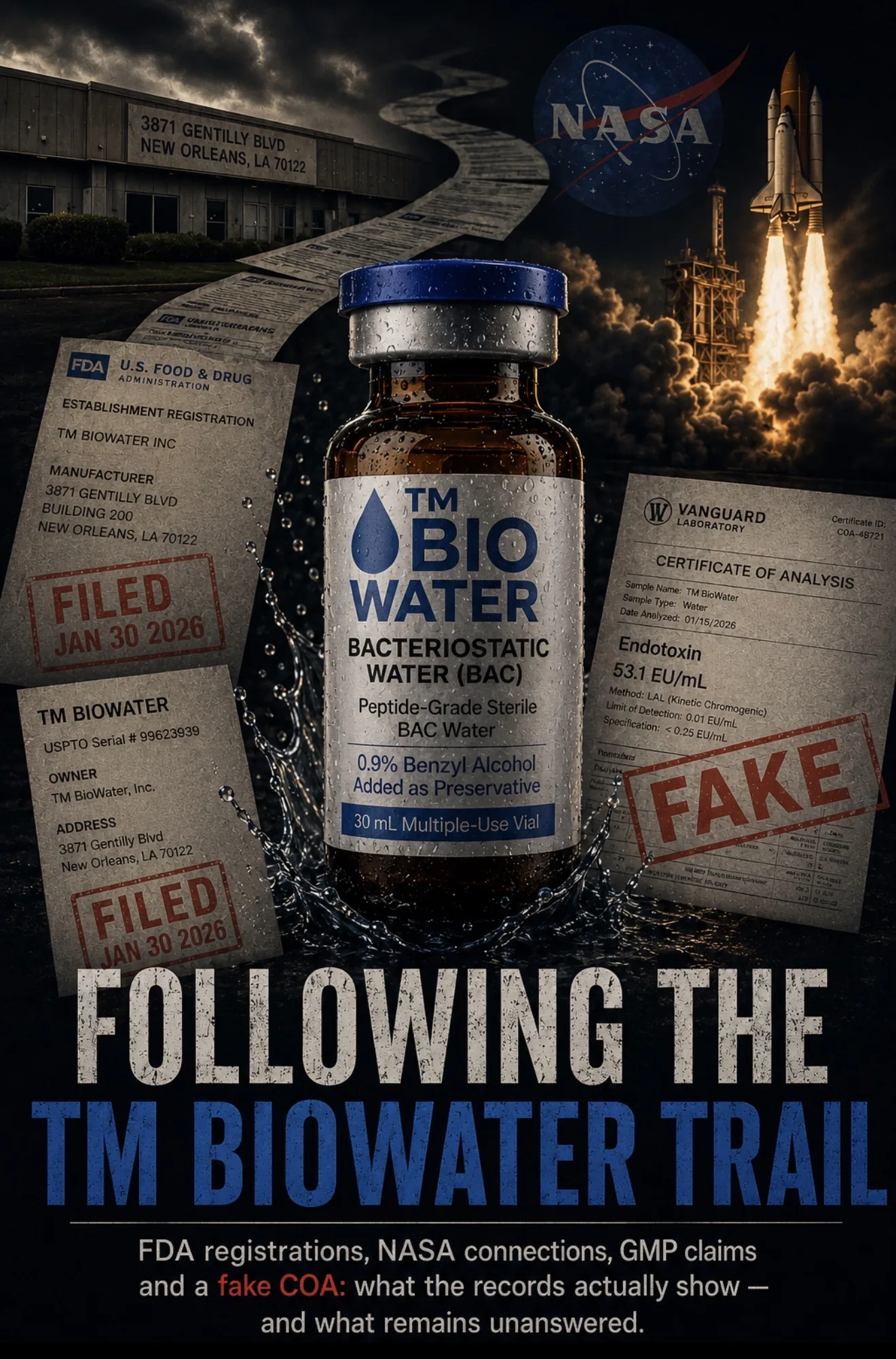
TM BioWater is not a subtle product. From the moment it appeared, the company positioned itself as something far beyond a typical bottle of bacteriostatic water. Marketing materials describe it as the world’s only NASA-engineered, FDA-registered, GLP/GMP-certified bacteriostatic water, produced in the United States under continuous lot control. The company claims superior sterility, peptide compatibility, consistency, and traceability, while promotional material describes it as “the cleanest bacteriostatic water on the planet.”
The claims don’t stop there. According to TM BioWater’s website, every batch undergoes a multi-stage purification process involving carbon filtration, ion-resin polishing, dual reverse osmosis, sterile filling, and quality-control testing. The company further claims its water contains no heavy metals, no microplastics, and is suitable not only for peptide reconstitution and laboratory research, but also for agriculture, hydroponics, livestock, and animal health applications.
On paper, it’s an ambitious proposition, yet TM BioWater entered the market at a time when many peptide buyers were desperately searching for alternatives to Hospira bacteriostatic water. As shortages continued and new suppliers rushed to fill the gap, people began asking a simple question:
Who exactly is behind TM BioWater?
What began as a routine attempt to verify a bacteriostatic water supplier quickly expanded into a much larger investigation involving FDA registrations, trademark filings, manufacturing claims, corporate records, NASA connections, TM Biotech, TresMonet, and a fake COA discovery.
Following the TM BioWater trail revealed a company that is far more substantial than many initially assumed. At the same time, it uncovered a growing list of claims that remain difficult to independently verify.
This article follows that trail from the marketing promises to the public records, examining what can be confirmed, what appears legitimate, and what questions still remain unanswered.
At the time of writing, TM BioWater is being sold through several medical-supply and bacteriostatic water distributors, including BacteriostaticWater.com, Farris Laboratories ( sold out), Westend Medical Supply, Syringe Needles Depot and MitoBioLabs. TM BioWater appears to have pursued distribution through a broader network of medical-supply vendors and specialty distributors.
The Domain Trail
The first step was tracing the company infrastructure. TMBioWater.com was registered in October 2025.
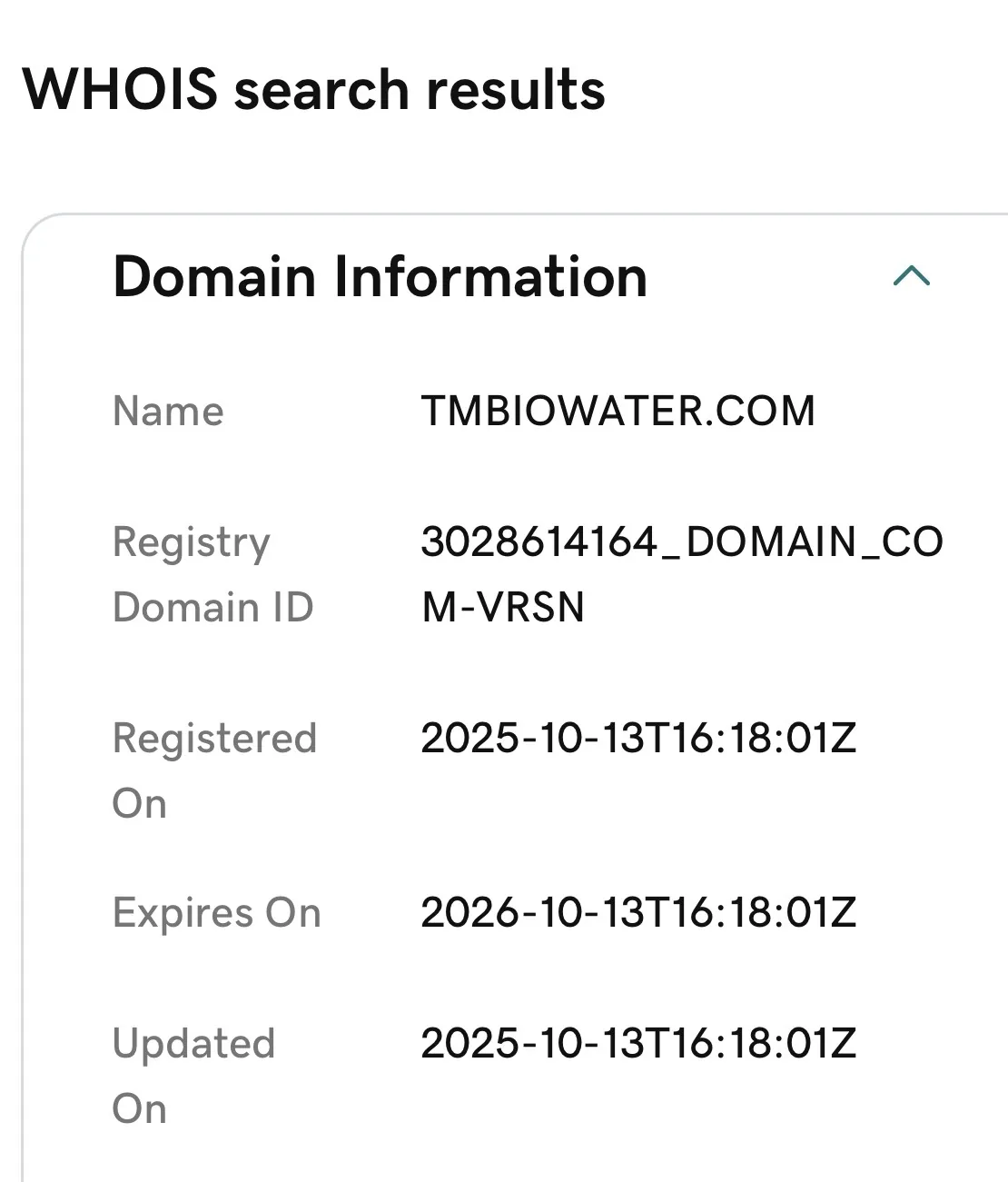
That immediately raised questions because the branding and marketing language created the impression of a long-established operation. However, further digging revealed a broader network already existed before TM BioWater appeared.
The Corporate Records
Louisiana filings showed that TM Biotech Inc was registered in 2020 and remains active. TM BioWater Inc was registered in December 2025.
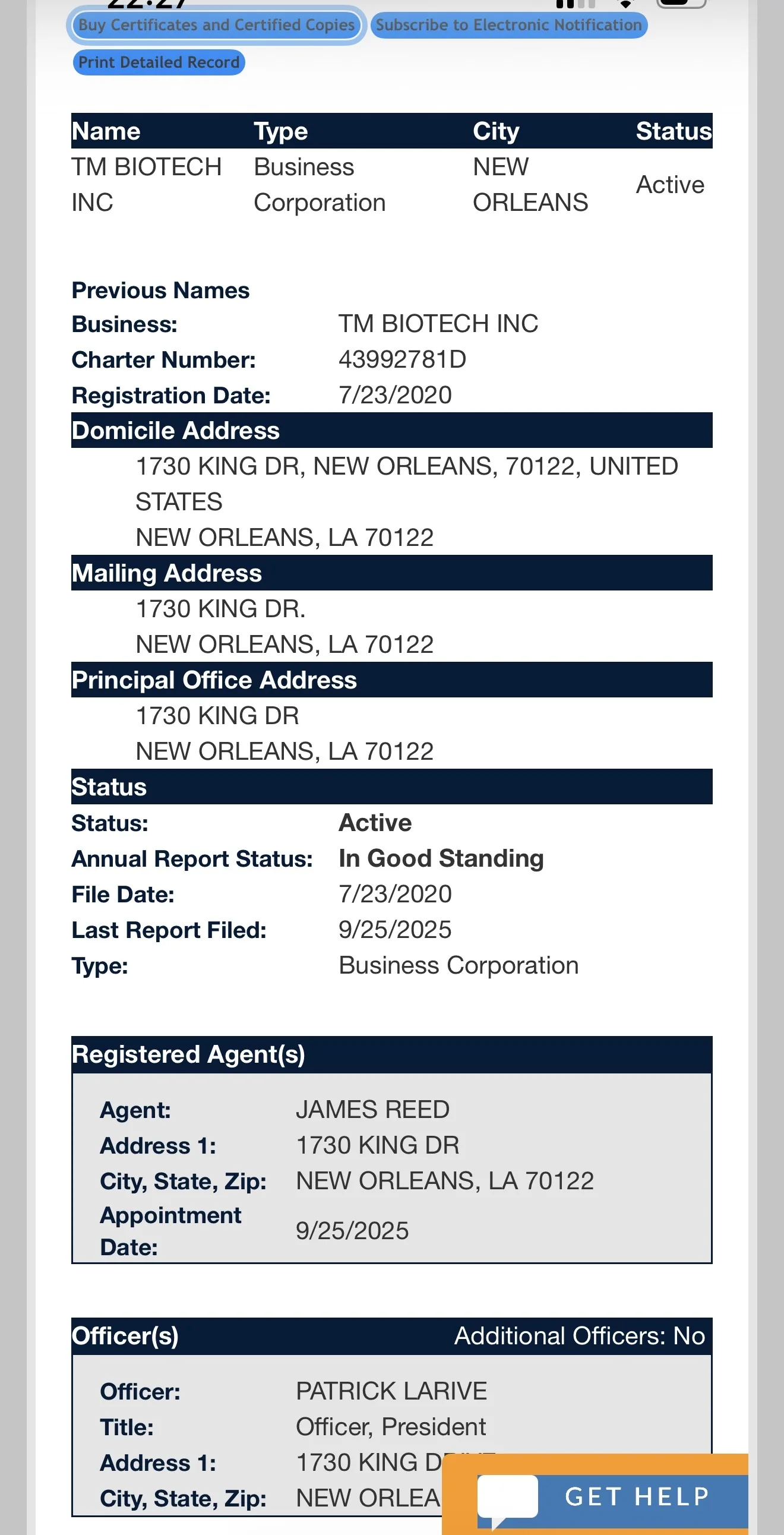
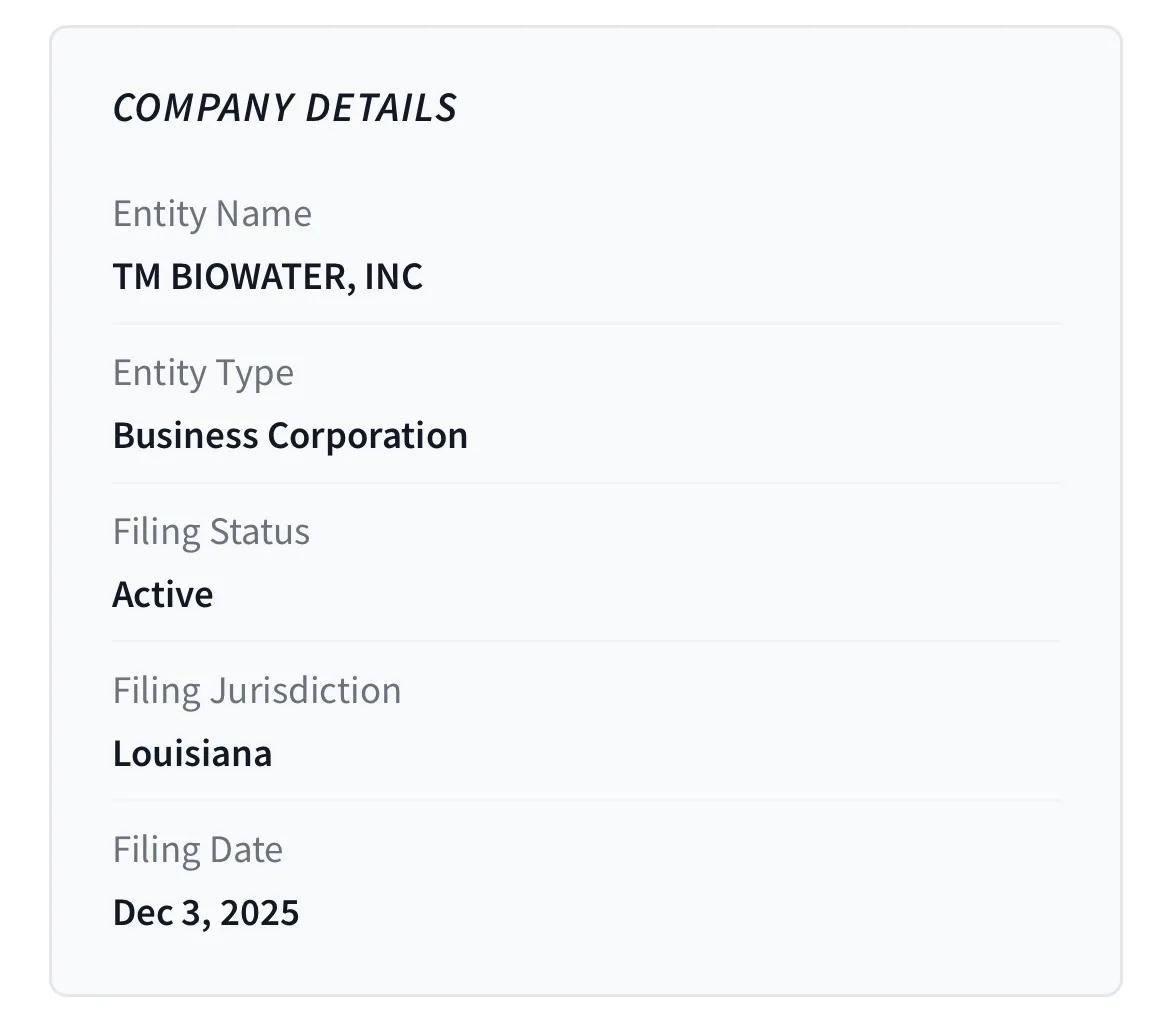
That timeline immediately stood out as TM BioWater didn’t appear to be an independent company that had existed for years. Instead, it looked more like a new brand emerging from within an already existing business ecosystem. The strongest evidence came from TM Biotech itself.
TM Biotech Appears
TM Biotech’s public materials describe the company as a biotechnology platform involved in preclinical research, regulatory consulting, analytical testing, water purification systems and consumer healthcare development. The company’s president is listed as Dr. PJ LaRive. Then the personnel links started appearing.
Dennis Dannel, TresMonet and TM BioWater
LinkedIn profiles show Dennis Dannel publicly presenting himself as CEO of TresMonet Skincare (February 2018 to Present), CEO of TM Biotech (March 2020 to Present) and CEO of TM BioWater (November 2025 to Present)
Meanwhile, Dr. PJ LaRive appears throughout TM Biotech, TM BioWater and TresMonet-related material.
TresMonet’s own LinkedIn page lists LaRive as President and Co-Founder and describes its products as being “Designed by a NASA engineer with over 15 years of experience.”
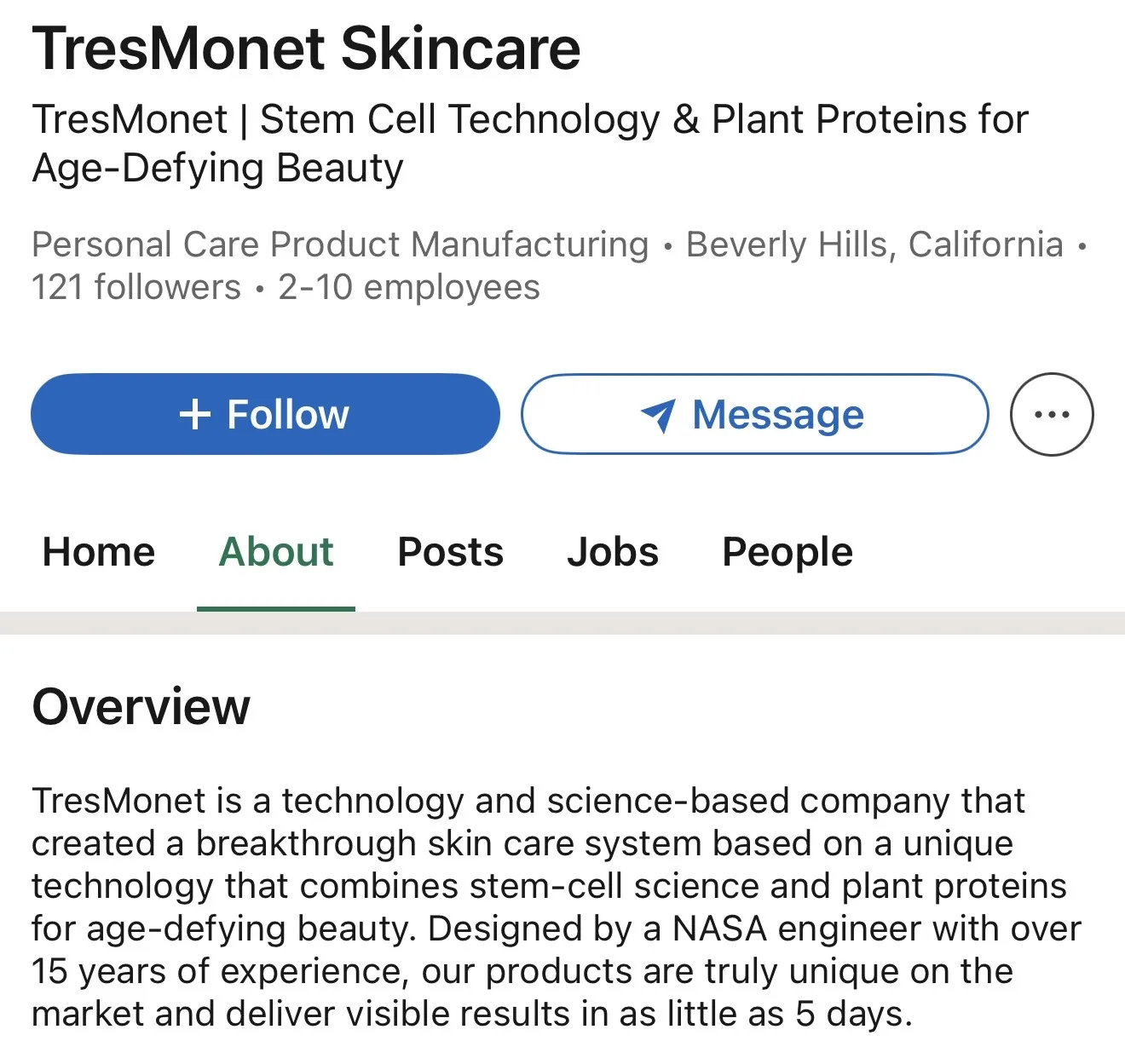
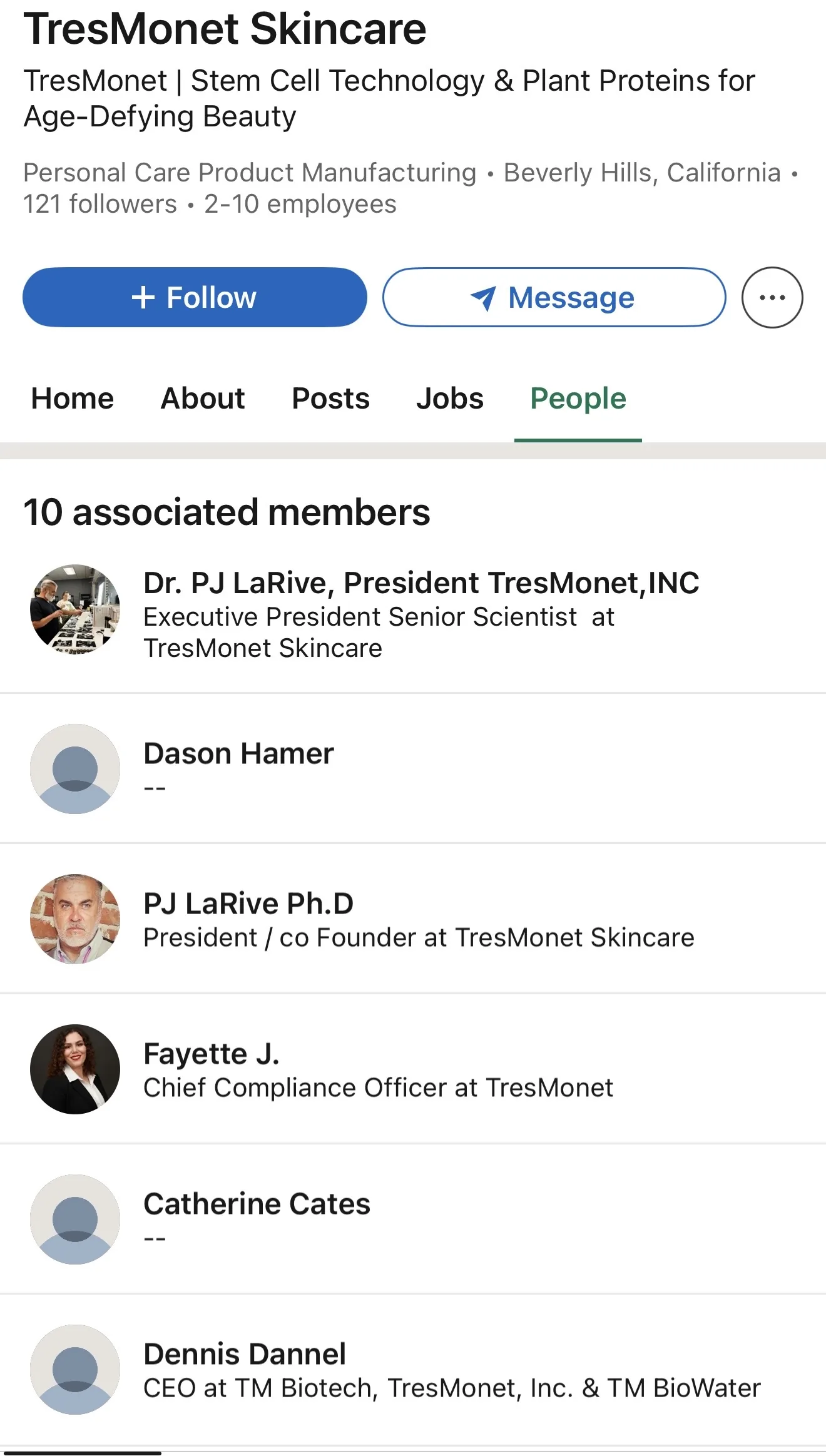
As more records emerged, what initially appeared to be separate projects increasingly resembled a connected business ecosystem. Rather than a standalone BAC-water startup, TM BioWater appeared to have emerged from an existing network involving TM Biotech, TresMonet and the same core leadership team.
The NASA-Engineered Claim
One of the most eye-catching aspects of TM BioWater’s marketing is its claim to be the world’s only “NASA-engineered” bacteriostatic water.
Initially, the claim proved difficult to trace. Searches didn’t uncover NASA patents, licensing agreements, technology-transfer programs or publicly documented NASA-owned intellectual property directly linked to TM BioWater. However, repeated references to Dr. PJ LaRive provided a possible explanation.
Public biographies, social-media profiles and TresMonet marketing materials repeatedly describe LaRive as a former NASA scientist or engineer, often referencing more than 15 years of NASA experience. Because LaRive is publicly linked to TresMonet, TM Biotech and TM BioWater, the NASA branding appears to predate the launch of TM BioWater itself.
This raises an important distinction. There’s a significant difference between a product being developed by someone with a NASA background and a product incorporating NASA-owned technology, patents or technology-transfer agreements. At present, the available public evidence appears to support the former more strongly than the latter.
The FDA Registration
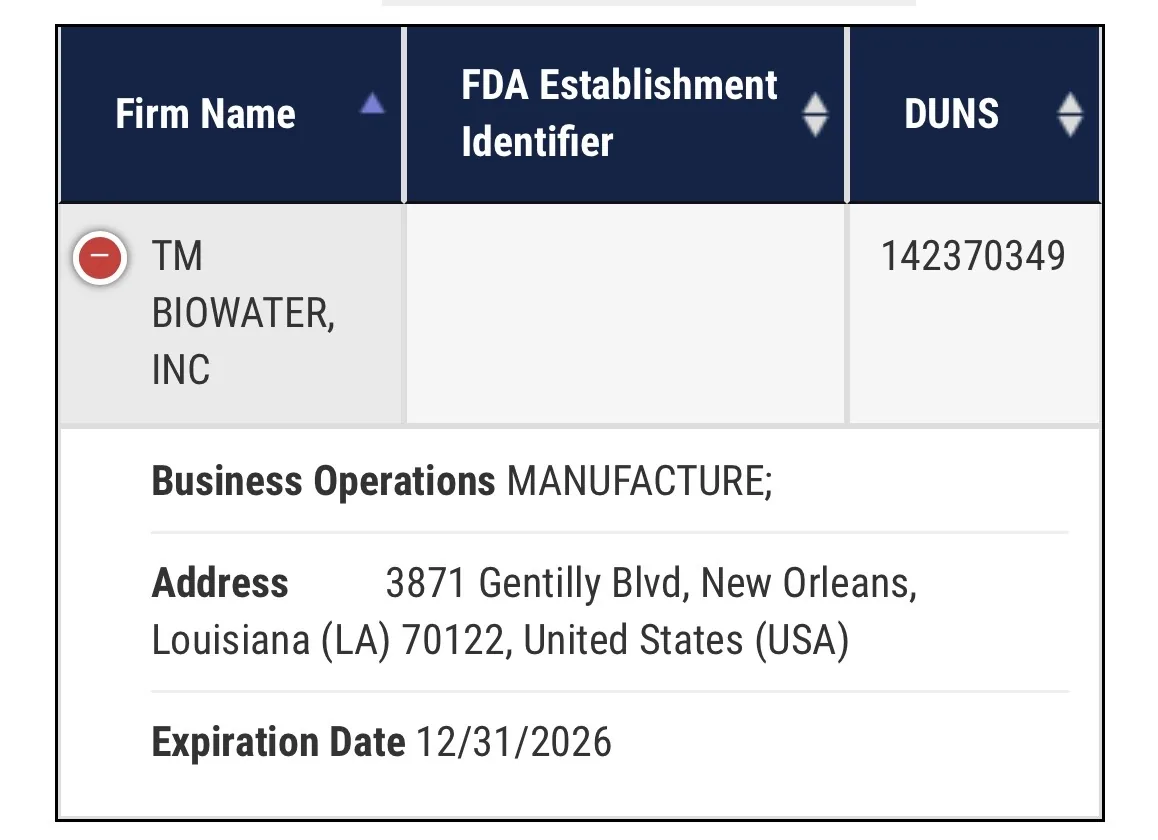
One of the biggest questions was whether TM BioWater actually existed beyond marketing. The FDA registration database provided the first major independent confirmation. TM BioWater Inc appears within the FDA Drug Establishments Current Registration database. More importantly, the listed business operation is: MANUFACTURE. The registration doesn’t just identify a distributor or reseller, it identifies a manufacturing operation. The FDA listing points to 3871 Gentilly Blvd
Building 200, New Orleans, Louisiana
Following the Address
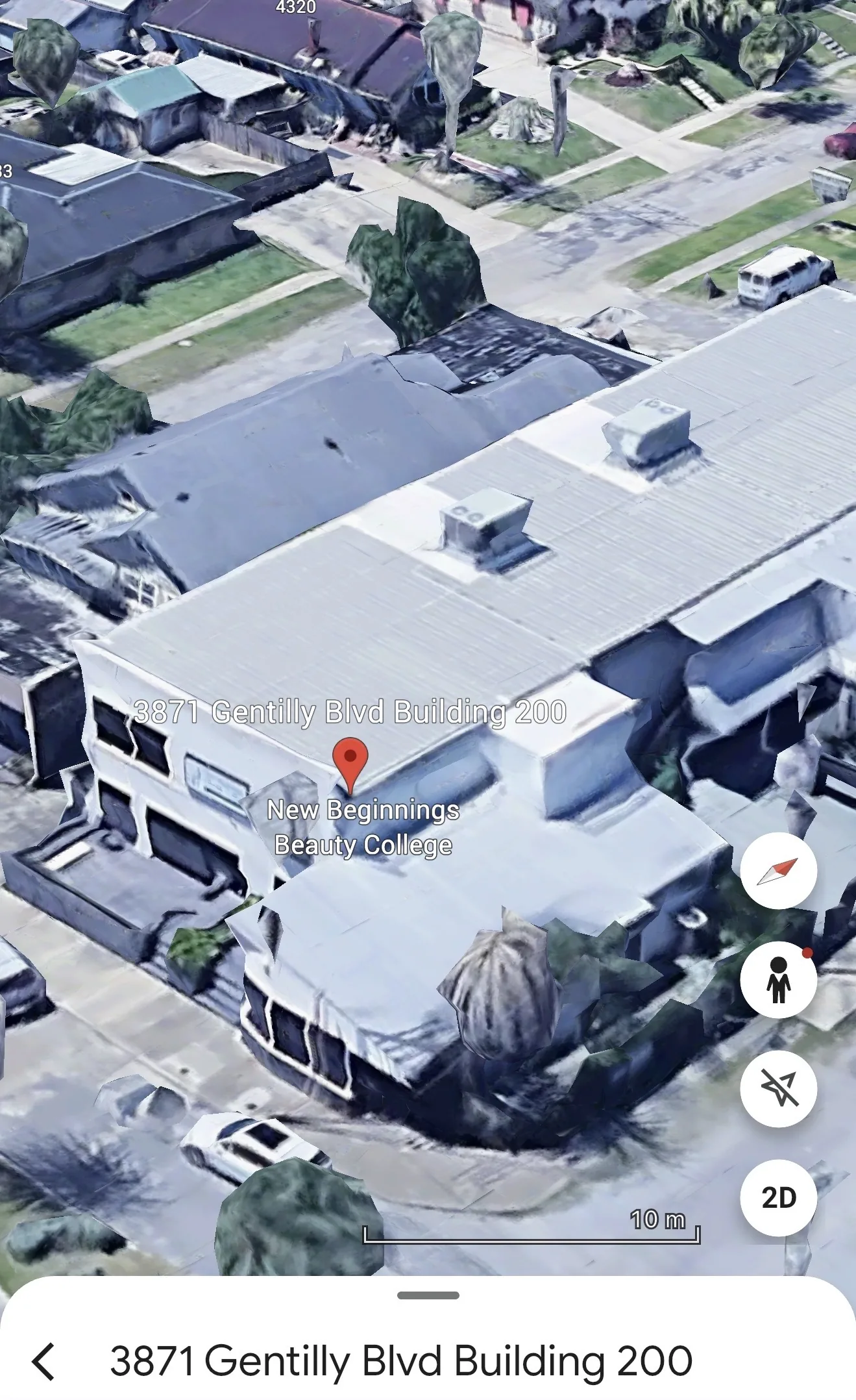
3871 Gentilly Blvd appears to be a multi-tenant commercial property rather than a residential home, listing New Beginnings Beauty College at that address. The same address surfaced repeatedly through FDA registration records, Trademark filings and Louisiana corporate records. At that point, the address stopped looking like a random placeholder and started looking like a genuine operational location. For a company marketing itself as the world’s only NASA-engineered, FDA-registered, GLP/GMP-certified bacteriostatic water manufacturer, the facility doesn’t match what many customers would picture. The site appears far more modest than the large-scale pharmaceutical manufacturing complexes often associated with those kinds of claims.
The Altered Vanguard COA
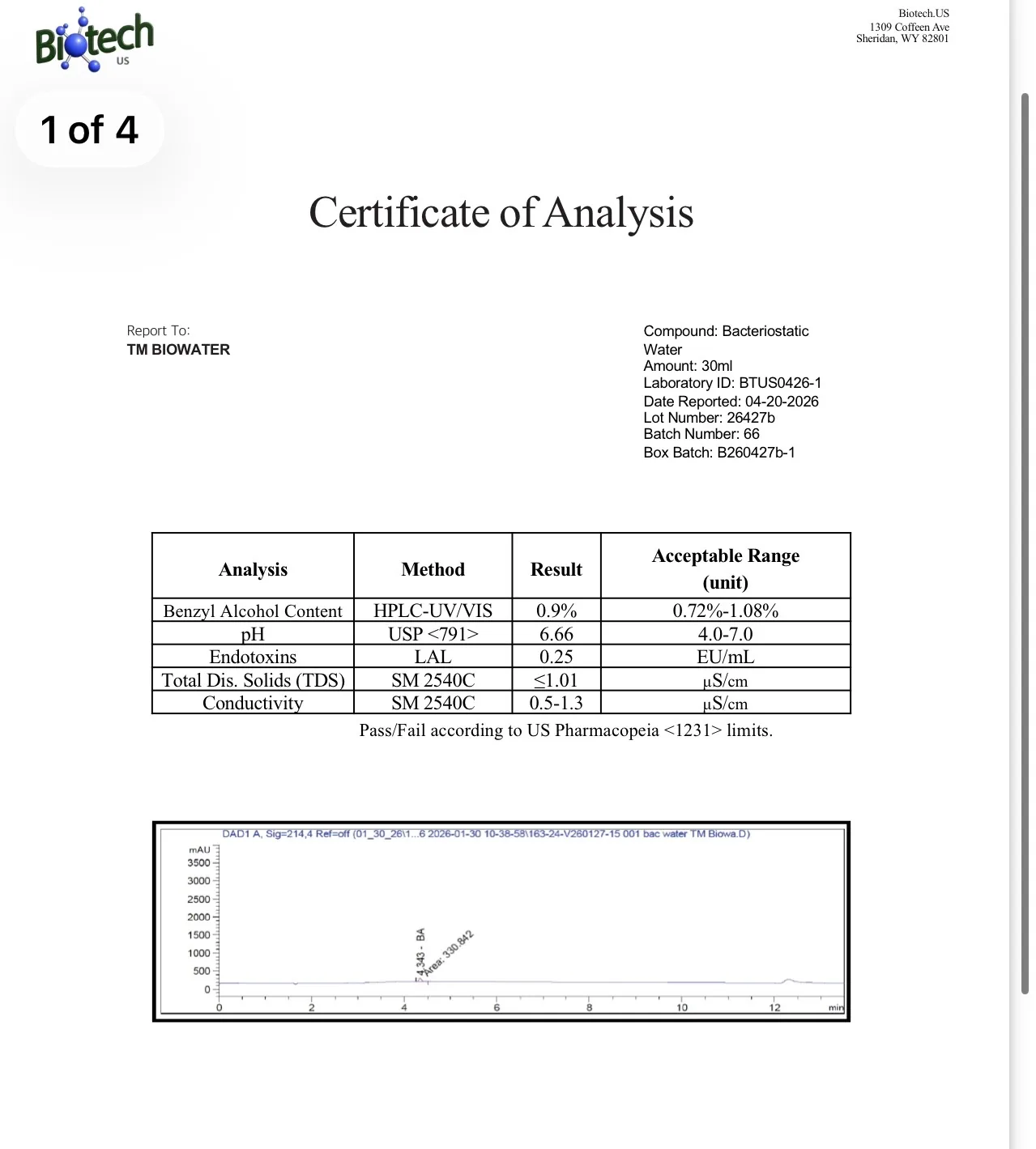
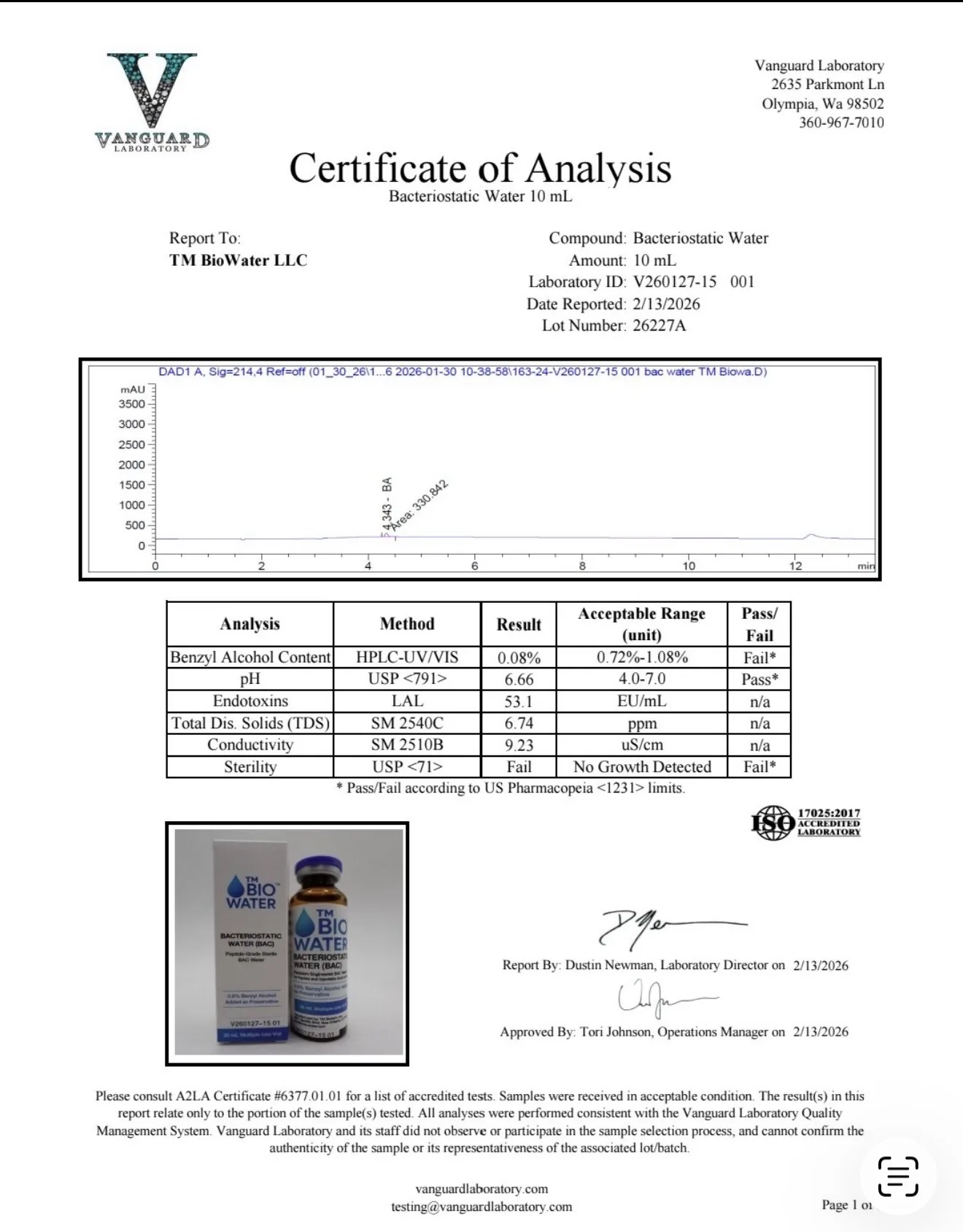
The most serious controversy surrounding TM BioWater involves a COA that appears to have been copied from an original Vanguard Laboratory report. Vanguard stated that the sample itself had been submitted and tested by their laboratory, but that the COA later circulated online had been heavily edited. While portions of the original report were retained, other results were clearly edited. Vanguard branding was replaced with BioTech.US branding. The report was reformatted, additional pages were added, and internal authorization fields not present on the original Vanguard report, including a signature attributed to Patrick La Rive, PhD, CEO/President were added. A comparison of the two documents reveals significant differences.
The original Vanguard report showed. Benzyl alcohol content: 0.08% Bacterial endotoxins: 53.1 EU/mL Sterility: Fail
The BioTech.US version instead reported Benzyl alcohol content: 0.9% , Bacterial endotoxins: 0.25 EU/mL, No sterility failure.
The endotoxin result is particularly significant. At 53.1 EU/mL, a 30 mL vial would contain approximately 1,593 EU in total endotoxin burden. The BioTech.US version reduced that figure to 0.25 EU/mL, transforming a failed result into a passing one.
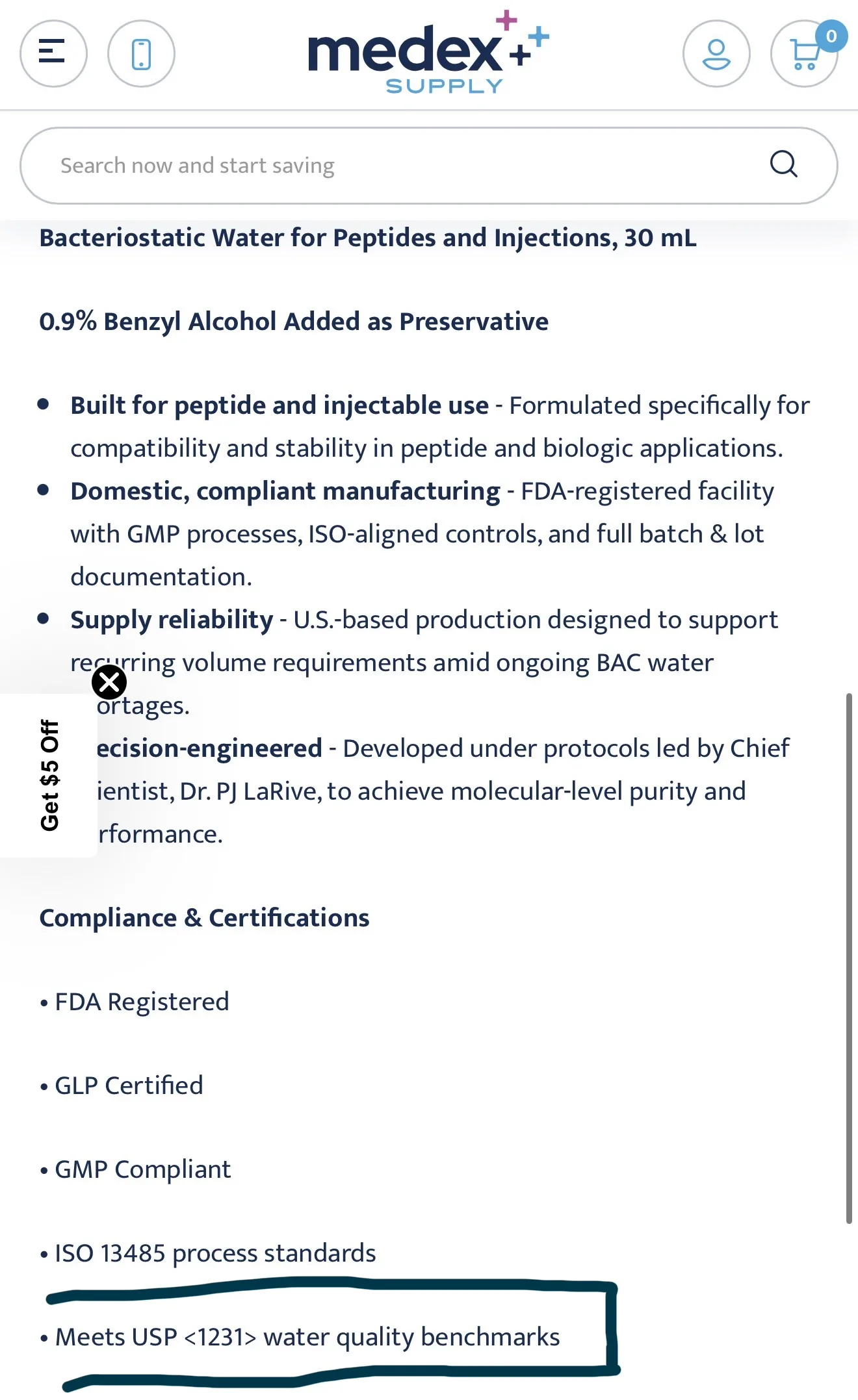
Meanwhile Medex is using a marketing page claiming compliance with USP <1231> benchmarks.
In other words an authentic Vanguard Laboratory report describing a sample that failed key quality and safety measurements was altered and redistributed with materially different results under the Biotech US brand.
Peptide Test Results
Following the controversy surrounding the altered Vanguard COA, a separate set of tests was commissioned through Peptide Test as part of a vendor qualification process.
According to Peptide Test, the testing was not conducted for a customer complaint or marketing exercise. Instead, it was performed to evaluate whether TM BioWater would be suitable for inclusion as a future vendor. The results raised additional concerns.
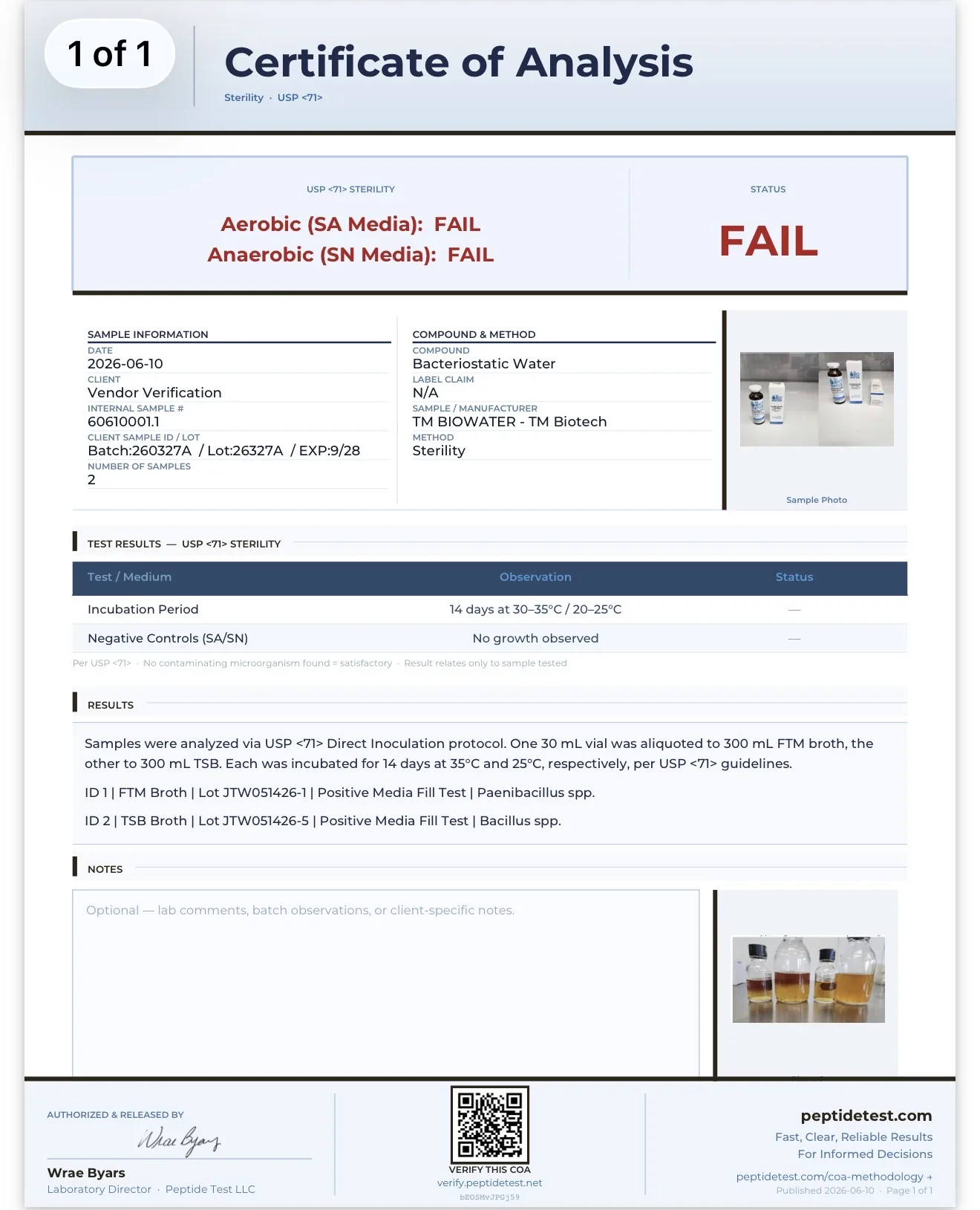
USP <71> sterility testing reported failures in both aerobic and anaerobic media. The report identified growth consistent with Paenibacillus spp. and Bacillus spp., resulting in an overall sterility failure.
A separate endotoxin analysis reported 4.11 EU/mg. According to information provided by the laboratory, the sample contained approximately 30 mg per vial, corresponding to roughly 123 EU per vial.
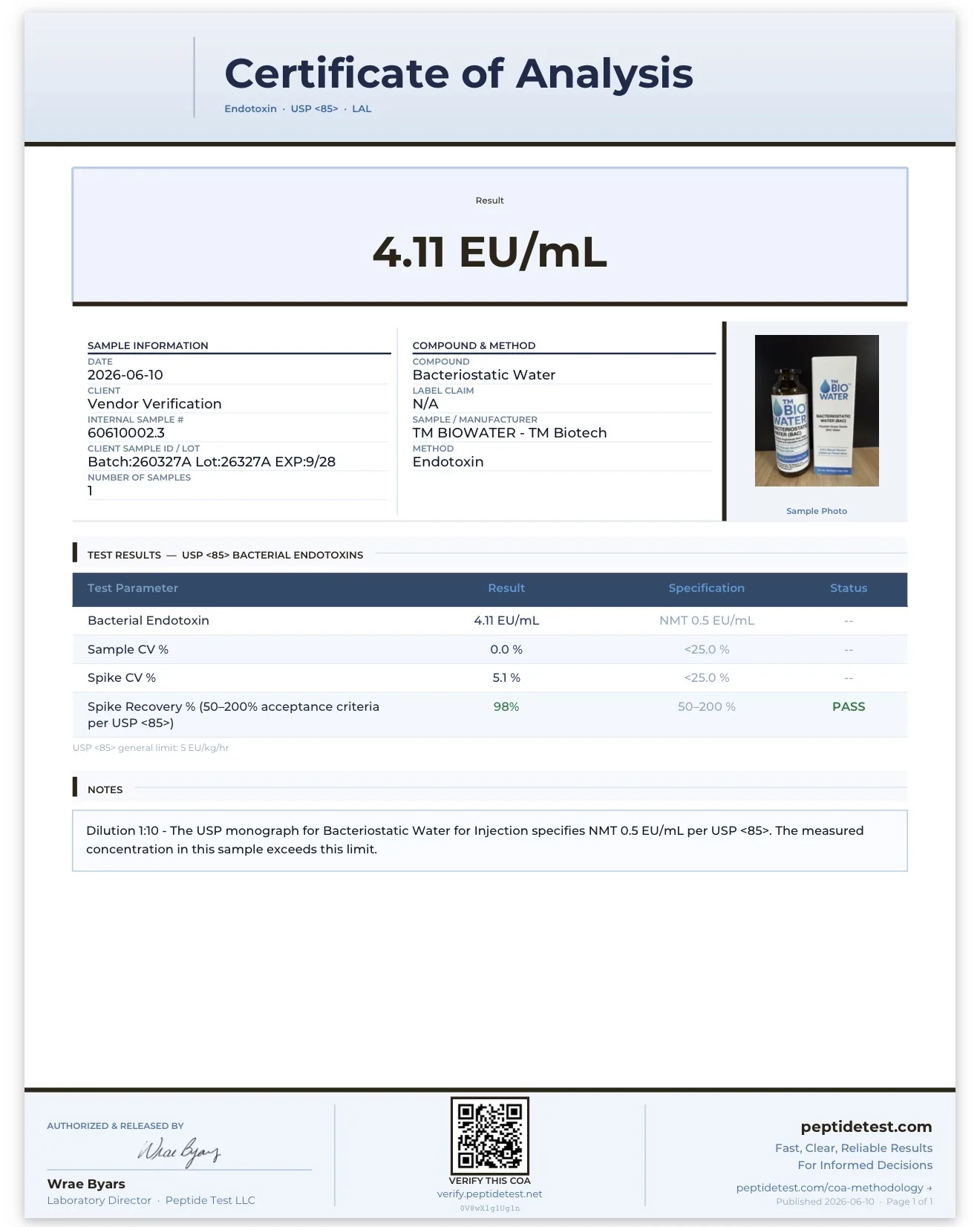
While lower than the approximately 1,593 EU per vial implied by the original Vanguard report, the result remained elevated enough for the laboratory to express concern.
pH analysis reported a measured pH of 8.16, exceeding the laboratory’s stated specification range of 4.5 to 7.0 and resulting in an overall FAIL determination.
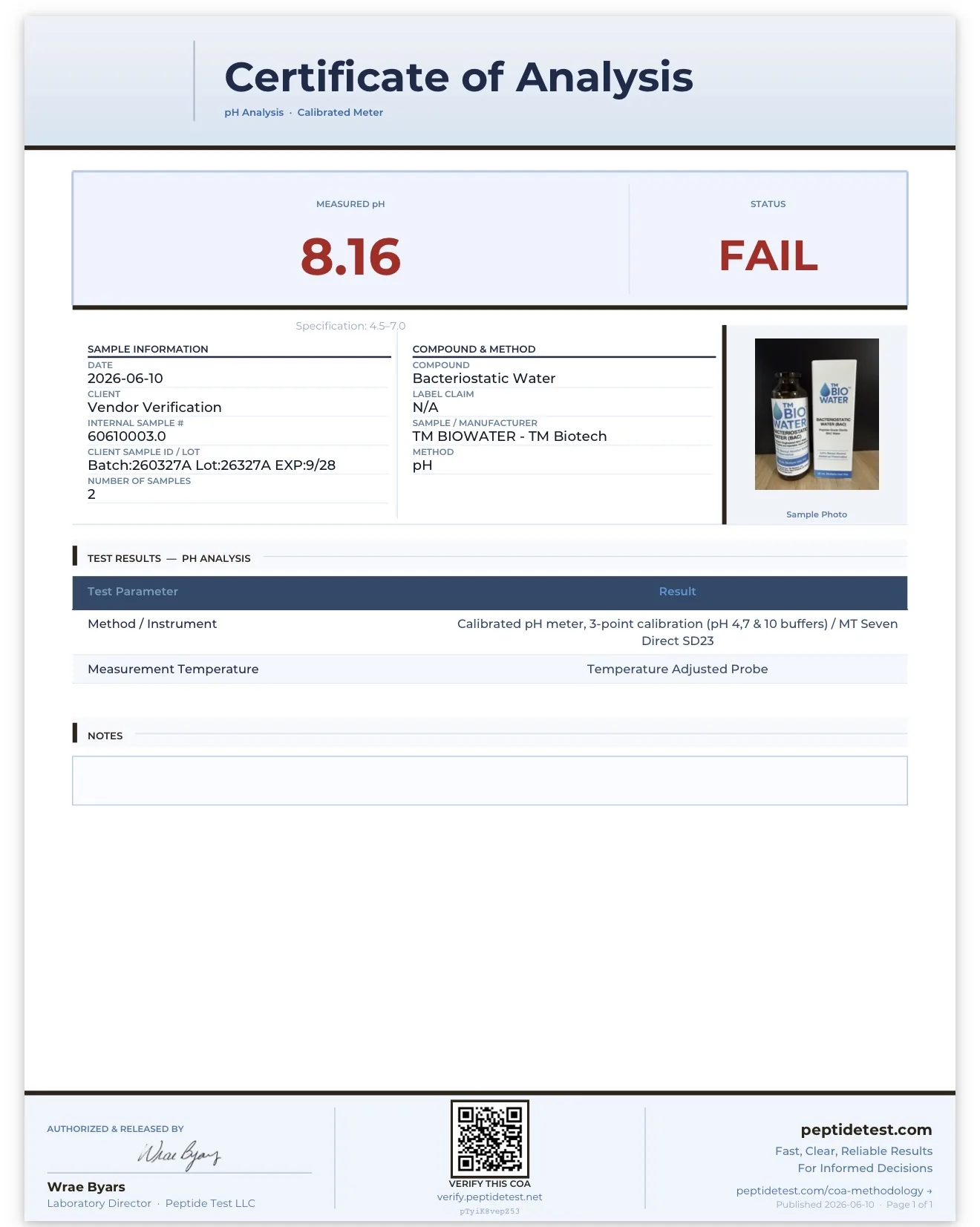
Taken together, the independent testing identified failures in three separate areas:
Sterility, Failed in both aerobic and anaerobic media.
Endotoxins, Reported at 4.11 EU/mg, exceeding the stated specification.
pH, Measured at 8.16 against a stated specification range of 4.5 to 7.0.
In light of these independent results, the GMP claims become increasingly difficult to reconcile.
A product marketed as being produced under GMP processes should have robust controls for sterility, endotoxins, pH, documentation, batch release and quality assurance. Yet the available evidence shows an altered COA controversy, a later sterility failure, an elevated endotoxin result and a pH failure.
That doesn’t prove the company has no quality system at all, but it does make the broader marketing language, especially claims around GMP processes, strict quality controls and documented batch release, highly questionable.
Comments