
Most people imagine online communities as messy but essentially organic. Someone posts, someone replies, arguments happen, reputations form, and over time a rough consensus emerges.
But in grey market communities, that is often not what is happening at all.
What looks like open discussion is frequently shaped behind the scenes by moderation tools, word filters, selective bans, deleted links, and the underhand replacement of names with loaded labels. The result is that readers think they are watching consensus form naturally, when in reality they may be seeing a curated version of the conversation.
This matters because in the grey market, information is everything. Most participants operate in spaces where trust is fragile, vendors are semi anonymous, accusations spread quickly, and there is no official regulator stepping in to separate fact from fiction.
In that kind of environment, whoever controls the narrative often controls the outcome.
And sometimes that control is subtle enough that most readers never notice it happening.
When a Rumour Appears Fully Formed
A recent example made that especially clear to me.
Someone joined my server and asked a simple question:
> “Isn’t PepChat a data-mining site?”
It was a strange thing to hear stated so casually, as if it were already established fact.
Serious too.
PepChat has existed since mid-2024. We are now in March 2026, and during that entire time there have been no documented reports, investigations, or technical evidence showing that PepChat engages in data mining.
There have been no reported cases of private DMs being read, and no known security breaches.
That is more than can be said for Discord, which has experienced multiple breaches over the years, some quite serious. Yet discord links are allowed to be posted in GLP1Forum
So where did the claim come from?
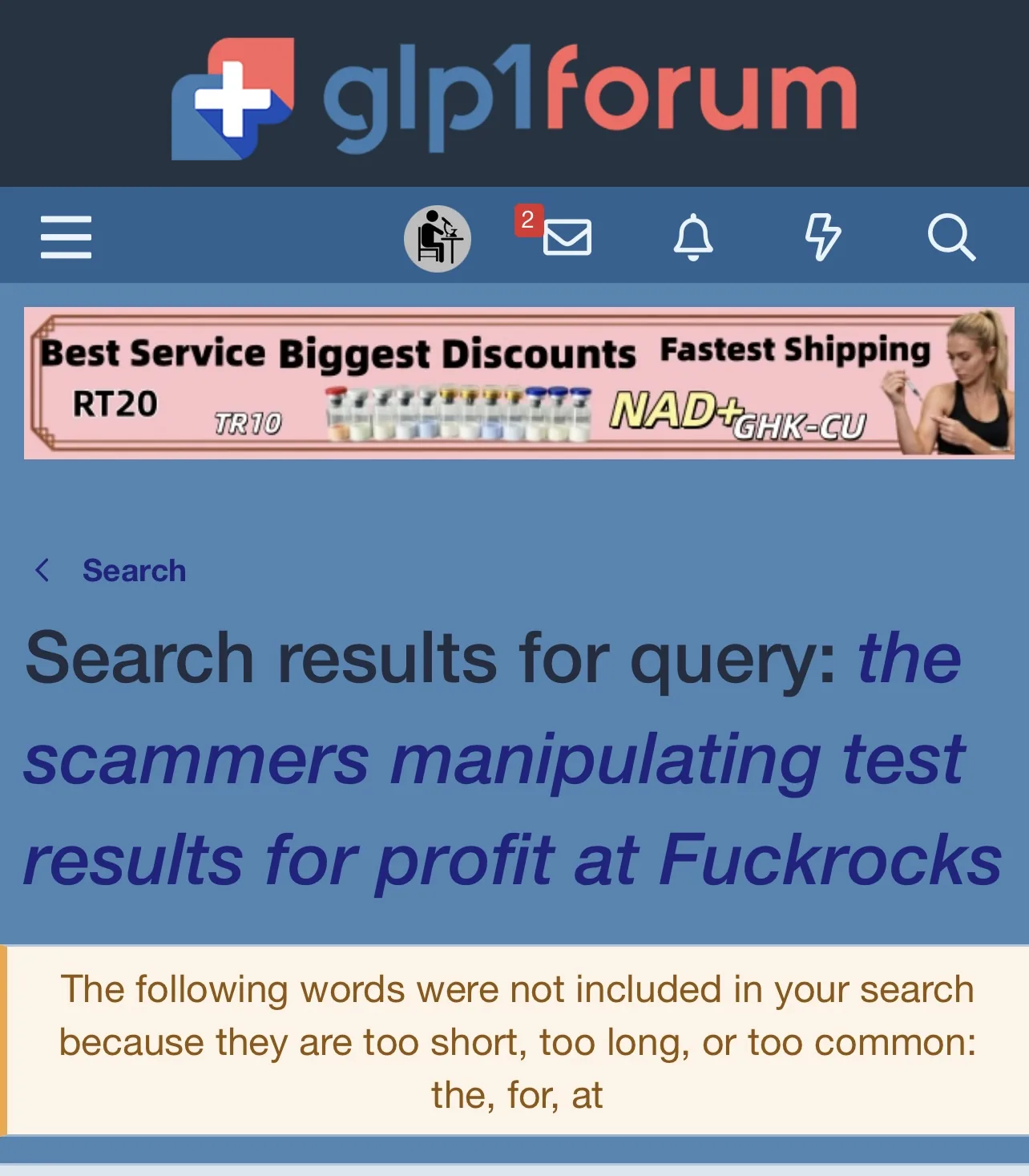
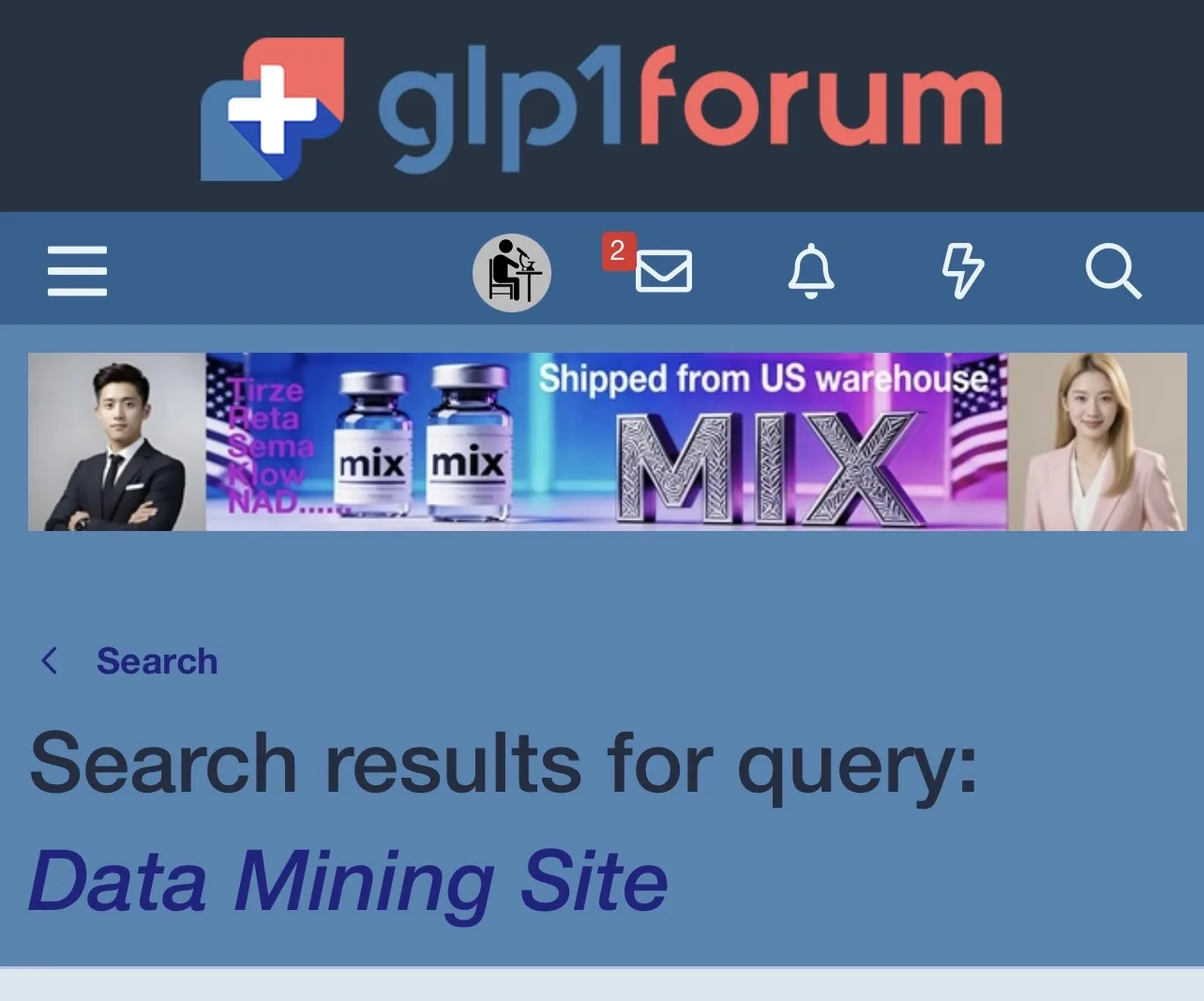
When the word PepChat is typed into the search bar on GLP1Forum, the result shown is:
> “Data Mining Site”
The platform name disappears. The accusation remains.
And the substitution does not stop there.
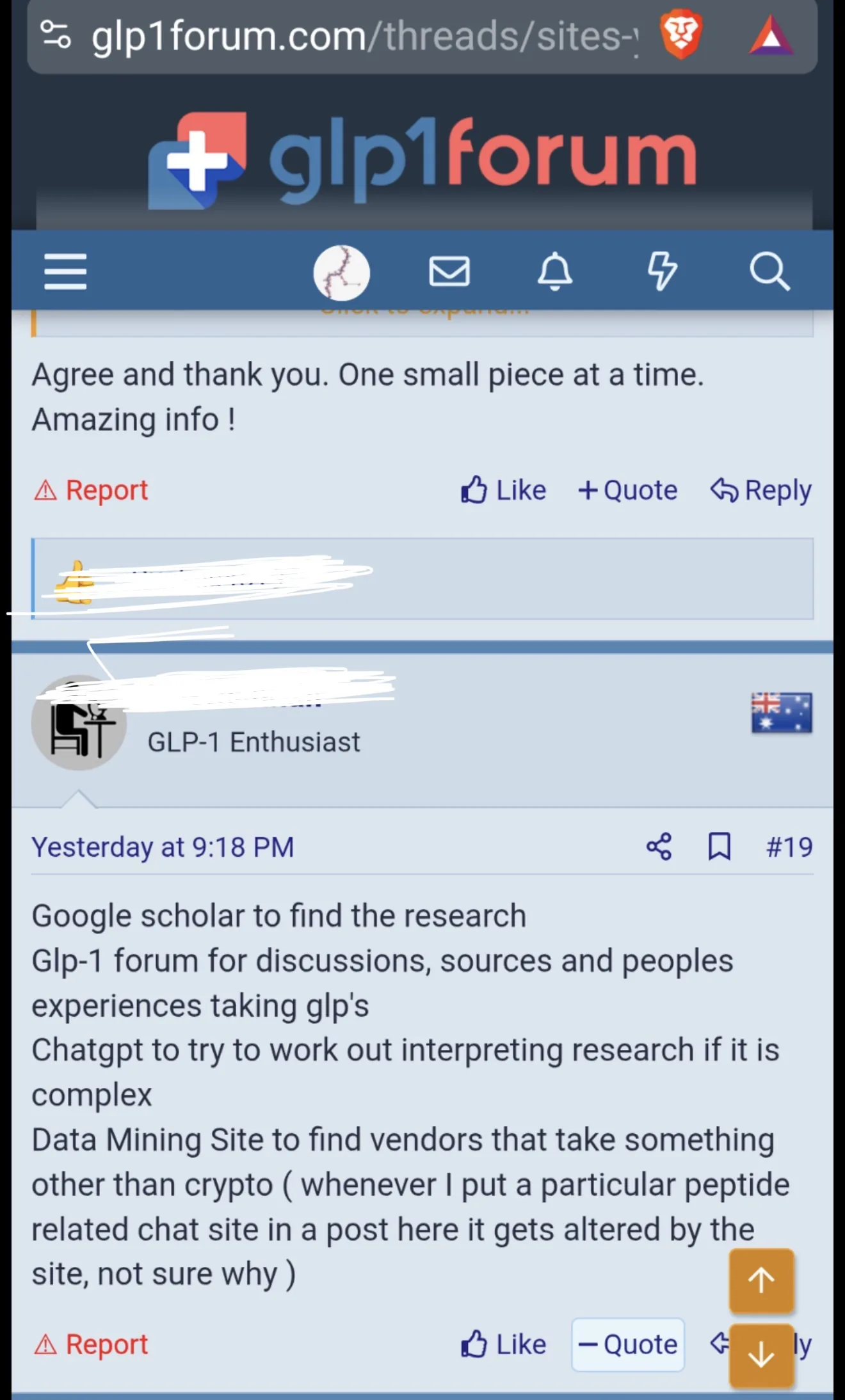
When vendors post links to their communities, PepChat links are automatically replaced with the phrase:
> “Data Mining Site”
This is not community consensus.
It is not a debate.
It is a moderation decision embedded directly into the forum’s software.
The Backstory: Platform Rivalries
To understand how the “data mining site” label began circulating, it helps to look at the history between the communities involved.
The owner and admin of GLP1Forum have developed a personal hostility toward the owner of PepChat.
In one instance, a user who later became a moderator on GLP1Forum had previously been banned from PepChat after participating in a raid on Uther’s server in his early days.
That same user later “begged” the PepChat owner to allow him back onto the platform.
The hostility did not stop there.
At one point I was contacted by someone who said they had been banned from GLP1Forum after posting an invite to my server in the Nexaph thread and telling people I had a good interview with Cain (Nexaph). That post was also deleted.
According to the same account, when they later mentioned my server on Qualligators, saying I had strong vendor interviews and would post an invite if an administrator approved, it resulted in another ban there as well.
Whether every moderation decision can be independently verified is not the point. The broader pattern is.
These kinds of conflicts are common in tightly connected online ecosystems. Forums, Discord servers, and chat platforms compete for users, credibility, and influence. When disagreements between moderators or community leaders escalate, those tensions often bleed into the narratives that circulate about rival spaces.
Once that happens, technical claims and personal disputes become difficult to separate.
What begins as a disagreement between communities can gradually evolve into a reputation that follows a platform wherever it is mentioned.
In environments where information spreads through screenshots, forum posts, and word of mouth, those reputations can become surprisingly durable.
When Names Get Rewritten
The same pattern appears elsewhere on GLP1Forum.
In one thread, a user attempting to refer to me found that the forum had automatically replaced my name with the phrase:
> “some lady”
They did not understand why it appeared that way and explained that my name had to be written differently to bypass the filter.
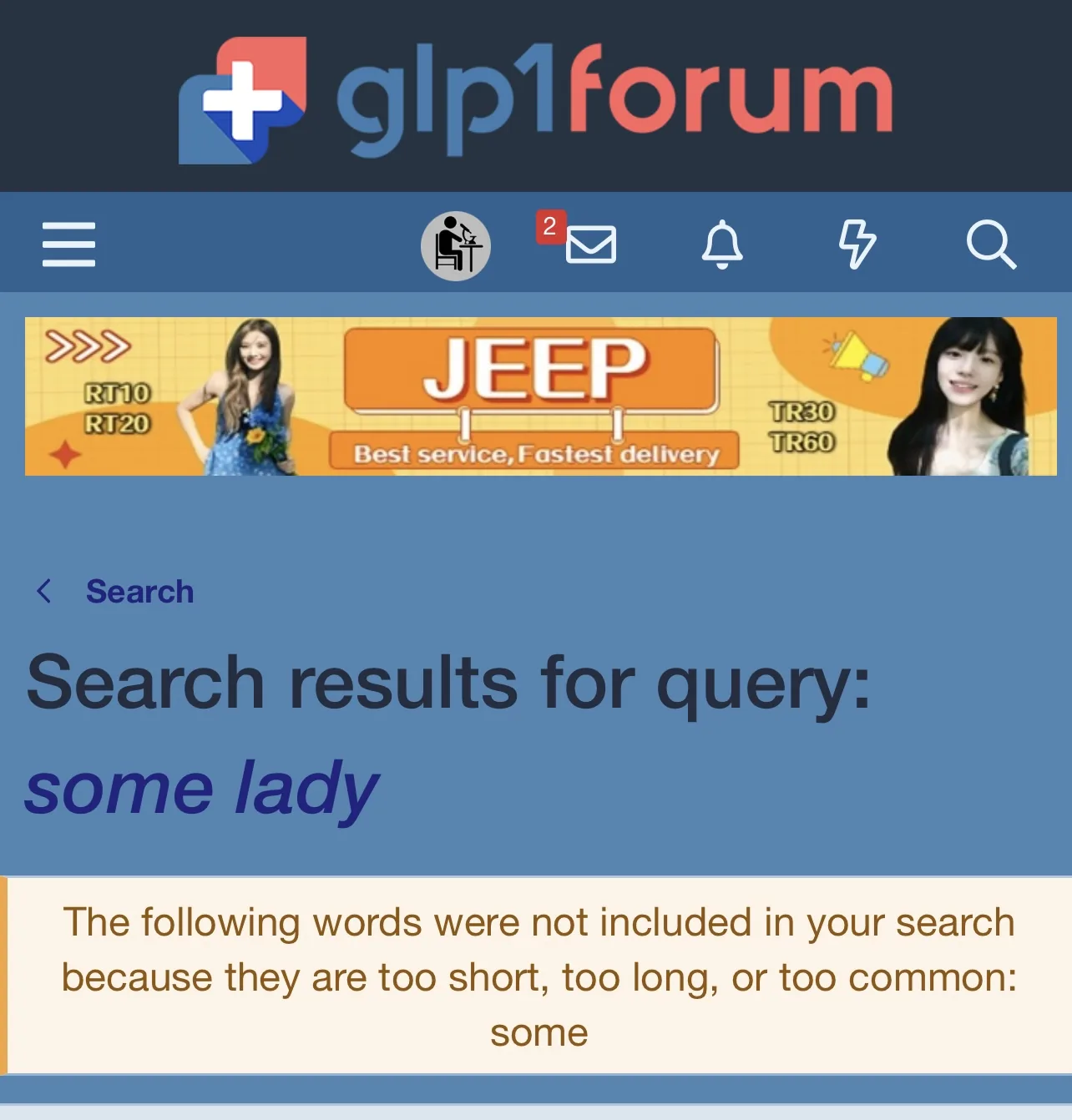
Searching my name on the forum produces the phrase “some lady.”
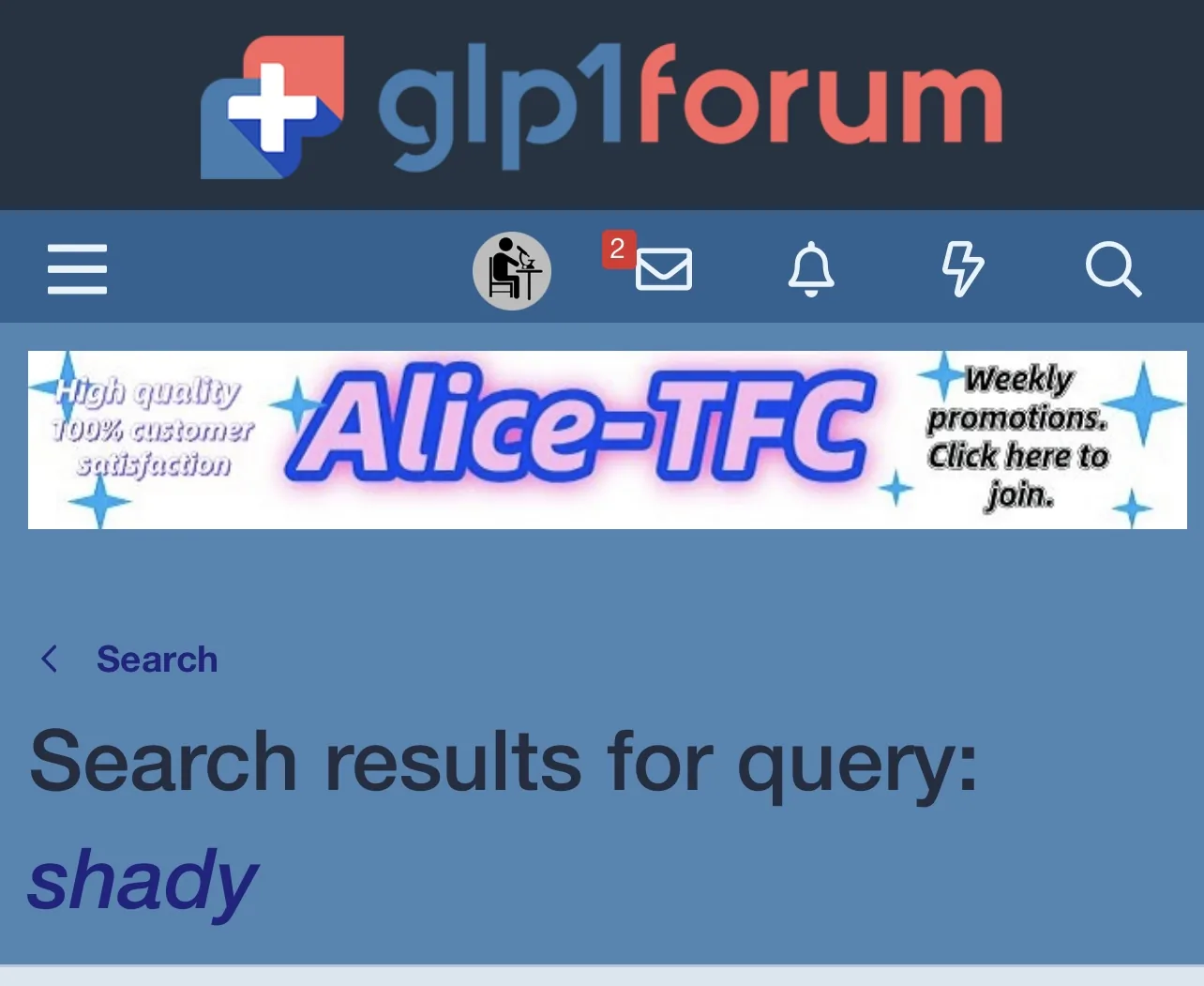
Searching my server name, K-Hole, produces the word “shady.”
I will leave readers to decide for themselves whether my server deserves to be labelled “shady” by GLP1Forum.
On my own server I do nothing of the sort. Members are free to mention any other community or forum and discuss them however they wish, even when I disagree with what is being said.
Again, this is not ordinary discussion.
It is the platform rewriting the language of the discussion itself.
The Technical Claim
The accusation that PepChat is a “data-mining site” is also difficult to reconcile with how the platform is built.
PepChat runs on Revolt, an open source chat platform. Because the underlying software is open source, anyone with the technical ability can inspect the code.
That makes it significantly harder for hidden surveillance features to exist without being discovered.
Open source software does not automatically guarantee perfect privacy, but it does make secret data collection mechanisms far easier to detect.
Which makes the continued repetition of the “data mining site” label even more puzzling.
The Doxxing Dispute
The history between these communities also includes a major dispute involving admin access to user data on GLP1Forum.
In one incident, an admin used privileged access to account login information to argue that several accounts were operated by the same individual. Screenshots circulating at the time showed a list of accounts with repeated logins from the same location.
The admin later acknowledged that admin could see every IP address used on the forum, describing this as a normal moderation tool.
The controversy began when that information was used publicly in an argument with a vendor operating under the name Cain (Nexaph). According to screenshots from the discussion, the admin accused him of operating multiple accounts from the same location and used that information to challenge his claims about being a Chinese manufacturer.
Critics argued that using staff only login data in a public dispute crossed a privacy line.
Others argued that it did not constitute full doxxing because IP addresses were blurred and no home address or personal identity details were published.
Even among participants at the time, the situation was debated in those exact terms.
One user summarised the concern this way:
“A person used a privileged position to reveal private information… then others started slipping real names into the chat.”
Another moderator later commented that they were trying to determine whether the incident constituted doxxing, even if the person involved had misrepresented himself.
In other words, the argument was never about whether admin access existed. That was openly acknowledged. The argument was about whether using that access in a public conflict was appropriate.
Privacy for Us, Suspicion for Them
What makes the situation particularly notable is that GLP1Forum’s own rules state:
“NO DOXXING. Revealing any kind of personal information about anyone (member or otherwise) will not be tolerated.”
The rules also emphasize OPSEC and the protection of personally identifiable information.
On paper, the principle is clear.
Yet the same forum has repeatedly labelled PepChat a “Data Mining Site” through its own word filters and post formatting, despite the absence of any documented reports, technical investigations, or evidence that PepChat engages in data mining.
That is what makes the contradiction so striking: a forum that publicly declares zero tolerance for doxxing and presents itself as privacy conscious is also willing to circulate an unproven privacy accusation against a rival platform, even as its own history includes disputes over the use of staff only access to user data.
By contrast, I am not aware of any comparable public controversy involving PepChat admins exposing user information or using privileged IP or login data in that way.
In other words, privacy appears to be treated as a principle internally, and as a narrative weapon externally.
The Larger Problem
In grey market communities, narrative control rarely looks dramatic.
It usually looks administrative.
A name gets filtered.
A term gets replaced.
A link disappears.
A thread gets locked.
A user gets banned for “shilling,” “drama,” or “off-topic promotion.”
Over time those small interventions shape what the community sees, and what it never gets to see.
That is how reputations are built and destroyed.
Not always through evidence.
Often through architecture.
A forum does not need to publish a formal accusation if it can simply ensure that whenever a name appears, it arrives attached to a warning label.
Readers come away believing they reached their own conclusions.
In reality, the range of visible conclusions may have been narrowed for them in advance.
This is not unique to GLP1Forum.
Other grey market communities do similar things. STG auto removes certain vendor names and suppresses discussion of controversial figures, myself included. Some also heavily moderate mentions of rival servers or forums.
The methods vary.
But the principle is the same.
Control the language, and you influence the story.
When Rumour Becomes Infrastructure
This is one of the defining problems of grey market communities.
People think they are observing raw opinion when they may actually be consuming moderated narrative packaged as consensus.
That does not mean every filtered term is malicious.
It does mean readers should be aware of how much power sits behind the scenes.
Because once a label becomes embedded in the architecture of a platform, it no longer spreads like gossip.
It spreads like part of the platform itself.
And platforms are much harder to challenge.
The problem is not that communities have opinions.
The problem is when those opinions are embedded into the architecture of the discussion and then mistaken for facts.
First the label changes. Then the reputation does.

Comments