
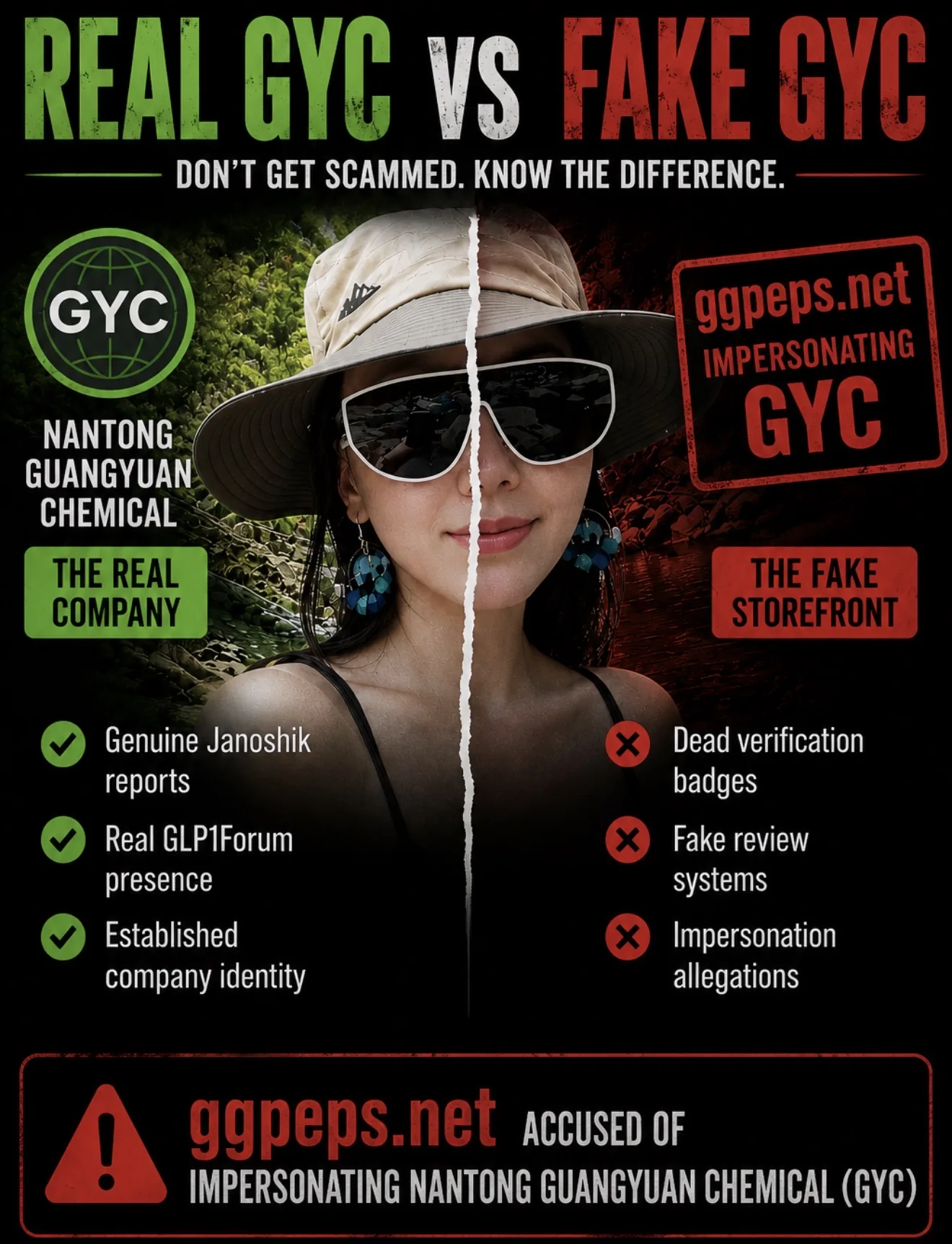
The GYC impersonation situation started with something deceptively simple, confused customers messaging the real company about orders they never received.
The website ggpeps.net is operating using GYC branding, linking to genuine Janoshik reports, referencing active GLP1Forum threads, and presenting itself as a direct website for Nantong Guangyuan Chemical.
The key distinction is that ggpeps.com is the legitimate GYC-linked site, while ggpeps.net is the disputed impersonation site. At the same time, the “real” GYC was receiving emails containing unfamiliar order numbers connected to purchases they allegedly had nothing to do with. That was the first sign this was not just another obvious fake peptide site.
The website itself looks unusually convincing. It’s professionally built, hosted through Vercel, and filled with modern ecommerce trust signals such as “live verified” badges, UK warehouse claims, secure card checkout, Telegram support, Trust Pilot customer reviews and even direct links to authentic Janoshik verification pages.
Some parts are clearly real, while other parts appear fake. Some verification systems work, while others don’t.
And this is where the story becomes far more complicated than a normal scam warning.
Vercel as the Hosting Platform
Having Vercel as the hosting platform is important because it explains how a modern impersonation storefront like ggpeps.net could appear polished, professional, and difficult to remove while still operating in a legally grey and highly disputed space.
Vercel is a legitimate cloud hosting platform used by startups, ecommerce companies, and developers to deploy modern websites quickly. The platform itself isn’t suspicious, in fact many real businesses rely on it, but the same features that make Vercel attractive for legitimate companies, also make it useful for impersonation operations and cloned storefronts. It offers fast deployment, easy domain switching, global hosting, automatic SSL certificates, modern frontend support and rapid redeployment if a site is reported or removed.
Although when ggpeps was reported to Vercel as being a GYC impersonator, they initially responded stating that the reported content was “no longer available,” suggesting some action had been taken following the abuse report. The website is still clearly up, which leads to further confusion about whether the site had simply been redeployed, temporarily hidden, or moved between frontend instances.
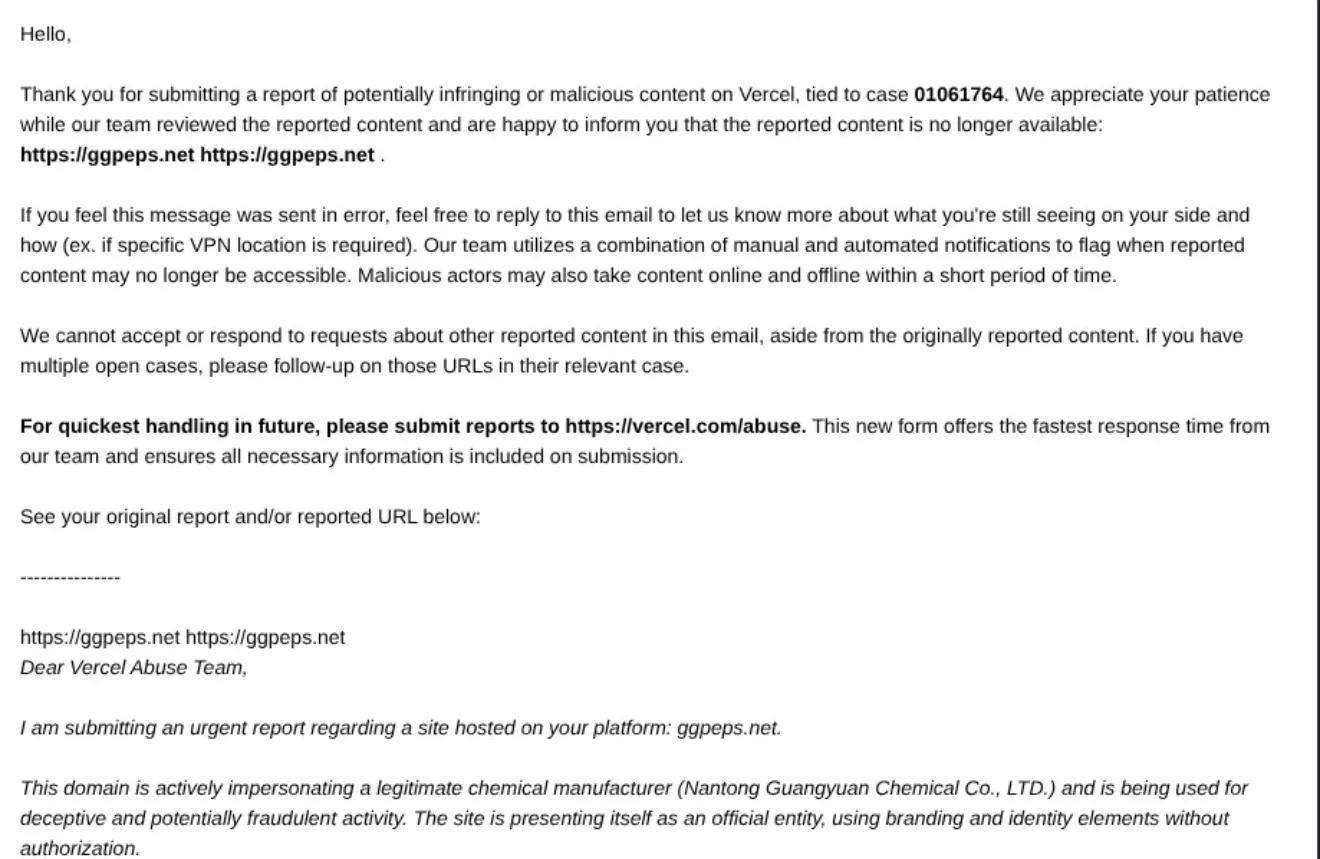
Modern frontend hosting platforms don’t operate like traditional web hosting in the early internet era, sites can disappear and reappear rapidly, often faster than abuse systems can track them consistently.
The presence of an active Telegram account in the name of Lisa with real Lisa’s profile picture, working checkout systems, genuine Janoshik verification links and live GLP1Forum connections, produces a strange hybrid containing a technically sophisticated website with real infrastructure and real testing links, but surrounded by growing allegations of impersonation, disputed affiliation, and misleading trust systems.
The Verification Problem
The verification section is where the whole thing starts to unravel. On the surface, ggpeps.net makes a big show of trust. It displays Janoshik testing, PeptideMeter verification, CompoundTalk verification, buyer protection, lab reports, customer reviews, and “live verified” style badges.
But when you actually click through, the picture changes. The Janoshik links appear to lead to genuine Janoshik verification pages connected to real GYC-related reports. That part is important, because it means the site isn’t relying entirely on fake paperwork. But the other verification systems tell a different story.
The PeptideMeter and CompoundTalk links lead to 404 pages. The “inside our lab” section does not function at all. The Trust Pilot customer reviews appear to be self-hosted rather than pulled from a real Trustpilot profile. The in-house purity, sterility, and endotoxin reports use branded GYC-style templates rather than clearly traceable third-party verification. This is the central trick, the site mixes real trust signals with fake or broken ones.
A buyer sees genuine Janoshik reports and assumes the rest of the site must also be legitimate. But a real Janoshik report only proves that a sample was tested. It doesn’t prove that ggpeps.net is an official GYC storefront, that the products being sold match those reports, or that the person operating the website is authorised to use the GYC name.
The strongest red flag isn’t that everything is fake, it’s that everything is blended together and that’s much harder for buyers to spot than a basic scam site.
The Catalogue Problem
One reason the website looks believable to experienced peptide buyers is the sheer scale and structure of the catalogue itself. This isn’t a basic fake storefront selling only a handful of GLP-1 products with copied stock photos. ggpeps.net presents a large, unusually detailed product catalogue covering everything from peptides to bioregulators to HGH variants to SARMs, injectable oils, oral tablets, raws, precursor chemicals and obscure research compounds rarely seen on low-effort scam sites.
The pricing also sits in a believable “China-direct” range, cheap enough to attract buyers, but not so absurdly cheap that the storefront immediately looks fake. For experienced buyers, this matters psychologically as most amateur scam sites don’t structure catalogues professionally, organise products by CAS-style listings, maintain coherent large-scale pricing system or present manufacturing-style inventories.
The inclusion of niche products such as Bronchogen, Cartalax, Chonluten, Vesugen, Vilon, Pancragen and even piperidone-related precursor chemistry creates the impression of access to a broader chemical supply chain rather than a simple retail peptide scam. This may actually tempt some buyers to make a purchase since these products are generally hard to source.
At the same time however, the catalogue also introduces more inconsistencies. The website heavily promotes peptide pens and retail GLP-1 kit systems, which are not sold by the real GYC. This becomes another example of the same recurring pattern seen throughout the site, real enough to appear convincing, but inconsistent enough to raise doubts once examined closely.
The GLP1Forum Layer
The GLP1Forum connections add another layer of legitimacy to the storefront. Unlike most obvious scam sites, ggpeps.net doesn’t exist in isolation. The site links directly to active GYC-associated GLP1Forum threads containing visible posting history and ongoing community engagement. For buyers, this matters, as a fake site with no outside footprint is easy to dismiss, but a storefront connected to real community spaces, vendor discussion, and genuine Janoshik verification pages feels substantially more credible.
But this is also where the impersonation problem becomes more difficult to untangle. A real forum presence doesn’t automatically prove the storefront itself is officially operated by GYC. It only demonstrates how effectively real infrastructure, real testing history, and disputed branding were blended together under the same identity.
The Trust pilot Contradiction
At first glance of the review section displayed directly on ggpeps.net, it looks like a self-hosted Trust pilot imitation. The interface uses “verified purchase” style labels and highly trust-optimised language focused on Janoshik purity, fast shipping, Telegram responsiveness and “manufacturer-direct” pricing. However, after manually checking Trust pilot itself, a real Trust pilot listing for “ggpeps” was discovered, and the reviews there paint a very different picture. Instead of polished five-star testimonials, the external reviews are dominated by scam accusations, phishing claims, non-delivery complaints, and warnings from users alleging they had paid for products that never arrived. Several reviews specifically accuse ggpeps.net of impersonating the real GYC operation, copying the “Lisa” identity, using genuine Janoshik reports to appear legitimate and linking buyers back to real GLP1Forum threads to reinforce credibility.
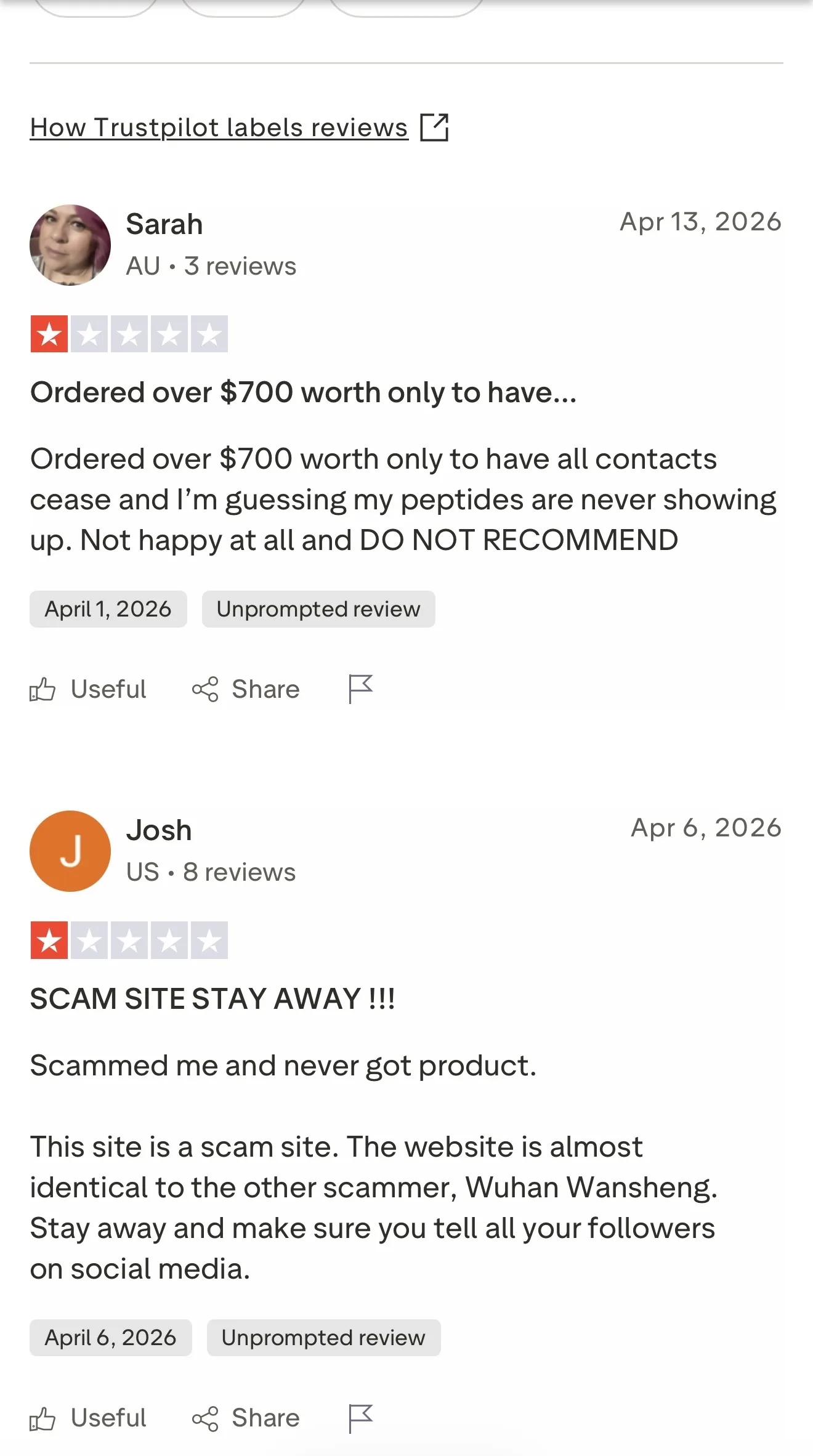
One reviewer even claimed:
“they even link you back to the GLP forums, where the real telegram is found. And the real COAs.”
That detail matters because it reinforces the central theme running throughout the entire situation, that the website doesn’t appear to invent everything from scratch. Instead, it appears to attach itself to real existing infrastructure, real reports, real community spaces, real vendor history and real identities, while allegedly operating independently under disputed branding.
The Payment System
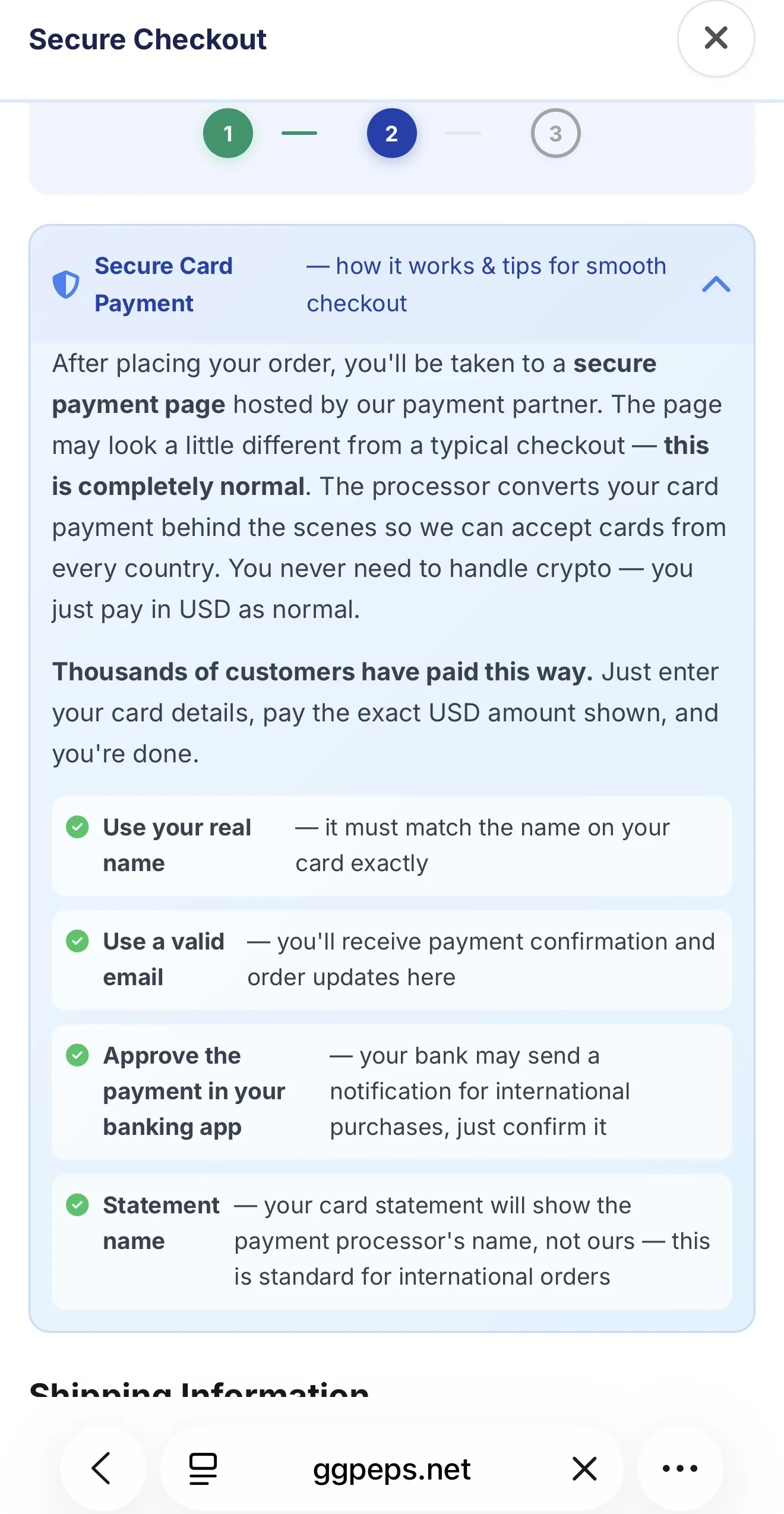
The payment system introduces another layer of ambiguity, ggpeps.net uses a polished consumer-style checkout supporting Visa, Mastercard, Apple Pay, Google Pay, Revolut, cryptocurrency and claimed UK and US warehouse fulfilment. But several details stand out immediately, the site warns users that
“The page may look a little different from a typical checkout, this is completely normal.”
It also states
“your statement will show the payment processor’s name, not ours”
and explains that:
“The processor converts your card payment behind the scenes.”
That wording strongly suggests the use of intermediary high-risk payment processors converting customer card payments into crypto or crypto-equivalent settlement before forwarding funds to the vendor.
In practice, buyers may believe they are paying normally by credit card while the vendor is still effectively receiving cryptocurrency behind the scenes.
That matters because these types of payment structures are common in industries rejected by mainstream processors, such as research chemicals, SARMs, offshore pharmacies, gambling and other high-risk grey-market sectors.
The system creates a smoother checkout experience for customers while simultaneously distancing the website itself from the underlying payment flow.
On its own this doesn’t automatically prove fraud, but combined with disputed branding, impersonation allegations, dead verification systems, fake-looking reviews and reports of non-delivered orders, the payment structure becomes another example of how the website blends polished e-commerce presentation with opaque grey-market infrastructure operating behind the scenes.
The Telegram “Lisa” Identity

The website also relies heavily on Telegram-based customer support, directing buyers toward an account operating under the name “Lisa”. This identity appears repeatedly throughout the site, inside customer reviews, during checkout, within support instructions and throughout FAQ sections.
Unlike some of the dead verification systems elsewhere on the storefront, the Telegram account itself appeared active and functional, adding another layer of perceived legitimacy.
Within the peptide grey market, that matters. Many buyers now associate active Telegram support with grey market vendors
Finnrick Freezes GYC
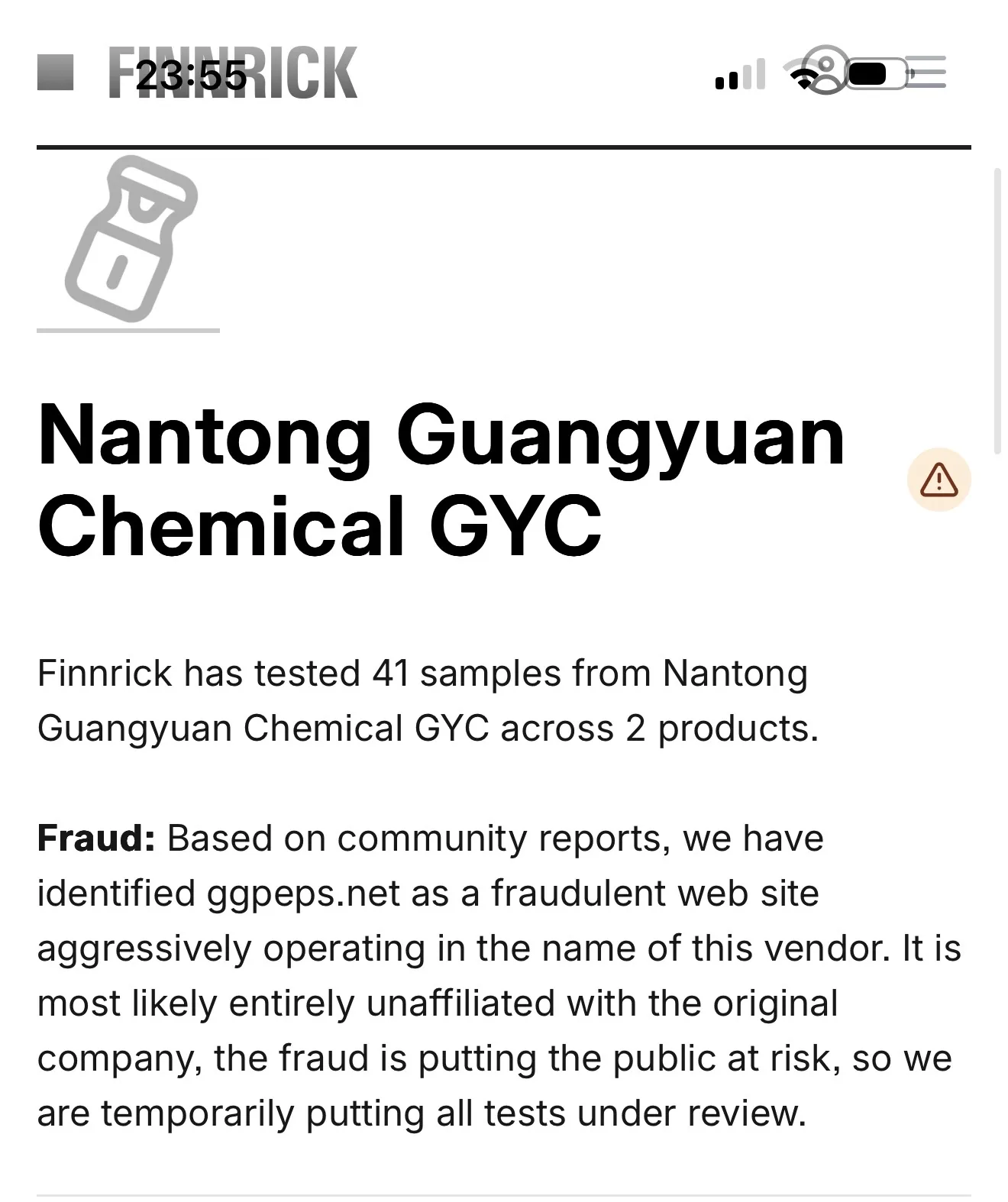
The situation became even more complicated once Finnrick intervened. Instead of isolating only the disputed ggpeps account, Finnrick effectively froze confidence across the entire GYC vendor identity. On Finnrick’s website it states;
“Based on community reports, we have identified ggpeps.net as a fraudulent web site aggressively operating in the name of this vendor.”
Finnrick then attached fraud warnings to the GYC profile, placed GYC-linked tests “under review” and temporarily retracted confidence around associated testing records.
That immediately created controversy as the historical tests are connected to genuine GYC products rather than directly to ggpeps.net itself, which doesn't actually send out any products as far as i’m aware. So the warning system effectively contaminated GYC’s entire profile all at once.
From Finnrick’s perspective, however, the reasoning becomes easier to understand. According to their statement, the combination of impersonation concerns, community scam reports, alleged non-shipment complaints, copied “PeptideMeter” branding, dead verification ecosystems and overlapping website identities, made it impossible to confidently determine who was actually operating under the GYC name.
From a liability perspective, freezing the entire identity was safer than trying to untangle official company channels vs the disputed branding claims individually.
Even Janoshik allegedly sent the fraudsters a cease and desist notice.
By this stage, the situation no longer resembles a simple fake website scam. Instead, it’s evolved into something much harder to untangle, a mixture of real tests, real infrastructure, disputed storefronts, cloned trust systems, reseller-style operations, active community identities, and overlapping branding all operating under the same GYC name.
The GYC impersonator site shows how much more sophisticated peptide impersonation operations have become.
This isn’t a low-effort fake website with broken English, stolen stock photos, and obviously fabricated lab reports and it’s probably why so many people were confused long before they realised something was wrong.

Comments