
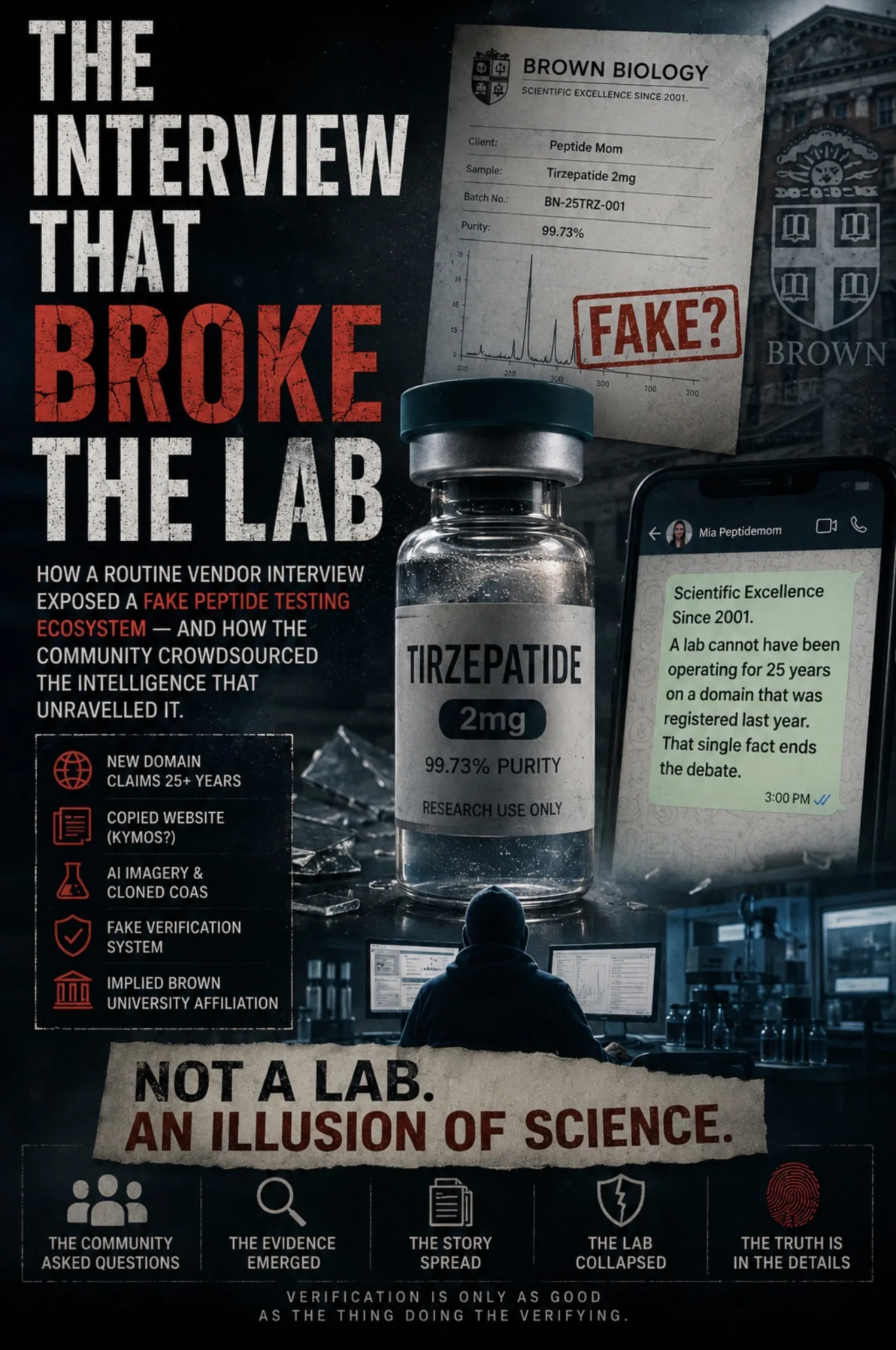
This is the story of how a routine vendor interview exposed what appears to be an entire scam ecosystem.
For all intents and purposes, there was nothing initially unusual about the interview itself. Kaylea, the rep’s answers were fairly standard for a China-based peptide supplier. A couple of things did catch my eye. She claimed to work with more than 50 companies, which is a lot more than most vendors usually state, and she was willing to offer alternative payment methods if crypto was a barrier, which seems a bit too flexible.
Beyond that, she appeared able to provide many of the normal verification materials required by Pepchat admin, stock photos, video holding handwritten company name and date and customer screenshot showing a successful delivery.
The biggest anomaly, however, was her use of Brown Biology for testing and this is what gave her away as a scammer.
She supplied multiple Brown Biology COAs, a lab I’ve never heard off before, but being in a rush to get the interview out ahead of my trip to Prague, I let that go. New labs occasionally appear in the grey market, especially when vendors are looking for faster turnaround times or cheaper analytical work.
But everything changed after the interview was published. Almost immediately, members of the community began questioning the Brown Biology COAs. What added to the confusion is that there is a real Brown University, which Brown Biology actually claim an affiliation with.
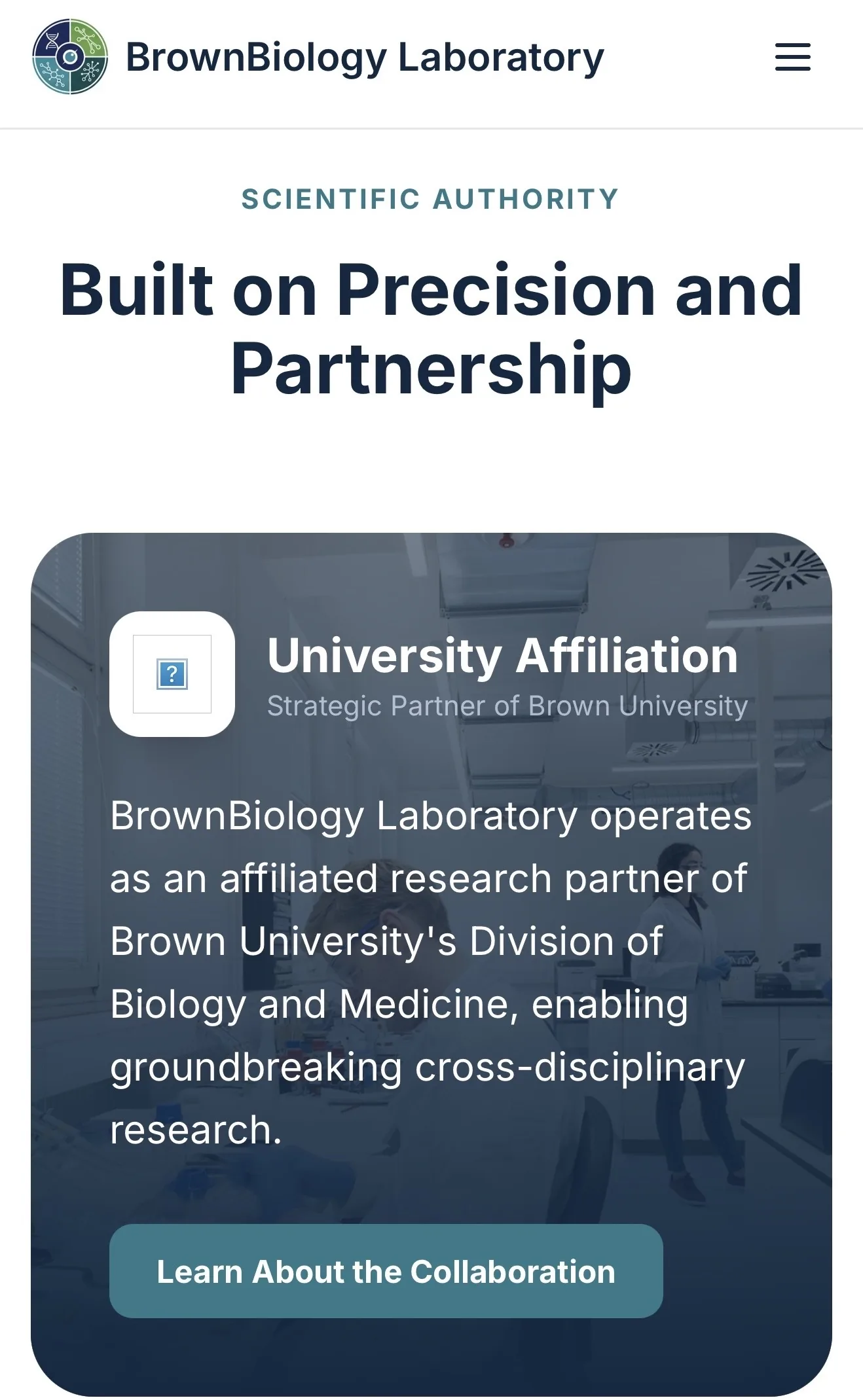
Community members began crowdsourcing intelligence across multiple platforms, checking domain registration data, tracing archived versions of the site, analysing QR verification systems, reviewing ISO accreditation claims, cross-referencing laboratory structures, and comparing Brown COAs side by side with genuine Janoshik and other labs COAs.
The allegation was now that Brown Biology itself may have been a fabricated laboratory identity, a year old registered domain, claiming decades of scientific history, a website structure copied from another legitimate analytical company, Kymos.com, cloned COAs, AI-generated vial images, implied Brown University affiliation, and a verification portal designed to make the reports appear independently authentic.
Although Brown Biology had already been outed as a scam lab by some people in another group, the interview itself became the mechanism that brought the entire operation into the public domain, so that the wider community could also benefit from this knowledge, rather than just a select few who seem to think they are a step above everyone else.
The Brown Biology COAs
The COAs immediately felt off to many people looking at them. Although at first glance they were trying very hard to look legitimate with task numbers, QR verification codes, chromatograms, mass spectra, purity figures and a dedicated verification portal, the deeper people looked, the stranger the reports became.
The reports looked overly templated and although the data in most of the COAs appears accurate, one of the Tirzepatide COAs shows a chromatogram and mass spectrum which don’t support the Tirzepatide claim.
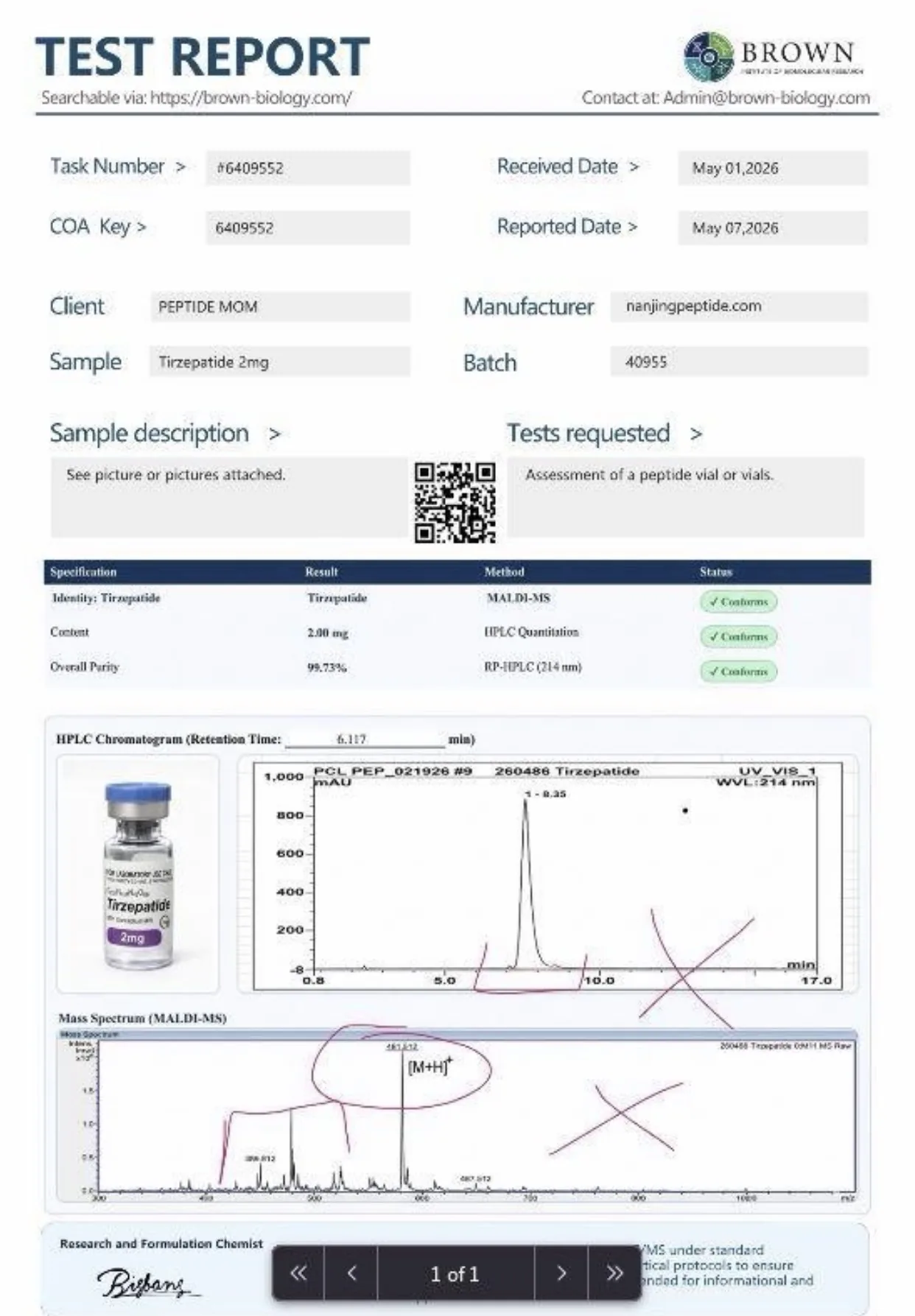
The vial images also looked AI-generated. Across multiple vials, the same visual tells kept appearing, malformed label geometry, impossible reflections, synthetic glass texture, repeated lighting patterns and the same strange rendering defects across supposedly different samples.
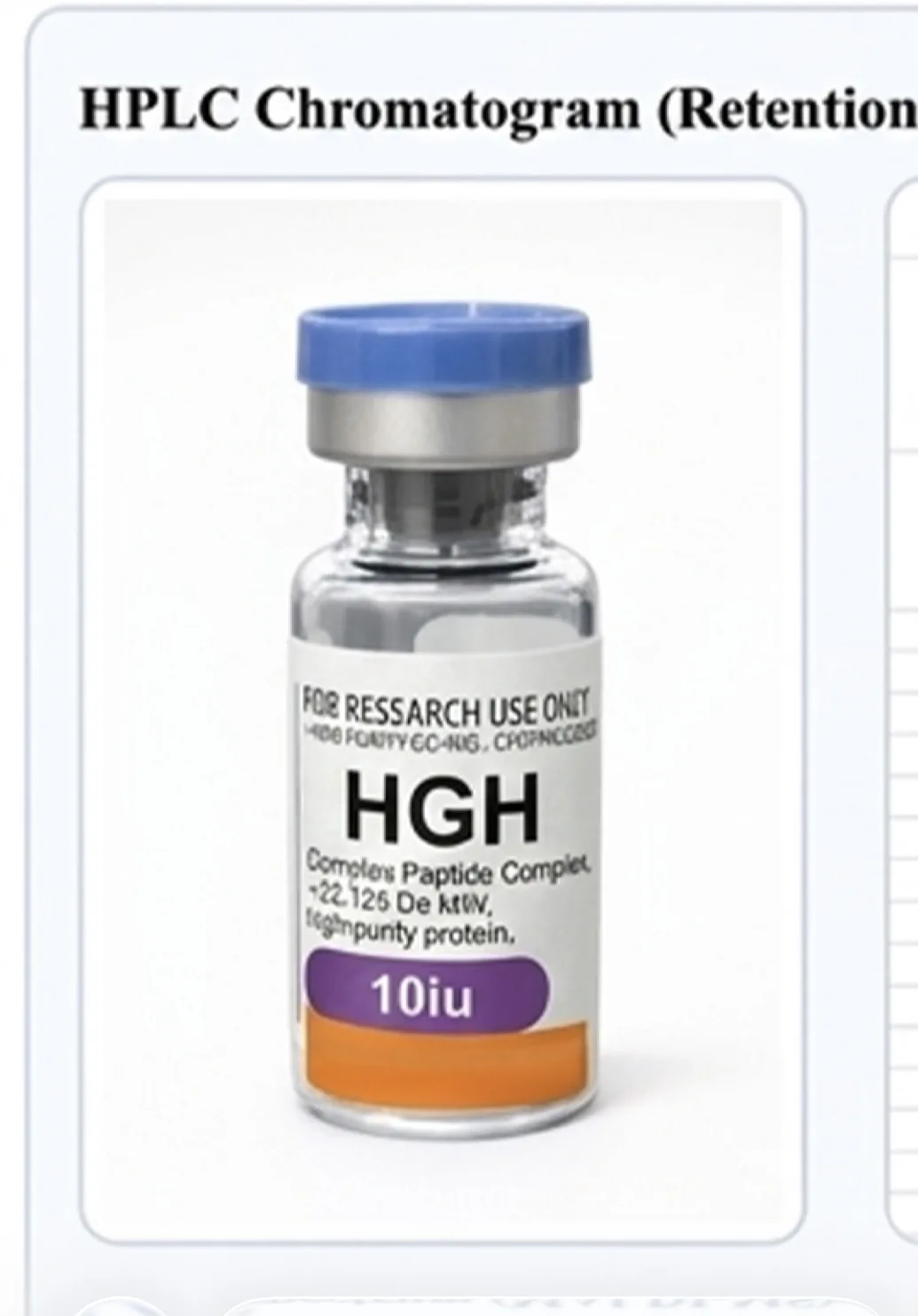
The labels were also a giveaway. They showed text that didn’t behave like real printed typography. “AI hieroglyphics” is used to describe tiny fragments of pseudo -text that visually resemble technical typography but collapse into unreadable character noise on zooming in.
The Brown Biology COAs didn’t just look suspicious in isolation, several contained structures, layouts and data patterns that matched reports from other labs. The Retatrutide report below is a good example of this as it appears to have been lifted straight from a Janoshik report.
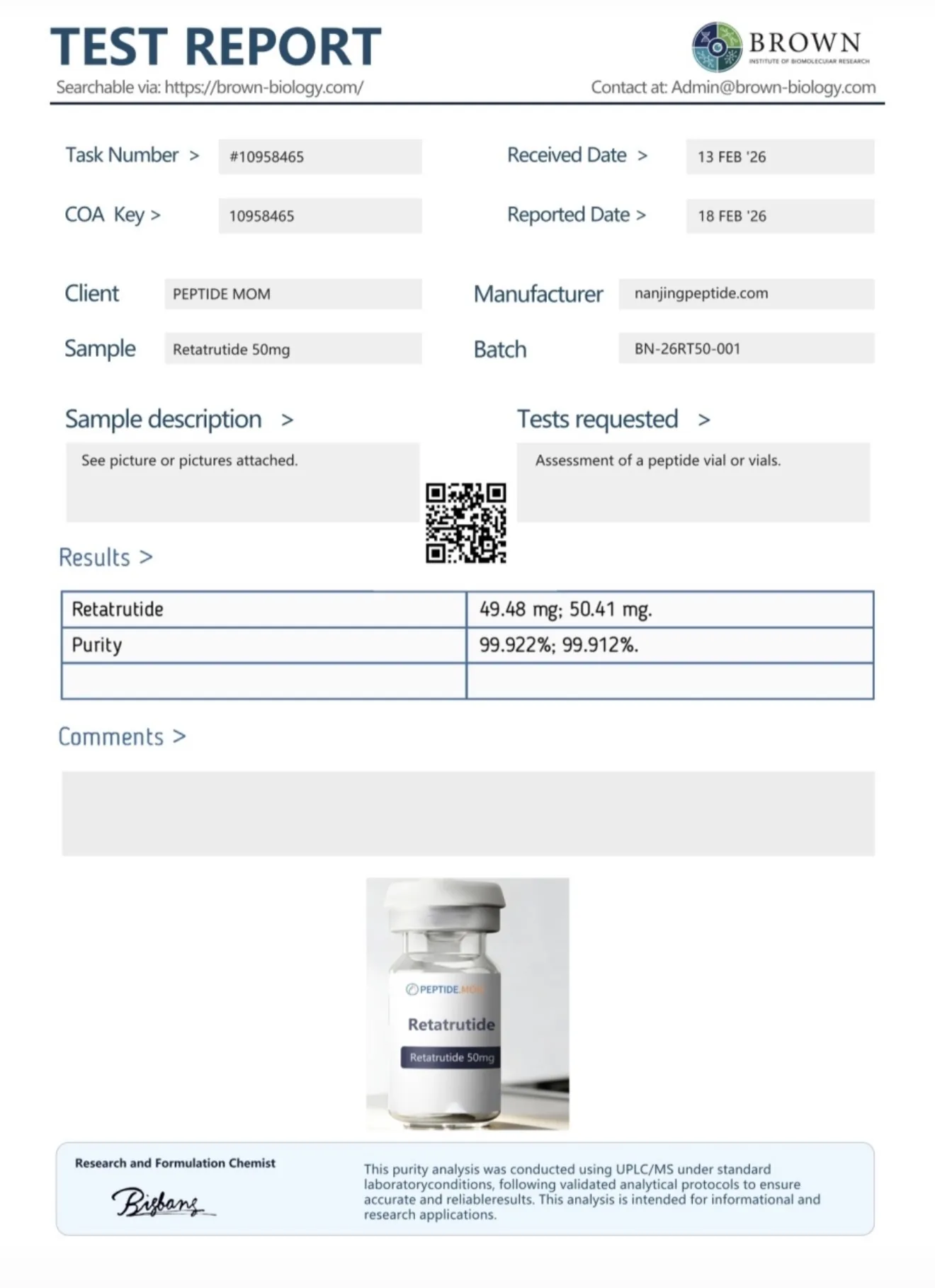
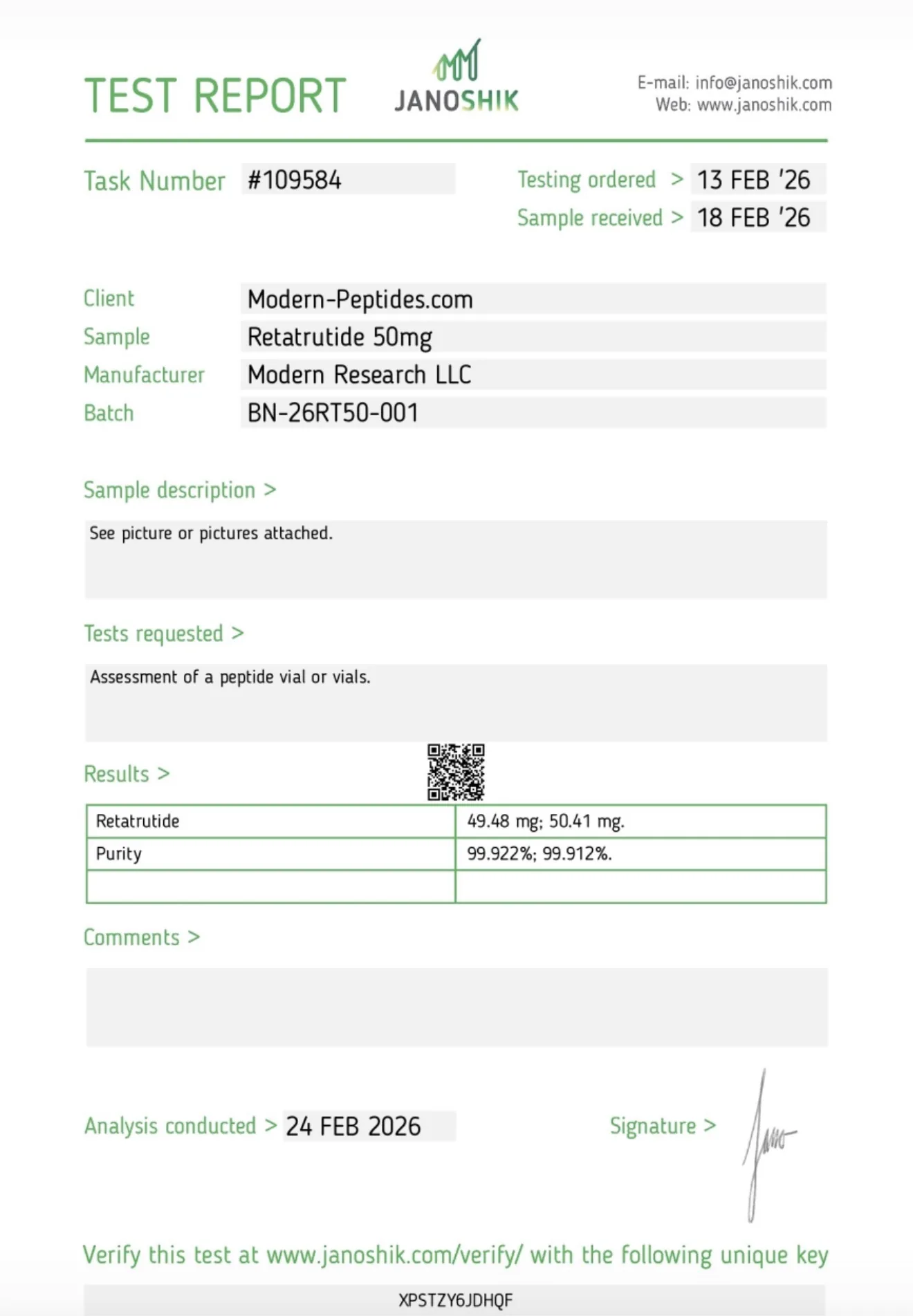
Other reports were copied from Clark-Turner scientific labs and Bioviridian.
This did not resemble a low-effort scam page thrown together overnight. It resembled a carefully constructed synthetic scientific identity built to survive superficial scrutiny.
The Brown Biology Website
One of Kaylea’s responses to the fake looking COAs was that they are verifiable through the Brown Biology website, which they are.
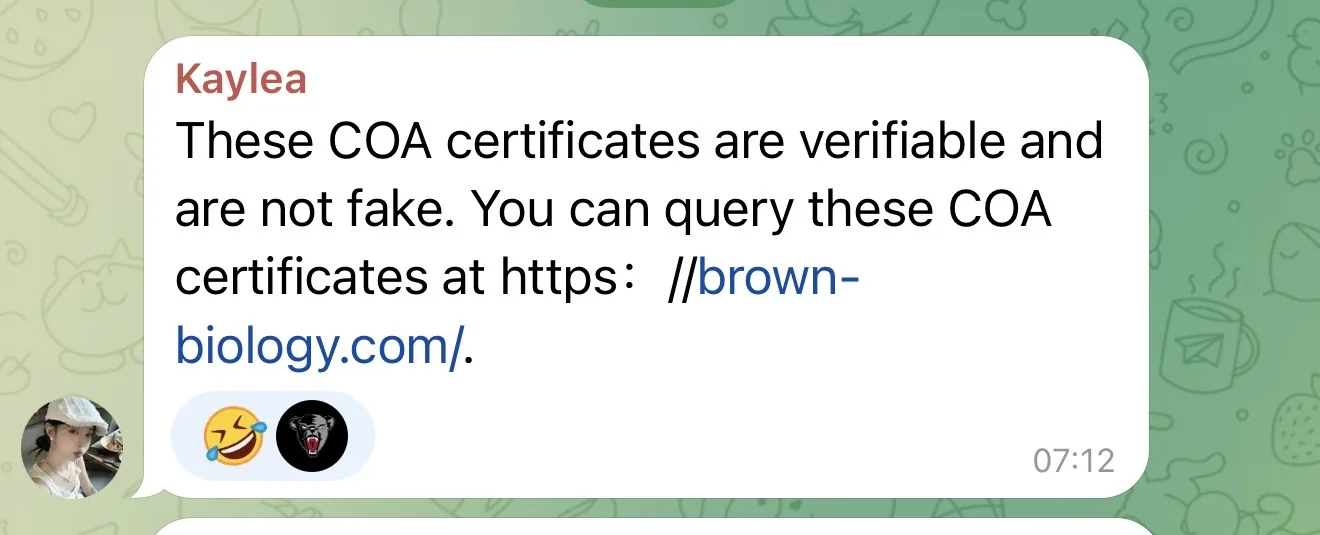
So while the QR code and searchable COA number created the appearance of authentication, they only proved that Brown Biology’s website recognised Brown Biology’s paperwork.
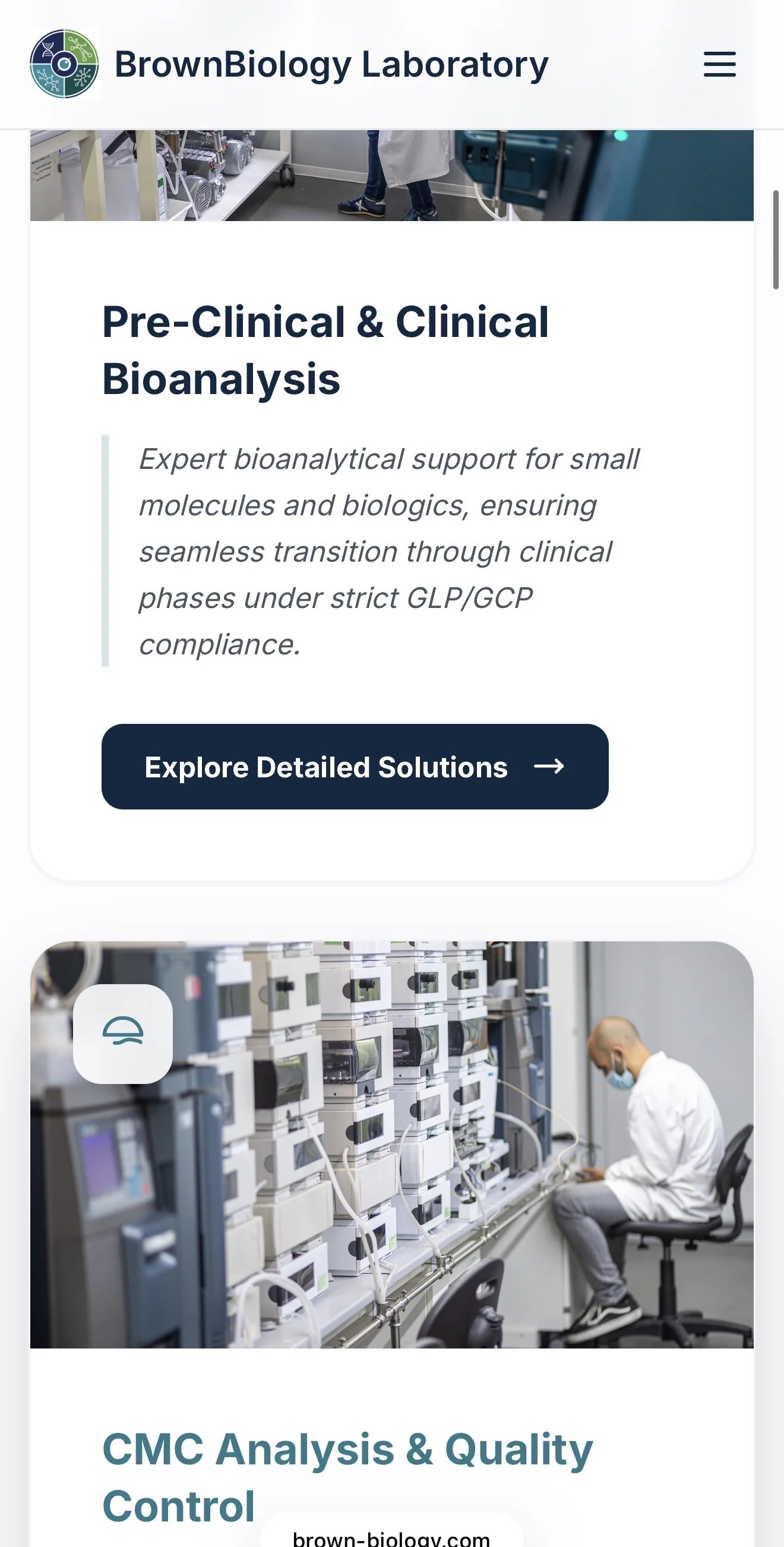
The website itself appears very similar to Kymos, a legitimate European CRO and analytical services company.
Entire sections appeared visually and structurally mirrored, the dropdown service architecture, the “Preclinical & Clinical” language, the CMC and Quality Control sections, the European facility listings, the “Find a location near you” layout and the overall CRO positioning and design flow. The resemblance went far beyond generic biotech website aesthetics. Even the wording rhythm, formatting hierarchy and navigation structure appeared unusually close.

The WHOIS Trail
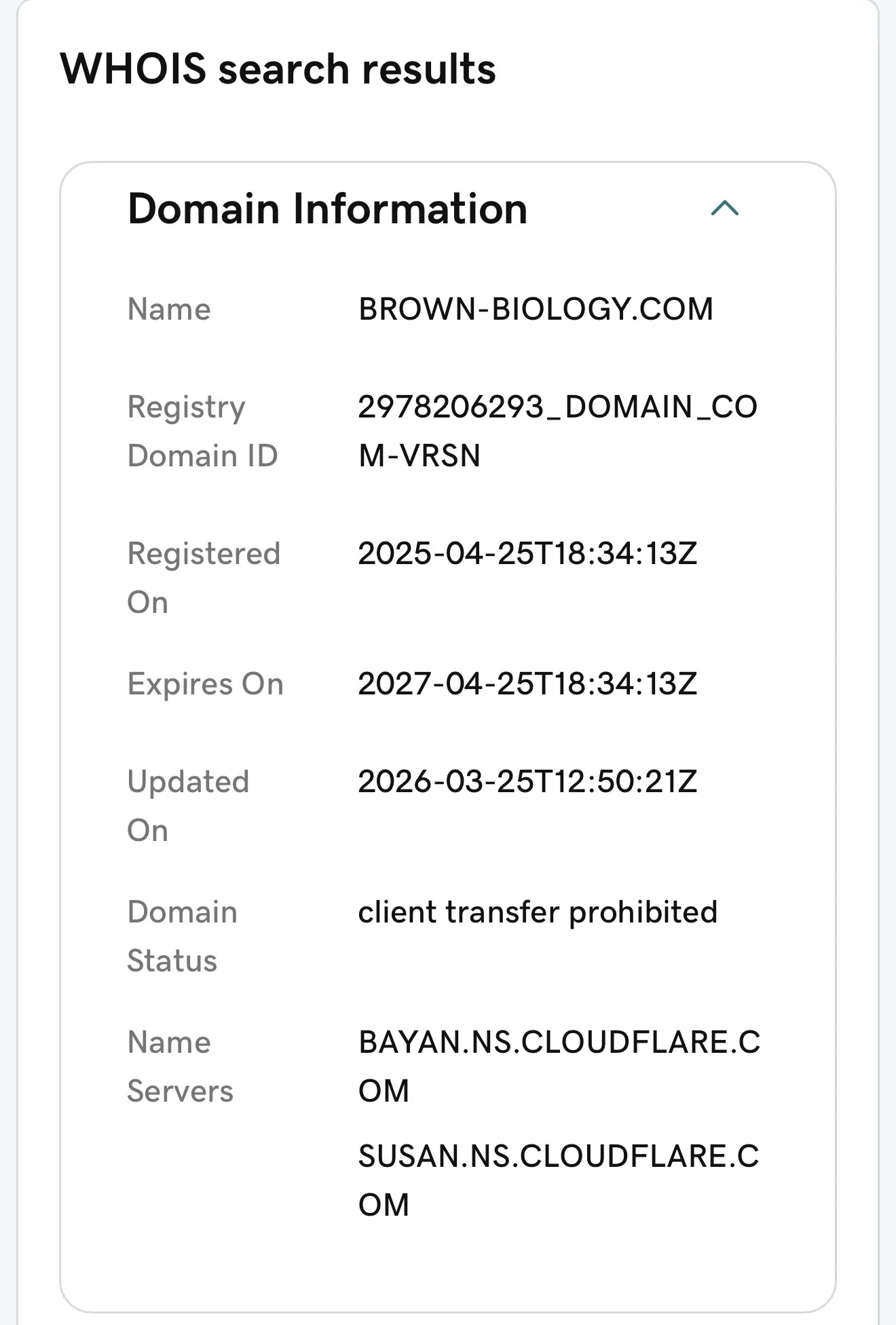
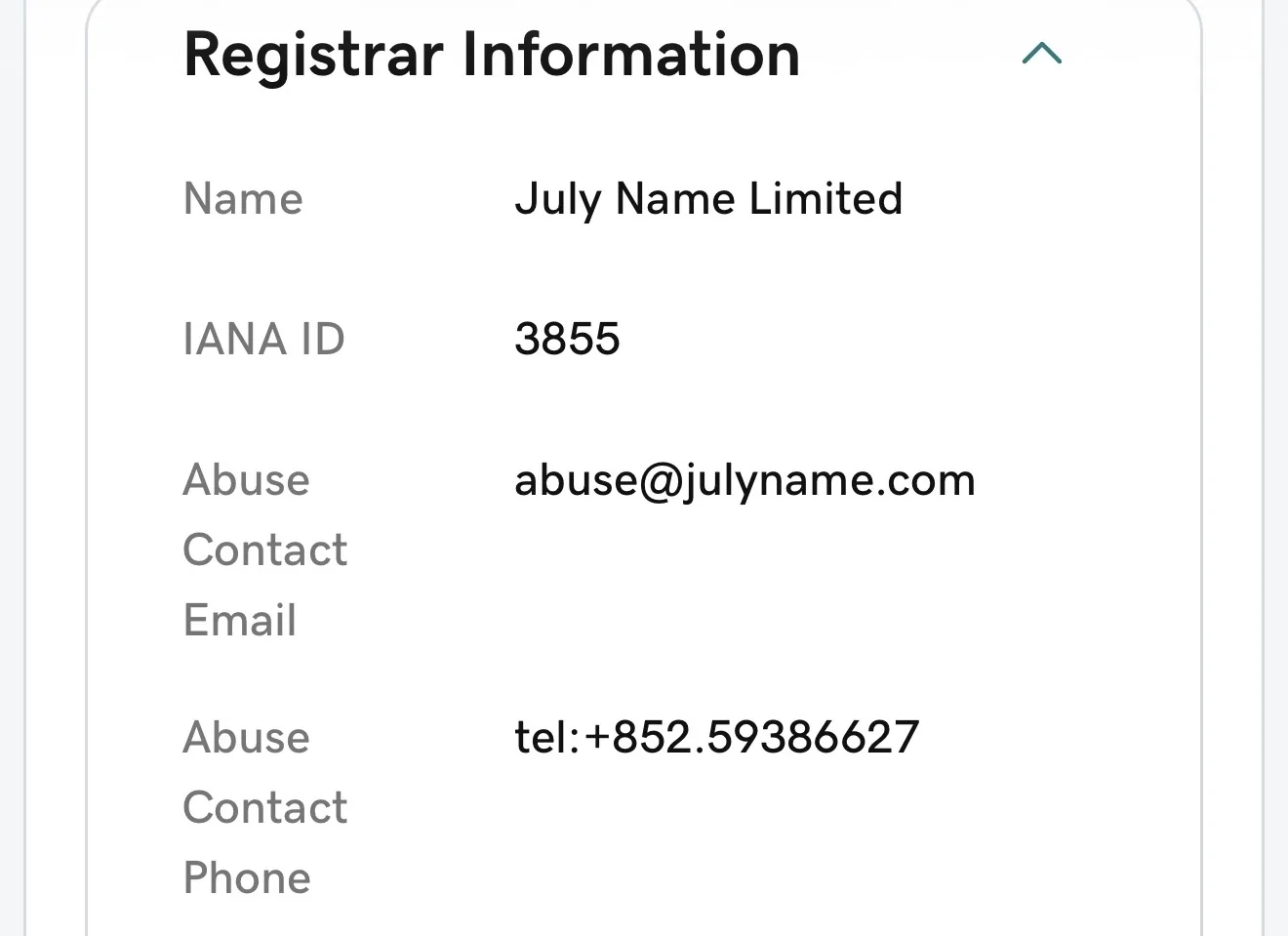
The WHOIS data made the Brown University claim even harder to defend.
The site presented itself as a long-running scientific institution, a “Global CRO Authority,” and an affiliated partner of Brown University’s Division of Biology and Medicine. But the domain records told a very different story.
According to the WHOIS registration data brown-biology.com was registered on April 25, 2025 and the abuse contact phone number used the +852 country code which is Hong Kong.
Then came the Wayback Machine.
A search for “Brown-biology” didn’t uncover a historical Brown Biology laboratory footprint. Instead, the archive returned real Brown University biology and biomedical domains going back to the 1990s, including Brown University’s Division of Biology and Medicine infrastructure. This shows that Brown University’s real biology infrastructure is historically traceable, but Brown Biology is not. If a Brown University partnership genuinely existed for decades, you’d expect to see archived references, institutional cross-links, historical mentions, faculty references, procurement or vendor listings, conference participation, publication acknowledgements or at minimum an older web footprint. Instead, the historical trail appeared to lead only to the real Brown University domains, not Brown Biology. This is strengthened by the fact that when a community member who is a colleague of one of the claimed principal scientists, reached out to said scientist, his colleague was equally in the dark.
When someone else checked internal LIMS references for Brown-associated laboratories, they found entries for legitimate Brown University labs the group had collaborated with previously, but nothing corresponding to Brown Biology itself.
The Nanjing COA Library
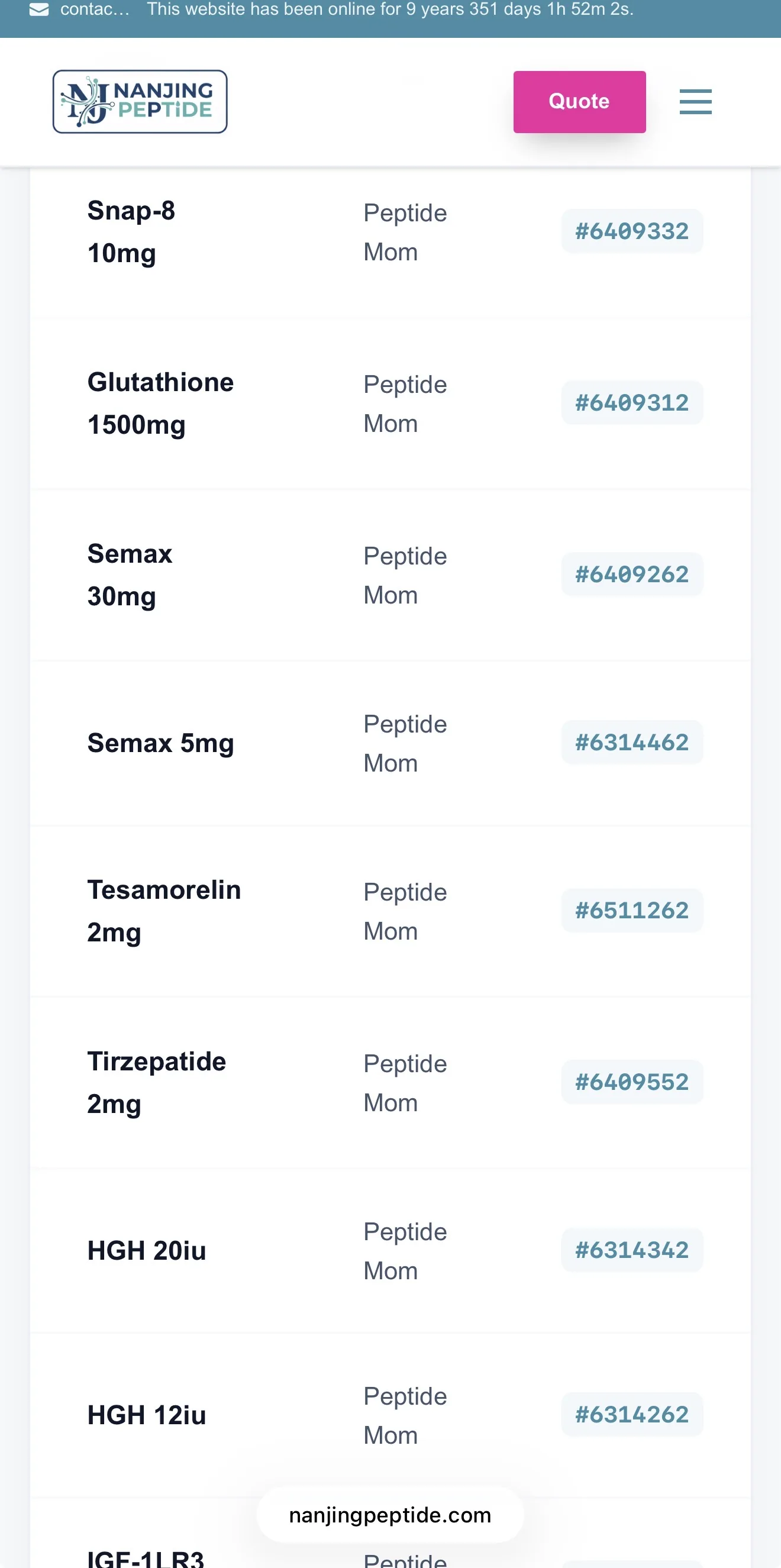
The Nanjing COA Library
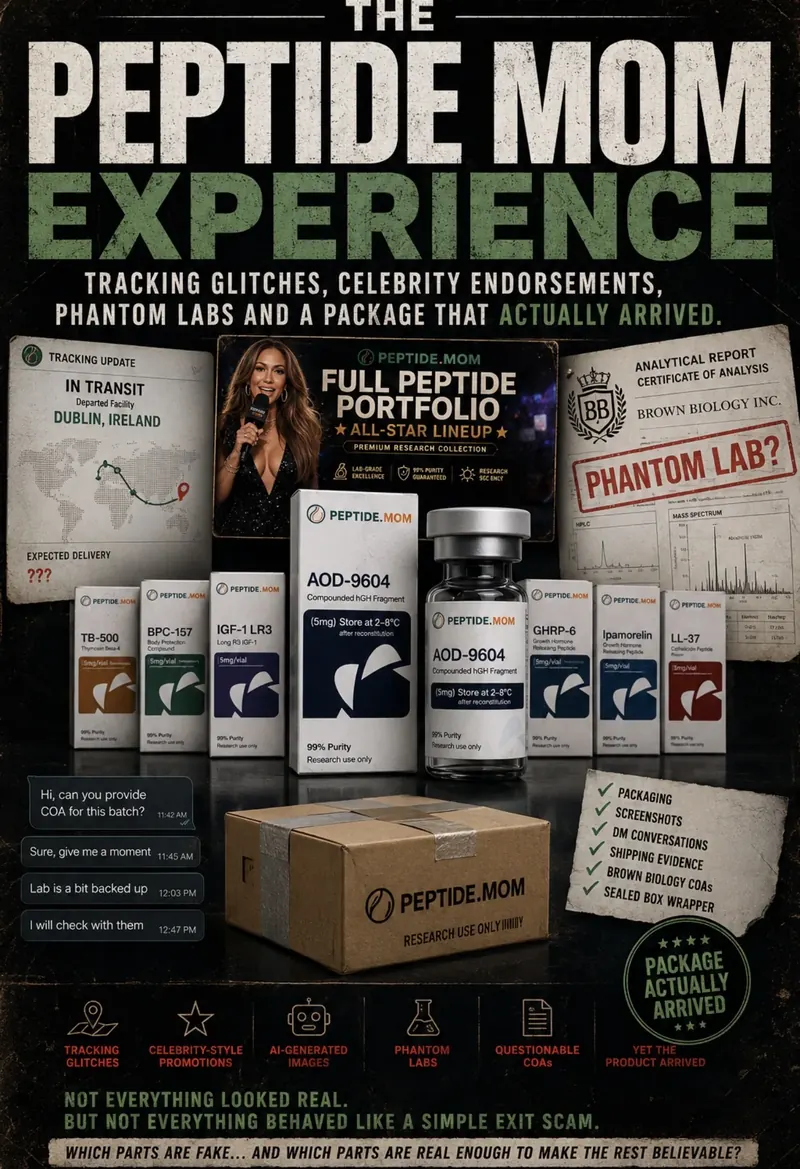
The NanjingPeptide website hosts a searchable “Certificate of Analysis Library” where products are listed under Peptide Mom, assigned specific lot numbers, and linked directly to Brown Biology COAs. That creates a direct infrastructure link between NanjingPeptide, Peptide Mom and Brown Biology.
This matters because Brown Biology was not just appearing on random reseller screenshots. The Nanjing-associated COA lookup itself appears to route users into the Brown Biology verification system. At that point, the issue no longer looked like a reseller using a questionable lab, it looked like a complete verification ecosystem built around Brown Biology. Further down the list there are also additional entries linked to Purgolabs LLC and Alura
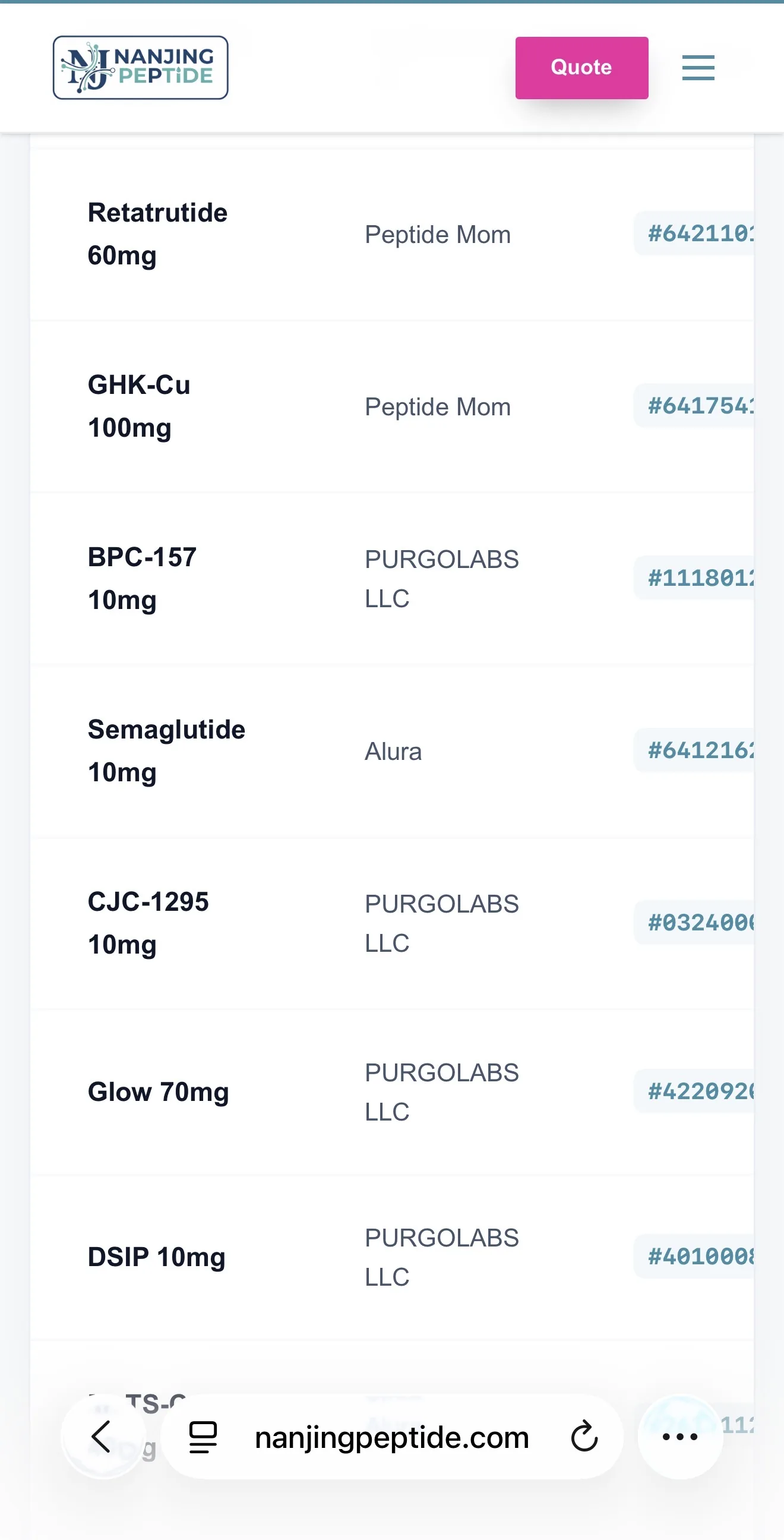
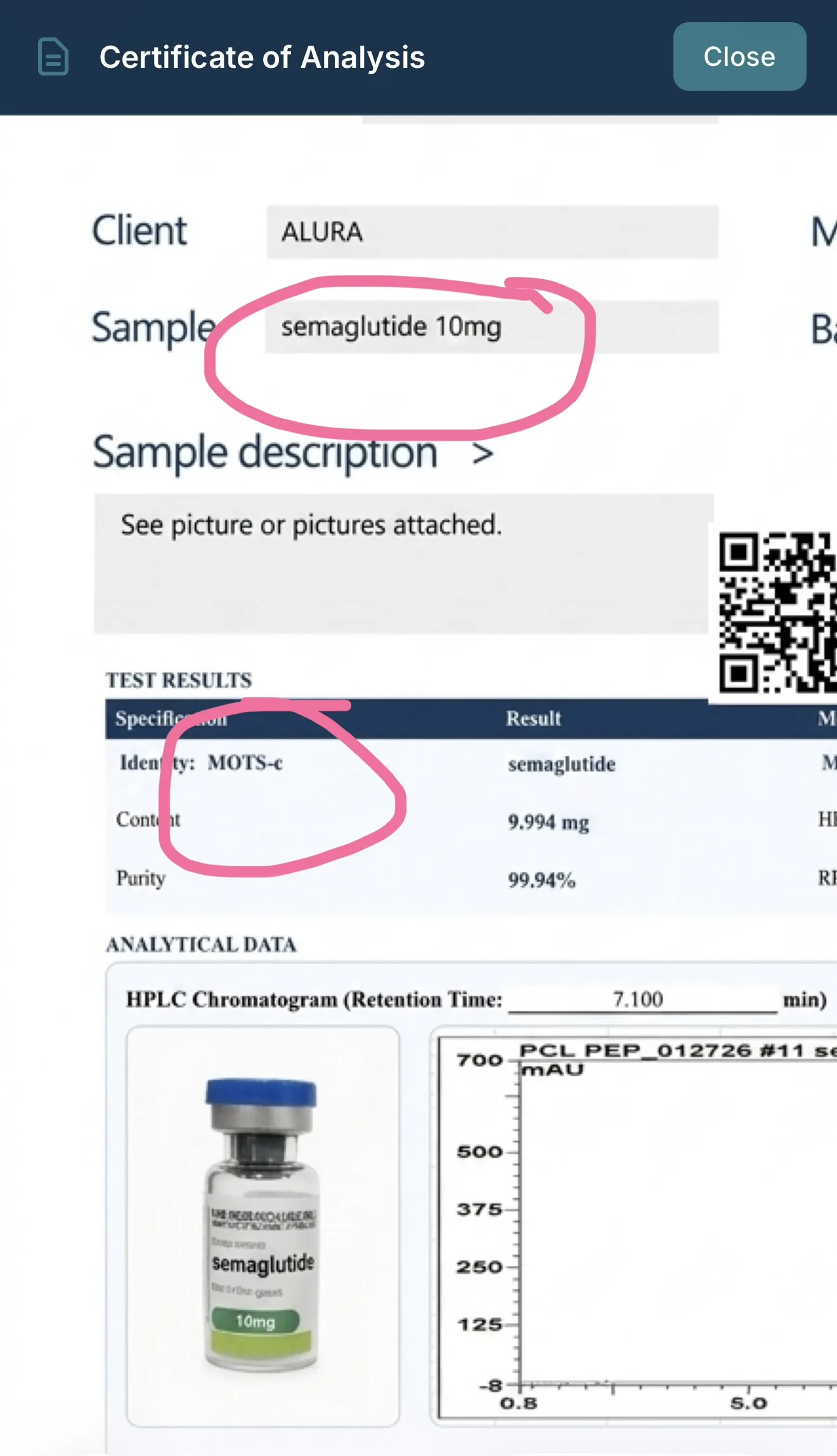
Clicking the “ view report” for those led to more Brown Biology COAs where more inconsistencies are noted. In one example, a Semaglutide report listed the sample as Semaglutide 10mg, but the test specification field identified the substance as MOTS-c.
The Network Widens
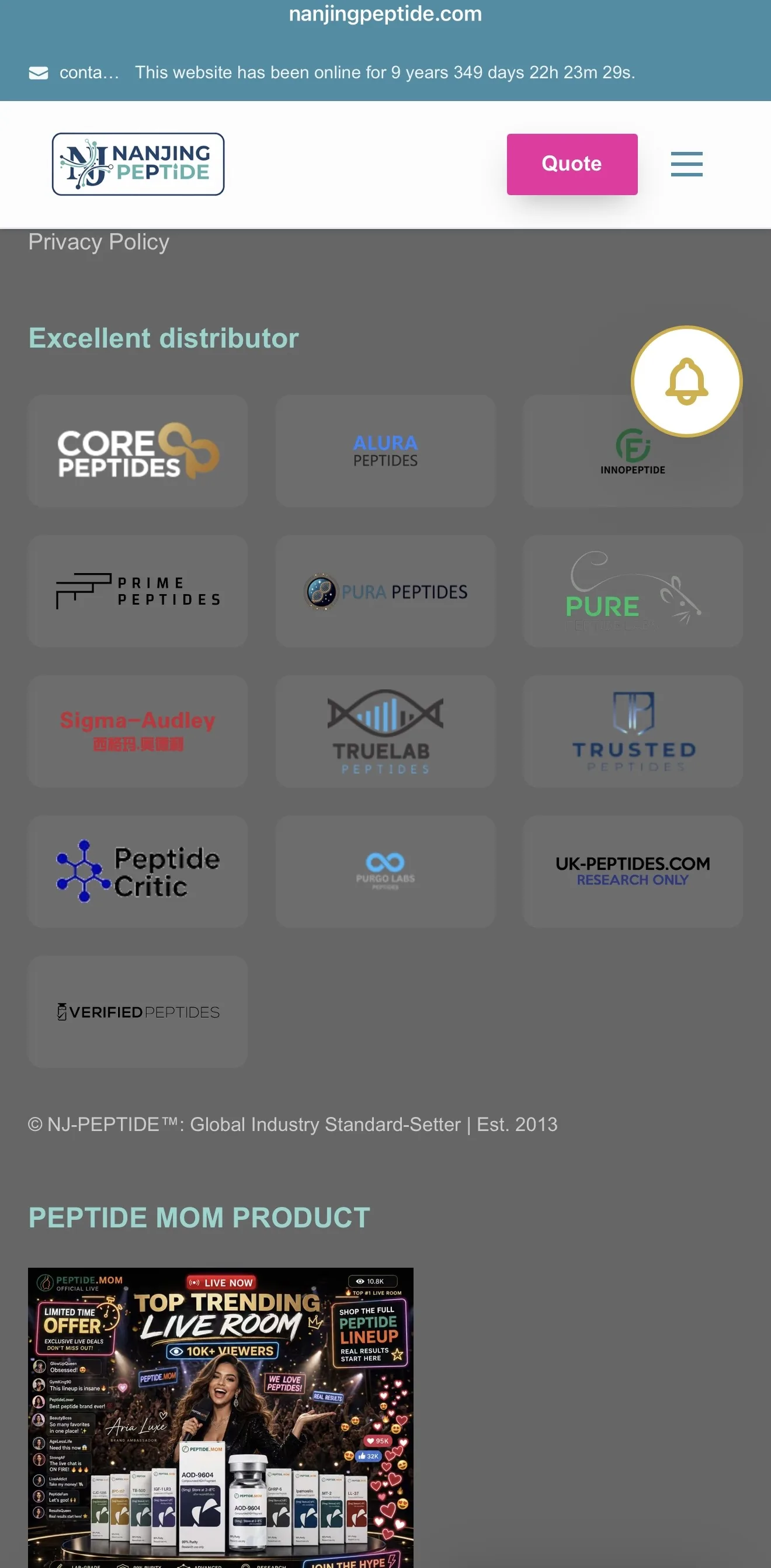
NanjingPeptide also claim to be distributers of several other companies, some of which are clearly fake like the long gone SSA, but others like Peptide Critic are legit and knew nothing about this supposed collaboration.
By this stage, there is little doubt that Brown Biology is not a legitimate independent laboratory but part of a much larger verification ecosystem built to manufacture credibility. The website, the COAs, the verification portal, the copied analytical reports, the Brown University claims, the AI-generated imagery, the reseller network and the Nanjing COA infrastructure all appeared to point in the same direction.
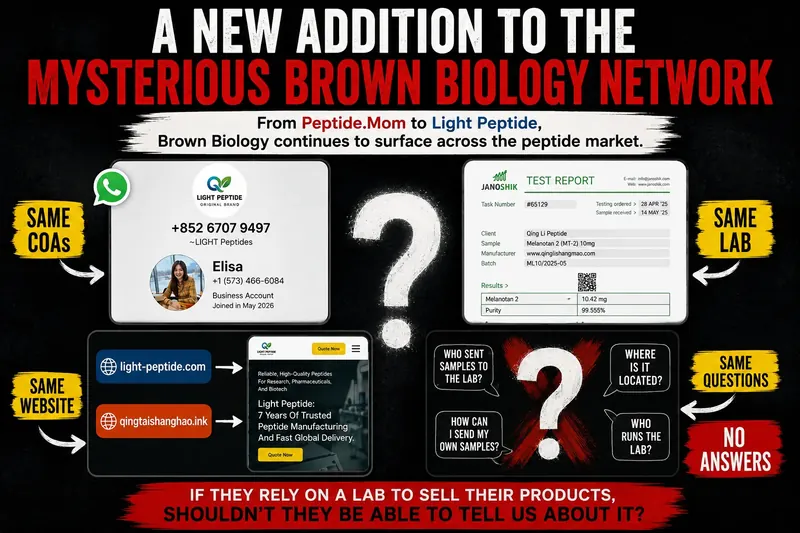
Adding to the questions, Kaylea, the Nanjing representative whose interview started this investigation, has since disappeared. But Brown Biology is only part of the story.
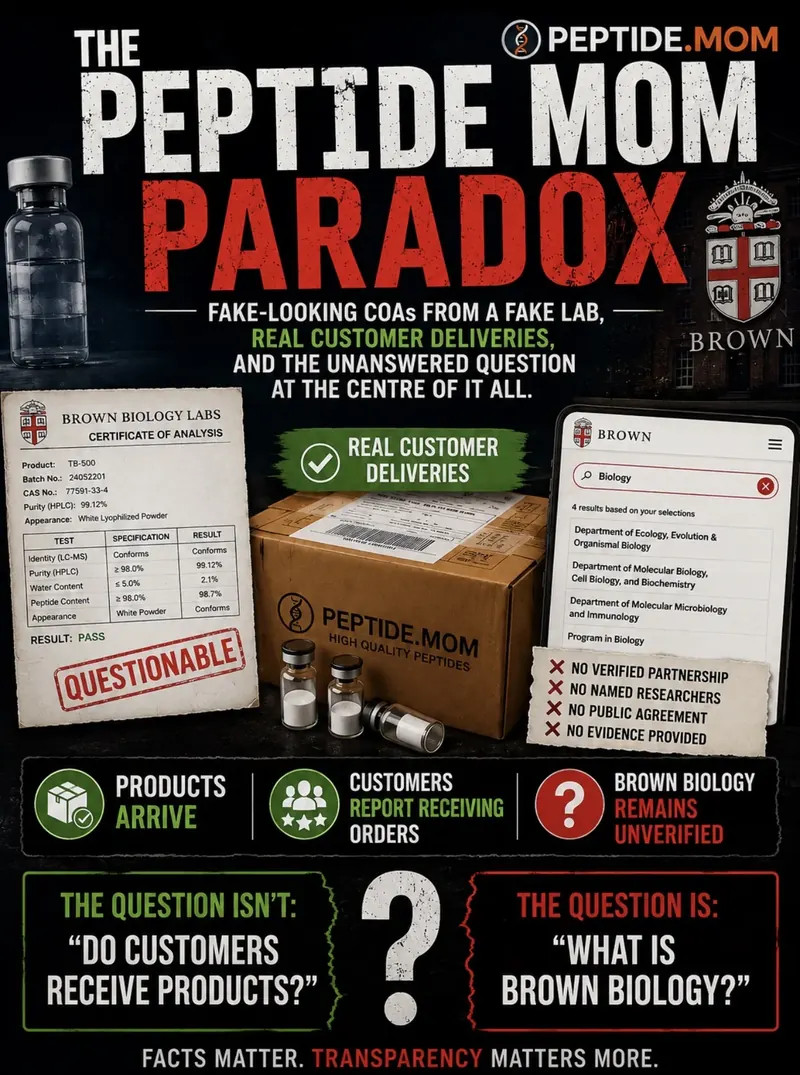
In Part 2, I’ll be investigating Peptide Mom directly. Although the assumption is that this is also a scam site, I have one customer who has received their product, and submitted a sample to Finnrick for testing. In Part 2, I’ll share this customer’s experience and the results when available.
Part 2: Peptide Mom Under the Microscope coming next.
Comments