
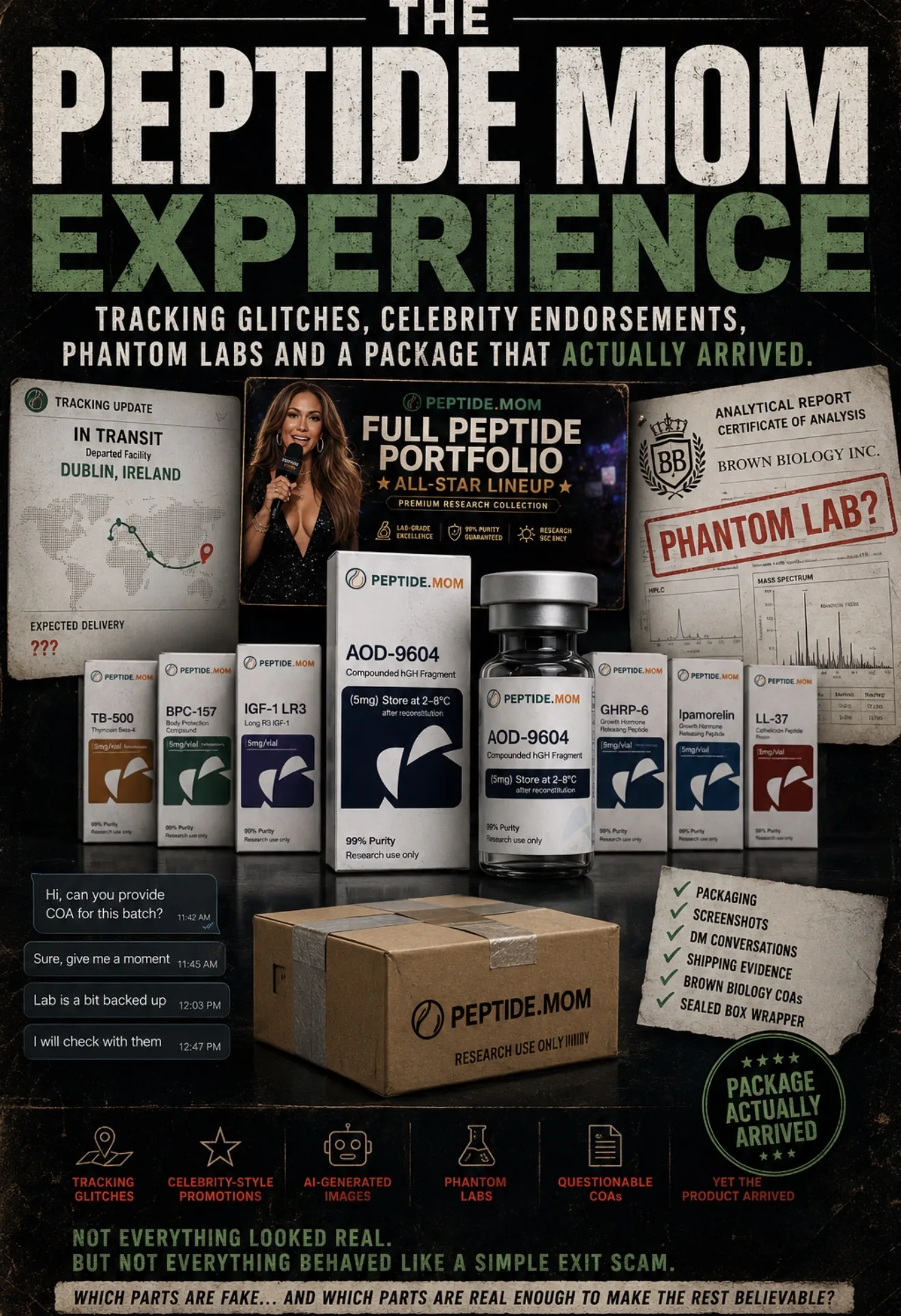
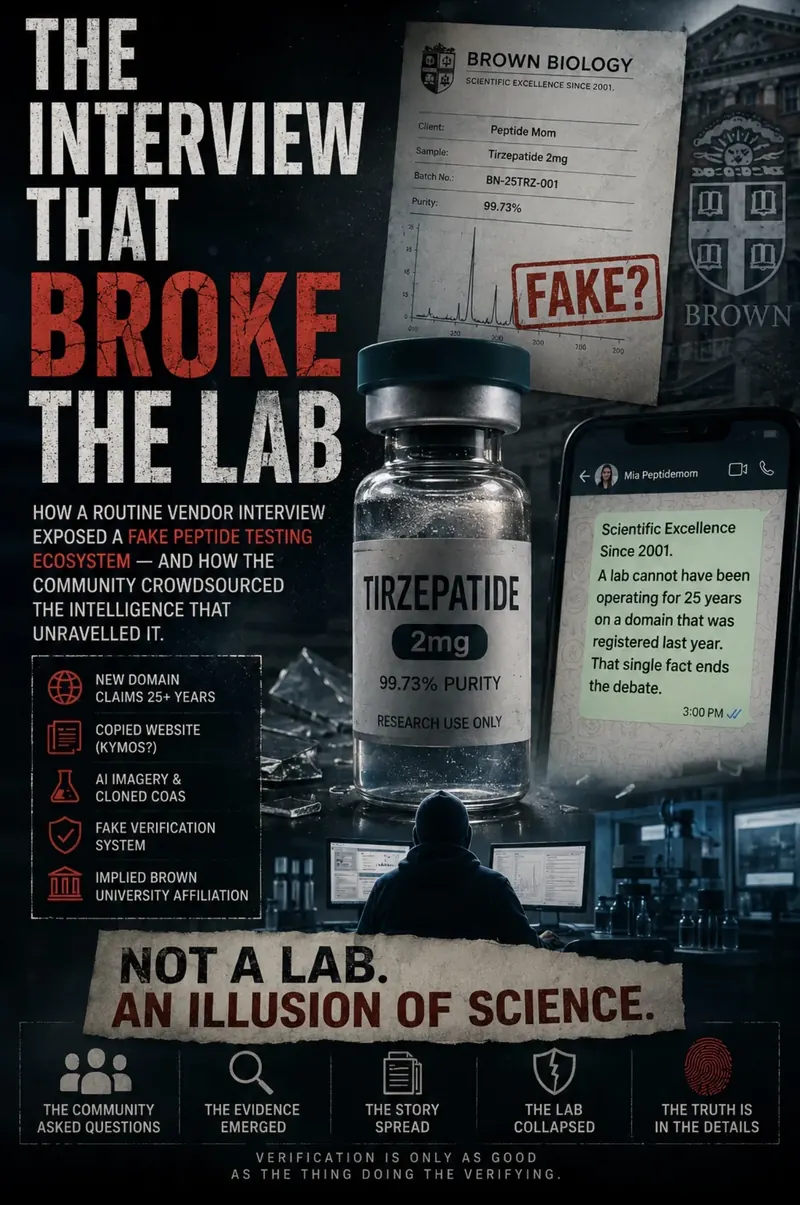
When I published my investigation into Brown Biology and the wider Nanjing-linked COA ecosystem, one question kept coming up:
What about Peptide Mom?
By the time it came to writing this article the peptide mom website was gone so I’m using the information I collected prior.
One of the most detailed accounts came from a customer, who placed a small test order. What makes his story interesting is that it doesn’t fit the normal scam template as he actually received his products.
A Strange Tracking Number
The buyer’s first concern came when he received the tracking number which showed the shipment to be heading for customs in Ireland instead of Kentucky. He described it as one of those moments where you look at the tracking page twice because it makes no sense. Eventually he dismissed it as a possible tracking error and largely forgot about the order.
Then The Marketing Started
Shortly afterwards, the promotional campaign began.
According to the buyer, his inbox started filling with marketing material that looked more like luxury influencer advertising than peptide sales.
The promotions featured glamorous lifestyle imagery, celebrity-style brand ambassadors, livestream graphics, engagement counters and social-media-style campaigns designed to create the impression of a rapidly growing brand.
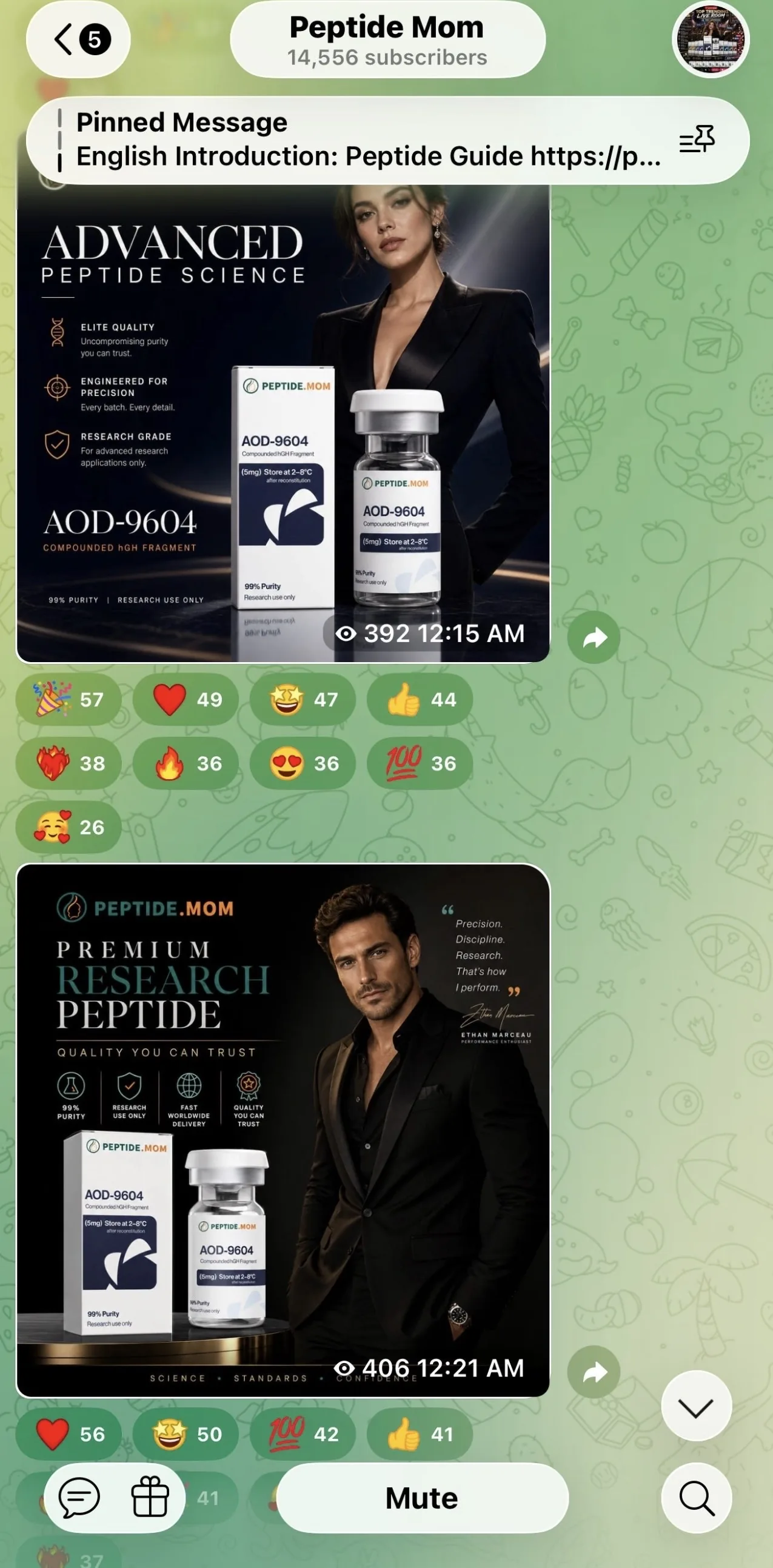


The screenshots preserved from the Telegram channel show highly polished campaigns promoting the product range through what appeared to be fictional spokespersons and aspirational branding.
At the same time, he began noticing references that appeared to imply celebrity involvement. He specifically mentioned names such as Jennifer Lopez and Mark Wahlberg appearing within the wider promotional ecosystem.
Whether the intention was endorsement, inspiration or simply marketing theatre, the effect was the same, it created the impression of a heavily manufactured credibility campaign.
Then The Package Arrived
This is where the story becomes interesting. Because despite all of the red flags and having written this purchase off, the package eventually arrived. Below is a picture of the products.
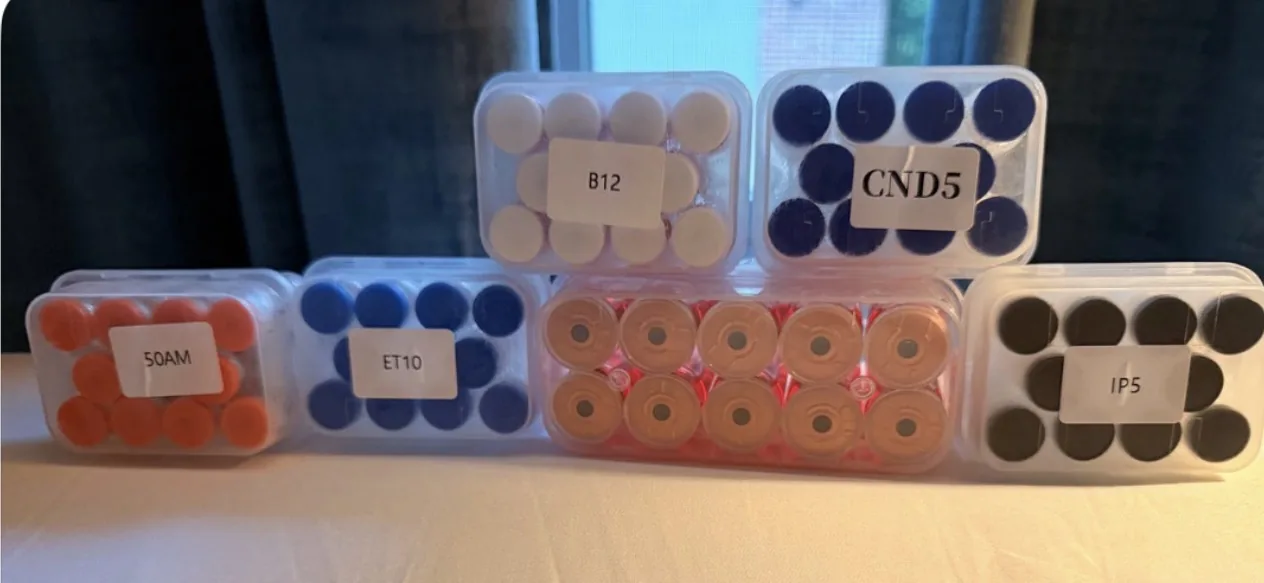
That immediately complicated the narrative. If everything surrounding the operation appeared questionable, why was product actually being shipped? Out of curiosity, he’s sent samples to Finnrick for testing and will be revealing the results as soon as they are available.
Another customer has also come forward to say he’s made 2 purchases, both of which arrived, but he’s had feedback from multiple users of the R30 that they’re not feeling any effect from it.
A Different Type Of Scam?
One explanation put forward is that although many people still imagine scams as simple exit scams where they take the money and disappear, modern operations can be more complicated than that. Partial legitimacy can itself become part of the business model. A vendor doesn’t necessarily need every component to be genuine. They may only need enough genuine elements to keep uncertainty alive. Enough deliveries, enough successful customers, enough positive feedback and enough product flow. Meanwhile the rest of the trust infrastructure can be manufactured through fake labs, cloned COAs, synthetic verification systems, influencer-style marketing, social proof campaigns and carefully constructed credibility assets.
Whether that ultimately proves true here remains to be seen. But it explains why the Peptide Mom story generated so much attention. Because the evidence didn’t point cleanly in one direction. The operation contained elements that looked fabricated and it also contained elements that appeared functional.
And that combination is often far more difficult to analyse than a simple scam that vanishes overnight. The independent testing results may provide some answers, however, the disappearance of the website today is probably all the evidence we need for now.
Comments