
While British authorities are raiding warehouses filled with unauthorised weight-loss injections, Australian health officials have released new figures showing a dramatic rise in emergency department visits mentioning unapproved peptide use.
The UK has seized more than 12,000 purported retatrutide and tirzepatide pens, while Australia has recorded 1,180 emergency presentations mentioning peptides over a 15-month period.
Both announcements arrived within days of each other, offering two very different perspectives on the expanding grey-market peptide industry.
UK: £2 Million in Counterfeit Weight-Loss Pens Seized
On 14 October, the Medicines and Healthcare products Regulatory Agency (MHRA), working with West Midlands Police, raided an industrial unit in Birmingham.

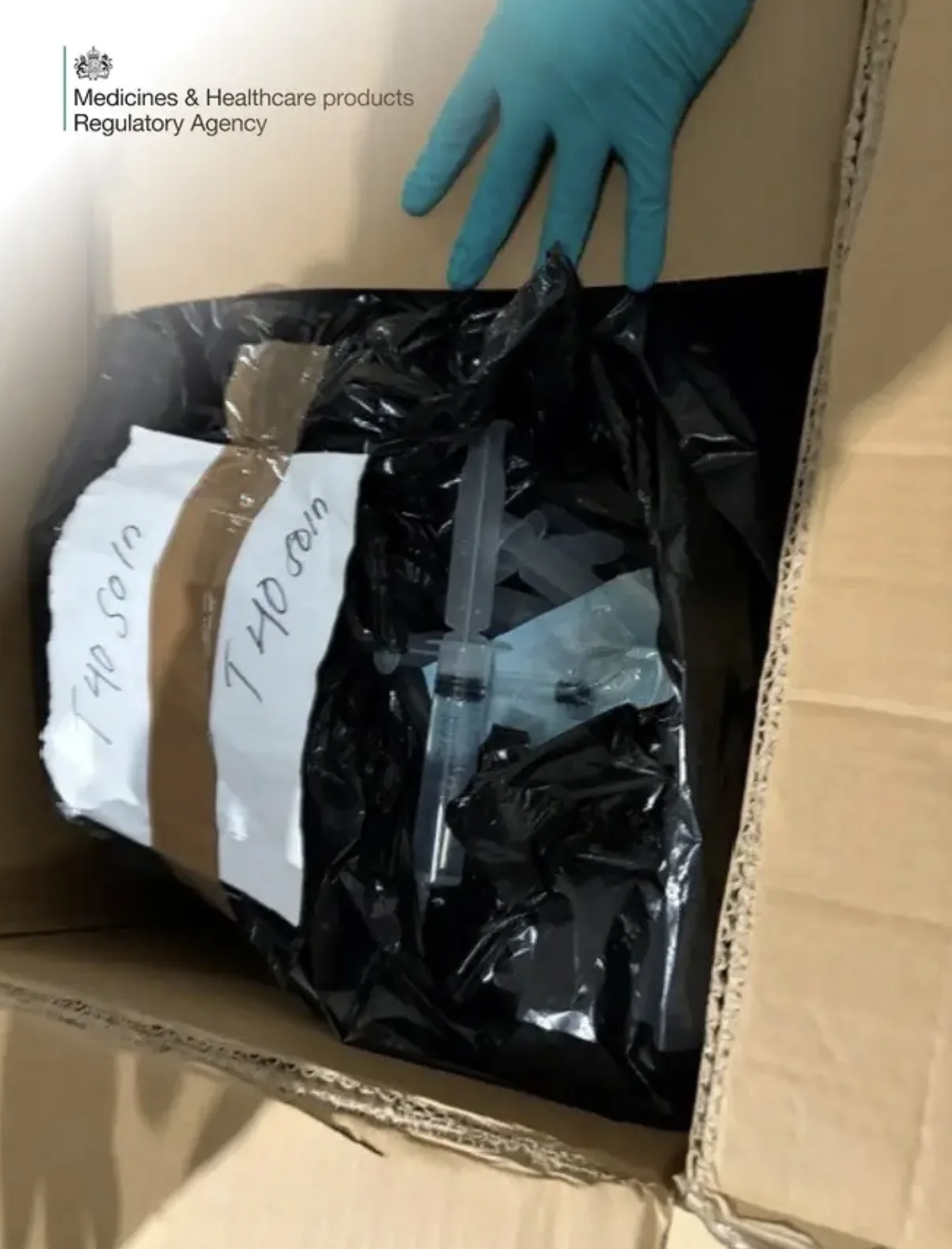

Inside, officers discovered more than 12,000 purported retatrutide and tirzepatide pens, together with packaging for approximately 30,000 additional products. The estimated value of the seized products was £2 million.
The MHRA described the premises as a filthy warehouse and warned that the products had not been assessed for safety, quality or effectiveness. Authorities have classified the products as counterfeit, although no laboratory findings establishing their actual contents have been published.
That leaves several interesting questions. Were the pens being filled on the premises or simply packaged for distribution? Where did the peptide ingredients originate? And what, if anything, did the seized pens actually contain?
For now, the authorities have not provided those answers.
Not the UK’s First Peptide Raid
The Birmingham operation follows several previous enforcement actions.
In October 2025, the MHRA dismantled what it described as the first illicit weight-loss medicine production facility discovered in the UK, recovering 5,000 unauthorised retatrutide and tirzepatide pens alongside empty pens and raw ingredients.
In February 2026, investigators seized around 2,000 doses awaiting dispatch, together with manufacturing equipment and suspected pharmaceutical ingredients.
Another raid in May recovered approximately 12,000 doses from a country estate believed to have been used to manufacture, assemble and distribute unauthorised weight-loss medicines.
The latest Birmingham seizure adds to an increasingly substantial enforcement record.
Source: MHRA, £2 Million Weight-Loss Medicine Seizure, 15 October 2026
Australia: 1,180 Emergency Department Presentations Mentioning Peptides Over 15 Months
Between 1 July 2025 and 30 September 2026, New South Wales recorded 1,180 emergency department presentations among people aged 16 and over that mentioned unapproved peptide use.
Of the 1,180 emergency department presentations:
833 (71%) mentioned retatrutide alone, while another 98 mentioned retatrutide alongside other peptide terms, bringing the total involving retatrutide to 931 (79%).
445 (38%) mentioned generic peptide terminology or other unapproved peptides, including the 98 presentations that also mentioned retatrutide.
83% involved people aged 16 to 44, with the largest group aged 25 to 34.
The most common recorded diagnoses included gastrointestinal complaints, cardiovascular symptoms and allergic reactions.
The number of presentations increased from just five in July 2025 to 217 in September 2026.
These figures record mentions of peptide use in emergency department records, not 1,180 confirmed adverse reactions caused by peptides.
But What Do These Numbers Actually Tell Us?
This is where the distinction between an association and a confirmed adverse reaction becomes important.
The Australian report doesn’t establish that peptides caused 1,180 medical emergencies.
Researchers searched hospital triage records for references to peptide use. Those references could include current or previous use, and one person could account for multiple presentations.
NSW Health explicitly acknowledges that it can’t determine whether peptide use caused the emergency presentation or subsequent hospital admission. The report is useful for identifying a rapidly increasing pattern of recorded peptide use among emergency patients. It’s not a count of 1,180 confirmed peptide injuries.
That doesn’t mean genuine adverse reactions are absent. It means establishing the cause requires examining the individual circumstances.
A patient experiencing vomiting after retatrutide use might be suffering a pharmacological adverse effect. Another might have received an incorrectly dosed or mislabelled product. Others could have an unrelated medical problem. Without the relevant clinical investigation and, where appropriate, product testing, those possibilities cannot simply be treated as interchangeable.
Source: NSW Health, Full Surveillance Report, October 2026
Two Countries, Two Different Approaches
The UK announcement focuses on the supply chain: seizing stock, disrupting distribution and pursuing those involved in unauthorised medicine operations.
Australia’s latest announcement focuses on the public-health picture, documenting an increase in emergency presentations mentioning peptides while continuing its own enforcement activity.
Neither development tells us exactly how many people are purchasing grey-market peptides or what proportion of those products are incorrectly manufactured. The Birmingham seizure confirms a substantial quantity of unauthorised products was circulating through one operation. The Australian figures confirm that mentions of peptide use in emergency departments have risen sharply.
They are different types of evidence, and both are relevant.
What Happens Next?
Authorities in both countries are showing increasing interest in the peptide trade, particularly unapproved weight-loss products. The next important developments will be whether the UK releases laboratory results from the seized pens, whether investigations identify their manufacturing origins and whether Australia publishes more detailed findings about products associated with serious adverse events.
For the grey-market industry, the implications extend beyond retatrutide.
Regulators are paying attention not only to what vendors are selling, but to how these products are manufactured, packaged, advertised and distributed.
And with enforcement operations and hospital surveillance both expanding, the market is facing scrutiny from more than one direction. The interesting question now is whether that pressure improves product accountability or simply changes where and how the grey market operates.

Comments