
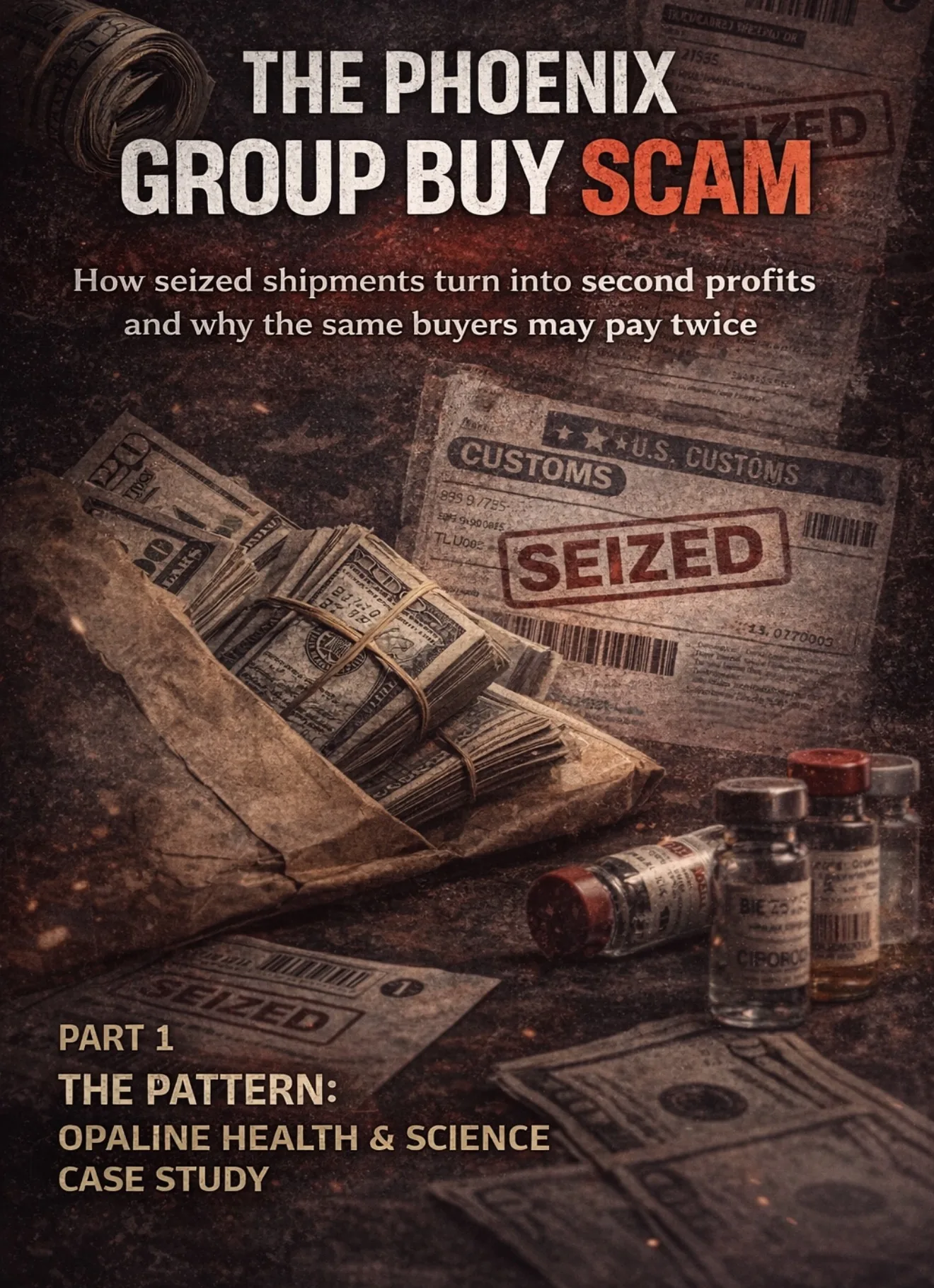
Part 1; The Pattern
This is not a story about a single failed group buy. It’s about a pattern. A pattern that has been described in a Reddit post, echoed in community discussions, and when you step back, starts to look less like bad luck and more like a repeatable scam.
Because the concern isn’t just that money disappears. It’s that a failed, or allegedly failed, group buy may become the setup for a second round of profit.
The Pattern
1. The Buy-In
It starts the same way most group buys do. An organiser brings a community together around a simple idea:
bulk pricing
shared shipping
better deals than going solo
Thousands of dollars are collected.
Trust does the heavy lifting.
2. The Seizure Story
Weeks later, the narrative shifts. Members are told the shipment has been seized, but the proof is thin, or missing entirely:
no tracking history showing detention
no seizure notice
no official documentation
no clear timeline
Just a story.
And in grey markets, claims often spread long before proof appears.
3. The Pivot
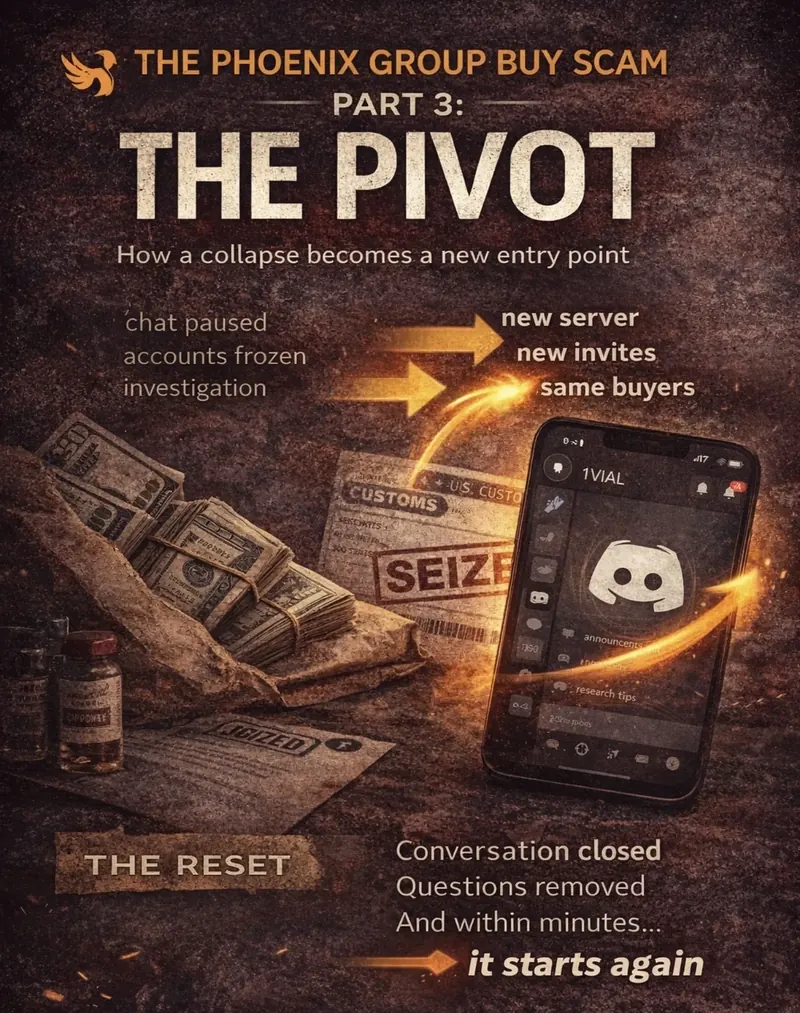
Then comes the shift. Activity doesn’t stop, it moves. A new server appears, moderators or close associates begin selling elsewhere and operations continue under a different structure. The group buy is “over.” But the ecosystem isn’t.
4. The Real Risk: Recovery or Retention
This is what makes this different from the usual group buy scam. The issue is not simply, “they keep the money” but the reality is more nuanced, and more concerning. There are two possible paths:
If the order was placed, the money becomes inventory and the risk is that inventory is never distributed, and instead ends up being retained, redirected, or resold.
If the order was never placed, the mechanism is simpler. The funds are retained, while the loss is attributed to external factors like seizures, investigations, or suppliers.
Either way, the community pays upfront and may be asked to pay again later
5. The Retail Flip
This is where the model becomes visible. Members are told the group buy failed.
But later, similar or identical stock appears sold as single vials, at higher prices, through different channels.
Instead of fulfilling the original order, the inventory is monetised again.
6. The Profit Model
This is the “double dip.” The community funds the inventory once, then pays again to access it, not through refunds but through resale.
Why It Works
This model doesn’t rely on sophistication.
It relies on structure, confusion around how seizures actually work, lack of documentation standards in grey markets, trust in familiar community figures and separation between public chat and private transactions
By the time questions start, the structure has already shifted, the narrative is already set and the money is already gone
The Key Takeaway
This isn’t about proving intent. It’s about recognising patterns, because once you see it, you realise this isn’t a one-off failure. It’s a model that can be repeated.
Case Study: Opaline Health & Science
(formerly Popping Peppers)
One alleged example of this pattern involves a Discord server run by Vanessa.
Background
Server launched: December 26, 2025
Original name: Popping Peppers
Rebranded to: Opaline Health & Science
Admins:
Vanessa (owner), Theghettogringo, Barrelchest
Mods: mamabearstephy, karima
Vendor (via COAs): Zepeptide (rep: Li Li)
Early Red Flags
Members reported high shipping costs, tax charges that didn’t clearly match state rules, payments taken via PayPal Friends & Family and the vendor never directly disclosed.
One customer placed a direct order, but was later told that direct orders were closed and they should join the group buy instead to save ~$50 on shipping
The Group Buys
March 1 Group Buy
The order was reportedly submitted but some items were out of stock and so a partial shipment was made, with the remaining stock promised later.
That “second part” was later said to be seized.
March 15 Group Buy
The funds were collected but the order never submitted
Reason Given
Members were told that a large shipment had been seized at customs, which then triggered a review of Vanessa personally. Federal agents even came to her residence. There was an ongoing investigation and her bank accounts were frozen. Funds would be inaccessible for 4 to 6 months
Inside the Server: Structured Behaviour
1. Community Before Commerce
Early messaging focused on everyday chat, encouraging invites, growth framing (“the more we grow, the better”). Trust was built first, transactions came later.
2. Early Framing of the Group Buy
Very early on “who would be interested in a group buy? we could save on shipping”
This reframed participation as collaborative, smart and low-risk
3. Public Trust, Private Transactions
Repeated prompts “send me a message” or “message me and I’ll help you”
This created a clear split, public chat for trust building and private DMs for transactions
4. Authority Without Hard Selling
Vanessa positioned herself as the knowledge hub, sourcing (“everything comes from China”), reconstitution guidance and dosing discussions.
Not aggressive selling, but building credibility and reliance.
5. Price Anchoring
Statements like “don’t pay $1300 a month”, indicated that pharma is expensive but her route is more efficient.
6. Gradual Escalation
The progression was from general chat to curiosity to education to dosing, results and testimonials, then group buy
The “Broker” Positioning
Her key statement of “I’m just the broker… facilitating between you and the supplier” creates distance from the product, reduces perceived responsibility and frames her as a helper, not a seller
Avoidance of Specifics
When asked where product comes from, whether she is reselling and how the structure works, her responses tended to redirect to channels, stay vague or move to DMs
Structural Shifts Over Time
Marketplace Expansion; Jan 12
At this stage, Vanessa introduced a broader marketplace concept “open marketplace type of chat… re-direct people on how to order” after previously removing a BST channel in there, calling it the “like the wild, wild west”
This likely marks the point where the single-vial sellers Barrelchest and Theghettogringo emerged as authorised sellers.
Restricting Access; Late Feb
In late February, individual orders were stopped and Group buy became the only route to buy products, “orders aren’t even being accepted right now” she said in response to someone asking about placing an individual order.
Sudden “Going Legit” Phase; Feb 23
To everyone’s surprise, Vanessa announced they are transitioning to a registered business with the introduction of taxes (~7%) and rebranding to Opaline Health & Science. “If i don’t, there won’t be any packages” was her reason.
Parallel Infrastructure
A new server 1Vial was created Feb 27, although activity only increased around March 21 and at the same time the single-vial pricing increased (March 10) and the narrative shifted to shortages, delays, and seizures
Narrative Framing Before the Collapse
Before anything failed, the groundwork was already laid with supply shortages, shipping delays, increased seizure risk and rising prices. Individual orders were conveniently closed and the group buy became the main route.
The March 21 Announcement
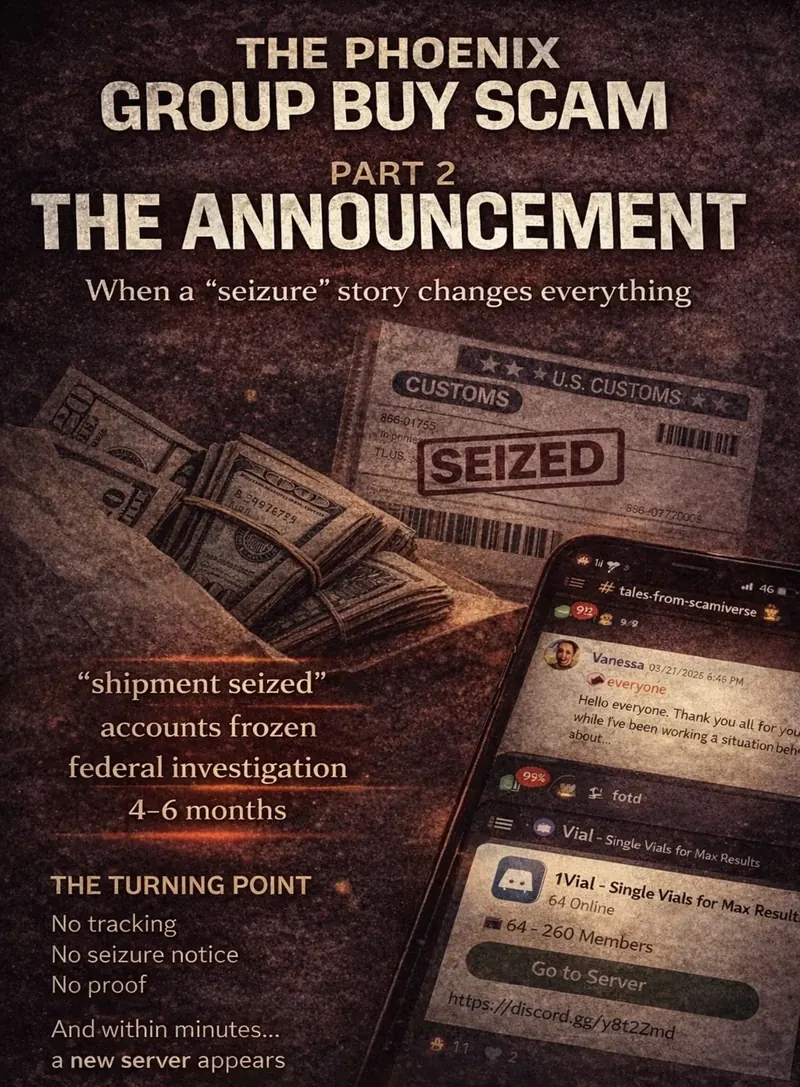
Up until this point, everything could still be explained as delays, stock issue or logistics problems. But that changed with one message on March 21, when Vanessa posted the announcement that shifted the story completely, from a failing group buy to claims of seizure, frozen funds, and federal scrutiny.
Part 2 begins there.
Comments