
A funny thing happened after I wrote about those outrageous Nova Vita RX bulldog ads. Someone actually texted the company.
The creator reached out to me afterward, genuinely surprised. The campaign had not officially launched yet. In fact, she had only shared those versions of the ads with one person. Somehow, the ads made their way to me, I wrote about them, and then someone saw the article and messaged Nova Vita RX asking if she was “Tank.”
That alone is worth a follow-up. Because as it turns out, Harley and Tank are not just random AI mascot dogs cooked up in a marketing lab. They are based on real dogs with real backstories, which makes the whole thing even better.
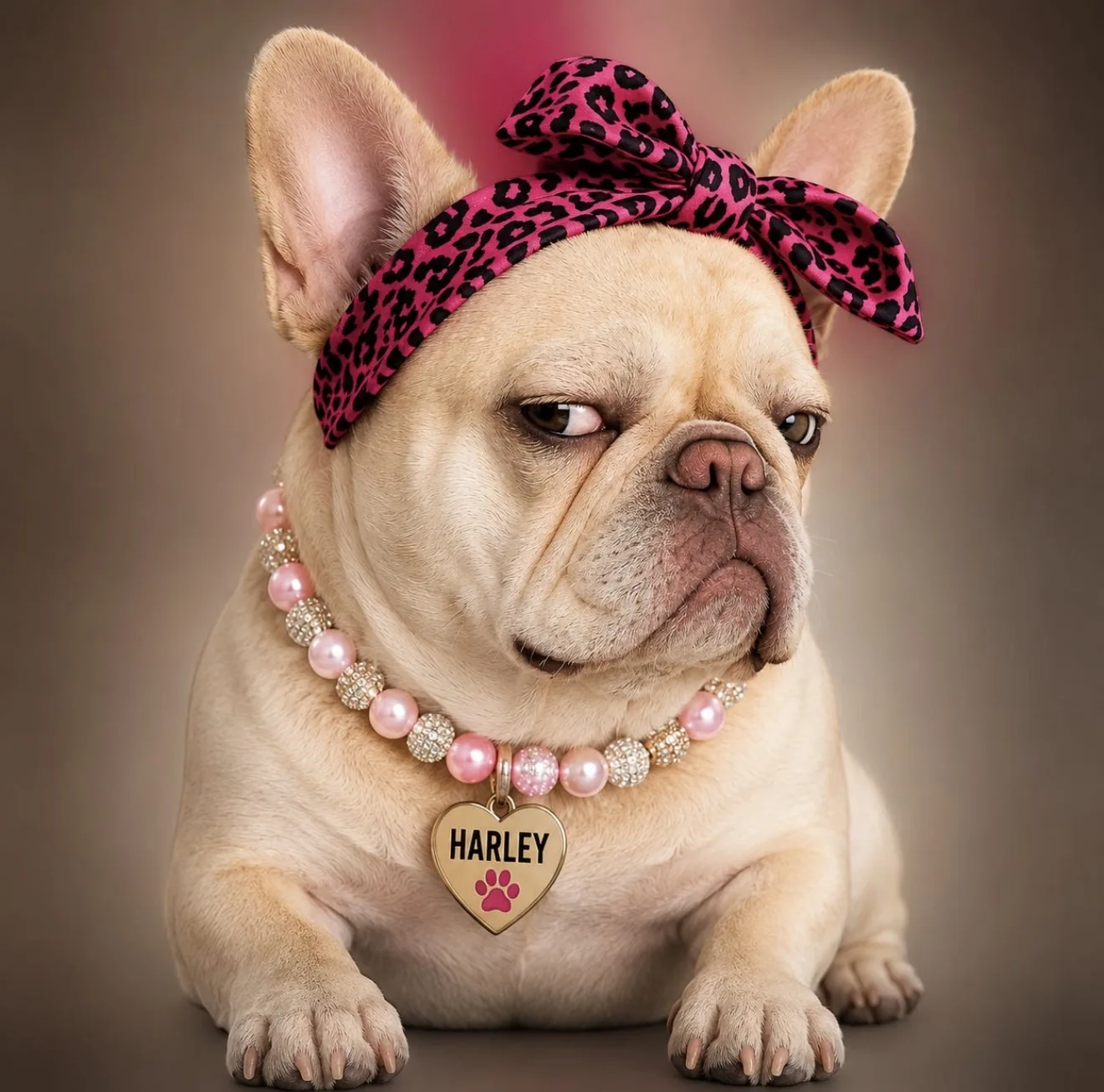
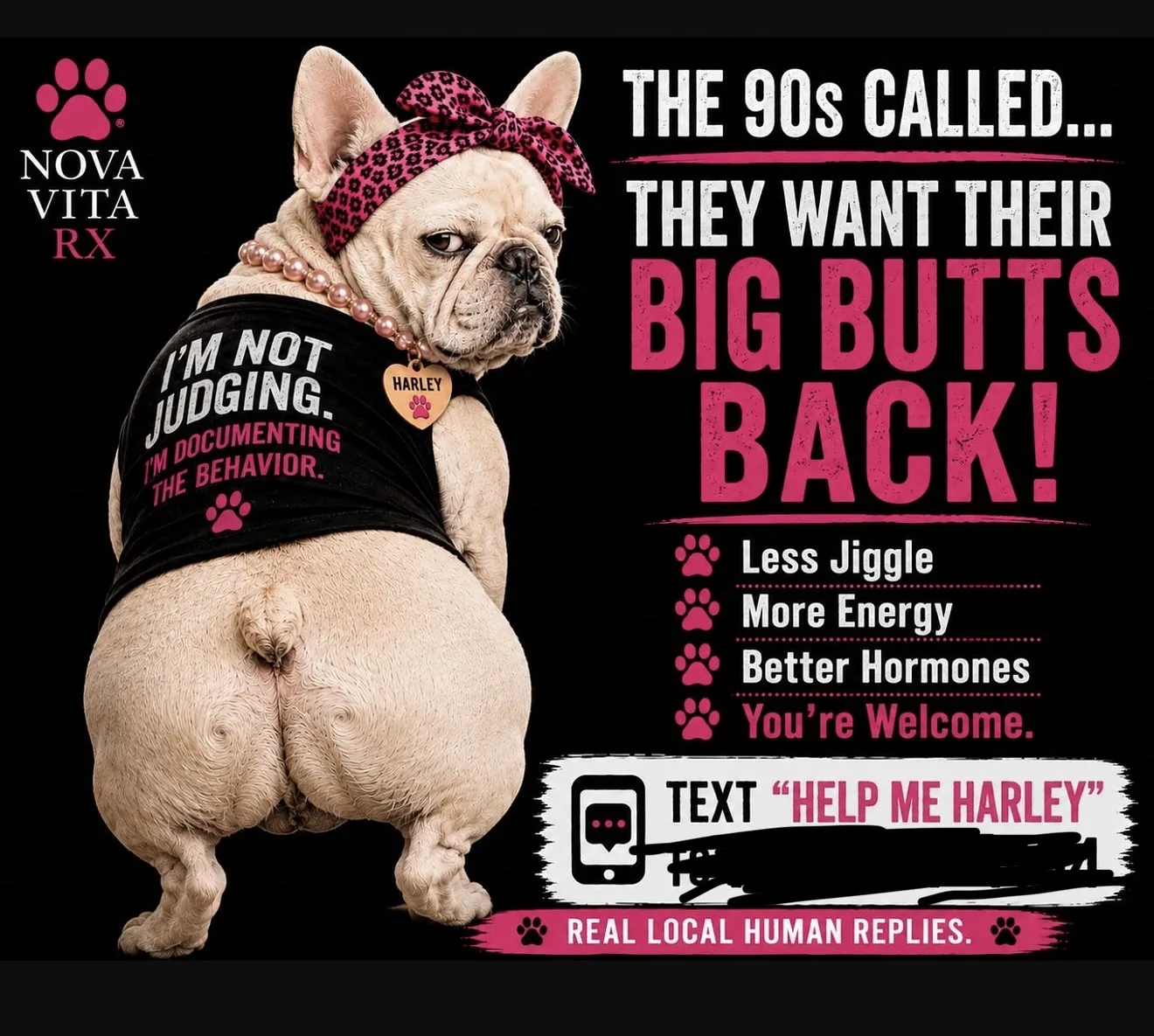
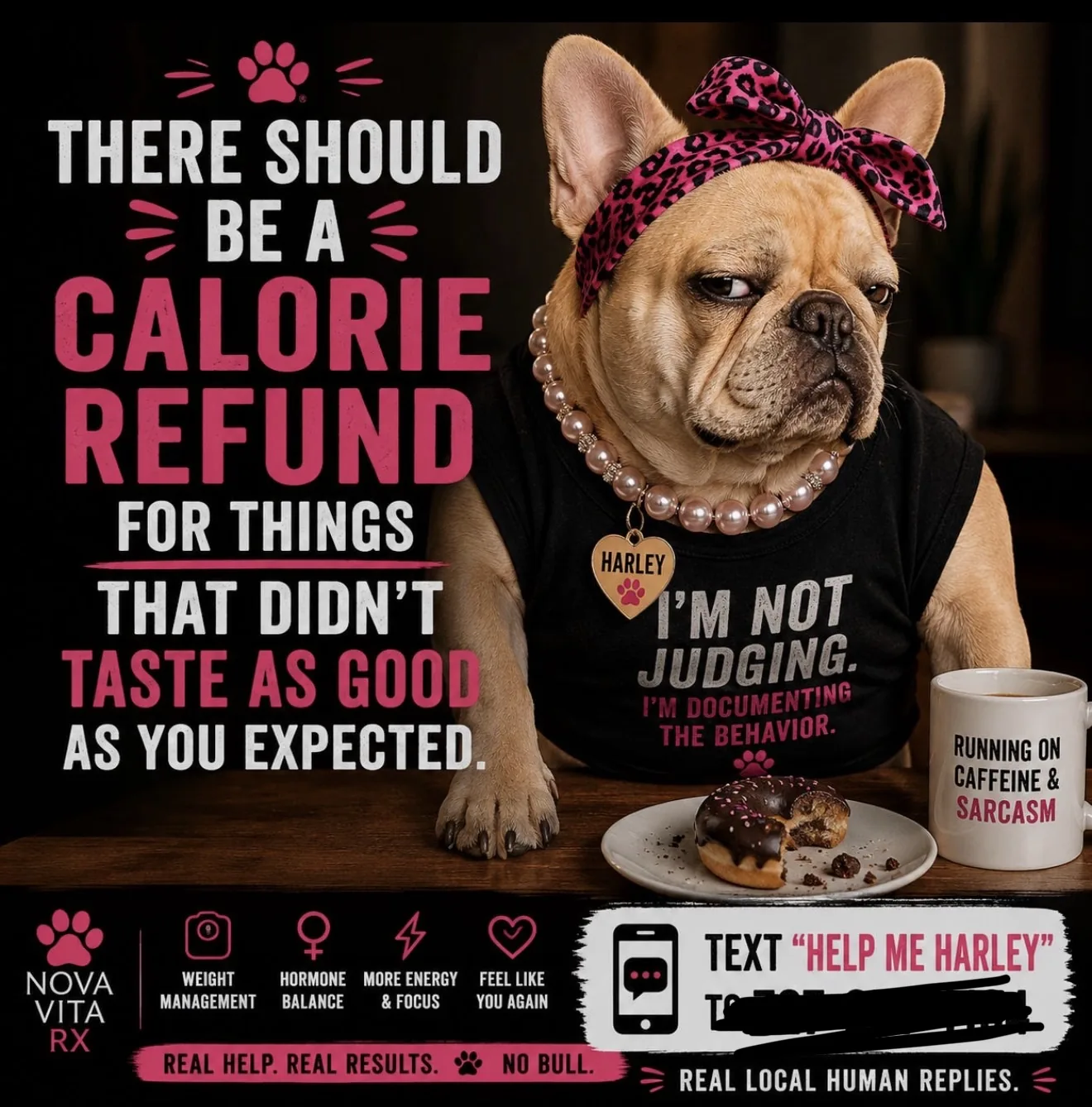
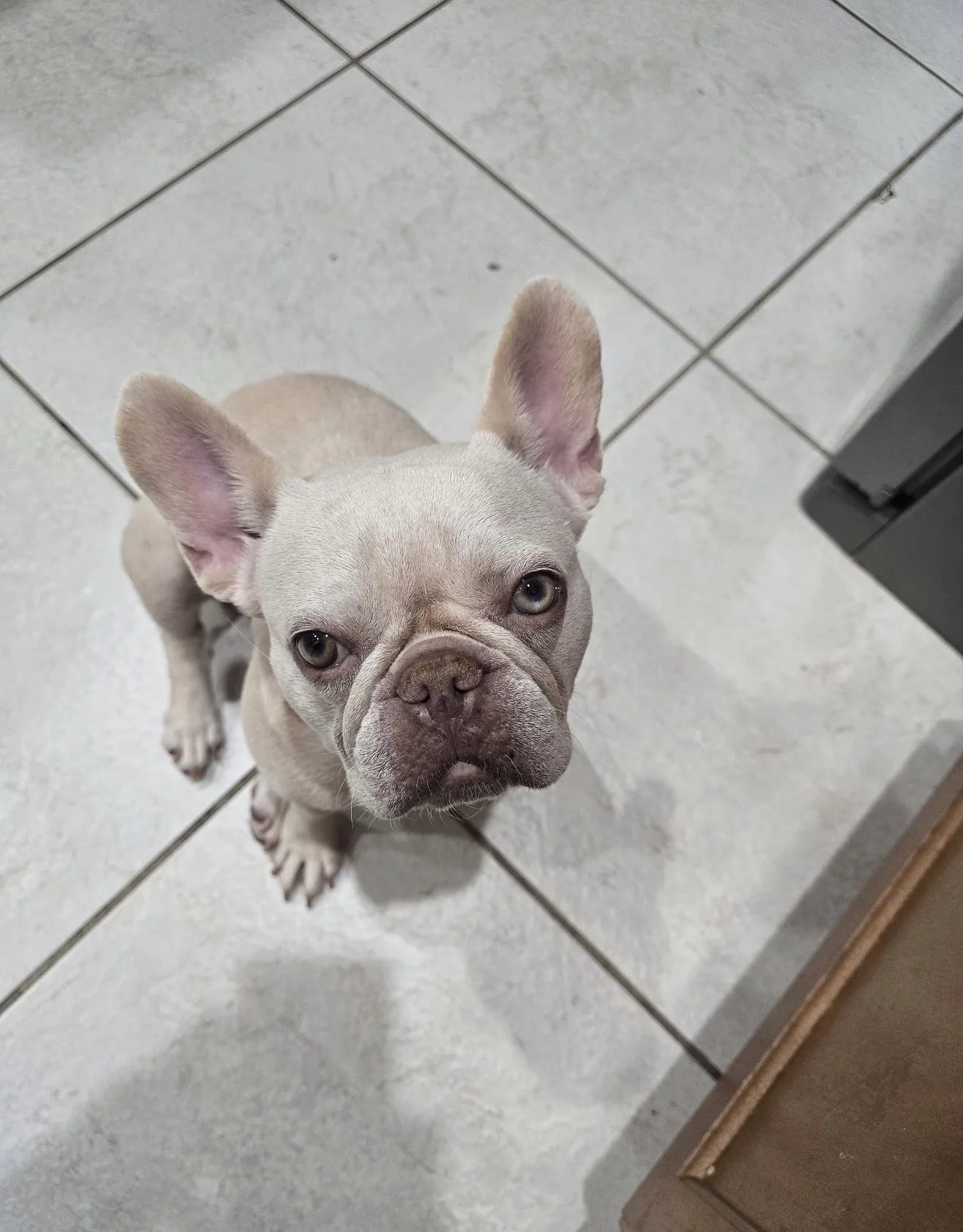
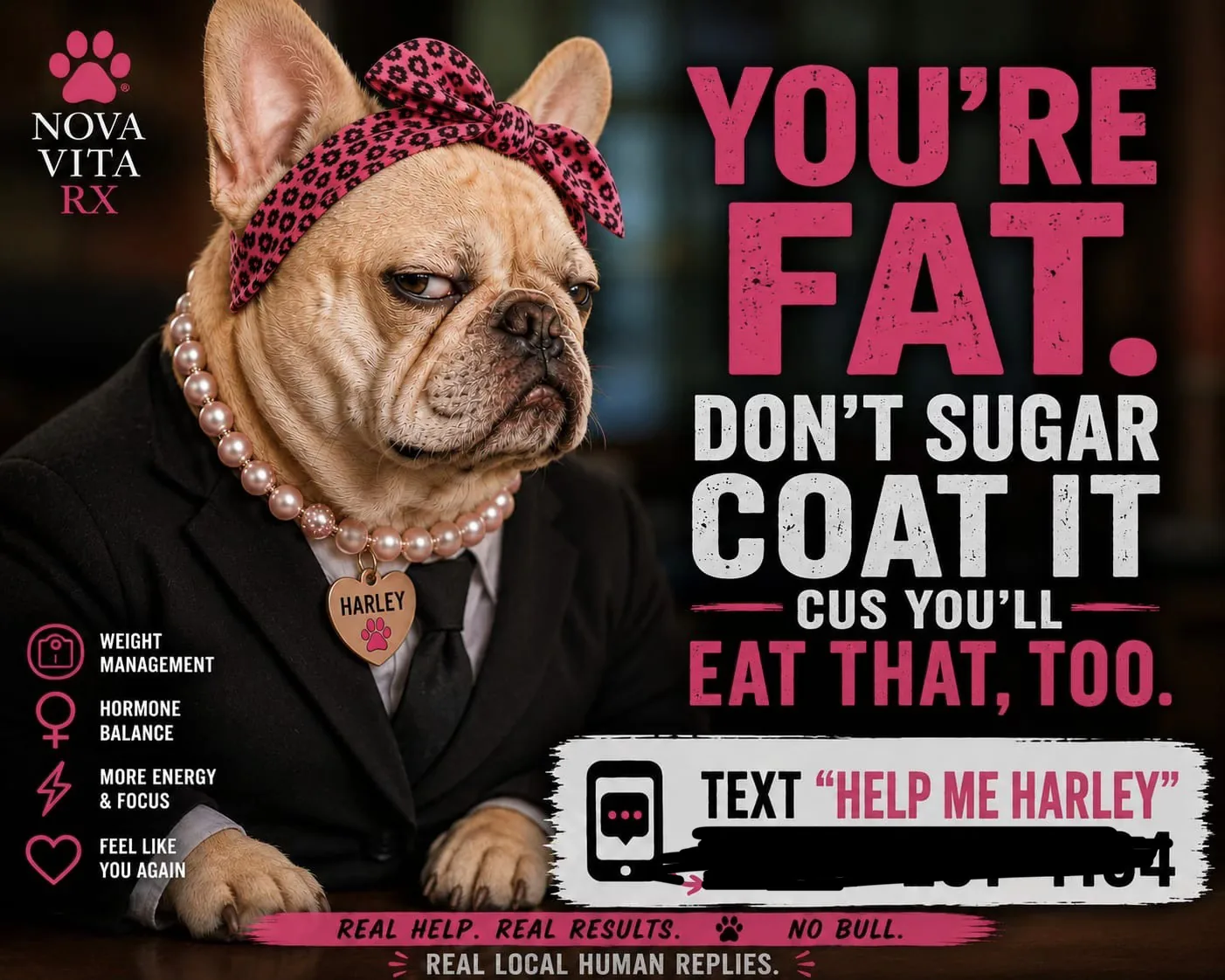
Harley, the pearl-wearing, pink-headband bulldog who looks like she has judged every snack decision you’ve made since 2017, is actually the creator’s dog. She was adopted last August from Space Coast Frenchie Rescue in Florida. According to her owner, Harley has the personality to match the ads: a “judgy little know-it-all with zero filter and max side-eye.”
That explains a lot. The first Harley ad worked because the dog looked like she meant every word. When an ad says, “YOU’RE FAT. DON’T SUGAR COAT IT ’CUS YOU’LL EAT THAT, TOO,” it needs the right face behind it. Harley has that face. She does not look motivational. She looks disappointed. She looks like she found the emergency cookies.
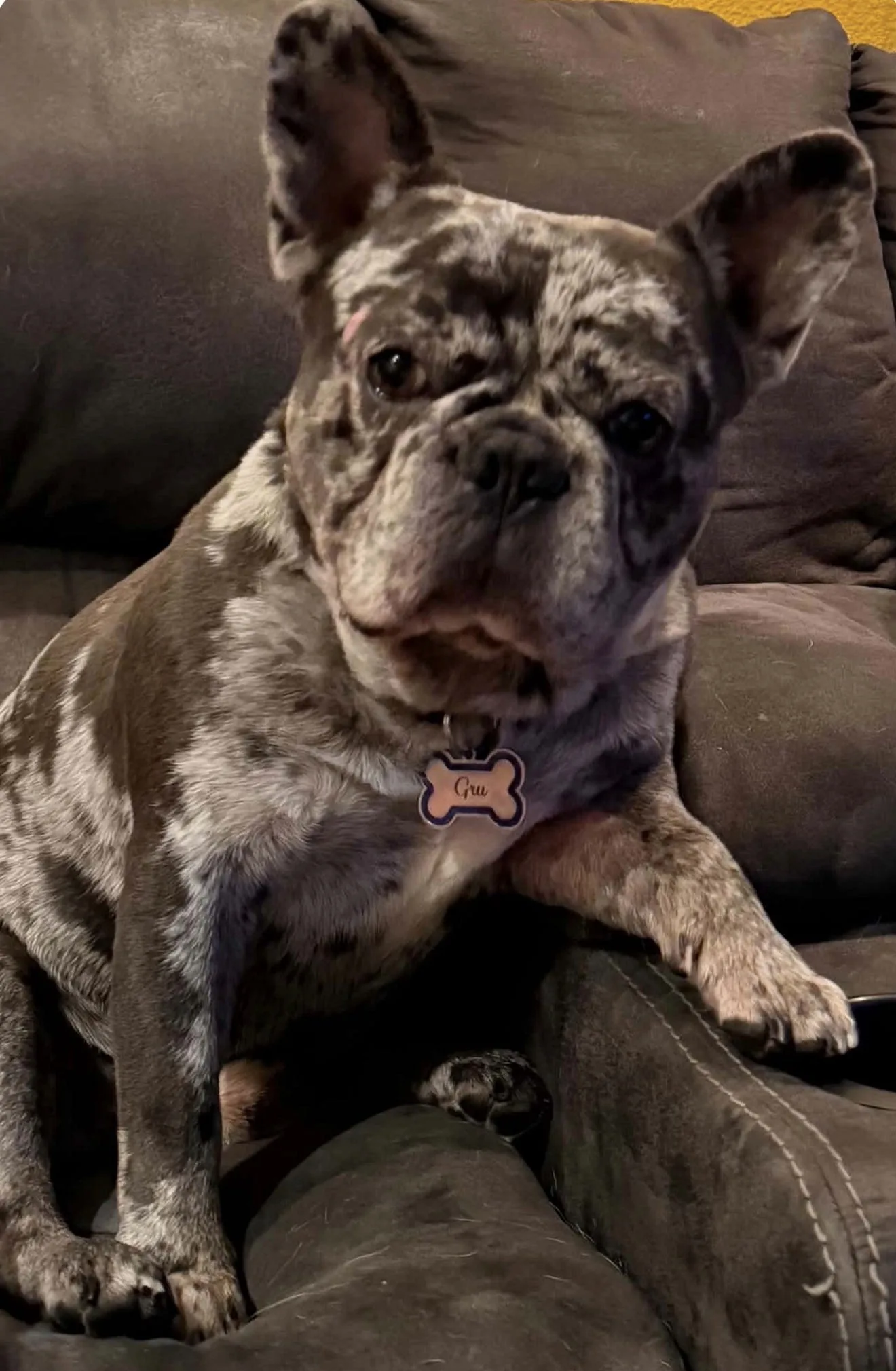
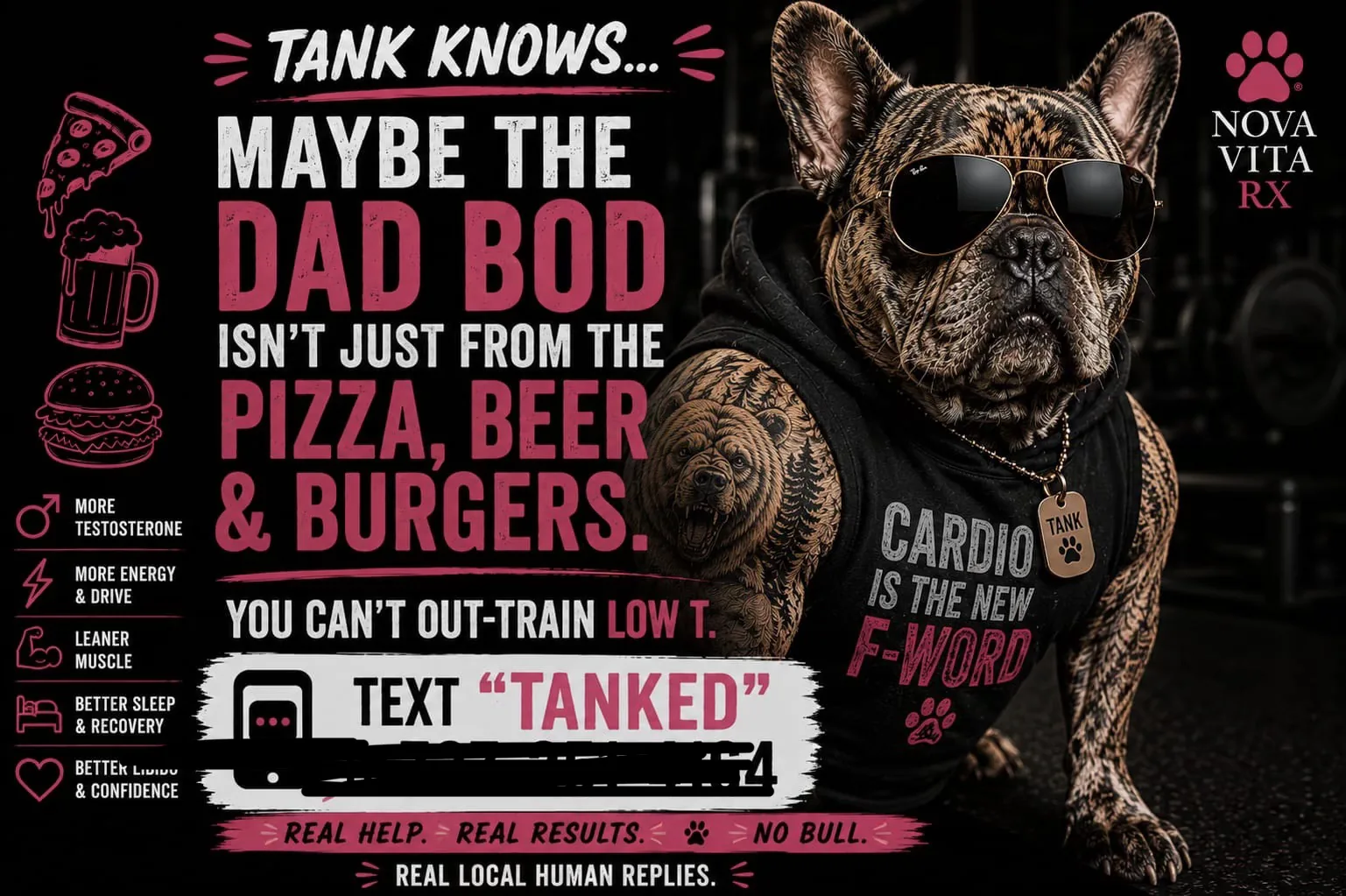
Then there’s Tank. Tank, it turns out, is also based on a real dog, though “Tank” is apparently his stage name. His real name is Gru, which somehow makes it even funnier. Gru became Tank for the campaign because, let’s be honest, “Tank” is a better fit for a tattooed bulldog in sunglasses selling men on the idea that their dad bod might not just be from pizza, beer, and burgers.
The Tank character was inspired by the creator’s partner’s dog, with a little extra personality borrowed from the men around him. Her husband and partner are both big gym guys and personal trainers, so Tank became a blend of bulldog attitude, gym-bro confidence, and low-T marketing chaos.
That’s how you end up with a dog in a hoodie saying “Cardio is the new F-word.”
What I like about the backstory is that it makes the campaign feel less like a gimmick and more like a weird little brand universe. Harley is not just “female weight-loss dog.” She is a rescued Frenchie with side-eye powerful enough to sell hormone balance. Tank is not just “male testosterone dog.” He is Gru with a stage name, sunglasses, and the energy of someone who tells you to get your labs checked between sets.
The creator says the plan is to make Harley and Tank the faces of the company, not only for ads about products and services, but also for regular entertainment and fun content. The campaign will include more static ads and videos, with screens planned for local businesses like gyms, restaurants, and doctors’ offices.
That part is smart. These ads are made for places where people are already thinking about their bodies, energy, food choices, or health. Seeing Harley roast you at a gym or Tank question your testosterone levels near a restaurant TV screen is absurd, but it is also exactly the kind of thing people would stop and photograph.
That is the real lesson here: the campaign works because it has a story behind it. It is not polished stock-photo wellness marketing. It is local, strange, funny, and built around dogs with actual personalities.
Is it aggressive? Absolutely.
Is it for everyone? Definitely not.
But it’s memorable, and in health marketing, memorable is rare. Most telehealth ads blur together into the same soft fonts, the same clean bathrooms, the same smiling people holding water bottles. Harley and Tank are different. They’re not here to hold your hand through a “wellness journey.” They’re here to side-eye you into taking the assessment.
And now that I know Harley is a real rescue dog and Tank is actually Gru with a stage name, I like the campaign even more.
Because anyone can make a loud ad. It takes a special kind of imagination to build a telehealth campaign around two French bulldogs who look like they know your lab results before you do.
Below are pics of the real characters
If you missed the original post the link is below
When the Bulldog Says It's Time to Check Your Hormones
Most weight-loss and hormone clinics advertise with images we aspire to: the after pictures
Nova Vita RX went another way.
They put a French bulldog in pearls and a pink leopard headband on an ad that says, in giant letters: "YOU'RE FAT."
That isn't a wellness ad. That's a dog-led intervention.
Harley isn't here for gentle encouragement. She's here in a blazer, wearing pearls, telling you not to sugarcoat it because, apparently, you'll eat that too.
Rude? Yes.
Memorable? Completely.
Then there's Tank, the male version of the campaign: a tattooed French bulldog in sunglasses and a hoodie that says, "Cardio is the new F-word." Tank is aimed directly at men with dad bods, low energy, poor sleep, lower libido, and the creeping fear that their body has started ignoring them.
His ad says, "Maybe the dad bod isn't just from the pizza, beer & burgers."
Translation: it might be low T.
That's a bold medical suggestion coming from a dog called Tank.
But that's why the ads work. They're ridiculous enough to be funny, but direct enough to land. The company is selling weight management, hormone balance, testosterone help, energy, focus, recovery, and confidence. In most hands, that message would sound like generic clinic copy. Here, it becomes a bulldog-powered intervention wrapped in hot pink attitude.
There is risk here, obviously. Health advertising is delicate. People dealing with weight, hormones, fatigue, libido, or confidence are often already frustrated. A headline like "You're fat" could make some people laugh, and it could make others immediately think, "Absolutely not."
But the bulldogs soften the blow. A doctor saying that would be horrifying. A French bulldog in pearls saying it feels like a meme with a medical intake form attached.
That's the strange genius of the campaign. It uses insult comedy, pet branding, local-business energy, and telehealth convenience all at once. It's part clinic, part gym poster, part bar bathroom flyer, part roast from a dog who somehow has better jewelry than you.
The best line may be the slogan: "Real help. Real results. No bull."
No bull, indeed. Just bulldogs.
The big question is whether attention turns into trust. Funny ads can get someone to text. But once health, labs, prescriptions, hormones, or weight-loss medication enter the picture, the company still has to prove there are real licensed humans behind the dog jokes.
Still, credit where it's due: these ads don't disappear into the background. You may not love them, but you will remember them. And in a world full of bland wellness marketing, that's half the battle.
Harley and Tank may not be board-certified.
But they're definitely board-unforgettable.
Disclaimer: Not sponsored, not a promotion, and not medical advice. This is commentary for educational and entertainment purposes only. Do your own research and consult a licensed clinician before considering any weight-loss, hormone, peptide, or telehealth treatment.
Disclaimer: This is not sponsored, not a promotion, and not medical advice. This is commentary for educational and entertainment purposes only. Anyone considering weight-loss, hormone, peptide, or telehealth treatment should do their own research and speak with a licensed medical professional.



Comments