
The morning after my interview with Bella was posted, plotting profits resurfaced as if nothing had happened.
First came the nudge:
“hello 👋”
Then the guilt-tinged prompt:
“you didn’t get back to me sir”
Our informer replied that the prices were too high, not personal, and that should have been the end of it.
Instead, plotting profits returned with the classic re-entry hook:
“prices went down recently”
“do you mind seeing it?”
That wasn’t customer service. It was a sales loop.
Then the next move arrived immediately: the platform shift.
Plotting profits asked whether our informer had WhatsApp, said they were sending a message now, and confirmed they’d messaged him on WhatsApp “with the catalogue.” The follow up came again the next day:
“did you see it?”
The informer was unable to open the file. But the pattern didn’t change: keep the thread alive, keep the buyer engaged, keep the materials moving off-platform.
And this was where the trail led next.
Alisa’s server: “science-based discussion” with the comments turned off
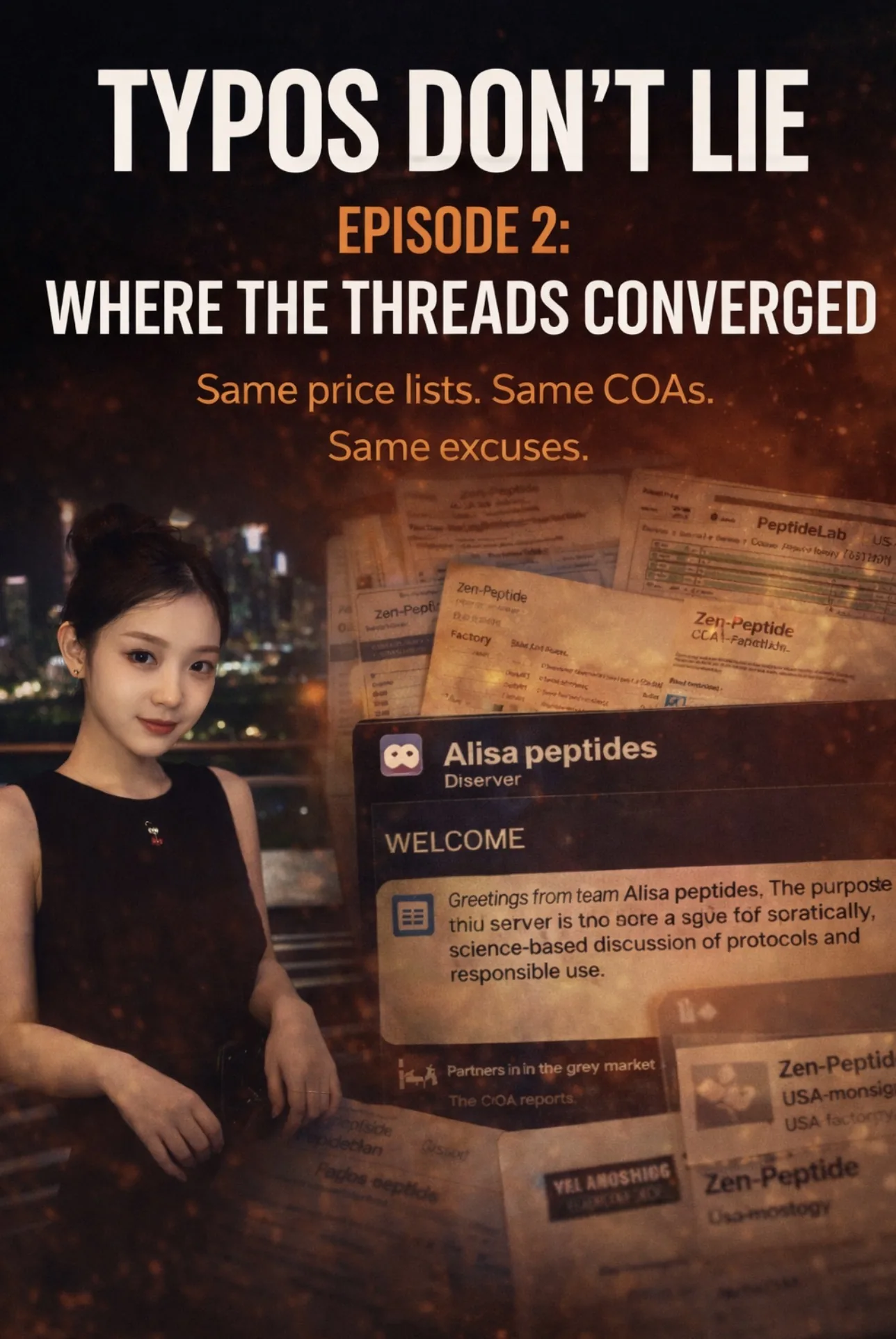
When I joined Alisa peptides’ Discord, the first thing I saw was a polished welcome post presenting the server as a space for “meaningful, science-based discussion” and “responsible use.”
But the structure didn’t match the mission.
It functioned like a broadcast channel: read only, no comments, no discussion.
The tone was professional on the surface, but the purpose was obvious, signal legitimacy, retain control of the narrative, and keep communication strictly one way.
Then the testimonials appeared, the kind designed to do emotional heavy lifting. A member thanked Alisa intensely for being “the only person” who stood by them and ensured a package arrived safely.
Alisa responded warmly.
And then, in the same breath, the sales line landed:
“Still taking orders family.”
Gratitude → bonding → transaction.
Payments, shipping, and the first overlaps
When I asked in her server which payment methods were accepted, Alisa immediately responded to DM her.
Apple Pay
Zelle
Cash App
Apple Pay again.
Then I asked shipping.
Alisa quoted $35 shipping, and delivery “approximately 4 to 5 days via express freight.”
The numbers differed from Bella’s, but the setup felt familiar: payment methods designed for speed and irreversibility, plus shipping reassurance.
Then she posted the price list, and it was the same style of catalogue we’d already seen circulating through this network, posted by plotting profits
At that point, the threads weren’t just “similar.”
They were starting to touch.
The same COAs reappeared, so who was Zen Peptide?
Before I even got a clear answer on who she was, she sent me a load of Janoshik COAs
And the overlap was immediate: the Janoshik COAs were the same ones Bella had shown me, with Zen-Peptide appearing as the client (and also referenced on the manufacturer line on those reports).
Only after the documents were on the table did I ask directly:
Who is Zen peptide?
Alisa’s first answer stayed vague:
“Our partners in the grey market.”
When I pressed for what kind of partner, the wording shifted:
“Our colleague.”
When I asked whether she was on PepChat:
“No sister.”
Then she dropped another batch of non Janoshik reports and called them
“The COA reports”
PeptideLab appeared as the client.
When I asked who PeptideLab was, she replied
“That’s the USA factory”
And when i again asked who Zen is, she replied “COA reports participants”
So the paperwork came in layers: first the same Zen-Peptide Janoshik reports already circulating through Bella, then additional COAs that introduced PeptideLab as the customer, before Alisa ever gave a stable explanation of who Zen (or PeptideLab) actually was.
The labels moved depending on pressure, but the goal stayed constant: keep the paperwork sounding official without pinning down who was actually responsible for what.
The Bella connection: denial, then damage control
When I asked directly if she knew Bella, Alisa’s immediate response was:
“Sorry no. Who is that?”
When I told her Bella had named her as a friend/colleague, Alisa pivoted:
“I don’t remember… Do they sell too? Or they are customers?”
Then I stated the obvious: Bella was a scammer, and I pointed out that Alisa had shown me the same COAs.
That’s when the explanation landed fast:
“That’s because they stole from our website which is under maintenance.”
And she added a justification for why they didn’t post the COAs openly:
They avoided posting because scammers would see, and they avoided “situations like this.”
So the narrative became self sealing:
we’re real → scammers steal our content → we keep things quiet → trust us anyway.
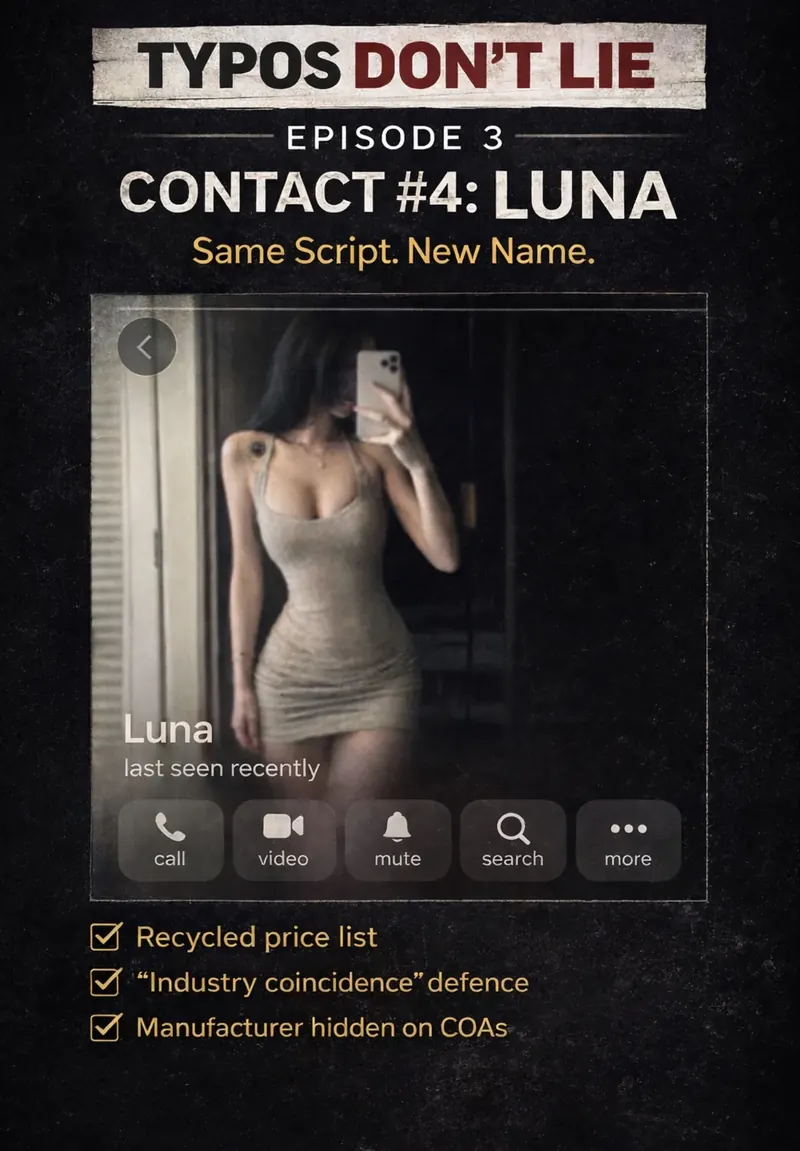
And after that… a fourth contact appeared.
To be continued in episode 3

Comments