
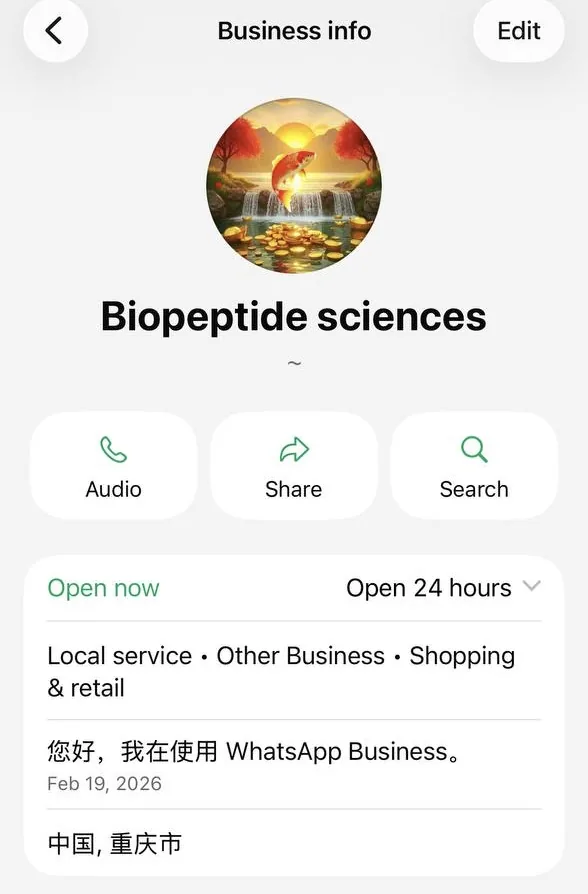
Until June 2026, BioPeptide Sciences appeared to be another Chinese peptide supplier competing for business in the crowded grey market. The company was introduced into a large Skool community after being recommended by one of its members. At the time, independent testing was still pending, but attractive pricing persuaded some customers to place orders before the results were available.
Within weeks, the relationship had deteriorated into laboratory failures, refund disputes, accusations of fake certificates and customers attempting to recover their money through Alibaba and chargebacks.
The Introduction
BioPeptide Sciences was added as a vendor while testing was still underway. Members were informed that independent results had not yet been completed, but despite that warning, some customers still decided to buy immediately because the prices were considered competitive. The expectation was that the testing would confirm the quality of the products. Unfortunately, the opposite happened.
The First Test Results
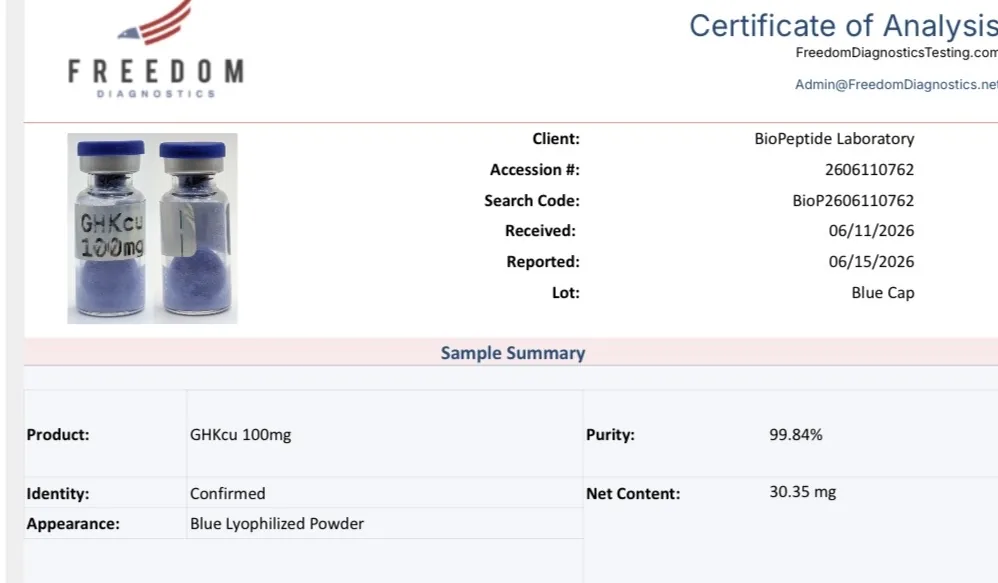
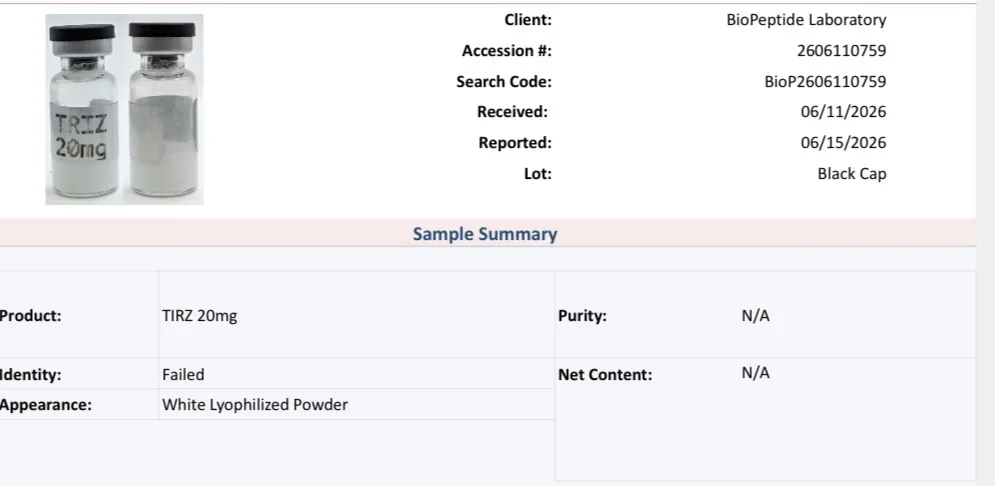
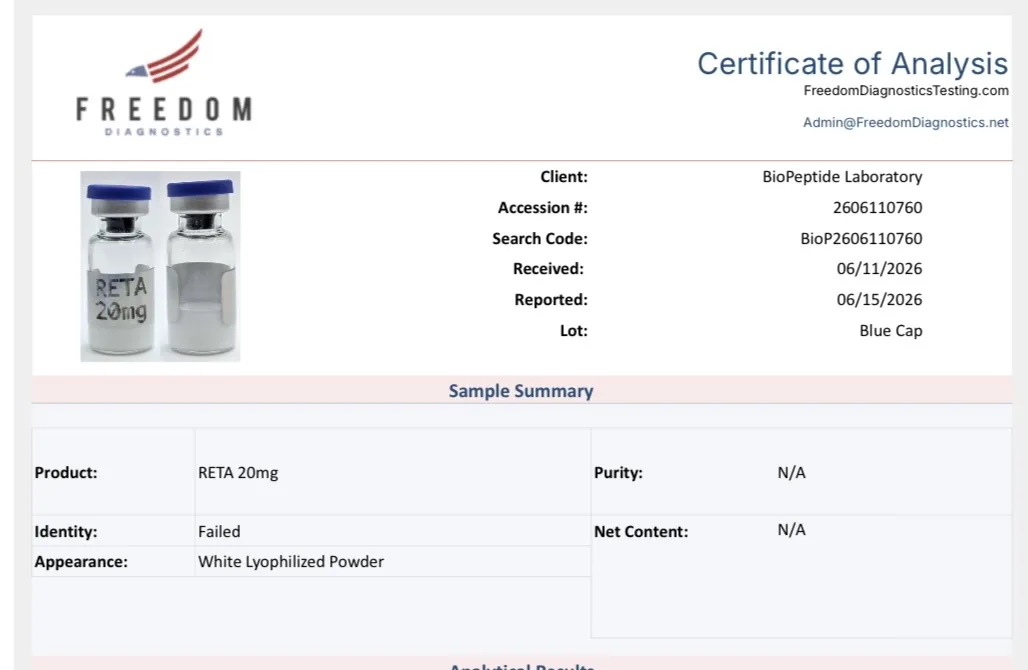
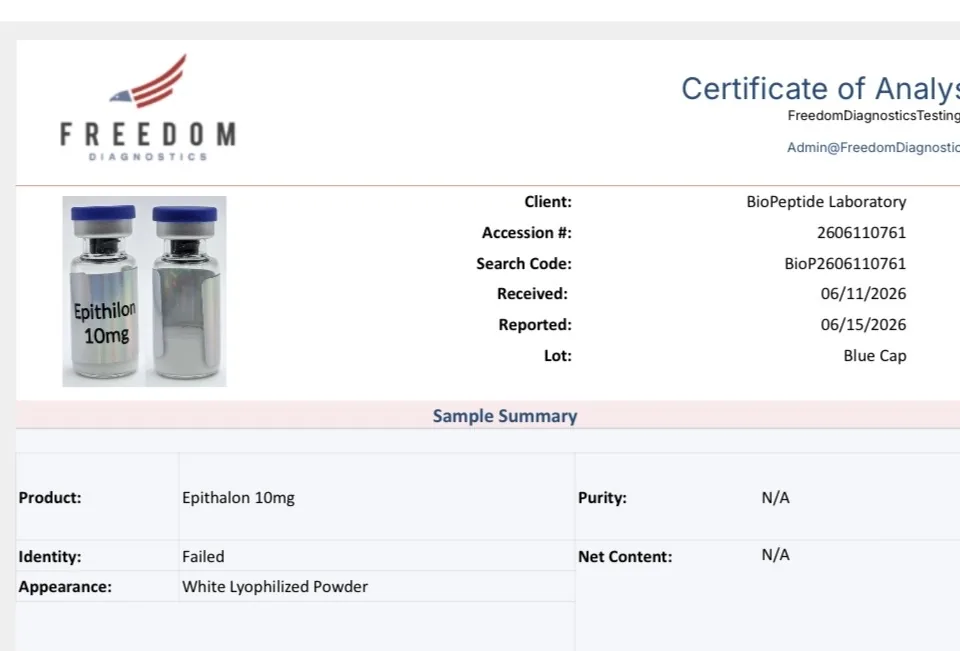
Freedom Diagnostics analysed four BioPeptide Sciences products received on 11 June 2026.
The laboratory reported:
Tirzepatide 20 mg, No analyte detected.
Retatrutide 20 mg, No analyte detected.
Epithalon 10 mg, No analyte detected.
GHK-Cu 100 mg, GHK-Cu identified at approximately 30.35 mg, substantially below the labelled amount.
Rather than finding the expected peptide, Freedom Diagnostics reported that several samples produced signals more consistent with small non-peptide or formulation-related compounds than the labelled products.
A Second Round
According to members of the community, BioPeptide Sciences initially argued that only products from an older production run were affected.
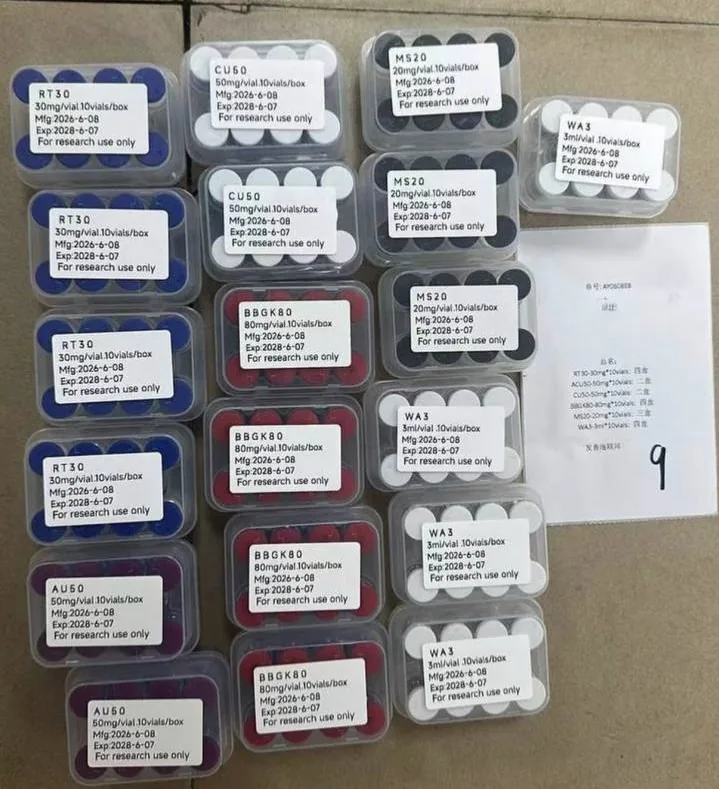
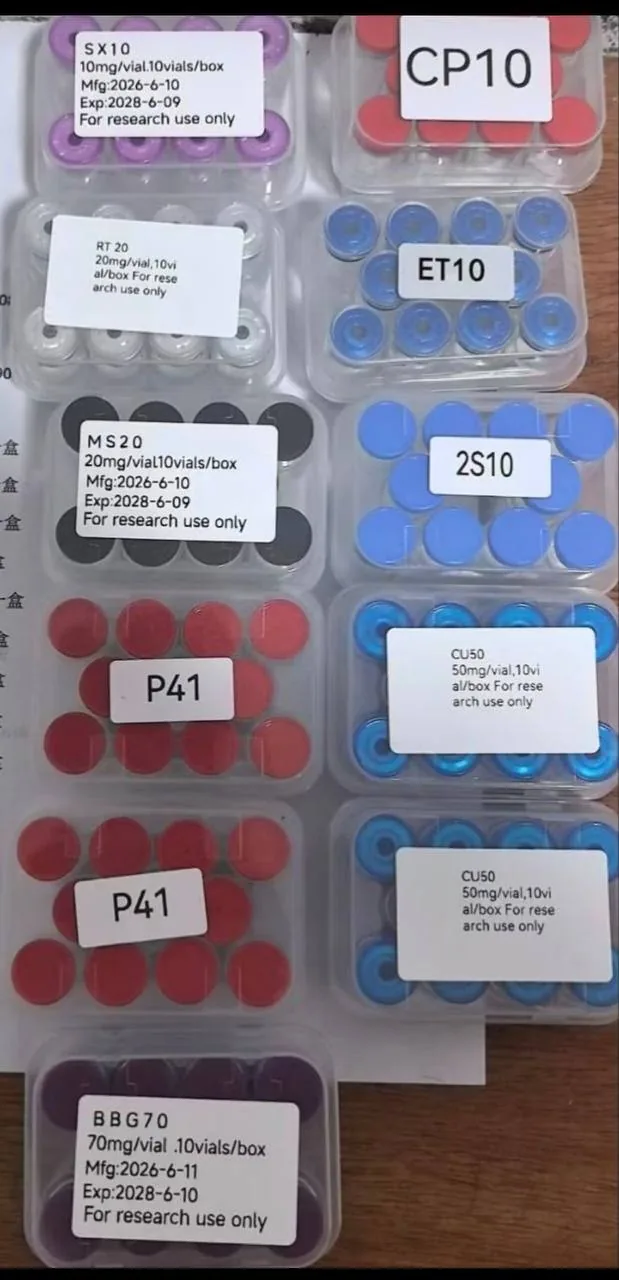
Customers say they were told the company had changed factories and that newer labels represented products from the new manufacturer. Apparently the labels from the old factory had just the SKU but the labels from the new factory showed the MFG dates. The explanation sounded plausible, but the newer-labelled products were tested as well through Freedom Diagnostics.
MOTS-C 40 mg -no analyte detected
SS-31 10 mg- no analyte detected
Tesamorelin 5 mg-no analyte detected
So in the end, both the older and newer labelled products failed independent testing.
The Company’s Response ;“The Reports Are Fake”
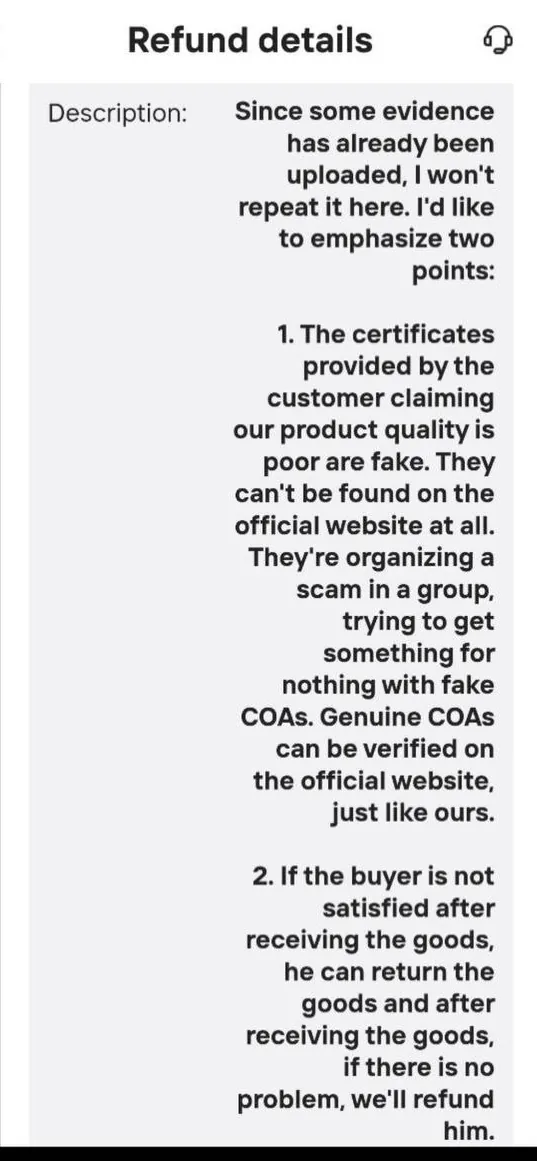
Rather than acknowledging the independent laboratory findings, BioPeptide Sciences took a different approach during multiple Alibaba refund disputes. Documents submitted as evidence show the supplier repeatedly argued that the customers’ laboratory reports were fake.
According to the supplier:
the customer certificates could not be found on the “official website” and because they couldn’t be verified there, they were assumed to be fabricated;
they alleged that customers were working together to organise a scam using fake COAs to obtain refunds;
genuine certificates, the supplier claimed, could be verified online “just like ours.”
they offered the link to the Janoshik website to verify their own tests done on the products
The supplier also argued there was no legal requirement to provide laboratory reports when selling products and stated that payment is voluntary and that it had not engaged in any fraudulent activity.
At the same time, the company told Alibaba that dissatisfied customers could return their products and, if no problems were found after inspection, refunds would be issued.
The Lasting LLC Connection
The Janoshik COA the company was pushing carried the name Lasting LLC, although it’s unclear how that company is connected to BioPeptide Sciences.
Customers Try to Cancel
According to members involved in the dispute, some buyers attempted to cancel orders that had not yet shipped after learning of the laboratory findings. They claim BioPeptide Sciences shipped the products anyway.
Others turned to Alibaba’s Trade Assurance process or contacted their credit card companies in an attempt to recover their money. A separate Telegram group was created solely for customers trying to resolve outstanding cases.
Community Support
One notable aspect of the incident was the response from the Skool community itself. The owner of the Skool group supplied replacement kits to some cryptocurrency customers and helped offset losses for members in particularly difficult situations.
Still Selling?
Perhaps the most troubling allegation made by customers was that BioPeptide Sciences continued accepting orders after the testing controversy emerged. One member reported successfully contacting the original sales representative and finding the same price list still being offered. If true, that would mean customers could still have been purchasing products while earlier buyers were disputing failed laboratory results.
Conclusion
The BioPeptide Sciences dispute demonstrates how quickly confidence can collapse in the grey-market peptide industry. A vendor introduced through community recommendations was soon facing seven independent laboratory failures, allegations of underfilled and failed products, refund disputes and accusations that customer testing had been fabricated.
BioPeptide Sciences rejected the allegations, arguing that the customer laboratory reports were fake and defending its position throughout the Alibaba disputes. The customers, however, maintained that the reports were genuine and pointed to multiple independent laboratory results, repeated failures across different products and batches, and the supplier’s continued sale of the products as evidence supporting their claims.
Comments