
Following my article about DataMeds AI planning to target customers who currently buy peptides through the grey market, the discussion on X has been extensive. The company clearly sees an opportunity to move existing peptide buyers into a prescription-based pharmacy system. But the responses suggest that persuading them to move could be considerably harder than identifying them as potential customers.
The discussion has moved beyond price to manufacturing, independent testing, supply-chain transparency, clinical evidence and which peptides pharmacies would actually be allowed to provide.
Price Is Still the Biggest Obstacle
The most common objection was straightforward: why would existing grey-market buyers pay considerably more for peptides they can already obtain at much lower prices?
Many purchase directly from Chinese suppliers and arrange independent laboratory testing, keeping their costs well below typical US pharmacy prices.
Licensed compounding brings additional costs, including pharmaceutical-grade sourcing, manufacturing controls, testing, prescriptions and professional oversight. Some buyers may consider those safeguards worth paying extra for, particularly if the price difference is reasonable.
But for established grey-market customers already satisfied with their suppliers and testing arrangements, price could be the deciding factor in whether they switch.
Which Peptides Would Pharmacies Actually Offer?
Product availability is another major concern. A regulated pharmacy route may have limited appeal to existing grey-market buyers if it excludes compounds they currently purchase, particularly retatrutide and tirzepatide.
The FDA’s proposed interim compounding policy remains under review, and the final list of eligible substances has yet to be confirmed. In July, the FDA’s advisory committee recommended six peptides for consideration:
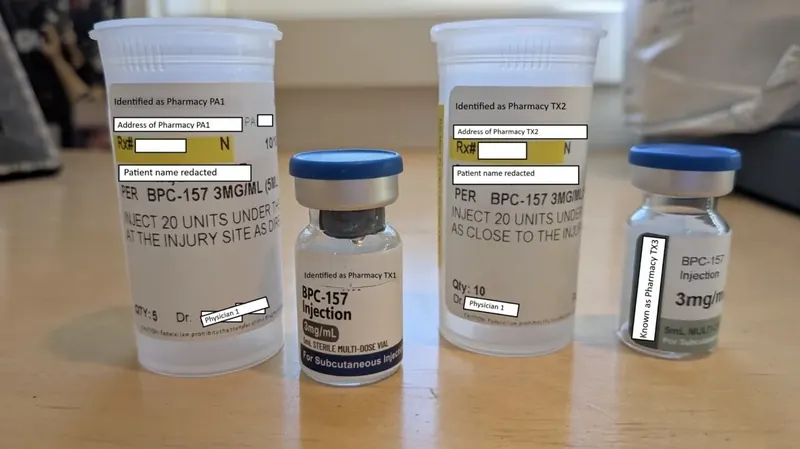
BPC-157
KPV
TB-500
MOTS-c
Semax
Epitalon
The committee voted against emideltide.
These recommendations are advisory and don’t constitute FDA approval or automatically authorise pharmacies to compound these substances. BPC-157 and MOTS-c are among the compounds likely to attract interest, alongside others such as GHK-Cu, tesamorelin and Epitalon. Tesamorelin is already FDA-approved for treating excess abdominal fat in adults with HIV-associated lipodystrophy, but that approval doesn’t extend to other uses.
Ultimately, the appeal of pharmacy compounding will depend partly on whether the peptides people want are legally available through that route.
Does It Really Need to Be Made in America?
Manufacturing location is another important consideration. American-made doesn’t automatically mean better quality. China, Europe, Japan and other countries already produce pharmaceutical ingredients under internationally recognised standards.
What matters is transparency around API suppliers, proper oversight of manufacturing and lyophilisation facilities, and traceability from the raw material through to the finished vial.
US-based filling and finishing already takes place in parts of the peptide market. A product can be manufactured using Chinese API, filled into vials in America and sold under a US brand. That doesn’t make the original peptide American-manufactured.
There’s also the question of whether the US has sufficient manufacturing capacity to meet demand if pharmacy compounding expands. Domestic production may increase, but international API suppliers are likely to remain an important part of the supply chain.
Ultimately, manufacturing standards, testing and traceability are more meaningful measures of quality than the country printed on the label.
The strongest point emerging from this discussion was that manufacturing quality should be demonstrated through documented standards, traceability and testing, rather than nationality.
Recent FDA investigations have identified manufacturing deficiencies at facilities in China and the United States. The country of manufacture is a poor substitute for examining how a particular facility actually operates.
Independent Testing, Will Pharmacies Offer Anything Better?
Independent testing is already an established practice among experienced grey-market buyers. Many arrange lab analysis to verify peptide identity, purity and quantity, while some also commission sterility and endotoxin testing.
For licensed compounding pharmacies hoping to attract these customers, lot-matched finished-vial testing results could provide greater transparency than relying on Section 503A status alone.
A COA may confirm identity, purity and peptide content, but those results don’t automatically establish sterility, acceptable endotoxin levels or compliance with other quality requirements. The certificate also needs to be traceable to the batch actually supplied. This becomes particularly important when peptide ingredients pass through manufacturers, distributors and compounding pharmacies before reaching the customer.
The question is whether pharmacy compounding will provide customers with greater access to verifiable testing information, alongside the regulatory safeguards already required.
An impressive-looking COA is considerably less useful when nobody can establish which batch it represents.
Recent FDA Recalls Raise Questions About Quality Control
Recent incidents involving US compounding pharmacies demonstrate why independent testing and manufacturing oversight remain important, even within a regulated system.
In September, Apothecary Pharma recalled 22 vials of compounded tirzepatide because sterility could not be assured. Separately, several pharmacies recalled injectable glutathione preparations following elevated endotoxin findings and reports of serious adverse reactions.
The wider glutathione investigation involved more than 25 reported illnesses and at least three hospitalisations. FDA also identified a common ingredient lot supplied by Medisca to pharmacies associated with multiple adverse-event reports.
These incidents don’t establish that pharmacy-compounded products carry the same risks as grey-market peptides. They do demonstrate that a pharmacy licence alone can’t guarantee the quality of every preparation.
For experienced peptide buyers already accustomed to examining independent laboratory results, access to batch-specific testing information could be an important factor when deciding whether a pharmacy offers a worthwhile alternative.
New COAs and Monographs Are Being Developed
An interesting development came from Dr Alex Tatem, who shared details of work underway on peptide testing standards. He stated that the American Academy of Peptide Medicine and the Peptide Council are finalising COAs and monographs for the six peptides considered by FDA’s advisory committee in July.
He also offered to share details of their progress. That’s worth following because consistent testing standards could make it easier to compare products and assess whether they meet defined specifications.
The important questions will be what the monographs require, whether they cover both raw APIs and finished preparations, and which laboratories will perform the testing. It will also matter whether those standards are adopted by regulators or remain industry-developed documents.
The proposed standards are still being finalised, and it remains to be seen how they will be implemented and whether the FDA will formally recognise them.
Manufacturing Quality and Clinical Evidence
A peptide can pass laboratory testing for identity, purity and quantity without having been proven safe or effective for its intended medical use. Several popular research peptides still have limited human clinical evidence, regardless of how well they are manufactured.
Establishing safety and effectiveness requires clinical trials, which raises another challenge: who will fund large, expensive studies of peptides that may offer limited opportunities for patent protection or commercial exclusivity?
That could remain a significant obstacle even if manufacturing standards improve and pharmacy access expands.
Not Everyone Wants to Stay in the Grey Market
Despite concerns about pricing, there’s also demand for a regulated alternative, particularly among people interested in peptides who are uncomfortable purchasing from research-peptide suppliers.
A licensed pharmacy offers additional safeguards, including professional oversight, prescription requirements and greater accountability when problems arise. These benefits may appeal to people who have avoided the grey market or had disappointing experiences with online vendors.
However, those safeguards come at a cost, and pharmacy access doesn’t automatically establish the clinical safety or effectiveness of an experimental peptide.
For this market to attract customers, pharmacies will need to offer both credible quality assurance and prices people are prepared to pay.
Who Will Actually Switch?
The proposed pharmacy route is likely to appeal to two different groups.
Established grey-market buyers often have trusted suppliers, independent testing arrangements and experience comparing prices. Convincing them to switch will require competitive pricing, access to the peptides they want and quality assurance that offers a clear advantage over their current arrangements.
People who have avoided the grey market because of concerns about sourcing, safety or reliability may be more willing to pay extra for prescription-based access and professional oversight.
For companies such as DataMeds, the challenge will be attracting both groups. The proposed FDA changes could create a substantial new market, but the customers most interested in regulated access may not be the existing grey-market buyers the company intends to target.
The Bigger Question
What started as a discussion about DataMeds targeting grey-market customers has become a broader debate about the future of peptide supply. The recurring demands are fairly clear: affordable prices, transparent sourcing, traceable batches, meaningful independent testing, reliable manufacturing standards and access to compounds supported by appropriate evidence.
The FDA has yet to finalise its interim compounding policy, and companies are already preparing sourcing arrangements, distribution networks and marketing strategies. But the customers have their own expectations.
The companies may be ready to sell to the grey-market customer. The more interesting question is whether they’ve worked out what that customer is actually willing to buy, and pay for.
Link to my original article below
The Grey-Market Peptide Customer Is Now a Target for US Pharmacies
The FDA hasn’t finalised its proposed peptide-compounding policy, but one US healthcare company is already planning to target customers who’ve been buying peptides through the grey market.
On 16 October, DataMeds AI (NASDAQ: MEDS) announced plans to expand its Corexa Health operations into the emerging market for pharmacy-compounded peptides.
Buried in the announcement was a particularly interesting statement:
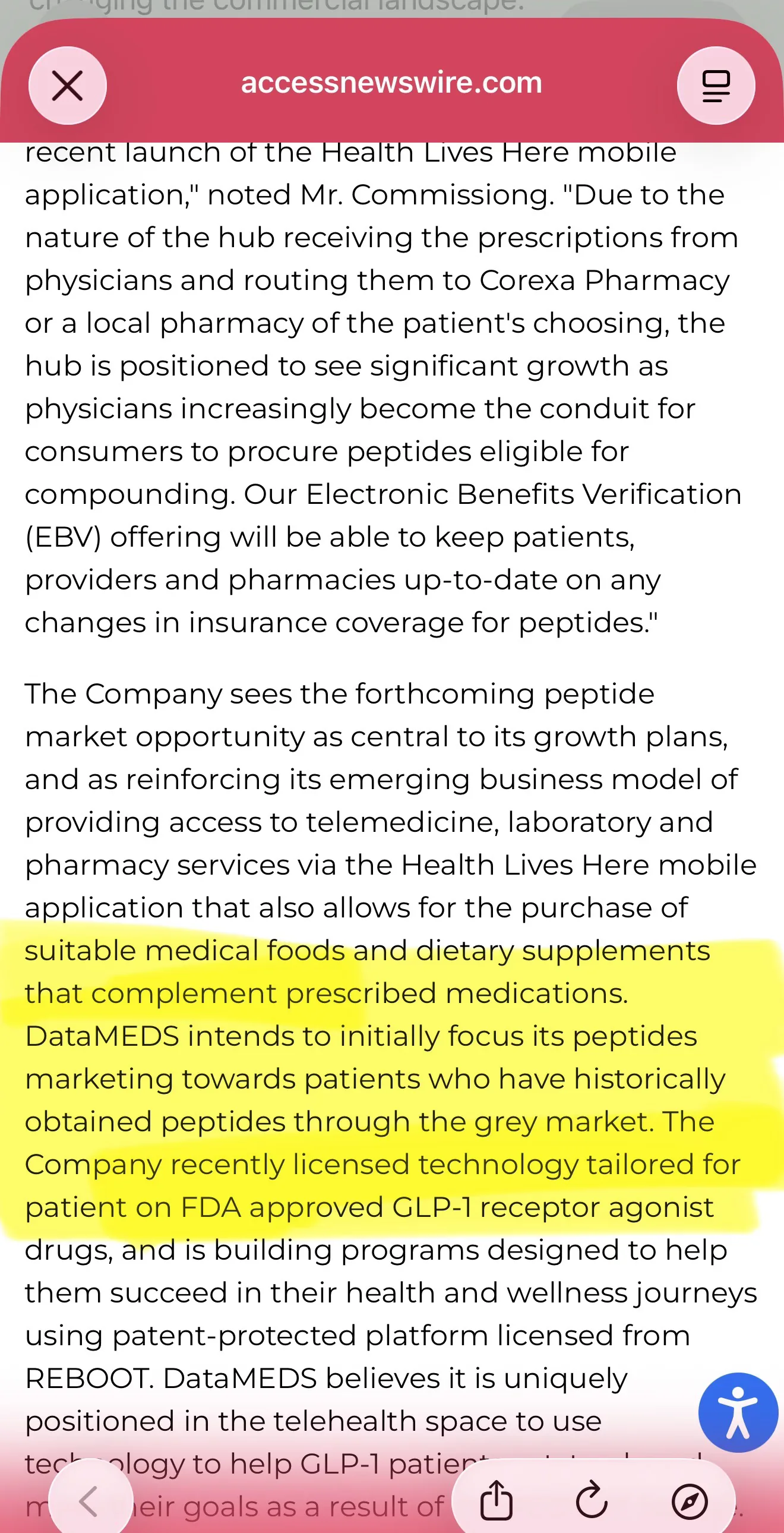
“DataMEDS intends to initially focus its peptides marketing towards patients who have historically obtained peptides through the grey market.”
That’s a fairly direct acknowledgement of a customer base that pharmaceutical and healthcare businesses have often preferred to distance themselves from.
Corexa Pharmacy is already an established Section 503A compounding pharmacy. The company intends to begin dispensing eligible peptides if the FDA’s proposed interim access policy takes effect.
It also has much of the infrastructure in place. Its distribution division operates a 40,000-square-foot warehouse in Florida, reports licensing across all 50 US states and has access to a network of more than 6,500 independent pharmacies.
Its technology division plans to connect doctors, patients and pharmacies through the Health Lives Here app, handling prescription referrals and helping patients access compounded treatments.
DataMeds expects the market to be predominantly cash-pay, which it sees as an advantage because it reduces reliance on insurance reimbursement.
The company is already reviewing potential peptide API suppliers and expects to arrange sourcing contracts in the coming weeks.
The FDA policy remains a proposal, with the final list of eligible peptides and conditions for compounding still to be confirmed.
But will grey-market customers actually move?
This is where DataMeds’ strategy becomes interesting.
Many established peptide buyers use the grey market precisely because of price and access. Some purchase directly from Chinese suppliers, arrange independent laboratory testing and still pay considerably less than they would through a typical US pharmacy.
DataMeds wants to introduce prescriptions, licensed compounding, US distribution and a telehealth platform. All of those services come with costs.
There will undoubtedly be customers willing to pay more for regulated sourcing, medical supervision and convenience. But converting price-conscious grey-market buyers into cash-paying pharmacy customers could prove difficult.
The company has identified an existing customer base, but identifying those customers and persuading them to change how they buy are two very different things.
The irony is that DataMeds sees grey-market buyers as a commercial opportunity, while the prices that attracted many of those buyers to the grey market may be exactly what keeps them there.
The FDA is still working out the rules. DataMeds is already working out how to get the customers.
Source: DataMeds AI / Corexa Health announcement, 16 October 2026.

Comments