
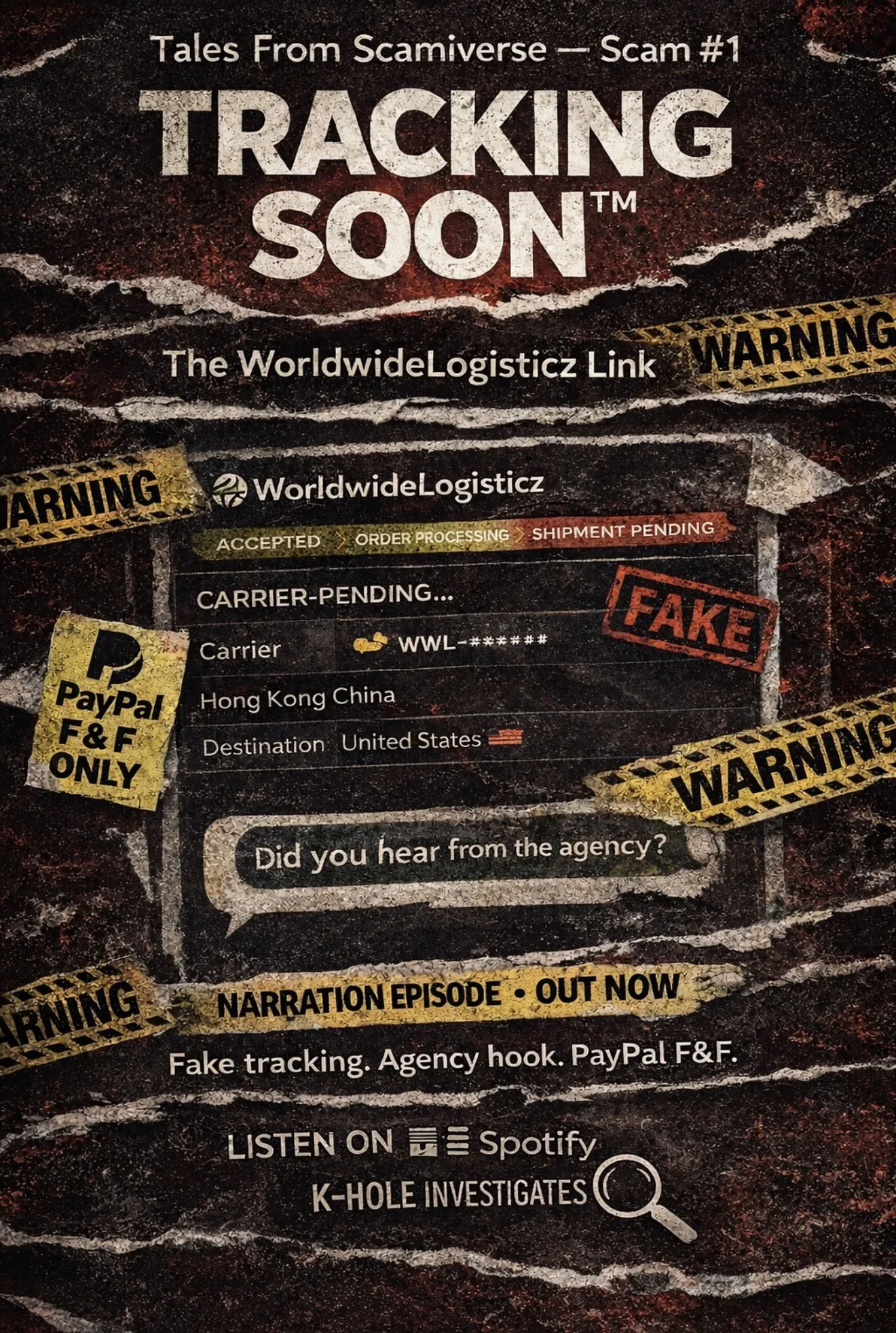
In Scamiverse, “30 minutes” doesn’t mean thirty minutes.
It means: we’re buying time.
Because waiting is the product. Waiting keeps you invested. Waiting keeps you polite. Waiting keeps you thinking, maybe it’s just a delay. Waiting makes you want closure.
And that’s exactly how the Olivia Grace scam starts, not with a threat, not with a demand, but with momentum. A TikTok follow. A friendly DM. An Excel spreadsheet fired over instantly, because spreadsheets look like businesses and the brain loves shortcuts.
The buyer asks if Olivia is a supplier. The response is immediate: a catalog. An Excel price list. Not answers. Not reassurance. A file.
When the buyer asks a simple question, does Mounjaro come like the video or in vials, Olivia slides into that polite, copy paste tone: “Kindly go through the catalog and send me your order.” It’s the first test.
If the buyer obeys and places an order, the scam moves forward. If the buyer stays curious, keeps asking for specifics, the scam gives the minimum required to keep them moving. Eventually: “In vials.”
Next comes the proof question: Do you have test reports for RT? The answer is a single word: “Yes.”No attachment. No batch context. No verification path. Just “yes,” because “yes” is cheap, fast, and designed to close the subject.
Then the shipping pitch arrives, a neat little menu that sounds professional until you listen properly. Normal FedEx. Fast FedEx. Fifteen days. Seven days. And then the reassurance perfume: “Double clearance. Door to door. Safe and fast.”
In real life, “safe and fast” looks like a label photo, an origin scan, and tracking created by a real carrier. In Scamiverse, “safe and fast” is what you say when you want someone to stop thinking.
This is where the scam brings out its first prop: a COA screenshot. Not a complete, order specific document trail, just a cropped screenshot that looks official at a glance. It’s meant to be seen, not checked. A trust token. Something shiny enough to lower your guard.
But the details whisper the truth: the report appears tied to another vendor, not Olivia. That’s what happens when someone borrows credibility, they forget the small print is the loudest part.
Still, the hook lands. The buyer says they’ll order soon. And now the scam has what it wants most: forward motion.
Next comes an early promise that matters later. The buyer asks a very specific logistics question: if they order tomorrow with fast delivery, will it ship tomorrow?
Olivia answers confidently: yes.
That confidence is bait. Scammers love confident scheduling early on because it makes you think you’re dealing with someone organised, someone with logistics. But promises are free. And that “yes” becomes the first crack when nothing moves.
The buyer places a small test order. Olivia responds with an itemised quote, then immediately asks for full delivery details, full name, address, phone number, email. The scam puts on a clipboard. It imitates normal checkout because familiar processes make people relax.
The buyer tries to stay smart. They increase one item and ask for a few free vials for testing. Olivia agrees instantly: three free vials, “first time deal.”
Freebies here aren’t generosity. They’re leverage. They make you feel like you negotiated something, like the seller is flexible, like this is cooperative. And that tiny relaxation is exactly what the scam needs before the next move.
Then Olivia asks the question that matters: payment method.
The buyer chooses PayPal. Olivia’s condition lands immediately: Friends & Family only.
That’s the trap. Friends & Family turns a purchase into a “gift” and gifts don’t come with protection. Gifts don’t get disputed. Gifts don’t get reversed.
The buyer asks why. Olivia doesn’t explain. She repeats policy like a wall: PayPal only through Friends & Family.
Then the scam shifts from “selling” to managing. Olivia asks for screenshot verification. When the buyer says they can’t screenshot PayPal, Olivia instructs them to use a second phone to photograph the transaction and send it.
That’s the stomach drop moment. Legit businesses don’t need your two phone photo theatre. Payment processors confirm payments automatically. Only scammers need manual proof rituals to keep control.
Payment goes through. The buyer voices what everyone thinks: Friends & Family offers zero security.
Olivia responds with reassurance instead of evidence: the buyer won’t regret it. Olivia doesn’t run a scamming institution. That line always appears at the same moment, when doubt finally breaks the surface. It’s not proof. It’s performance.
Now the scam enters Act Two: the tracking treadmill.
The buyer asks for tracking. Olivia replies with warm vagueness: as soon as possible… I’ll keep in touch.It sounds supportive, but it avoids commitment. So the buyer asks for specifics, one day? two?
Olivia replies: tomorrow.
Tomorrow becomes a loop. Tomorrow becomes “couldn’t register the package.” Tomorrow becomes “lots of shipments.” Tomorrow becomes tomorrow again.
And when the buyer starts using the word “scam,” Olivia doesn’t offer proof. She offers time.
Two hours. She hasn’t forgotten. She’s busy. Two hours is a leash, it keeps the buyer watching, waiting, hoping.
Then “two hours” becomes “soon.” Soon becomes “30 minutes.” And “30 minutes” becomes the most human excuse in the script: “I’m driving home now. I’ll get you the tracking shortly.”
It’s designed to sound ordinary. It’s also strategically perfect because nobody argues with someone who is allegedly driving.
Finally, the tracking arrives.
A number. A link.
But not FedEx. Not UPS. A domain you’ve never heard of, an off-brand tracking page controlled by the scam itself.
That’s what fake tracking is for. It doesn’t need to be true. It just needs to lower panic. It’s damage control. It’s theatre.
The buyer stays polite, still hoping. Olivia thanks them for their patience.
And then Olivia asks the line that tells you what comes next:
“Did you hear from the agency?”
That question isn’t casual. It’s a trigger phrase. It signals the handoff into the next collection attempt, the moment a WhatsApp message or email arrives claiming the parcel is held and a fee is needed to release it. Customs, agency, whatever label they use… the function is the same.
The buyer recognises the pattern instantly and calls it out: the tracking isn’t real, and now there’s a message asking for money to “release” the parcel.
Olivia performs confusion: “What do you mean?”
That’s where Scam #1 ends.
Not because it stops, but because it reaches its pivot: the second payment attempt.
And this is why Scam #1 matters on its own. Because it reveals the mechanism: a sequence of small steps, each one survivable, each one framed as “just one more thing.” Spreadsheet. Vague “yes.” Forged COA. Policy wall. Photo proof. Tomorrow. Two hours. Thirty minutes. Driving home. Tracking link. Agency.
Smart people get caught not because they’re stupid, but because the scam doesn’t demand everything at once. It asks for small steps. And small steps feel manageable… until you look back and realise you’ve already invested money, time, and hope.
So the lesson isn’t “be smarter.”
It’s: respect the pattern.
Because once you recognise the pattern, you can walk away early, before the treadmill starts.
In Scamiverse, accounts get banned and come back fresh. Domains change. Names change. But scripts are stubborn.
And Scam #1’s script is simple:
TikTok hook. Spreadsheet legitimacy. One word answers instead of proof. Friends & Family only. Manual “verification” rituals. A treadmill of shifting deadlines. A fake tracking domain. And an “agency” waiting offstage with its hand out.
And if you ever hear the phrase:
“Did you hear from the agency?”
You already know what act you’re in.
And you can walk out before the next payment scene begins.

Comments