
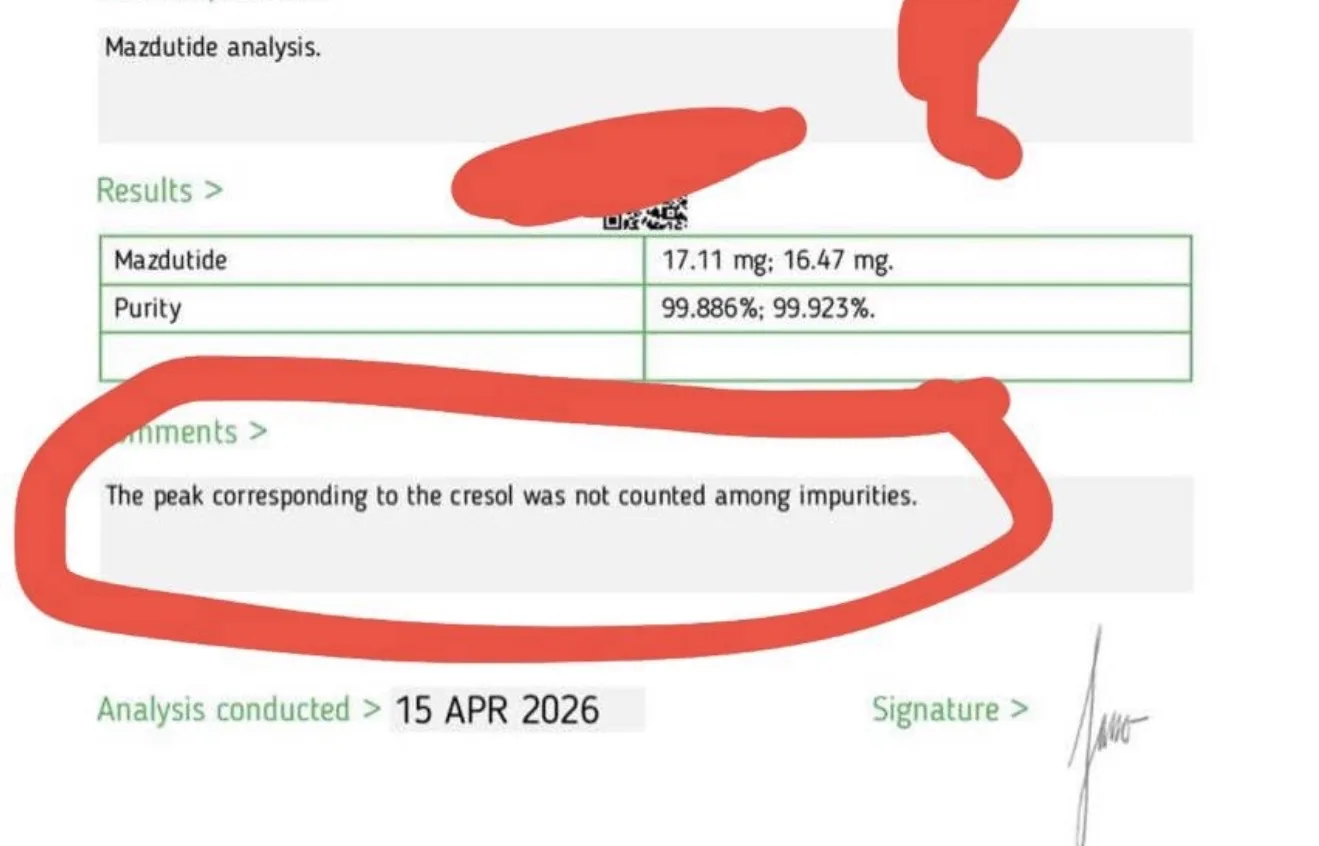
Once again, we encounter contamination in a grey market peptide, this time, Mazdutide. A recent Certificate of Analysis (COA) from Janoshik detected an unexpected peak on the chromatogram identified as m-cresol. Given prior contamination incidents involving cresols, Janoshik recognised it promptly and excluded it from purity calculations.
Previous Incident: p-Chlorocresol (PCMC) Contamination
In June 2025, a dispute arose between SRY and Janoshik after an initial COA reported unexpectedly low purity for SRY’s Tirzepatide, which was later amended to reflect the presence of PCMC and the purity restored back to over 99%
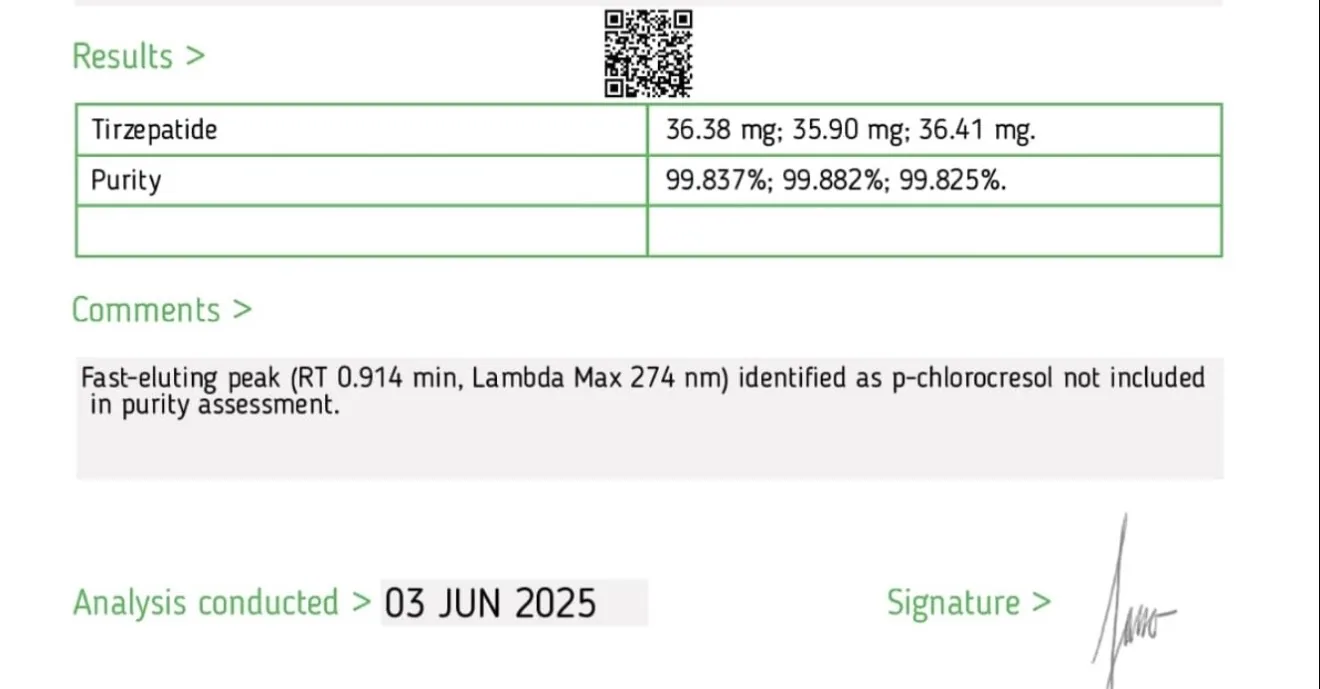
SRY challenged Janoshik, alleging he amended the COA without explanation. Janoshik clarified that an unidentified contaminant initially necessitated inclusion in purity calculations until definitive identification through Gas Chromatography-Mass Spectrometry (GC-MS) was performed upon receiving payment. The contaminant was conclusively identified as p-chlorocresol (PCMC).
Understanding p-Chlorocresol (PCMC)
PCMC is a chlorinated phenolic compound commonly employed as an antimicrobial preservative and disinfectant in products like antiseptic creams and topical pharmaceuticals. In pharmaceutical injectables, it’s typically restricted to reconstituted multi-dose injectables such as insulin at low concentrations (~0.1%) to preserve sterility between uses. Its use must be explicitly disclosed due to significant risks of allergic reactions and potential malignant hyperthermia in susceptible individuals.
Why is PCMC in Grey Market Vials Problematic?
The presence of PCMC in lyophilised peptide vials is concerning because such products are designed to be sterile and preservative-free. Historically, preservatives like phenol or benzyl alcohol have been common in multi-dose injectables, but their use in lyophilised peptides is highly unusual and unnecessary. Thus, unintended PCMC contamination strongly indicates manufacturing contamination or improper practices.
Sources of PCMC Contamination specific to grey market peptides
The presence of contaminants like PCMC primarily arises from inadequate manufacturing practices prevalent in grey-market peptide production, including:
Facility Sharing and Cross-contamination: Peptide manufacturers often share equipment and production spaces with cosmetic or topical product manufacturers, significantly raising contamination risks.
Inadequate Cleaning and Validation Procedures: Poorly enforced cleaning standards allow residues like PCMC to persist between production runs.
Insufficient Analytical Oversight: Limited or inadequate analytical testing means contaminants frequently go unnoticed until detected by independent testing labs.
Current Issue: m-Cresol Contamination in Mazdutide
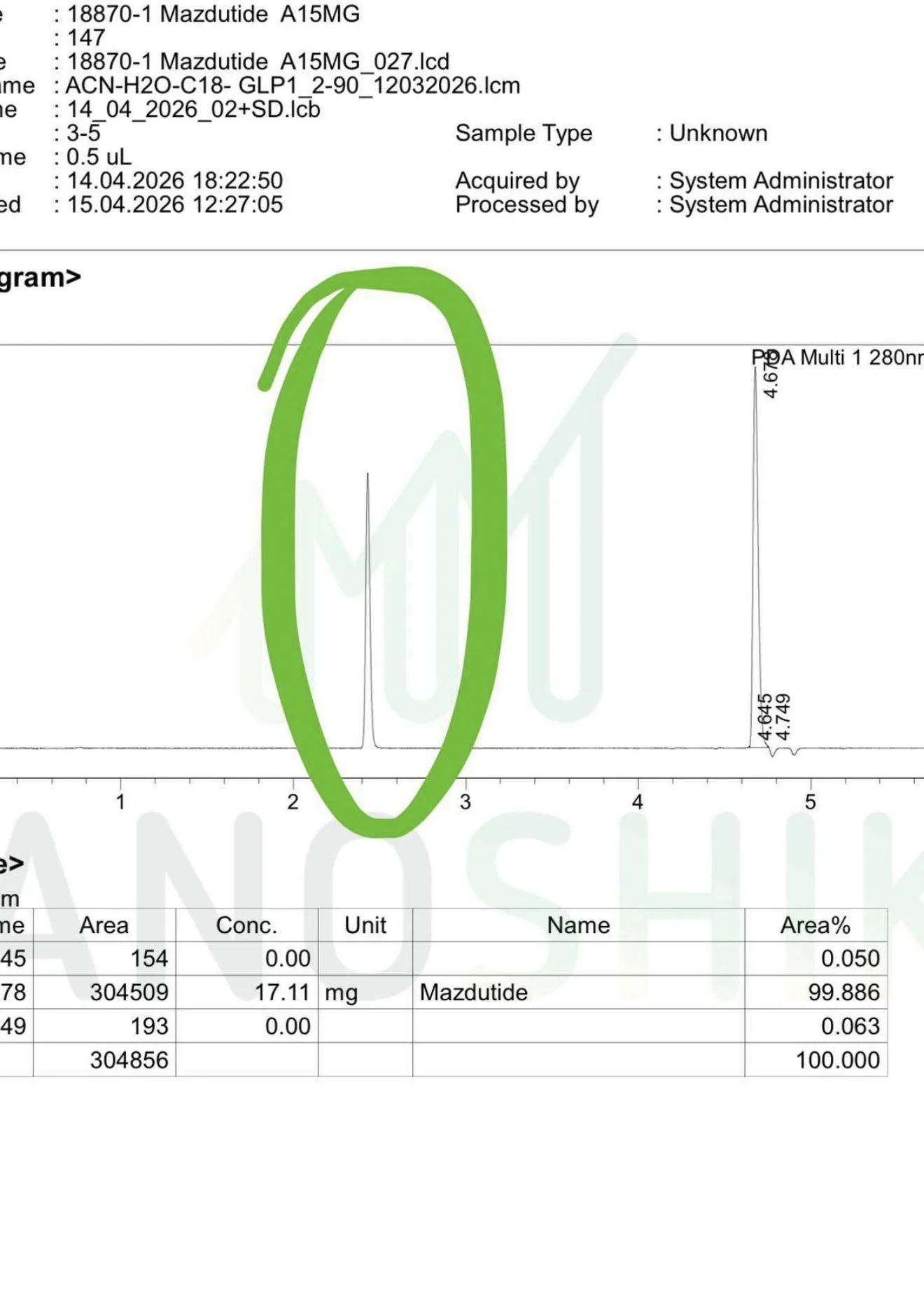
Janoshik’s chromatogram analysis of Mazdutide revealed:
An early-eluting peak at ~2 minutes ( green circle), indicating a small polar contaminant.
UV absorption at 280 nm, typical for aromatic phenolic compounds.
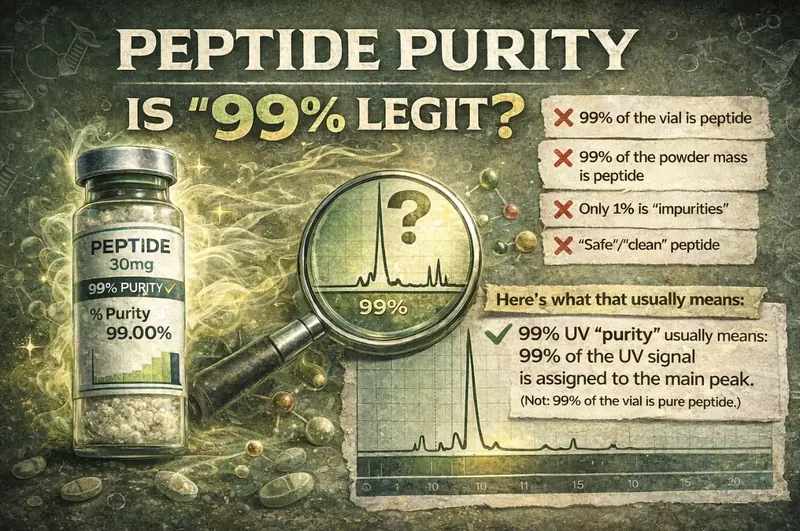
A minor yet significant contamination level (0.050%), despite a high purity reading of 99.886% for the main peptide. This illustrates clearly that a high purity percentage does not guarantee the absence of contaminants.
About m-Cresol
Like PCMC, m-Cresol (meta-cresol) is widely used as an antimicrobial preservative in multi-dose injectable pharmaceuticals, notably insulin formulations, typically at concentrations of approximately 0.15% to 0.3% to ensure sterility during repeated use.
However, unlike PCMC, it’s generally not used in cosmetics due to its irritant and allergenic potential. Finding m-cresol in lyophilised peptides strongly indicates unintended contamination rather than deliberate inclusion.
Health Implications:
Significant irritation potential
Risk of allergic reactions
Possible systemic toxicity
Final Thoughts:
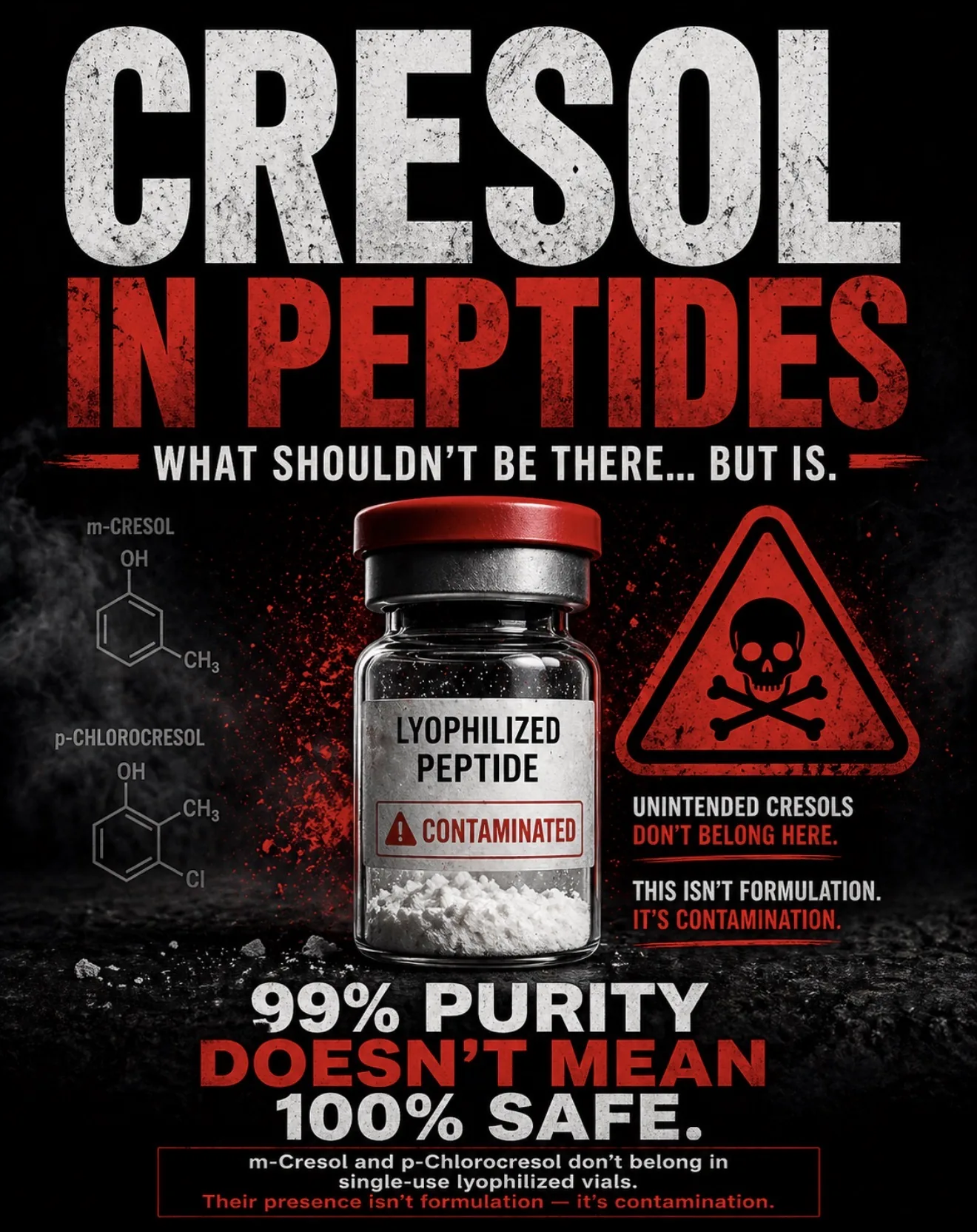
The detection of cresol contaminants in peptides underscores significant quality control issues in grey-market manufacturing. It highlights the limitations of relying solely on high purity ratings, emphasising the essential role of rigorous analytical testing. Grey market consumers and researchers should remain vigilant, recognising that even highly pure-labelled peptides can contain harmful hidden contaminants.
Addendum
To put the detected contamination (approximately 0.050% m-cresol or 500 ppm) into context, this level, although analytically measurable and notable, is still significantly below the concentrations (0.15% to 0.3%) intentionally used in regulated multi-dose pharmaceuticals like insulin. Analytical experts have recommended further precise quantification using multiple wavelengths and validated reference standards to accurately assess clinical relevance and potential risks.

Comments