
The client shared the results after experiencing repeated problems with ILS, including questionable failures, incorrect vial photographs on COAs and delays with its expedited testing service.
Four conflicting results
5‑Amino‑1MQ
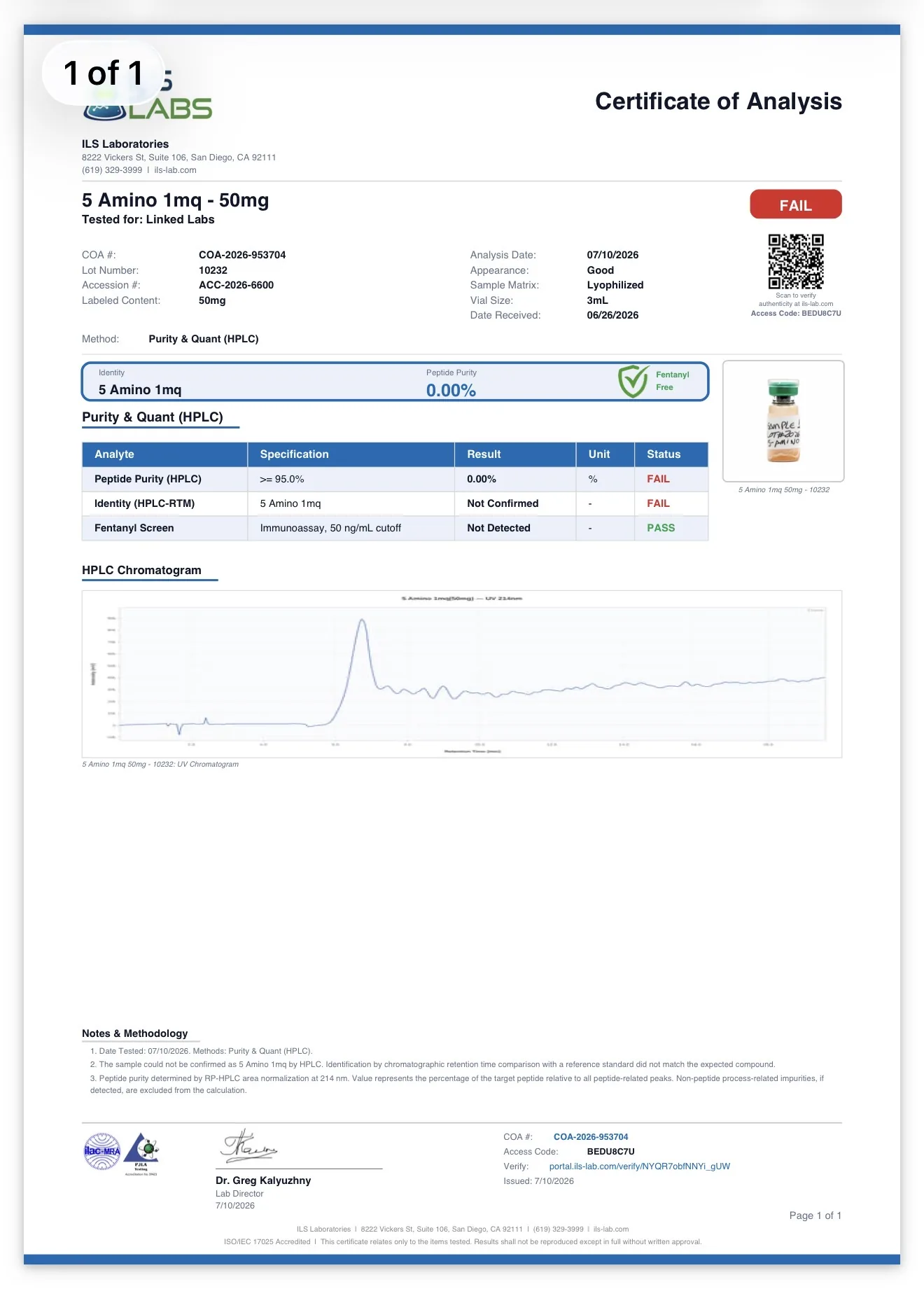
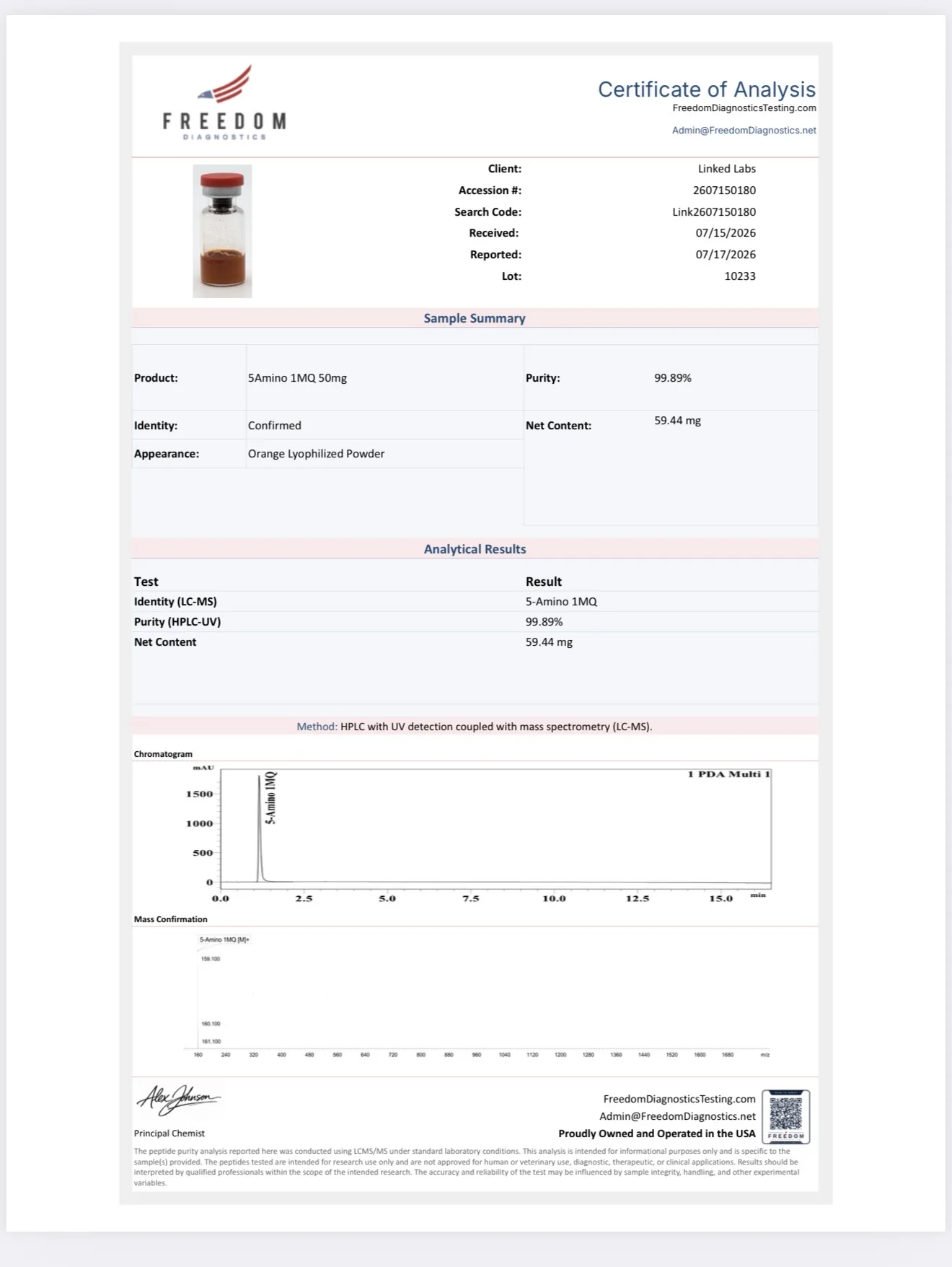
ILS reported 0% purity and couldn’t confirm the identity. Freedom later identified the same batch as 5‑Amino‑1MQ, reporting 99.89% purity and 59.44 mg against a 50 mg label.
The lot number changed between the two reports, but the client explained why. She had accidentally assigned 10232 to both 5‑Amino‑1MQ and MOTS‑C. Before sending the 5‑Amino sample to Freedom, she changed its number to 10233 to avoid confusion. It wasn’t a different batch.
Client also says the photograph attached to the ILS 5‑Amino COA belongs to somebody else and still hasn’t been corrected.
KPV lot 10013
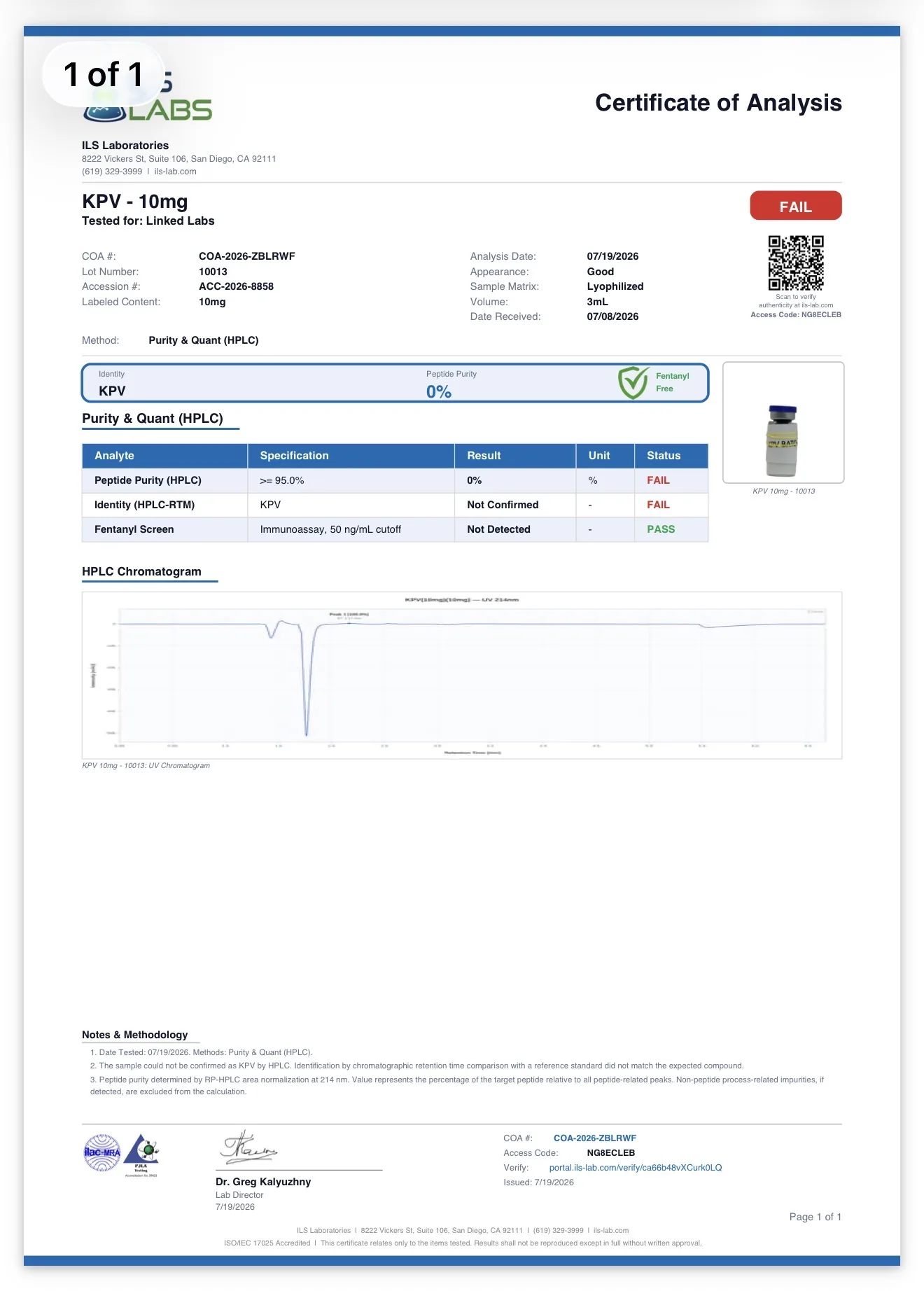
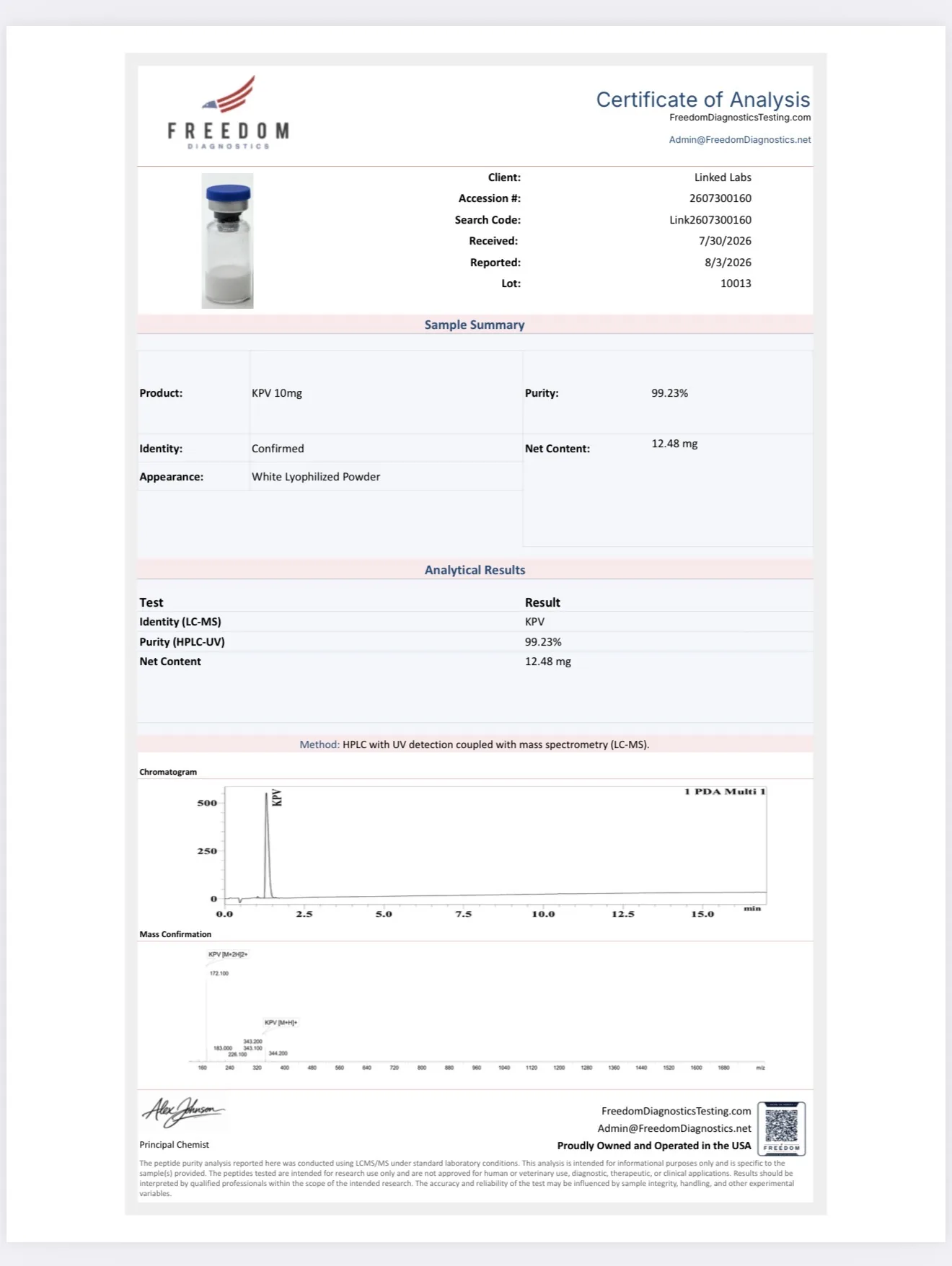
ILS reported 0% purity and identity not confirmed. Freedom reported the identity as KPV, with 99.23% purity and 12.48 mg against a 10 mg label.
GHK‑Cu lot 10012
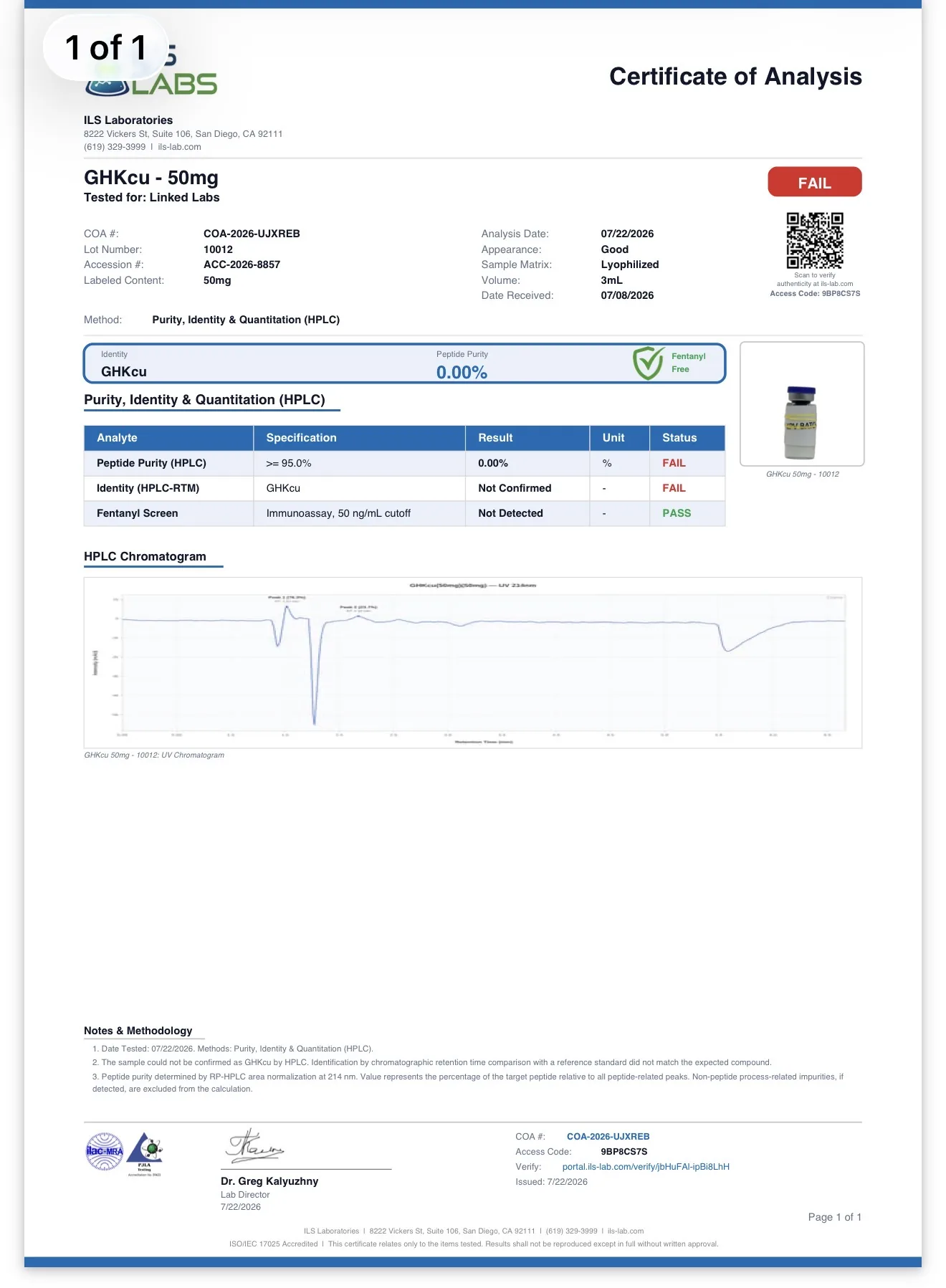
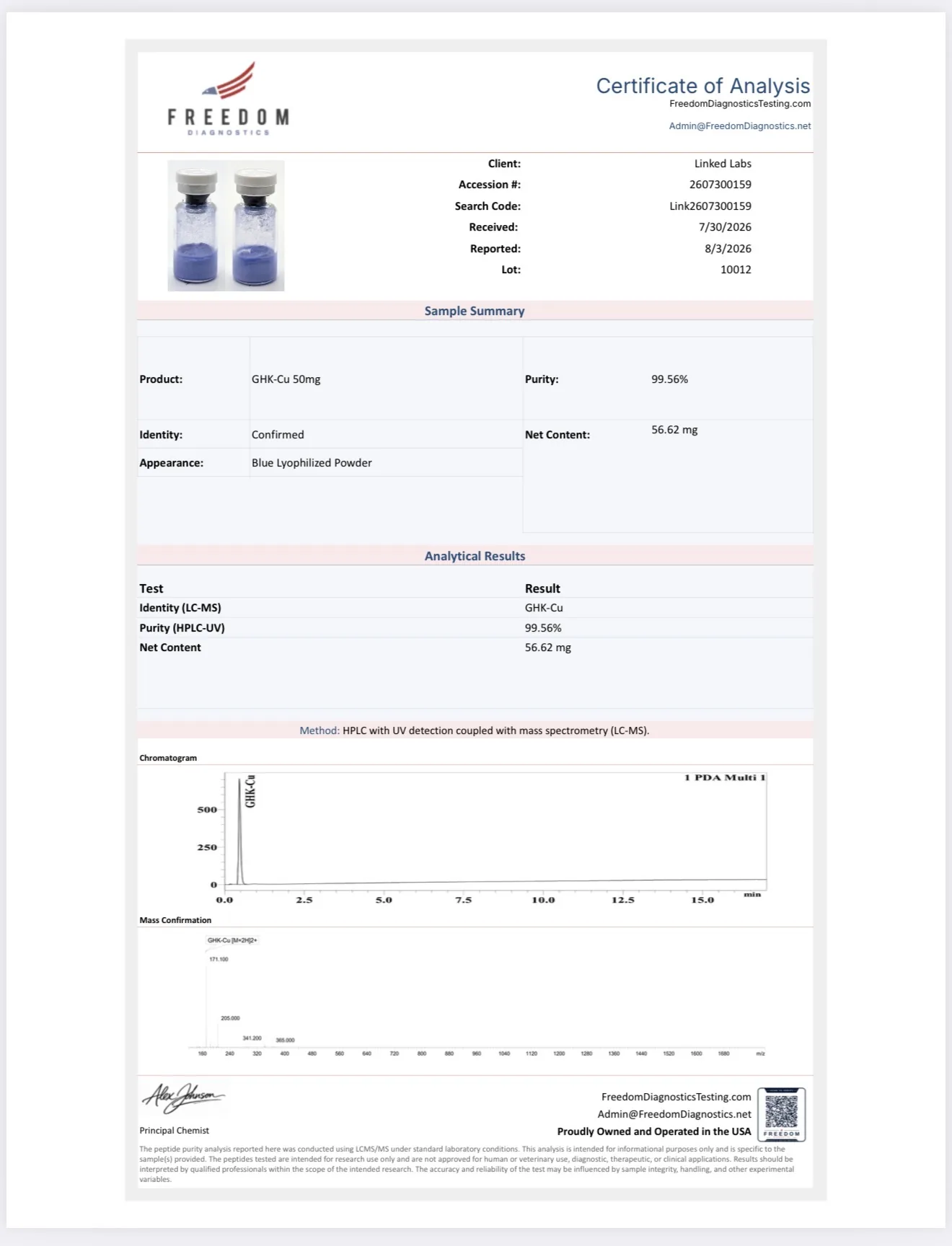
ILS again reported 0% purity and identity not confirmed. Freedom reported GHK‑Cu confirmed, with 99.56% purity and 56.62 mg against a 50 mg label.
MOTS‑C lot 10232
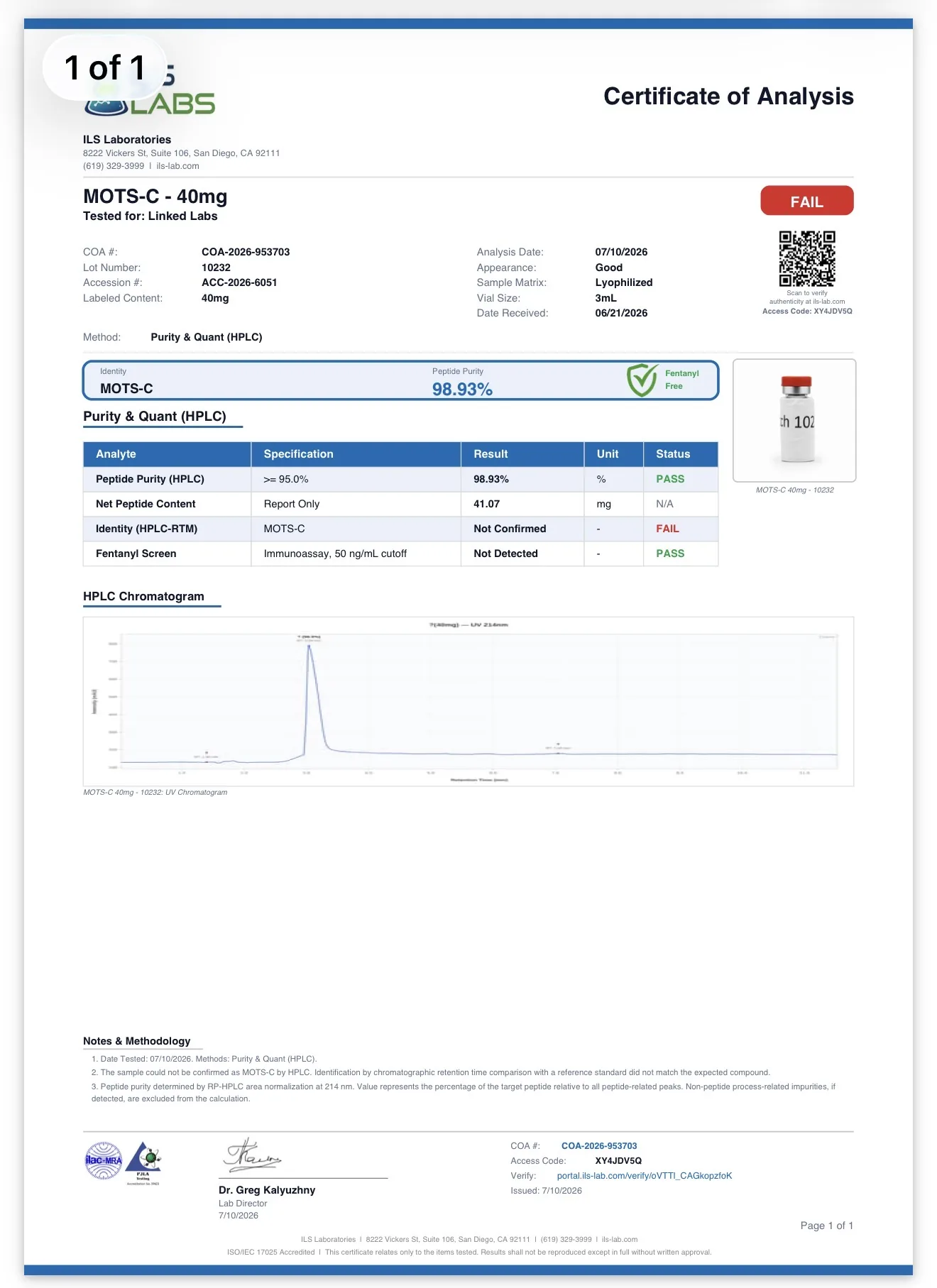
The ILS MOTS‑C report is particularly confusing. It recorded 98.93% purity and 41.07 mg but still stated that the identity couldn’t be confirmed.
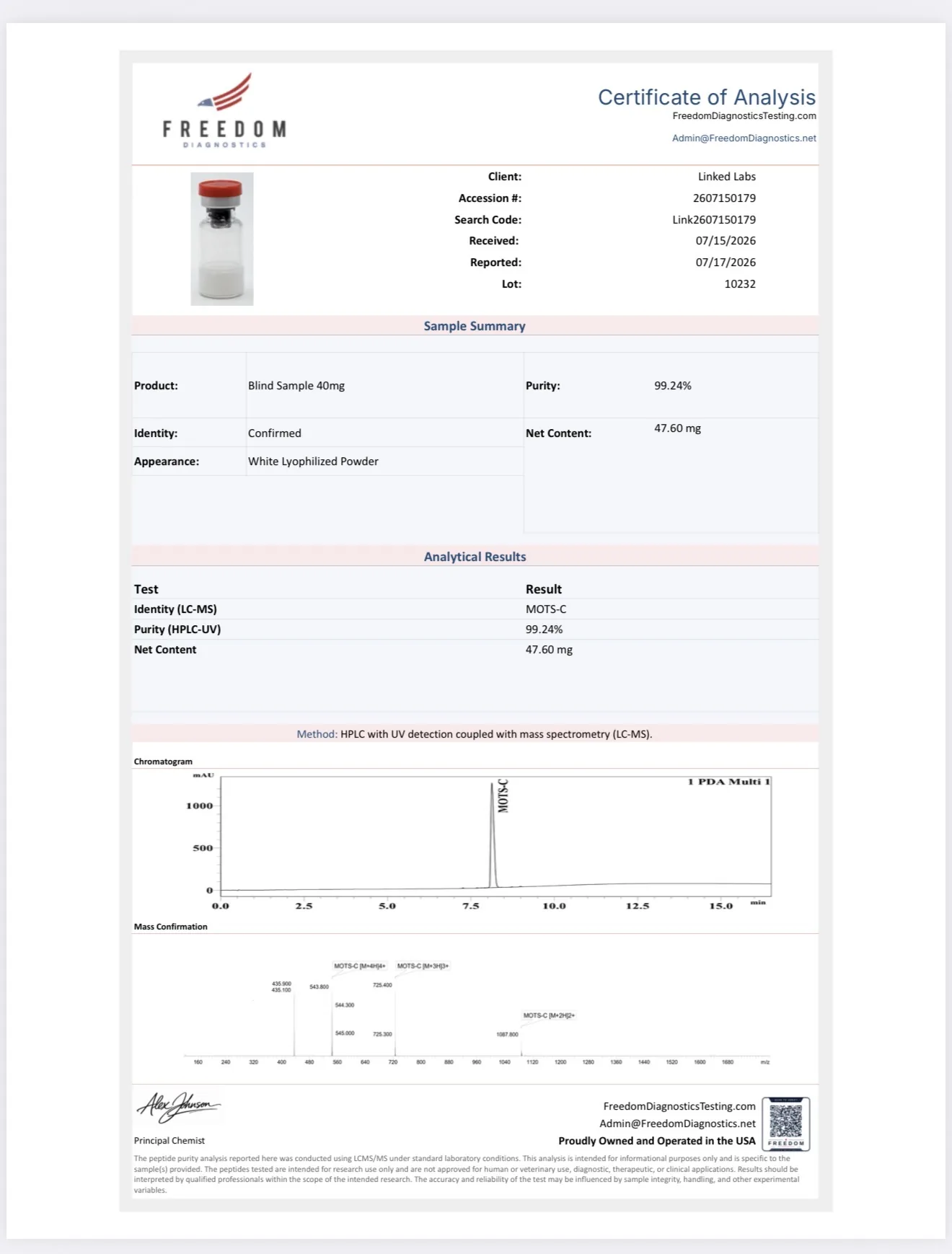
The client then submitted the same batch to Freedom as a blind sample. Freedom identified it as MOTS‑C, reporting 99.24% purity and 47.60 mg.
What does “0%” actually mean?
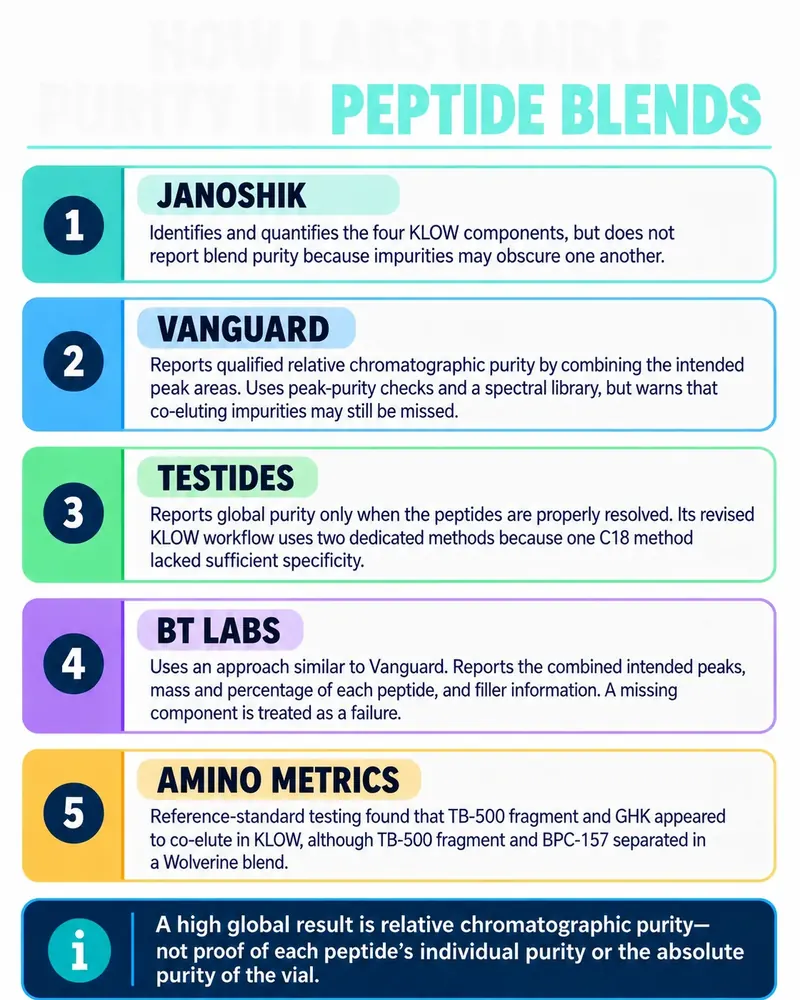
ILS identified these products by comparing their HPLC retention times with reference standards. When a sample peak didn’t appear at the expected time, ILS failed the identity and, in three cases, reported 0% purity.
That doesn’t prove the vials contained no product. It means ILS couldn’t match the target using its retention-time method.
Freedom used LC-MS, which adds mass confirmation and provides stronger evidence of The client shared the results after experiencing repeated problems with ILS, including questionable failures, incorrect vial photographs on COAs and delays with its expedited testing service.
Further problems with the service
The client says ILS has used incorrect vial photographs on several of her COAs, including one that remains uncorrected.
She also paid rush fees for two tests advertised as being completed within three days or less, with the fee refunded if the deadline was missed. Instead, the results took nearly two weeks, and she says repeated attempts to obtain the promised refund have gone unanswered.
At minimum, ILS should review these COAs, explain why failed retention-time matches were presented as 0% purity and disclose whether its reference standards, methods and sample records have been checked.
Comments