
Independent testing is supposed to answer a simple question: what is actually in the vial?
In practice, however, the difficult part sometimes begins after the result is issued. Some clients don’t just challenge bad lab results; they ask for them to be retested, reinterpreted, improved, or even removed from the COA altogether. One lab described clients asking whether a chromatogram could be read as 99%, whether a lower result could be matched to a higher one from another lab, and whether failed sterility findings could simply be excluded from the report. In another case, a vial labelled 30 mg tested at 27 mg, and the client asked if it could be reported as 30.5 mg instead.
The MOTS-C Dispute
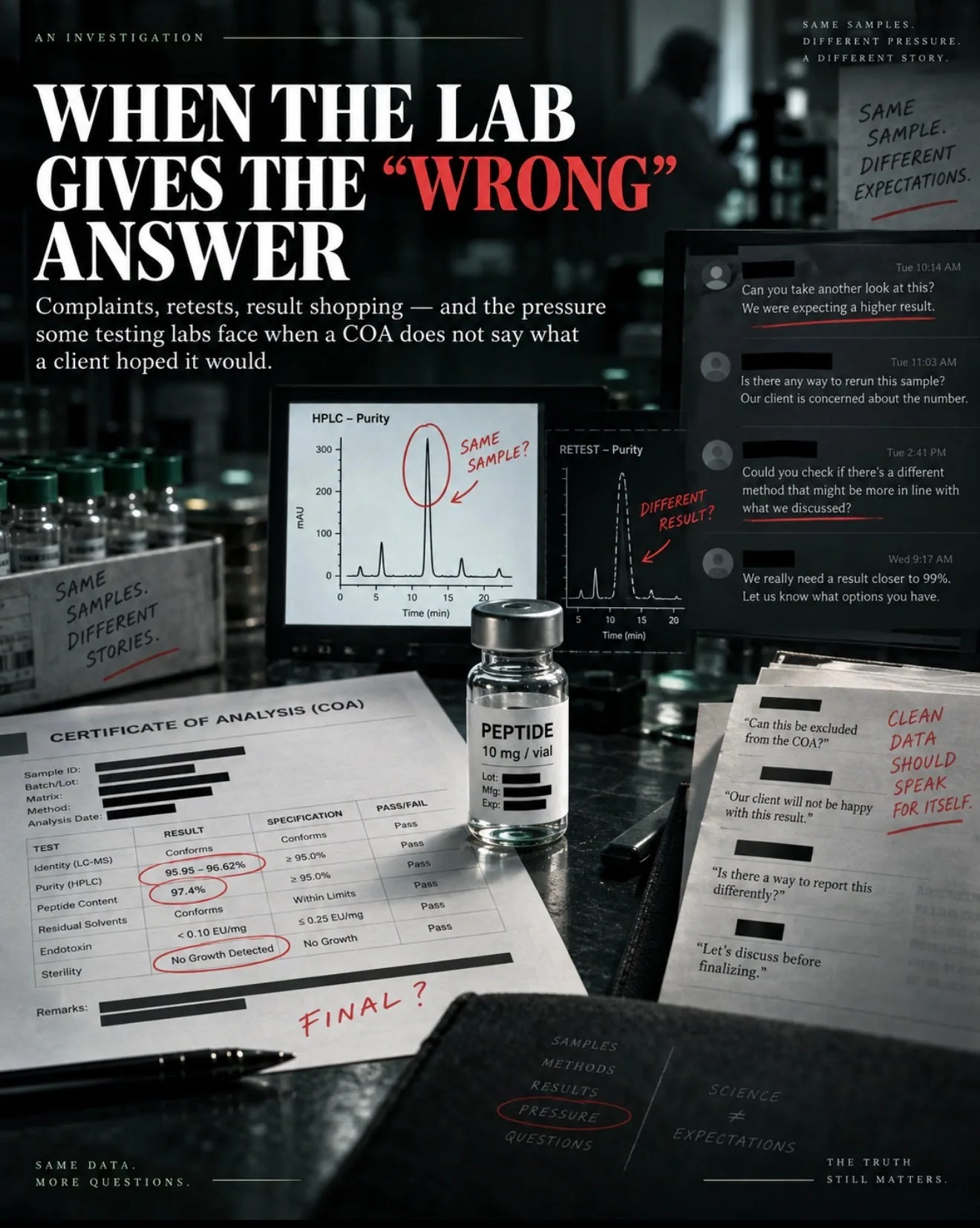
One of the most detailed examples involved a MOTS-C sample. The first lab tested three vials by HPLC-UV/VIS and reported purity of 95.95%, 96.01% and 96.62%. Identity passed and matched the laboratory’s reference standard, but the results put the lot below the client’s required ≥99% purity specification. The client then submitted samples described as being from the same lot to a second lab. Those came back at 99.24%, 99.56% and 99.37%, an average of 99.39%. The second laboratory also reported confirming identity by LC-MS. The difference therefore wasn’t simply two labs disagreeing by a few tenths of a percentage point. Samples from the same lot had failed the client’s specification at one laboratory and passed it at the other.
The client returned to the first laboratory with the second COA and asked what could explain the roughly 3% point difference. Their questions were detailed and technically relevant. They asked whether differences in the HPLC method, reference standard, mobile phase, column, wavelength, integration parameters, sample preparation or treatment of neighbouring impurity peaks could account for the discrepancy. They also pointed to several smaller peaks surrounding the main MOTS-C peak on the first laboratory’s chromatogram and asked how those peaks were being identified and integrated into the purity calculation.
But the client wanted more than an explanation. They asked about reviewing or reintegrating the existing chromatographic data, comparing the two labs’ methods, testing additional unopened vials from the lot and performing LC-MS or another orthogonal analysis if available. There was also a substantial amount riding on the answer. The client said more than $100,000 worth of product was involved and that the analytical results could potentially support a dispute with their vendor.
The end of the message is important because it shows what the client said they were actually trying to achieve. They said the analytical data needed to support their eventual decision and noted that the first lab was one of their primary testing providers. They asked for its technical assessment and recommendation on the best path forward so they could establish consistent and defensible purity testing.
That isn’t evidence of somebody simply demanding a passing result. It’s a genuine analytical dispute with significant commercial consequences attached to it.
When Another Lab Gives a Much Higher Result
Other correspondence showed similar concerns about results that were substantially lower at one lab than elsewhere. In one message, a client said that roughly 20% of the compounds they were submitting were failing their purity standards and that manufacturers were becoming increasingly concerned about the results. They asked whether another lab could be recommended for confirmatory HPLC purity testing.
Another message was careful not to accuse the first lab of doing anything wrong. The client explicitly said they didn’t personally believe its figures were biased or incorrect. Their concern was that samples returning below 99% at the first laboratory were subsequently being tested elsewhere and producing 99.8%+ readouts. That’s a very different complaint from simply saying, “your result is wrong.” The client was acknowledging confidence in the laboratory while simultaneously pointing to a repeated discrepancy they couldn’t explain.
97.4% Versus 99.968%
Another case involved a compound the client said they had always tested with the same laboratory. The client said the chemical had recently been causing problems in manufacturing, so they sent a sample from the same batch to another laboratory. The first result was approximately 97.4% purity, while the second lab reported 99.968%. The client then returned to the first lab and said the difference was “huge”, asking for its view on what could explain it.
Glutathione: 96.36% Versus More Than 99.8%
A separate example involved glutathione. The first lab reported 96.36% purity, which it said wasn’t unusual for that compound. Another lab returned a result of more than 99.8%. The first lab said the other chromatogram appeared to contain peaks that hadn’t been integrated.
The client, meanwhile, said they were confused by how low the first result was and asked whether additional vials from the lot could be retested. They also said the lot had been produced by a U.S. cGMP pharmaceutical-grade laboratory and attached the manufacturer’s own COA. Again, the request itself wasn’t improper. The client had a result that appeared inconsistent with both another test and the documentation supplied with the material and wanted it investigated.
But it’s another example of why simply comparing the large purity percentage printed on two COAs may not resolve anything. In this case, the first lab’s concern wasn’t just that the numbers were different; it believed the other chromatogram had been treated differently during integration.
When the Manufacturer Challenges the Result
Sometimes the pressure comes after the manufacturer disputes the result. In one retatrutide case, the client said the reported purity was “dramatically lower than usual”, asked whether the laboratory’s method had changed, and requested free retesting because the manufacturer had challenged the result. The laboratory said the vial had already been rerun several times.
These are useful examples because they show that pressure doesn’t necessarily originate with the person submitting the sample. A client may also be caught between the testing lab and a manufacturer disputing what the laboratory found.
The 99% Threshold
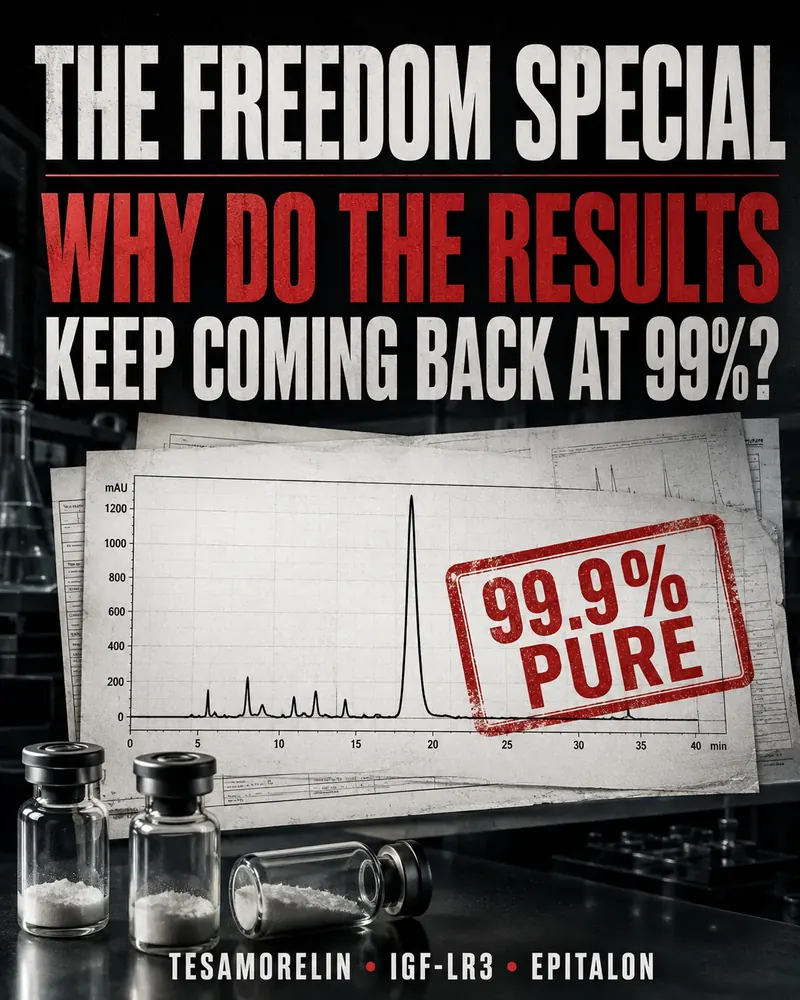
The more direct examples start when the question changes from “why are these results different?” to “can this result be made higher?” A lab said it had received calls from clients saying their material had to test above 99% or they would find another testing provider. It also described a client arguing over a result of 99.91% and asking whether the chromatogram could be reintegrated for a better result.
In another case, the original purity result was just under 99%. The question sent to the laboratory was:
“Is there enough subjectivity in the raw data to allow a 99% purity readout?”
The lab summarised the recurring pattern in its inbox as variations on three questions: why is its result lower than another lab’s, can the existing chromatogram be read as 99%, and can the sample be retested using a method that will match the higher result obtained elsewhere. Those requests are materially different from asking a lab to explain a discrepancy. They are questions about whether the lab’s existing data can support a higher number.
A 30 mg Vial Tests at 27 mg
A more recent example concerned quantity rather than purity. A new client submitted a vial carrying a 30 mg label claim. When the lab reported 27 mg, the client then asked whether it could “round it up to 30.5.” There’s no ambiguity about what was being asked here.
The Client Who Offered to Pay Double
Another quantity dispute involved a vial with a 10 mg label claim that tested at approximately 9.85 mg. The lab said the client asked whether the vial could be shaken before retesting to try to obtain a higher result and offered to pay double for the retest. The lab did perform the repeat analysis, and the result was essentially the same, although it didn’t charge the client for the retest.
The lab described overt attempts to pay for a more favourable outcome as extremely rare. Complaints were plentiful, but it recalled no threats and estimated only around three attempted financial inducements in three years. It said the more common problem was clients pressuring the lab to change or omit results, requests it said it refuses.
“Can You Just Not Report the Sterility Result?”
Purity and quantity weren’t the only areas where this happened. The lab said it had received requests asking whether a failed sterility result could simply be excluded from the COA. Its description was unambiguous: clients had asked whether the sterility result could simply not be reported if it failed, effectively leaving it off the certificate. The laboratory said it refuses to do that. Questioning or repeating a sterility test is one thing, but asking for a failed result to be left off the COA is another.
What Happens When a Retest Is Actually Justified?
The lab said that when it sees an unexpectedly low-purity result, it will often offer to test another couple of vials from the same lot to see whether the same impurities appear across the batch. The original result remains alongside the retest data, and according to the lab, the majority of those retests confirm the original result.
What Usually Happens
The more extreme examples shouldn’t be mistaken for the norm. Most clients don’t dispute their results, and when disagreements do arise they often centre on purity below 99%, a higher result from another lab, or an upstream vendor or manufacturer challenging the finding through the reseller who arranged the test.
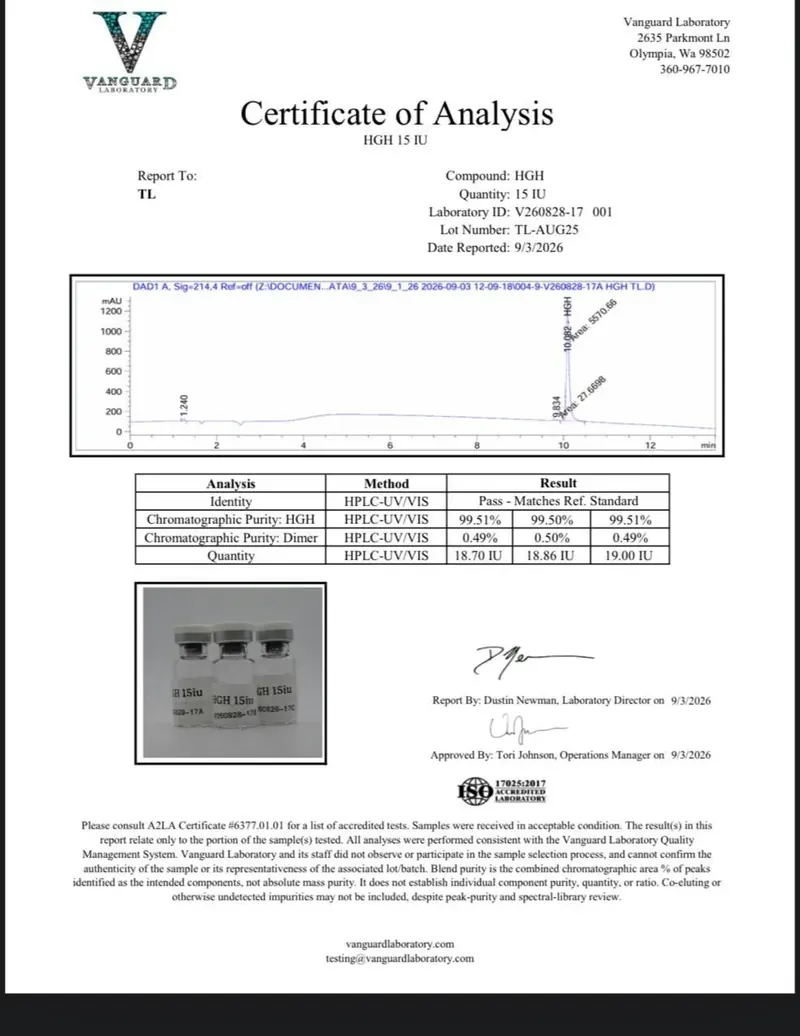
Requests to round results up do happen, but a large share of questions around failed testing concern something more basic: mislabelled products and identity failures. When a peptide appears at the wrong retention time, clients naturally want to know what is actually present. At present, a report may simply state that the expected compound was “not detected.”
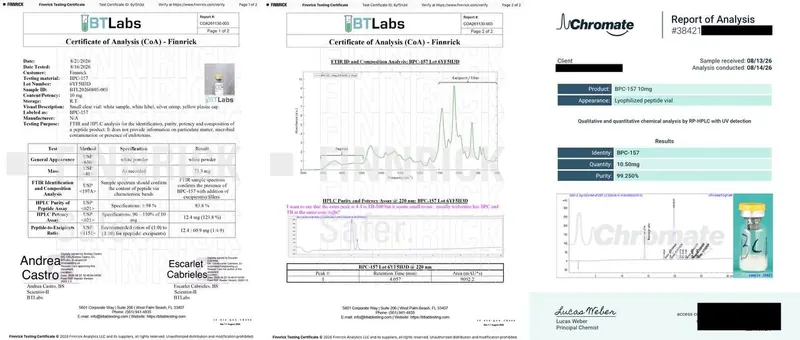
Some labs are therefore looking at ways of giving more context on the COA, including showing reference standards alongside chromatograms, so an identity failure is easier to understand.
That puts the more unusual requests into perspective. Asking for a number to be changed, pushed above 99%, or omitted from a COA isn’t everyday behaviour. More often, the testing lab ends up in the middle of a disagreement between the analytical result, another lab’s COA and what the supplier or manufacturer says should have been in the vial.
Comments