
Introduction
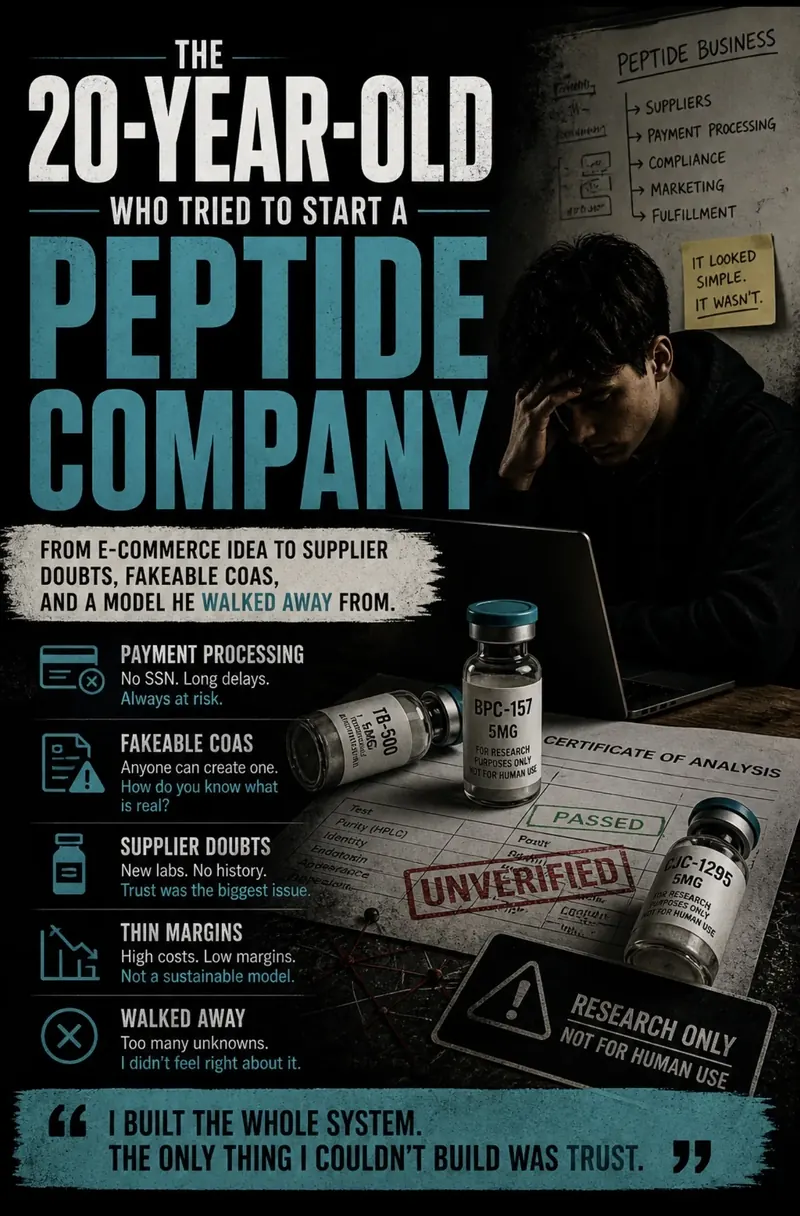
Direct Peptides first came to my attention while I was writing about the 20-year-old e-commerce founder who attempted to launch an RUO peptide website before ultimately walking away from the idea.
According to him, Direct Peptides was one of the companies he explored as a potential sourcing and fulfilment partner while trying to understand how the modern RUO peptide market actually works.
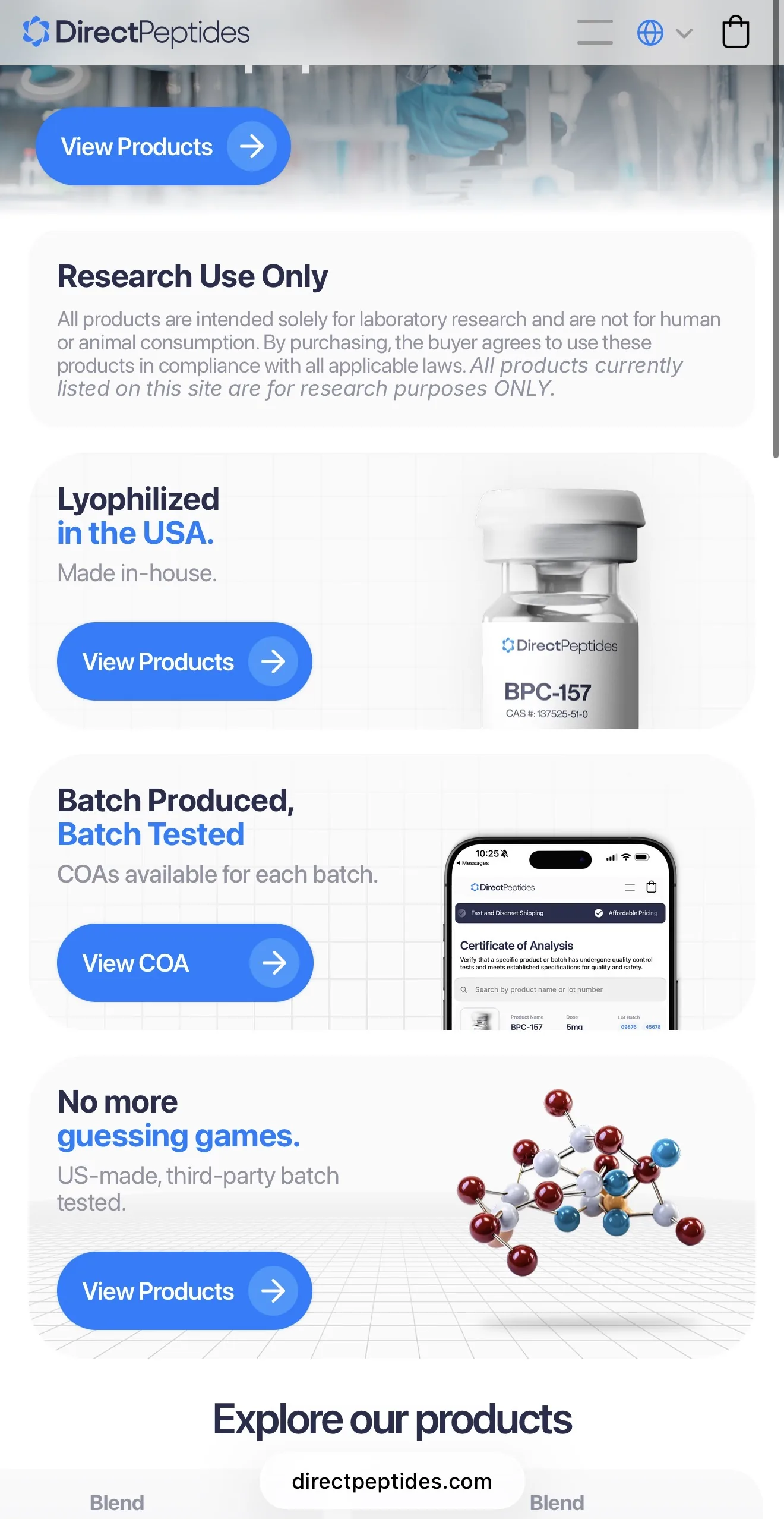
At first glance, the company presents itself as a polished US-based research peptide operation, third-party tested, US-fulfilled, professionally branded, vertically integrated and batch verified.
The Coding System
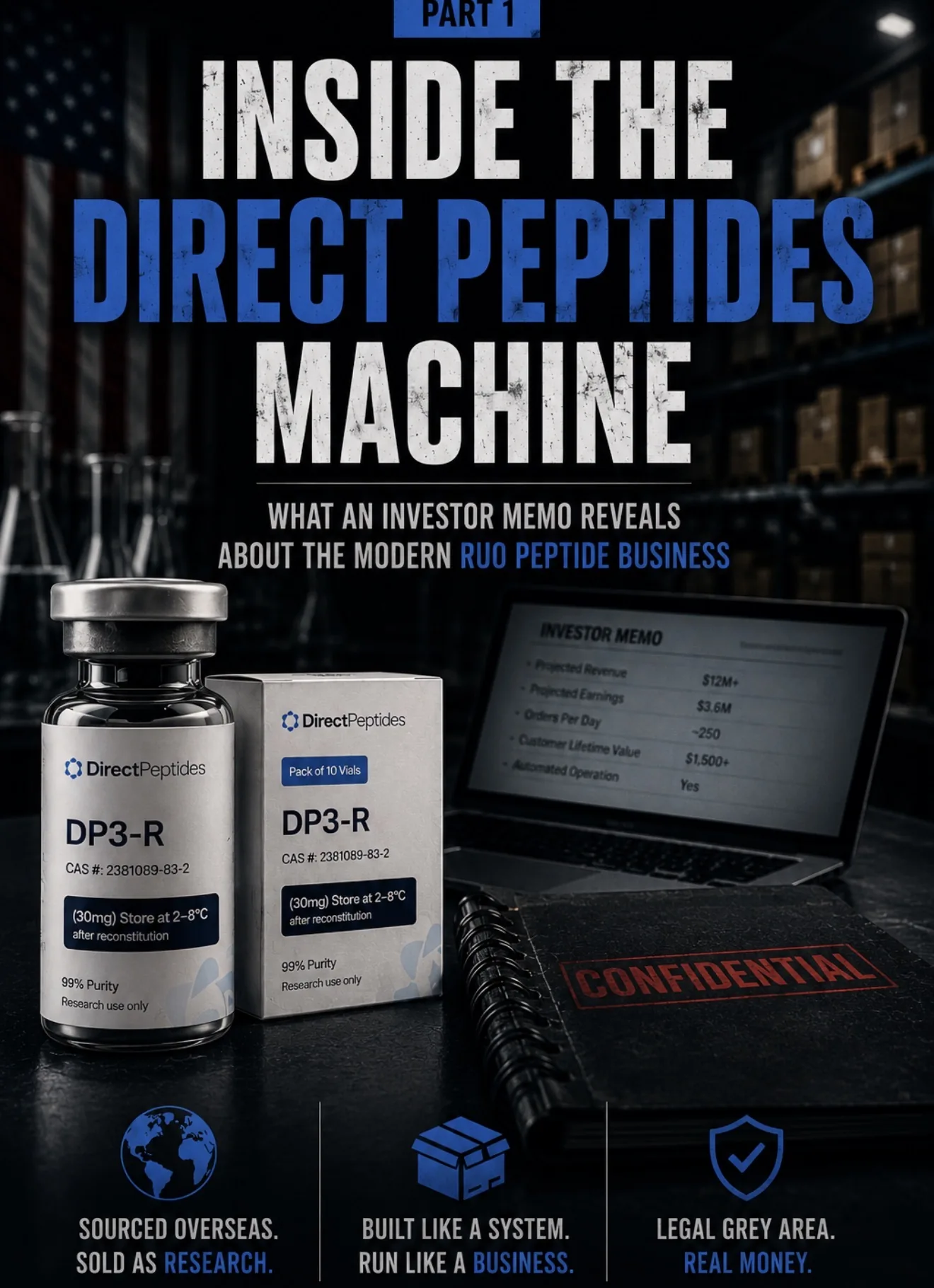
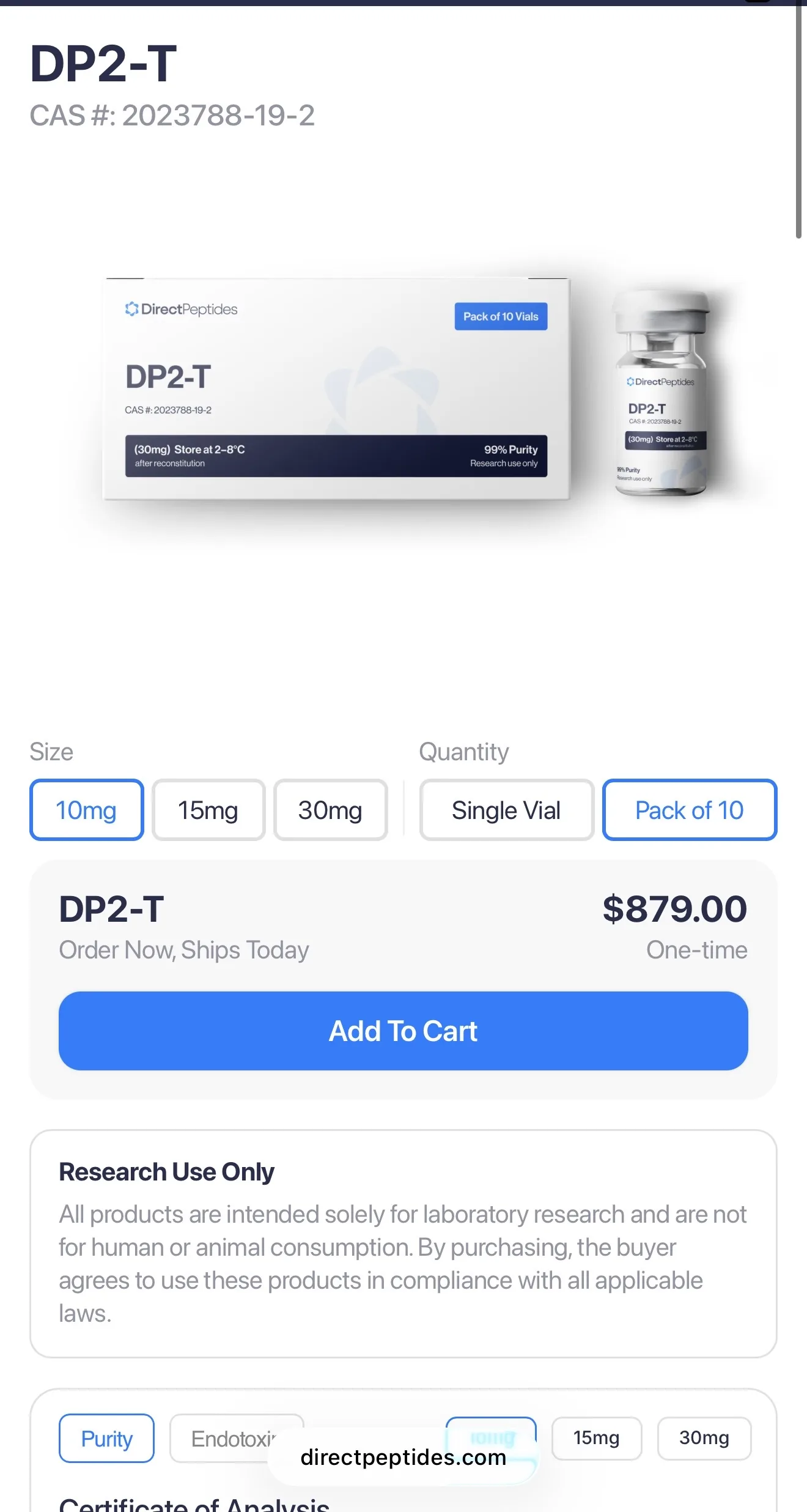
An interesting detail is how Direct Peptides appears to handle some of its GLP products publicly. Like many other RUO websites, instead of openly listing GLP-1s by name, they’re being presented using internal-style coded labels such as DP3-R (Retatrutide) and DP2-T (Tirzepatide). The actual compound is still identifiable through the CAS number, which creates a kind of middle layer, recognisable to buyers, less obvious to automated systems and slightly more insulated from direct keyword-triggered enforcement.
The pricing strategy is also notable. The products aren’t being sold cheaply. For example Retatrutide 10mg is listed around $1,249 for a 10-vial pack and Tirzepatide 10mg around $879 for a 10-vial pack
Those prices are dramatically higher than directly sourcing it from China. But that may actually be part of the positioning, because the business isn’t trying to look like a bargain-bin peptide reseller. It’s trying to look premium, compliant, scientifically managed and operationally legitimate. In other words, the higher pricing itself may function as part of the trust architecture.
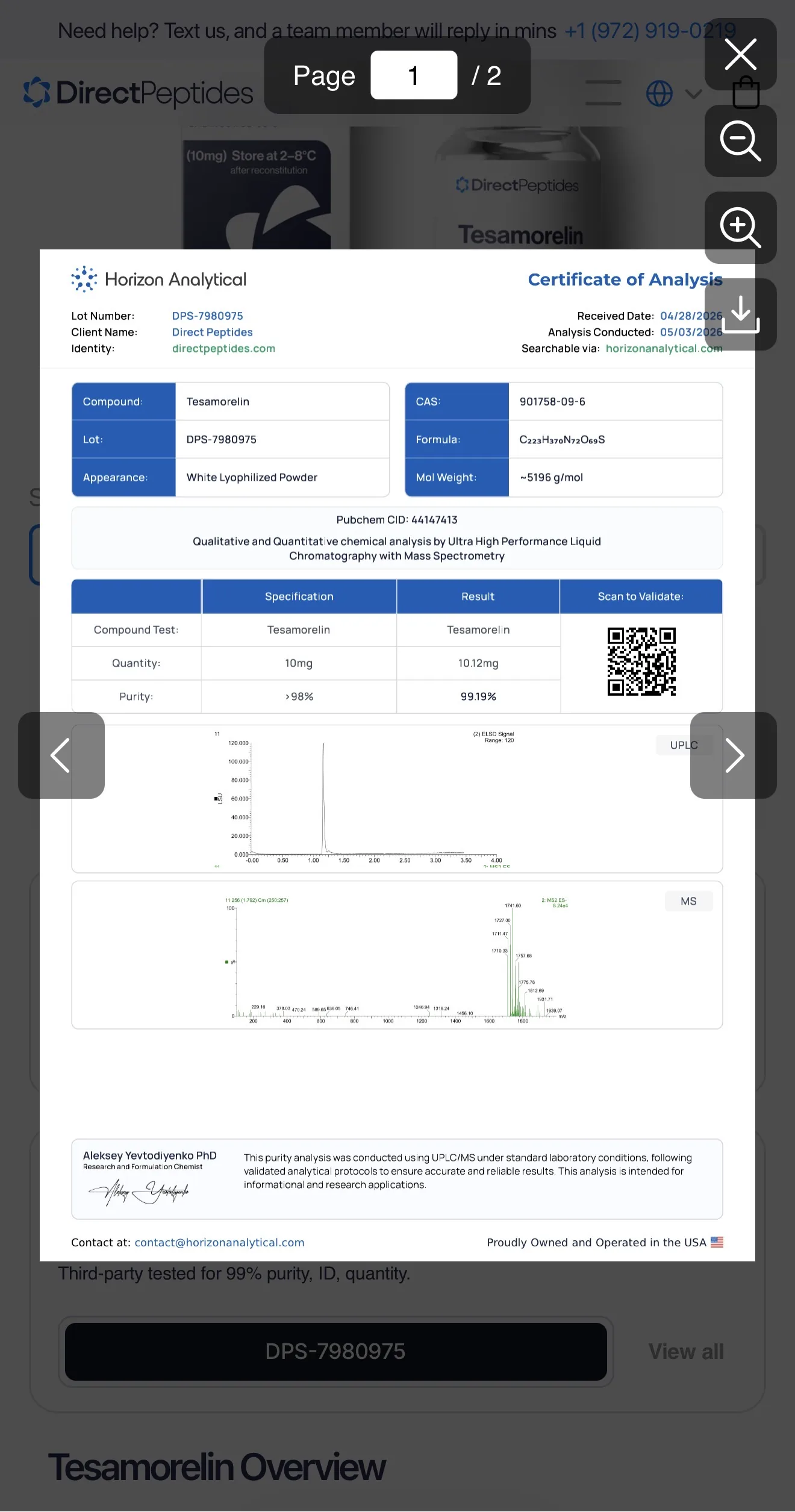
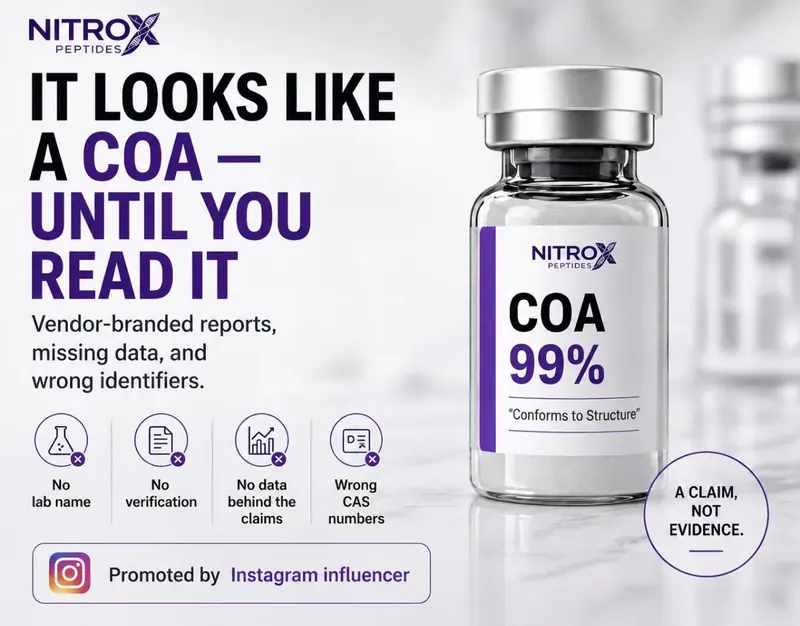
The public-facing site leans heavily on testing as part of that credibility. Its COAs come through Horizon Analytical, which is presented as the verification layer behind the products.
That detail matters, because what first looked like a straightforward vendor became more interesting after investor materials connected to the company surfaced. Those materials don’t just reveal another peptide seller, they reveal the infrastructure behind a modern RUO e-commerce machine.
The investor materials also name Liberty Peptides, Certified Pep and Simple Peptides as competitors. Direct Peptides’ claimed advantage is not just the peptide itself, but the machinery around it, the website design, marketing materials, product presentation, COA backlog, fulfilment and operational infrastructure.
The Sale
According to the investor memorandum, Direct Peptides is being marketed as a high-growth acquisition opportunity with projected revenues above $12M, projected earnings around $3.6M, roughly 250 orders per day, customer lifetime values above $1,500 and a highly automated backend operation. The business is being sold through WebsiteClosers as an acquisition target.
The memo positions the company less like a traditional RUO vendor and more like a scalable digital commerce operation built around repeat customers, retention systems, payment infrastructure, fulfilment and operational automation.
What the Buyer Is Actually Buying
The most revealing part of the memo is what’s included in the sale. The buyer isn’t simply purchasing peptides, branding or a website. They’re purchasing the backend ERP system, fulfilment infrastructure, customer database, SMS and email automation, ad account systems, payment-processing relationships, SOPs, inventory systems, operational workflows and a retention-driven customer acquisition machine. The company describes itself as vertically integrated, operationally automated and protected by “defensible infrastructure.”
The memo openly discusses multiple ad accounts (Meta, Tik Tok, Google, Reddit), cloaking systems, backup advertising infrastructure, payment-processing workarounds, repeat-order behaviour and aggressive customer retention systems. The peptide itself increasingly looks like only one layer of the business.
Owner Interview
The seller interview section is also very interesting. According to the document, Direct Peptides launched around April 2025, ownership sits under Aspire Labs LLC, and ownership is reportedly split 50/50 between Avery Wiese and Adrian Stresow.
The memo states that raw API material is sourced from multiple suppliers in China, lyophilisation is reportedly handled in Missouri, and testing is performed through Horizon Analytical.
The Horizon references in the memo are also important. Horizon Analytical is not mentioned as a distant, unrelated lab. It appears repeatedly inside the operational structure of the business.
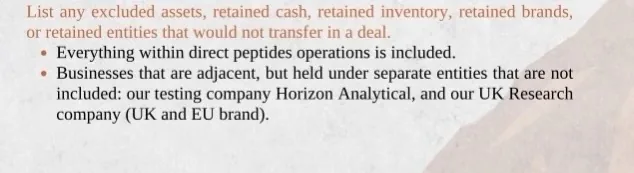
The memo says testing is done batch-by-batch by Horizon Analytical, but also states Horizon is “not being sold with Direct Peptides” and is instead an adjacent company. Elsewhere, the materials discuss the transition of “Direct and Horizon ownership,” and describe Horizon as expanding its SOPs, methods and scalability to continue servicing Direct Peptides and other peptide businesses. It then goes further than simply saying Direct Peptides uses Horizon Analytical for testing. It states that contracts can be set up to provide Direct Peptides COAs “at cost,” with “no profit to Horizon built in,” and adds that this is “currently how it’s set up anyway.”
That is a significant detail. An ordinary third-party lab relationship is usually presented as an external service. Here, Horizon is described more like an adjacent operational layer built into the business model
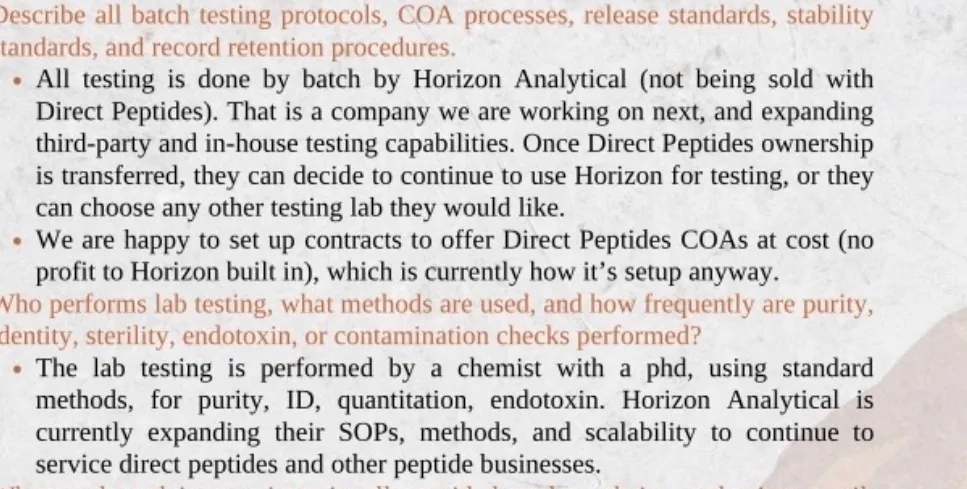
This is all very relevant because the public-facing website leans heavily on “third-party tested” language, while the investor materials place Horizon much closer to the business structure than a normal arms-length testing provider.
So the question isn’t simply whether testing exists, the question is how independent that testing really is.
The seller interview also contains another revealing detail. When asked why the business was being sold, the owners stated they had “other businesses in our pipeline that we want to launch.”

The memo describes the operation as already highly systemised and delegated, with transition support offered to help a buyer quickly integrate into the infrastructure.
That language again frames Direct Peptides less like a traditional lab business and more like a repeatable operational model capable of being replicated, scaled, or redeployed into future ventures.
The business claims around 250 orders per day, average order values around $220, same-day fulfilment, roughly two months of stock on hand, and approximately $30k to $40k weekly spent on API sourcing.
The customer base is described as overwhelmingly US-based, with growth driven almost entirely through paid advertising rather than organic traffic or affiliate systems.
What the Memo Really Shows
The real story is not simply that a peptide company is for sale, it’s what the memo exposes about the modern RUO peptide business. By the end of the memo, Direct Peptides reads less like a traditional peptide company and more like an acquisition-ready e-commerce machine.
The product matters, but the real value being sold is the system around it, fulfilment, payments, ads, retention, customer data, backend automation and the appearance of scientific credibility. And that’s where Horizon Analytical becomes important.
The memo doesn’t describe Horizon like a distant outside lab, it appears as an adjacent testing company, excluded from the sale but still built into the Direct Peptides workflow. The documents mention continued use of Horizon after transfer, and even refer to providing Direct Peptides COAs “at cost,” with “no profit to Horizon built in.”
That raises the question for Part 2:
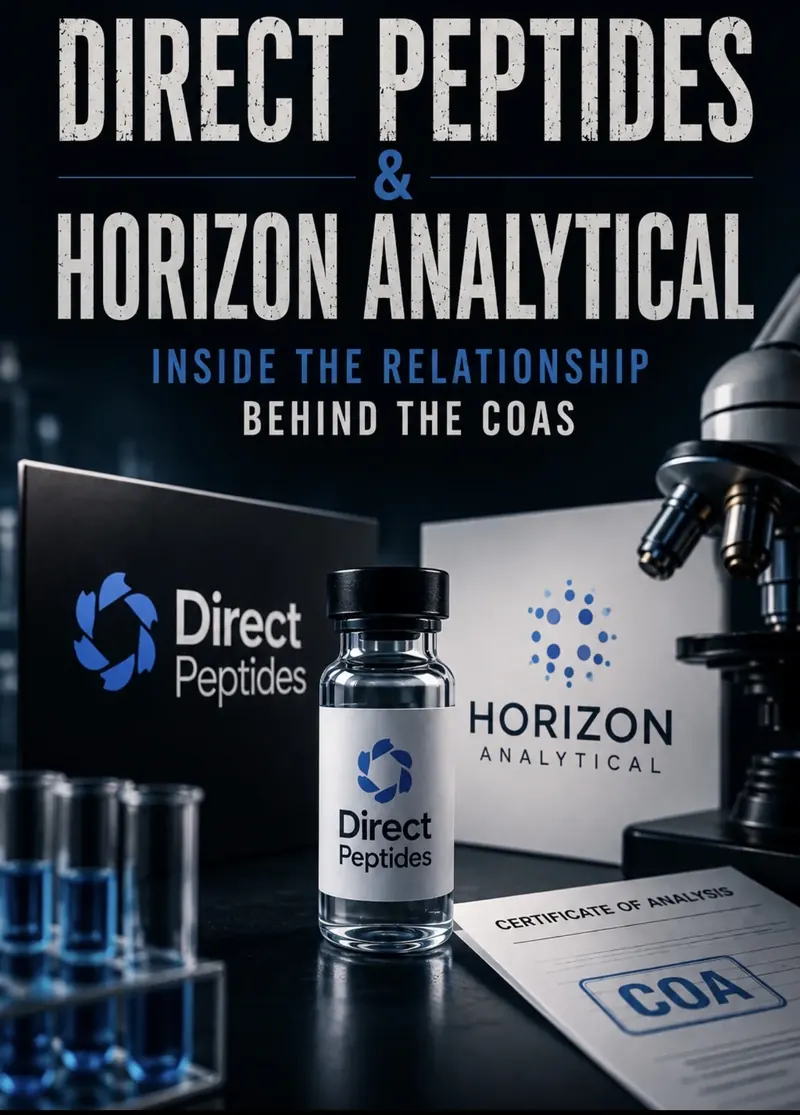
In Part 2, I’ll be examining the relationship between Direct Peptides and Horizon Analytical more closely, including the timeline, ownership references, testing structure, accreditation questions, and what “third-party tested” actually means in practice.
Comments