
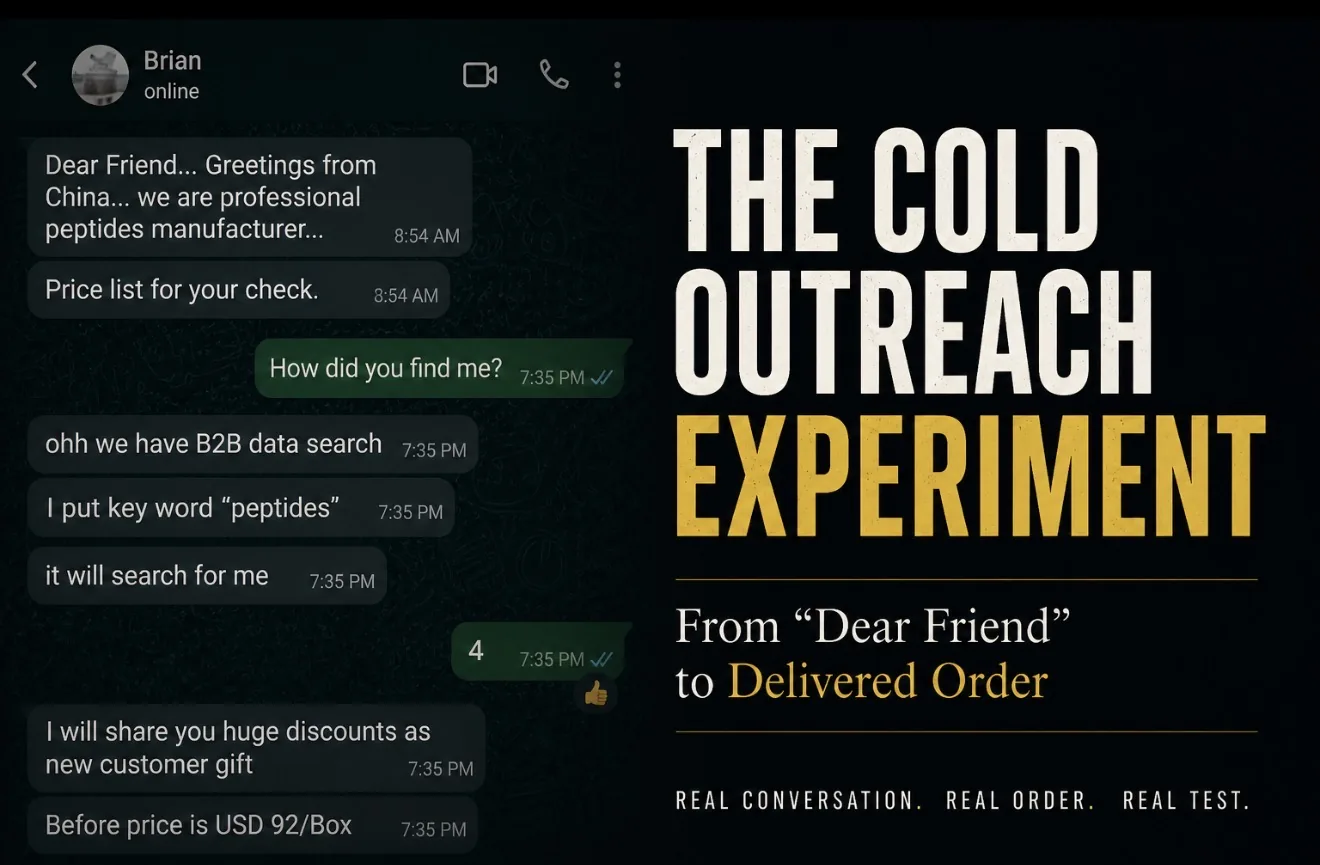
“Dear friend… Greetings from China… we are professional peptides manufacturer… price list for your check.”
That was the outreach. No introduction, no context, just a PDF and a pitch, but instead of ignoring it, the recipient decided to follow it and so the experiment began. What you’re about to read isn’t a one-off, it’s a clean look at how this part of the grey market actually works.
Step 1: The Pitch
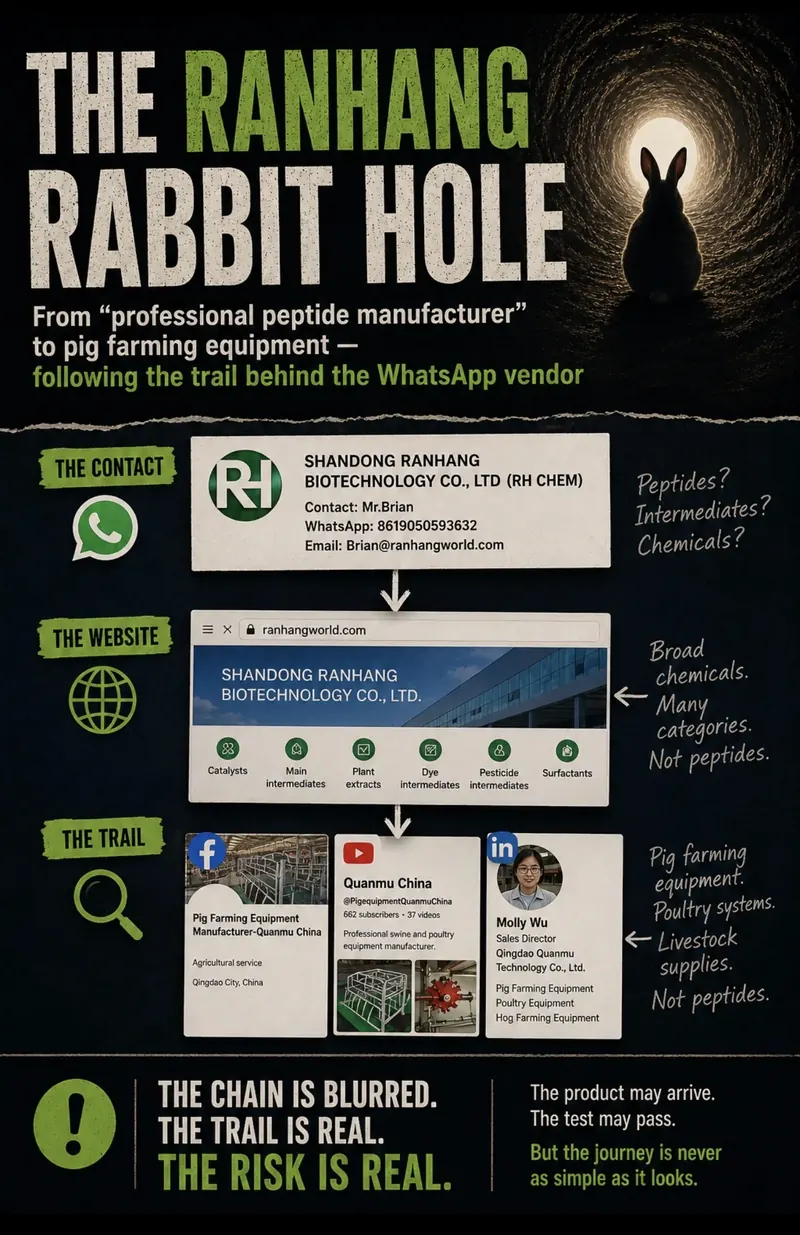
“Brian” says he’s from RH CHEM and immediately added a price list PDF, product photos and “Does your team have any needs recently?” That’s a standard script, but then it widens to not just peptides. His catalogue also includes Flavours & fragrances, Veterinary drugs, Pharmaceutical intermediates and cosmetic raw materials. That alone tells you that this isn’t a focused peptide operation, it’s a general chemical supplier casting a wide net.
Step 2: The COA Shuffle
When asked for COA proof, the tone shifts and there is no a structured answer. Instead COAs are dropped into the chat. At first glance, they look solid, from Vanguard Lab with clean formatting, ~99% purity number and Batch / lot / lab ID / dates. Everything you’d expect, but on closer inspection the COAs are issued to:
“New Beginning Peptides”
while the PDFs he sent are labelled:
“Ranhang”
and the person messaging is called
Brian / RH CHEM
So there are already three different names within one conversation. Our experienced buyer picks up on this and asks;
“How is Ranhang related to New Beginning Peptides?”
His answer:
“That is my dealer.”
That’s the moment the real structure starts to show, you’re not always dealing with one clean company selling one clearly traceable product with one clear set of documents. You’re dealing with a chain, and in this market, those chains are often complicated, informal, and blurred long before the product ever reaches the buyer. There are layers, and the more blurred those layers become, the harder it is to know who tested what, who supplied what, and who is actually responsible if something goes wrong. And the paperwork is just… moving along that chain.
Step 3: The Batch Number Dodge
When the buyer pushes a bit further:
“I need to understand who I’m working with.”
Brian’s response is
“You can see the batch number.”
That sounds like an answer, but it isn’t. A batch number is just that, it doesn’t tell you who manufactured it, who commissioned the test, whether the tested batch matches what you’ll receive or whether the COA is even tied to this supply. It’s useful, but it’s not proof of anything on its own.
Step 4: Cold Outreach and the B2B Data Search
This is where the “how did you even get my number?” mystery gets solved.
When asked directly, Brian says he used a B2B data search. He typed in the keyword “peptides” and the tool pulled contact details. He also adds that the app costs money “need much money,” so this isn’t a referral, it’s pay-to-prospect keyword hunting.
A cold outreach doesn’t automatically mean scam, some reps are paying for data tools and doing outbound, just like any other industry, but that doesn’t make them trustworthy either. It just means your number wasn’t found by reputation, it was found by a filter.
Step 5: No Reviews, Just “Deal History”
The next question asked is:
“Are you on Discord / Pepchat / Telegram? Any reviews?”
Brian replies:
“We not advertise on much platform.”
“But I can show you some of our deal history.”
Then come the screenshots. Product photos, chat snippets, random proof-of-life images. This is the grey-market version of:
“I don’t have public reviews, but I promise these screenshots are real.”
But private screenshots are not verification, they just show conversations happened somewhere.
Step 6: “We Sell, He Buys, You Buy”
When the buyer asks
“I want to better understand the peptide business in CN”
Then comes the clearest line in the entire exchange:
“No, the dealer just buy from us and resell.”
Followed by:
“We sell, he buy. He buy, he sell, you buy.”
That’s the supply chain. Then:
“We can deal directly.”
This confirms everything earlier, multiple names, multiple layers and no clean chain. Each layer adds distance, and with that distance comes plausible deniability: That wasn’t me, that was my dealer or that was my customer.
Step 7: The Sales Turn
Then the conversation shifts from
“who are you?” to “okay, let’s transact.”
Shipping is “5 to 7 days”, customs are “We have professional forwarder”
and guarantee is “Resend is 100% guarantee.”
It sounds reassuring, but it’s still just a WhatsApp promise. Then comes the pricing
Tirz 15 for 4 boxes is $92 → $80 per box, Shipping is $65. Total is $380 to your door
Plus the words all newbies like to hear.
“We can accept PayPal too.”
So fast quote, friendly discount, confidence, but still no structure behind it.
The Real Point
This wasn’t a scam attempt, there was no pressure, no urgency, no obvious fraud tactic. It was just a normal outbound rep operating inside a messy supply chain. And that’s the uncomfortable part, most people think that a cold message is automatically a scam, but that’s too simple. What this shows is that cold outreach is often just entry into a system where roles blur, documents move independently of product and responsibility isn’t clearly defined. As a result, the answer to the question of who is responsible if something goes wrong never becomes fully clear.
Update: The Order Landed
The experiment didn’t stop at payment, the kits were shipped, they arrived promptly. A vial was sent for independent testing via Peptide Test / Trust Pointe and the result for the Tirzepatide 15 mg:
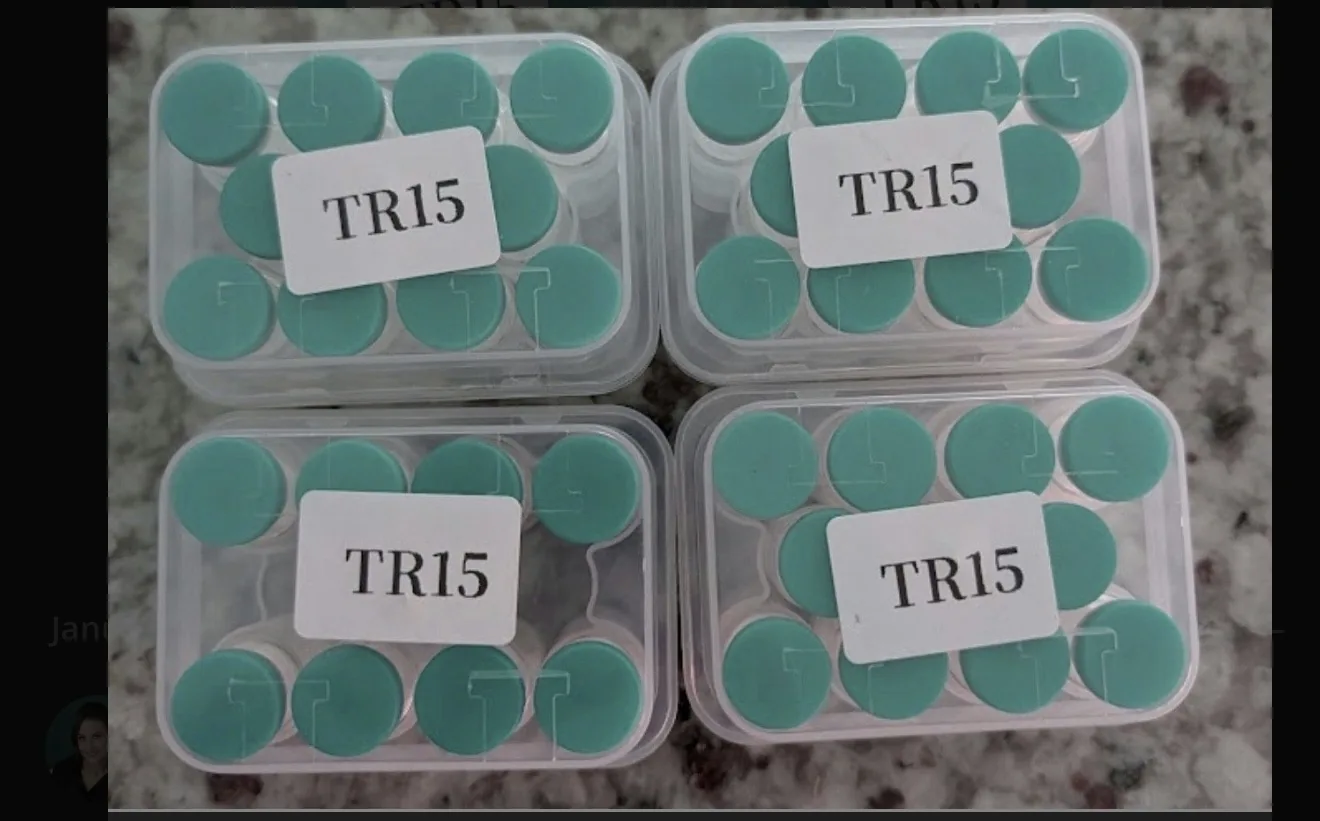
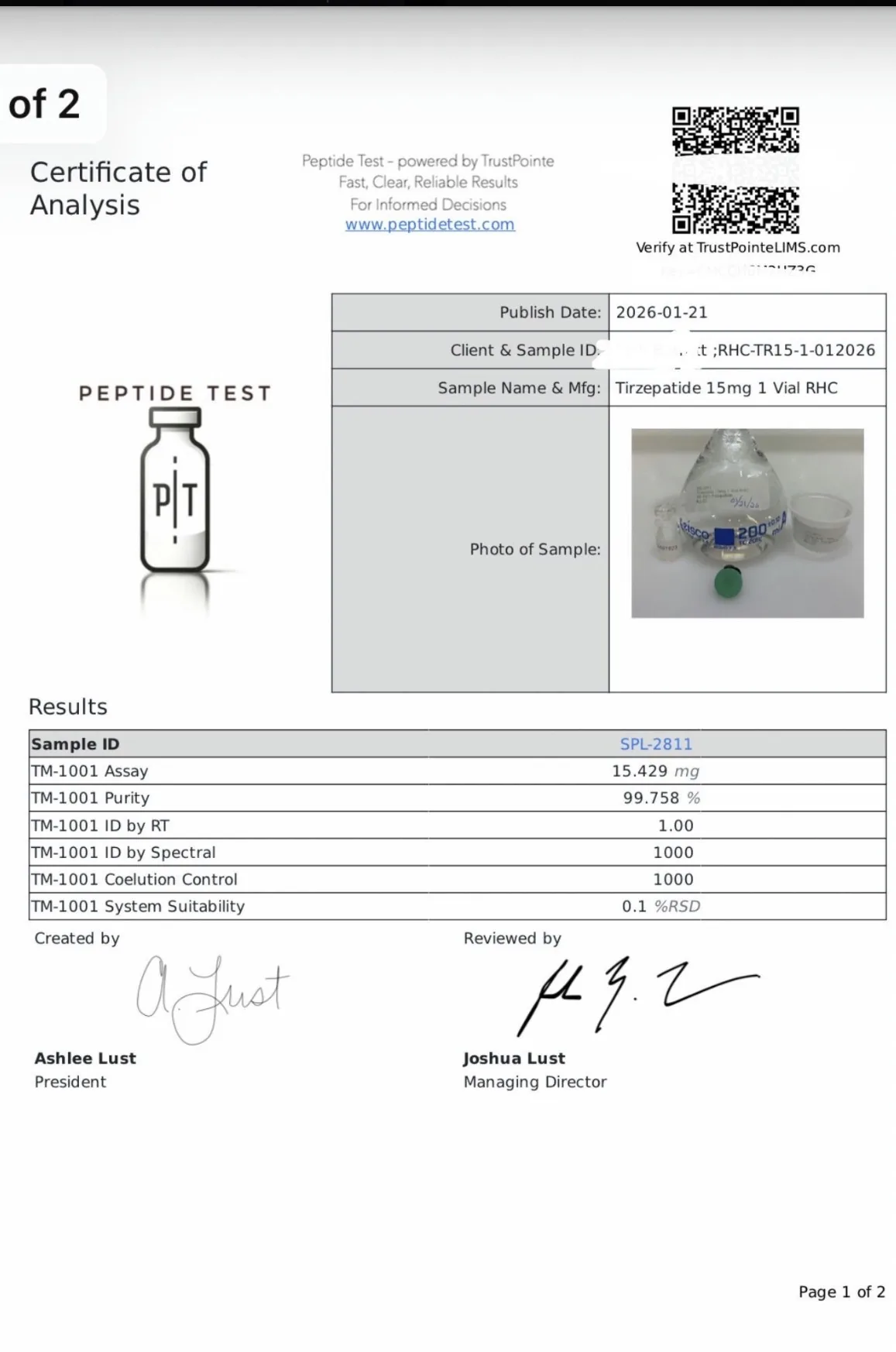
Assay: 15.429 mg
Purity: 99.758%
So in this case, the vendor didn’t ghost, the product arrived, the test result came back close to label claim. The experiment was a success, but what would have happened if there had been a problem with the purchase, that part remains unknown.
This experiment doesn’t make every random WhatsApp vendor trustworthy, what it does do is to highlight the messy supply chains that are often referred to. But at the same time it doesn’t always mean scam, although it does mean you’re entering blind. For most buyers, it’s just not worth the risk, but for our experienced buyer the risk paid off. As always, never spend more than you’re willing to loose
So in the end, this experiment went from:
“Dear friend…”
to:
paid order → delivered product → third-party test result
And that’s exactly why this market is hard to explain.
Sometimes the red flags are real, sometimes the vendor is too and our job is figuring out which…before our money becomes the experiment.
One More Thing: How Do They Find You?
B2B data search is one route, but it’s not the only one. In some cases, scraping large Telegram, Discord, or Facebook groups may be even more targeted. If someone is already inside a peptide group, they’re not just a random contact, they’re already part of the market. That makes them a better lead.
So the reality is probably both.
Some reps use paid B2B tools, some scrape communities, some likely do both, that’s why cold outreach can feel so random and so targeted at the same time. While you may never have actually handed your number to a peptide vendor, but if you write about peptides, comment on them, join groups, sign up to vendor sites, use gated catalogues, or have an email linked to public peptide content, you can still end up tagged.
Not because one person “found” you, but because the data trail found you. And once your contact details are linked to the keyword, you become searchable, that’s the real lesson here.
You do not need to shout “I buy peptides” into the internet, you just have to exist in the space long enough to be collected.
Comments