
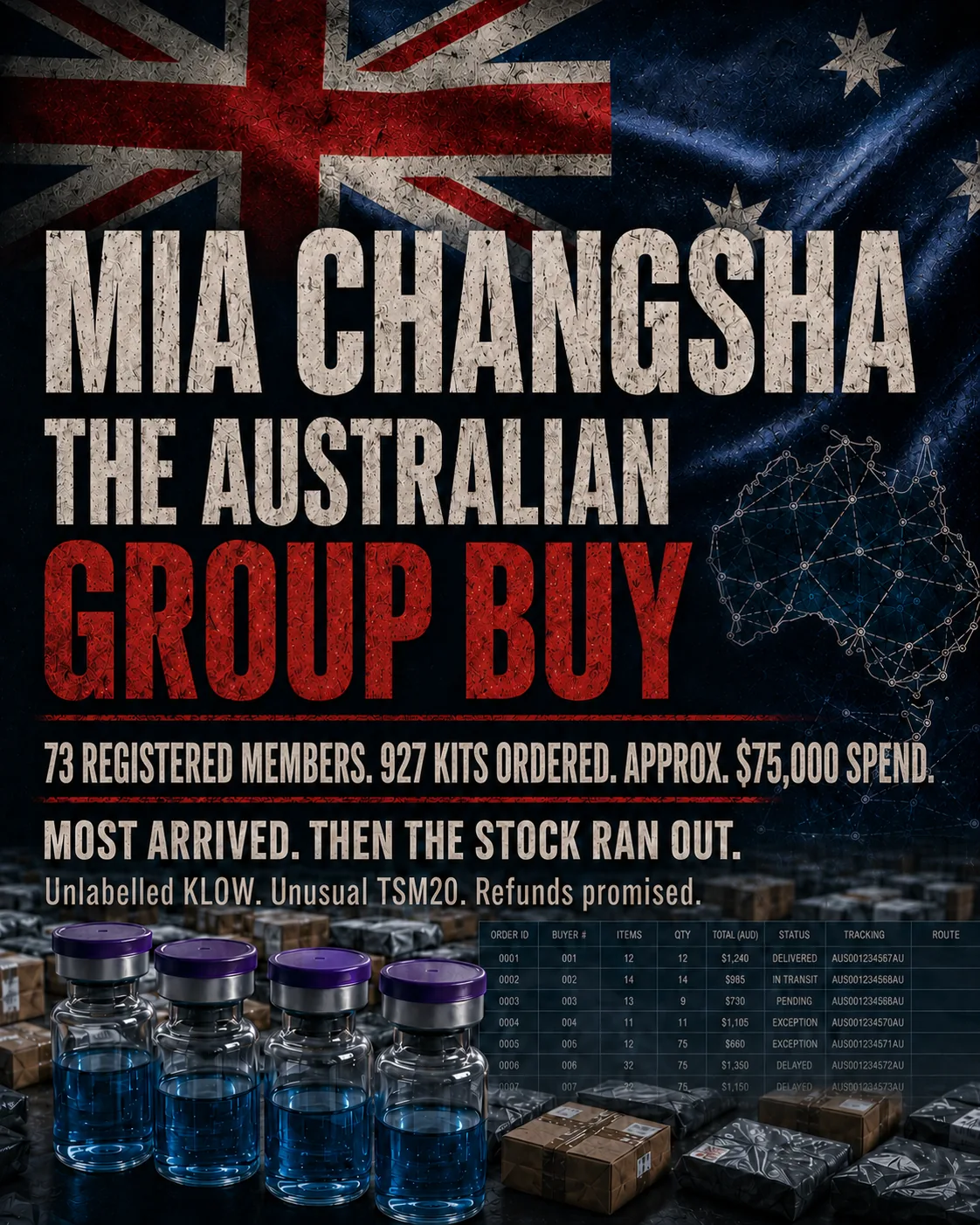
The Australian group buy didn’t begin as a small, carefully controlled order. It was organised by someone previously known as “Gosu,” who later adopted the name “Sensei” after reportedly being removed from several Australian peptide groups. He then created his own community and attracted around 200 expressions of interest, many from people who’d never ordered directly from China or participated in an international group buy.
Rather than limiting the offer to one or two products, Sensei reportedly used Mia’s entire wholesale list. The final buy involved 73 registered members ordering 927 kits, with the total spend estimated at approximately $75,000. It was also structured unusually, with most parcels being sent directly from China to individual participants rather than being received and redistributed by the organiser.
That arrangement placed much of the fulfilment burden directly on Mia. An estimated two-thirds of the participants were new to group buys and didn’t understand that these were not ordinary retail orders expected to ship within a few days. When some customers hadn’t received their parcels after two weeks, they began contacting Mia directly for updates.
Sensei reportedly did little to manage those expectations and eventually became difficult to reach himself. Participants were directed to contact Mia, while complaints spread through group chats and social media. What began as one bulk order effectively became dozens of individual customer-service cases handled by a sales representative already trying to coordinate stock, freight forwarders and Australian customs requirements.
Accounts from the time describe a noticeable change in Mia as the pressure increased. She reportedly became withdrawn as her messages filled with complaints and requests for tracking. It has been suggested that this pressure contributed to her later decision to restrict the group, remove members and eventually dissolve it.
The biggest issue appears to have been KLOW. According to participants, 93 kits were ordered by 37 members at a listed price of $120 each, more than $10,000 in KLOW orders. It’s alleged that Mia knew the product was unavailable before all payments had been received but continued accepting orders.
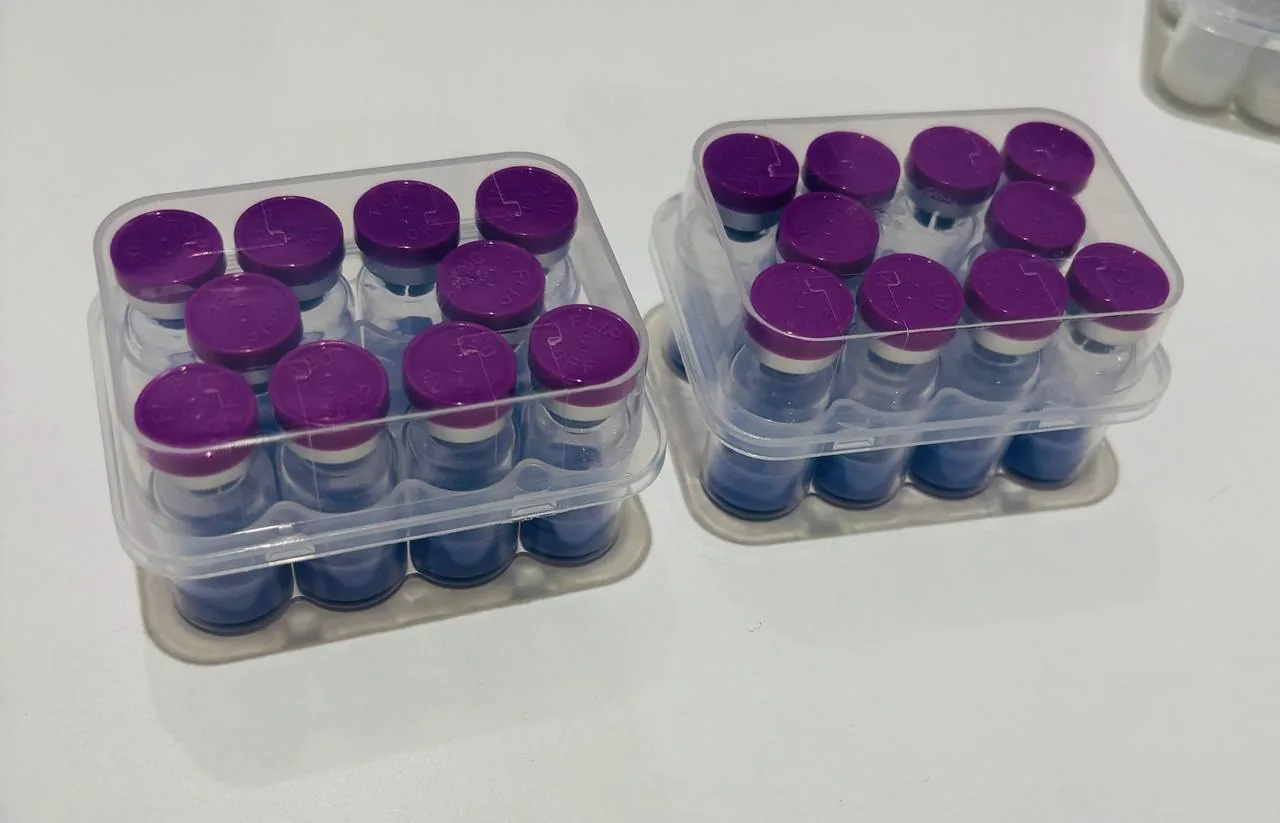
Some customers later received unlabelled KLOW from what Mia described as previous inventory. The boxes reportedly retained adhesive residue where diamond-shaped Changsha stickers appeared to have been removed, raising the obvious question of why the company’s own labels had been stripped from its own stock. Different-looking batches also appeared, leading to speculation that replacement stock had been sourced elsewhere and repackaged using labels removed from existing Changsha boxes. This remains a theory and hasn’t been confirmed. After being told the KLOW was being sent for testing, she has greed to refund everyone who received the unlabelled batch.
Unusual black-spade TSM20 kits were also distributed and similar kits reportedly appeared in another 50-kit group buy which have been sent for testing. The TSM20 orders were another example of the logistical problems. According to Mia, shipments to postcodes beginning with 2 were processed first, while orders for postcodes beginning with 4 required another freight forwarder charging considerably more. By the time one was found, the original TSM20 stock had run out, so the remaining orders were substituted with black-capped inventory. Mia said repeatedly changing freight forwarders increased her costs and resulted in her losing money on the group buy.
This wasn’t a failed group buy in the ordinary sense. Most products arrived, and every shipment reportedly cleared customs without a single seizure. The breakdown came at the edges: an inexperienced customer base assembled by an organiser already reportedly banned from several Australian groups, who then failed to manage expectations and directed the resulting flood of enquiries towards Mia.
That pressure may explain why Mia became overwhelmed, but it doesn’t explain why more than $10,000 in KLOW orders were accepted without sufficient stock, or why customers received unlabelled, inconsistent and increasingly questionable substitutions in their place.


Comments