
After the previous post (link below),
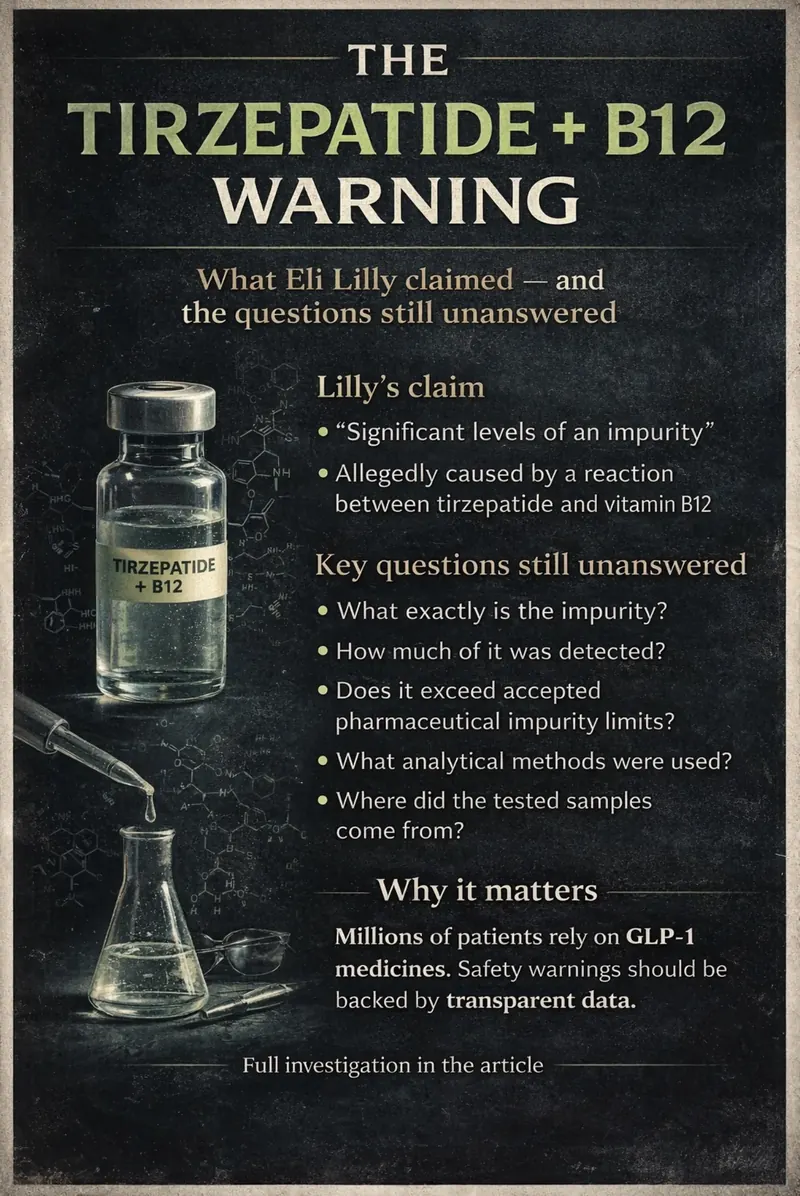
Eli Lilly’s Tirzepatide + B12 Warning
some discussion shifted to concerns about taking tirzepatide and vitamin B12 separately.
This raises two distinct questions:
Where can a reaction occur?
Where would any consequences show up?
These are not the same thing.
In a shared vial, the conditions are highly favourable for interaction:
high local concentration
prolonged contact time
a shared formulation environment
From a chemistry perspective, reactions require molecules to collide with sufficient energy and the right orientation. In a vial, there are trillions of tirzepatide and B12 molecules confined in a small volume, constantly interacting.
The most important factor here is pH.
Peptides like tirzepatide are highly sensitive to their chemical environment. They are typically stabilised within a narrow pH range (roughly 6.5 to 7.5). Vitamin B12 formulations may sit at a different pH.
When combined, the environment shifts.
That shift can:
destabilise the peptide
alter its structure
promote aggregation
or trigger degradation (e.g. hydrolysis)
The key point is not that these outcomes always occur, but that this is the environment in which they are most likely to develop, before injection.
The Body: A Completely Different Environment
Once injected, the situation changes immediately:
rapid dilution into a large fluid volume
continuous movement and distribution
exposure to proteins and enzymes
tightly regulated physiological pH (~7.4)
Under these conditions, the likelihood of two specific molecules repeatedly interacting in a controlled way is significantly reduced.
This does not make interaction impossible.
But it does make it far less favourable than in a shared vial
Why Compatibility Matters
When manufacturers warn against mixing compounds, the concern is not simply that “they might interact.”
It is that the drug may no longer be the same substance by the time it is injected.
Potential risks include:
peptide instability under altered conditions
formation of modified or degraded species
aggregation or structural disruption
incompatibility between excipients or preservatives
These are not hypothetical concerns. They are mechanistically plausible, and they are why compatibility is normally established through controlled formulation studies, not assumed.
What Separating Actually Changes
Injecting compounds separately:
✔ removes prolonged contact in a shared vial
✔ removes the primary environment where pre-injection changes are most likely
✔ significantly reduces the likelihood of forming new species before administration
But:
❌ it does not make interaction in the body impossible
❌ it does not guarantee zero biological effect
Immunogenicity: The Risk You Don’t See
One reason these changes matter is that they are not always just a visual problem.
When peptides aggregate or undergo structural changes, they can become more visible to the immune system. In protein and peptide drugs, this can sometimes increase immunogenicity, meaning the body may recognise the altered molecule as foreign and mount an immune response.
That does not mean this is happening here, and there is currently no direct evidence of immunogenicity in this case.
But it does mean the issue should not be dismissed as cosmetic. Once a peptide changes its physical or structural state, the question is no longer just how it looks, but whether it is still behaving like the same molecule.
Where this leaves us
The vial is where risk can be introduced.
The body is where any effects, if they occur, would manifest.
Separating compounds removes the main pathway for pre-injection incompatibility, but it does not eliminate all theoretical interaction.
The critical question is not simply whether compounds can interact, but:
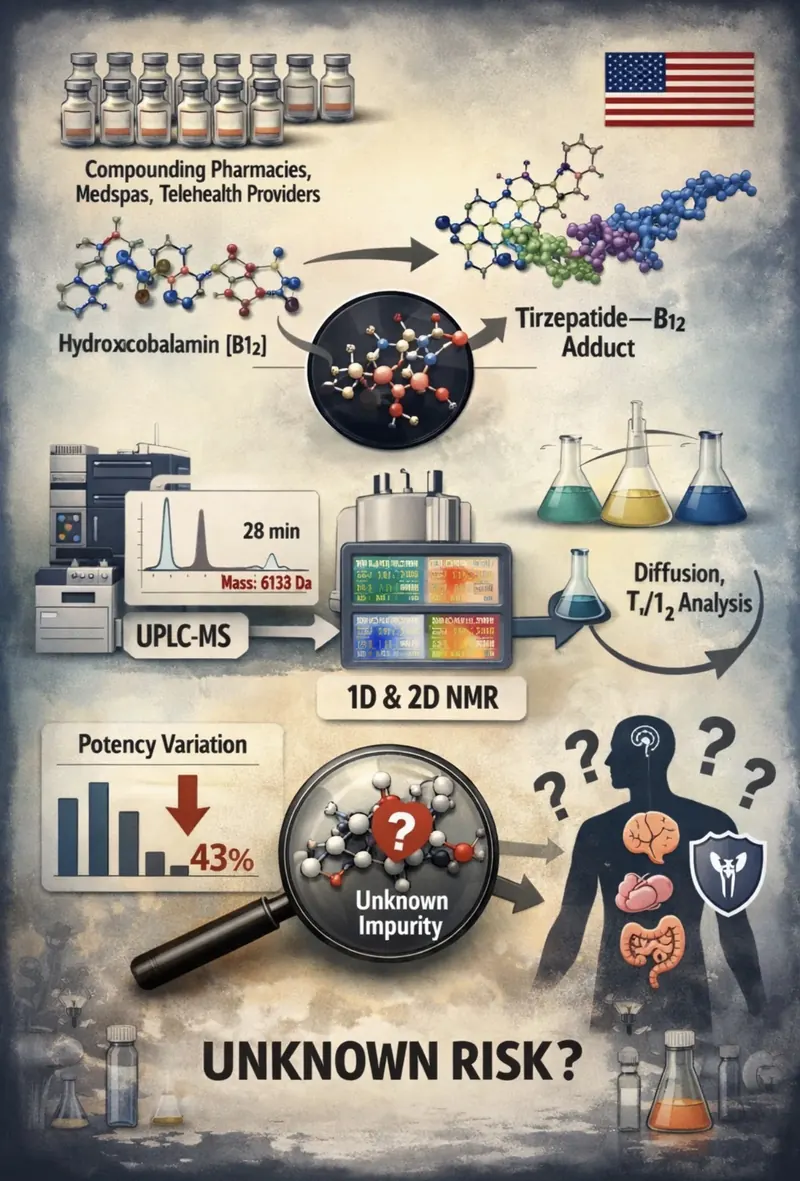
what actually forms, in what amount, and whether it meaningfully matters.
Until that is clearly demonstrated, most conclusions remain assumptions, not evidence.
Comments