
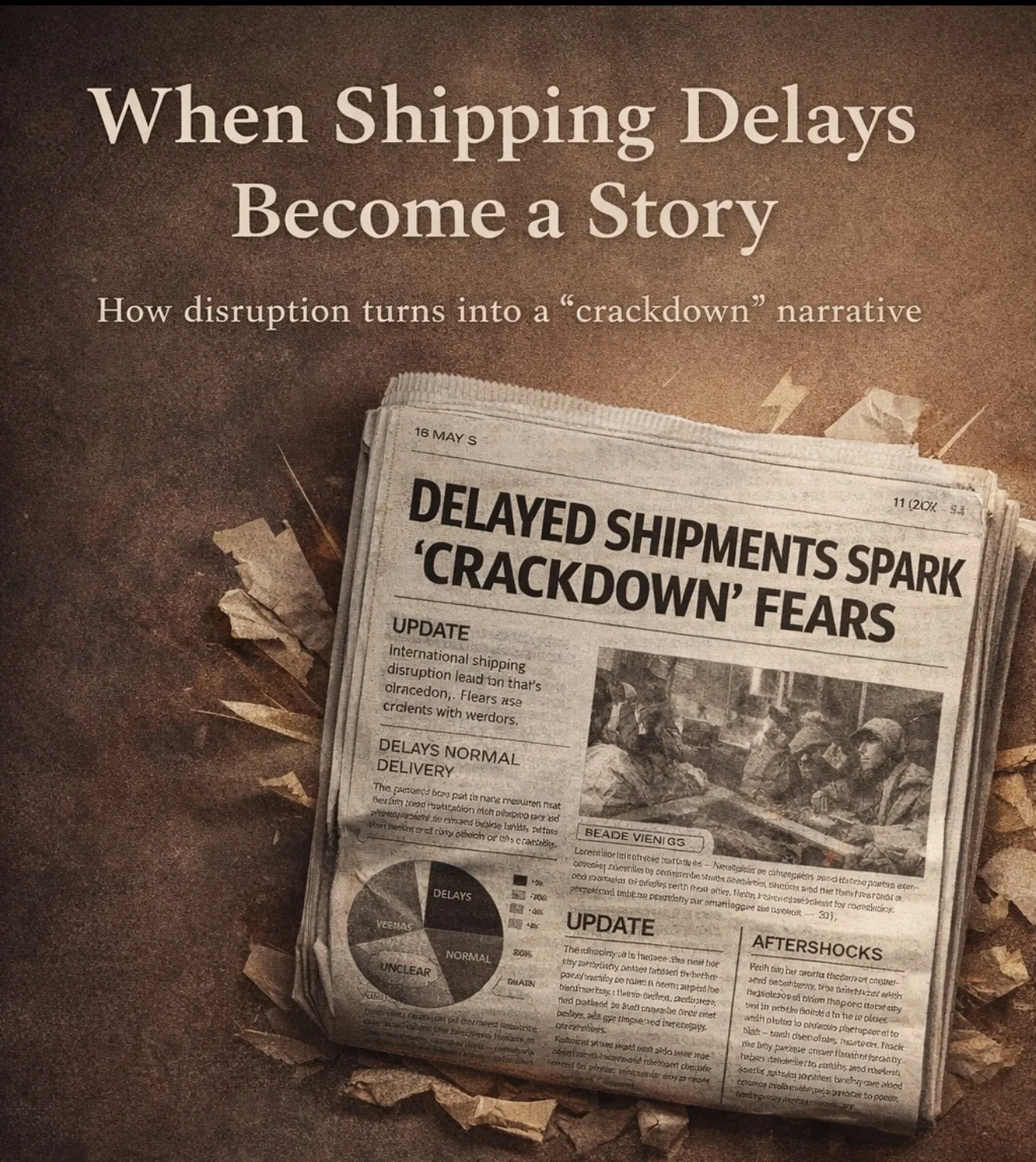
Over the last week, shipping delays have taken over almost every major platform.
People wanted to know what caused them, who was still shipping, and what was fact versus rumour. The discussion escalated quickly. At one point I was even accused of making things up and asked what my agenda was. That reaction alone told me something. This wasn’t just about shipping anymore.
So I decided to take a step back and to look at how the story was actually being told across platforms. Unsurprisingly, vendor messages came first.
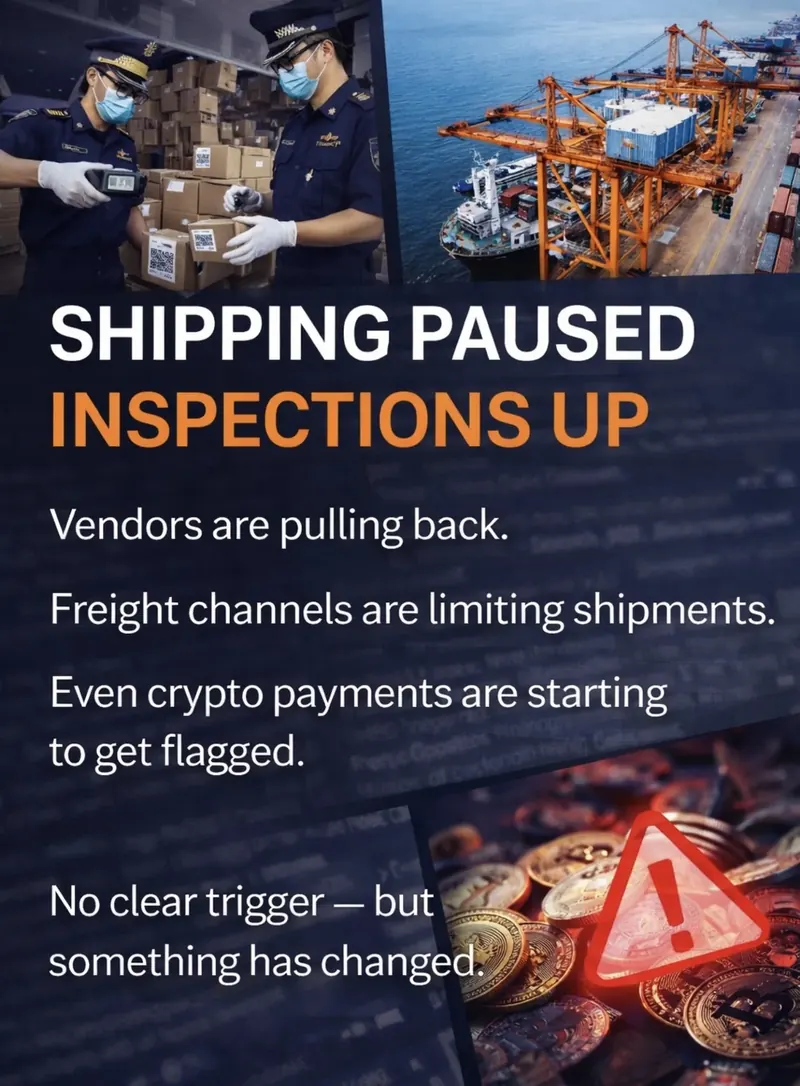
They weren’t identical, but they all pointed to the same underlying issue. Some were blunt, reminding buyers that disruption is part of the grey market. Others were more reassuring, emphasising that orders were still being monitored. Some kept it vague, inspections, delays, tighter controls. Others were more direct, mentioning arrests, supply chain problems, and even non-peptide products being shipped under peptide labels. A few went further and gave tentative dates for when shipments might start moving again. Taken together, the messages showed two things:
There was disruption. But there was no single, consistent explanation.
Down the Reddit Rabbit Hole
Reddit gives you the most unfiltered view of what people are actually experiencing, and it rarely lines up neatly.
In the same threads, you see completely different outcomes. Some users report orders not shipping at all, tracking numbers disappearing, or packages sitting in customs with no updates. Others describe delays stretching from 10 to 14 days into 3 to 4 weeks, or vendors going quiet. At the same time, there are posts from people saying their packages arrived faster than usual, or that reshipped orders are already moving again.
That contradiction is the first clue. If this were a system-wide shutdown, the reports would be consistent. They aren’t.
Instead, what emerges is fragmentation.
Some users point to specific logistics problems, a warehouse being shut down, a courier under scrutiny, or certain shipping lines being watched more closely. Others dismiss the idea of anything unusual, treating it as routine disruption being amplified.
Alongside that, you start to see second-order effects, stock shortages, even for non-GLP peptides, increasing reliance on alternative payment methods, growing difficulty sourcing certain items and US warehouse stock tightening. As the threads develop, the tone shifts from reporting delays to explaining them.
Users begin repeating vendor messages, paused shipments, inspections, tentative restart dates. Others push back, suggesting those explanations are exaggerated or convenient. Then the theories appear: flagged routes, disguised shipments triggering inspections, or simply another cycle of disruption and adjustment.
At that point, the picture starts to blur.
You have second-hand information, repeated timelines, rumours framed as explanations, and scepticism mixed in with acceptance, all feeding the same narrative.
What Reddit actually shows
Not consensus, not clarity, but a mix of real delays, working routes, partial disruption and speculation, all happening at once. That is what makes the situation look bigger than it is.
Final takeaway from Reddit
By the end of it, Reddit is no longer just describing the situation. It is helping give it shape. Delays become explanations, explanations become theories, and repetition gives those theories more authority than the evidence does. What you are left with is not one coherent crackdown, but a messy set of disruptions hitting different parts of the system in different ways.
Substack comments: trying to pin down a cause
By the time the discussion reaches Substack, the tone shifts again. The comments are less chaotic than Reddit and less argumentative than X, but they are still built around the same problem: people are trying to work out what, if anything, actually explains the delays.
Some readers bring in their own source material, repeating variations of the same basic idea, a logistics hub under scrutiny, people being questioned, shipments pausing while things settle down. Others try to connect the delays to something more concrete, such as FDA announcements, Category 2 changes, CBP enforcement, or broader political pressure. But none of those explanations fully settles the issue.
What stands out most is how often people come back to the same admission: most of the information is second or third hand, nobody has a complete picture, and different people are hearing similar things with important differences.
That uncertainty shapes the comments.
Some readers ask whether this is a temporary phase or something longer term. Some try to test one explanation against another. Some push broader theories about who benefits. Others strip it back to the simplest version: this whole space runs on “he said, she said.”
What Substack comments actually show
Not clarity, and not consensus, but people trying to pin a moving situation to a stable explanation, using fragments, links, rumours, and whatever source material they can find.
Final takeaway from Substack
Substack is not where the story becomes clean. It’s where people try to make it make sense and in doing that, they reveal the real problem which is not just disruption itself, but how little solid information exists once the disruption begins.
X: where the argument becomes the story
If Substack reflects, X reacts. Here the discussion becomes confrontational. The divide is immediate, some report delays, inspections, and paused shipments. Others insist it’s business as usual, dismissing the narrative as exaggeration or fearmongering.
At that point, the focus shifts from logistics to motive, is this real or rumour? is it China-side or US-side? is it peptides, or something else being shipped as peptides ?and who benefits from the panic? From there, positions harden quickly.
What X adds is acceleration. Information is challenged in real time, flattened into opposing views, and amplified through reaction.
What X shows
Not clarity but pressure. By the end, the issue is no longer just shipping. It becomes a public dispute over evidence, interpretation, and trust and the stronger the disagreement, the clearer it becomes that there is no single version of events.
The commercial angle
Alongside the debate, behaviour starts to shift. If international shipping becomes unreliable, domestic options become more attractive; US-based stock, faster delivery and fewer customs risks. Not a shutdown, but a system adapting.
What this reveals
The disruption isn’t just logistical, it’s behavioural too. Buyers adjust, vendors reposition and the system continues moving albeit unevenly.
Facebook: decision-making under uncertainty
Facebook strips it back to the basics. There is less theory and more practical concern. Is it safe to order, who is still shipping and should I wait?
The answers remain inconsistent, some report clear issues with delayed shipments, payment problems and longer delivery times, but others report none, fast domestic orders, normal delivery windows and no noticeable change
What Facebook shows
Not explanation but decision-making. People aren’t waiting for certainty, they’re adjusting based on partial information, other people’s experiences, and risk tolerance.
Online Forum: lived experience
The forum discussions feel more grounded and less performance, more fatigue. People describe what’s happening to them directly, delayed or suspended shipments, mixed outcomes between US and China orders, stock tightening and repeated shipping attempts. Some try to break it down into issues inside China and issues at customs after arrival. But others accept it as part of the cycle.
What forums show
Not theory, but experience and and that experience is inconsistent.
Conclusion: how the story forms
Step back from the noise, vendor messages, Reddit threads, Substack comments, X debates, Facebook posts, and the pattern comes into focus.
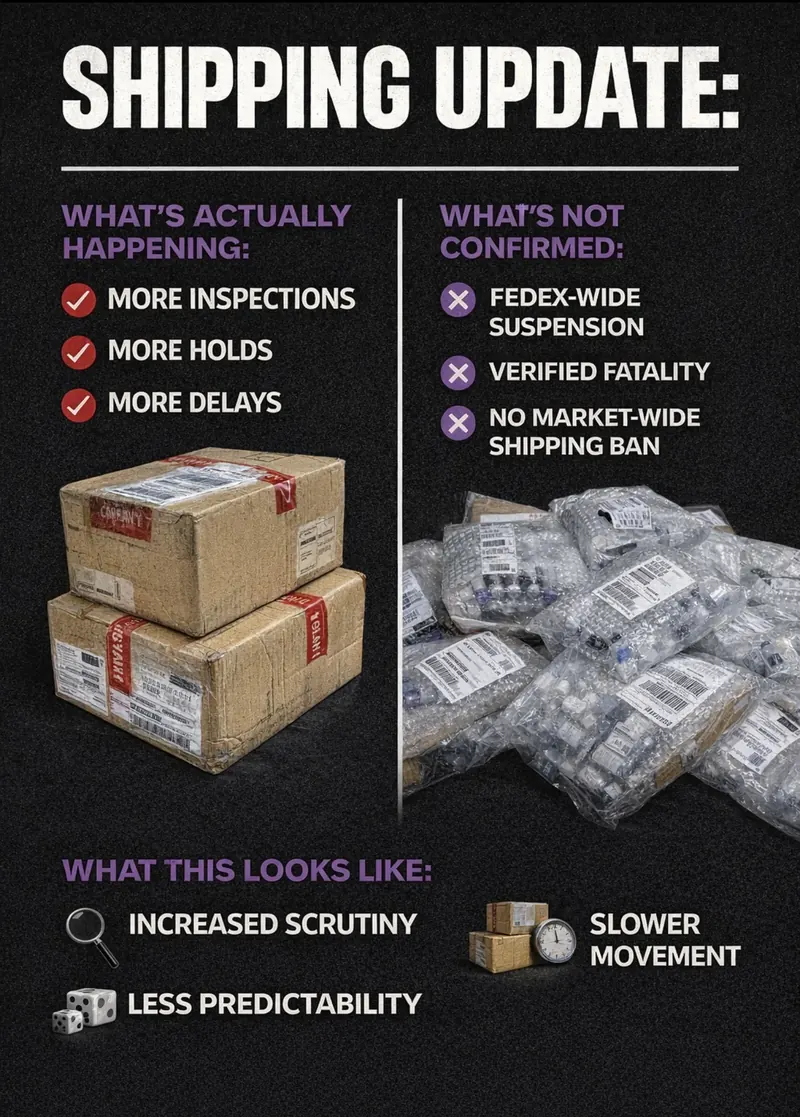
Parts of the system are under strain. Routes are being flagged, shipments delayed, vendors adjusting in real time. That much is real.
What isn’t real is the idea of a single, unified event. At the same time, shipments are still landing, some vendors are operating as normal, and many buyers are seeing no disruption at all.
This isn’t a shutdown.
It’s a system under pressure and it doesn’t break evenly. What spreads cleanly online rarely matches what is happening on the ground.

Comments