
When I first posted a failed Retatrutide test linked to LKZ, I expected it to be received like the many other bunk COAs I’ve been posting, but what I didn’t expect was for it to start an identity war.
Within hours of the COA being posted on X, I found myself in the middle of what can only be described as an identity dispute between two competing LKZ operations.
Both claimed a connection to the LKZ name. Both claimed legitimacy. And both appeared to be denying the other’s version of events.
The deeper I dug, the less straightforward the story became.
The Test That Started It All
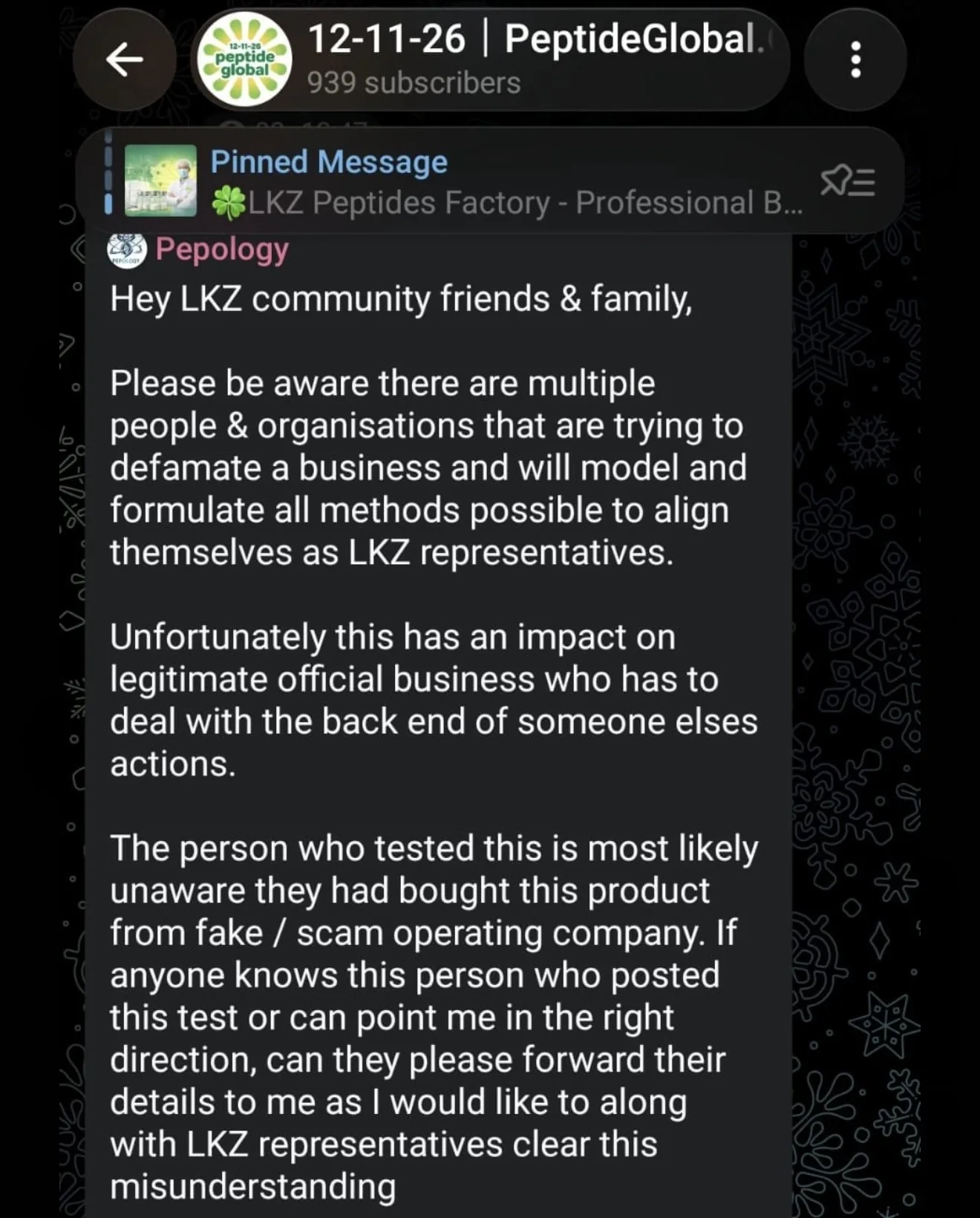
The controversy began when I posted Retatrutide test commissioned by R&T from the vendor LKZ which returned a result showing no detectable Retatrutide. The product had been purchased through a group buy with LKZ as the vendor. Shortly after I posted the COA on X, a statement appeared in a Telegram channel operating under the name, 12-11-26, PeptideGlobal. The announcement claimed the product had likely been purchased from a fake company impersonating LKZ and suggested the tester had unknowingly bought from a scam operation This seemed like a bold claim since things like this are easy to verify.
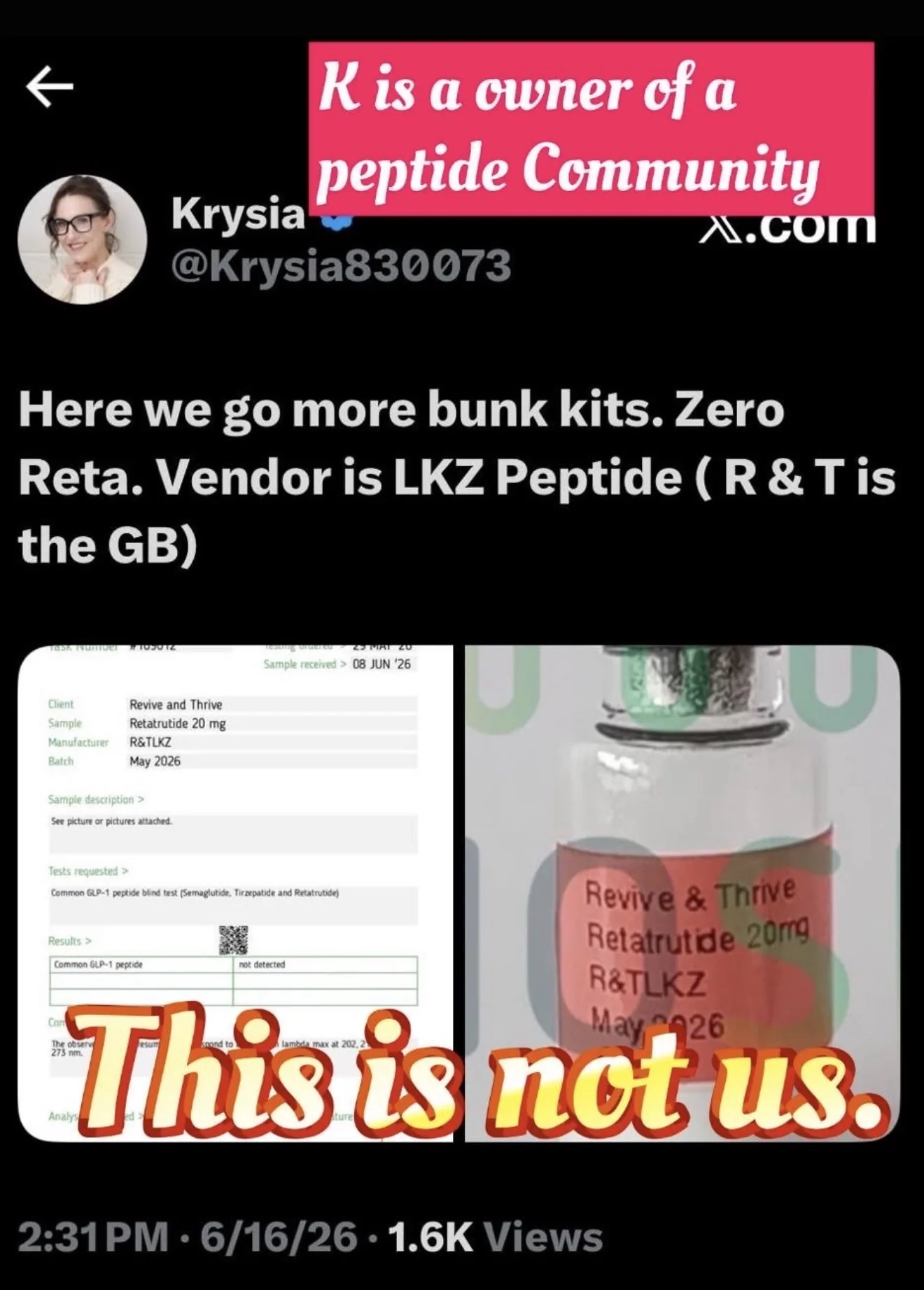
The group buy organiser responsible for the test, quickly confirmed that the product had come from the same LKZ representative they’d used successfully for numerous previous orders. According to the organiser, they’d completed more than fifteen purchases through the same contact and had never previously encountered a failed result. The organiser also confirmed that LKZ immediately offered a reshipment and paid for additional testing.
That raised an obvious question. If the product genuinely came from LKZ and LKZ was already replacing it, why was there an announcement by LKZ denying that they are the source.
Meet Mark Clark
To answer that question, I contacted Mark Clark, who’s publicly represented herself as LKZ for months since I introduced her to the community late last year. Expecting her to continue denying it, her explanation surprised me. She didn’t deny selling the bunk Reta, and repeatedly stated that she’d resolved the matter immediately, claiming responsibility and covering the testing costs. She also claimed that the Telegram group making public statements wasn’t her group.
According to Mark, there were multiple organisations operating under the LKZ identity. She claimed that PeptideGlobal had originally called itself LKZ because it didn’t have its own COAs and so they stole her LKZ COAs. According to her, they later began making their own COA certificates, but many customers still believed they were LKZ.
This wasn’t the first time she’d raised such concerns. Going back through old conversations, I found discussions dating back months in which Mark complained about people stealing her COAs, impersonating LKZ representatives and using branding similar to her own. At the time, I largely dismissed those warnings as unfortunately impersonators are all too common these days
The ZZQ Connection
The story became even more complicated when I revisited one of my earliest pre interview conversations with Mark. At the time, I asked whether she was related to ZZQ, because ZZQ was the name appearing on some of the COAs she showed me.
Her first explanation was that ZZQ had been their previous domain name and that it was frequently attacked but has now been restored. She then sent a website link for LKZ, https://www.lkzpeptide1.com/ followed by another link for ZZQ, www.zzqpeptide.com, before correcting herself and saying she’d sent the wrong one and sent a third one, www.lkzpeptide.com
When I tried the link it didn’t work so she said “Our domain name has expired- you can add a number 1 after it”. Then when i asked about ZZQ again, she said ZZQ was a company owned by her friend, while she was LKZ. She said that before taking on the LKZ role properly, she’d used her friend’s COAs. She went on to say that “Our company has been operating for over ten years, but we’ve only been in the industry for 2-3 years”
I explained to Mark that if a vendor’s COAs show one company name, the website shows another, and the sales representative is operating under a third identity, buyers are naturally going to ask questions. She appeared to recognise this herself, later saying she would standardise the manufacturer names on COAs to avoid further misunderstanding.
One curious detail emerged during my investigation. Mark had originally explained that lkzpeptide1.com existed because the original lkzpeptide.com domain had expired. However, current WHOIS records show lkzpeptide1.com was registered on 3 November 2025, while lkzpeptide.com wasn’t registered until 30 December 2025. Based on the available records, the numbered domain appears older than the non-numbered version, raising questions about the exact sequence of events. When I asked what the L, K and Z stood for, she replied that it was a name she’d originally come up with, similar to names like RT Peptide or TR Peptides, and that it didn’t have a deeper meaning. She also insisted that lkzpeptide1.com was hers, pointing to the contact information she had added to the website as proof.
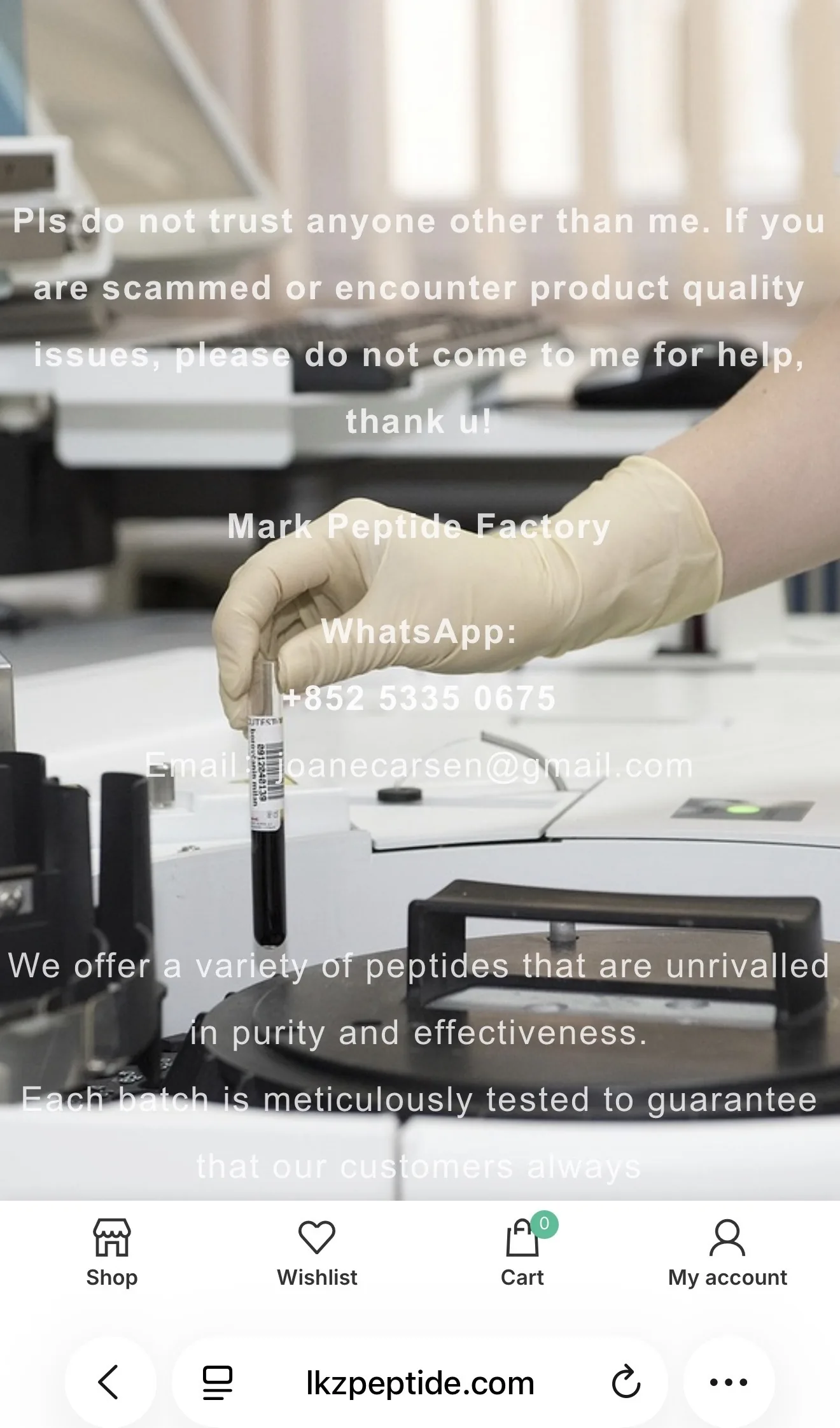
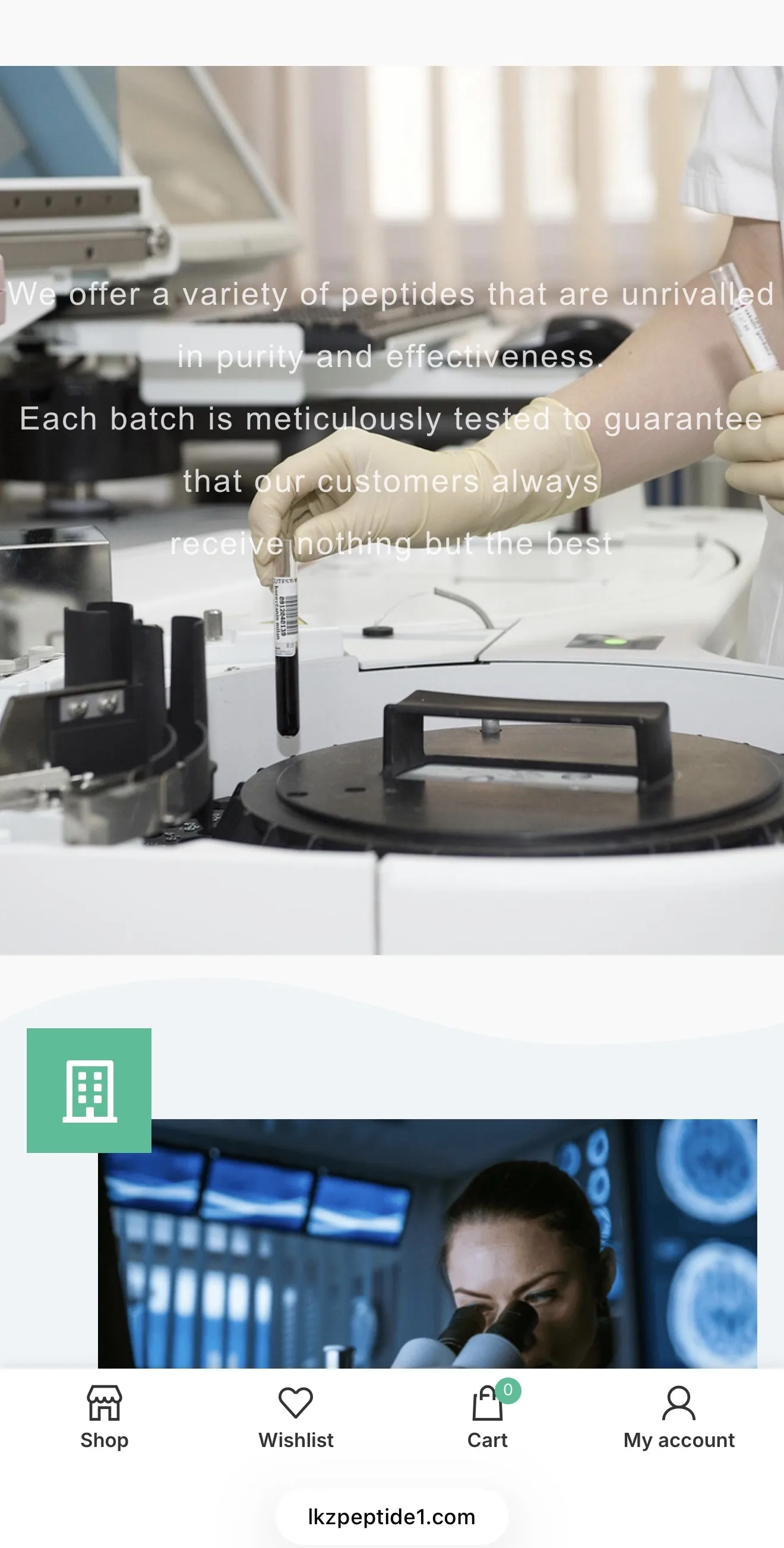
When I pointed out that there appeared to be two LKZ operations, Mark maintained that PeptideGlobal had originally called itself LKZ because it didn’t have its own COAs. According to her, they later began making their own COA certificates, but many customers still believed they were LKZ.
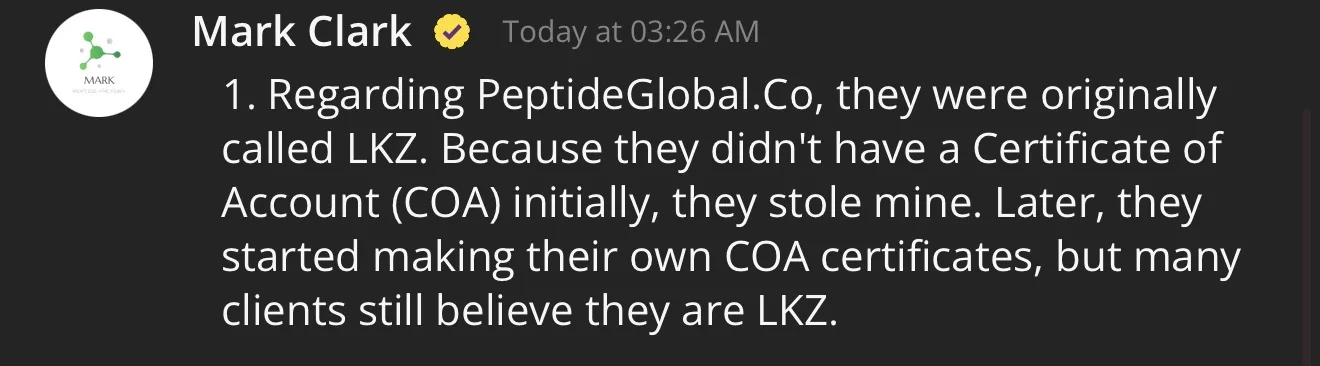
She also repeated that she’d previously warned me about impersonators and said that many scammers were using the LKZ name. However, when she showed an example of an alleged impersonator, it didn’t appear to be the same PeptideGlobal operation I was asking about.
At one point, Mark appeared unsure how to resolve the confusion and suggested she might contact the other side’s boss and ask them to use the PeptideGlobal.Co name going forward. That was perhaps the clearest sign yet that this wasn’t a simple scammer problem. Even Mark seemed to recognise that the existence of two LKZ identities was creating a problem that couldn’t be explained away with the usual “impersonator” answer.
Then I Met The Other LKZ
To understand the situation better, I then contacted PeptideGlobal, the other apparent LKZ in whose telegram group the announcement claiming they are the real LKZ was posted. I’d also already recently interviewed him and he’d made no mention of LKZ so that was the first question I asked him. What I got was another version of the story entirely.
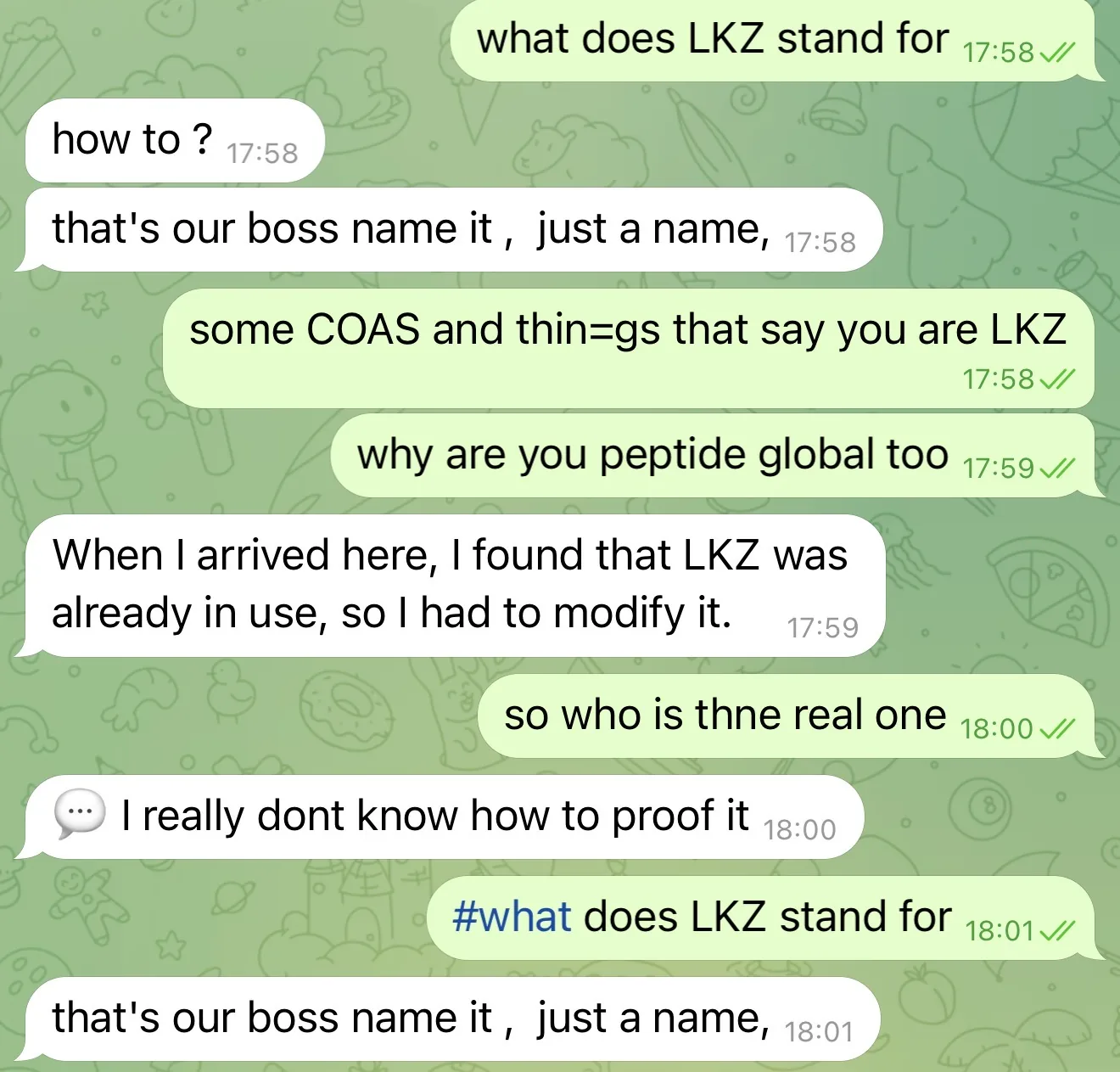
When he arrived, he found that LKZ was already in use, so he had to modify it and LKZ is just his boss’s name.
The 12-11-26 explanation.
The earlier announcement by PeptideGlobal.Co/ 12-11-26, distancing themselves from the bunk Reta had been posted by an account called Pepology.
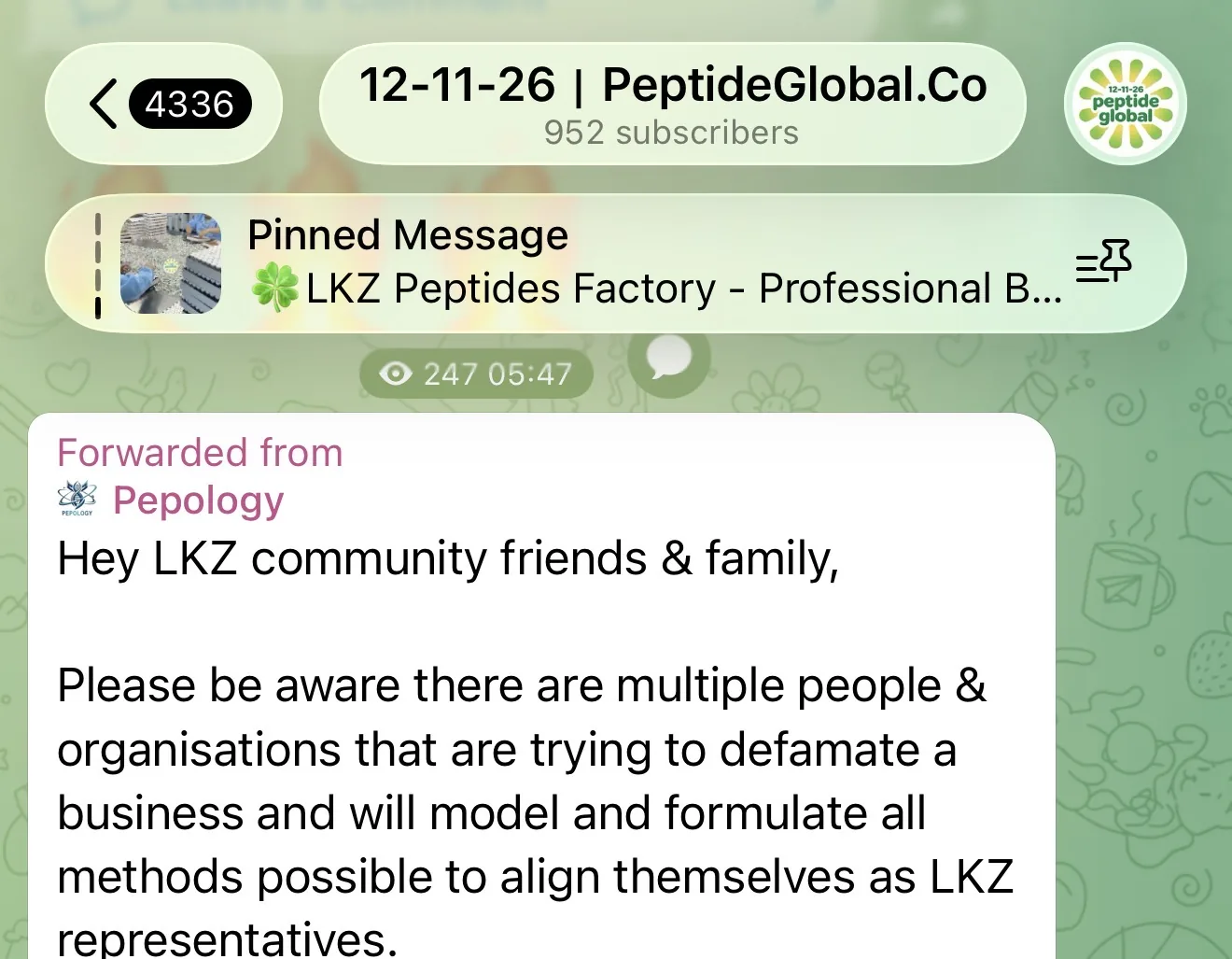
I contacted Pepology and I got a third version of events. He explained that he’s an Australian distributor operating under the name Pepology and that he leads LKZ’s community group testing which has been running for 3 months. According to him, there are eight LKZ sales representatives. He listed multiple names and claimed the company was headed by Harry who is same PeptideGlobal rep I’d interviewed a few months ago. Not surprisingly, when asked about Mark Clark, he responded: “Mark does not ring a bell for me” and he also said the LKZ logo used by Mark Clark has never been the LKZ logo either.
The mystery deepened when he revealed a code name that LKZ operate under that only true members will understand, 12-11-26. He said it stands for LKZ in letter of appearance in the English alphabet. He also showed me a COA with the manufacturer listed as 12-11-26. He then explained that the identifier had been created to solve a common problem in the peptide industry. According to him, distributors were often reluctant to reveal their manufacturers, while customers were understandably suspicious of COAs with the manufacturer information removed. The solution, he said, was to use 12-11-26 as a manufacturer identifier on the COAs, allowing reports to be shared in full without directly exposing the supplier’s identity. In other words, 12-11-26 wasn’t presented as a separate company but as a way of referencing the manufacturer while preserving anonymity.
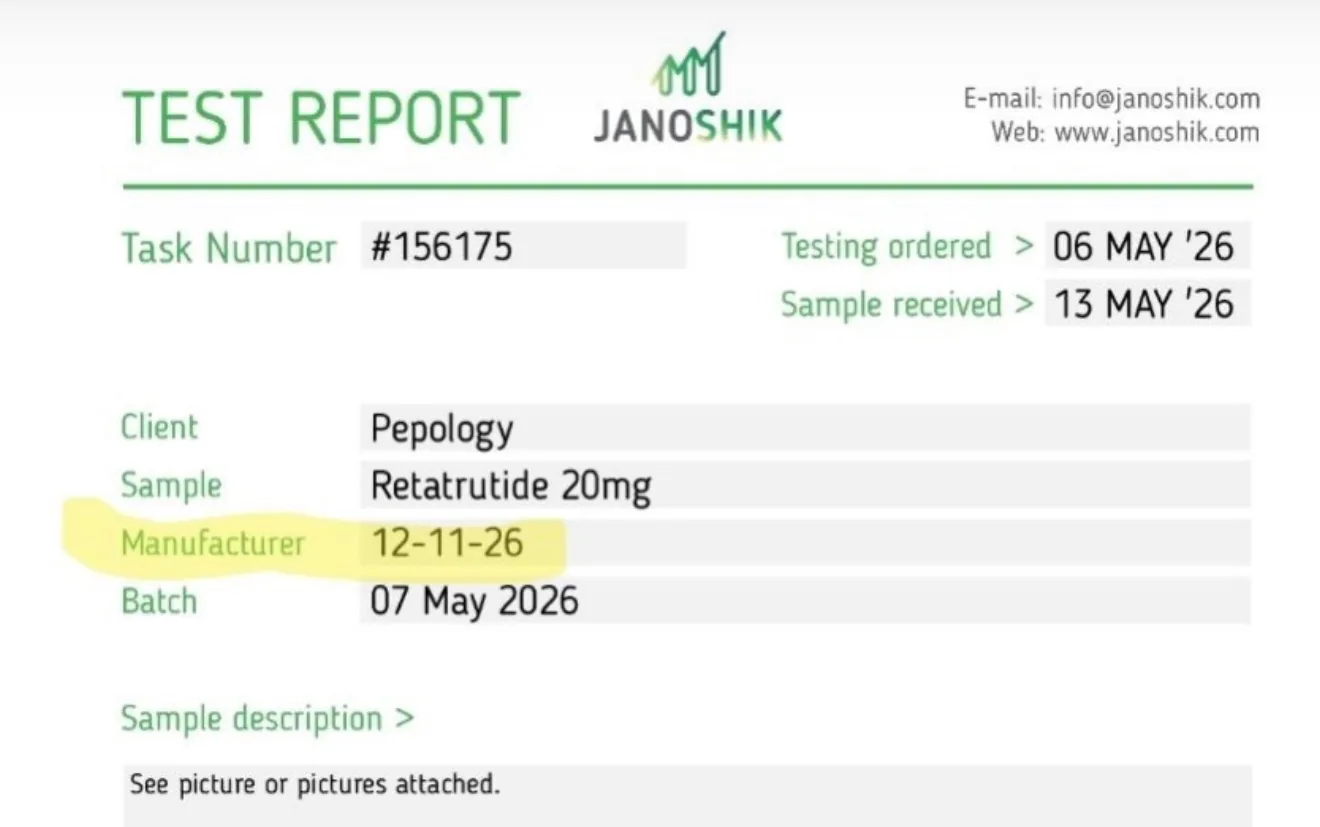
Whether that approach reduced confusion is another matter entirely.
The LKZ Ecosystem
As I continued digging through the PeptideGlobal channels, another detail stood out. This wasn’t simply a Telegram group occasionally mentioning LKZ, it appeared to be an entire network built around the LKZ identity. I found:
LKZ Client Support Group
LKZ Success Stories
LKZ Gateway & Verification
LKZ Community-Led Quantity Testing
LKZ Peptides | PeptideGlobal.Co
All operating under the same LKZ branding and logo.
The groups were active, had hundreds of members and contained discussions ranging from product testing and customer support to delivery reports and user feedback.
One of the more interesting posts showed historical Janoshik reports where the client was listed as LKZ and the manufacturer field referenced lkzpeptide1.com. The post described these as: “The COA made by our company before” which actually supports Mark Clark’s claim that her LKZ COAs were used by PeptideGlobal when they first arrived.
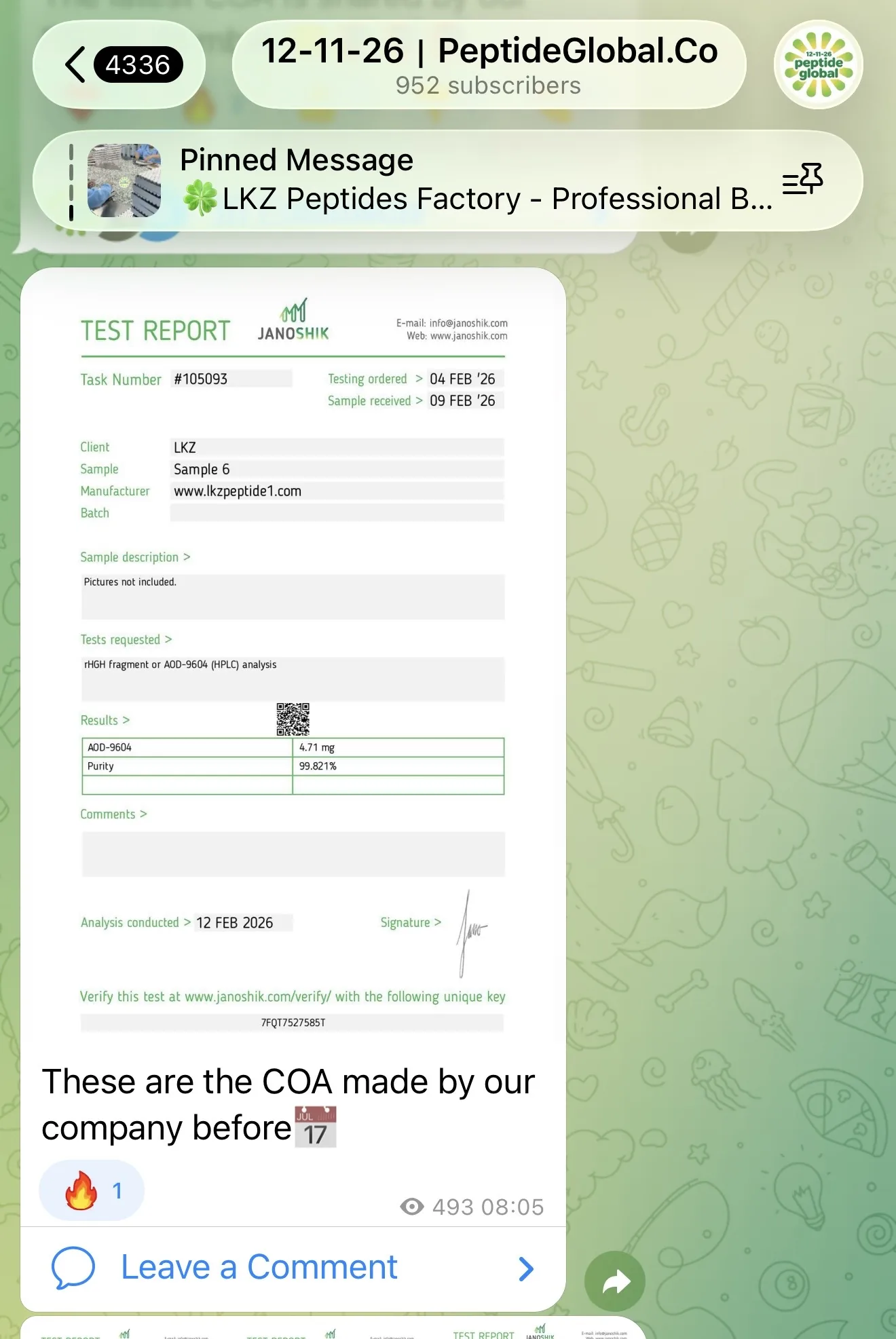
The channels also repeatedly referred to LKZ Family, LKZ Clients, LKZ Community and LKZ Success Stories
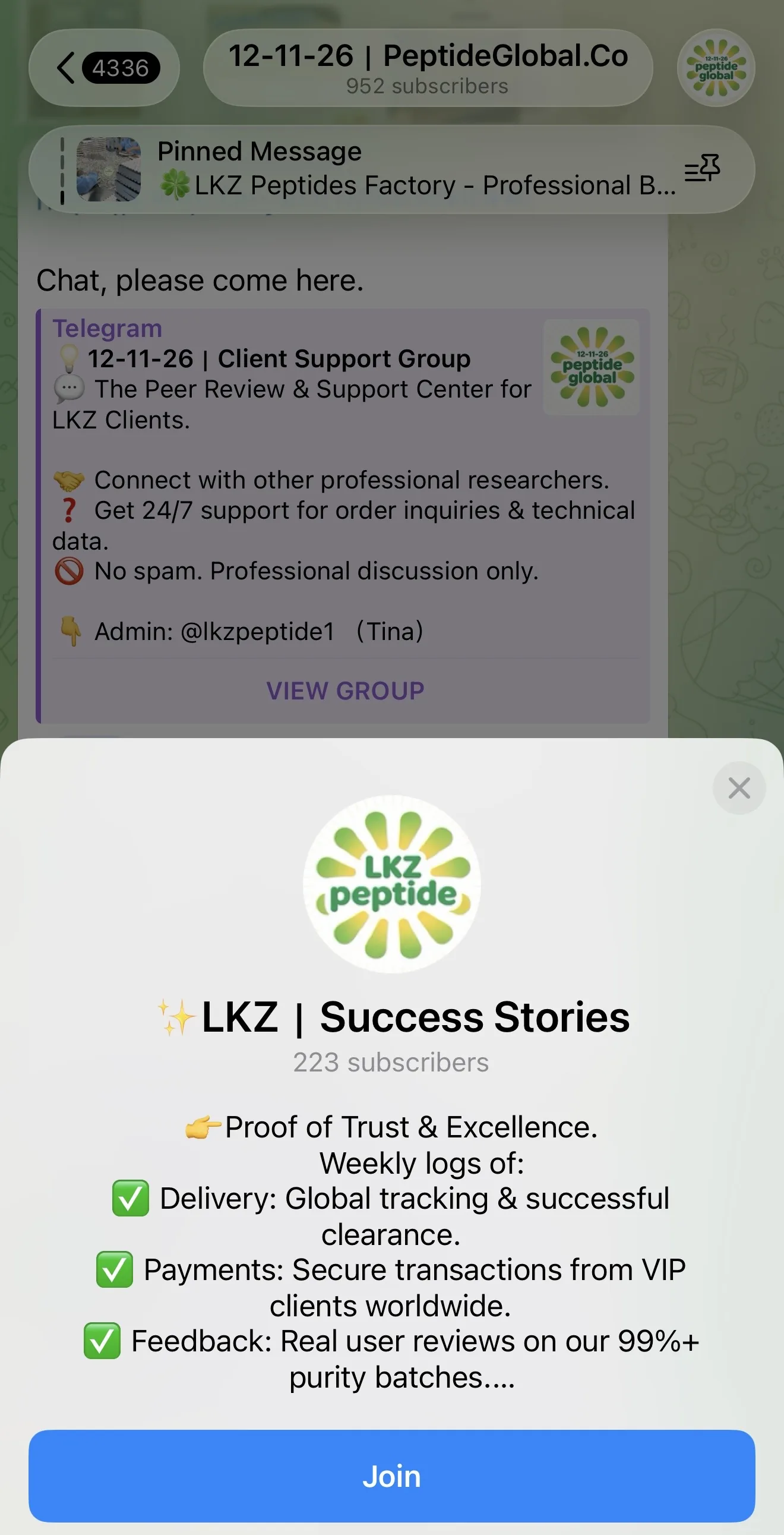
This reinforced the impression that LKZ was being presented not just as a reseller, but as the core identity around which the wider community was built and it directly conflicted with the idea that LKZ was merely a name being used by unrelated third parties.
By this stage, both sides appeared to have extensive histories, communities, documentation and customers attached to the LKZ identity.
The question was no longer whether LKZ existed.

Comments