
By now, most of us are very familiar with the sorts of excuses used by Chinese vendors.
From claims of borrowing COAs from a “friend”, to promises that a product is from “the same batch,” the warehouse or freight forwarder switch has become one of those explanations.
This explanation first surfaced during last year’s wave of zero peps and was used by several vendors, including Uther and GYC. At the time, many people felt it was unlikely, because it would have required scammers to physically take all the good vials out and replace them with zero pep vials. Last year, the zero peps arrived in the original boxes.
This time, however, the bunk peps are arriving in different kits, which makes the warehouse switch explanation slightly more believable. This is the case of one such alleged warehouse switch.
The original order was for 61 boxes of R20 from Mark Clark at LKZ. According to Mark, they usually take a picture of the shipment before it’s sent, but this time they didn’t.
The customer, who is the GB known as R and T, received, according to them, four kits of T20, one kit of T60, and the rest R20. The picture below is the picture taken by the receiver, R and T.
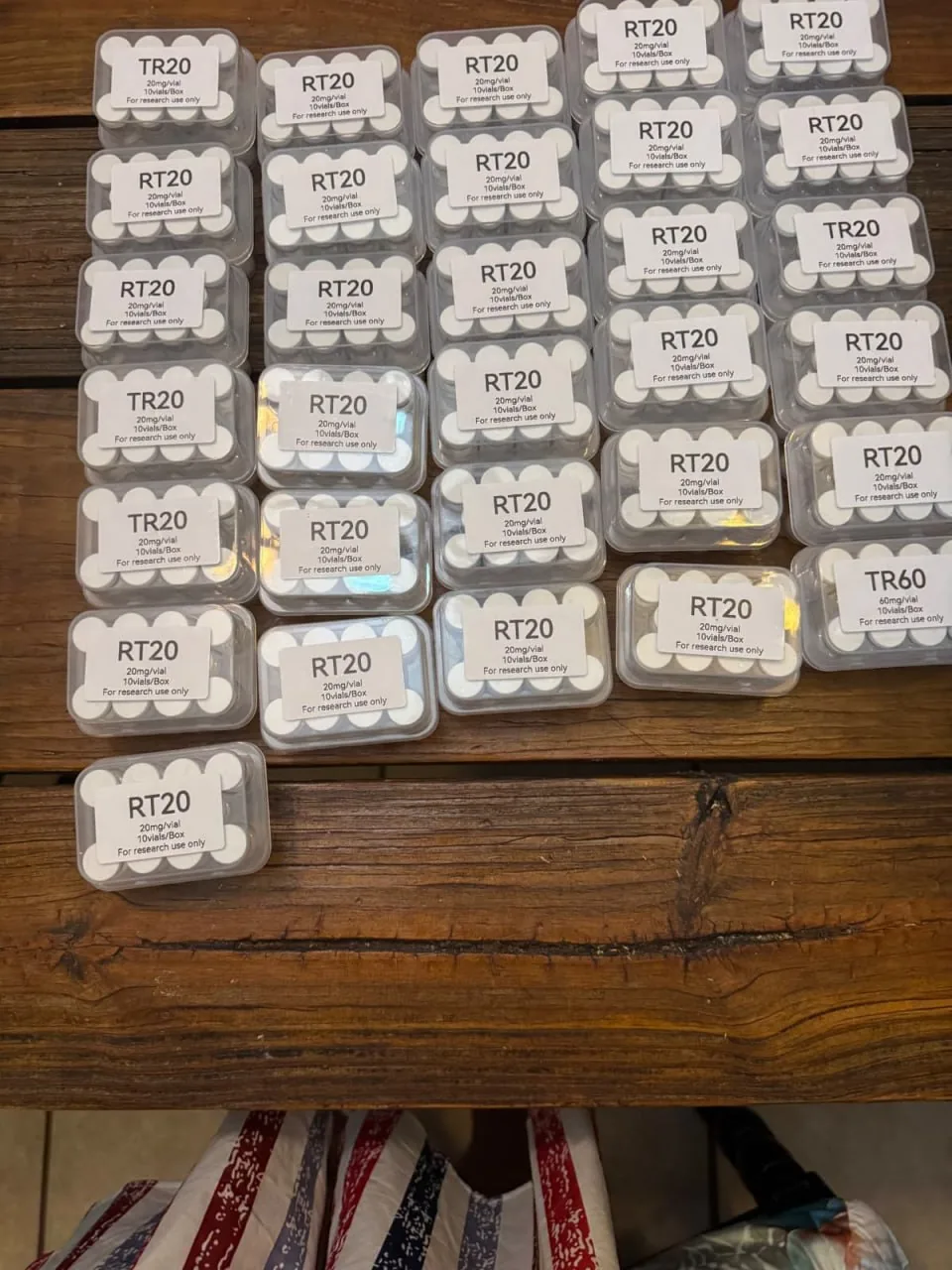
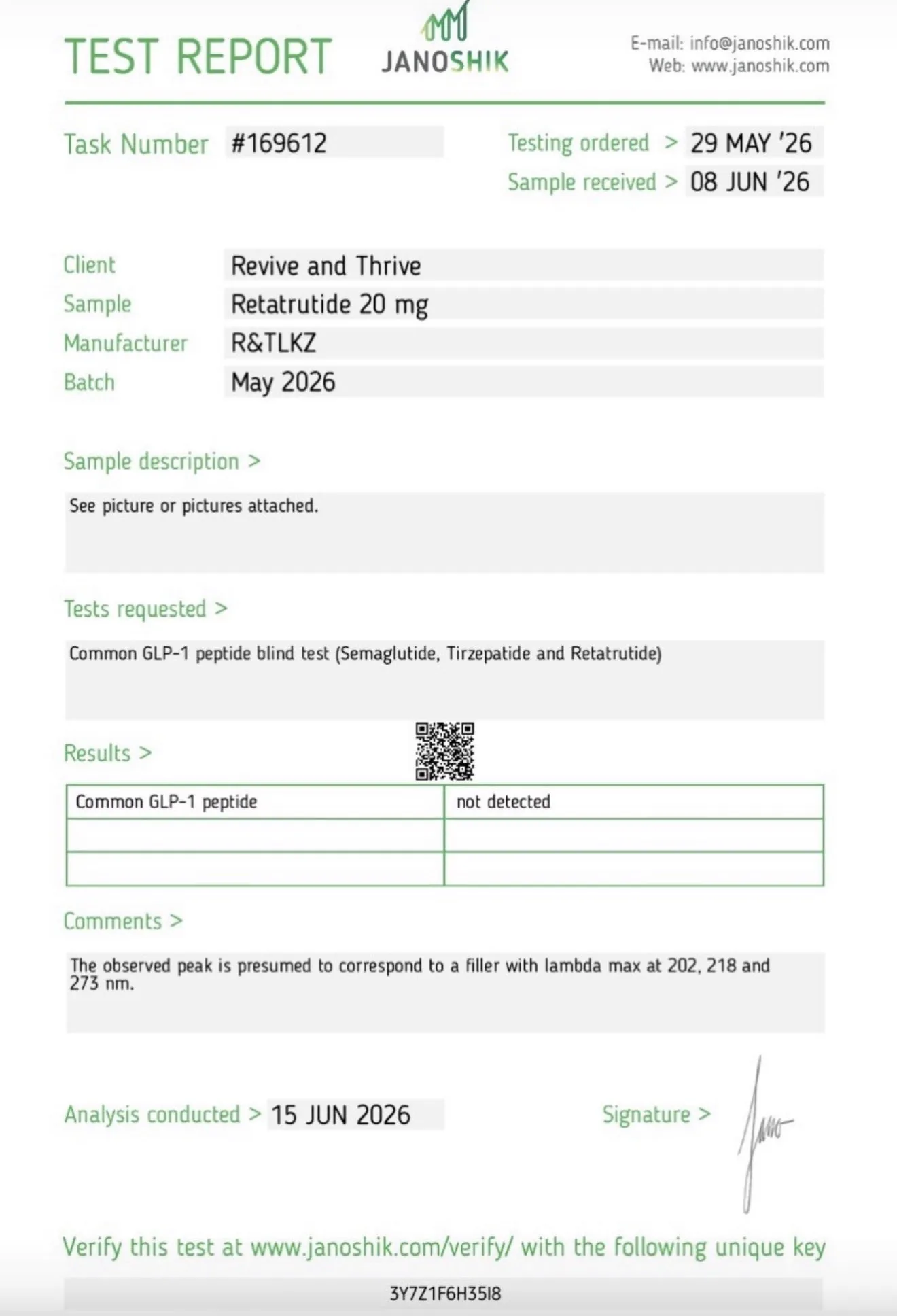
Initially, Mark believed it was a simple mix-up by the warehouse staff, since both their Reta and Tirz had white caps. The original plan was simply to resend the five missing kits of R20. However, when the Janoshik report for the R20 came back showing zero active ingredients, it became clear that this was a much bigger issue.
According to Mark Clark, from April to May this year, they encountered numerous counterfeit suppliers.
He claimed those suppliers shared a logistics company with LKZ and that, due to a surge in orders, goods were swapped with other customers’ goods by employees at the logistics company. According to him, this resulted in approximately one-third of the shipment being defective.
Mark stated:
“Upon learning of this, we immediately contacted our customers, and regardless of whether there was a problem, we resent the goods and refunded the testing fees”
He also explained:
“A new employee at the logistics company mistakenly thought another company’s goods were ours because the cap colours were the same. The original order was for 61 boxes of R20, but he sent 56 boxes of R20, 4 boxes of T20, and 1 box of T60. He only noticed the cap colours and didn’t even read the labels”
According to Mark, the issue was resolved by contacting the logistics company, whose personnel admitted their mistake. LKZ then reportedly took back the affected goods and switched to another logistics company. What makes this case different from many of the usual zero pep cases is the response. Instead of accusing the customer of switching the vials sent for testing, denying the result, stalling, or dragging out a refund, Mark appears to have taken control of the situation quickly.
The GB has already received replacement kits, testing fees were refunded, and the vendor moved away from the logistics company involved.
Whether the warehouse switch explanation is accepted or not, the key point remains the same: A product sold as R20 was tested by Janoshik and came back with zero active peptide. The difference here is that the vendor did not try to pretend the result was fine. He acknowledged the problem, replaced the stock, and resolved the issue.

Comments