
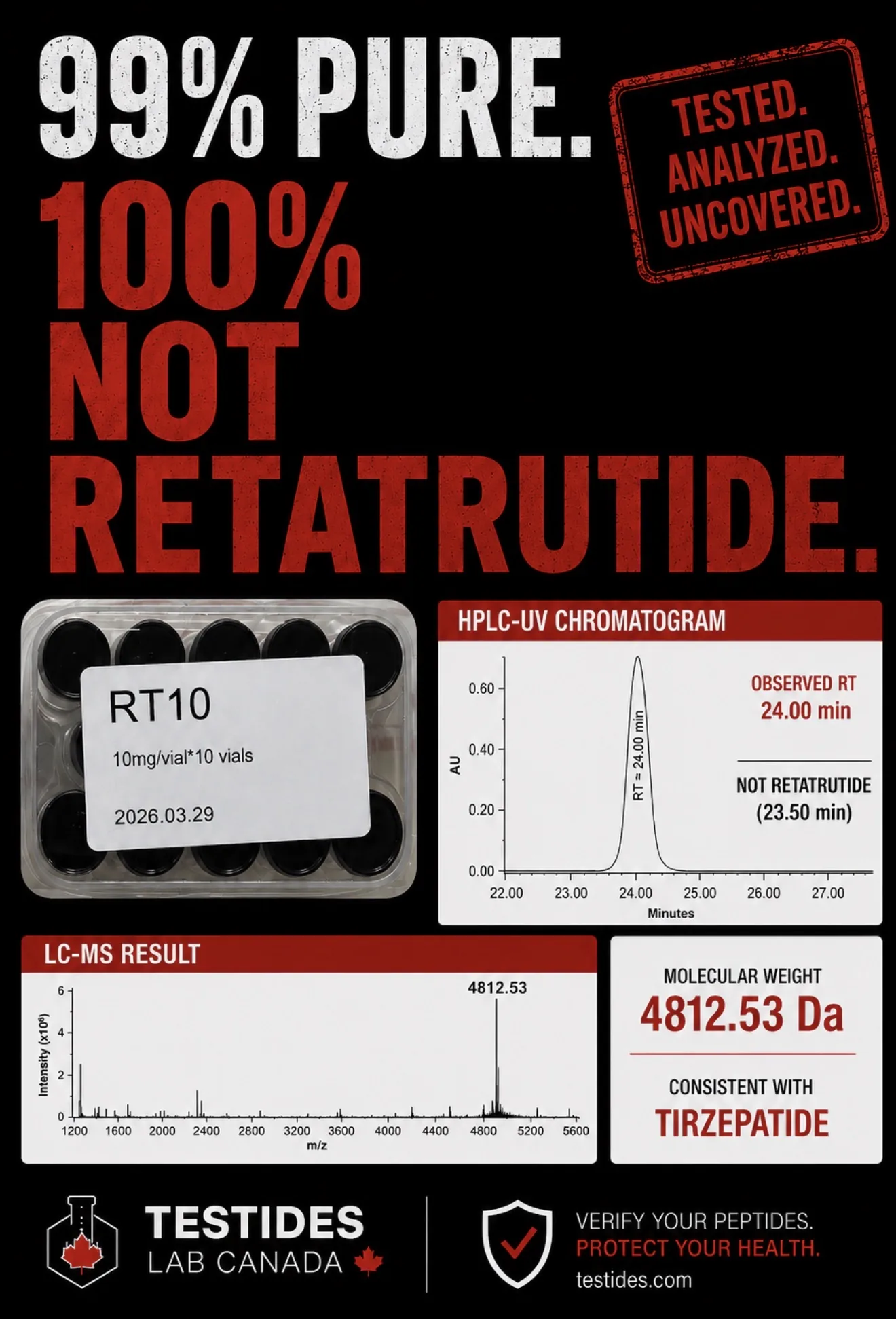
Testides Lab, Canada has received multiple 10 mg samples labelled as Retatrutide that are testing as Tirzepatide instead.
According to the lab, 2 of the tested vials came from end users and 6 came from Canadian resellers. The apparent origin traces back to the Guangzhou region in China according to one affected customer, who also said the kits were being sold off quite cheaply from a vendor claiming to be a manufacturer.
The image below shows the affected kit.
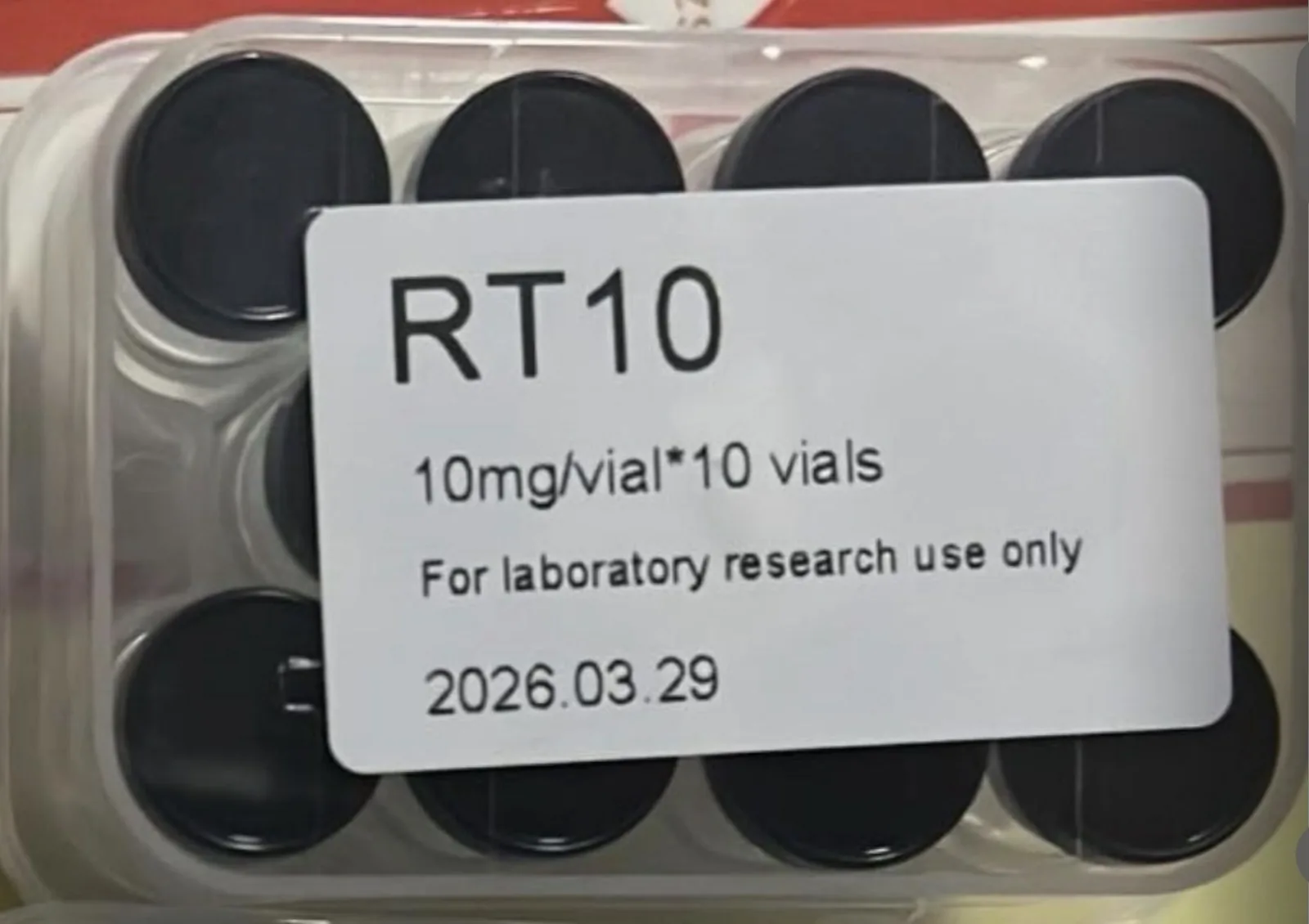
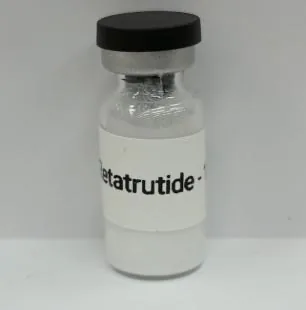
The lab has also now received its first alleged 20 mg “Retatrutide” sample, which is a blue cap and is also appearing suspicious for Tirzepatide, although the full analysis is still pending. In addition, a 10 mg mislabelled blue cap has also just arrived. The lab needs the owner’s permission before posting any information to do with these new arrivals.
The initial HPLC-UV chromatograms showed a large dominant peak, indicating the compound itself appeared to be relatively high purity. Below are examples of two HPLC-UV chromatograms from the affected samples.
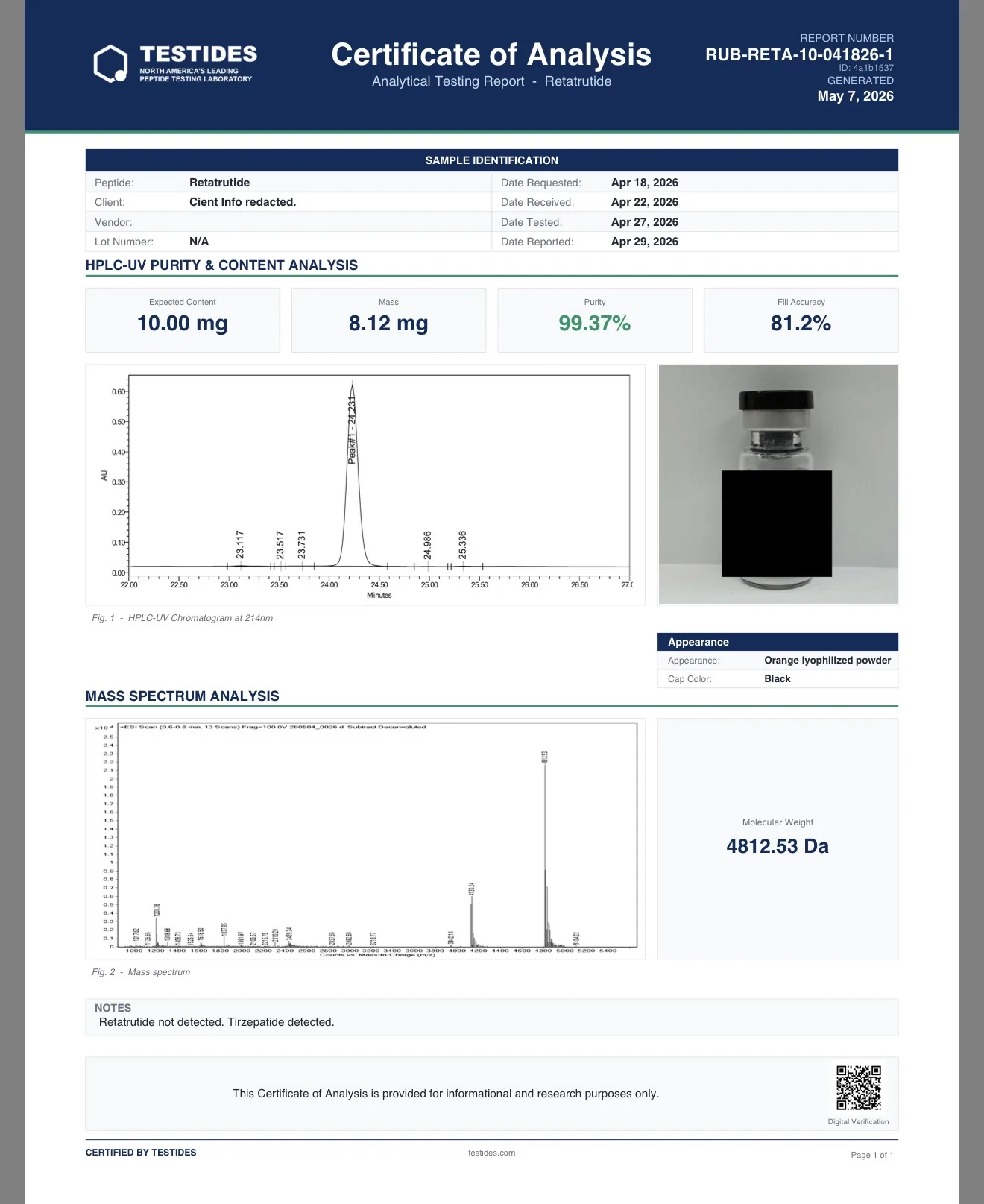
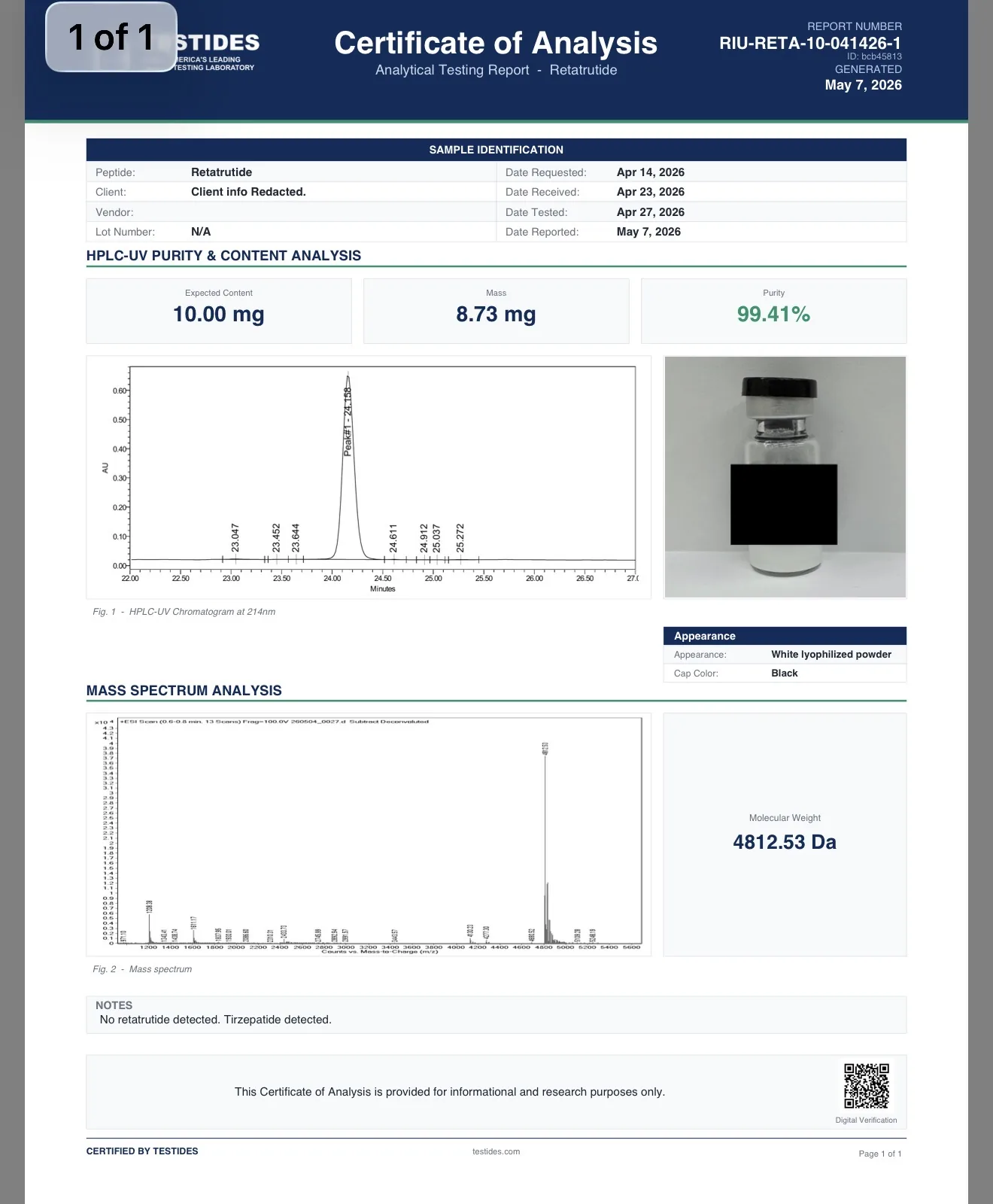
The retention time immediately raised concerns, as under Testides’ method, Retatrutide typically elutes around ~23.5 min and Tirzepatide around ~24 min
These samples were consistently appearing around ~24 minutes, fitting Tirzepatide rather than Retatrutide.
At that point, the lab proceeded to LC-MS confirmation testing. The MS data showed a molecular weight of:
- ~4812.53 Da, which is consistent with Tirzepatide.
Retatrutide has a lower molecular weight of roughly ~4731 Da.
According to Testides, they use unusually long 30-minute HPLC runs. Longer runs can improve peak boundary integration, reduce co-elution issues, and when combined with multi-wavelength analysis, can make LC-UV peptide differentiation significantly more reliable. That said, the broader consensus remains, that MS confirmation is still the definitive method for peptide identity testing.
Both our samples above ( and all the others tested) show roughly ~99.4% purity and a similar underfill range (~8.1 to 9.2mg from claimed 10 mg). This consistency suggests they likely came from the same production batch or at minimum the same upstream source/process, because if this were random contamination or accidental mix-up, you’d expect more variability with different purities, different fill levels, noisier chromatograms and mixed identities Instead, the data looks relatively standardised.
Once the lab gets permission from the owners of the blue caps, I’ll post those too. This is just another reminder that all grey -market peptides should be tested before use.
Thank you to Matt from Testides for providing me with this important safety information
Comments