
Today’s statement posted by QSC in their Telegram channel may look like a frustrated vendor rant at first glance, but underneath the sarcasm, anger and “don’t bust my balls” tone, it reveals something much bigger happening across the grey-market peptide and steroid supply chain. And for once, the dramatic tone may actually reflect reality.
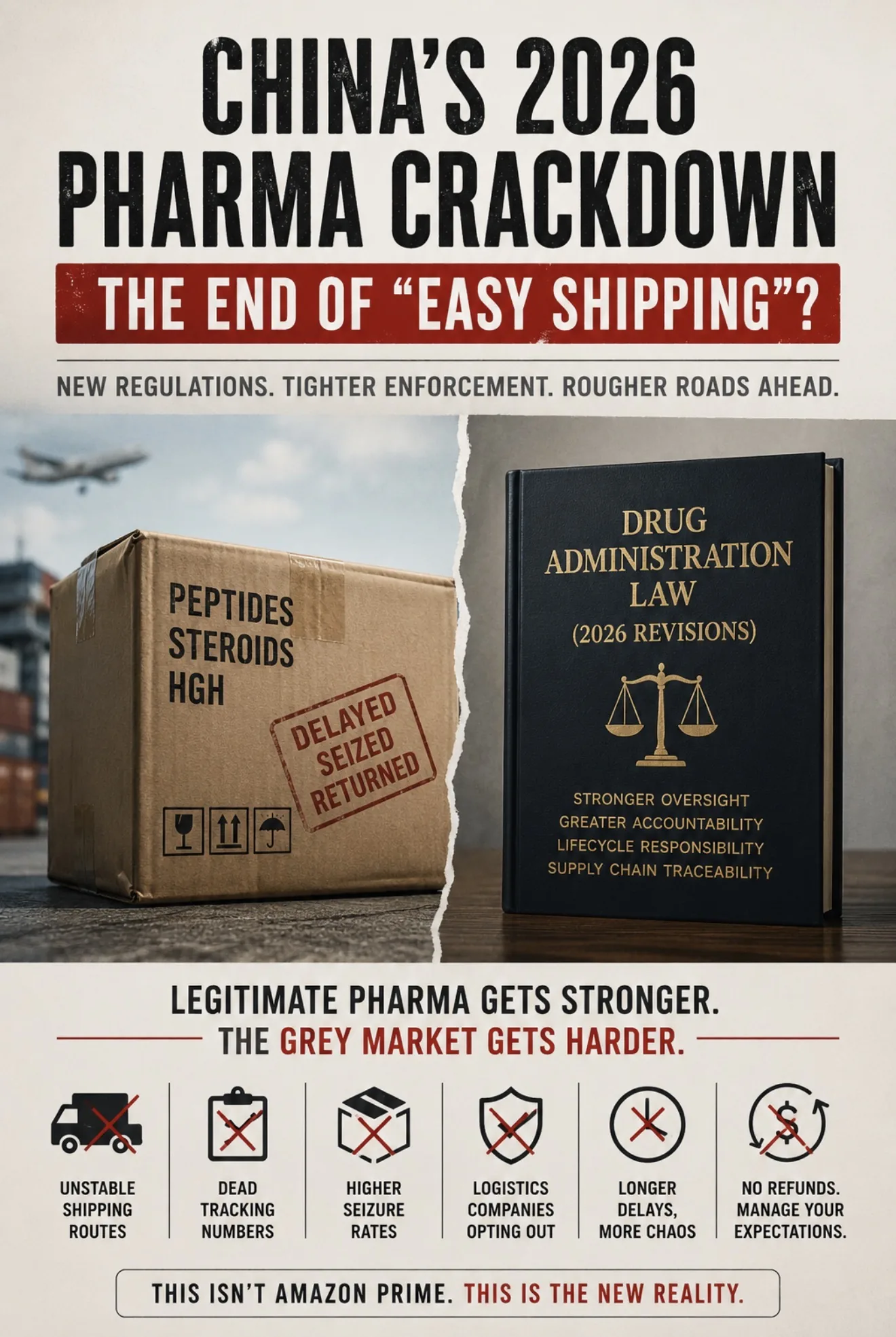
Because at almost the exact same time, international law firms and regulatory analysts are publishing breakdowns of China’s new 2026 Implementing Regulations of the Drug Administration Law, a major overhaul of how pharmaceutical manufacturing, oversight, logistics and accountability are handled inside China.
The two things aren’t identical, but they are probably connected.
The Official Version: China’s 2026 Drug Administration Reforms
According to a February 2026 legal analysis published by Morgan Lewis, China’s revised framework represents a major shift toward a fully integrated, lifecycle-based pharmaceutical regulatory system. The reforms include stronger Manufacturing Authorization Holder (MAH) accountability, tighter GMP oversight, expanded post-market surveillance, increased supply-chain traceability, stricter pharmacovigilance obligations, greater regulatory integration across manufacturing, distribution and registration, formalised accelerated approval pathways, tighter oversight of overseas data usage and increased legal accountability for foreign-linked pharmaceutical operations
One of the more important sections concerns supply-chain flexibility and segmented manufacturing. On paper, this sounds like increased flexibility. But in practice, it also means more visibility, more formalisation and more oversight across production chains that were previously fragmented and opaque.
And that matters, because the grey market survives inside the gaps between those systems.
Then Came the QSC Statement
At almost the same time, QSC posted an unusually blunt message to customers describing the current reality of international peptide shipping. It wasn’t polished marketing or another “100% stealth guaranteed” sales pitch. It sounded more like operational burnout from a vendor trying to hold together an increasingly unstable shipping system.
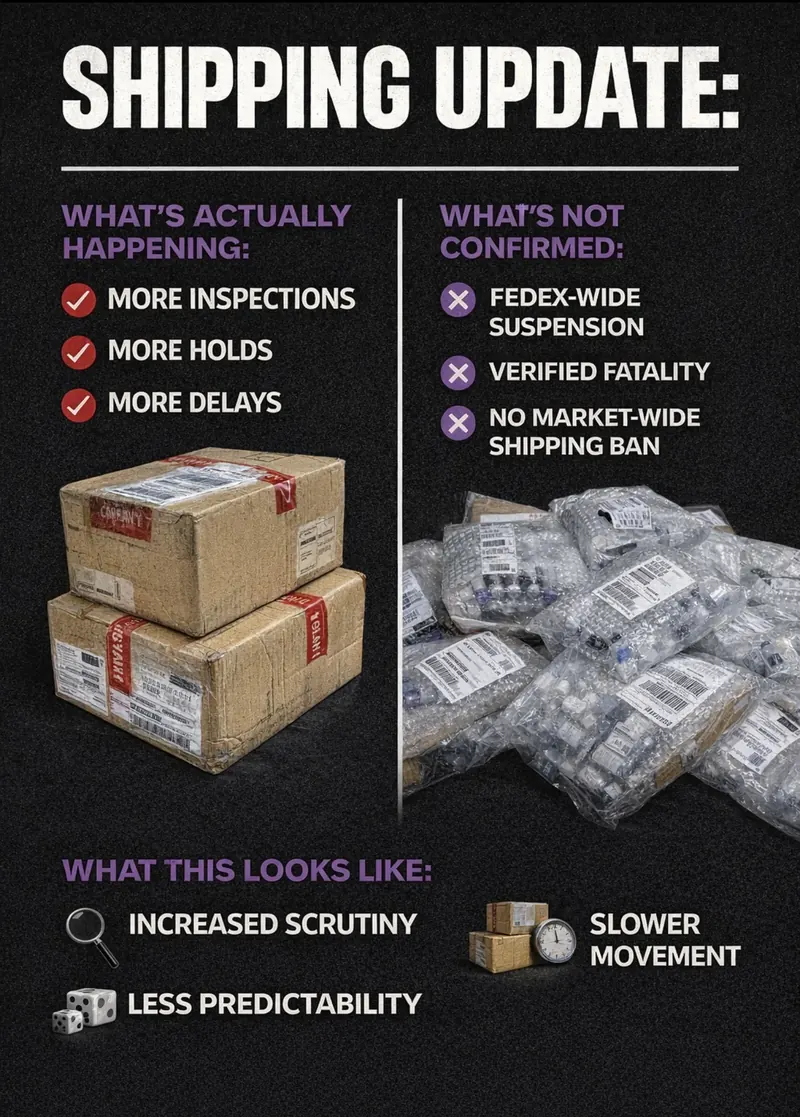
According to the statement, logistics companies are increasingly refusing peptide shipments with HGH shipments becoming especially difficult. Shipping lines are shutting down without warning, tracking numbers are dying mid-route, packages are being returned after initial acceptance and freight routes are becoming unstable. In addition, seizures and delays are increasing and international orders may now take months to arrive and customers should stop expecting refunds or rapid updates
One line stood out in particular:
“The golden era of 99% pass rates to most countries via the simplest postal lines from China? Also gone.”
That sentence alone explains the shift many buyers have been noticing recently. The old model was built around abundance with cheap raws, permissive shipping routes, weak enforcement pressure and a constant supply of willing logistics intermediaries. That environment appears to be changing now.
The Important Distinction
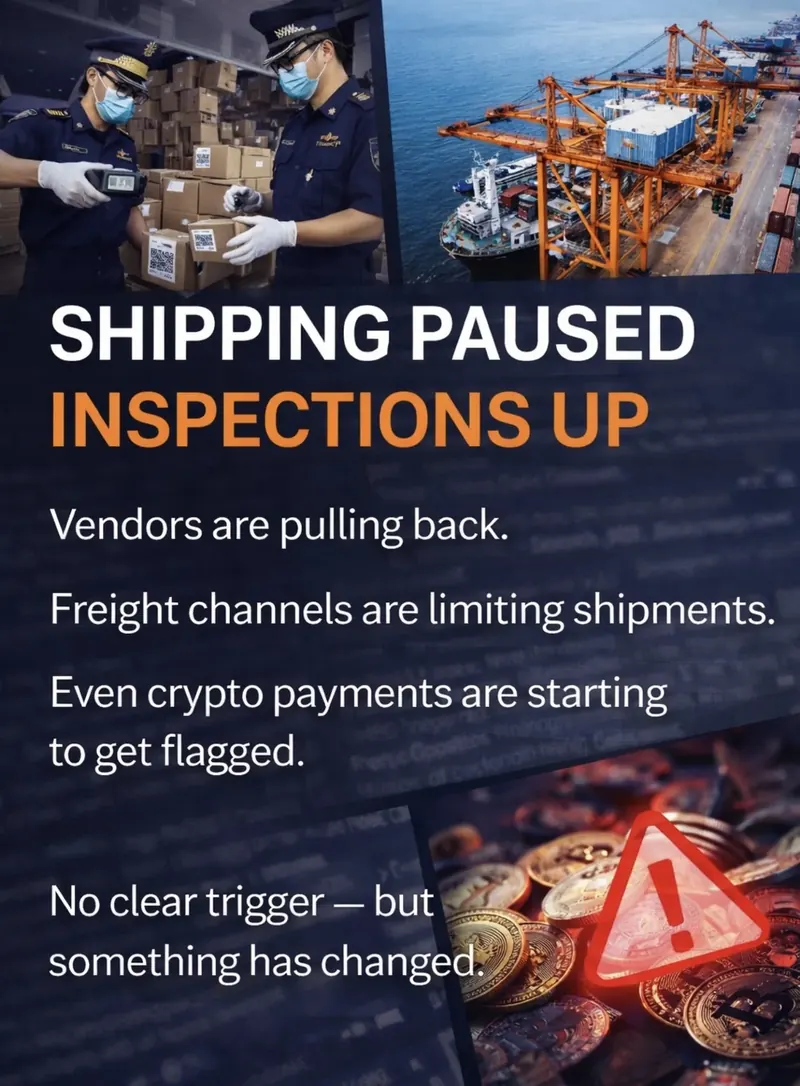
It’s important not to oversimplify this. China’s 2026 regulations are aimed at the formal pharmaceutical system, not directly at Grey Market peptide vendors, but enforcement pressure rarely stays neatly inside official boundaries. What usually happens is that regulators tighten formal oversight, logistics companies become nervous, freight forwarders overcorrect, shipping lines start refusing entire product categories, customs inspections increase and grey-market operators lose stable export routes
That is exactly what many peptide communities have been documenting more recently. Shipping lines are disappearing, there are more repeated reships, tracking numbers that don’t work, sudden route closures, rising seizure notices and a growing dependence on domestic resellers.
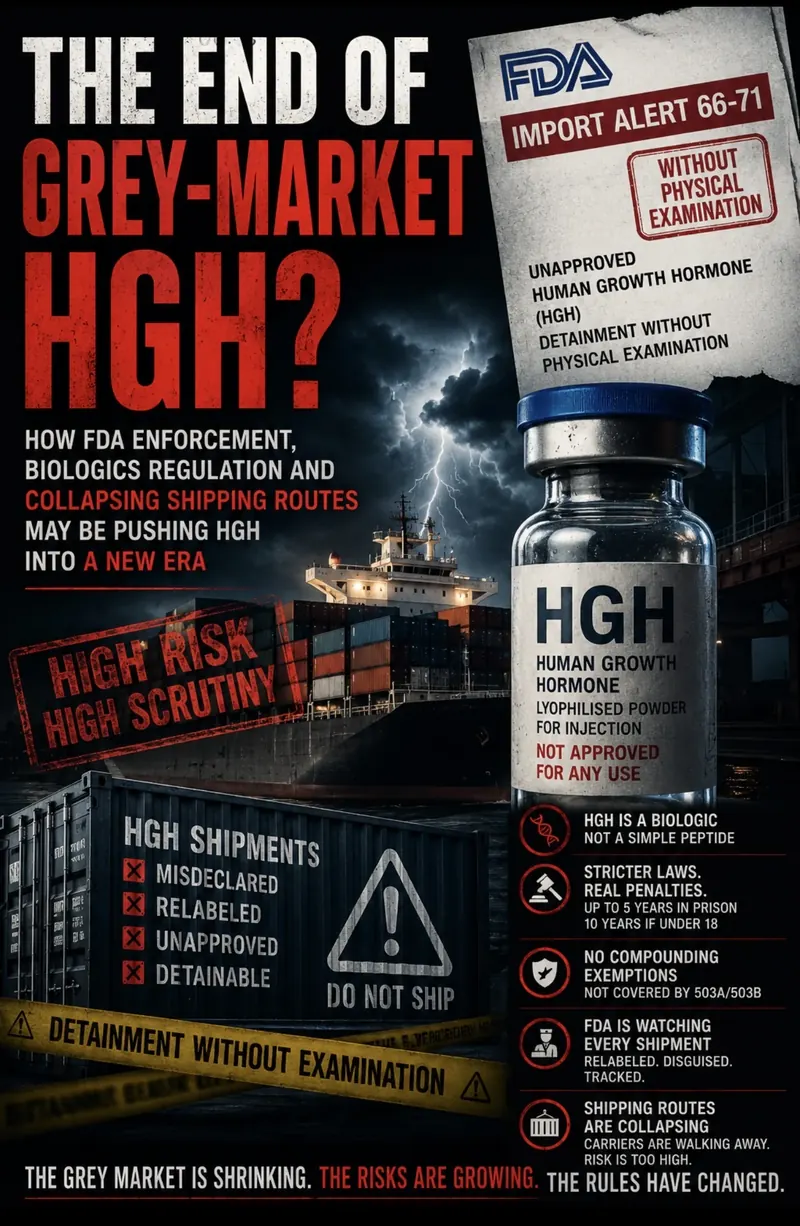
Now sources are getting busted for selling steroids and as logistics companies are getting busted for shipping freeze dried powders, most shipping lines won’t touch peptides now according to the QSC announcement. This is the reason for the HGH shortage, the increase in inspections in China.
The Grey Market Is Becoming Structurally Different
For years, many buyers treated international peptide shipping almost like a slightly slower version of Amazon. Order. Wait. Receive. But that mindset no longer matches reality. The newer environment looks far more unstable and perhaps most importantly, will rely on far more operational secrecy.
The irony is that China’s reforms are partly designed to make legitimate pharmaceutical manufacturing more structured, traceable and internationally aligned. But the side effect may be the opposite for the grey market with more fragmentation, more opacity and more logistical instability.
Expectation Management or Genuine Crisis?
The honest answer is probably both. QSC is clearly using this message to prepare customers for delays, reduced communication, lack of refunds and operational chaos. That is absolutely expectation management. But the broader pattern also aligns with what multiple vendors, resellers and buyers across different communities have been reporting independently. And the tone itself is revealing. A few years ago, vendors competed on speed, stealth, reliability, “easy customs” and smooth logistics. Now QSC are effectively saying that this is chaos, wait quietly or don’t order.
That’s a major psychological shift in the market and it may be one of the clearest signs yet that the old grey-market shipping era is ending.
The two sources for this are today’s QSC announcement and
https://www.morganlewis.com/pubs/2026/02/navigating-chinas-new-2026-implementing-regulations-of-the-drug-administration-law
Comments