
A trial number, a government website and a “Recruiting” status make useful additions to a peptide sales pitch. They suggest a compound has progressed beyond animal experiments and internet testimonials into organised human research. In one TB-500 record, The TB-500 record rather spoils the effect by describing the study as fictional. But that didn’t stop commercial RUO websites citing it as an ongoing human trial. The record sits on ClinicalTrials.gov, where it’s marked “Recruiting”, despite describing itself as an example of how a trial record might look. The warning was available to anyone following the reference.
It’s one of eight registrations naming Hudson Biotech as sponsor. Three describe themselves as fictional, mock or example material. Two others reuse identifiers and study information from genuine Eli Lilly trials. The remaining three cover BPC-157, GHK-Cu and MOTS-c. They contain no equivalent disclaimer, but this review found no independent confirmation that those studies were operating.
Peter Attia’s team highlighted the registrations in its peptide analysis. Following those references onto seller websites reveals how the records have been used commercially: in research guides, product specifications and pages offering peptides for sale. Some sellers cite explicitly fictional material; others describe the unverified studies as human research underway. One has since acknowledged removing four Hudson registrations, including the TB-500 entry it had presented as a real recruiting trial.
The question is how much checking happened between finding a clinical trial number and putting it in front of a customer.
What the records actually say
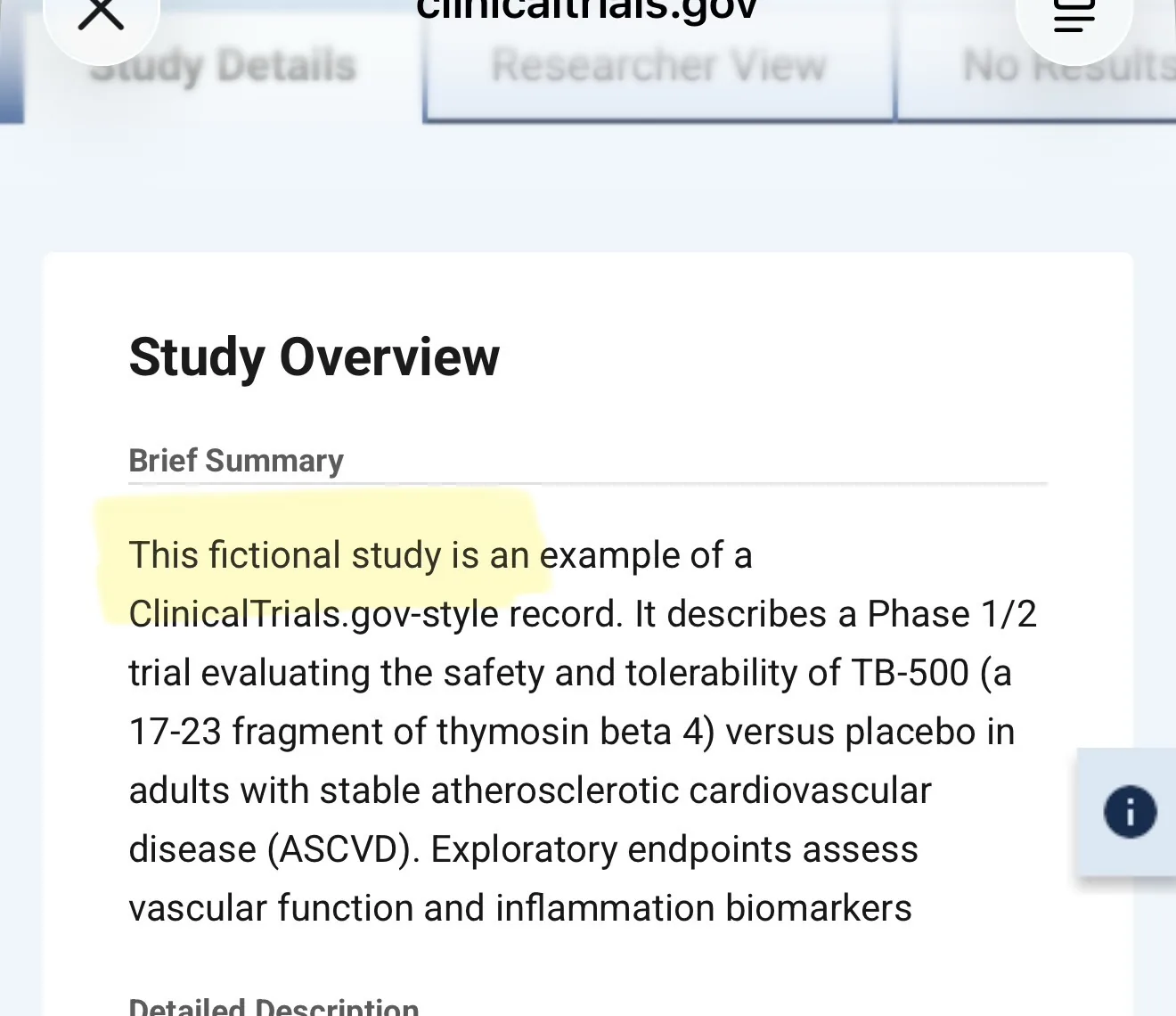
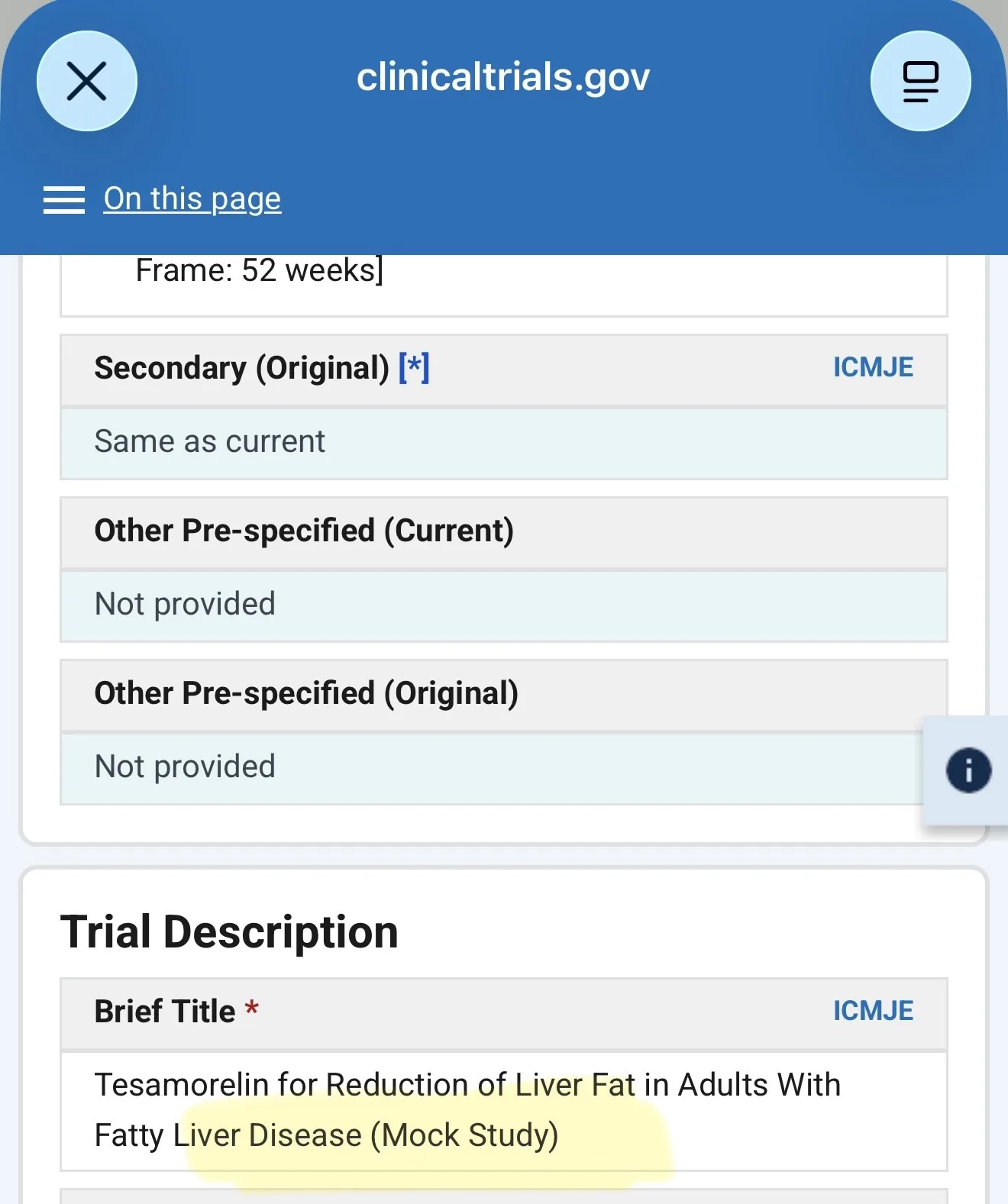
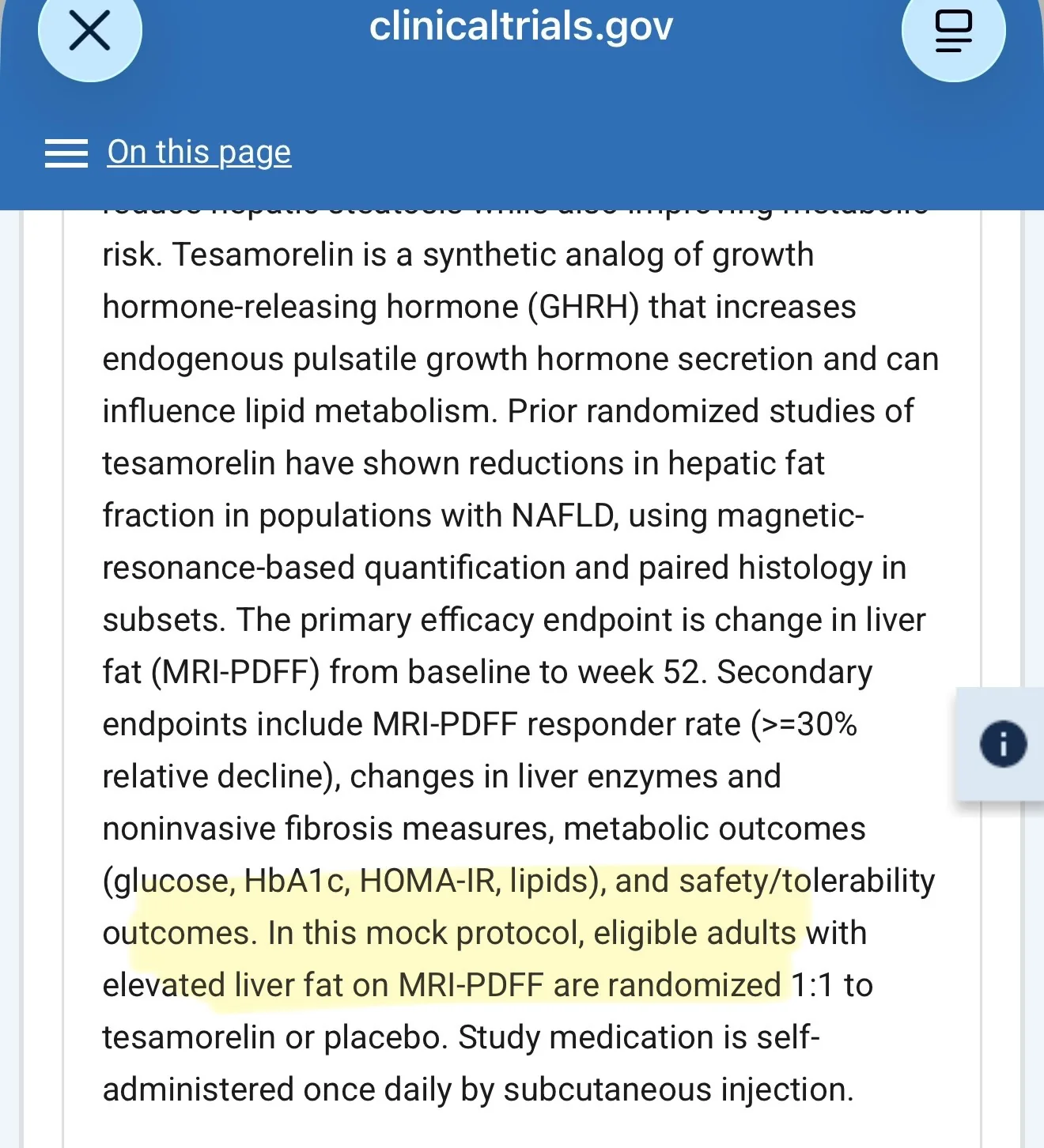
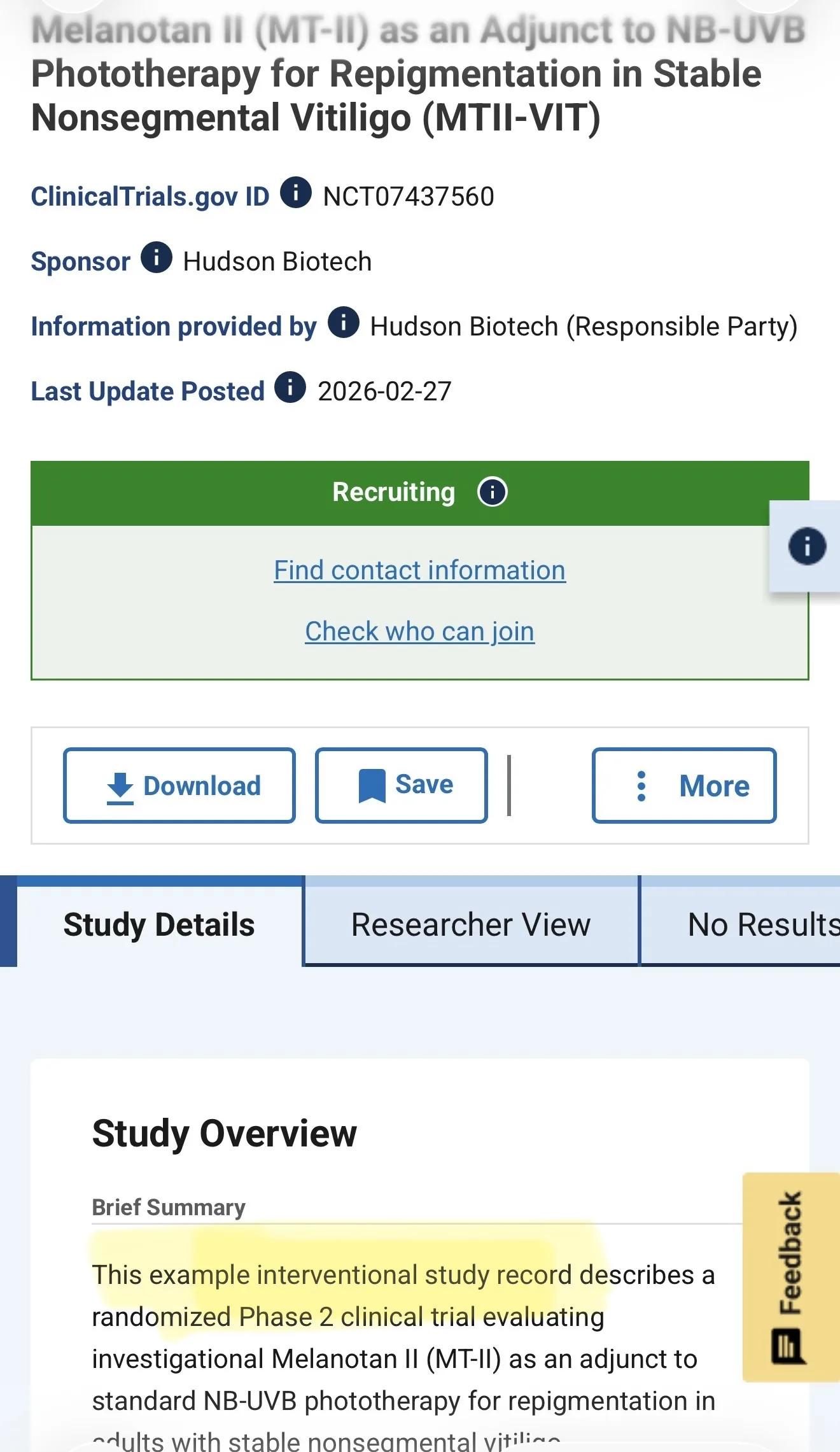
TB-500, NCT07487363
Summary opens: “This fictional study is an example of a ClinicalTrials.gov-style record.”
Tesamorelin, NCT07481734
Title includes “Mock Study”; the description also identifies a mock protocol.
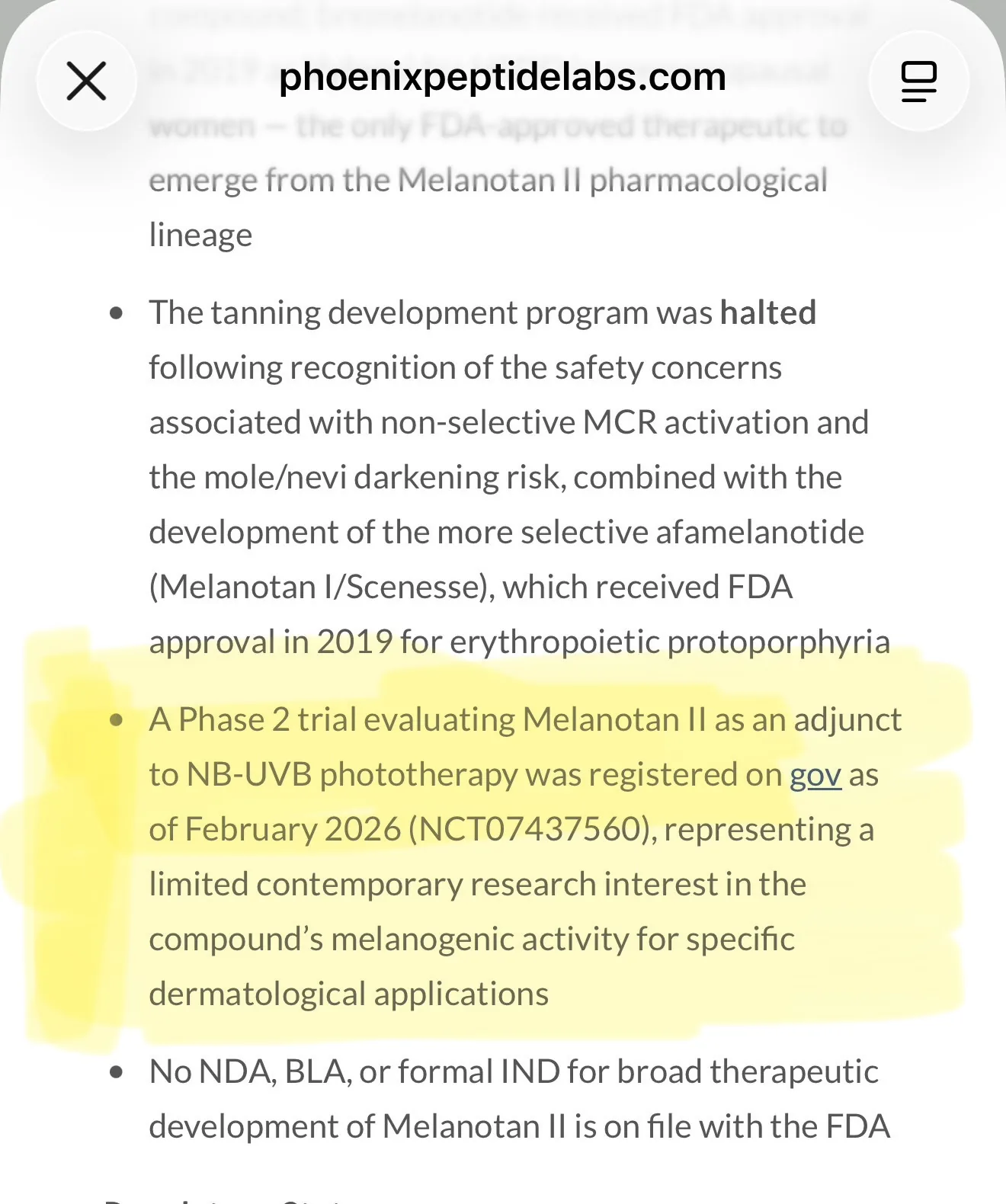
Melanotan II, NCT07437560
Summary describes an “example interventional study record”.
Tirzepatide, NCT07481747
Reuses the SURMOUNT-1 name, Lilly’s protocol amendment identifier, its 2,539-person figure and study design.
Retatrutide, NCT07467447
Reuses the exact official title and protocol identifier of Lilly’s completed Phase 2 study.
BPC-157, NCT07437547
Unverified hamstring-repair study sharing the sponsor, site and contacts.
GHK-Cu, NCT07437586
Unverified topical wound-healing study sharing the same sponsor, site and contacts.
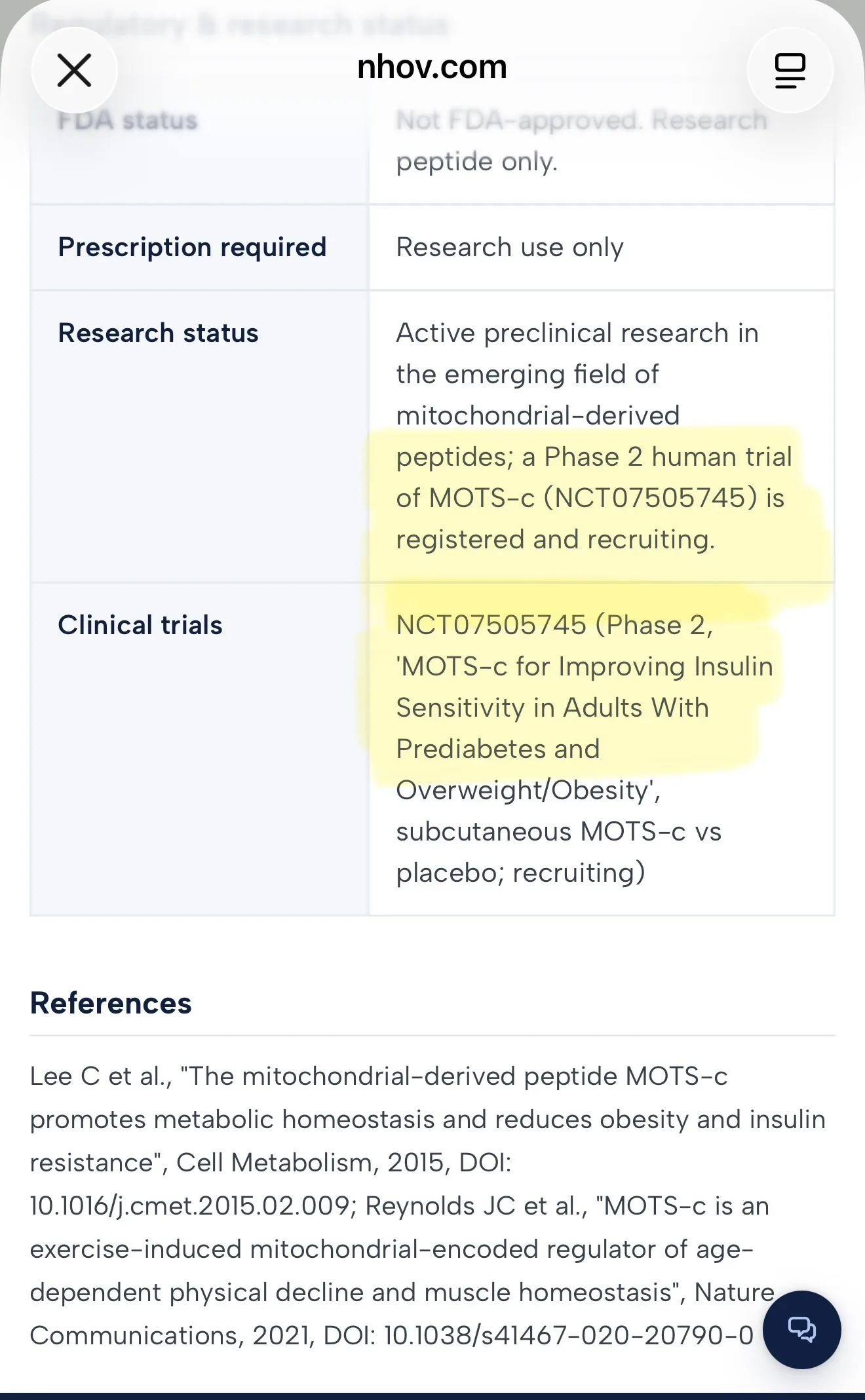
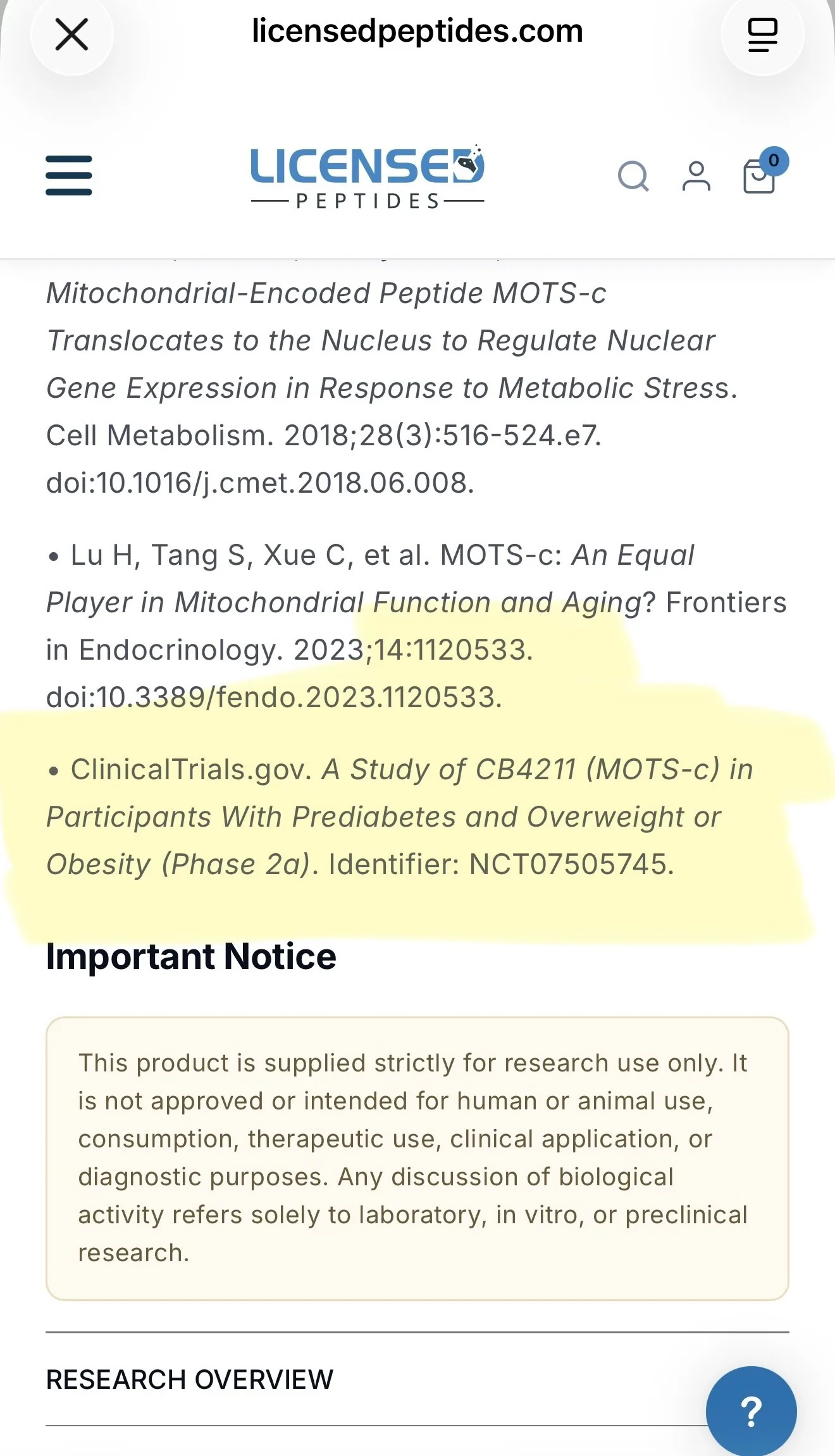
MOTS-c, NCT07505745
Unverified insulin-sensitivity study sharing the same sponsor, site and contacts.
All eight records list one facility: Peking University Shenzhen Hospital. That doesn’t establish that the hospital authorised the registrations. All eight are marked recruiting, with no results posted. The fictional, mock and example wording was present in the first public versions of the three explicitly labelled records. The tirzepatide entry also contains a timeline problem: its reported start and estimated primary completion are less than 54 weeks apart, despite specifying a Week 72 primary assessment.
Where the registrations appear in sales material
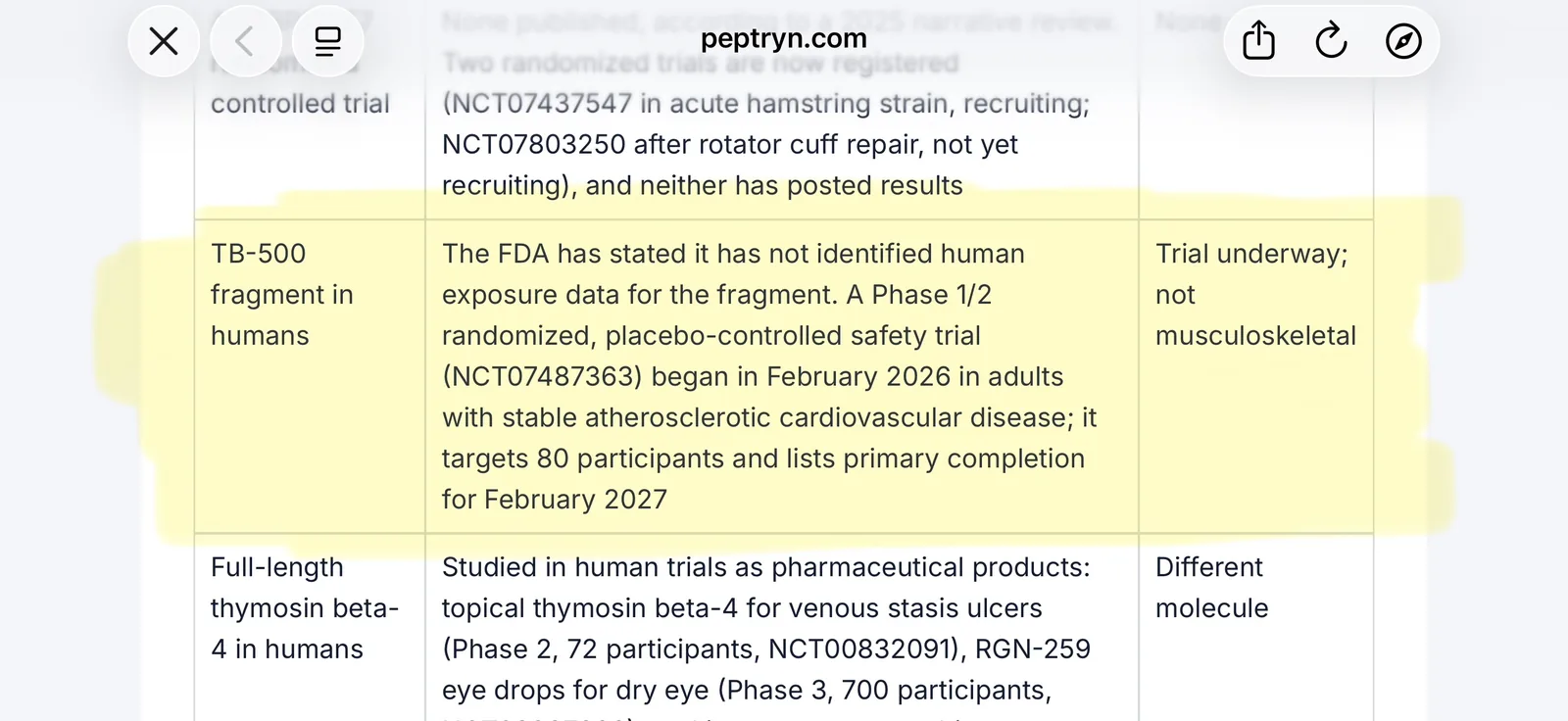
Peptryn describes the fictional TB-500 study as “Trial underway; not musculoskeletal” in its Wolverine blend guide. The same page advertises the blend and links to purchase it.
Phoenix Peptide Labs cites the Melanotan II example record on its product page as a registered Phase 2 trial.
NHOV lists the disputed MOTS-c registration in its product specifications as registered and recruiting. The page includes a price and Buy Now button.
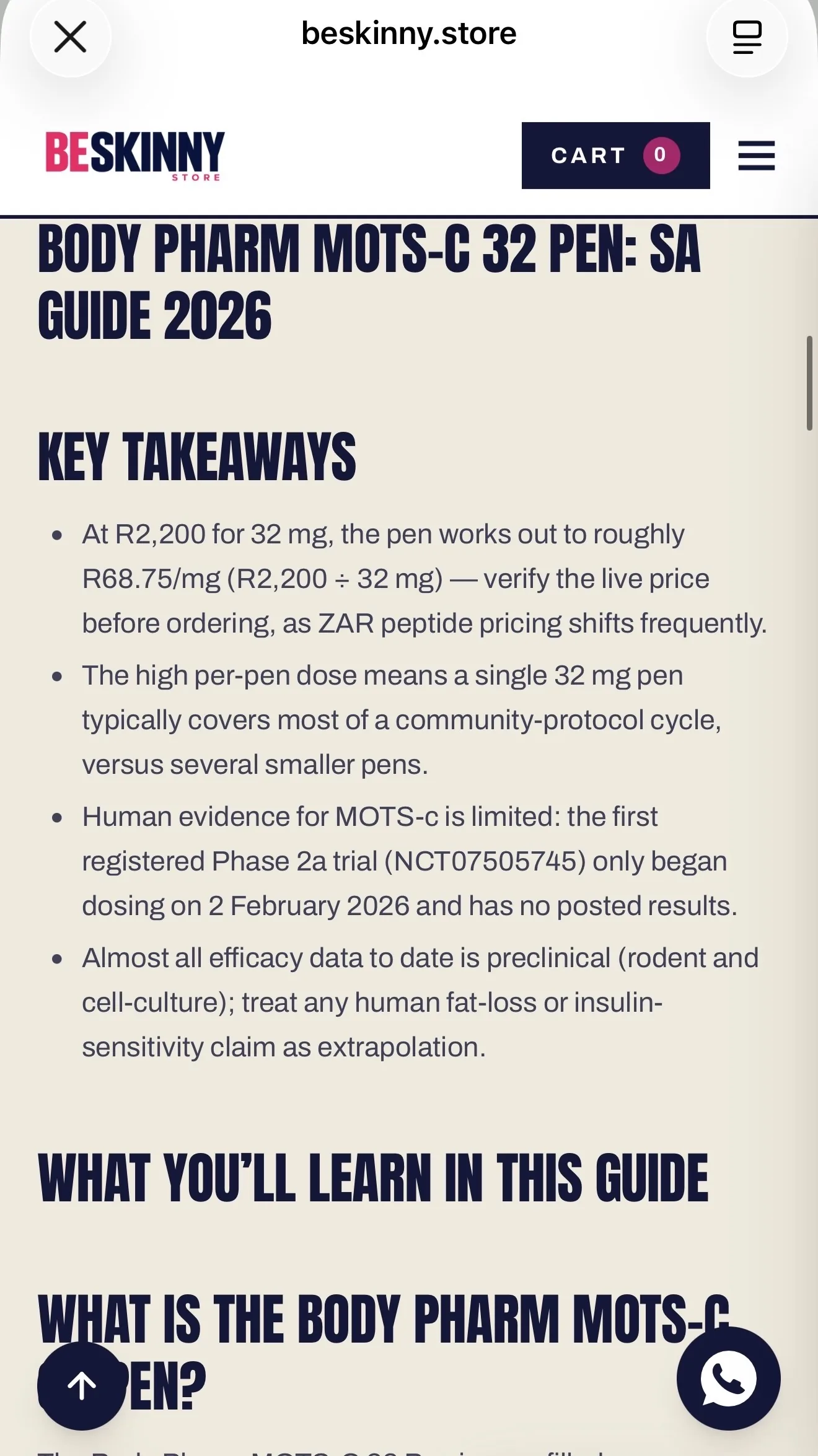
BeSkinny goes further: its MOTS-c pen page says the study began dosing on 2 February 2026. A sponsor-reported start date does not independently confirm that anyone received treatment.
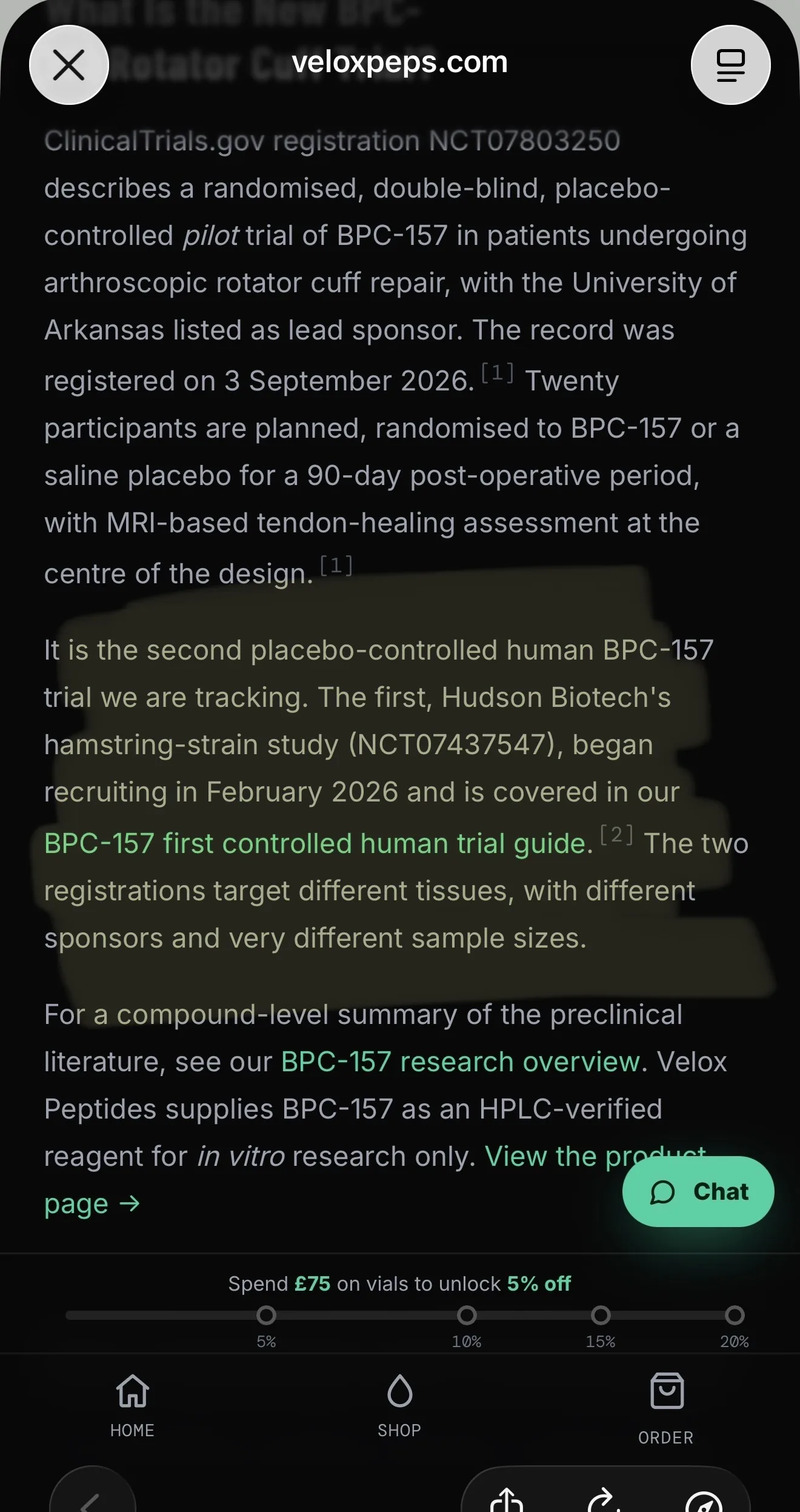
Velox Peptides describes Hudson’s BPC-157 hamstring study as recruiting, alongside links to its BPC-157 product.
Licensed Peptides attaches the suspicious MOTS-c trial number to CB4211 in its product references. The registry names native MOTS-c, not CB4211, which is a different investigational compound.
These pages commonly acknowledge that results are unavailable and that their products are for research only, but those qualifications don’t establish that the trials are actually taking place. Sellers also cite Hudson’s BPC-157, GHK-Cu and MOTS-c registrations. These are unverified, rather than explicitly labelled fictional:
NovaPep describes the MOTS-c registration, NCT07505745, as a recruiting Hudson Biotech trial involving 120 adults and says it will provide the first adverse-event data for native MOTS-c.
JD BioWorks presents the same registration as a meaningful advance beyond animal research, while acknowledging that recruitment and treatment numbers are unconfirmed.
Shop Peptides Online describes NCT07437586 as a recruiting Phase 2 wound-healing trial on a page selling GHK-Cu vials and pens.
PeRx says the GHK-Cu trial began recruiting in February 2026, in an article that also advertises its injectable GHK-Cu.
Peptryn also lists NCT07437547, the BPC-157 hamstring study, as a recruiting randomised trial in its article selling the Wolverine blend.
Some publishers have corrected their coverage
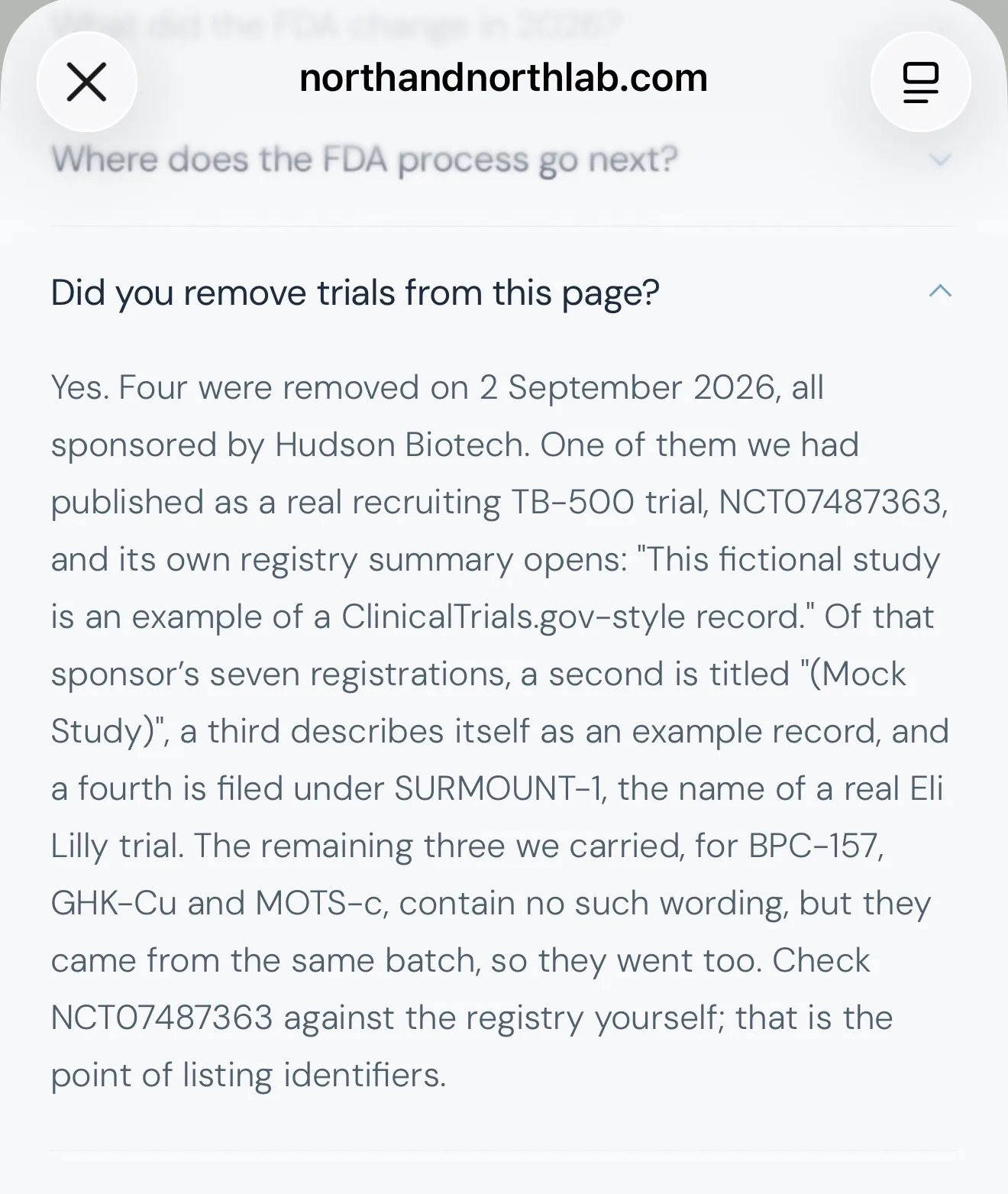
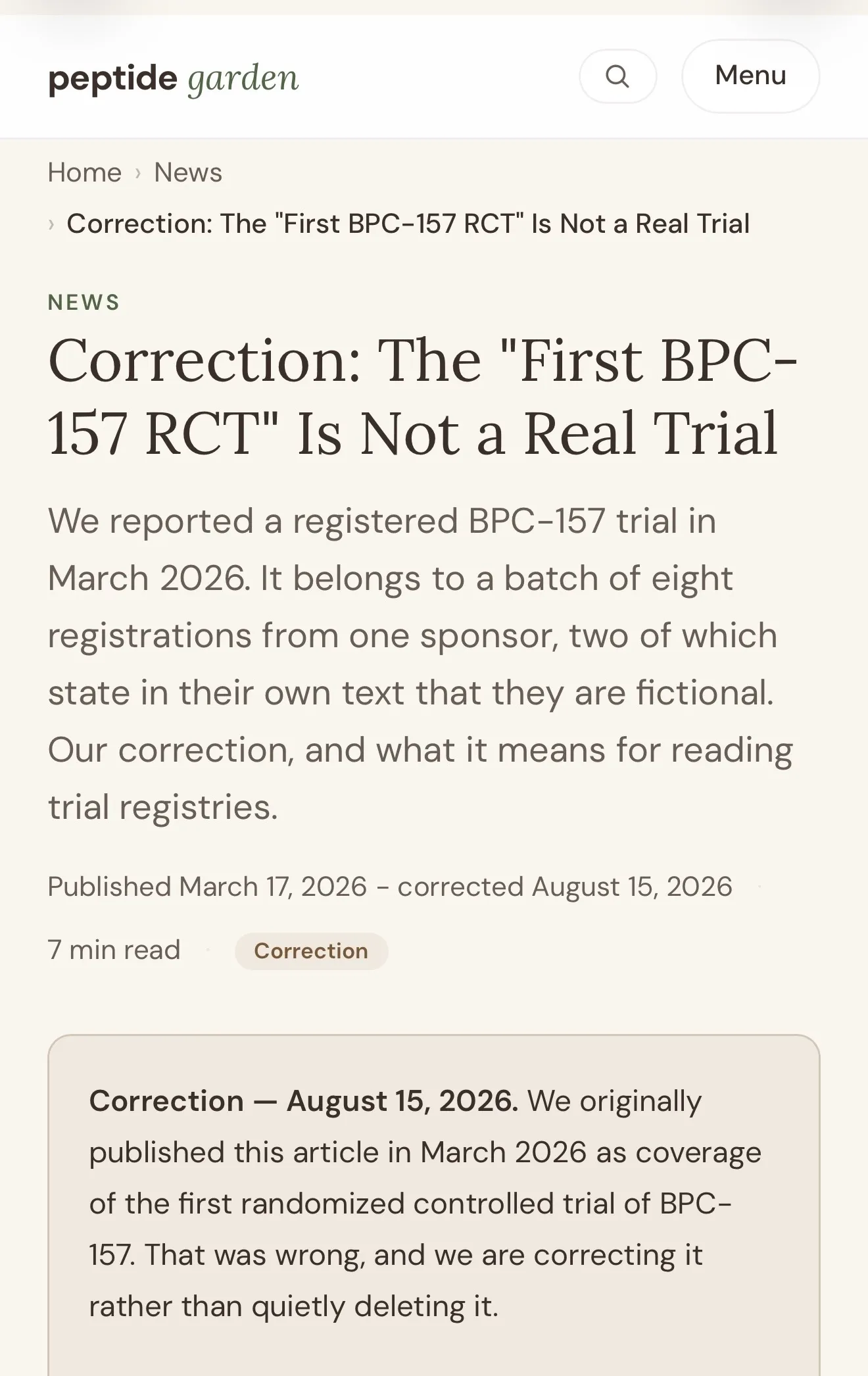
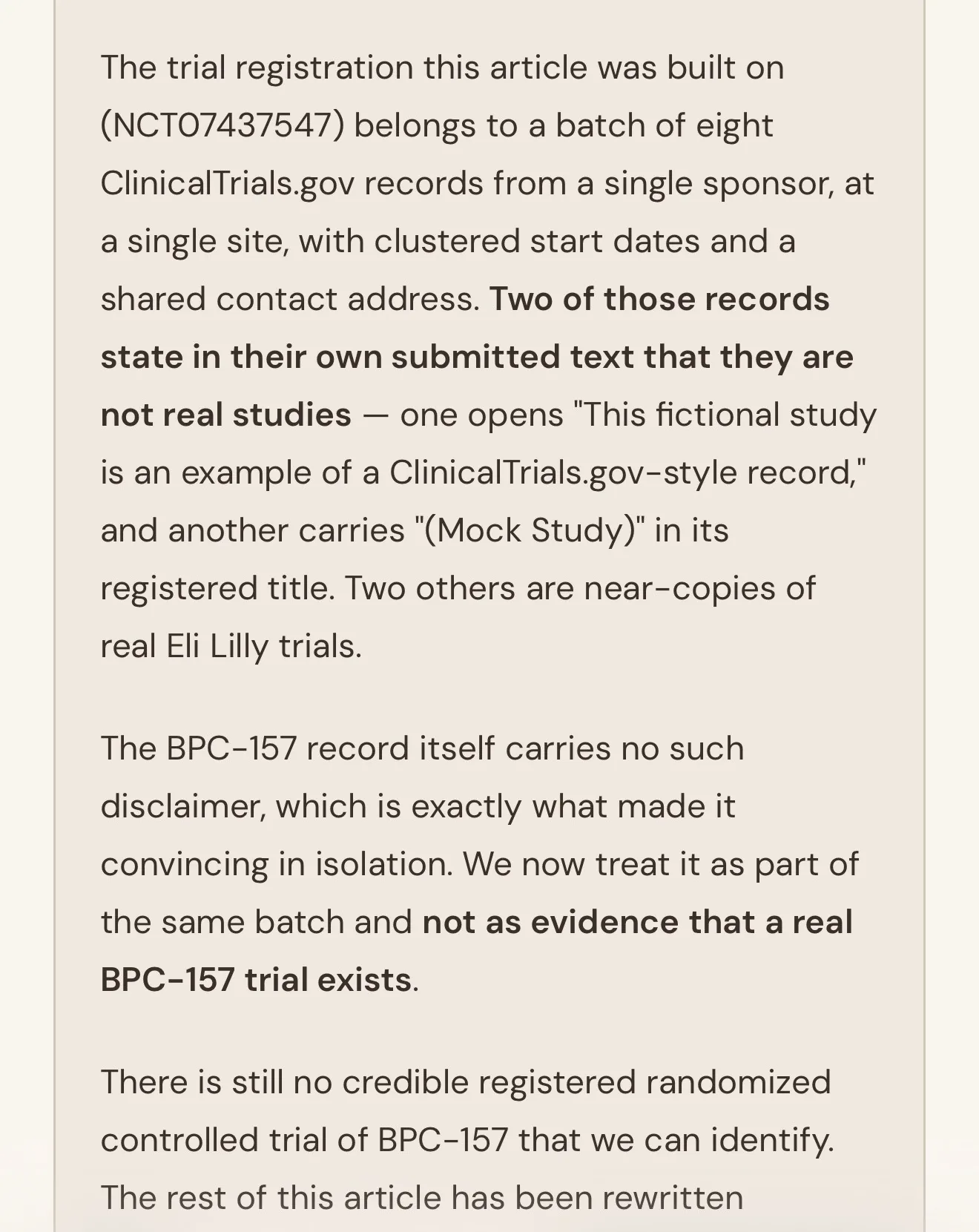
North & North acknowledges removing four Hudson registrations on 2 September 2026 after previously presenting the TB-500 entry as a real recruiting trial. PeptideGarden has also published a correction to its BPC-157 coverage.
A clinical trial number can make a sales page look credible. In these cases, following the reference exposes how little that credibility rests on: records labelled fictional, mock or example, and other studies whose operation remains unverified.
The sellers found the trial numbers. Reading the records should have been part of the job.
The Hudson registrations were highlighted by Taylor Yeater, Nicholas Nelson, Lauren Fritsch and Peter Attia in The [almost] unbelievable relationship between “big pharma” and gray-market peptides, published on 17 October 2026.
Comments