
On September 1, five new FDA warning letters appeared against US peptide vendors.
Peak Performance Peptides. Royal Peptides. NuScience Peptides. Peptide Partners. And TXP Innovations, better known as Tex Peptides.
All five letters were issued on August 24, 2026. All concerned products being sold as research peptides and all five revolved around essentially the same problem: the vendors might have written “research use only” or “not for human use” on their websites, but FDA looked at everything else they were saying and selling. This wasn’t about an FDA lab finding the peptides underdosed, contaminated or fake. It didn’t test the vials. Instead the FDA had reviewed each vendor’s website in July and used what it found there as evidence of intended human drug use. And that’s what makes the letters so interesting. The issue wasn’t the products themselves, but how they were being marketed and what FDA believed the vendors’ websites showed they were intended to be used for.
“Research Use Only” Is Not a Magic Shield
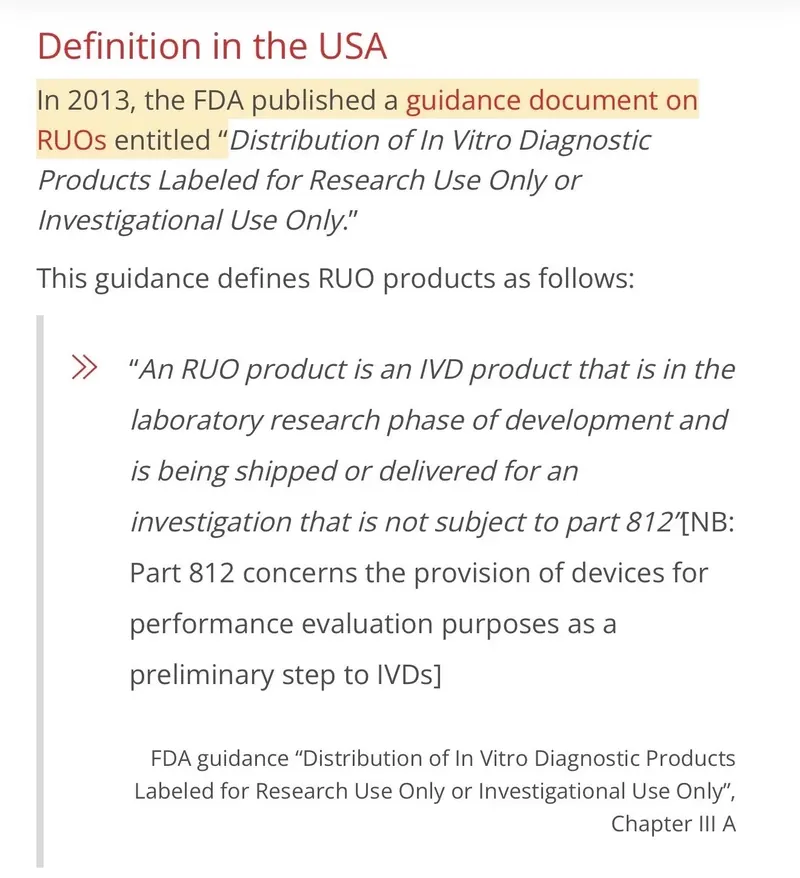
There is still a common belief amongst some in the grey peptide market that if a product is labelled “For Research Use Only” and “Not for Human Consumption,” the vendor has somehow placed a protective barrier between themselves and whatever the customer decides to do with it. FDA’s warning letters show it’s nowhere near that simple.
For Peptide Partners, for example, FDA identified semaglutide, tirzepatide, retatrutide, SS-31, tesamorelin, PT-141 and its bacteriostatic reconstitution solution as unapproved new drugs. The products were labelled for research rather than human use, but FDA pointed to the rest of the website. The site discussed potential effects involving obesity, diabetes, Alzheimer’s disease, cancer, kidney disease and sexual function. It also sold bacteriostatic reconstitution solution alongside the peptides. FDA’s position was that the disclaimer didn’t cancel out all of that other evidence.
The wording used repeatedly across the 2026 letters gets straight to the point: despite the RUO labelling, “evidence obtained from your website establishes that your products are intended to be drugs for human use.”
So putting NOT FOR HUMAN USE in capitals at the bottom of a page doesn’t necessarily help much if the rest of the page is explaining what the product may do to human appetite, glucose, body weight, sexual function or disease.
FDA Looked at the Whole Setup
This is where the five letters become more important than just another round of regulatory warnings. FDA didn’t appear to be looking for one particular forbidden sentence. It was looking at the overall commercial setup. That included the claims made on product pages, discussions of scientific studies, human clinical-trial results, injection terminology, dose information, calculators, guides, reconstitution products and, in some cases, peptide combinations.
Royal Peptides is a good example.
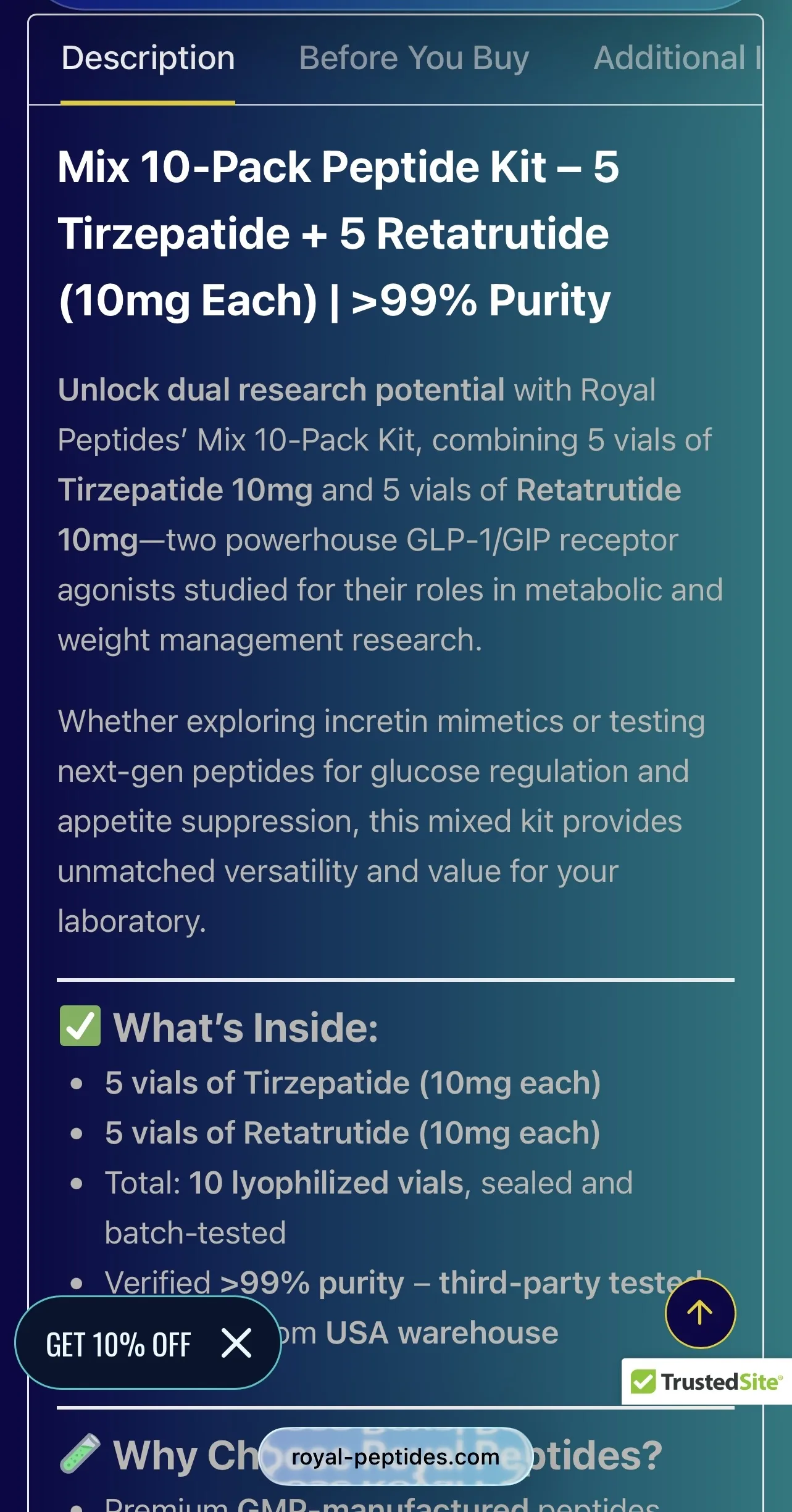
According to the analysis of the letter, FDA cited human weight-loss results, claims involving glucose and appetite, “once-weekly injection” language and dosing information. FDA also cited Royal’s 10-vial tirzepatide/retatrutide kit, which bundled five vials of each and promoted them together for metabolic and weight-management research.
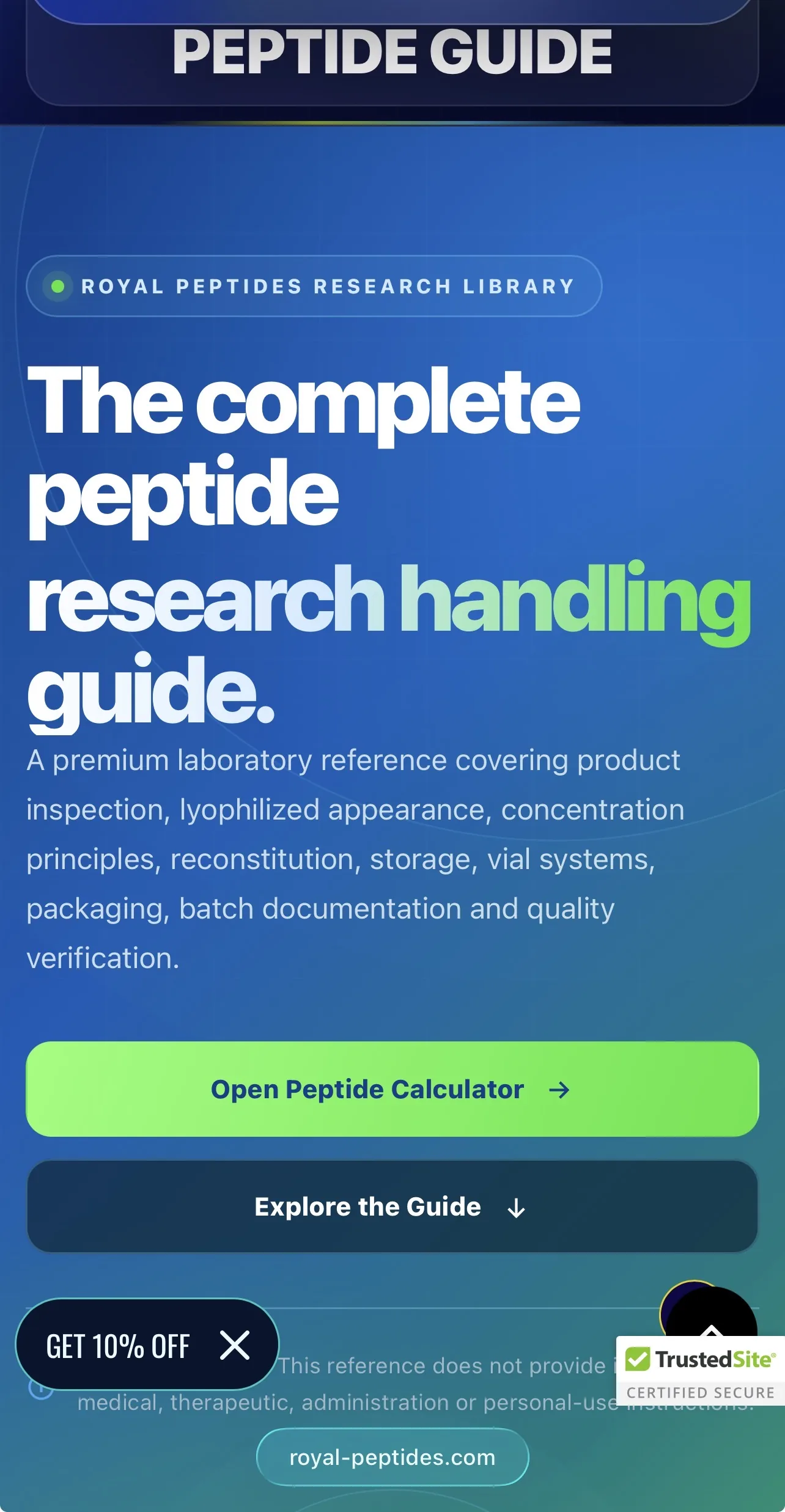
Then there was the practical side of the operation: bacteriostatic water, a peptide guide and a peptide calculator. Taken together, FDA said those features enabled buyers to prepare the products as injectable drugs. That’s very different from looking at a disclaimer in isolation. The product might say “research.” But what does the rest of the website tell the customer?
BAC Water Isn’t New, But FDA’s Use of It Has Escalated
BAC water is one of the more interesting parts of these letters, but it would be wrong to suggest FDA has only just started paying attention to it. Before this latest August batch, bacteriostatic water had already appeared in at least seven earlier FDA warning letters involving online peptide sellers. The first clear example I found was Nomida.biz in September 2024. FDA noted that its semaglutide and tirzepatide kits came with bacteriostatic water, insulin syringes, a draw syringe, dosing instructions and alcohol wipes. At that point, the BAC water was part of FDA’s evidence that these were injectable products being sold as complete kits.
Then came USApeptide in February 2025. Despite disclaimers including “research use only,” “not for human consumption” and “lab purposes only,” FDA pointed to the sale of a 20 mL vial of bacteriostatic water and packs of insulin syringes alongside semaglutide and tirzepatide products intended for injection.
But by March 31, 2026, the argument had moved a step further. FDA issued warning letters to Gram Peptides, Pink Pony Peptides, PekCura Labs, Prime Sciences and Mile High Compounds on the same day. In each case, BAC water was being sold alongside peptide products FDA considered intended for injection and requiring reconstitution. FDA’s conclusion was no longer merely that the water helped show what customers were expected to do with the peptides. It explicitly concluded that the BAC water itself was a drug because it was intended to be used in combination with those injectable products.
Prime Sciences makes the progression particularly obvious. Its “Reconstitution Kit” contained BAC water and a syringe. FDA said selling that kit alongside the peptide products demonstrated that the BAC water was intended to be used with them for injection and concluded: “Therefore, your ‘BAC water’ is a drug.”
That same reasoning reappears in the August 24 letters, but not in all five of them. NuScience, Peptide Partners and Tex Peptides were each specifically told that selling BAC water or reconstitution solution for use with their injectable peptide products demonstrated its intended use in combination for injection. FDA again classified the BAC product itself as a drug. Peak Performance was also cited over its bacteriostatic-water offering, while Royal Peptides is the exception: BAC water is not cited in Royal’s August 24 warning letter.
So BAC water isn’t a new FDA concern, and the August letters didn’t create a new rule around it. The more interesting progression is how FDA has developed the argument.
In 2024, BAC water appeared as part of a complete injectable peptide kit. In 2025, FDA again pointed to BAC water and syringes alongside injectable peptides. By March 2026, it was repeatedly making the much more explicit argument that the BAC water itself was an unapproved drug when sold for reconstituting peptide products FDA considered drugs intended for injection.
The August letters show FDA continuing that approach. That doesn’t mean selling bacteriostatic water automatically turns every research peptide on a website into a human drug. Nor does it mean BAC water itself is inherently unlawful. The important point is intended use: FDA is looking at what the product is being sold alongside and what the overall setup shows the customer is expected to do with it.
Even “Scientific” Information Can Become Part of the Case
Another interesting part of these letters is that the problematic material wasn’t limited to obvious statements such as “take this to lose weight.” Peptide Partners was cited for laboratory-study summaries connecting products to things including weight loss, glucose control, Alzheimer’s disease, diabetic kidney disease, breast cancer treatment, chemotherapy, glioblastoma, retinal protection, liver inflammation and HIV-associated fatty liver disease. That distinction is important because RUO peptide websites often try to stay on the safer side of the line by presenting product pages as educational content. Instead of saying: “This will help you lose weight.” They may say: “Research suggests activation of these receptors may affect appetite and body weight.” But FDA appears willing to look beyond the choice of wording.
The historical warning letters show the same thing. Scientific and preclinical language didn’t necessarily protect a seller when it still told the buyer what the substance could do to the human body or a human disease. Human-study summaries were used as evidence in seven of the 12 qualifying cases.
Peptide Partners Has Stripped Back Its Product Pages
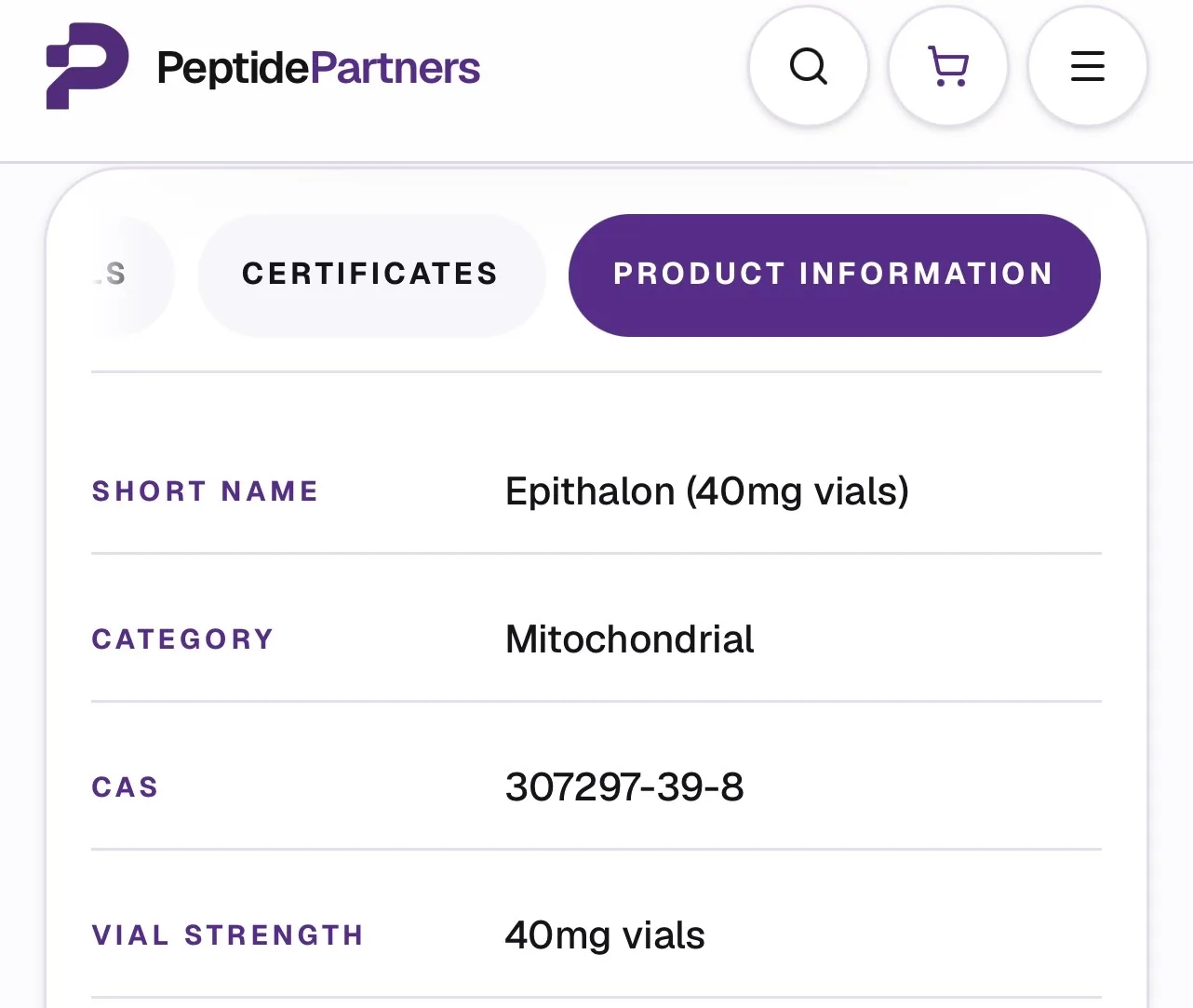
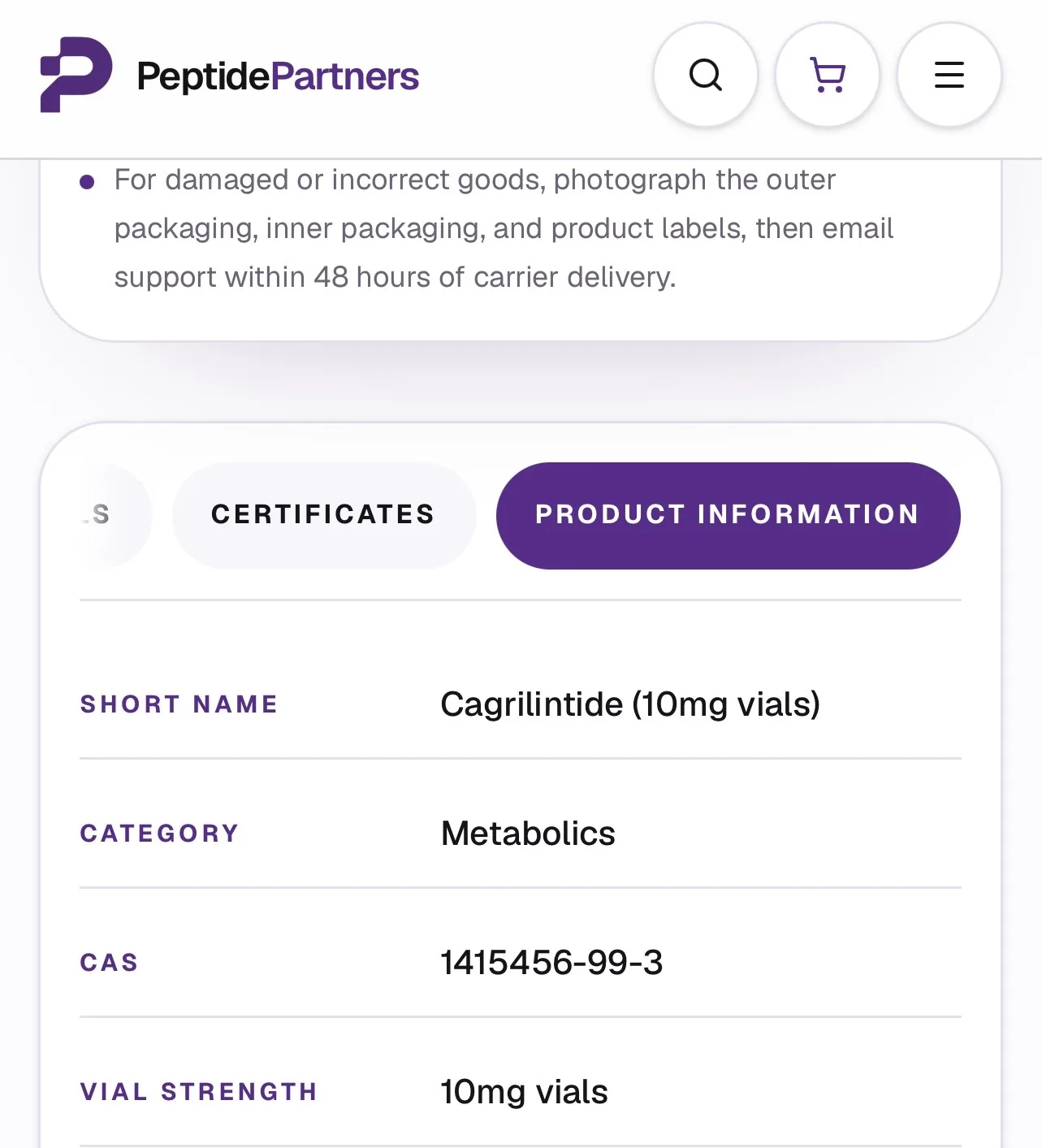
Peptide Partners’ website now looks very different from the version FDA examined in July. The pages are far more basic. They list information such as the peptide name, CAS number, vial strength and pack size, give it a broad category such as “Metabolics” or “Mitochondrial,” and state “Research Use Only. Not for use in diagnostic tests.” That’s a much more significant change than simply removing a few products. The whole way the products are being presented appears to have been pared back.
NuScience and the PubChem Link
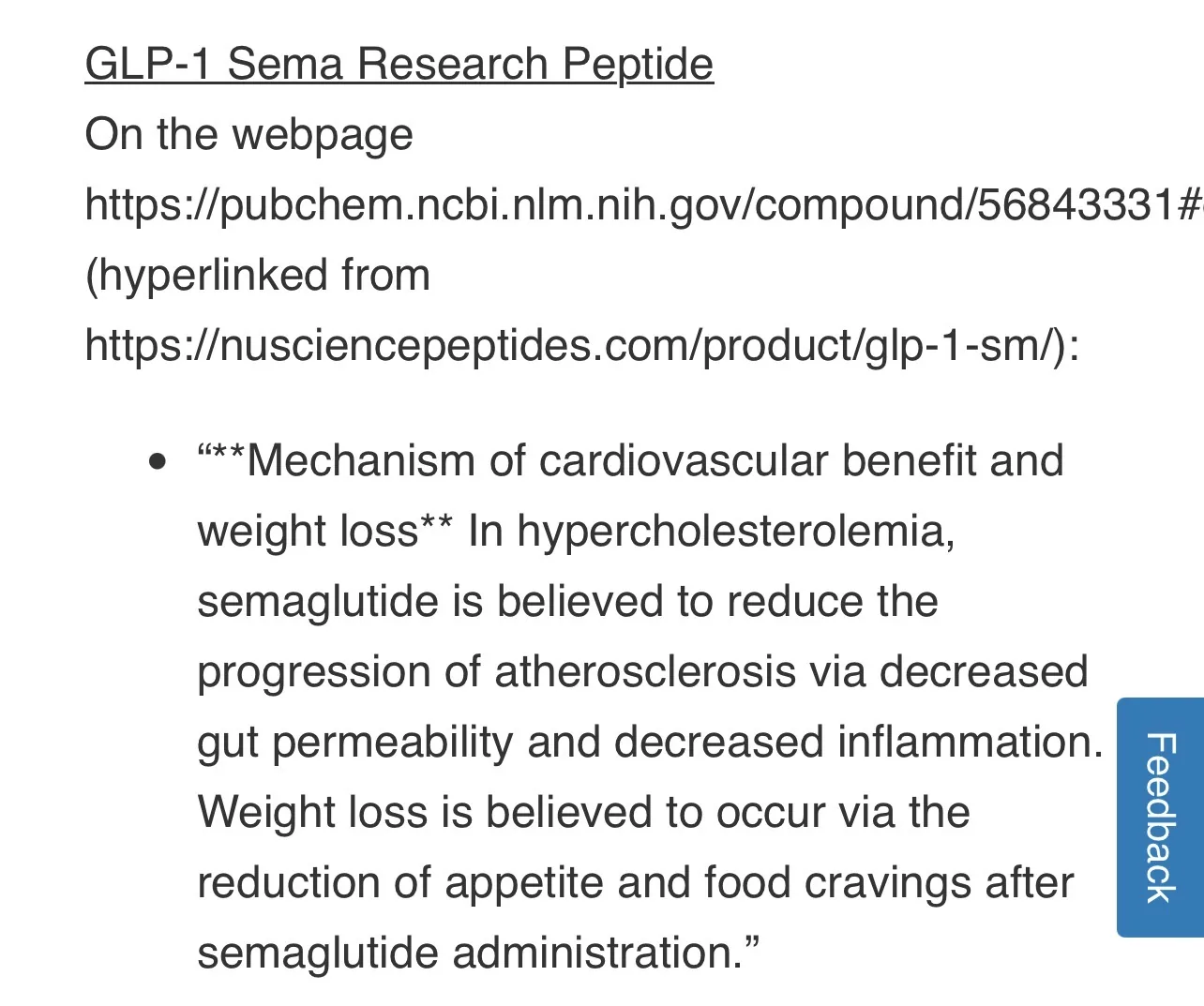
The NuScience letter contains an unusual example of how FDA can assess material beyond the wording written directly on a product page. NuScience’s semaglutide page linked to PubChem, and FDA cited statements from that PubChem page about semaglutide’s effects as part of its intended-use evidence. I couldn’t find an earlier published FDA peptide warning letter specifically using PubChem this way. This isn’t the first time FDA has followed a vendor’s hyperlinks. It did so in an earlier peptide case in 2020. What makes NuScience notable is that the linked information came from PubChem, a US government scientific database, rather than promotional material written by the vendor. It doesn’t mean that linking to PubChem or a scientific paper automatically creates a problem, but it does show that moving human-use information off the product page doesn’t necessarily prevent FDA from considering it if the vendor directs customers there.
This Did Not Start in 2026
The argument that an RUO disclaimer can be outweighed by other evidence isn’t new. FDA has previously cited peptide sellers for using “research use only,” “not for human consumption” and similar wording while simultaneously providing dosing information, discussing human effects, referring to approved drugs or presenting the products in ways FDA considered consistent with human use. The evidence has developed over time. Earlier cases relied heavily on therapeutic claims and dosing information. By 2024, FDA was also citing clinical-trial results, social-media promotion and product combinations. In 2025, USApeptide was cited for selling BAC water and insulin syringes alongside injectable peptides. Then, on March 31, 2026, FDA issued another group of peptide warning letters in which BAC water became even more significant. In several of those cases FDA explicitly concluded that the BAC water itself was a drug because it was being sold for reconstituting peptide products intended for injection. So the August letters aren’t based on a new theory. They’re another application of an approach FDA had already been developing.
Five Vendors. One Date.
Peak Performance Peptides, Royal Peptides, NuScience Peptides, Peptide Partners and Tex Peptides all received warning letters dated August 24. The individual evidence differed, but all five centred on intended use: what the products were being sold for, based on the claims and presentation surrounding them. Four of the five also involved BAC water or a reconstitution product. Royal Peptides was the exception.
FDA cited a mixture of human and clinical-study results, weight-loss and metabolic claims, injection or dosing language, peptide kits and blends, calculators, reconstitution products and other information connected to the products.
That makes the timing significant. Rather than introducing a new legal argument, FDA appears to have applied an existing one across several peptide vendors at once.
What the Letters Actually Show
These are not product-quality investigations. The letters don’t establish whether any peptide was correctly dosed, pure, sterile or even contained what the label claimed. The issue was how the products were being presented and what FDA believed that showed about their intended use. Nor does this mean that selling BAC water, mentioning a clinical study or linking to PubChem automatically makes a peptide an unapproved drug. FDA’s case depends on the wider context.
That is the problem for the RUO market. A disclaimer saying “Research Use Only” carries much less weight when the same sales setup discusses human effects, clinical results, dosing or injection, or provides the products and materials needed for reconstitution.
The August 24 letters show FDA looking beyond the disclaimer and at the operation as a whole.
https://www.fda.gov/inspections-compliance-enforcement-and-criminal-investigations/compliance-actions-and-activities/warning-letters
Comments