
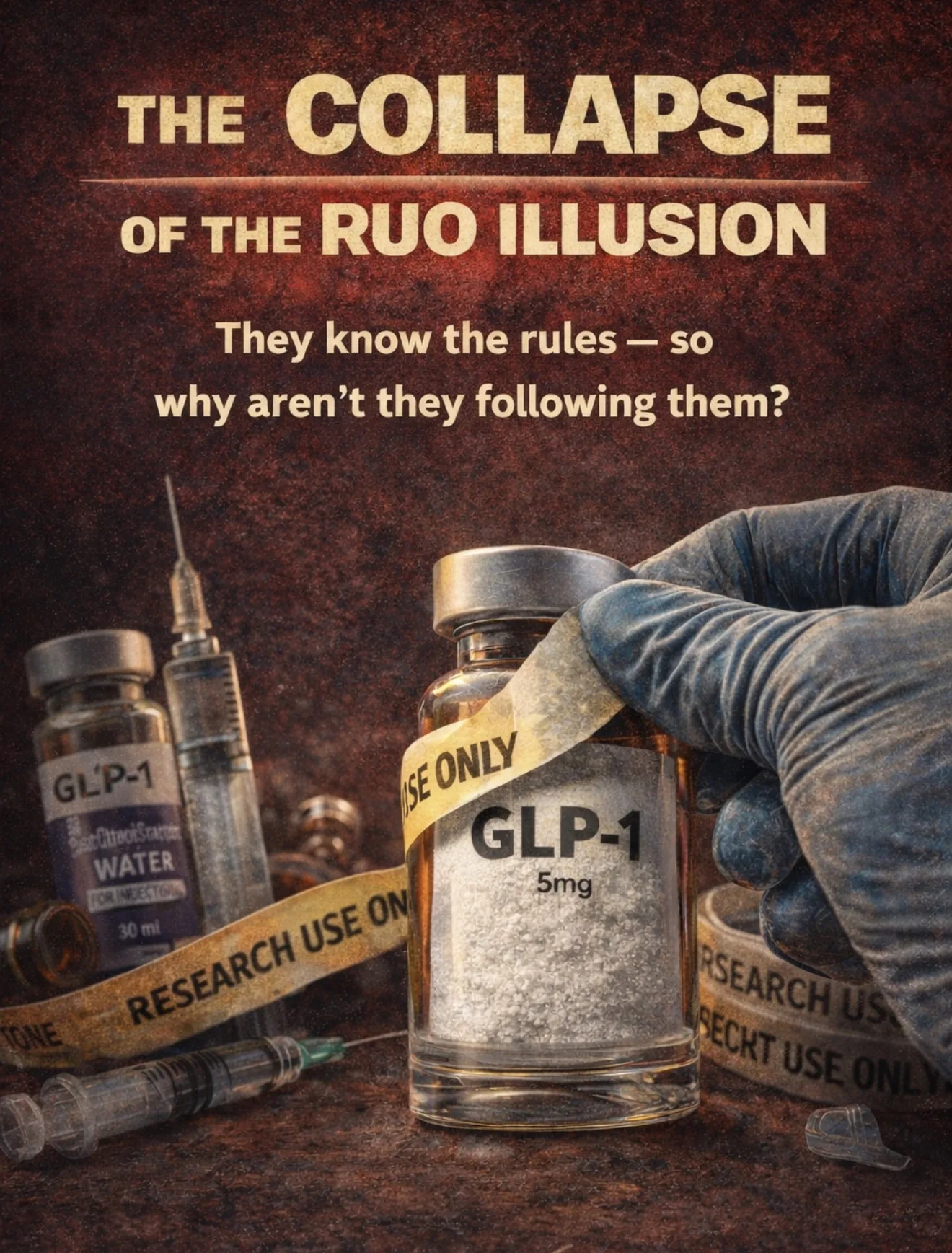
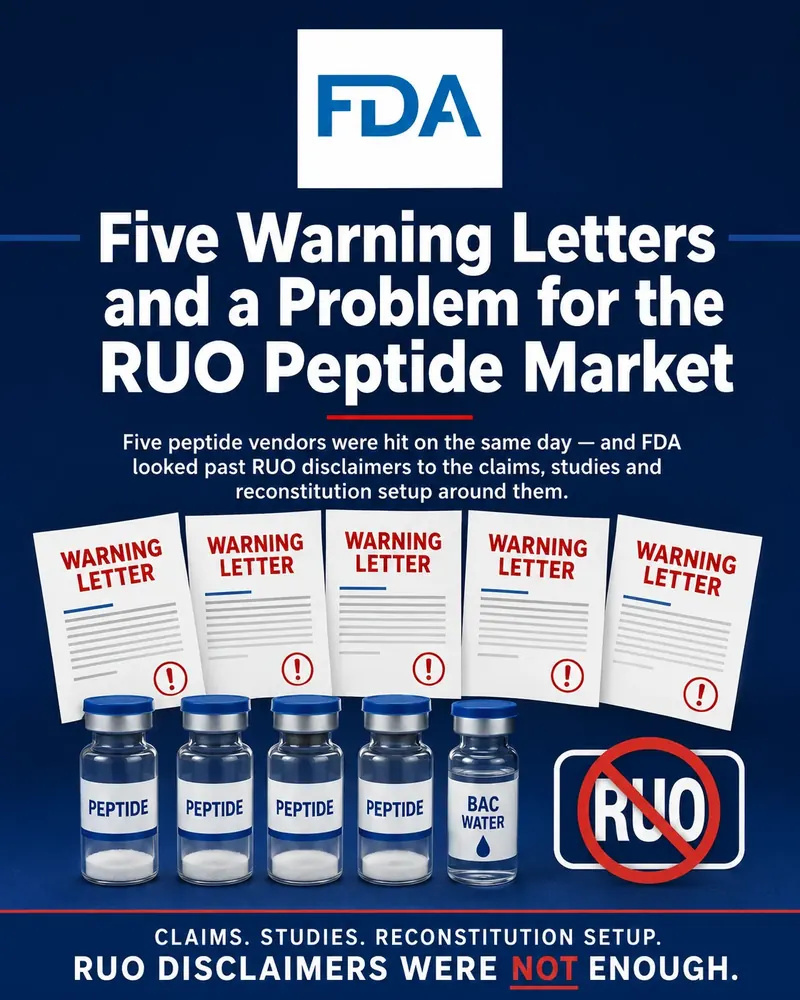
On 7 April 2026, the FDA issued seven warning letters linked to over 20 products, most of them GLP-1 related.
https://www.fda.gov/inspections-compliance-enforcement-and-criminal-investigations/compliance-actions-and-activities/warning-letters
At first glance, this looks like another routine crackdown. Another headline. Another warning cycle.
But if you actually read the letters, and look at the sites they reference, something becomes obvious very quickly.
This isn’t new. The rule has always been simple:
You cannot imply human use.
Not through dosing.
Not through benefits.
Not through “cheat sheets,” communities, or indirect framing.
I wrote about this last year. So the real question isn’t why the FDA is acting now, it’s why some companies are still acting like this wasn’t inevitable.
This Was Never a Grey Area
Every vendor in this space understands the structure:
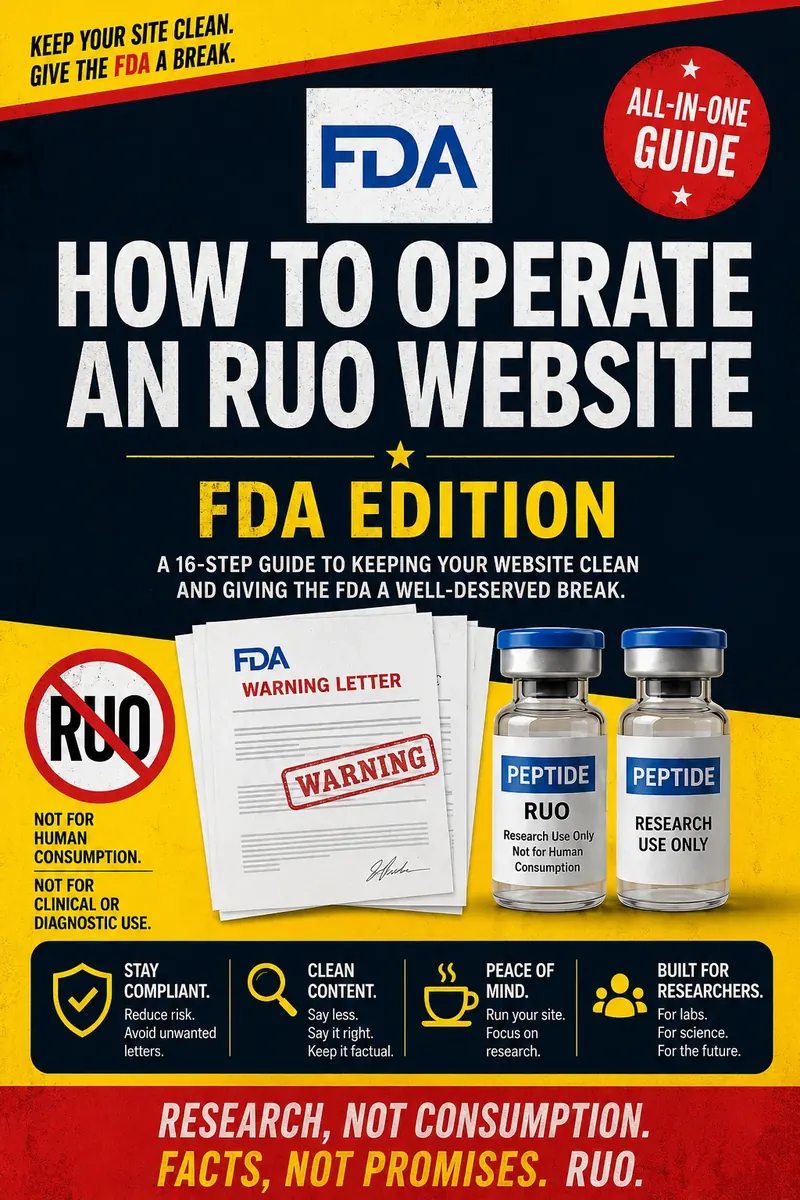
Label the product “research use only”
Add “not for human consumption”
Avoid human use claims
That’s the baseline. But the moment you introduce:
dosing protocols
weight loss claims
clinical outcomes
comparisons to approved drugs
or even structured “benefits”
you are no longer operating in a grey area.
You are defining intended use. And that’s exactly what the FDA is enforcing.
Mile High: Awareness Without Restraint
Probably the most visible case here is Mile High Compounds.
The FDA reviewed both the main Mile High website and the linked Skool community, where it found human use evidence in the form of “cheat sheets,” including dosing protocols, use cases, and expected outcomes.
That distinction is important because the evidence they cite includes:
“GLP-3 RT (Retatrutide)”
Uses: Weight Loss, Addiction Recovery
Dosing: Start 1 to 2mg weekly, titrate to 12mg
Alongside detailed breakdowns of:
glycaemic control
lipid profile improvements
liver fat reduction
energy expenditure
This isn’t interpretation. It’s instruction. The FDA didn’t just read the label, it followed the trail.
Public Content vs Regulatory Reality
Mile High is not a fringe operator.
It’s a large, visible business with an active public presence, particularly on TikTok. And that’s what makes this case more interesting.
Because this isn’t someone who doesn’t understand the rules. In fact, his own content suggests the opposite. He talks openly about:
renaming compounds to satisfy payment processors
adding front end “gates” to the website
modifying checkout flows to remain compliant
These are not the actions of someone unaware of regulatory boundaries. They are the actions of someone actively managing them.
At the same time, his content regularly crosses into human-use framing.
In one video discussing Amazon removing bacteriostatic water, the focus isn’t on why it may have been removed, but on product quality, dismissing Amazon listings as “garbage” and directing viewers toward his own BAC water.
There’s no acknowledgment of the underlying issue, that BAC water, when sold alongside injectable products, becomes part of the intended-use argument.
In another video discussing the shutdown of Peptide Sciences, his explanation is simply that they had made enough money and decided to quit. That framing avoids the broader reality:
increasing regulatory pressure
tightening enforcement
and the growing difficulty of operating within the RUO model
This isn’t ignorance, it’s someone who understands the rules and chooses where to follow them.
If you’re renaming compounds, adding front gates, and modifying checkout flows to “stay compliant,” you don’t misunderstand the rules, you understand them perfectly.
PekCura: The Academic Cover
PekCura looks more careful on the surface with heavy disclaimers, references to published studies
“research chemical only” language
But the product pages move straight into human clinical framing. They describe:
once-weekly subcutaneous administration
specific human dose levels
reductions in body weight
improvements in HbA1c
reduced cardiovascular risk
And sell bacteriostatic water alongside peptide products, reinforcing the intended-use argument.
The disclaimer says “research only.” The rest of the page says something else. PekCura didn’t forget the disclaimer. It just buried it under clinical language.
Prime Sciences: The Contradiction
Prime Sciences goes further. On the same page, it says:
“NOT for human use”
“NOT to be injected”
And then:
explains weight loss outcomes
compares to semaglutide and tirzepatide
sells reconstitution kits
instructs on storage after reconstitution
Prime Sciences said “not for injection” and then sold the steps needed to inject it.
Gram Peptides: Cleaner Language, Same Direction
Gram is more polished with stronger disclaimers and cleaner wording. But the structure still tells the story. Products are organised into:
Fat Loss & Metabolism
Recovery & Repair
Hormonal Balance
And described in terms of:
appetite signalling
glucose regulation
energy balance
satiety pathways
Even without explicit claims, the framing is clear.
Gram does a better job cleaning the language, but not the implication.
Fantasy Face: No Illusion, Just Retail
At the other end is Fantasy Face, an eBay storefront operated by Guangzhou Huli Technology
The FDA cites a listing for:
“GLP-1 Weight Control Oral Solution”
With claims including:
Metabolism Support
Weight management
Blood Sugar Balance
Body shaping
No disclaimers. No separation. Just direct consumer claims. And the store itself makes it even clearer:
anti-aging creams
hair loss products
fungal treatments
generic “male balance” sprays
All sold from the same account.
If Mile High blurred the line, Fantasy Face didn’t draw one at all.
Even Amazon Seemed to Get the Message
The FDA warning letters were one sign, but platform behaviour told the same story.
Amazon US (but not UK) appears to have pulled BAC water listings, and for a period even syringes and needles became harder to find before some later returned.
Whether that was policy, moderation, or uneven enforcement, the signal was clear, the surrounding injection infrastructure was starting to attract attention too. Because this market doesn’t run on peptides alone. It runs on:
BAC water
reconstitution supplies
syringes
needles
Once those start getting swept up as well, the idea that this is all just neutral “research” becomes harder to maintain.
What’s Actually Changed
The rule hasn’t changed. It’s always been the rule.
What’s changed is two things.
1. Everything is now evidence
Not just product pages, but:
community content
educational material
site structure
linked platforms
The FDA is no longer just reading the label, it’s now following the trail.
2. The gap has closed
For years, the model relied on a separation:
what the label said versus what everything else implied but that gap is now gone.
So Why Are They Still Doing It?
Because this wasn’t unclear. It wasn’t hidden. And it wasn’t misunderstood. It was ignored. The assumption was simple, everyone does it, nothing happens. Until it does.
Final Thought
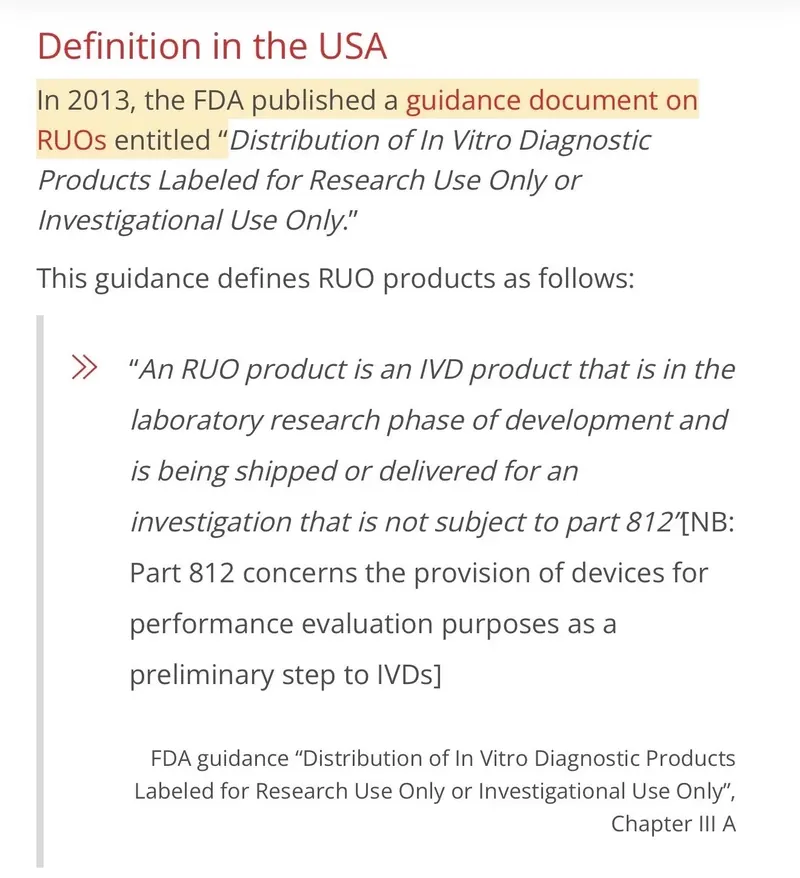
This isn’t a crackdown on peptides, it’s the collapse of an illusion. The illusion was that as long as you said “research use only,” you were protected. You an aren't, but you never really were.
Comments