
Six peptides, a new federal access policy and an FDA investigation that led to an empty apartment. As Washington changes its approach to peptide compounding, Florida’s pharmaceutical supply chain offers some revealing lessons.
TL;DR: Washington is opening a conditional route for pharmacies to compound six previously restricted peptides. Florida could be an early test of how well it works.
FDA investigations have already exposed serious ingredient-sourcing and testing failures, including a supply chain leading to an empty apartment. Meanwhile, Florida’s proposed tighter controls on compounding and medical spas failed earlier this year.
The question now is whether licensed pharmacies can meet the new requirements for manufacturer traceability, testing and quality control, and whether expanded access will change Florida’s existing research-peptide market.
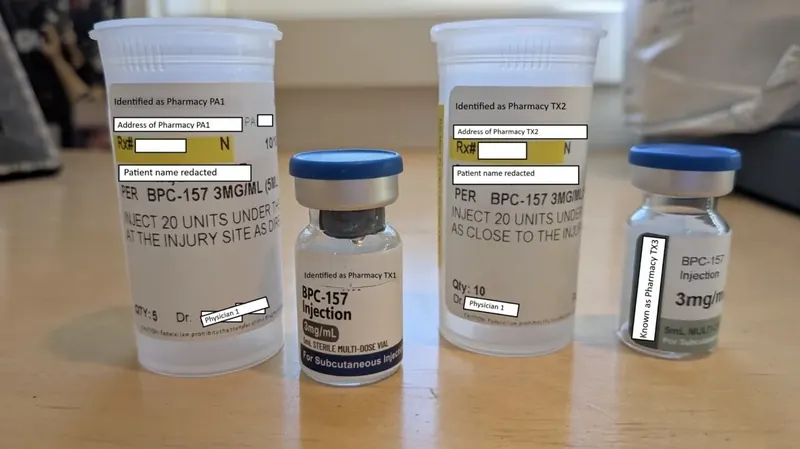
On 28 October 2026, the US Department of Health and Human Services (HHS) announced a new enforcement-discretion policy covering six peptides: BPC-157, KPV, TB-500, MOTS-c, Semax and Epitalon.
The policy establishes conditions under which HHS doesn’t intend to pursue certain enforcement actions against qualifying state-licensed pharmacies and licensed physicians compounding these substances under Section 503A. These include patient-specific prescriptions, specified routes of administration, controls over bulk-ingredient sourcing and testing, certificates of analysis identifying the original manufacturer, and adverse-event reporting. The peptides remain unapproved by the FDA. This is a conditional enforcement policy, not formal inclusion on the 503A Bulks List or a general authorisation for research-use-only suppliers.
For qualifying compounders, it could open a new commercial opportunity. But an earlier FDA investigation in Florida demonstrates why the sourcing and testing requirements deserve particular attention.
In December 2025, the agency documented serious violations involving Darmerica LLC, a pharmaceutical ingredient distributor in Davie, Florida. Its findings included retatrutide supplied to pharmacies seeking to compound medicines, inadequate ingredient testing and an overseas supplier whose registered address turned out to be an empty apartment. The new policy doesn’t cover retatrutide, but the investigation raises questions relevant to any pharmacy relying on imported peptide ingredients.
Source: HHS, Federal Register notice, scheduled for 30 October 2026
The Florida Supplier Whose Ingredient Trail Led to an Empty Apartment
The FDA inspected Darmerica from 3 to 19 March 2025 and issued a warning letter on 8 December, documenting violations involving active pharmaceutical ingredient (API) sourcing, testing, labelling and distribution. Among its findings was the distribution of retatrutide to pharmacies seeking to compound medicines under Section 503A, despite the substance being ineligible for that exemption. The FDA also identified other ineligible ingredients supplied to compounders, including cagrilintide, elamipretide (SS-31), thymogen, buserelin, larazotide, tesofensine and FGL acetate.
Darmerica subsequently informed the FDA that it had stopped importing and distributing retatrutide and cagrilintide. The agency considered those particular corrective actions adequate.
The Empty Apartment
During its investigation, the FDA examined one of Darmerica’s overseas API suppliers. The supplier’s registered address appeared to be a residential building rather than a pharmaceutical manufacturing facility. Investigators visited the address.
It was an empty apartment.
According to the registered contact, the company had gone out of business the previous year. The contact could not identify who was manufacturing or distributing the GLP-1 ingredients Darmerica had received and supplied for medicines administered to US patients. The supplier’s identity is redacted in the public warning letter. The FDA documented further problems:
GLP-1 ingredients shipped under the generic description “custom peptide”, rather than the actual drug name.
Ingredients distributed before completed quality-unit review and testing.
Destruction of original incoming labels.
Reliance on manufacturer-supplied pre-shipment samples instead of representative testing of received shipments.
API suppliers appearing on FDA import alerts.
A separate complaint concerned black particles found in an ingredient. Darmerica said its investigation attributed the particles to shedding during manufacturing. The supplier described them as technically unavoidable and suggested customers remove them manually.
The FDA criticised Darmerica’s investigation and its failure to contact other potentially affected customers. The public letter doesn’t identify the ingredient involved in that complaint. The agency requested extensive documentation covering suppliers, lots, quantities and customers. The identities of affected downstream pharmacy customers remain redacted.
The issue goes beyond one distributor. A pharmacy cannot reliably establish the origin and quality of an ingredient if its supply chain cannot identify the actual manufacturer.
Source: FDA warning letter to Darmerica, 8 December 2025
Florida Tried to Tighten Ingredient Controls. The Bills Died.
During Florida’s 2026 legislative session, lawmakers considered several proposals addressing pharmaceutical ingredients, compounded medicines and medical spas.
None became law.
Senate Bill 860, introduced by Senator Jennifer Bradley, addressed compounded weight-loss medications. It proposed requirements including pharmaceutical-grade API documentation, original-manufacturer testing, impurity identification, quality-control testing before use and evidence of an FDA inspection within the preceding two years, classified as No Action Indicated (NAI) or Voluntary Action Indicated (VAI). Proposed penalties included $1,000 per dose and licence or permit revocation.
The bill died in the Senate Regulated Industries Committee on 13 March 2026.
Florida SB 860, Official legislative record
House Bill 877 proposed wider API sourcing and testing requirements for 503A compounding, including documentation of the original country of manufacture, impurity testing and record retention. It also died on 13 March.
Separate legislation proposed licensing and oversight requirements for medical spas providing certain prescription-drug treatments, including weight-loss and longevity services.
Senate Bill 1728 and House Bill 1429 also failed on 13 March.
Florida SB 1728, Medical Spa Prescription Drug Oversight Act
Who Opposed the Bills?
The Alliance for Pharmacy Compounding (APC) publicly opposed SB 860 and HB 877. In its 13 February legislative update, APC’s Compounding Defense Initiative identified both bills as measures it opposed, arguing that restrictive state legislation could burden licensed pharmacies and interfere with patient care. APC also suggested the bills might die in committee if they were not taken up shortly afterwards. They ultimately failed to advance.
Source: APC, State Updates, 13 February 2026
Florida already regulates pharmacy compounding. These bills would have introduced additional requirements. Their failure is relevant now because the new federal peptide policy places its own emphasis on manufacturer documentation, laboratory testing and ingredient traceability.
Is Florida Becoming America’s Peptide Guinea Pig?
On 23 October, the South Florida Sun Sentinel published an editorial warning that Florida could become a testing ground for Washington’s expansion of peptide compounding. The editorial followed its August investigation into the state’s peptide industry, covering medical spas, longevity clinics and research suppliers offering everything from inexpensive lyophilised peptides to clinic programmes costing upwards of $1,500 per month.
The newspaper questioned the wisdom of expanding access to unapproved substances in a state where proposed safeguards for pharmaceutical sourcing and medical-spa oversight had failed. Florida hasn’t been designated a pilot state, but its established peptide market and documented supply-chain problems make it a relevant place to examine the effects of the new policy.
The question is which licensed pharmacies will participate, whether they can meet the sourcing and testing requirements, and how the changes will affect Florida’s existing research-peptide market.
Source: South Florida Sun Sentinel, August investigation
Source: October editorial, Florida Will Pay for Washington’s Peptide Shortcut
Start Your Own Peptide Brand Without Stocking a Single Vial
Another part of Florida’s peptide business operates through private-label fulfilment.
JAG Bio Labs, based in Orange Park, advertises a programme allowing businesses to launch research-peptide brands without purchasing or storing inventory. According to its website, JAG can design labels, package vials under another company’s branding and ship orders directly to customers using that brand’s packing slips. Its service includes blind shipping, meaning the fulfilment company’s identity need not appear in the customer’s order.
JAG also advertises independent laboratory reports from Freedom Diagnostics. This arrangement creates a distinction between the company advertising the product, the business fulfilling the order, the original manufacturer and the laboratory performing the testing.
Those may all be different organisations. Private-label fulfilment is an openly advertised business model, not evidence of improper conduct. But it illustrates why original-manufacturer identification and batch-level documentation matter.
Source: JAG Bio Labs, Private Label Peptides
Research-Use-Only Sellers Under FDA Scrutiny
The FDA has also taken action against Florida-based online peptide sellers over products marketed for research use.
On 24 August 2026, it issued warning letters to two businesses.
Royal Peptides LLC, Boynton Beach
The agency challenged the marketing of products labelled for research use, citing therapeutic claims, bacteriostatic water and material associated with reconstitution and administration.
Peptide Partners LLC, Sarasota
The FDA similarly cited therapeutic marketing and bacteriostatic water advertised as a solvent for reconstituting peptides.
An earlier warning letter, dated 7 February 2024, also targeted Miami-addressed US Chem Labs over the marketing of semaglutide, tirzepatide and thymalin. These cases concerned the FDA’s assessment of intended human use.
The new HHS policy doesn’t extend its conditional enforcement approach to these research-vendor sales arrangements.
Finnrick Reports Testing and Traceability Concerns at BioLongevity
Florida’s peptide industry also includes businesses promoting independent laboratory testing.
BioLongevity Labs, co-founded by Tampa-based Jay Campbell, was examined in a July 2026 Finnrick Vendor Intelligence Report. Across 33 laboratory tests, Finnrick reported 25 passes and eight failures, an overall pass rate of 76%. The report also identified missing batch identifiers on tested vials, complicating the matching of products to laboratory certificates. A subsequent Finnrick retatrutide test dated 23 September 2026 reported: Purity: 99.9%, Identity: Pass, Quantity: 76% below the advertised amount, Overall: Fail
Source: Finnrick, Vendor Intelligence Report
Source: Finnrick, Retatrutide test, 23 September 2026
Licensed Pharmacies Have Inspection Histories Too
FDA inspection records identify observations involving established Florida compounding operations.
Hallandale Pharmacy, in Fort Lauderdale, received a Form 483 on 13 June 2025 describing concerns involving sterile-processing practices, materials brought into an ISO-5 area and inadequate airflow smoke studies under production conditions. The cited examples included testosterone and NAD+, rather than a confirmed semaglutide contamination incident.
Hallandale, FDA Form 483, June 2025
OPS International Inc., doing business as Olympia Pharmaceuticals, received FDA inspection observations at its Orlando outsourcing operation on 3 September 2026, including deficiencies involving environmental and personnel monitoring during aseptic processing.
Olympia, FDA Form 483, September 2026
A Form 483 records inspection observations, not a final agency determination that particular products are defective. Olympia’s inspected outsourcing operation falls under the separate 503B framework, which isn’t automatically covered by the new 503A policy.
What Happens Next in Florida?
The federal policy creates a potential new supply route for the six covered peptides through qualifying licensed compounders. But several questions remain.
Which Florida pharmacies will participate? The announcement doesn’t establish which individual pharmacies can meet the conditions or intend to offer these products.
Where will the ingredients come from? Manufacturer identification, documentation and laboratory testing are central to the new approach. The Darmerica investigation demonstrates why those controls matter.
Will customers move away from research-use-only suppliers? The policy creates a potential alternative, but there’s no evidence yet of how many customers will switch.
How will Florida oversee the market? Federal enforcement discretion doesn’t replace state pharmacy law or resolve the regulatory position of businesses operating outside qualifying 503A compounding.
These are practical questions for pharmacies, regulators and customers, not simply arguments about whether peptides should be available.
The Bigger Picture
Washington has introduced a new route for six compounded peptides. Florida already has clinics, pharmacies, ingredient distributors and research suppliers operating across several distinct markets. The Darmerica warning letter shows how badly ingredient traceability can fail, while Florida’s legislative records document attempts to introduce additional safeguards that never became law. The FDA’s research-vendor warning letters, Finnrick’s testing findings and pharmacy inspection records add further context to the quality-control questions surrounding the industry.
Florida has not been designated America’s peptide guinea pig. But its existing market makes it a place worth watching as the new federal policy takes effect.
The immediate question is whether the pharmacies participating in that policy can demonstrate the manufacturer traceability, laboratory documentation and quality controls HHS is requiring.

Comments