
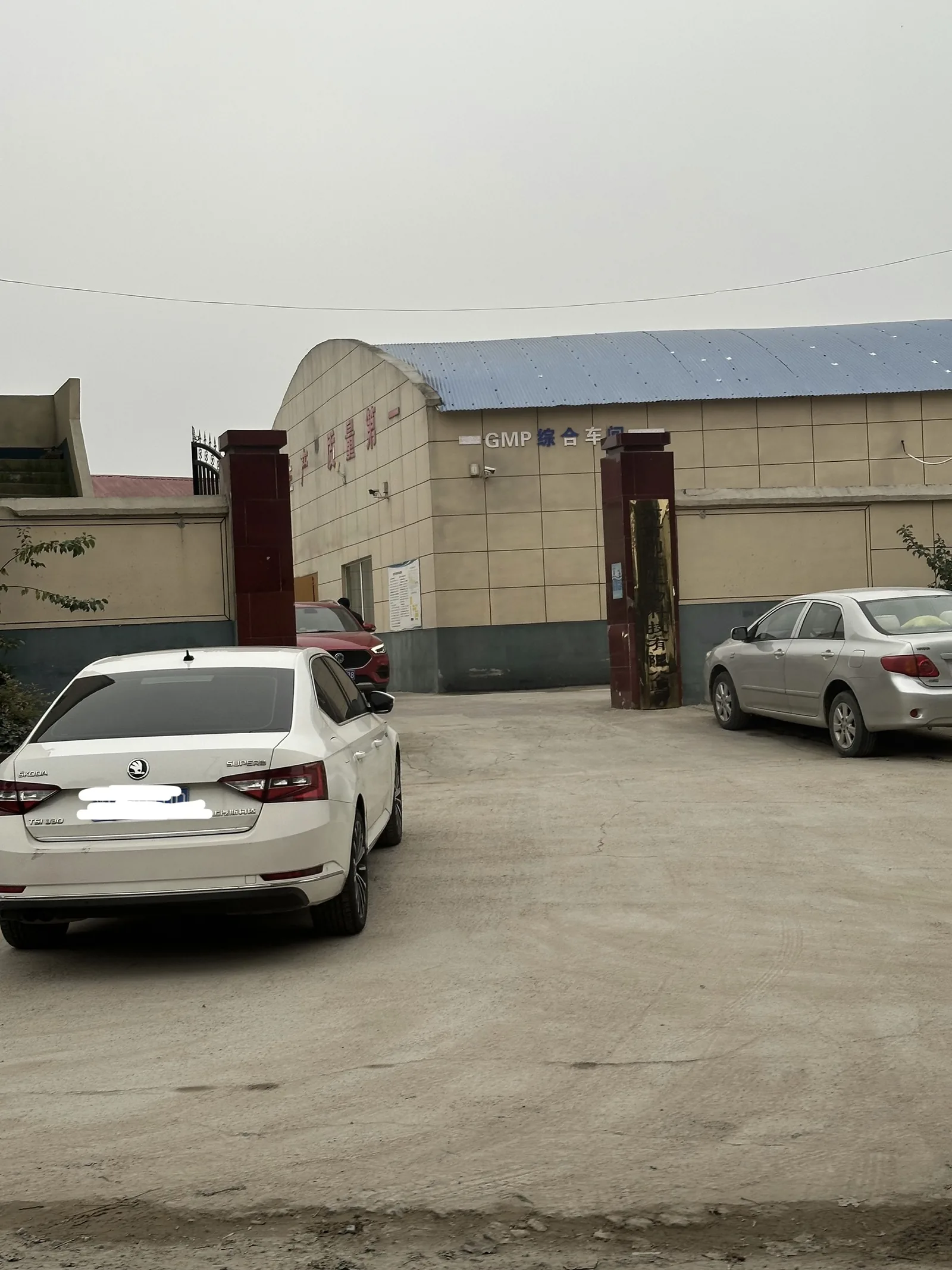
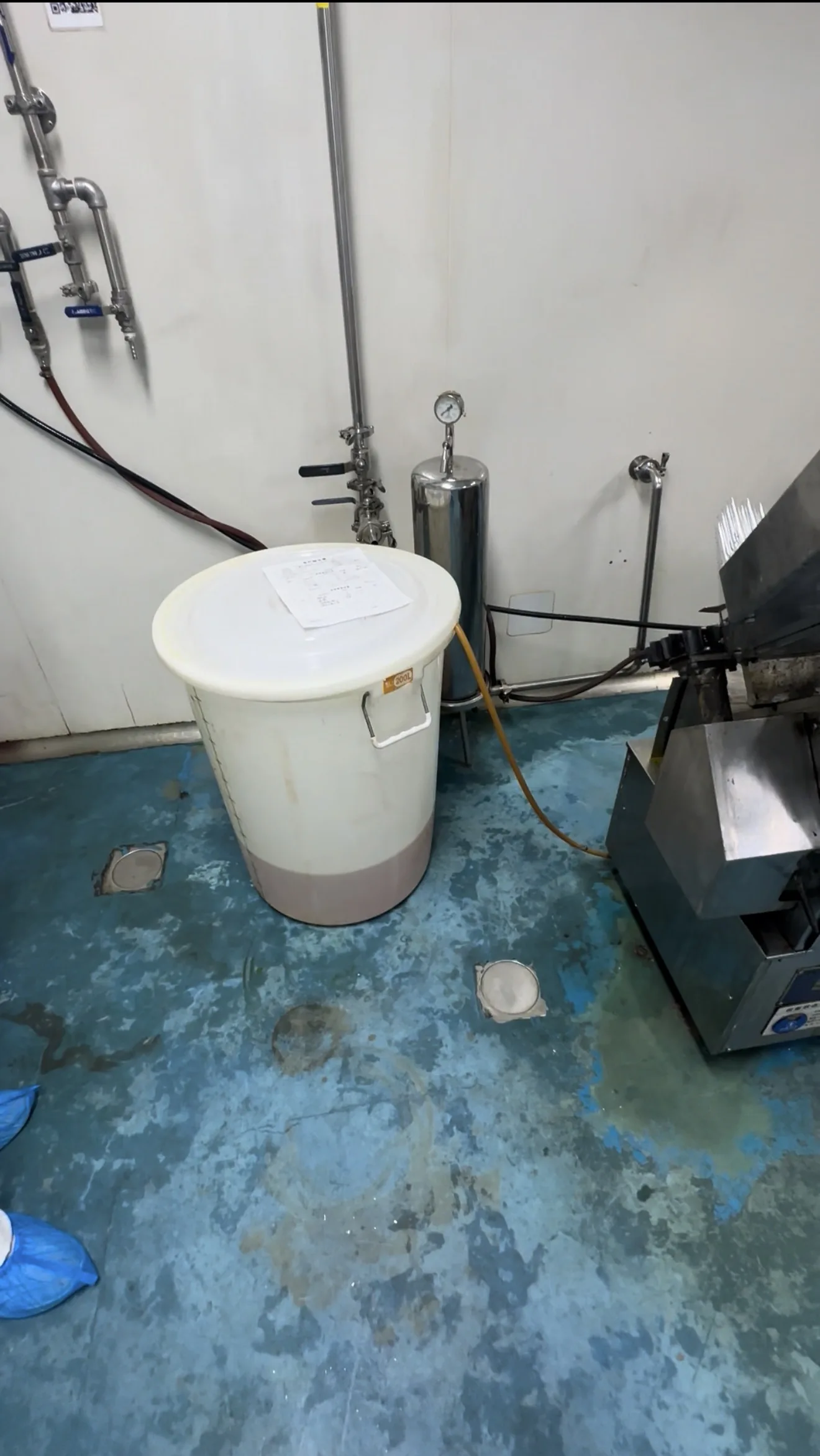
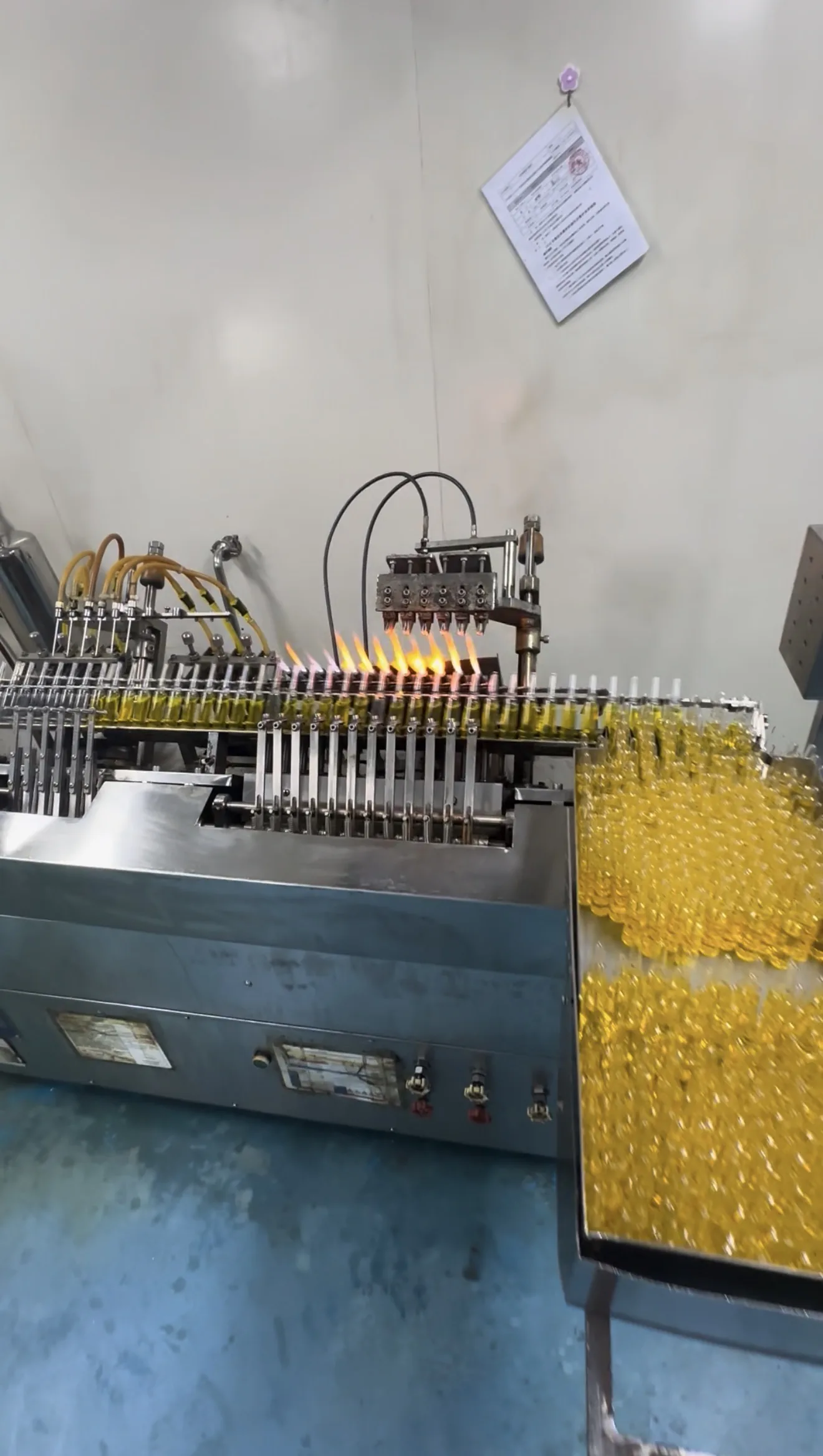
This was not a peptide-production factory, and the footage shouldn’t be treated as representative of modern peptide manufacturing in China. Most established peptide factories today are far more sophisticated: slick, highly automated facilities equipped with modern production and purification systems.
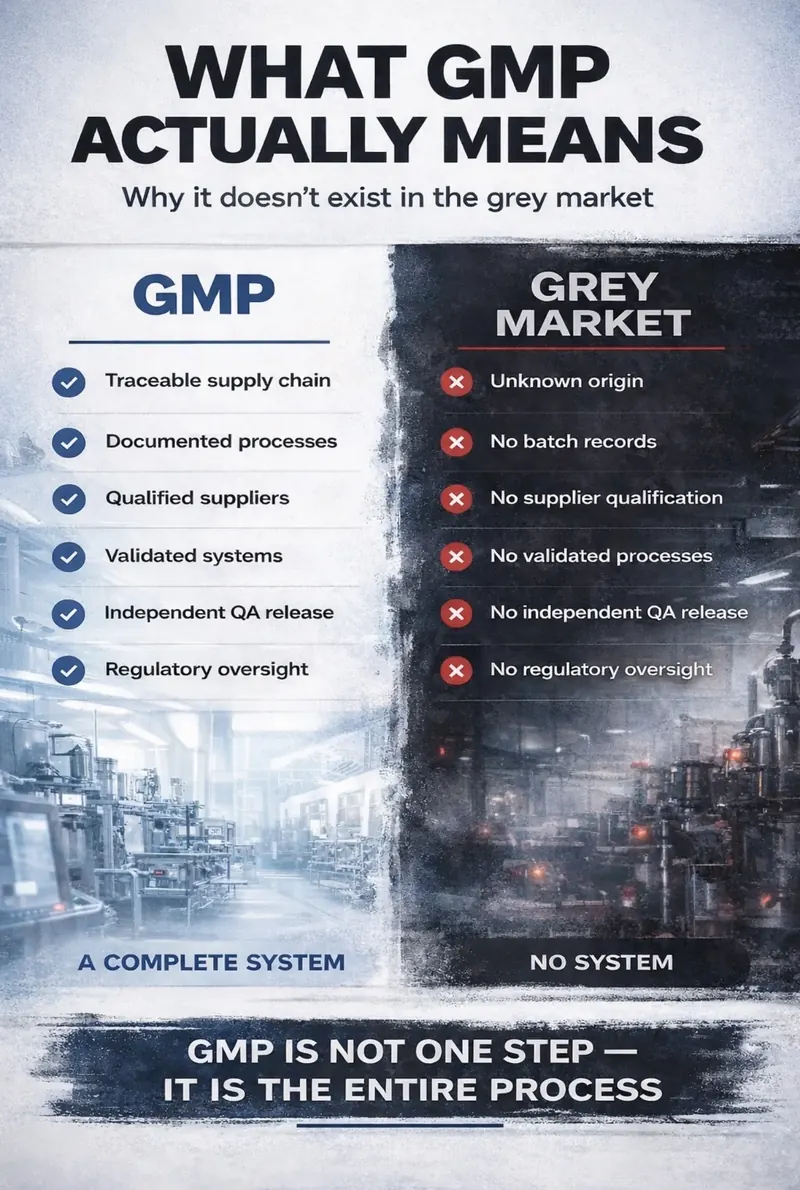
The factory shown here manufactured steroids and amino acids, not peptides. A visitor described being shocked by the conditions inside despite a sign identifying part of the site as a “GMP production workshop.”
According to their account, the route into the clean rooms was dirty and the factory itself was in poor condition. During the visit, staff attempted to demonstrate a manufacturing machine, apparently to show the quality of their equipment. Instead, components began falling off during the run and the ampoules started smashing into one another ( they were filing vials with B12 liquid in those pictures )
The visit had been prompted by a quality-control problem. Products from the factory were reportedly returning unusually high endotoxin results, so the visitor inspected its water-purification system. Although it had once been an impressive facility with a substantial purification setup, the factory was said to be old and struggling financially.
Part of its water system was a gas-powered distillation unit. According to the visitor, government roadworks outside the factory resulted in the gas supply being disconnected, and it was never restored.
Despite this, manufacturing allegedly continued for approximately two years. The water passed through reverse osmosis, but the distillation stage was omitted because the equipment could no longer operate. In the visitor’s assessment, this meant the water was not suitable for manufacturing injectable products.
The visitor added some important historical context. When they first visited Chinese peptide factories in approximately 2022 or 2023, some did resemble this one: small, grimy and almost underground in appearance. Many of the original peptide manufacturers began as steroid factories before switching to the more lucrative peptide market. This particular factory simply “missed the boat” and continued producing steroids and amino acids while much of the industry moved on.
The footage therefore offers a glimpse of the kind of operation from which part of China’s early peptide industry may have emerged, but not an accurate picture of most established peptide factories operating today.
This is a first-hand account and not an independently verified factory audit. It concerns one ageing steroid-and-amino-acid facility, not a peptide factory and not the current standard of China’s modern peptide-manufacturing industry.

Comments