
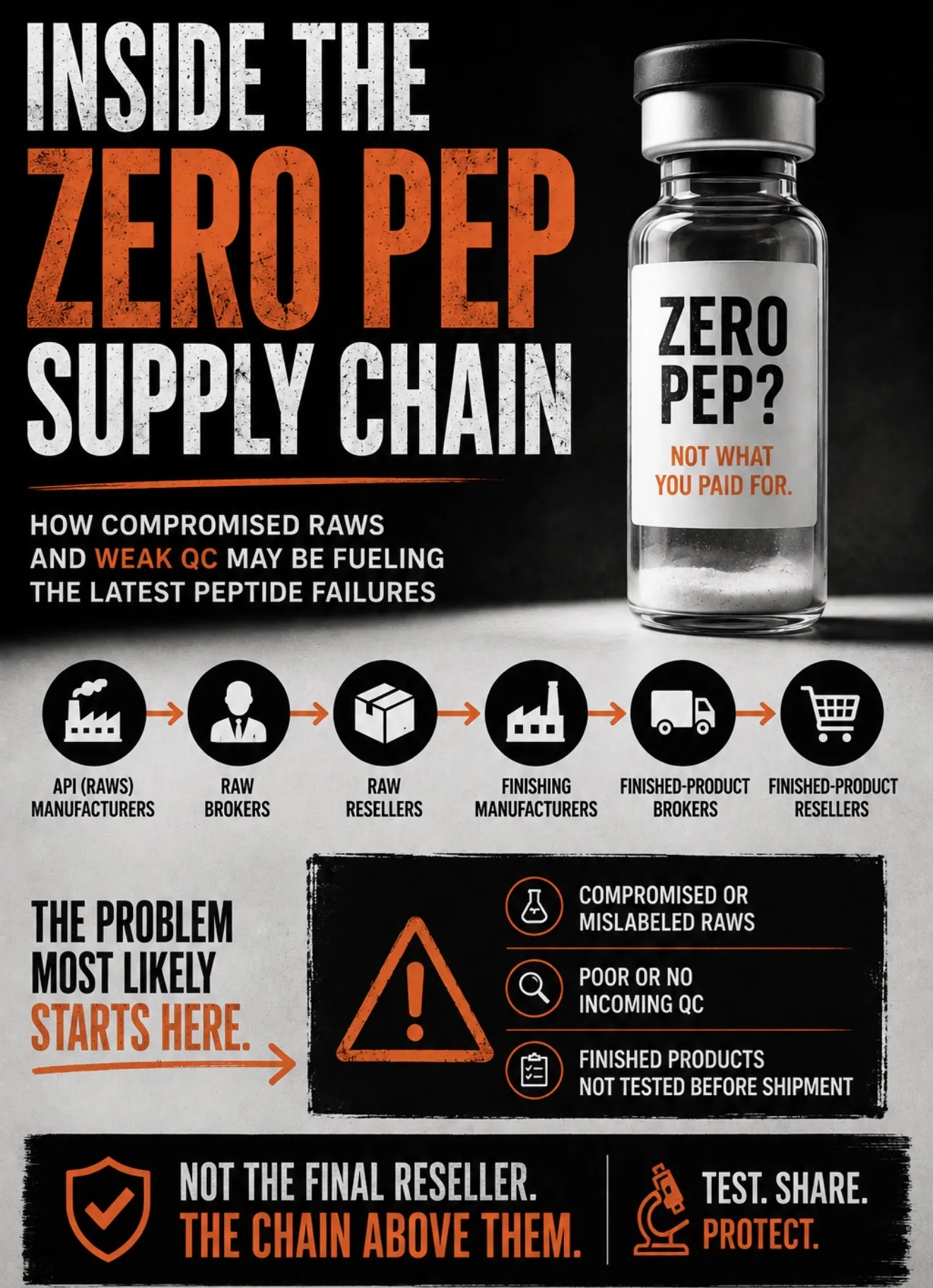
I think it’s time to address this current “zero pep” epidemic. To start with, this isn’t anything new to the grey market. We already went through a major wave of this last year.
And before people immediately blame resellers, I think our understanding of the grey-market supply chain needs refreshing.
The Grey Market Supply Chain
People imagine the chain as factory → reseller → customer
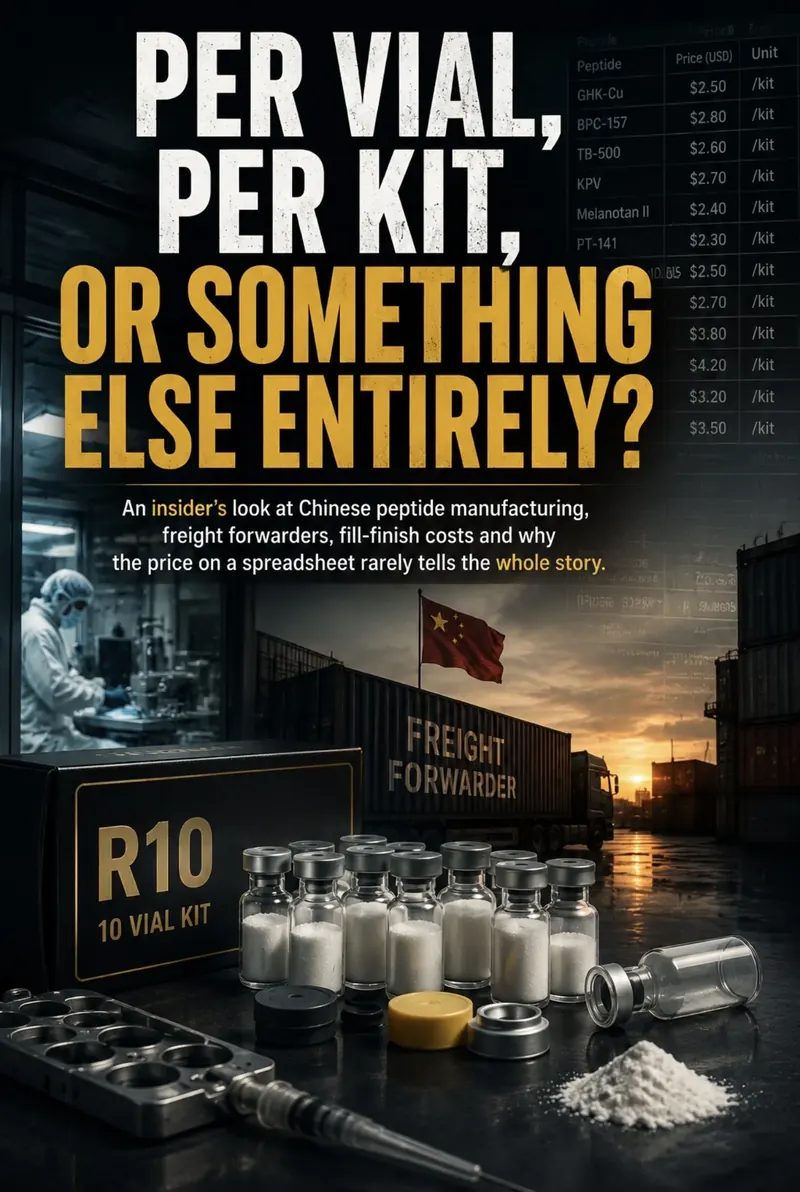
But it’s far more fragmented than that. There are the API ( raws) manufacturers, raw brokers, raw resellers, finishing manufacturers, finished-product brokers, finished-product resellers and so on…….
So by the time Bella on What’s App gets her hands on it, it’s already passed through multiple layers. That’s why knowing exactly which What’s App seller is selling this is unhelpful. What’s more helpful is seeing pictures of the affected kits with the labels so we can see if there are only certain type of labels affected or if this is more general and across multiple different label types.
Where The Problem Most Likely Starts
There are two realistic explanations for the “zero pep” issue.
1. Bad or substituted raws entering the chain
Someone upstream is selling fake raws with little or no active ingredient and
selling mislabelled raws ( in the case of the retatrutide containing tirzepatide instead)
The finishing manufacturer has then used those raws without properly testing them first. The poor incoming QC may be due to laziness/ cost saving, overreliance on supplier COAs or simple misplaced trust built through previous successful dealings
This is, in my opinion, the more likely explanation, in contrast to
2. A factory intentionally manufacturing “zero pep”
This is still possible, but less likely in my opinion, because by the time a product reaches the finished vial stage, the factory has already paid for lyophilisation, vialing, excipients, caps, packaging, labour, handling and shipping preparation. All of that costs money.
So if the plan is to make money out of this, intentionally manufacturing completely empty products at scale makes less economic sense than the compromised raws entering the chain upstream scenario. Plus the factory knows their customers can find them to ask for refunds/ compensation, so why put themselves at such risk? Far more likely they were unaware of what they were producing.
Also there’s a third possibility which the vendors latched onto last year, which sort of absolved them of a lot of responsibility, and which Uther also attributed to his own zero peps incident last summer. That is the “good kits” are being exchanged for “bunk kits” in the warehouse by fraudulent freight forwarders, but again these bunk kits must have come from somewhere, so we are back to the factory intentionally producing bunk products scenario.
Final Point
In my opinion, this problem originates at the raw-material (API) level. There is likely a raw supplier, broker, or intermediary selling material with little or no active ingredients, while finishing factories are buying these without testing the raws first and not testing the finished products either before sending them out. So the end suppliers that most of us deal with are usually just the end part of a far more convoluted supply chain.
This “zero pep” issue is less about individual resellers intentionally scamming people and more about a fragmented grey-market ecosystem built on trust, limited QC, and upstream uncertainty. So let’s be grateful to those resellers who are coming forward with their bunk products that they’ve identified through their own testing and let’s keep posting pictures of the bunk kits that have been tested so we can see if there’s a pattern to the labels.
So far it seems to be labels similar to the ones below are the ones to be affected
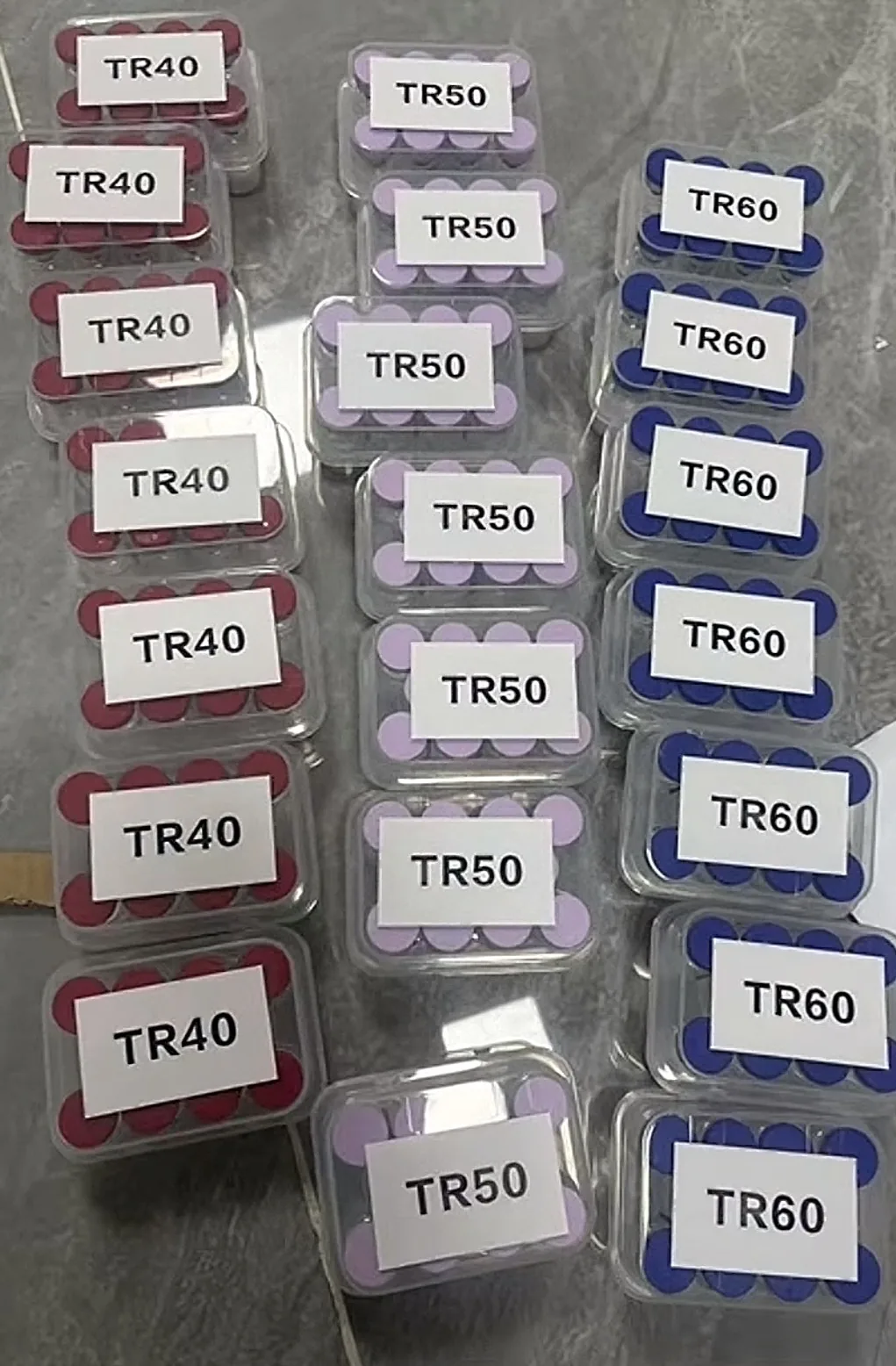
The Reta/ tirz substitutions seem to be a different type of label altogether and not any particular one so far, which makes me think this might be an unrelated issue.
Comments