
Grey market scandals usually arrive with an elaborate explanation. This one is almost refreshingly simple: Wendy Line (Wendy’s Pep) says a new supplier sent bad raw material. The supplier disappeared. Unfortunately, so did the peptides.
Wendy has now addressed the growing number of failed products. She says the first batch of raw materials was fine and had been tested by many customers. However, when a shortage forced her to find a new supplier, the second batch arrived with what she described as “insufficient content.”
According to Wendy, the new supplier was a scammer who provided the defective raw material and then disappeared. She says she delayed responding because she wanted to find a reliable replacement supplier before offering a solution. A manufacturer is now carrying out “final confirmation.”
“Insufficient content” is rather delicate wording when customers are reporting results of zero.
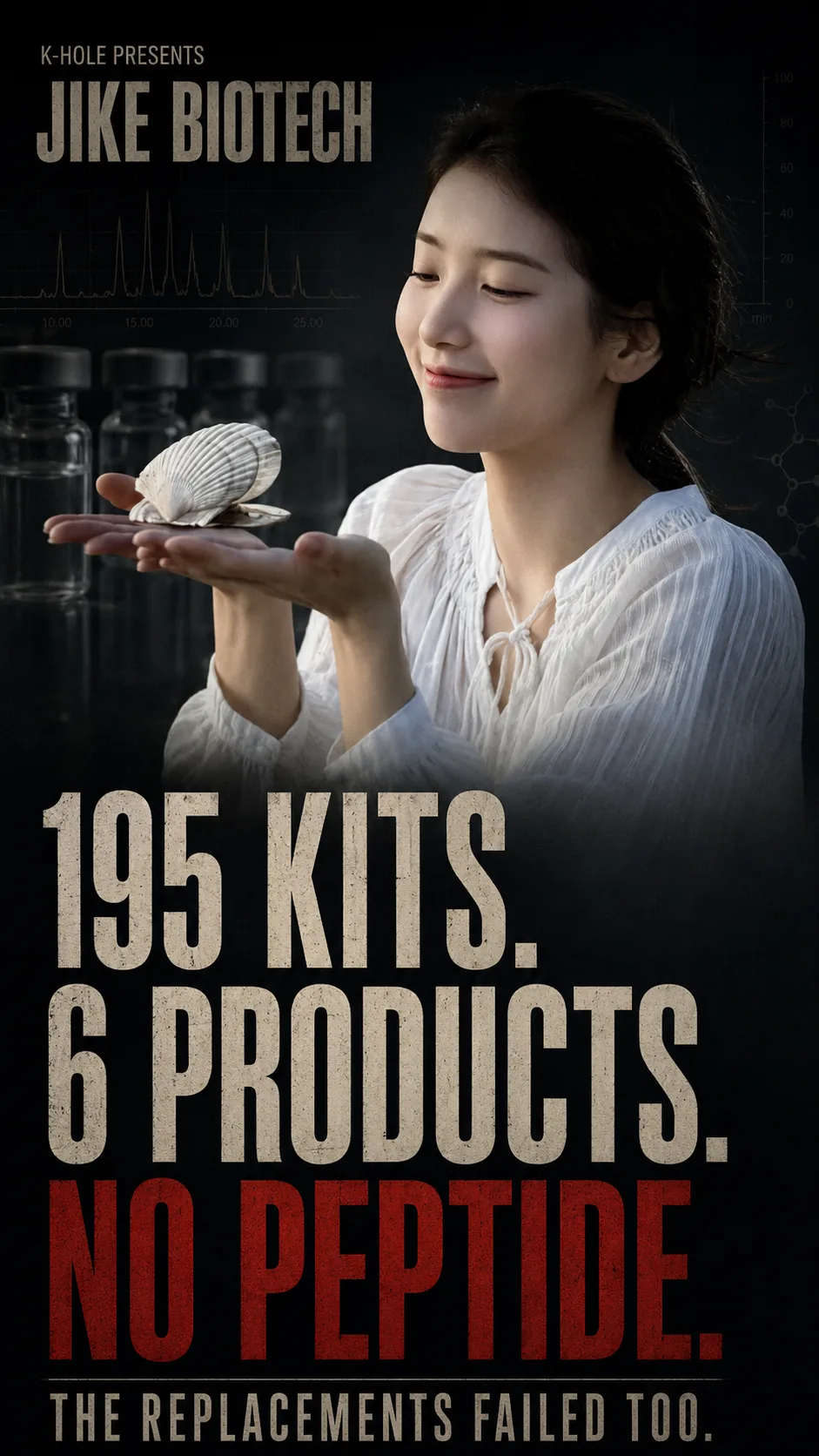
195 Kits Across Six Products
One long-standing customer has now described the scale of their own losses since Wendy changed companies to Jike Biotech. They received 195 kits across six products:
MOTS-c20, green cap
BPC10, black cap
T10, white cap
R30, red cap
NAD1000, clear cap
Cartalax20, green cap
Testing by Freedom found no target analyte in any of the six products. Some contained an unidentified compound, but Freedom didn’t investigate its identity further. The T10 and R30 were then sent to Janoshik for a second opinion. According to the customer, Janoshik noted that the unidentified substance in the T10 appeared to be hydroxyacetophenone, the filler associated with the recent wave of zero-peptide products commonly called “faketide.” Once Wendy received those results, she issued a partial refund and sent replacement batches of MOTS-c20 with pink caps and BPC10 with dark-green caps. Those replacements were then tested by Freedom.
Once again: no analyte detected. Wendy refunded the customer more money and is now working to send further replacements.
This Was Not One Bad Vial
This wasn’t one bad vial, one failed product or even one round of defective stock. The customer received 195 kits covering six different products, and the replacement batches failed as well.
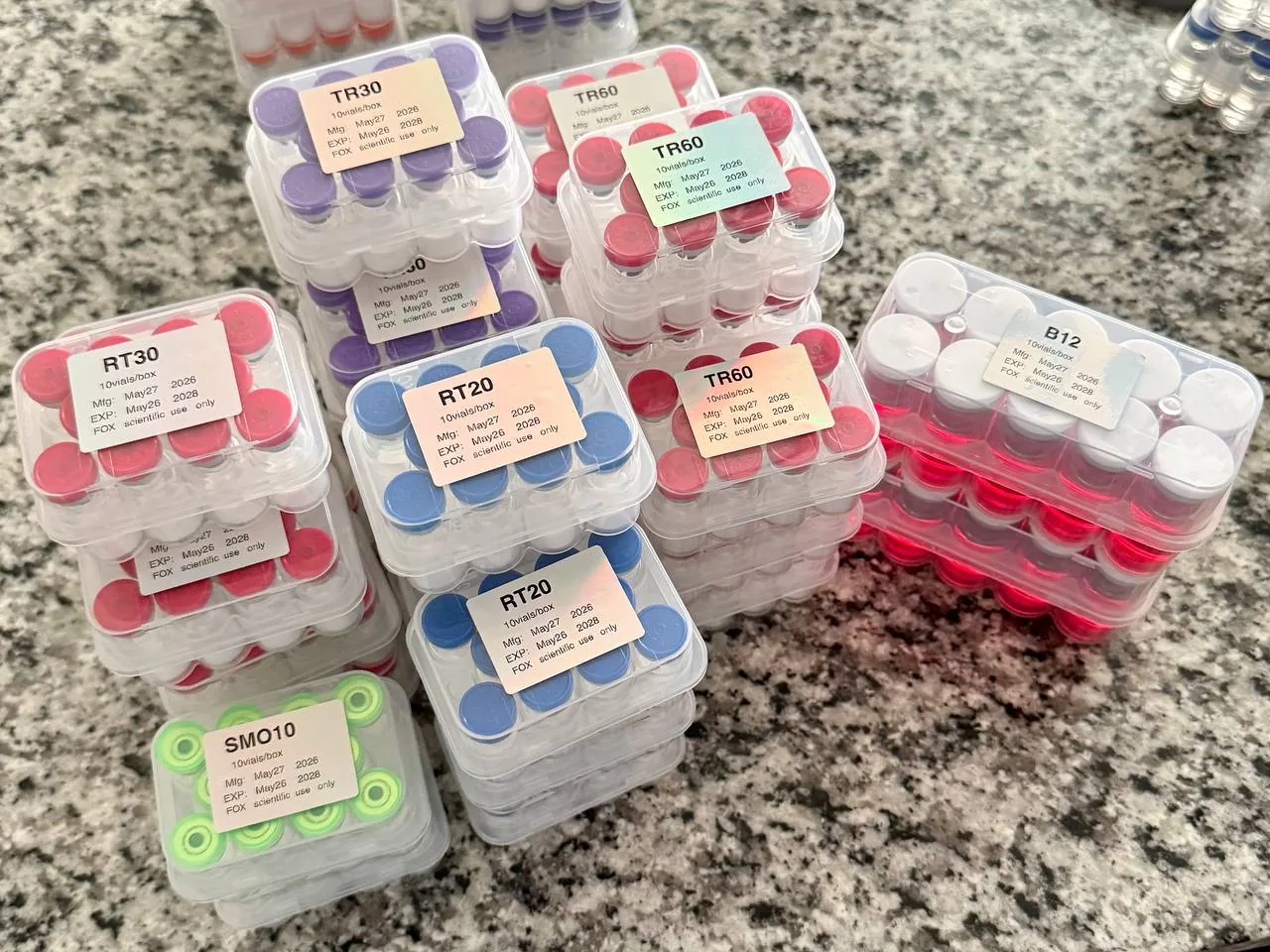
Other customers in the group have since reported problems with blue-cap TR30 and RT20, including an RT20 result of zero. One customer said every product they’d purchased needed replacing.
People are now asking whether only group-buy products were affected or whether ordinary purchases from Wendy’s recent price list may also be involved. There is still no complete list of affected products, cap colours or batches, no clear explanation of who qualifies for replacement and no confirmed reshipment date.
The customer later put the financial cost at approximately $12,000, including laboratory testing. They say only around half has been refunded so far. Wendy is supposed to send further replacements once she’s satisfied that the new products are good, but at the time of the update, the customer was still waiting for them.
The uncertainty is now affecting customers outside the most recent group buy. One buyer who had spent around $600 on R30 and T100 from an earlier purchase asked whether the products should be discarded. Another group member said Wendy switched to the new company in early July, meaning earlier orders may have come from the previous supplier, but still advised the buyer to test them.
This is exactly why a complete list of affected products, batches, cap colours and sale dates is needed. Customers shouldn’t be left searching through group messages and paying for their own testing to discover whether products they already bought contain what the labels claim.
Even the Customer Says Sales Should Have Stopped
The customer who disclosed the 195 kits isn’t attacking Wendy. They’ve worked with her for a long time, previously hosted a Discord group with her and say that, before this, they’d only ever received one slightly underfilled product. They believe this is a Jike Biotech problem. They also describe Wendy as professional, polite and accommodating, acknowledge the refunds and believe she is trying to make hundreds of customers whole.
But their main criticism is the correct one: sales should have stopped as soon as the failed COAs began arriving. Instead, customers were allowed to continue purchasing while the source and extent of the failures remained unknown.
A shortage may explain why a different raw-material supplier was used. It doesn’t explain how defective material made it into multiple finished products or why sales continued after zero results began appearing. If the raw material and finished batches were adequately verified before sale, how did six product lines, and then replacement stock, reach customers without the stated peptides? Customers effectively became the quality-control department, paying for the products and then paying again to discover what was missing from them.
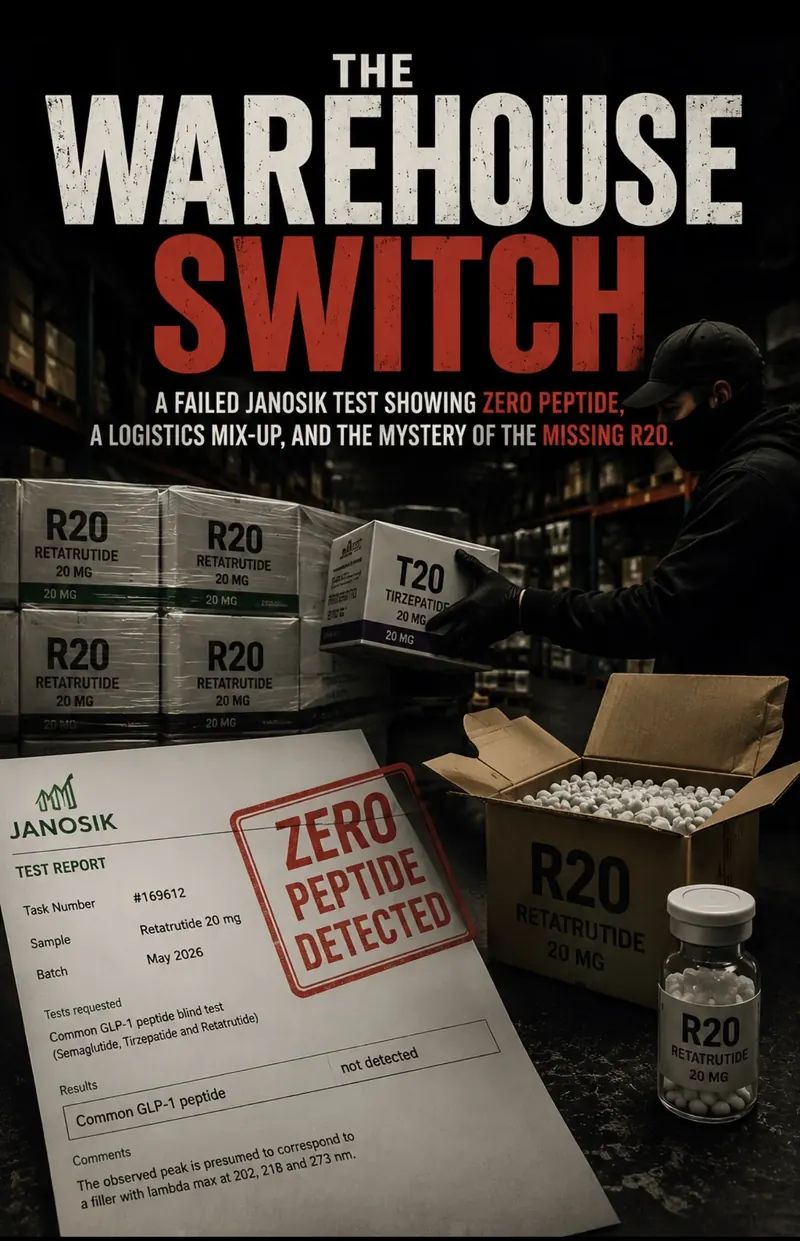
But on the bright side, at least nobody is blaming malicious sabotage, as XTP did, or claiming a freight forwarder secretly switched the products, like many others do. Small mercies. This explanation is far less imaginative: bad raw material went in, no one tested the raws, bunk products came out, no one tested the finished products, the replacements failed too, and customers paid to uncover the scale of it.
Refunds are a response to failed quality control. They’re not a substitute for it.

Comments