
A vendor can deliver successfully ten times and disappear with your money on the eleventh.
This is exactly why I’ve never believed in the concept of “trusted” peptide vendors. And Jingmei Biotech, better known as KimZe, is a perfect example.
From New Vendor to Established Reputation
KimZe joined K-Hole in July, and her interview was published on 27 July. She introduced herself as the General Manager of Jingmei Biotechnology Co., Ltd, a distributor she said was founded in 2023, working with seven factories and employing 20 people across sales, customer service and logistics. She described a business supplying lyophilised powders and related biological products, selling both wholesale and directly to consumers. Jingmei claimed to use Janoshik for testing, accepted results from other third-party laboratories and offered guarantees covering fill, purity and customs seizures.
Over the following months, customers reported successful deliveries, praised her communication and returned to place further orders. One customer reported losing $1,500, while others reported outstanding payments of $800 and $680.
KimZe had an active Telegram presence, a dedicated vendor discussion, an administrator helping promote her business and customers willing to recommend her. She wasn’t an unknown seller who appeared overnight, took a few payments and vanished.
She had built exactly the sort of trading history that many vendor-vetting accounts consider evidence of a trustworthy supplier.
By those standards, KimZe would likely have passed with flying colours.
Then the Complaints Started
By late September, customers were already reporting outstanding orders. During October, the situation deteriorated. Customers reported missing deliveries, incomplete orders, unanswered messages and money they were struggling to recover.
One customer reported losing $1,500. Another reported $680 outstanding. Two other customer payments of $800 and $680 were also identified in discussions with Jingmei’s former administrator, although those amounts haven’t all been independently reconciled against the outstanding orders.
A separate $1,815 order was marked as shipped, despite the available FedEx tracking apparently showing only that shipment information had been submitted on 17 September, with no carrier collection recorded by 14 October.
A tracking number isn’t proof that a parcel has been dispatched.
KimZe’s former administrator also came forward. He alleged that she had stopped communicating, deleted conversations, changed account usernames and failed to pay his commission. Five different customers have now come forward reporting problems with their orders, although the total amount of money outstanding has yet to be confirmed. One customer subsequently received most of an outstanding shipment but reported more than $150 in missing products.
There were also reports of freight-forwarder problems and possible warehouse disruption in China. One repeat customer said KimZe had advised him on 28 September to hold off placing another order because of problems with her freight forwarder. He reportedly completed an earlier shipment using his own freight forwarder. That suggests there may have been genuine logistics difficulties, but whatever caused the problems, customers were left chasing orders and answers.
The Final Promotions
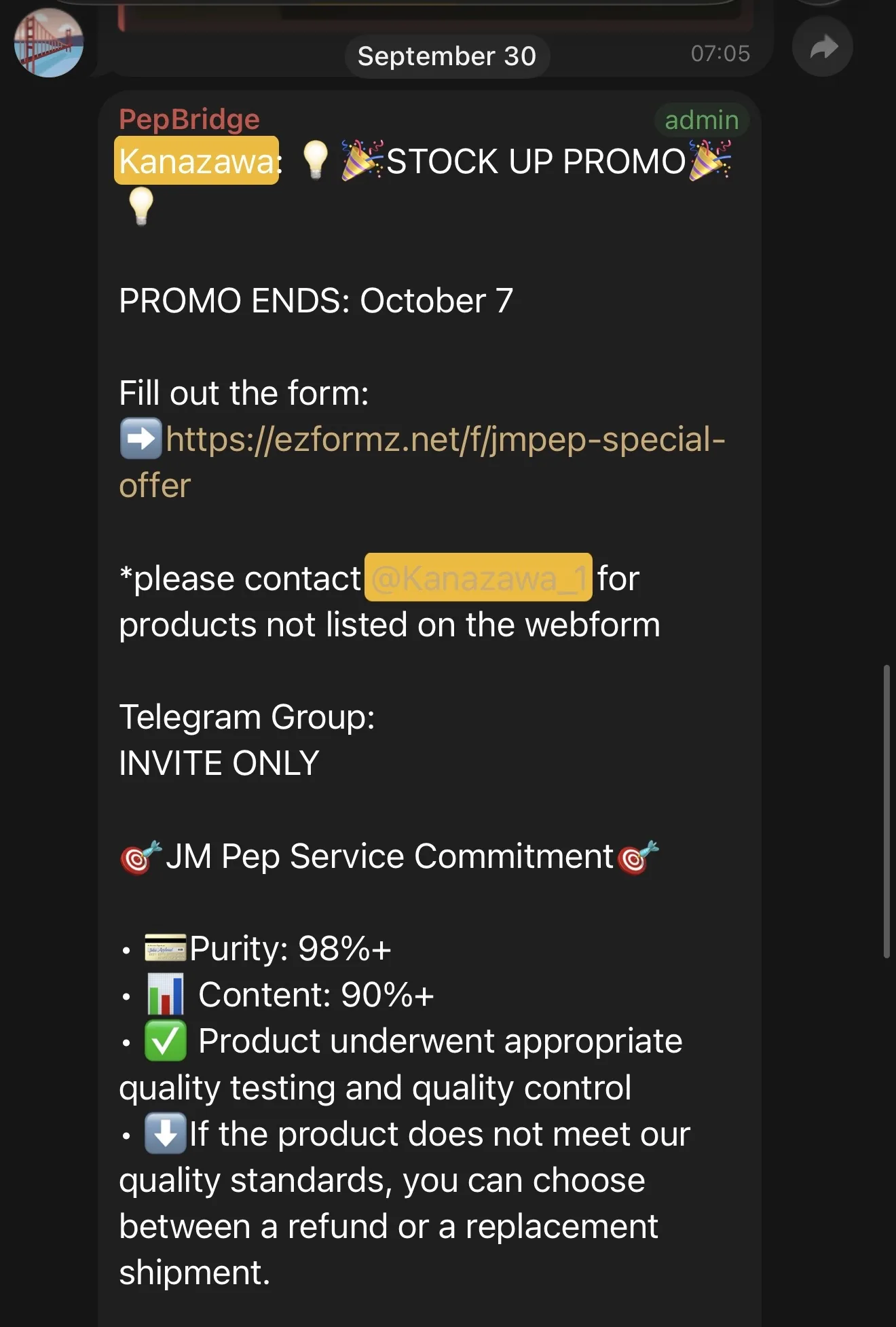
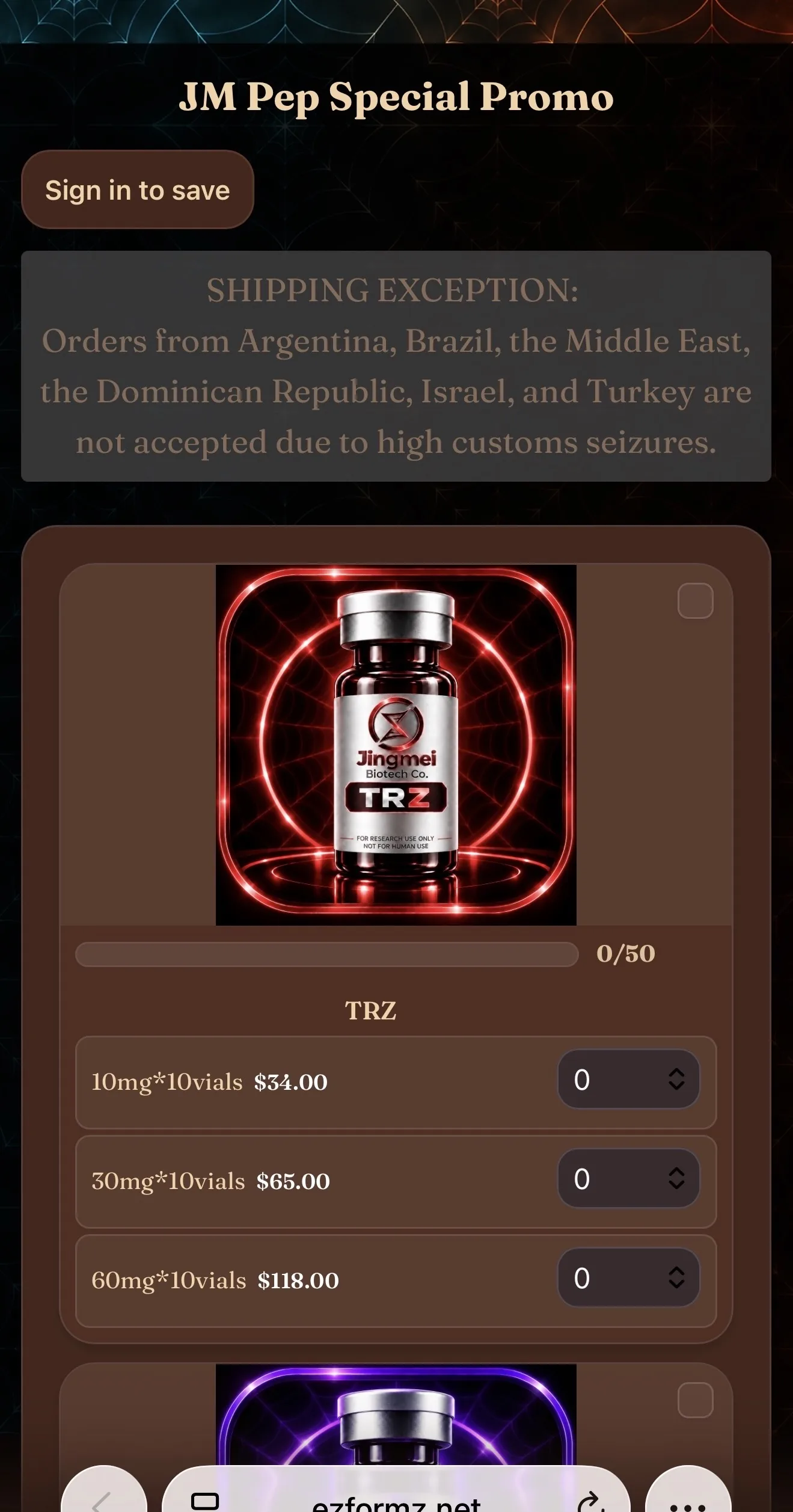
One particularly interesting detail is what Jingmei was advertising as the problems developed. On 30 September, Honesty, also known as Kanazawa, promoted a JM Pep Stock Up Promo on Pepchat, running until 7 October. Customers were directed to an online order form, offered free shipping on orders above $500 and told normal shipping would resume on 8 October.
The promotion promised purity of at least 98%, product content of at least 90% and refunds or replacements for products that failed quality testing. The promotion directed customers towards Jingmei’s vendor community, JMPeptide (KimZe).
All of this was being advertised after at least one customer had already reported an outstanding order.
Within days, more customers were reporting missing deliveries and unanswered messages. Jingmei had a functioning ordering system, detailed guarantees, an active community and a history of successful deliveries. But none of those things guaranteed the next order would arrive.
Jingmei, Lanxing and the Changing Vendor Identities
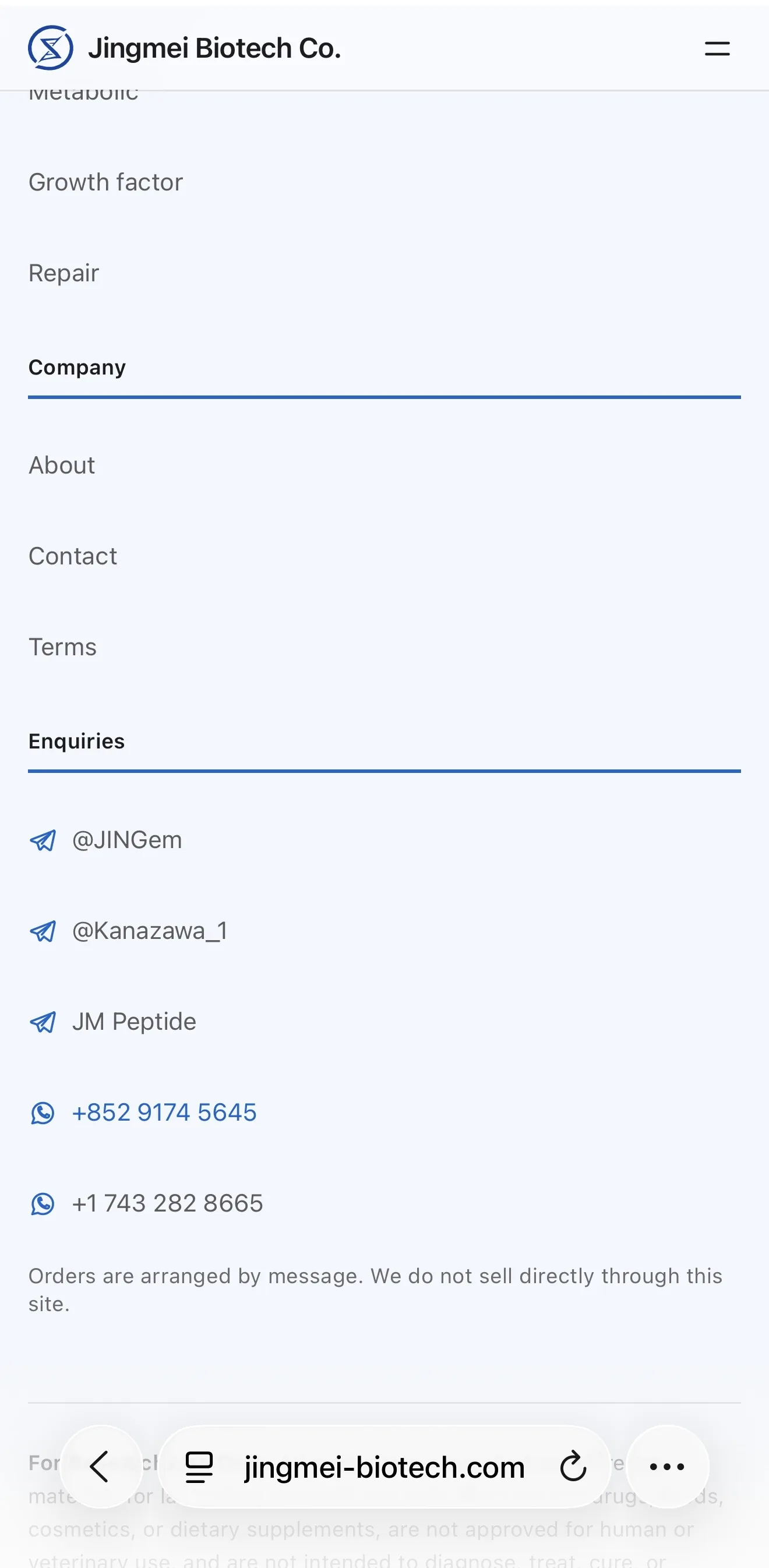
Customers looking into KimZe’s disappearance noticed that her WhatsApp contact, previously named Jingmei, was displaying ~LANXING. Lele, a representative from Lanxing Biotech was also using JM Biotech branding on her Telegram profile.

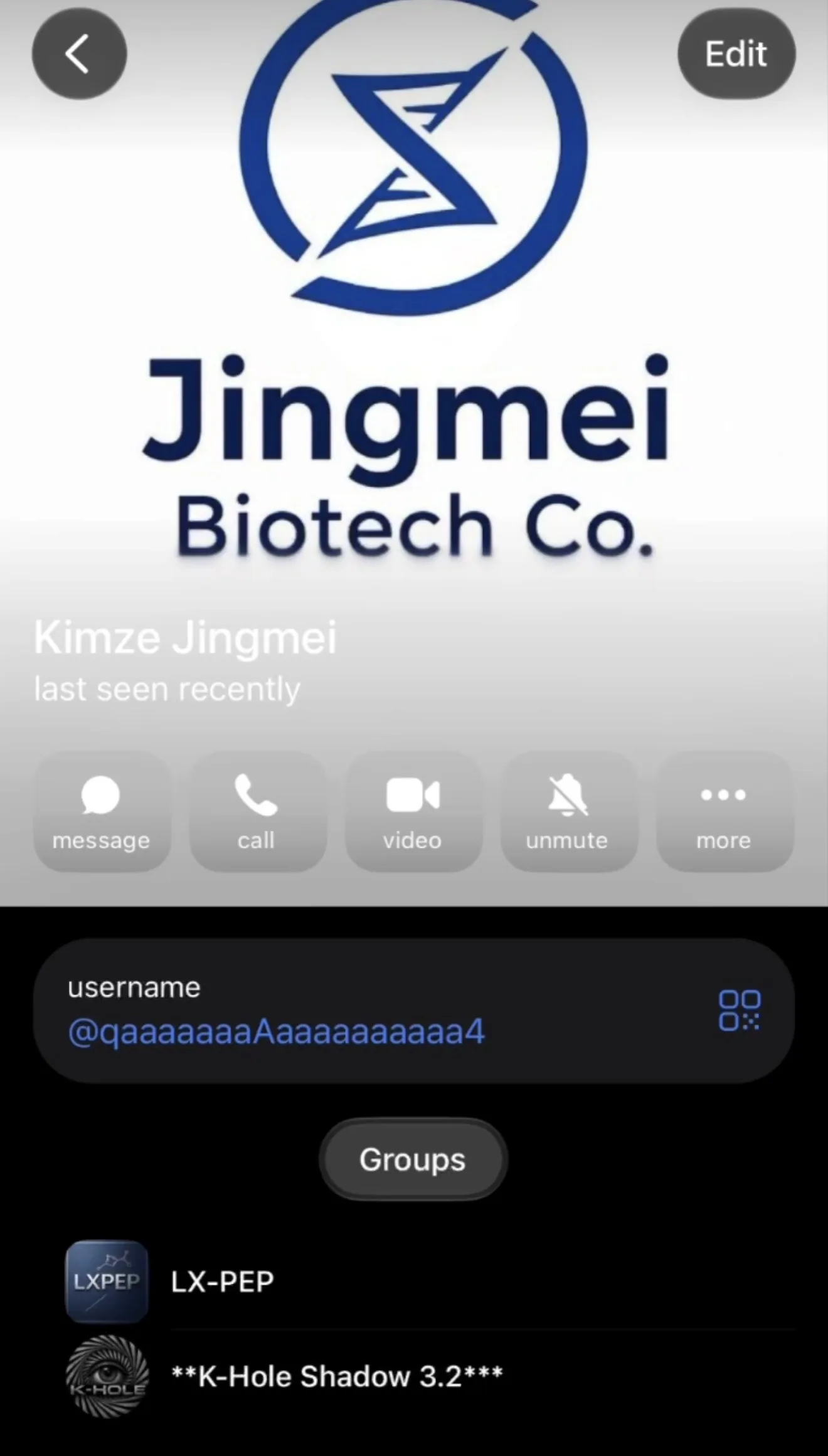
KimZe’s original Telegram account, previously, was renamed to a long, seemingly random username. A second Jingmei account, Honesty, previously, became. Honesty had been promoting Jingmei’s products and directing customers to its JMPeptide community.
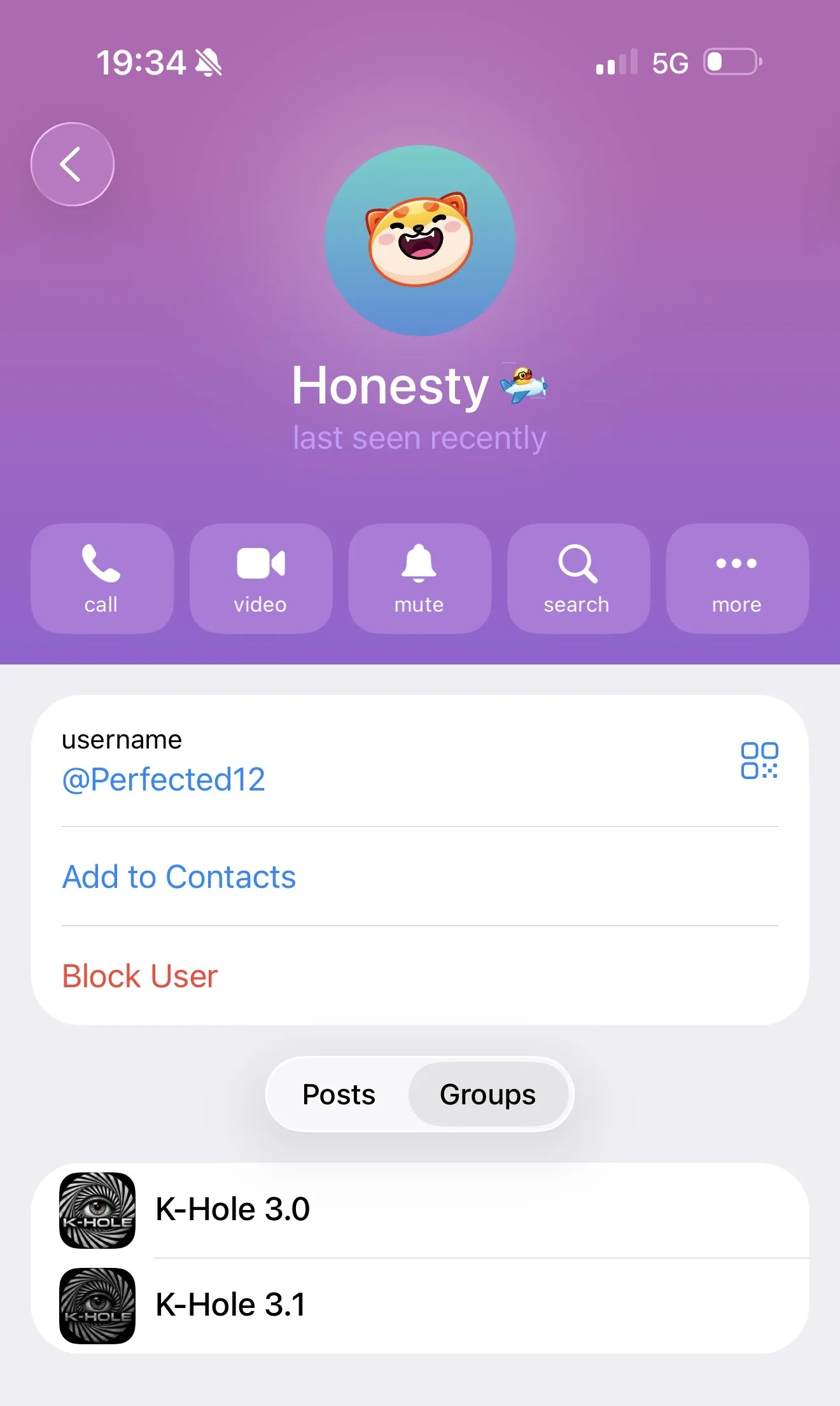
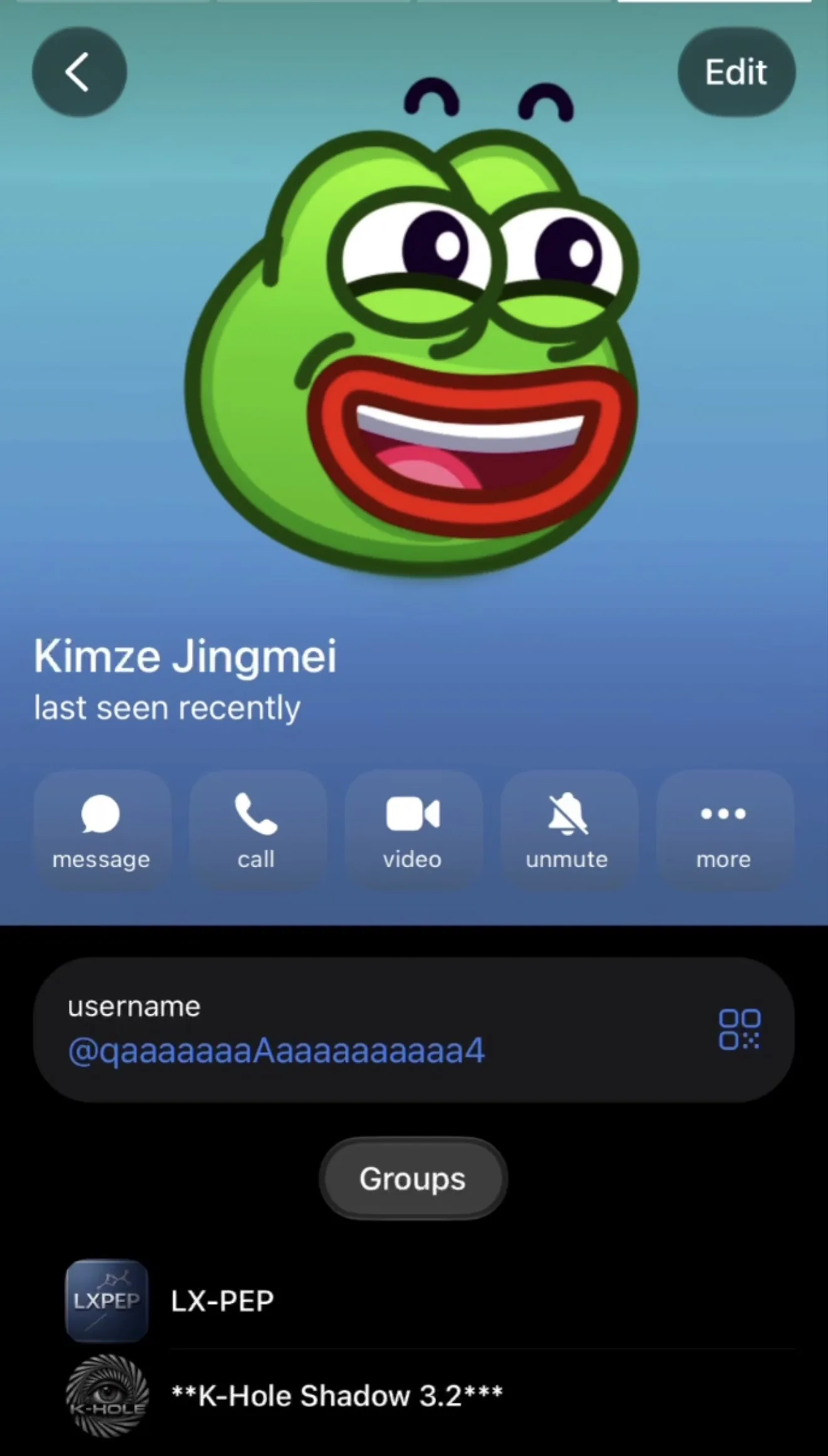

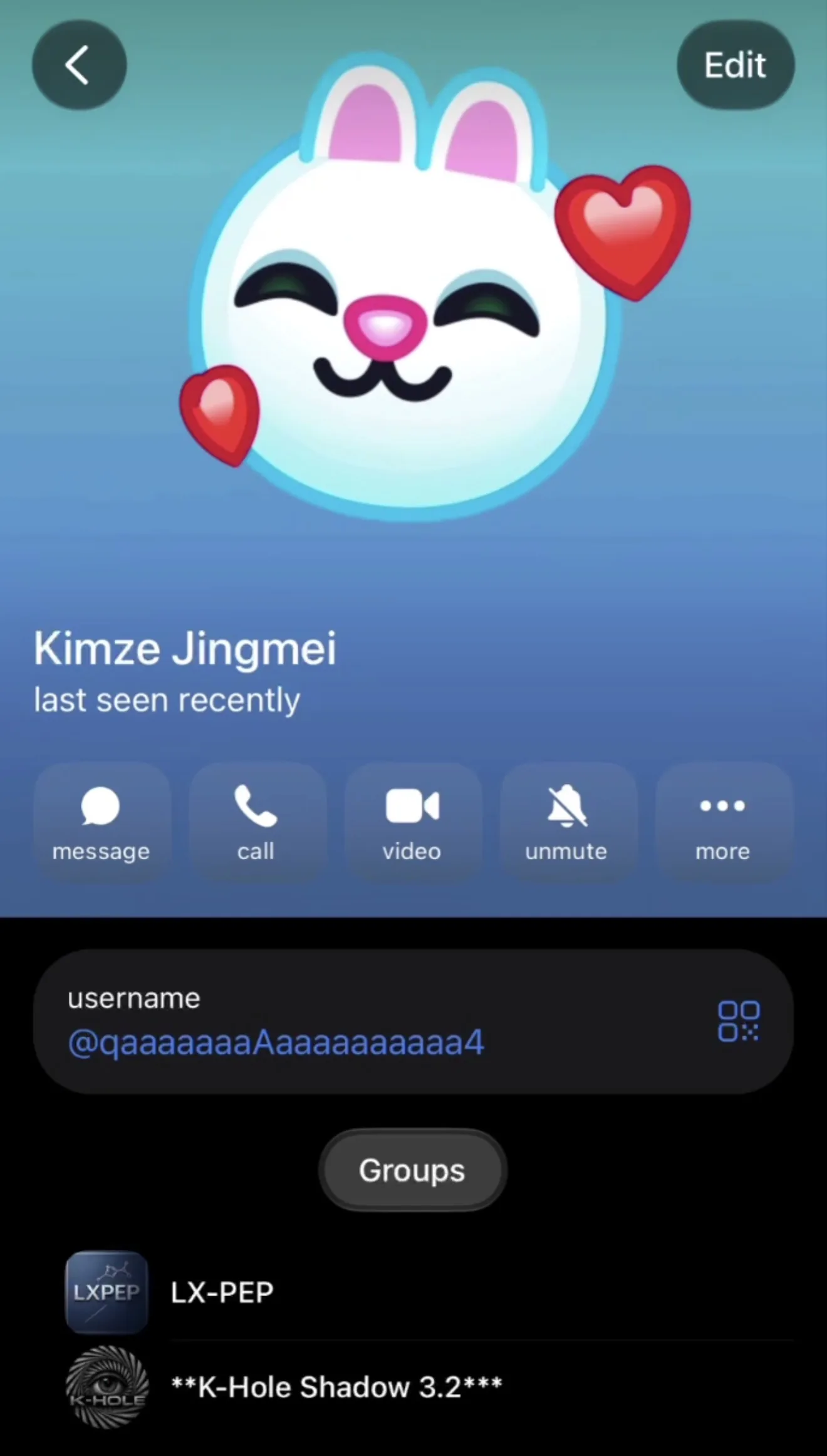
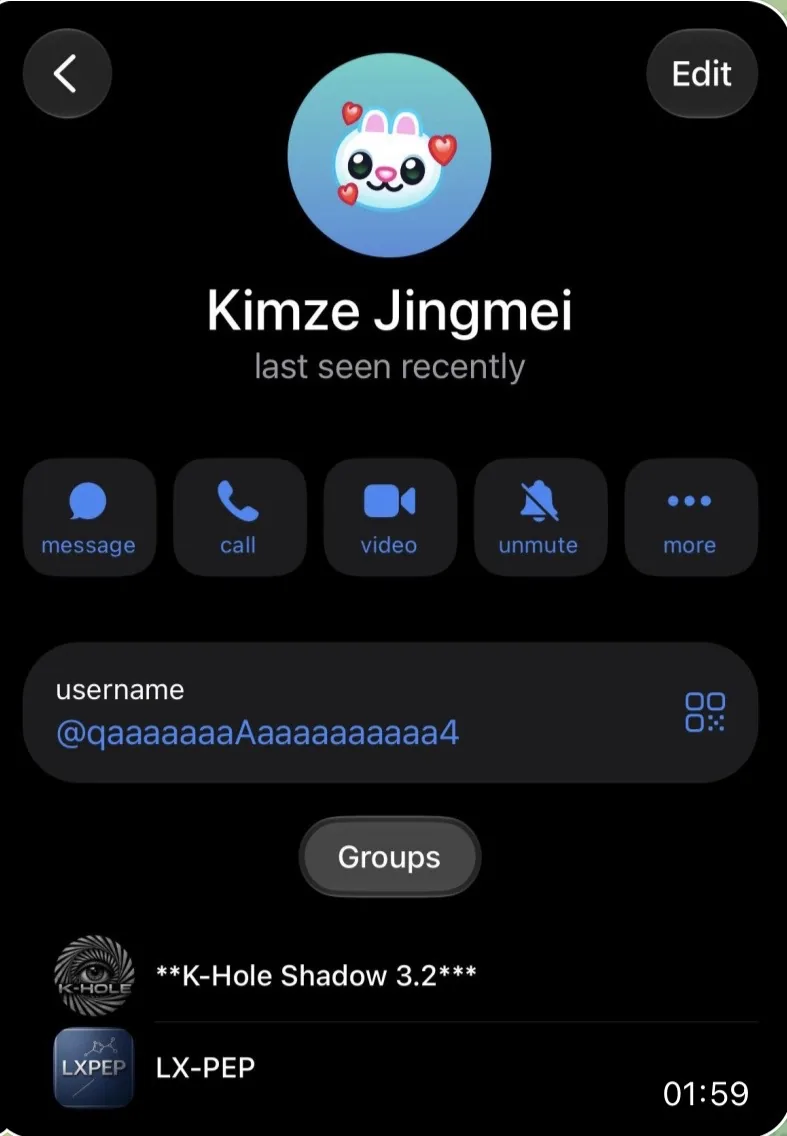
KimZe’s original account also changed profile pictures several times, appearing with the Jingmei Biotech logo, a woman’s photograph, a frog and a cartoon rabbit. The underlying account remained the same and was subsequently found in the LX-PEP group, associated with Lanxing, as well as K-Hole 3.2.
The account changes weren’t entirely new. Honesty had contacted me several times about problems with Jingmei’s Telegram accounts and transferring administrative access. On 5 September, she explained that one account had originally been set up as a backup and was in K-Hole, while the other wasn’t. At the time, Honesty’s profile was openly promoting Jingmei’s website and JM PEP V2 group.
So Jingmei had been operating with multiple Telegram accounts well before the complaints emerged. The earlier access problems don’t establish why the subsequent changes were made.
I interviewed KimZe on 27 July. On 28 September, I published an interview with Lele, who introduced herself as Lanxing’s founder and manager. Jingmei already had an outstanding-order complaint by then, and both businesses were advertising on 30 September. Lanxing was therefore operating publicly before the October allegations about KimZe’s disappearance. On 17 October, Lele was advertising another Lanxing promotion, offering immediate dispatch, free shipping above $500 and refunds or replacements for quality problems and customs seizures.
Another interesting detail is that KimZe’s original account joined K-Hole 3.2 just 12 minutes and 42 seconds after Lele’s account, while Jingmei customers were still reporting outstanding orders. By 18 October, customers and Jingmei’s former administrator, were confronting Lanxing about Jingmei’s unfulfilled orders. He directly addressed, alleging that the business had outstanding orders from Jingmei. Another customer asked for a previous order to be delivered and pointed out that KimZe’s account was present in the LX-PEP group.
The permanent Telegram IDs confirm that KimZe, Honesty and Lele are three separate accounts, although that doesn’t establish whether different people operate them.
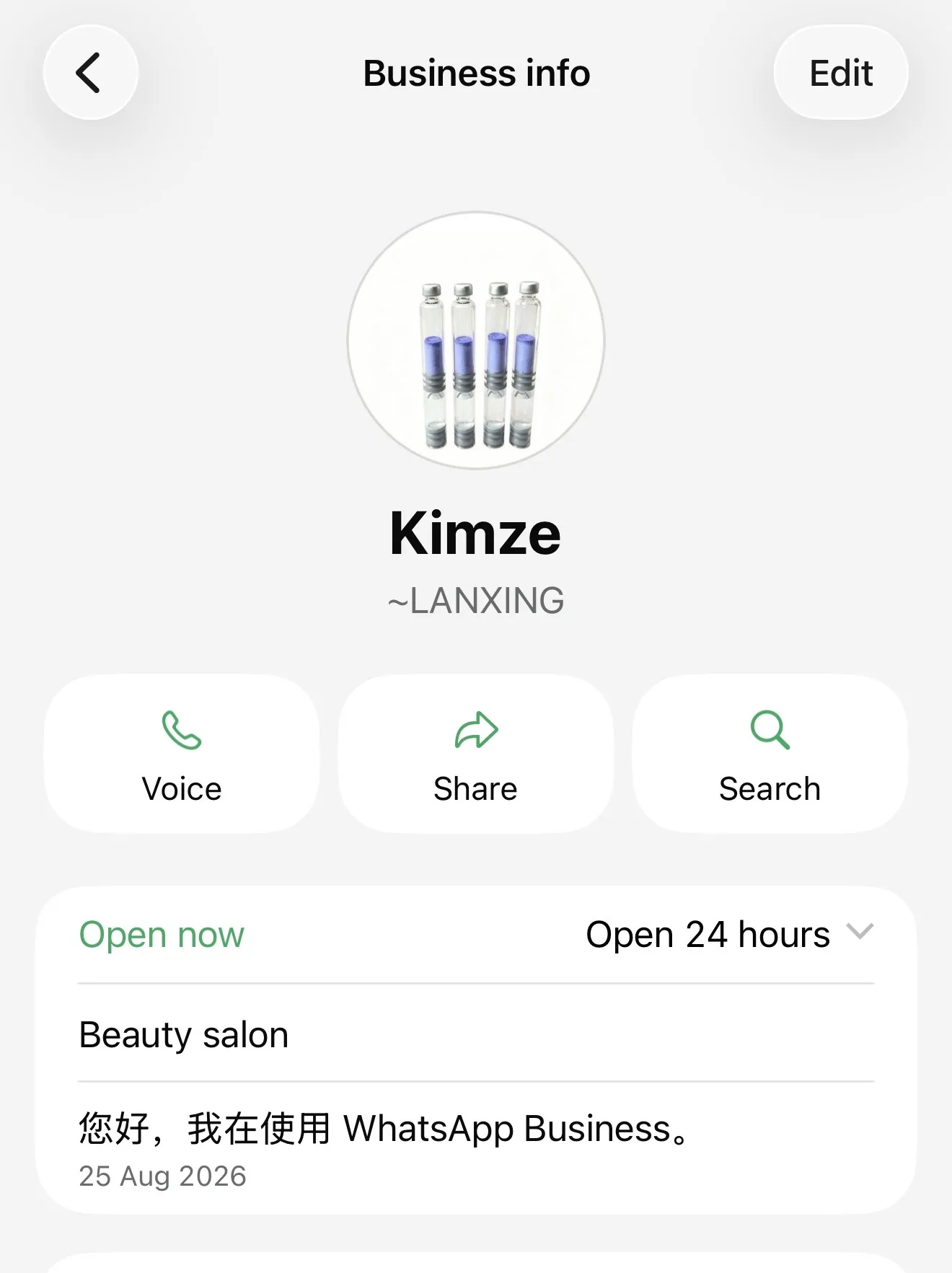
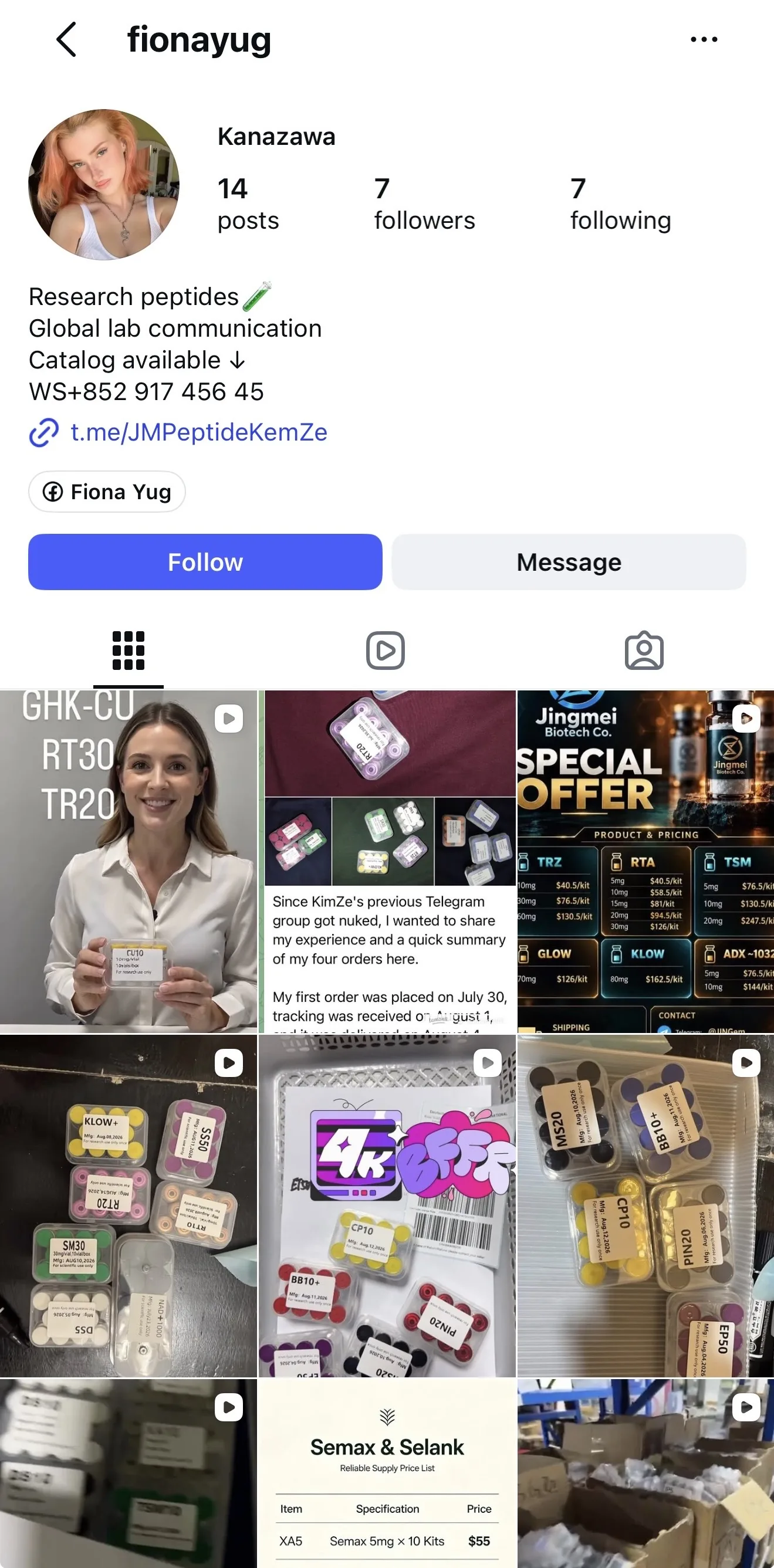
Jingmei’s original WhatsApp number, was advertised alongside its Telegram accounts. The WhatsApp Business profile now displays ~LANXING and links to an Instagram account operating as Kanazawa, which continues to carry Jingmei branding, product promotions and the original JMPeptide Telegram group link. Combined with KimZe’s presence in the LX-PEP group and Lele’s use of JM Biotech branding, there are now several connections between the two businesses.
For customers still waiting for their Jingmei orders, the question is whether Lanxing is connected to the people who took their payments, and who is going to take responsibility for the money owed.
Two Interviews, Some Familiar Answers
Having interviewed both representatives, I went back and compared their answers. Both described themselves as distributors rather than manufacturers, working with established Chinese factories and overseeing quality control, customer service and international shipping. Both sold similar products, including the RT and TR series, accepted cryptocurrency payments and emphasised their factory relationships, testing standards and competitive pricing.
Both claimed to use independent laboratories, accepted third-party test results and offered guarantees covering product quality, refunds and reshipments. Their answers about earning customers’ trust were also similar. Both emphasised reliable service, consistent product quality and looking after customers when something went wrong. KimZe described Jingmei as having:
“a flawless service system, premium product quality, and competitive pricing.”
Lele described Lanxing as a young company dependent on customer trust, promising independent testing, strong after-sales support and refunds or reshipments. She also said buyers should judge suppliers by their transparency and how they respond when something goes wrong. The similarities are worth noting given the other connections between Jingmei and Lanxing, although these are also common claims among Chinese peptide distributors.
Both interviews presented businesses built around quality, reliability and customer trust. The question now is whether those promises are being honoured.
What About All Those Positive Reviews?
Here’s another interesting detail. Jingmei’s website, jingmei-biotech.com, was registered on 4 September 2026, after KimZe had already been operating in K-Hole for several weeks. The website also carried Jingmei’s historical business contact information.
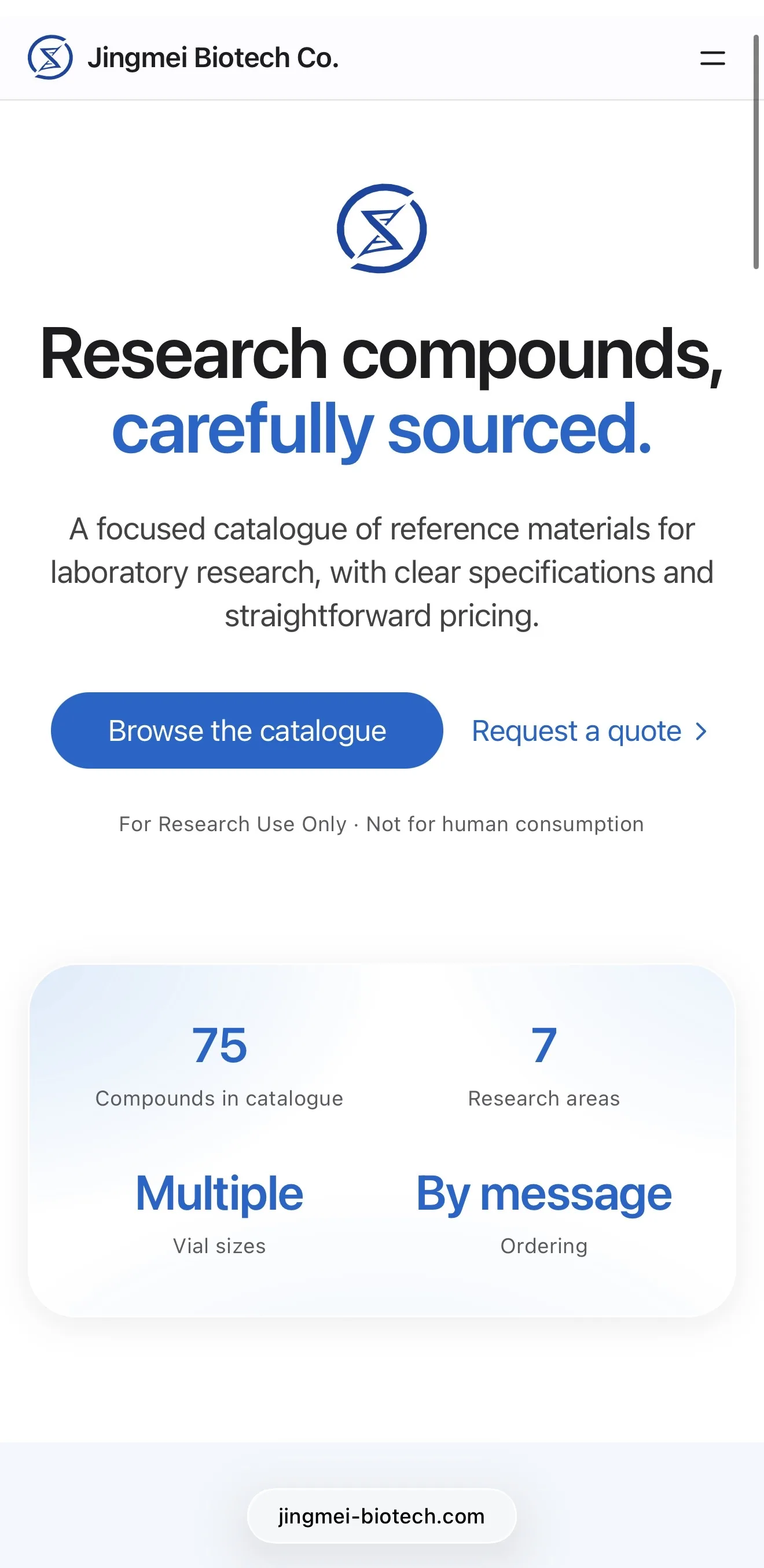
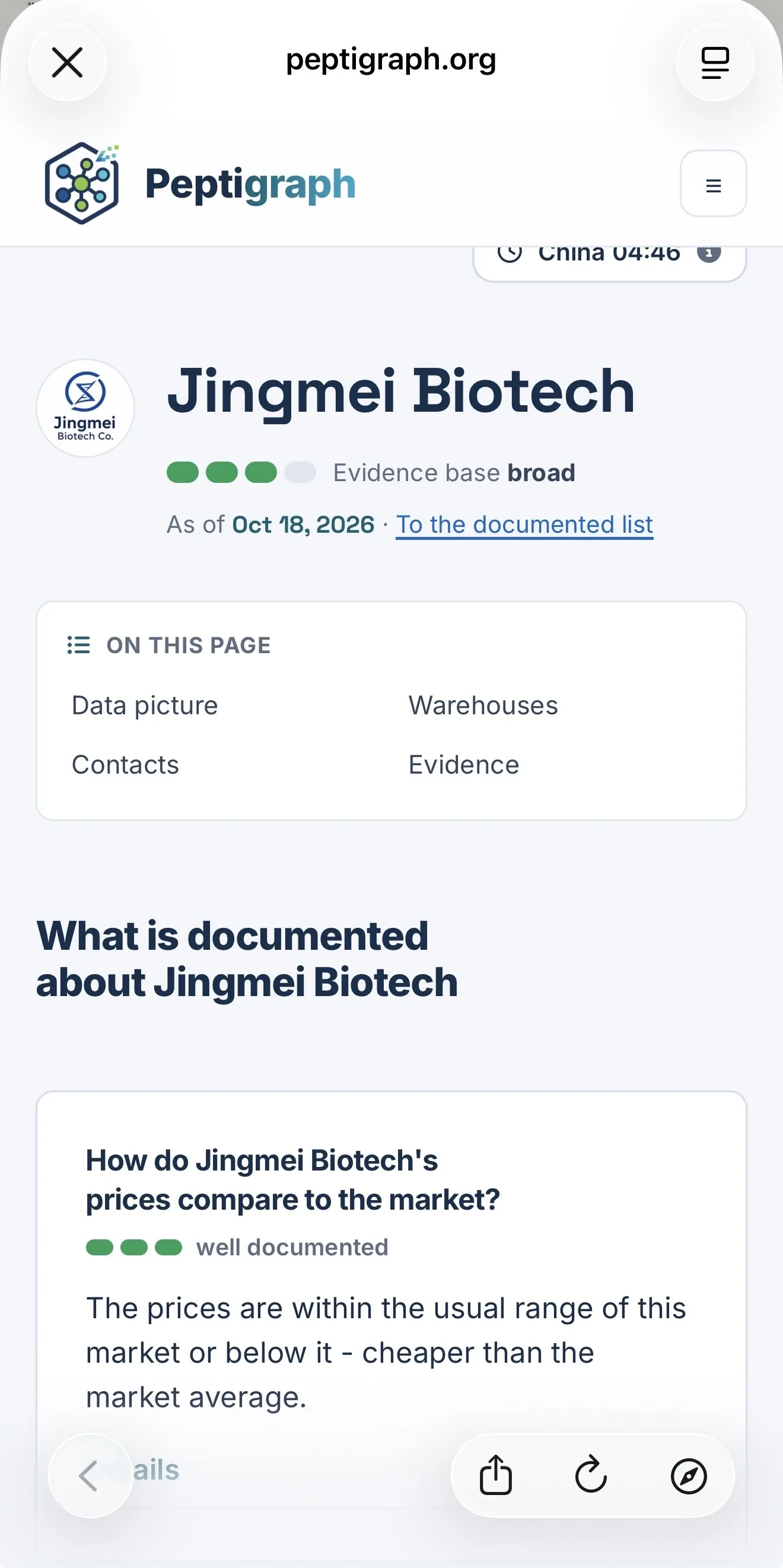
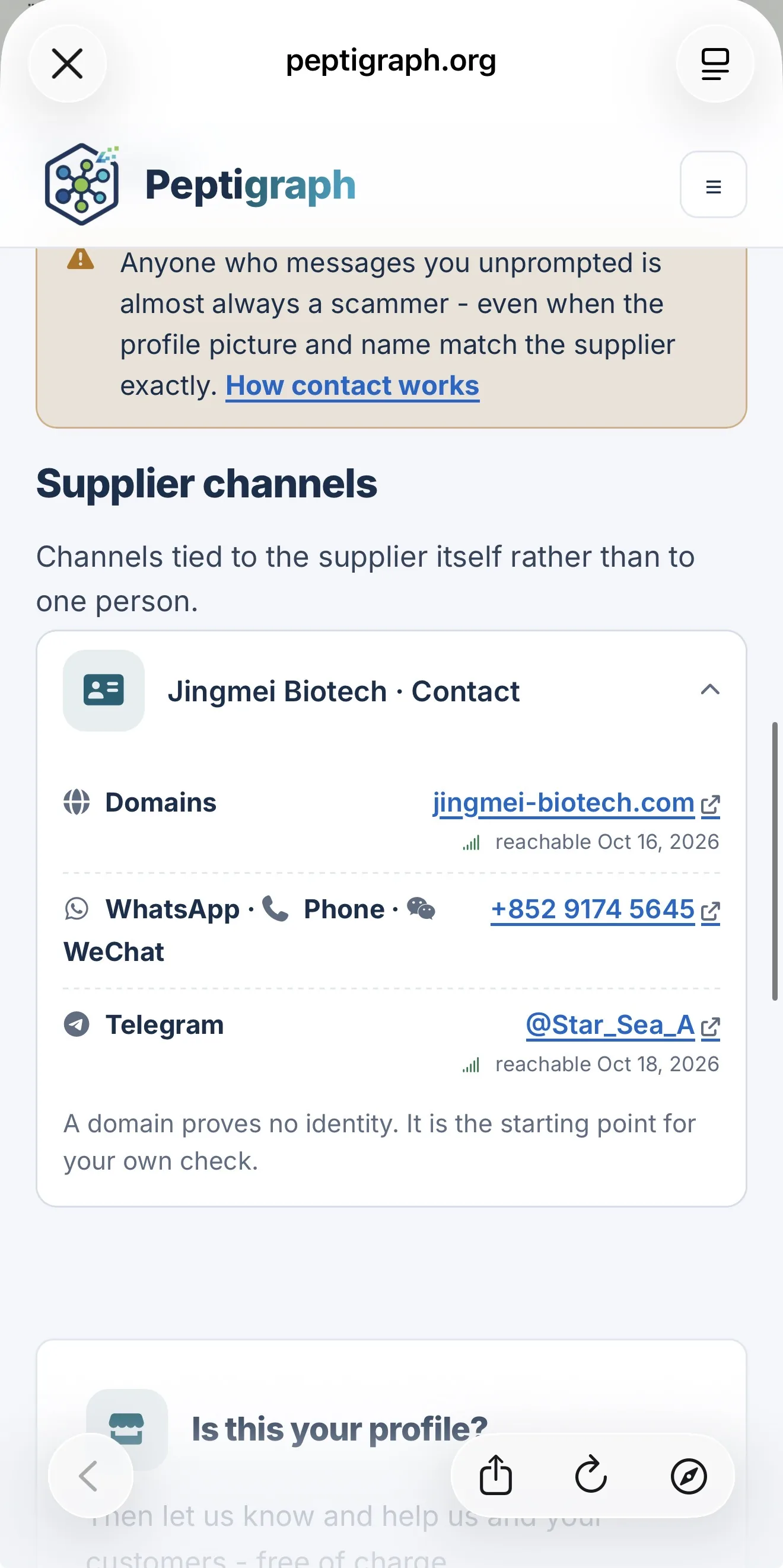
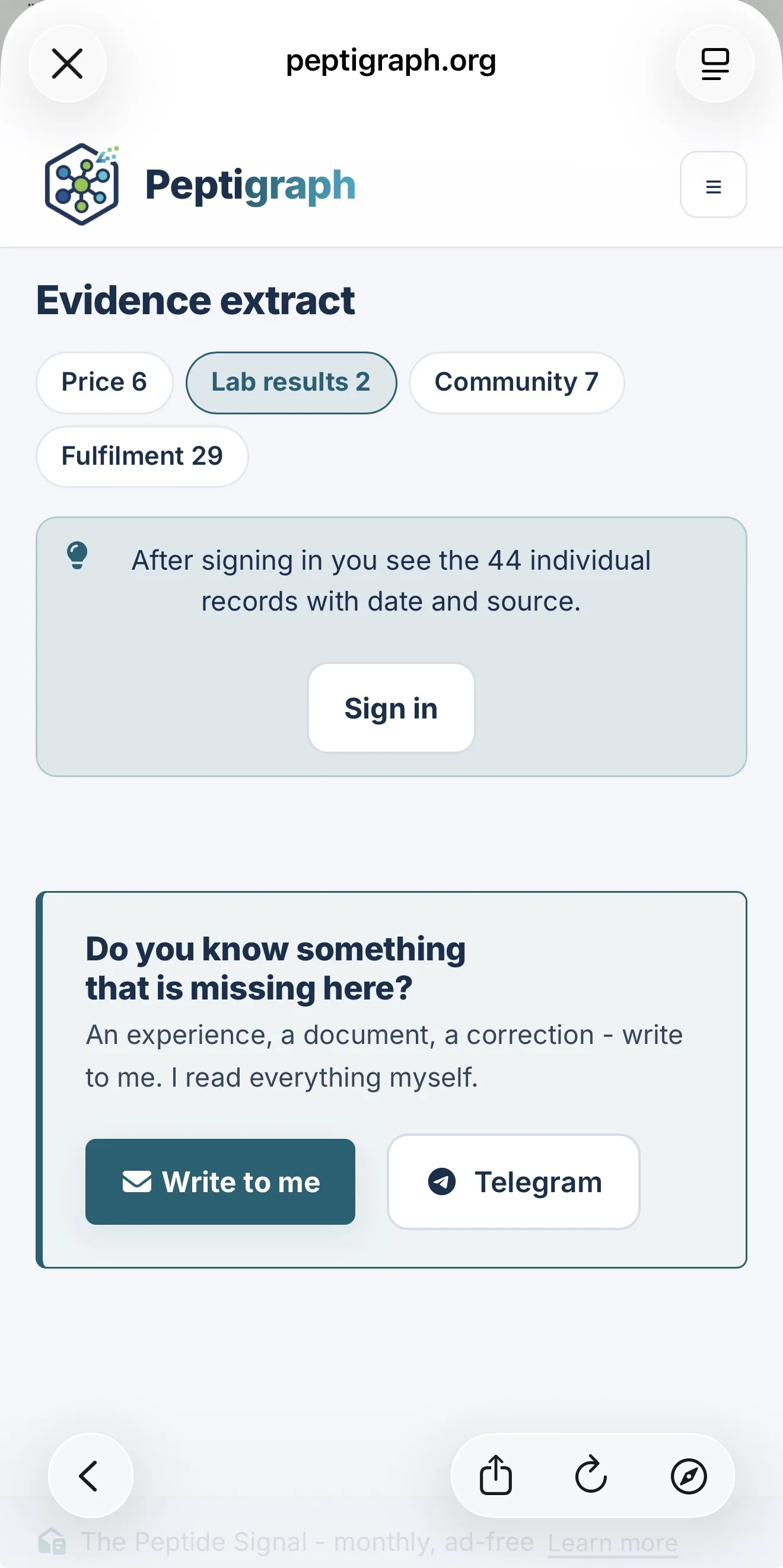
Peptigraph, a peptide vendor-review directory, currently lists 12 successful arrival reports out of 12 for Jingmei, despite customers elsewhere reporting outstanding orders and missing deliveries. A vendor can accumulate positive delivery statistics, repeat customers and favourable reviews, and still leave later customers with outstanding orders.
Those earlier deliveries may have been entirely genuine. We already have reports from customers who successfully received multiple orders. In fact, that’s precisely the point.
A successful delivery proves that a particular order arrived. It doesn’t prove the next one will.
And yet these are exactly the things people use to award vendors their trusted status.
There’s another consideration when looking at vendor recommendations. Jingmei’s former admin described a 5% commission arrangement, while the company also encouraged customers to post reviews through its “Touchdown & Review Promo”, offering $10 off their next order, plus additional bulk-pricing discounts, in exchange for a package photograph and a review in the group. The promotion didn’t require a positive review, but it did offer a financial incentive for posting one. That doesn’t mean the reviews were fabricated or that the deliveries weren’t genuine. It does mean there’s a difference between independent customer feedback, incentivised reviews and recommendations from people receiving commissions.
All three can contribute to a vendor’s reputation, but they shouldn’t carry the same weight when deciding whether a supplier can be trusted.
What Does Vendor Vetting Actually Prove?
What does a typical vendor-vetting process establish? That the vendor has been around for a while? That customers have received orders? That the vendor communicates well? That they have COAs, a website, a Telegram group and a refund policy? KimZe had much of that. And none of it prevented the subsequent complaints.
Even live factory or warehouse video calls have their limitations. They may show that someone has access to stock, machinery or a facility, but they don't establish ownership, product purity or whether future orders will be fulfilled. Prerecorded factory tours offer even less reassurance.
And even where a vendor genuinely has stock, that doesn’t establish whether every product meets its claimed specifications or whether future customers will receive their orders.
A video call proves what someone can show you today. A successful delivery proves what they fulfilled yesterday. Neither guarantees what they’ll do with your money tomorrow.
I’m not suggesting KimZe was planning an exit scam from the beginning. The evidence doesn’t establish that, and some successful deliveries continued remarkably late into her trading history. But that’s precisely why this case is so relevant.
A vendor can be completely legitimate today and become unreliable tomorrow.
A good reputation can be earned through genuine transactions. It can also outlast the behaviour that earned it. The problem begins when someone turns that historical record into a badge that implies future safety. People see “trusted vendor” and understandably assume that somebody has established the seller is safe to deal with. But nobody can guarantee what that vendor will do with the next payment.
Why I Don’t Believe in Trusted Vendors
A vendor’s reputation should be based on their actual performance, not a badge awarded by someone claiming to have vetted them. Interviews, independent testing, customer reviews and delivery reports all provide useful information. But none of them can guarantee how a vendor will behave in the future.
An interview isn’t an endorsement. A successful delivery isn’t a guarantee. A positive COA isn’t proof that a vendor will honour their next order.
If a vendor performs well, that should be recognised. If they fail testing, stop delivering, refuse refunds or disappear, that should be documented just as openly. KimZe had a history of successful deliveries, repeat customers and positive feedback. By the standards used by many vetting accounts, she could easily have been described as trusted. Now customers are reporting outstanding orders, disappearing accounts and possible connections to another vendor identity.
If that doesn’t demonstrate the limitations of vendor vetting, I’m not sure what does.
You can check a vendor’s history. You can examine their testing. You can read their reviews. What you cannot do is guarantee their next move.


Comments