

Eli Lilly’s retatrutide crackdown produced an awkward case of mistaken identity. Sued as the company behind Astra Peptides, Astra LLC told Lilly it was an unrelated transportation business with no connection to the website or the products involved. It subsequently supplied documentation supporting that explanation.
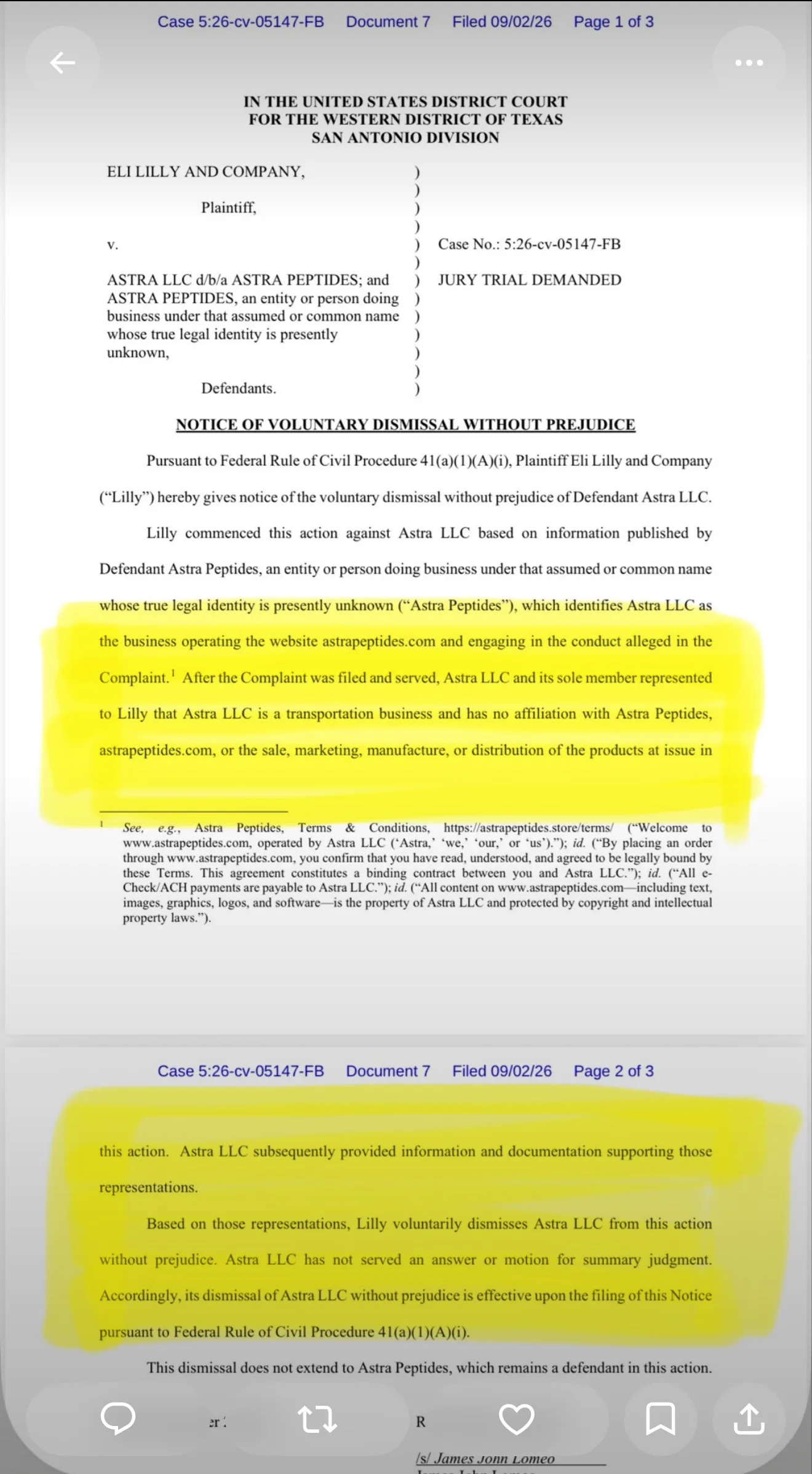
Lilly’s response is recorded in its 2 September 2026 notice of voluntary dismissal: it dropped Astra LLC without prejudice. The notice expressly states that the dismissal doesn’t extend to Astra Peptides, which remained a defendant under that notice. The pharmaceutical company had identified a registered business to sue. It was still trying to establish who actually operated the peptide storefront.
Six lawsuits and a public crackdown
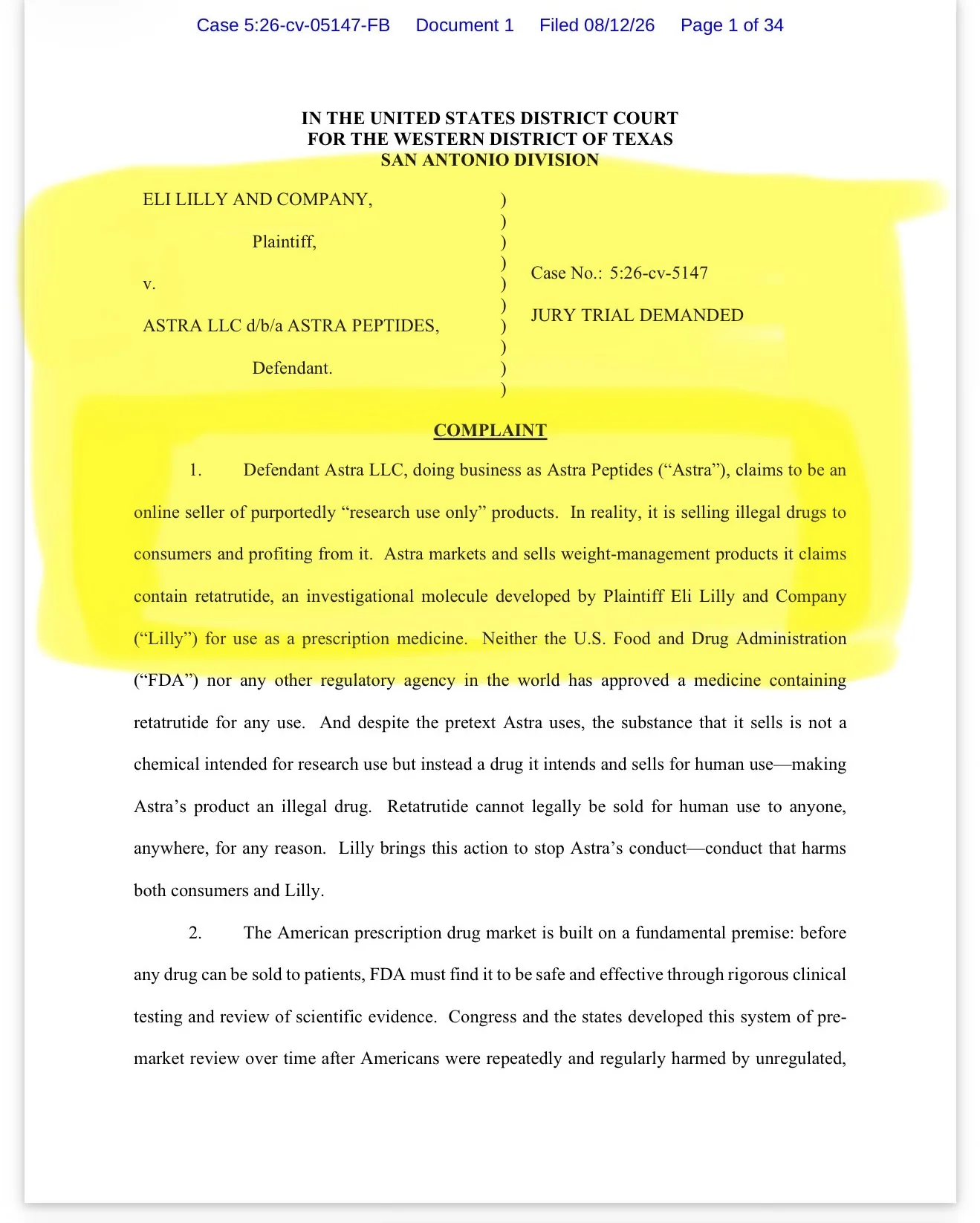
On 12 August, Lilly announced six lawsuits targeting businesses allegedly selling unauthorised retatrutide. The defendants included peptide vendors, a compounding pharmacy and a medical spa. Among those named was “Astra LLC, d/b/a Astra Peptides.”
The announcement accompanied a broader demand for action. Lilly called on social media platforms, payment processors, credit card companies and shipping providers to cut off the infrastructure supporting the trade. It said it had referred more than 200 individuals and entities to regulators and enforcement authorities, and reported more than 14,000 websites, advertisements, posts and product listings across over 100 countries. investor.lilly.com
The original Astra complaint made serious allegations. It identified a Texas limited liability company and its registered agent, attributed the operation of astrapeptides.com to that company, and accused it of selling products represented as retatrutide for human use. Lilly sought an injunction, damages, disgorgement of profits and legal costs. Those were Lilly’s allegations, rather than findings by the court. storage.courtlistener.com
What Lilly’s dismissal notice actually says
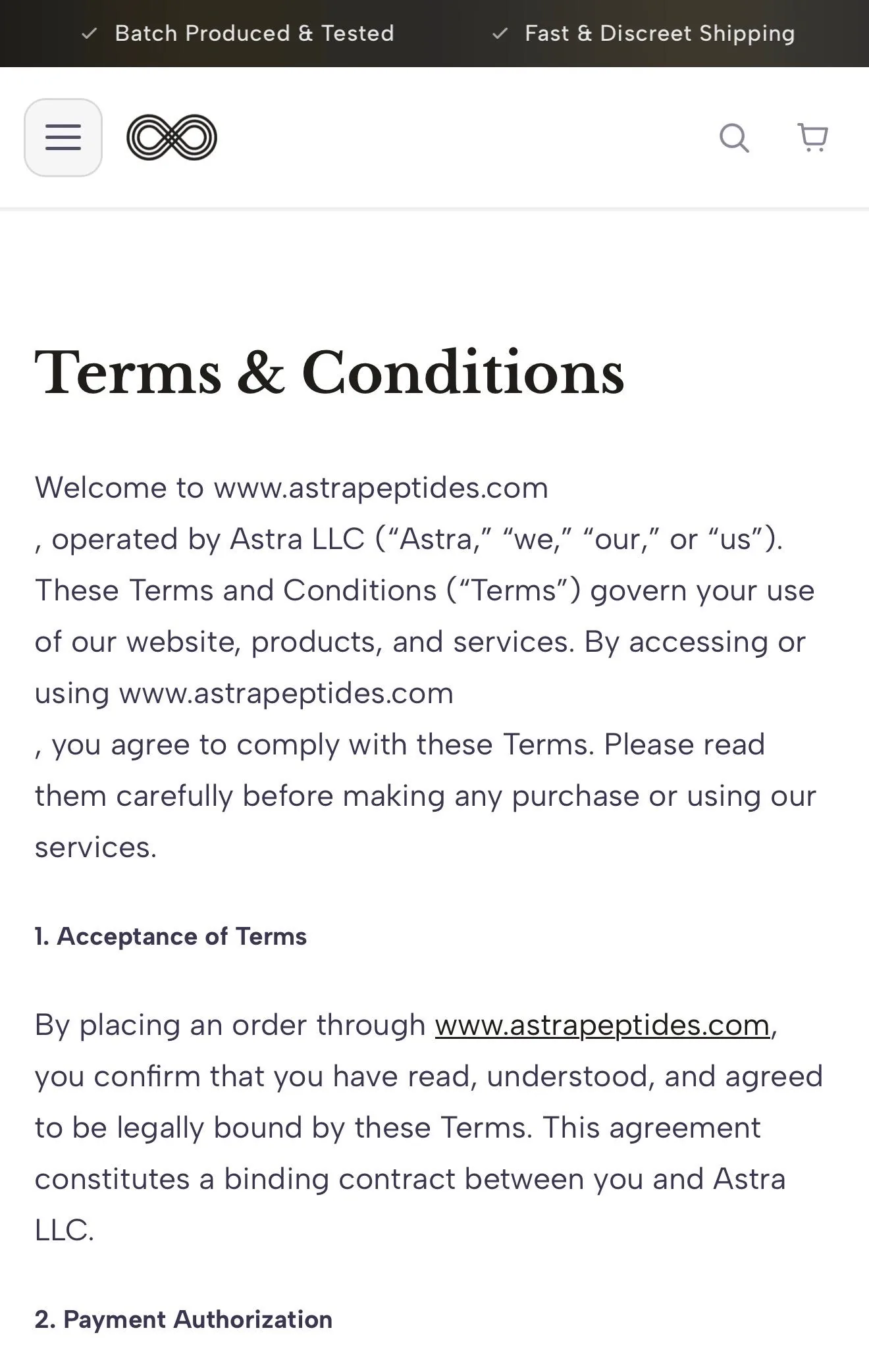
The withdrawal document explains how the company name entered the case. Lilly says it commenced proceedings against Astra LLC based on information published by Astra Peptides identifying Astra LLC as the business operating the website. The footnote cites the storefront’s terms and conditions. These described the website as operated by Astra LLC, stated that customers entered into a contract with Astra LLC, and said that electronic cheque and ACH payments were payable to that company.
After the complaint was filed and served, however, Astra LLC and its sole member told Lilly that the company was a transportation business with no affiliation with Astra Peptides, astrapeptides.com, or the sale, marketing, manufacture or distribution of the products at issue. The notice says Astra LLC subsequently supplied information and documentation supporting those statements.
Lilly explicitly links its dismissal to that explanation and supporting material. This is recorded in Lilly’s own filing, rather than inferred from the disappearance of a defendant’s name.
The seller’s identity was still unknown
Two days before the dismissal, Lilly filed an amended complaint adding Astra Peptides as a separate defendant. It described the business as an entity or person trading under that name whose true legal identity was unknown. Lilly said it had been unable to identify the operator despite reasonable efforts and would amend the complaint again once its identity became known.
Lilly had therefore named a specific Texas company while also acknowledging that it did not know who actually ran the peptide website.
Three addresses, one mistaken identity
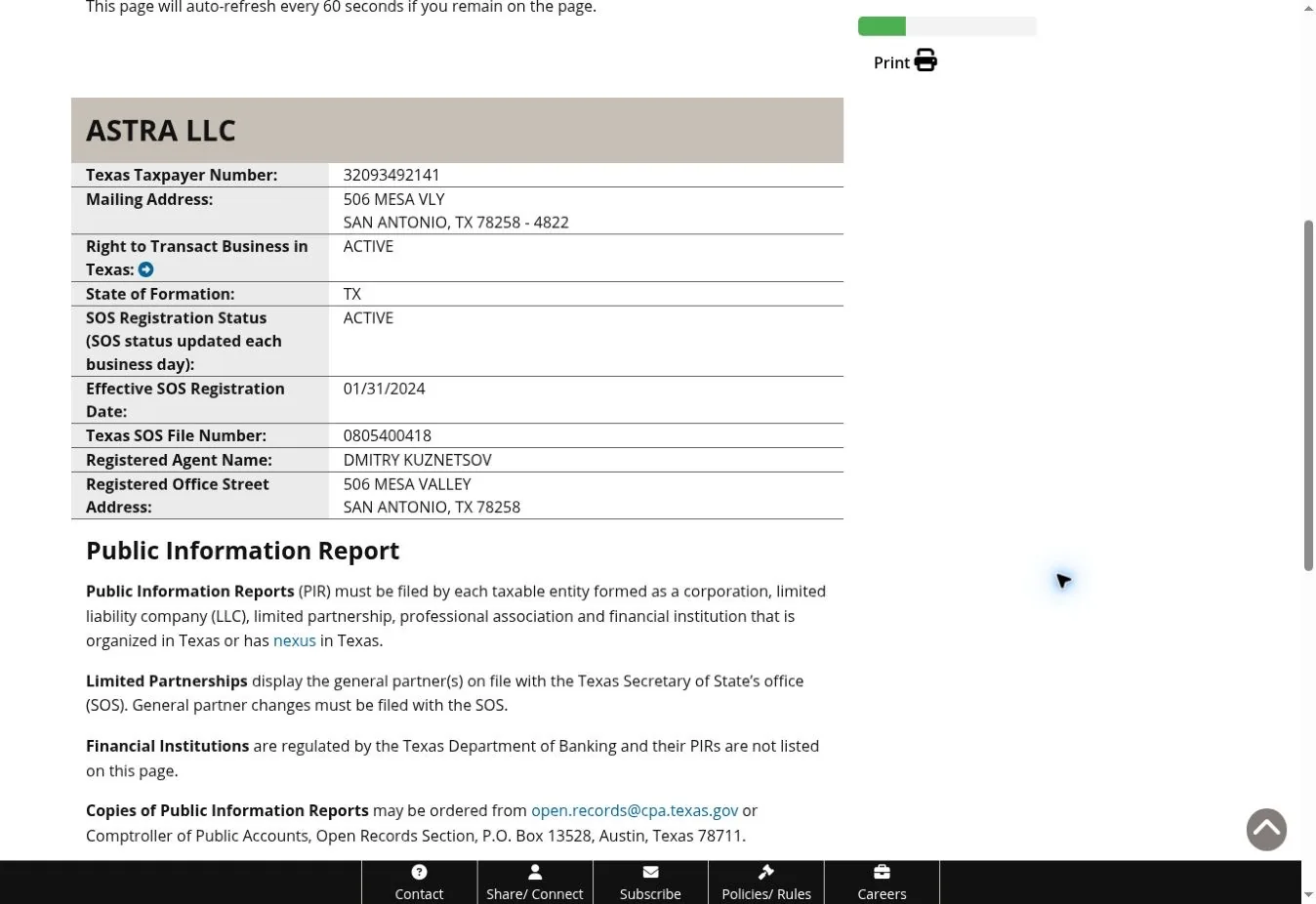
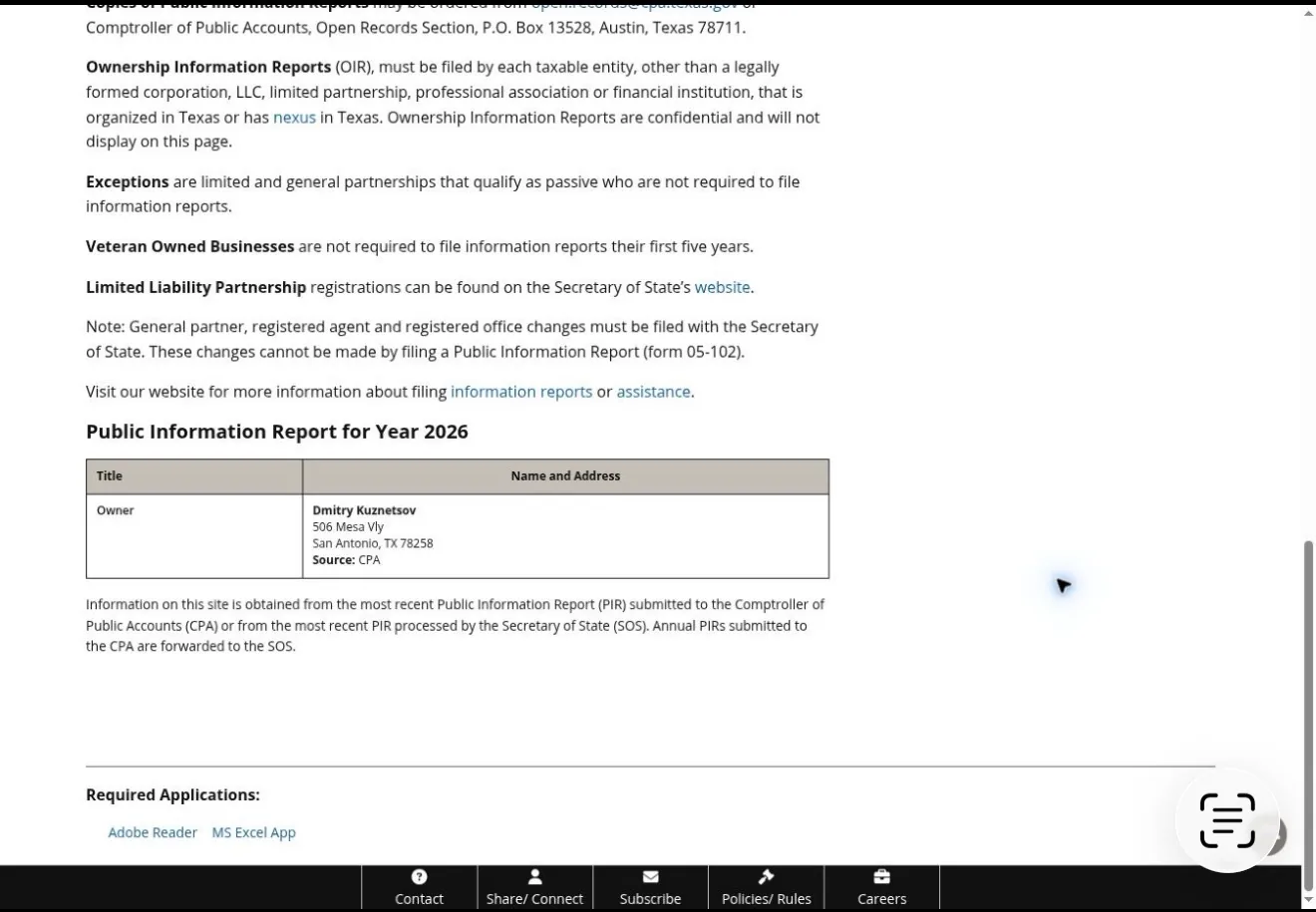
The addresses help explain the confusion. The Texas Astra LLC was registered at 506 Mesa Valley, San Antonio, under company number 0805400418, with Dmitry Kuznetsov as its registered agent. Those details match the company named in paragraph 12 of Lilly’s amended complaint.
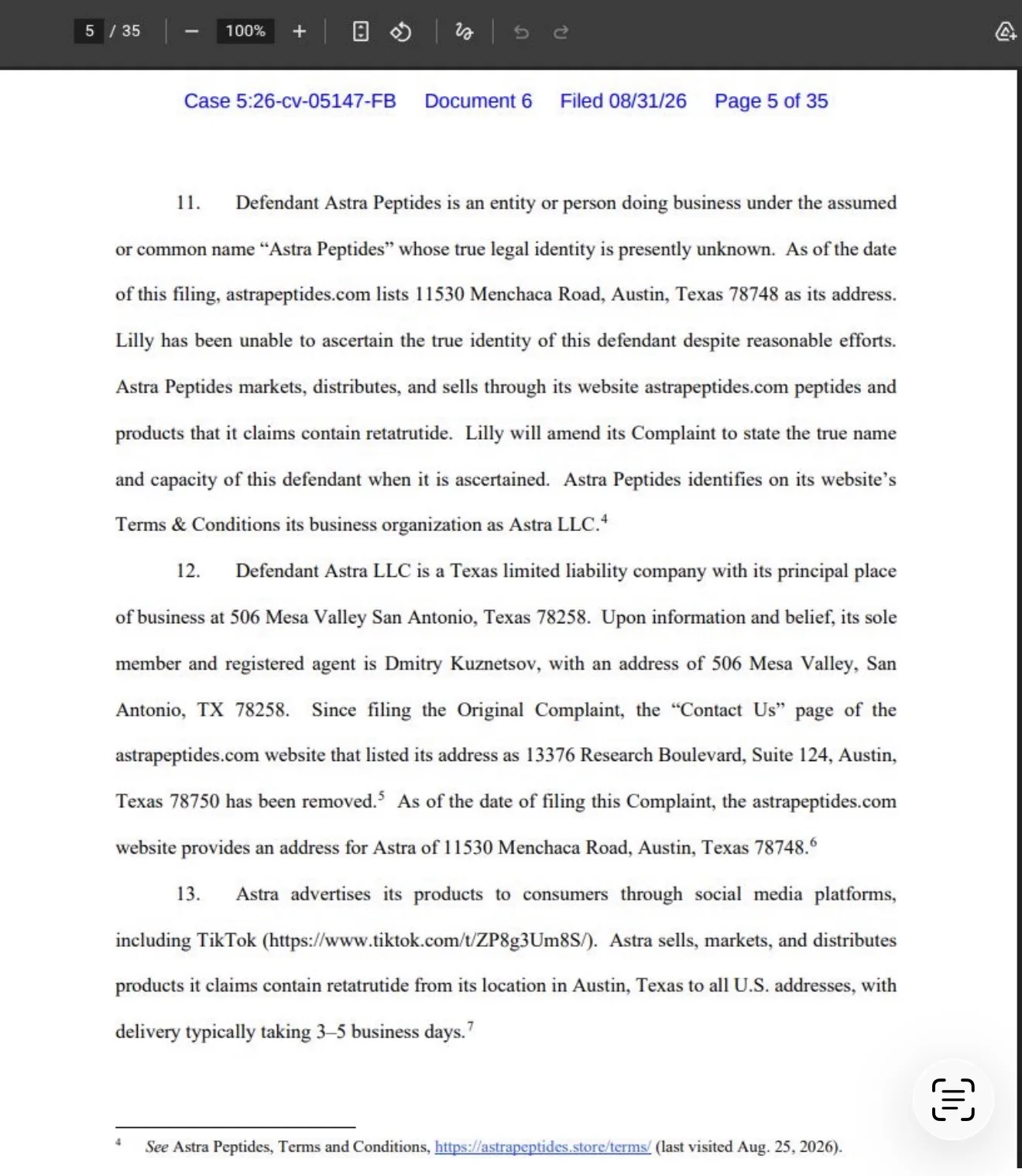
The peptide website listed different addresses, both in Austin. According to the amended complaint, its earlier contact page giving 13376 Research Boulevard, Suite 124 had been removed after the original complaint was filed. By 31 August, the website listed 11530 Menchaca Road. Neither address matched the San Antonio company’s registered office.
The website’s terms named its operator as “Astra LLC”, but supplied no registration number or country of incorporation identifying which company it meant. Archived terms show that the name, and instructions to make ACH payments to Astra LLC, appeared before the lawsuit. The terms also selected Nevis law, which doesn’t establish that the operator was incorporated there.
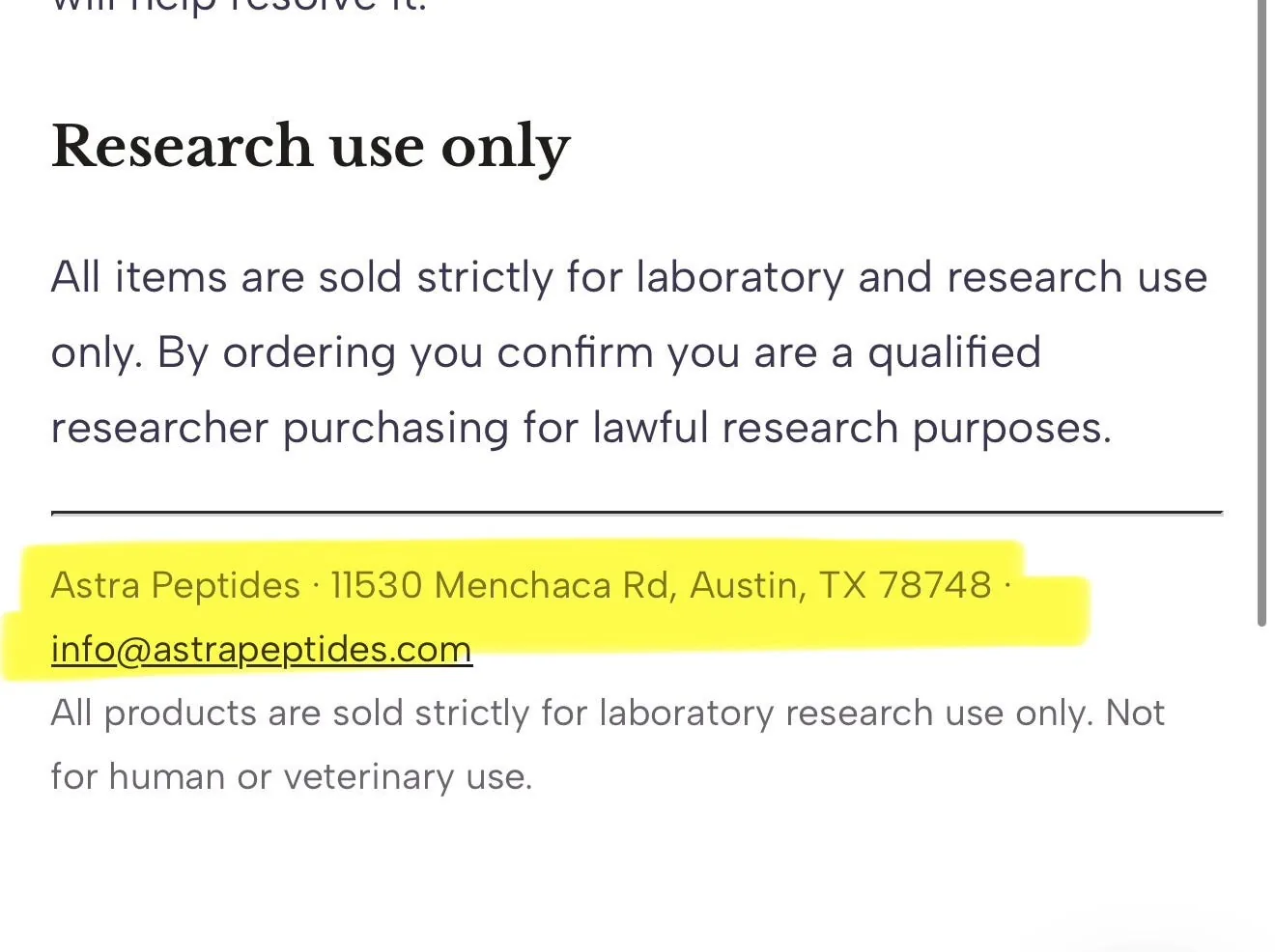
The shared name didn’t establish a connection to Kuznetsov’s company. The Texas Astra LLC can be identified from its registration and Lilly’s complaint; the website’s terms and Austin addresses haven’t established the registered identity of its operator.
What was withdrawn, and what remains
The notice is headed “Notice of Voluntary Dismissal Without Prejudice.” It dismisses Astra LLC and explicitly preserves the action against Astra Peptides. That distinction prevents the episode from being presented as a victory for the peptide seller. The filing contains no ruling that Astra Peptides’ sales were lawful, that its products were safe, or that Lilly’s allegations against the operator lacked merit. It records Lilly’s decision to remove the transportation company from the proceedings.
It also leaves a legitimate question about the investigation preceding the original lawsuit. The notice doesn’t disclose every check Lilly’s lawyers performed, so it would be speculative to describe precisely how they selected this Astra LLC. What it establishes is that the company challenged the connection, supplied supporting documentation, and was subsequently dismissed.
A basic problem behind the enforcement campaign
Lilly publicly named Astra LLC in its enforcement campaign, then dropped the company after it supplied documentation supporting its explanation that it was an unrelated transportation business. Meanwhile, the amended complaint acknowledged that the peptide operator’s true identity was unknown.
The episode illustrates a basic problem in pursuing grey-market sellers: a website’s business name is only a starting point for identifying its operator. Here, an unrelated company ended up defending itself in a federal lawsuit. It was in transportation; getting out of this case required paperwork.
With thanks to Phil Finish (@lifeoflyo) for bringing this development to my attention, and Gunnar at Dad Strength Daily for his reporting on the Astra dismissal.


Comments