
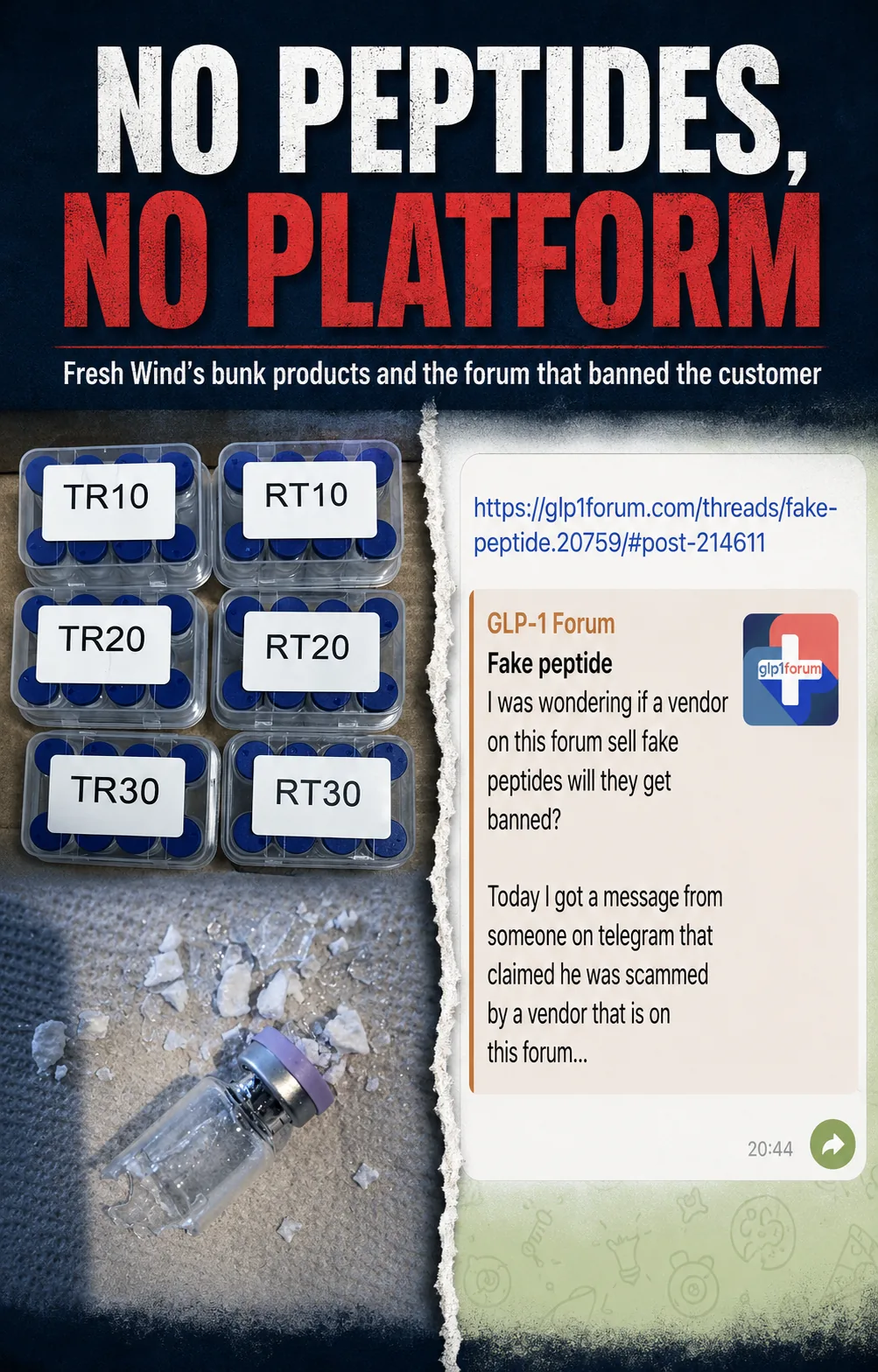
A customer who purchased several products from Fresh Wind says laboratory testing found that the vials did not contain the peptides he’d been sold.
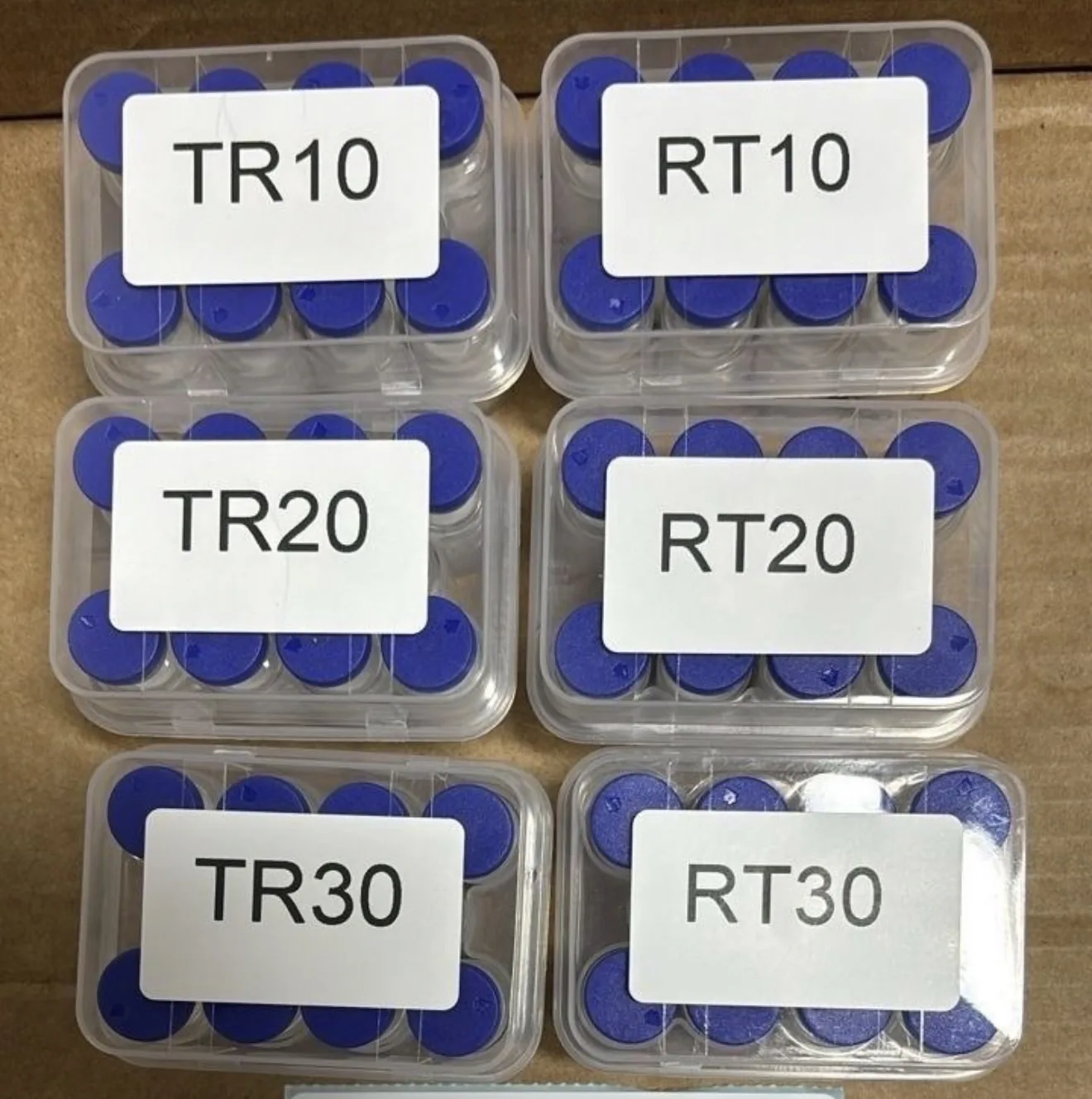
The products were tested by Canadian laboratory Testides. These were not minor purity or underfilling problems. Across several vials, the expected peptides were absent.
A tirzepatide 10 mg vial contained no detectable tirzepatide. The laboratory also found no tirzepatide in a 20 mg vial, reporting that its detectable composition was consistent with mannitol, a common bulking agent.
A retatrutide 20 mg vial produced a similar result. No retatrutide was detected, while the mass spectrum was dominated by mannitol-related ions.


Another vial labelled retatrutide appears to have contained approximately 10.75 mg of BPC-157 instead.
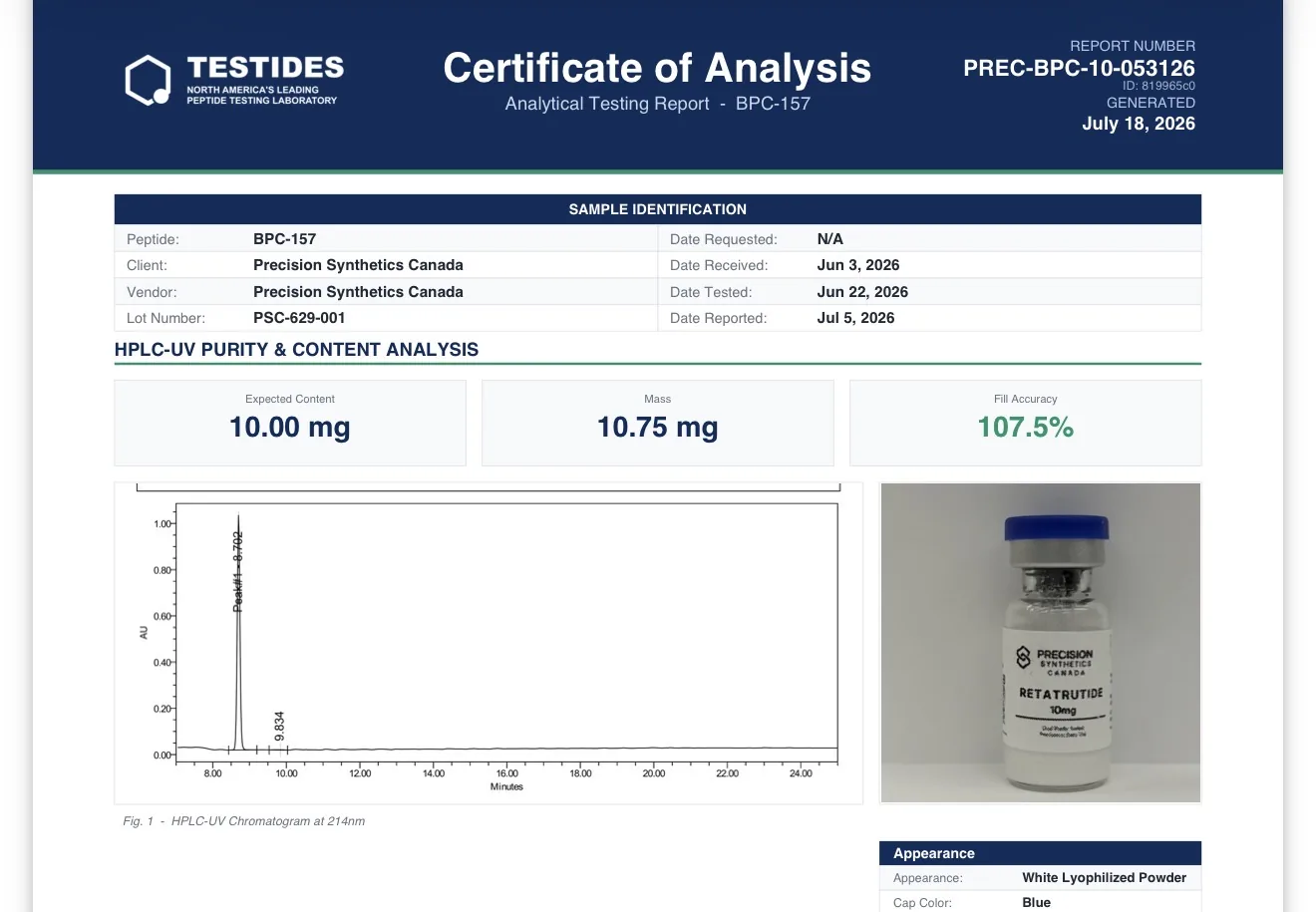
The customer had never ordered BPC-157.
The Customs Inspection Excuse
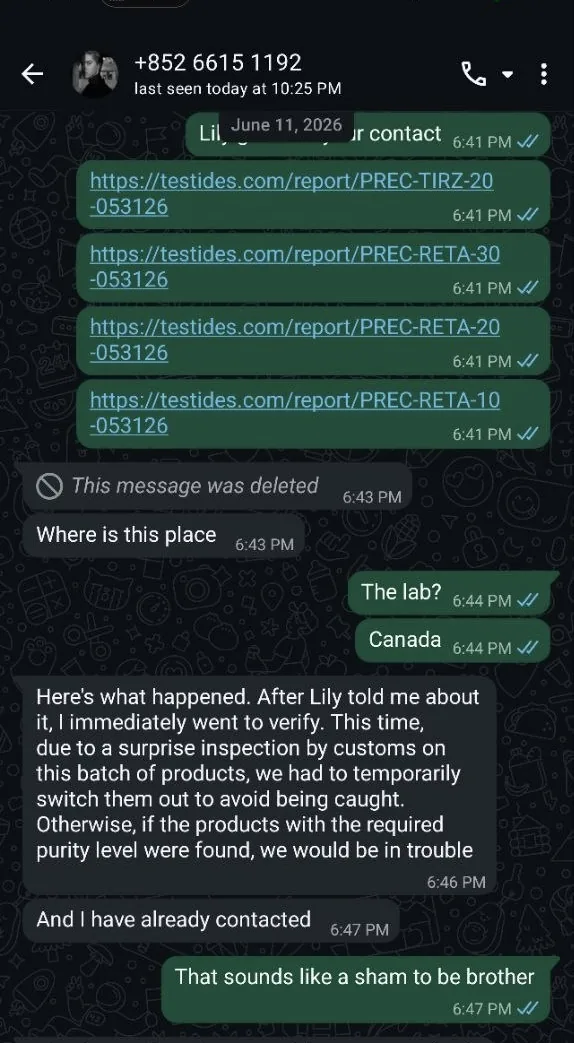
When the customer confronted Fresh Wind with the results, the contact offered an extraordinary explanation.
He claimed there’d been a surprise customs inspection involving the batch and that the products had been “temporarily switched” to avoid being caught with peptides at the required purity. He then said the factory had confirmed it was an accident. Deliberately replacing peptides to avoid a customs inspection isn’t an accidental production error. It would mean products carrying peptide labels were knowingly filled with something else and still allowed to reach a customer.
Several days later, the story became even stranger.
When the customer asked for an update, someone using the same WhatsApp number claimed to be Chinese customs. The person said the original contact was involved in illegal activity and was being investigated.
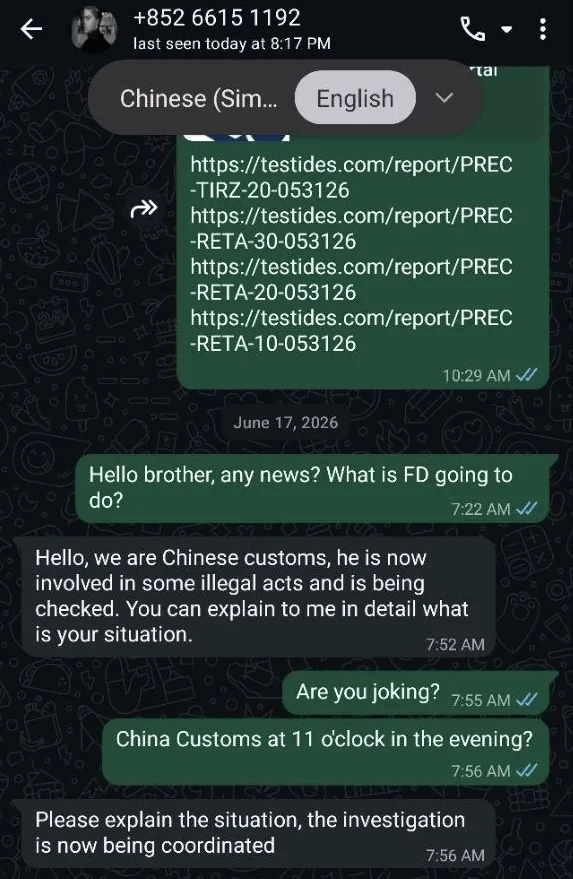
The customer questioned why Chinese customs would be communicating through the vendor’s WhatsApp account late at night. No independent evidence has been provided to confirm that the person was genuinely connected to Chinese customs.
Two Replacement Kits Became One
After considerable back and forth, Fresh Wind allegedly agreed to send two replacement kits of each peptide.
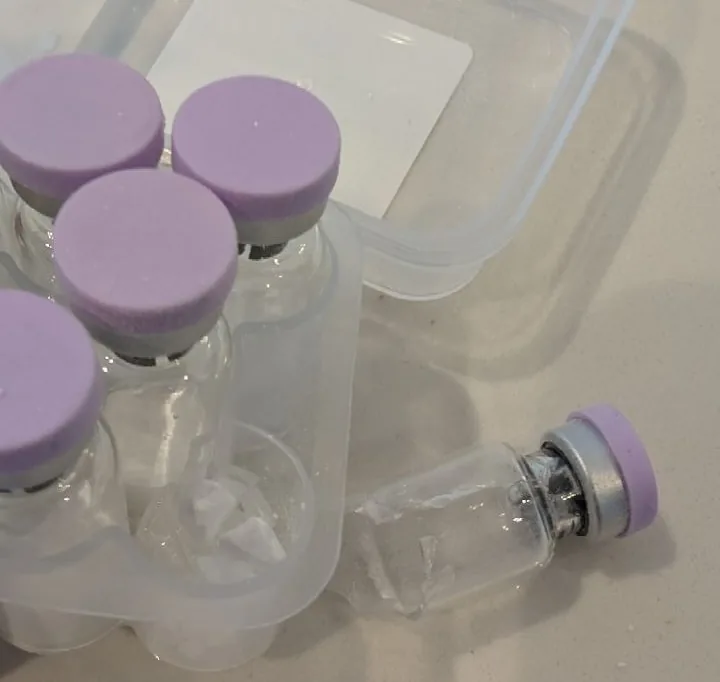
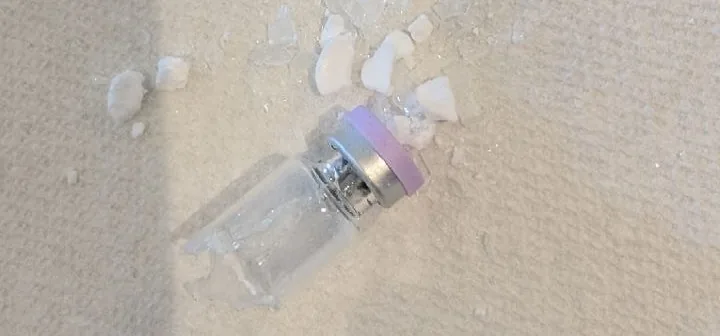
The customer says the replacements were intended both to correct the failed order and help compensate him for the money he’d spent independently testing bunk products. However, upon arrival, some vials were broken and they only sent one of each.
From Replacement to “Peace Offering”
Once the customer began showing the laboratory results to other buyers, some reportedly started asking Fresh Wind for refunds. He says some received their money back while others did not. Fresh Wind then allegedly accused him of attempting to poach its customers and questioned whether the tested products had really come from the company, despite having previously offered an explanation for why the products contained no peptides.
The customer says Fresh Wind later sent a replacement shipment as a “peace offering” intended to stop him discussing what had happened.
Part Two: The GLP-1 Forum Ban
The Fresh Wind customer had found them on the GLP-1 Forum, where they are listed as a sponsoring vendor. He completed the introduction required of new members and was then given access to respond to existing threads. He replied publicly to an administrator, attempting to raise the issue involving Fresh Wind and the failed laboratory testing. Although the forum had enabled his ability to reply, he was apparently still required to wait before posting.

Around three hours later, his account was banned. The notice said he’d been banned for being a “spammer, scammer, or violating forum rules,” without explaining which description applied.
Another Customer Posts on His Behalf
After being banned, the customer contacted another person who had also purchased from Fresh Wind and asked him to raise the issue on the forum. That second customer then created a thread titled “Fake peptide,” asking whether a vendor advertising on the forum would be banned for selling fake peptides. The second customer explained that someone had contacted him on Telegram claiming to have been scammed by a forum vendor. He said the customer had supplied laboratory reports covering more than four products and that he had checked the reports through the laboratory’s website. He also shared the vendor’s explanation that the real peptides had supposedly been switched out because of a surprise customs inspection.
Some members questioned why the products would have been sent to the customer if they had knowingly been replaced. Others asked to see the reports, although one response warned that posting them could result in a ban.
The Forum Dismisses the Banned Customer
The forum owner eventually responded by asking the forum to “define fake peptides.”
He said individual scam reports required clear and convincing evidence before a report would be published or action taken against a sponsoring vendor. He added that multiple reports supported by evidence, particularly from established members, were more likely to result in action. He then compared the complaint to customers calling routine problems scams, including slow replies, delayed shipping and products producing “no feels.”
That wasn’t what had happened here. The customer had commissioned laboratory testing that found no detectable tirzepatide or retatrutide in products sold under those names. One vial labelled retatrutide contained BPC-157, while other samples were reportedly consistent with mannitol.

The owner then wrote:
“Sorry, but some rando messaging you on Telegrump is probably full of shit.”
He argued that if the problem were genuine, the customer would be posting about it widely rather than messaging people individually. But the customer had already attempted to raise the issue on the forum and he’d been banned. He was only relying on another member because the forum had removed his ability to present the evidence himself.
The result was circular: he was dismissed as an unknown Telegram stranger because he wasn’t posting publicly, after being banned when he tried to post publicly.
Not an Isolated Complaint
I’ve heard from other people who say they were also unable to post warnings about alleged scammers because they hadn’t yet earned the required posting privileges. I understand why a forum would impose posting restrictions, as grey-market communities attract spam, impersonators and competitors. However, preventing members from making public allegations isn’t in the spirit of harm reduction.
In this case, the customer was already a forum member and had found Fresh Wind through the forum’s sponsored vendor listings. He’d completed the required introduction but was still unable to report what had happened.
There should be a separate process allowing any member, regardless of status, to submit laboratory reports, payment records and screenshots privately for review. Otherwise, the system risks protecting established vendors from new victims rather than protecting members from false claims.



Comments