
My earlier post about my degraded lyophilised Tirzepatide has raised a lot of discussion comparing grey market tirz with brand name and implying brand name is better than grey market, so here is a run down of the main differences.
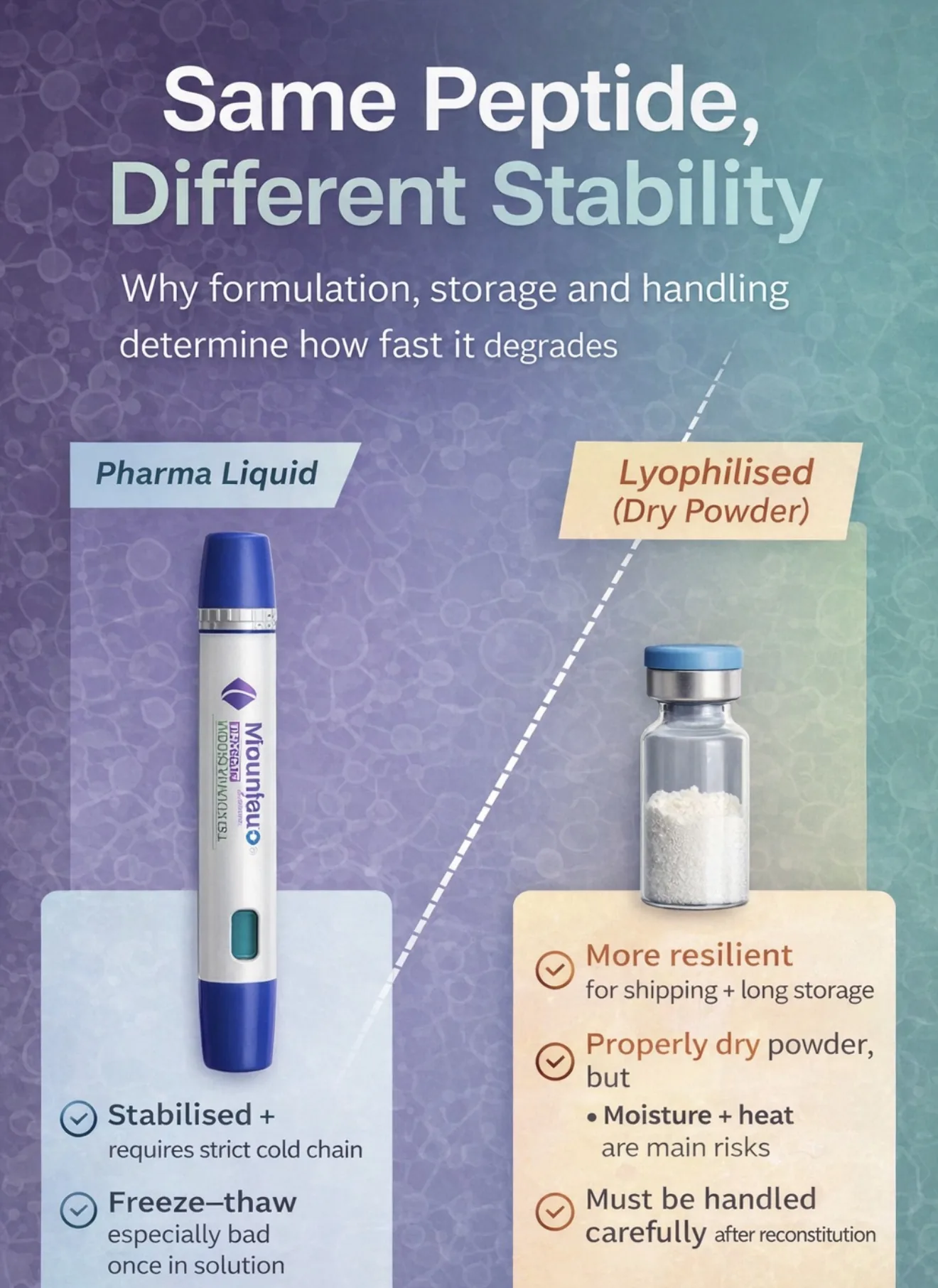
Official tirzepatide is supplied as a liquid formulation. That means it has been designed with stabilisers and intended for controlled cold-chain storage.
Grey-market tirzepatide is usually lyophilised. That is not necessarily because it is better, but because it is more practical for shipping, longer circulation and handling outside a tightly controlled pharma supply chain.
The trade-off is this:
Liquid pharma product can be more stable in use because it is properly formulated
Lyophilised product can be more resilient for transport and longer storage before reconstitution.
But once a lyophilised vial is reconstituted, the situation changes. At that point, degradation becomes much more active and much more dependent on temperature, time, moisture exposure, vial integrity and freeze-thaw stress
That is why formulation matters.
A pharma liquid product is not just “already mixed.” It is formulated to control degradation.
A grey-market lyophilised product is often being asked to do a different job: survive shipping, variable storage and less controlled handling.
So the real comparison is not:
liquid = good
lyophilised = bad
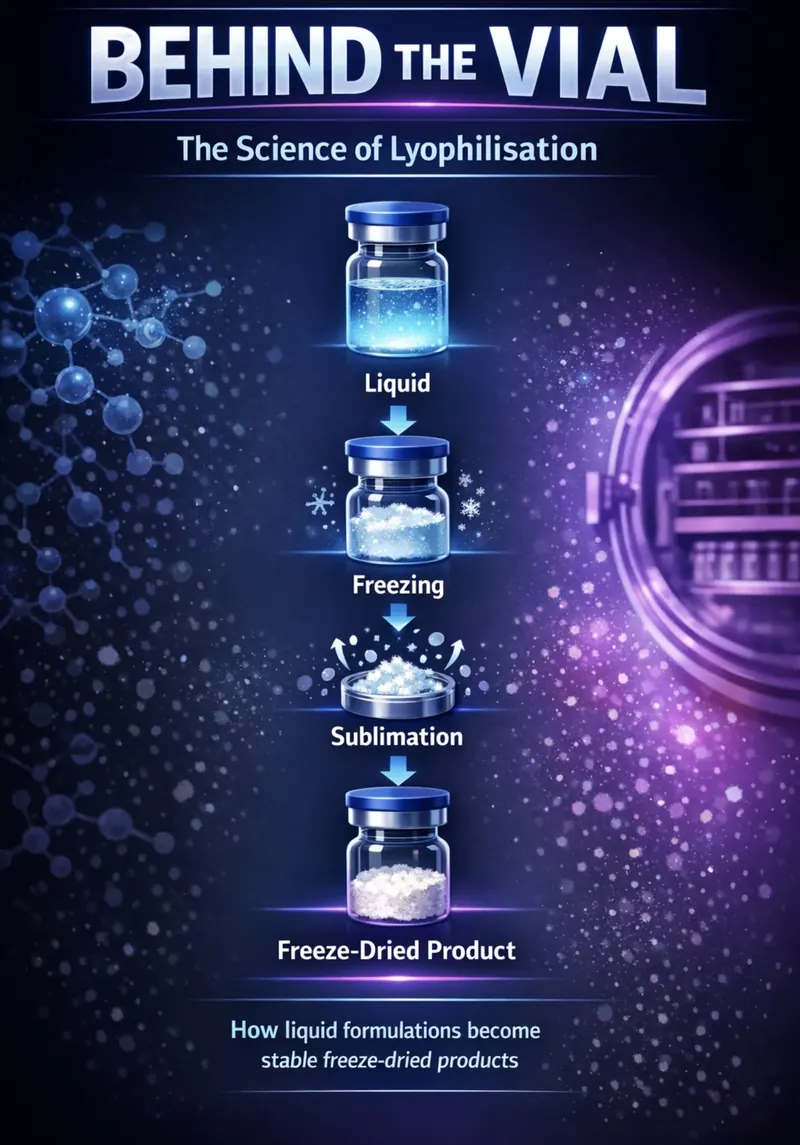
And formulation for lyophilised vs liquid products is very different( but that’s another story)
That difference helps explain why degradation behaviour is not the same.
pharma liquid = stabilised + controlled cold chain
grey-market lyophilised = shipping-friendly + more dependent on handling
And that is also why temperature matters so much for lyophilised peptides.
4 to 8°C is ideal for routine storage
freezer is better for long-term storage
30°C is far worse than 0°C
freeze-thaw is especially damaging for reconstituted
So yes, lyophilised products can last well. But they are not magically protected. If there is moisture intrusion, vial damage or large temperature swings, degradation can accelerate quickly.
The difference is formulation.
The risk is what happens after that.

Comments