
TLDR
Saudi authorities have begun legal action against online sellers of unregistered peptides. Cases are being prepared for referral to prosecutors, with substantial potential fines and prison terms. The sellers and compounds remain unnamed. A separate investigation reported in March explicitly identified retatrutide and traced supplies from gym trainers to a warehouse.
Online peptide sellers face legal action
Saudi Arabia’s Food and Drug Authority has announced action against websites and social-media accounts marketing unregistered peptides without the required authorisation. Its official notices are dated 29 September 2026. The authority describes the products as unregistered and of unknown origin, with pharmaceutical supply-chain, transport and storage requirements unmet. Their safety, quality and handling conditions couldn’t be verified. www.sfda.gov.sa
The SFDA also challenged misleading assurances suggesting that products were tested, reliable or approved. Its concerns therefore extend beyond registration to how sellers presented the products to customers. Legal measures have been taken against online-store owners in preparation for referring them to the Public Prosecution. The Arabic wording, “تمهيدًا لإحالتهم إلى النيابة العامة”, describes that preparatory stage. It doesn’t confirm completed referrals or charges. www.wideip.sfda.gov.sa
Severe potential penalties
The SFDA cites Article 34, paragraph 2, of the Law of Pharmaceutical and Herbal Establishments and Preparations, which prohibits selling, dispensing or possessing unregistered pharmaceutical products for trade. Potential penalties can reach SAR 5 million, five years’ imprisonment, or both. These are statutory maximums, rather than sentences imposed on the sellers in this announcement. saudigazette.com.sa
Saudi Arabia is known for harsh criminal penalties. Amnesty International recorded at least 356 executions in 2025, including for drug-related offences. Although in these peptide cases, the SFDA has cited potential fines and prison terms; its announcement makes no mention of the death penalty. Amnesty International. For online sellers, however, the stated prison terms and fines are substantial enough to make this a serious criminal-enforcement development.
An earlier case explicitly involved retatrutide
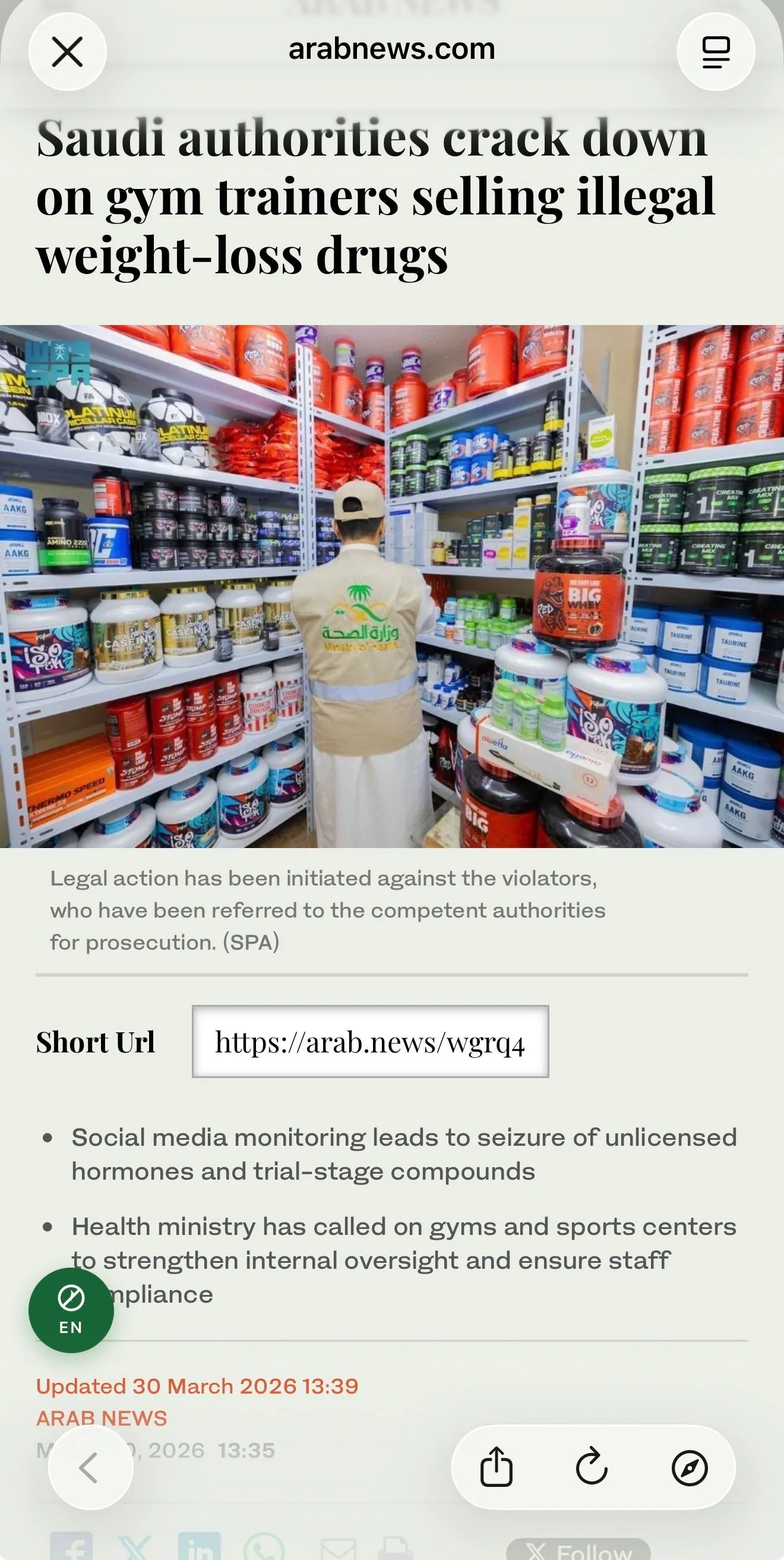
A separate investigation, reported on 30 March 2026, provides more concrete detail about Saudi enforcement against peptide supply. The Ministry of Health, working with the SFDA and other authorities, reported apprehending trainers of Arab nationalities working in gyms and fitness centres. They were accused of selling and promoting unregistered weight-loss medicines, hormonal drugs and peptide substances, and storing them improperly. www.moh.gov.sa According to the ministry, monitoring social-media promotions led to an undercover purchase. Investigators then traced the supply chain to a warehouse containing medicines, hormonal products, peptide substances and unregistered retatrutide. The Saudi Press Agency also explicitly named retatrutide in its account. www.spa.gov.sa
The ministry reported taking legal measures against the violators in Riyadh, with referral to the competent authorities to follow. It cited possible imprisonment of up to six months and financial penalties under the Law of Practicing Healthcare Professions, alongside sanctions under other applicable laws. Authorities also contacted buyers whose names appeared on the sellers’ customer lists. They advised them to stop using the products, dispose of them safely and seek medical assessment. Gyms were urged to strengthen oversight of staff. www.moh.gov.sa
What September’s announcement leaves undisclosed
The September notice names no vendors, owners, domains or account handles. It identifies no compounds, brands, strengths or batches, and gives no physical-seizure inventory, quantity, value or location. www.sfda.gov.sa No confirmed subsequent charges, arrests or laboratory findings linked to that announcement were found in the my search, as of 1 October 2026. However, this doesn’t mean that seizures, testing or other investigative steps never occurred.
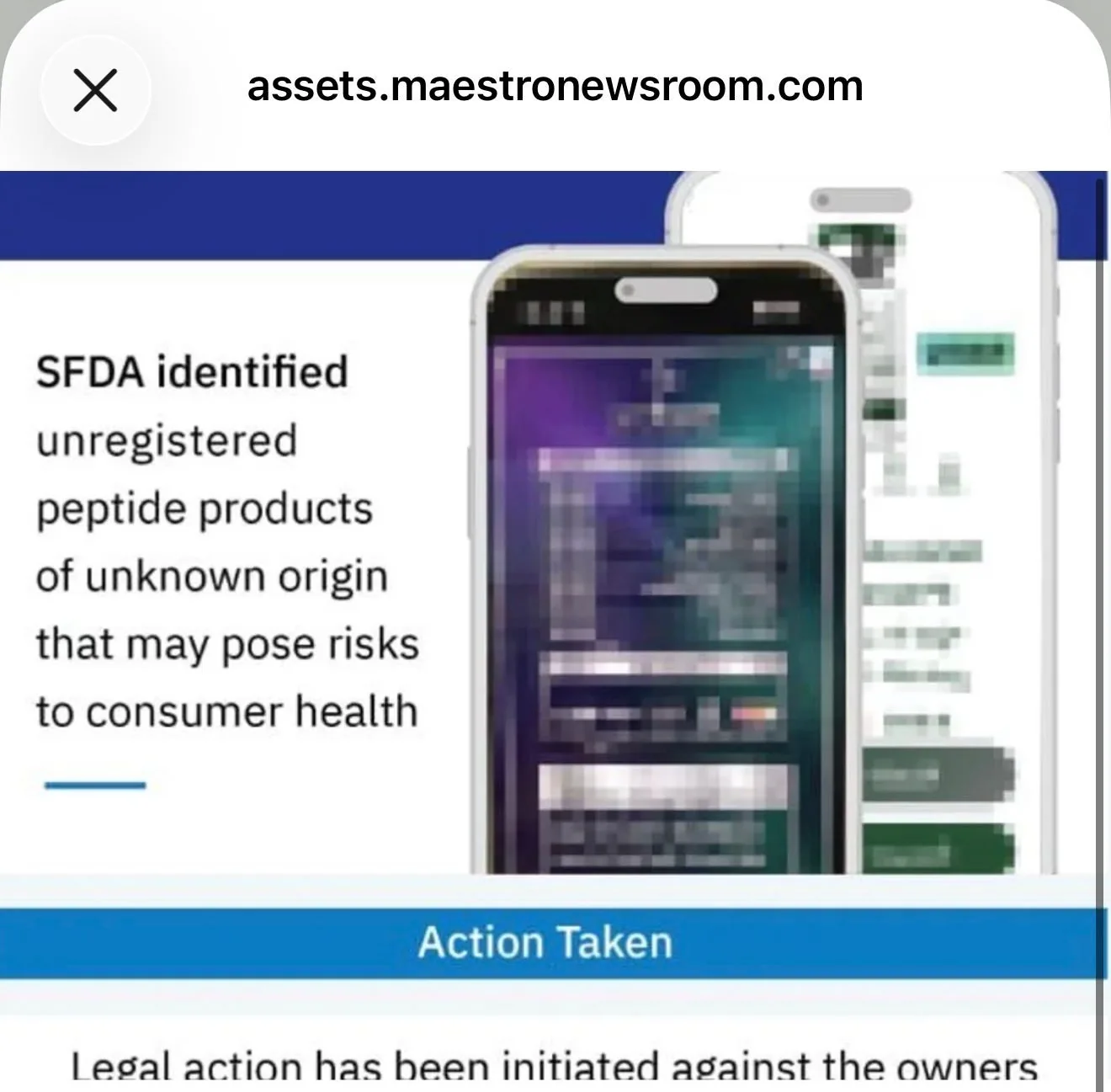
The enforcement graphic reproduced by Arab News contains pixelated website and account screens. Published graphic. The SFDA hasn’t identified where the products came from or released test results showing what they contained. Their identity, purity and quantity therefore remain unconfirmed.
Marketing claims and product assurance
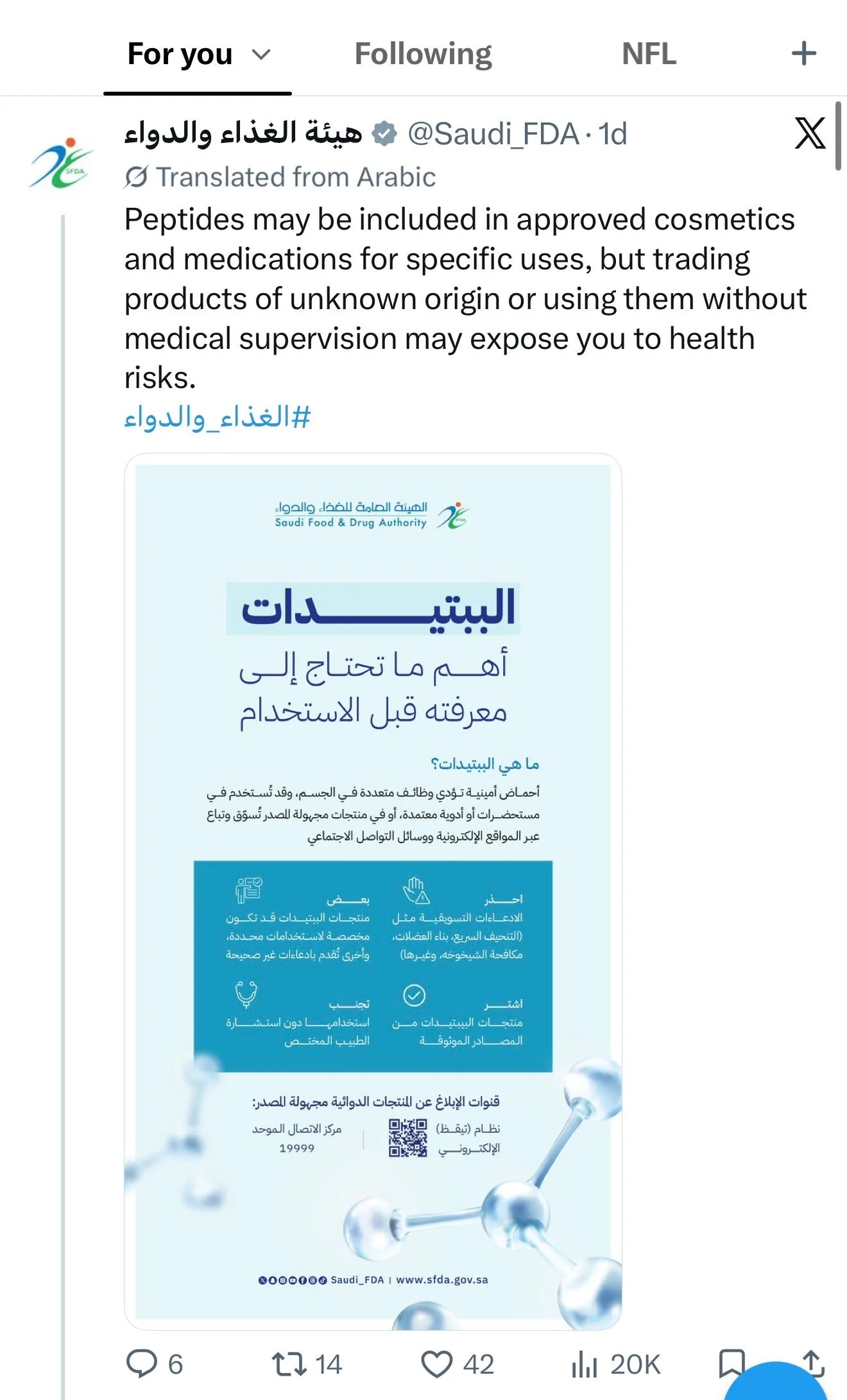
The SFDA also issued a public warning on X about peptides promoted for rapid weight loss, muscle building and anti-ageing. This was general consumer guidance; it also didn’t identify the products or sellers involved in the September enforcement action. Taken together, the March and September announcements show enforcement reaching different routes into the Saudi peptide market: supplies promoted through gym trainers and products marketed online. They don’t establish a connection between the sellers or a coordinated national campaign, but they do establish that selling unregistered peptides can bring investigations, referral towards prosecution and substantial potential criminal penalties.



Comments