
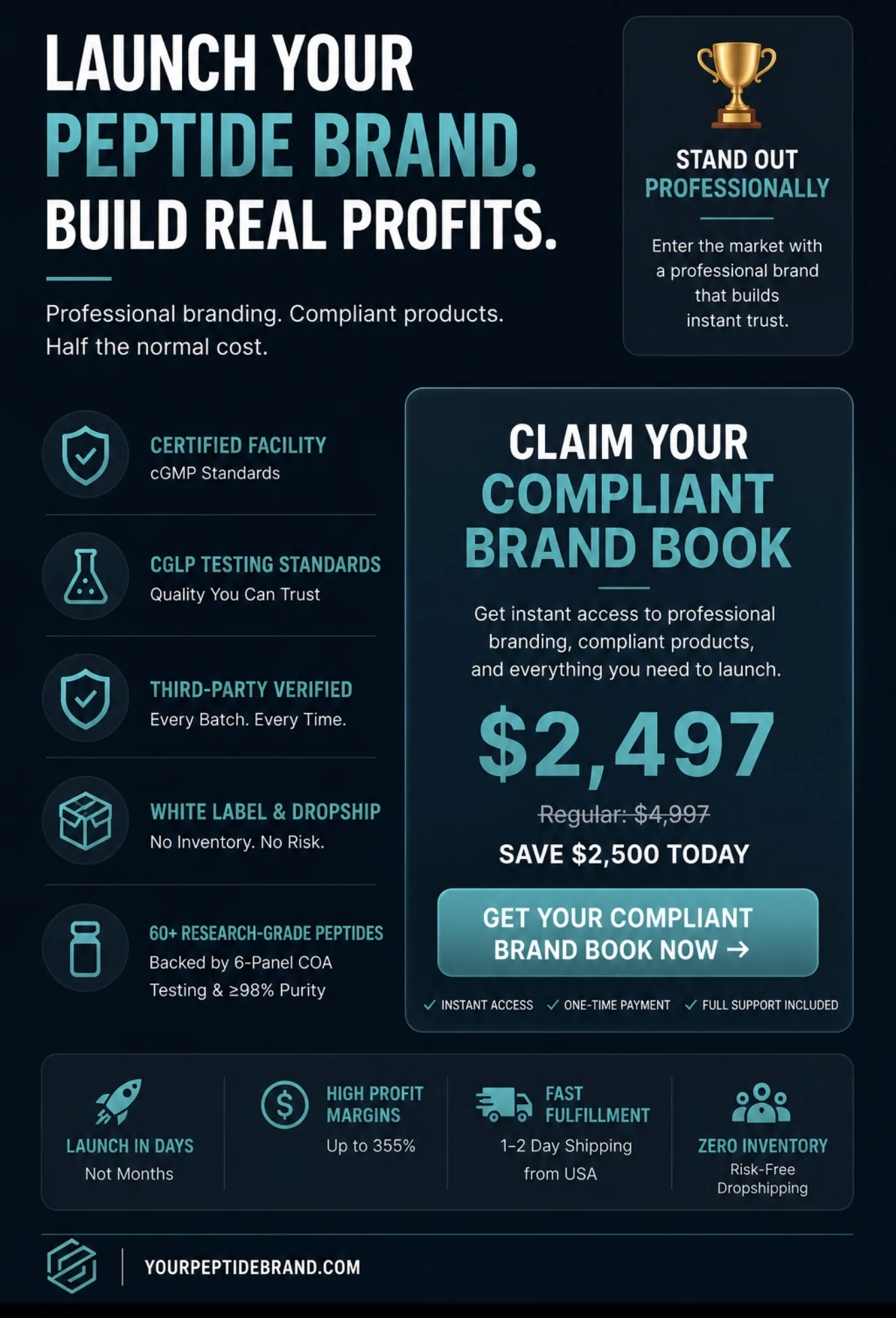
While I was working on my next post, “How Not to Start an Online RUO Business”, I came across yourpeptidebrand.com and ended up down a much bigger rabbit hole, because this isn’t just about one website, it’s about a new way of selling peptides without ever handling them.
These are platforms that don’t simply sell peptides, but they sell people the ability to sell peptides. What’s being sold is ready-made storefronts, white-label catalogues, COAs, pre-written compliance copy, fulfilment pipelines and profit calculators. Basically a peptide business in a box or at least, that’s the pitch.
Enter YourPeptideBrand.com
At first glance, it looks like a service platform. It has a clean design, clear offers and confident language.
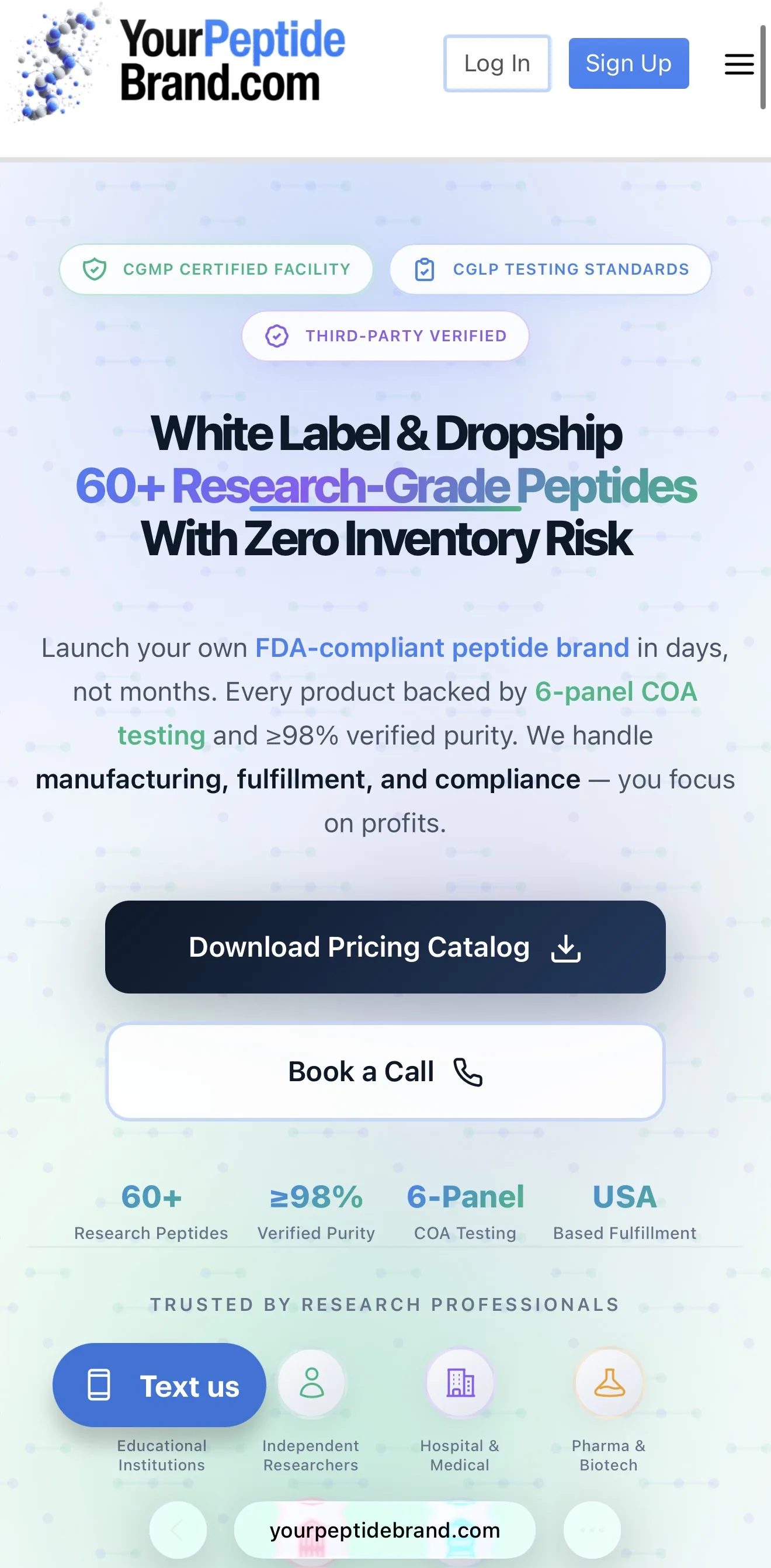
The homepage hits you immediately with cGMP certified facility, CGLP testing standards, third-party verified, 60+ research-grade peptides and zero inventory risk. This is followed by the core promise:
Launch your own FDA-compliant peptide brand in days, not months. We handle manufacturing, fulfilment, and compliance , you focus on profits.
Then it moves into the catalogue pitch. it boasts a full 2026 wholesale catalogue, transparent pricing and MSRP, projected margins per SKU, zero MOQ for online orders, US-based fulfilment (1 to 2 days) and third-party COAs for every product. To even access pricing, you’re asked for email and phone number, a classic lead capture before anything meaningful is revealed.
The COAs, Documentation as Infrastructure
There’s a full COA library built into the site. These aren’t just supporting documents, they’re part of the product. The certificates are issued under Analytical Formulations, Inc. (AFI) and presented in a polished format with the AFI branding, “Verified Certificate of Analysis” header, QR codes, task IDs, verification keys, product name, client, manufacturer (YPB Labs), batch/lot numbers, vial photos, analyst initials and dates and pass/fail formatting across all tests
A typical example is Sermorelin 10mg with a Purity: 99.5%, assay: 10.20mg and heavy metals: pass and microbial counts: pass. So everything passes, every time. The important detail isn’t what’s on them, it’s how they’re used. These COAs sit inside product pages as built-in reassurance tools, making a brand look tested, documented, and operational from day one.
They’re not just lab reports, they’re part of the storefront. And notably, the library shows COAs dated January to February 2026, static documents inside what’s presented as an active wholesale system. If this were true rolling supply, you’d expect continuous batch updates.
The Storefront, Built Before the Brand Exists
The product pages are already finished for you before the business even exists.
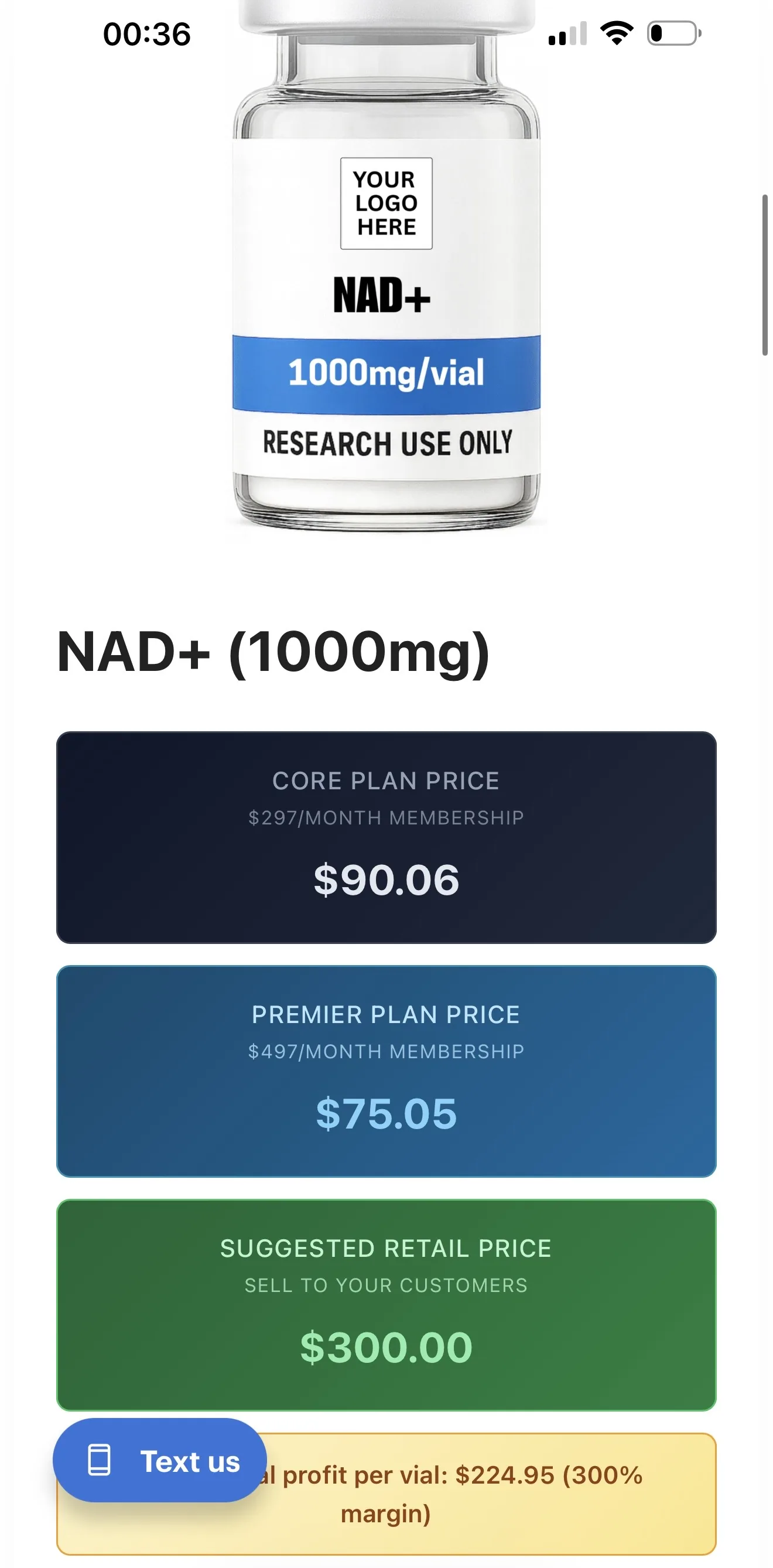
Each listing includes vial mock ups with “Your Logo Here”, pre-named compounds with dosages, pricing tiers (Core vs Premier plans), a suggested retail price (MSRP), estimated profit per vial, margin percentages, SKU numbers, COA tabs, storage instructions and bulk pricing breakdowns. GLPs are notably absent from the catalogue.
Example (costs are per vial): NAD+ 500mg Cost: $52.75 (Core) / $43.95 (Premier), MSRP: $200, Profit shown: $156.05 (355% margin)
NAD+ 1000mg; Cost: $90.06 / $75.05, MSRP: $300, Profit: $224.95 (300% margin)
BPC-157 10mg; Cost: $40.31 / $33.59, MSRP: $100, Profit: $66.41(198% margin)
Sermorelin 10mg; Cost: $69.33 / $57.77, MSRP: $100, Profit: $42.23 (73% margin)
The site doesn’t just show products, it shows the future business; pricing, margins, positioning, even before anything has been sold.
The Pricing Model, Where It Actually Sits
Each product is structured around the wholesale cost, the suggested retail price and the projected profit. On paper, margins look strong, but they’re built on already-inflated base costs.
For example, BPC-157 5 mg costs around $4.10 per vial from China, whereas the platform price ranges from $32.01 to $14.60 when buying 1000 + vials, so still significantly more than buying direct from China.
Tesamorelin 20 mg is on average $36 per vial from China but the platform price ranges from $131.33 to $50.29 when buying 1000+vials. So while its clear that bulk discounts (25+, 100+, 1000+ units) reduce the cost slightly, they don’t eliminate it.
A Shared Backend, Not a Unique Brand
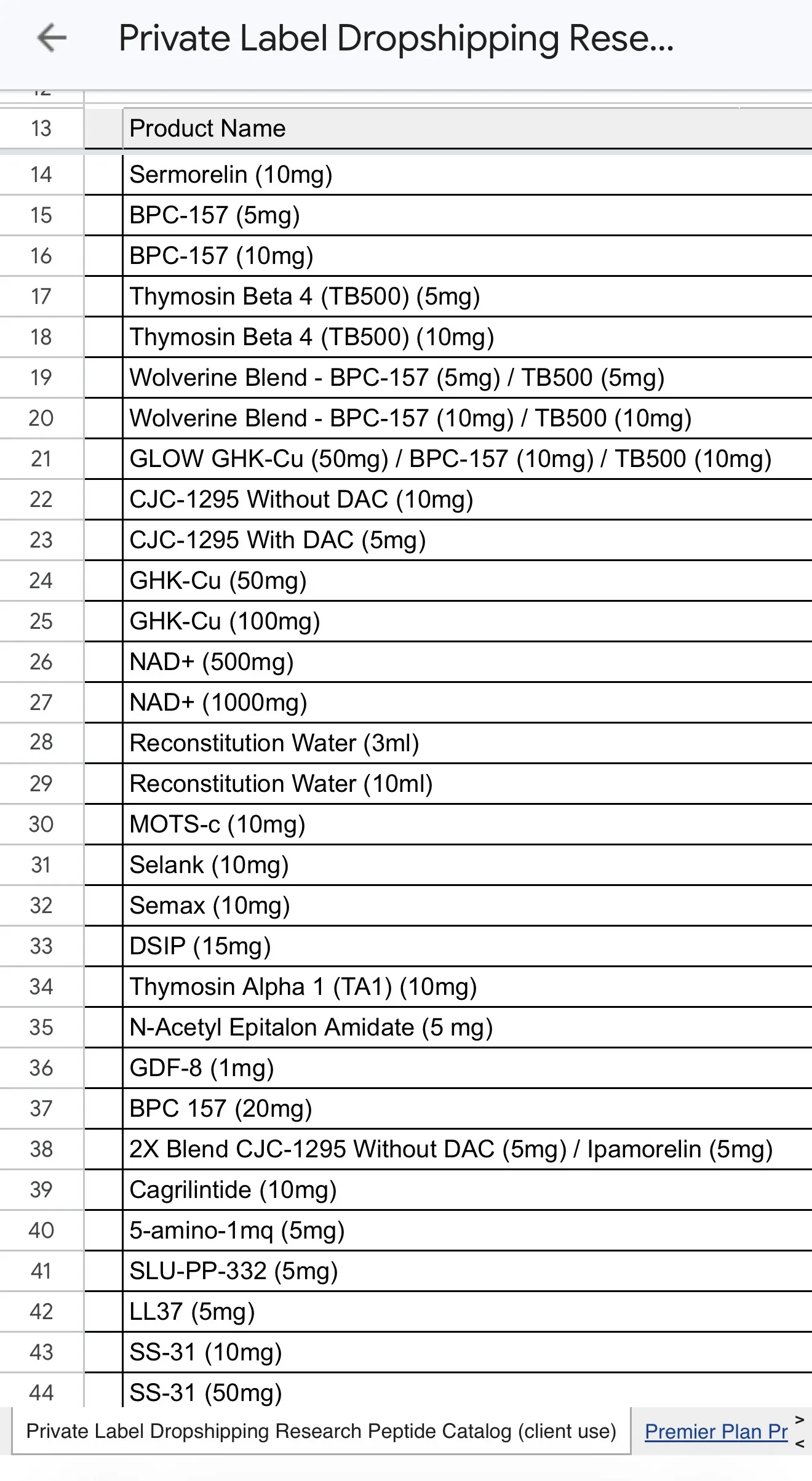
Behind the storefront there is a centralised product sheet with standard SKUs, fixed pricing tiers and uniform packaging specs. Multiple brands can plug into the same system, so although there are different logos, it’s the same backend. This means that there is an identical catalogue with identical fulfilment and identical infrastructure, just presented differently.
Compliance, Packaged and Sold
The platform also includes a full compliance framework with RUO language, full disclaimers, marketing guidance and pre-written product descriptions. It correctly explains that RUO status depends on marketing, positioning and implied use. That part is accurate, but here, compliance isn’t just guidance, it’s a product that comes with a price label.
The “Compliant Brand Book”
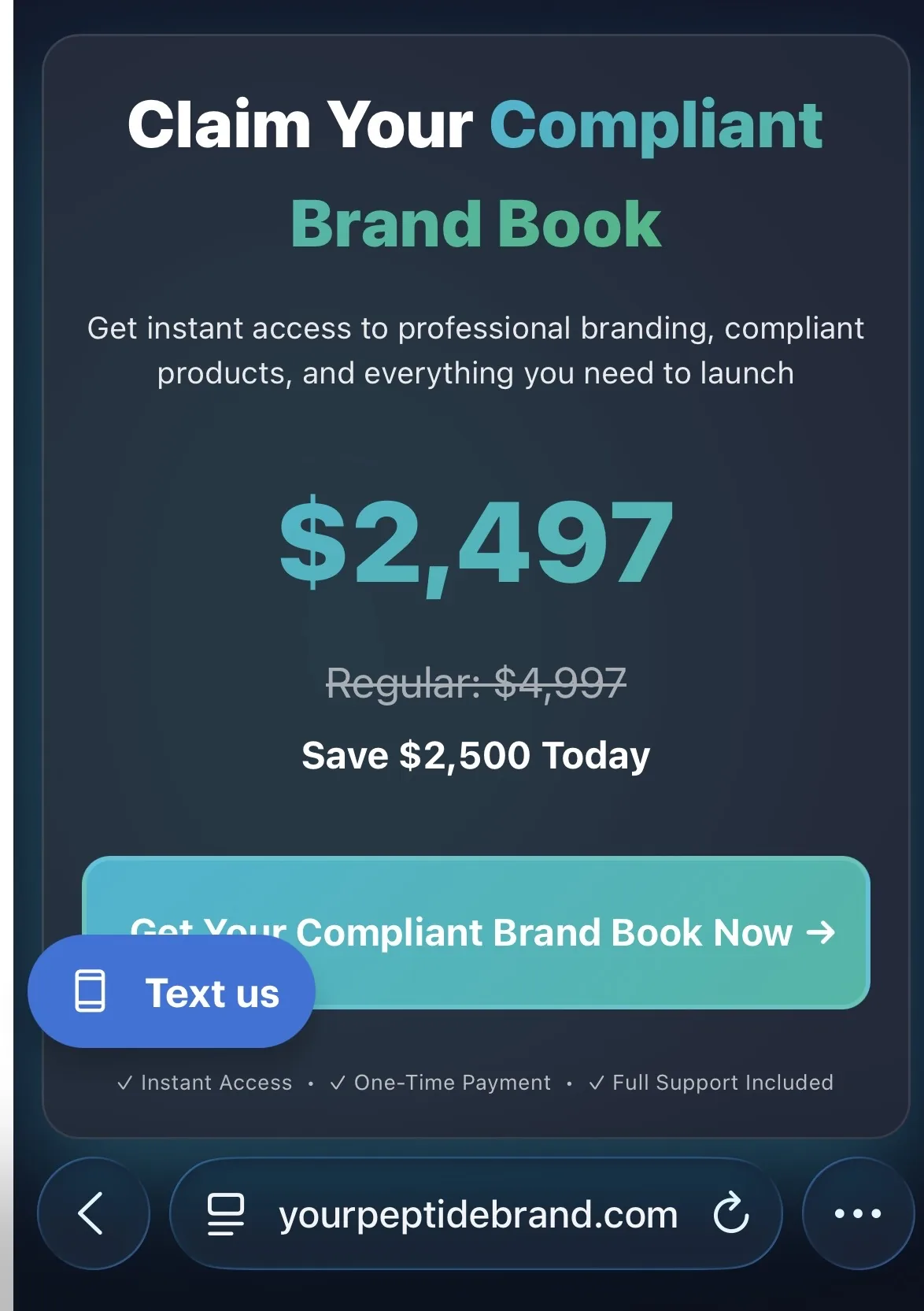
The Two Price Points
There are two versions of the offer.
At $2,497, the “Compliant Brand Book” is the playbook: brand identity, label templates, RUO-compliant product copy, wording rules, and storefront structure.
It teaches presentation, how to look compliant, sound compliant, and stay online.
At $4,497, the “Business in a Box” is the done-for-you version: the website built, product pages loaded, COAs attached, pricing and margins set, branding applied, fulfilment connected, and compliance copy in place.
One teaches you the model, the other builds it for you. But neither gives you control over the parts that matter most, manufacturing, batch verification, supply chain, or payment stability. And those are not minor details, they are the core business.
The Structure Behind It
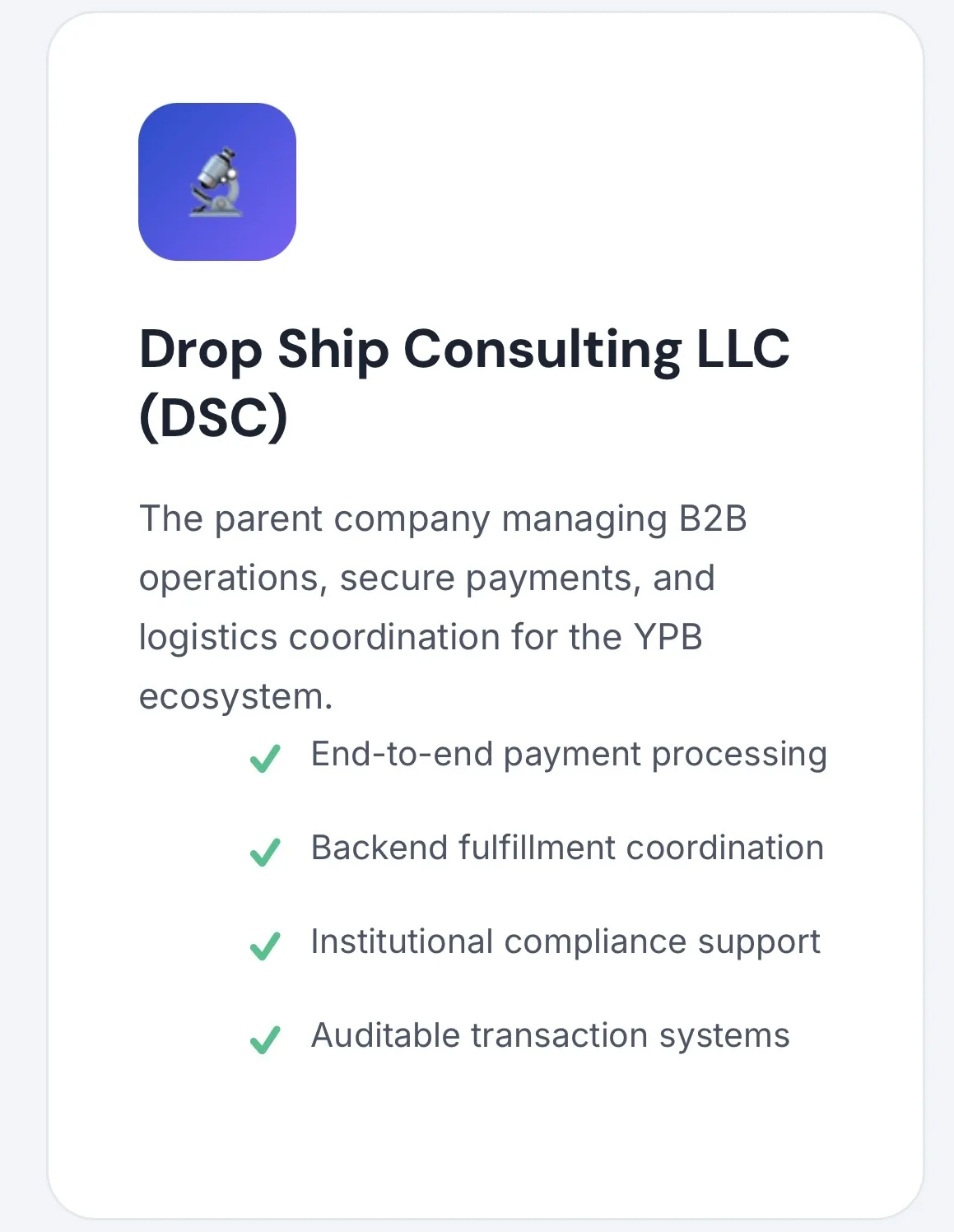
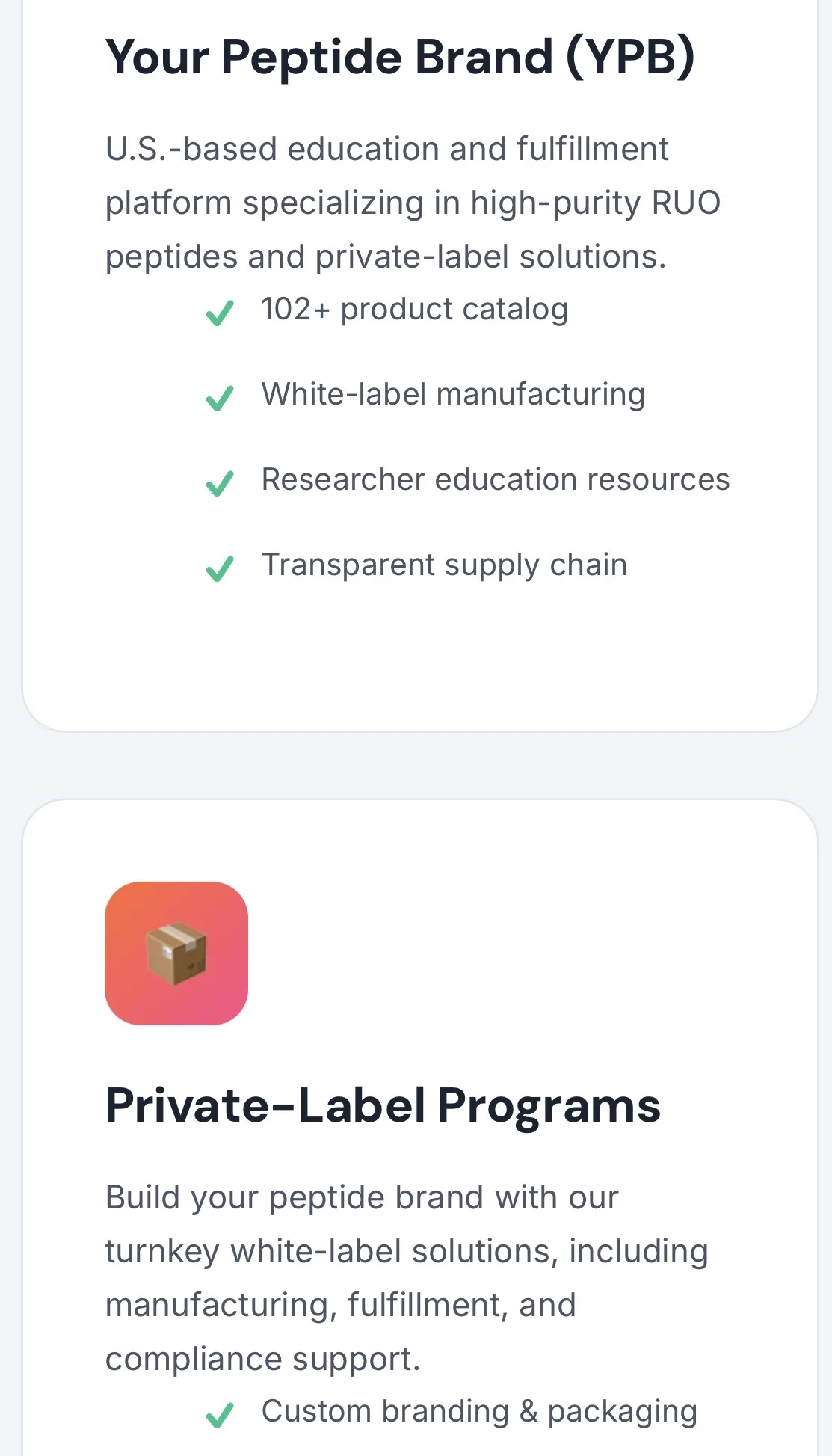
This doesn’t sit in isolation, yourpeptidebrand appears to be the front-end, while behind it sits Drop Ship Consulting LLC, which describes itself as handling B2B RUO operations, payment processing, logistics, backend fulfilment and compliance systems.
So the structure is simple: DSC → YPB → storefront operators
That reframes the whole thing. The peptide brand isn’t really the business, the pre- built infrastructure is, with a storefront connected to a backend you don’t control. You sell it and they fulfil it. So whilst it feels like you’ve skipped the hard part, because you have, that comes with trade-offs. The same things you don’t have to build, are also the things you don’t control: sourcing, testing, fulfilment, payments, and the supply chain behind the label. And those are the very things that define the quality of a brand in the first place.
Comments