
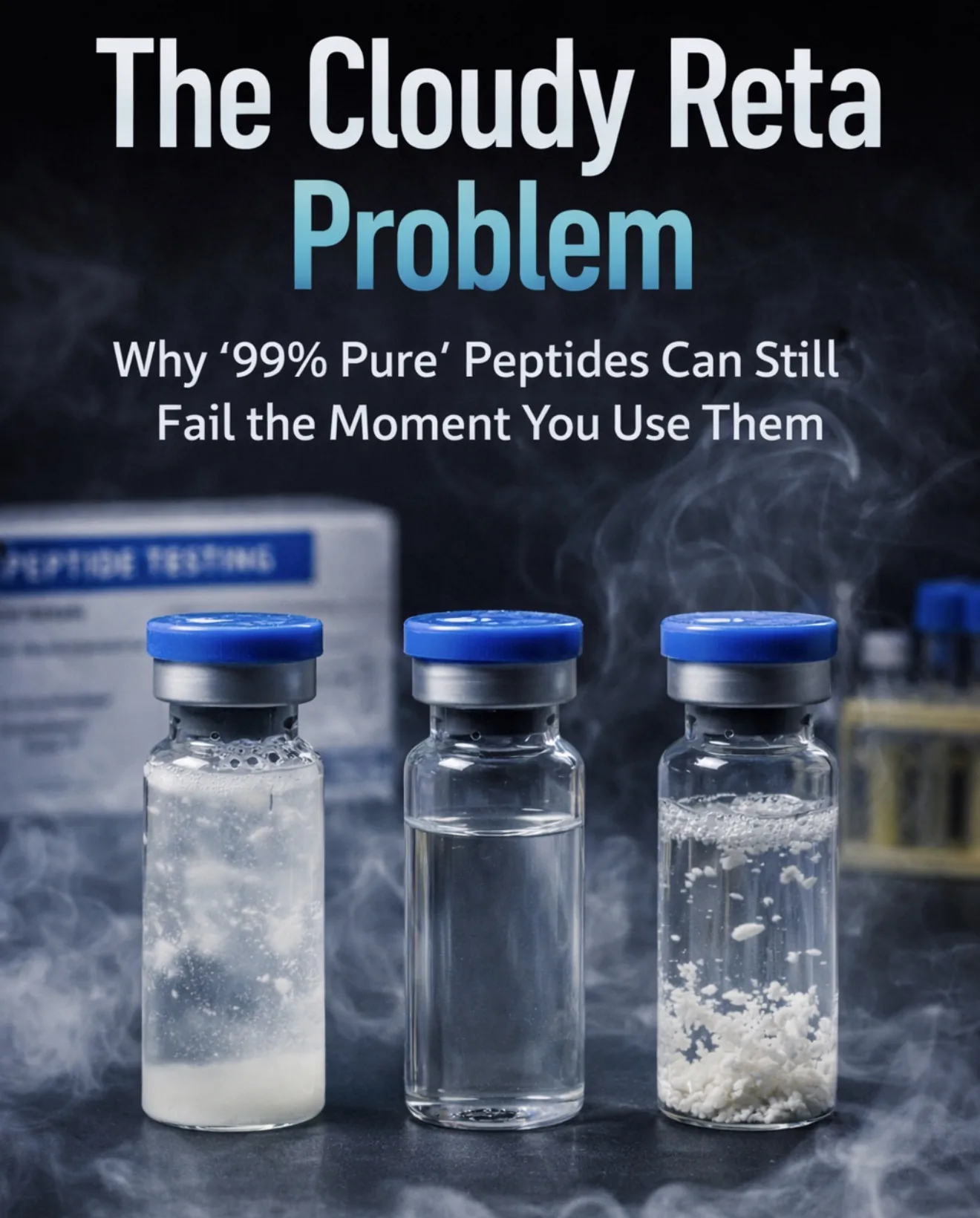
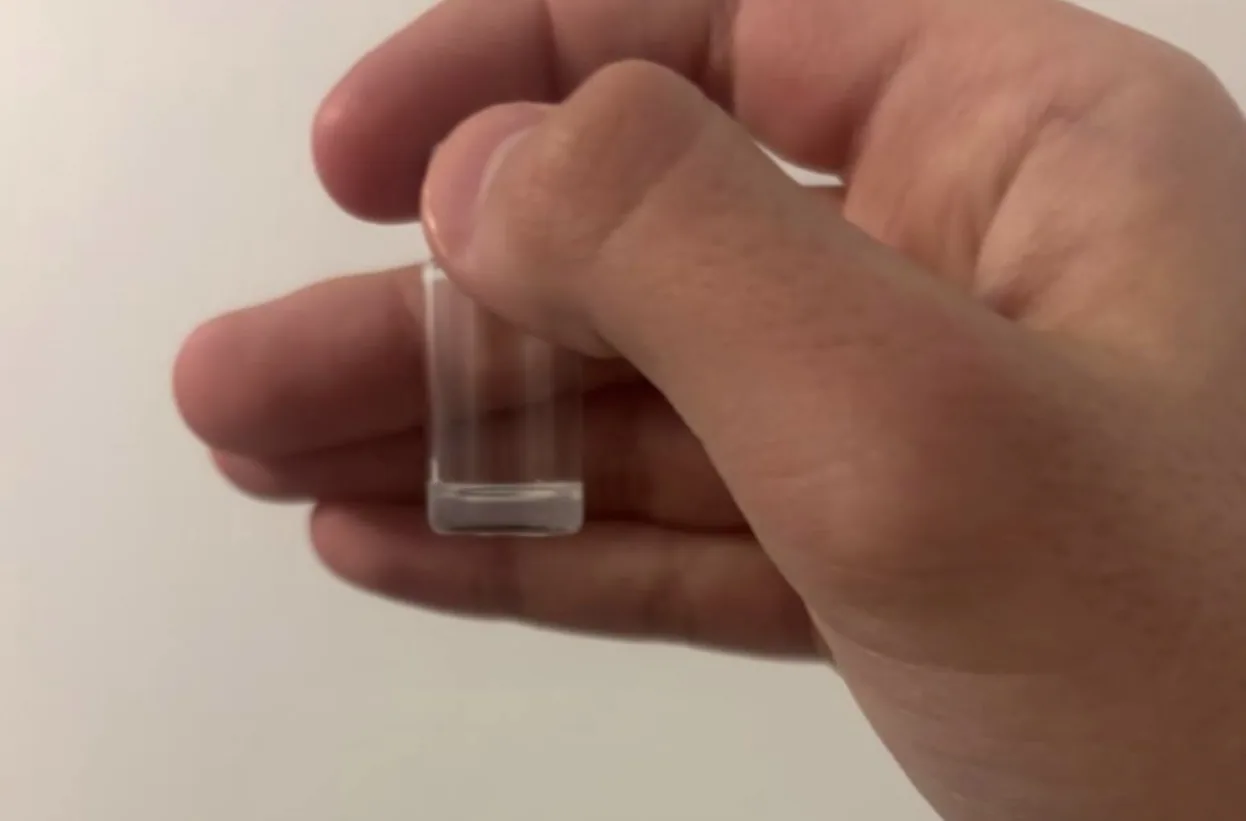
Left to right is BAC water, filtered water, saline
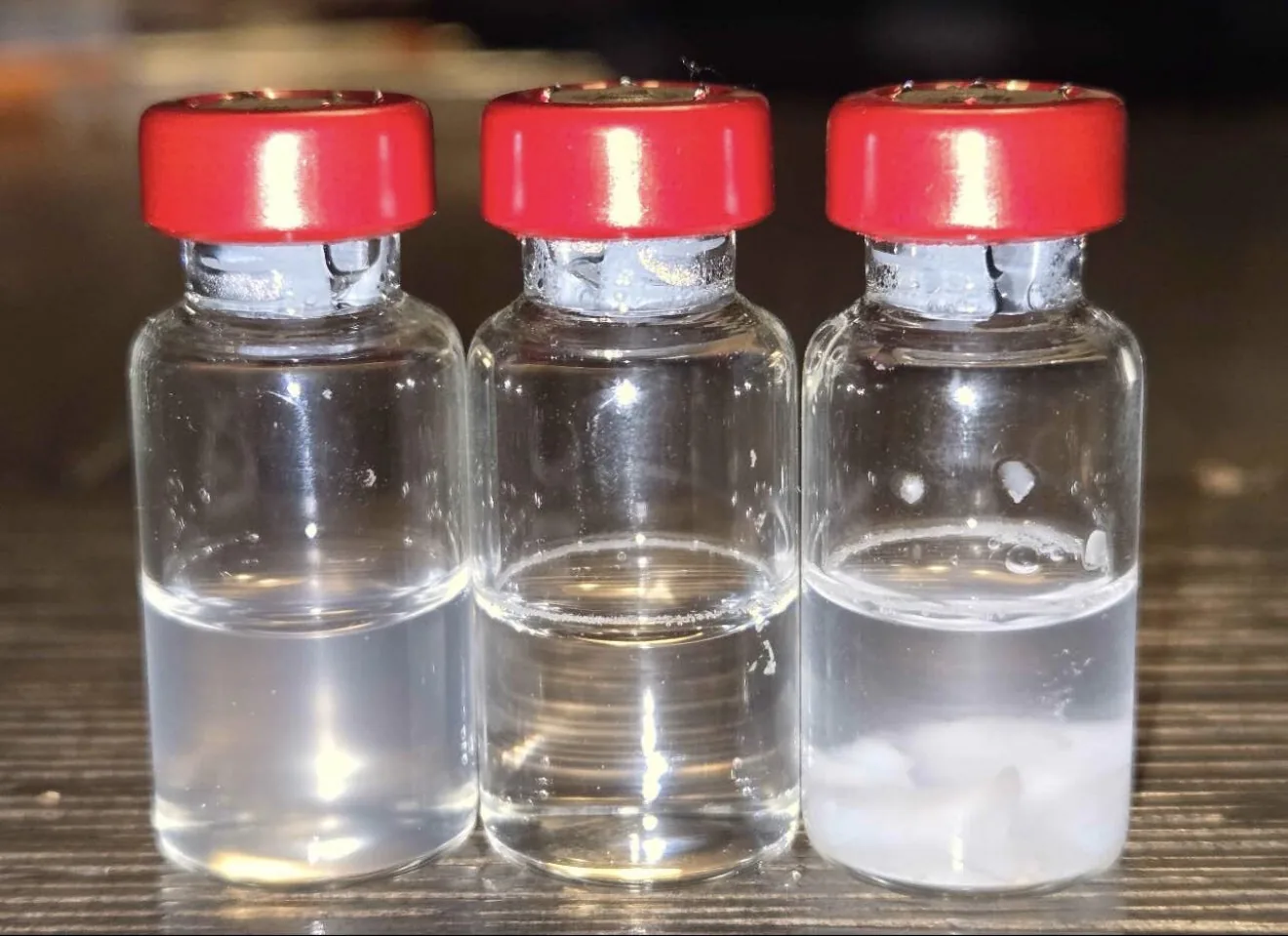
Three vials.
Same peptide.
Three different outcomes.
One turns cloudy in BAC.
One stays mostly clear in water.
One throws visible particles in saline.
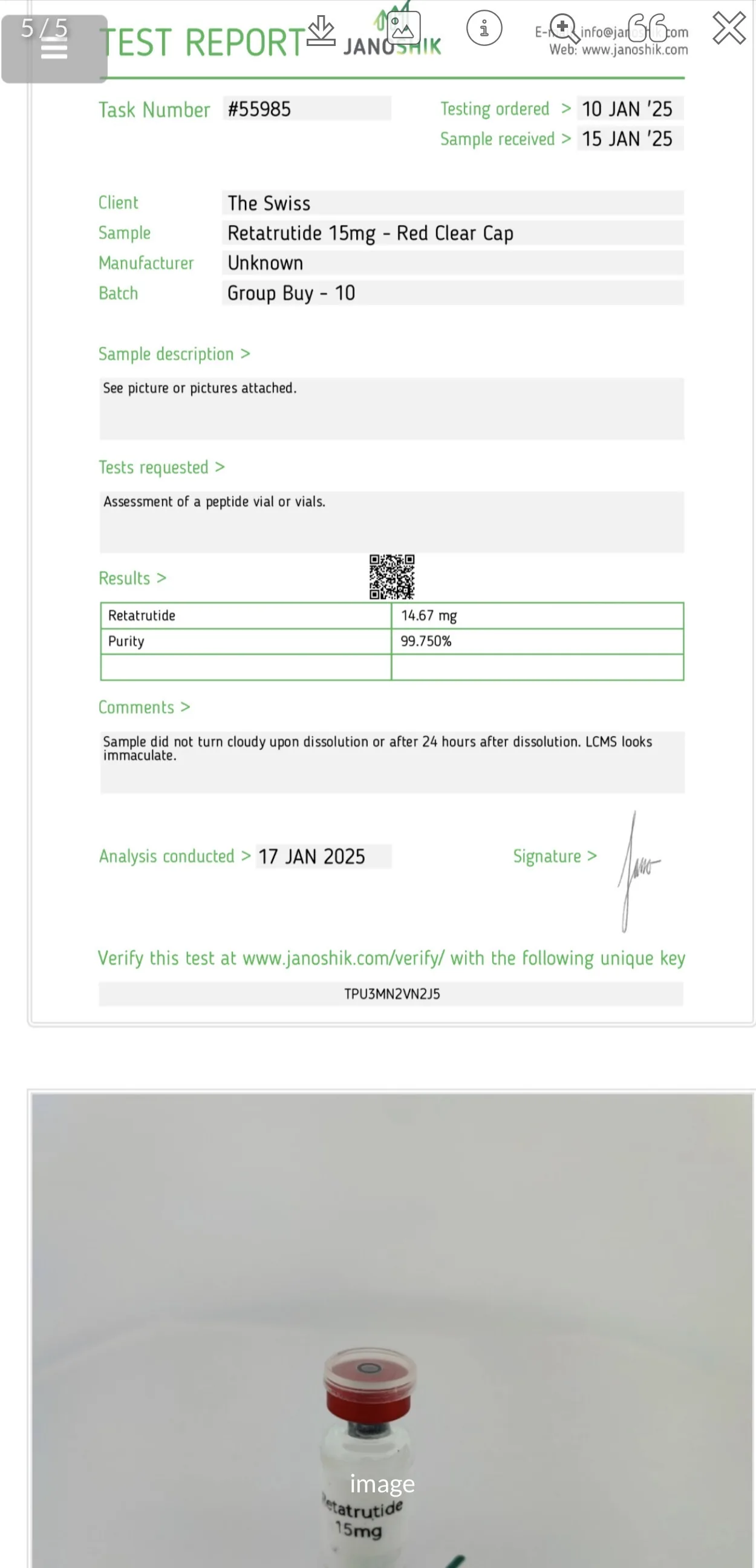
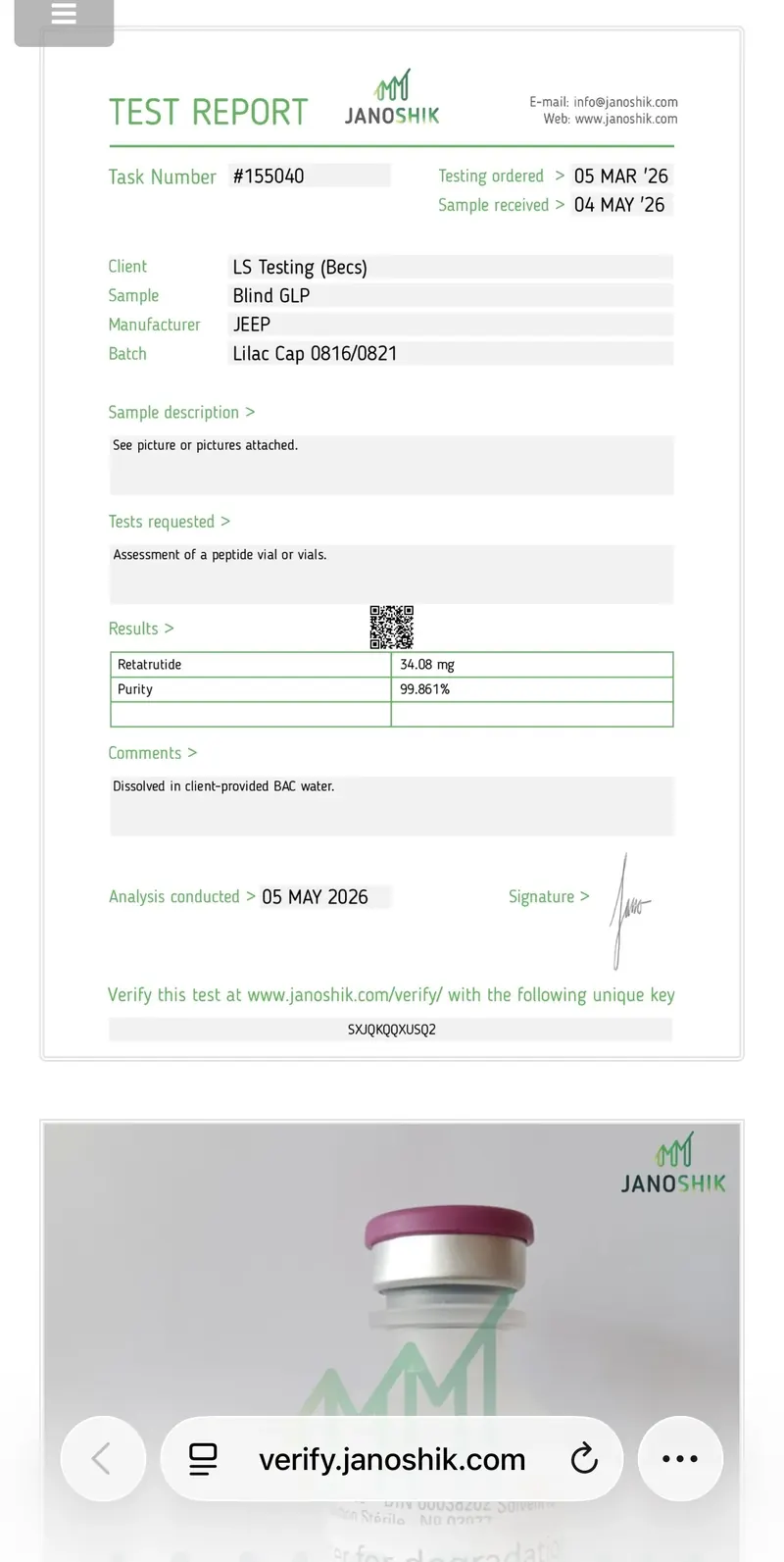
And yet the COA still says what buyers have been trained to trust:
99.75% purity.
LC-MS immaculate.
No cloudiness observed
That is the real problem.
Because in the grey market, a peptide can look perfect on paper and still fail the moment it meets the solvent people actually use. And Retatrutide is exposing that gap more clearly than almost anything else right now.
This is not just a story about cloudy Reta.
It is a story about the blind spot between chemical purity and real world performance, and about how a vial can pass standard testing while still breaking down at the point of use.
The Illusion of a “Perfect” COA**
In the peptide world, we’ve been trained to trust a simple formula:
High purity = good product
But what happens when that product behaves differently the moment you actually use it?
Because that’s exactly what we’re seeing with Retatrutide.
Dry vial: looks fine
COA: looks perfect
Reconstituted with BAC: cloudy, flaking, unstable
This isn’t a rare edge case anymore
This is starting to look less like coincidence and more like a repeat issue.
And it exposes something most testing simply doesn’t capture:
Purity does not equal performance in solution
Three Vials, One Problem
In the example above from Jan 2025 ( when I was still in Swiss)
BAC (bacteriostatic water) → cloudy
Filtered water → mostly clear
Saline → particles still visible
Same vial. Same batch. Different solvents.
That alone tells you this is not a single, cause issue.
What is failing is not necessarily the peptide sequence itself, but the system; the interaction between the peptide, the residual salts or formulation components around it, and the solvent used at reconstitution.
What’s Actually Happening
There is not one explanation for cloudy Reta. There are several overlapping mechanisms that can produce the same visible result.
Residual salts and counterions
During manufacture, acids such as TFA are used and then removed. But “removed” does not always mean fully removed.
What can remain includes:
counterions
residual salts
formulation related components
These may not show up clearly in standard COAs, but they still affect:
pH
solubility
behaviour in solution
pH shift during reconstitution
A lyophilised peptide exists in a controlled dry state. The moment liquid is added, the environment changes.
Reconstitution introduces:
a new pH
a new ionic environment
a different solvent system
If that shift pushes the peptide outside its stability window:
charge drops
repulsion weakens
molecules begin to aggregate
This is often described as a solubility cliff
The BAC effect
Bacteriostatic water is not neutral. It contains benzyl alcohol (~0.9%), which alters the chemistry of the system.
As one lab put it:
BAC can lower the solubility of excipients
In practice, that means something that dissolves in pure water may behave very differently in BAC.
This can trigger:
salt precipitation
peptide aggregation
or a combination of both
When the Solvent and the Vial Don’t Match
A lyophilised vial is not just peptide. It is a dry chemical system that may include residual salts, counterions, buffers, and other components left behind after processing.
When a diluent is added, two environments are forced together.
If they are compatible, the result is clear.
If they are not, the result may be:
cloudiness
flakes
precipitation
or aggregation
That incompatibility can be triggered by:
pH mismatch
benzyl alcohol altering solubility
residual salts interacting with the solvent
the sudden transition from dry to liquid
Once that happens, molecules that would normally remain separate begin to cluster. As those clusters grow, they scatter light, and that is what you see as cloudiness.
Why the COA Misses It
This is the part that should make people pause.
Standard testing usually asks:
Is the sequence correct? (HPLC)
Is the mass correct? (LC-MS)
What it does not reliably ask:
how does this behave in solution?
is it compatible with BAC?
is it prone to aggregation?
how do residual salts affect reconstitution?
So yes, you can end up with:
A “perfect” peptide that fails the moment it leaves lab conditions.
A Key Detail in This Case
The same sample that turned cloudy for users was reportedly tested using ultra pure water.
Not BAC.
That difference is relevant;
Because it suggests the peptide itself may not be fundamentally “wrong.” Instead, the issue may be that the finished formulation is not compatible with the solvent people are actually using.
That is a very different problem, and one standard purity focused testing may never expose.
A More Recent Case Points Further Upstream
A newer discussion around ERP linked R20 kits suggests the issue may be spreading more widely than many buyers assume.
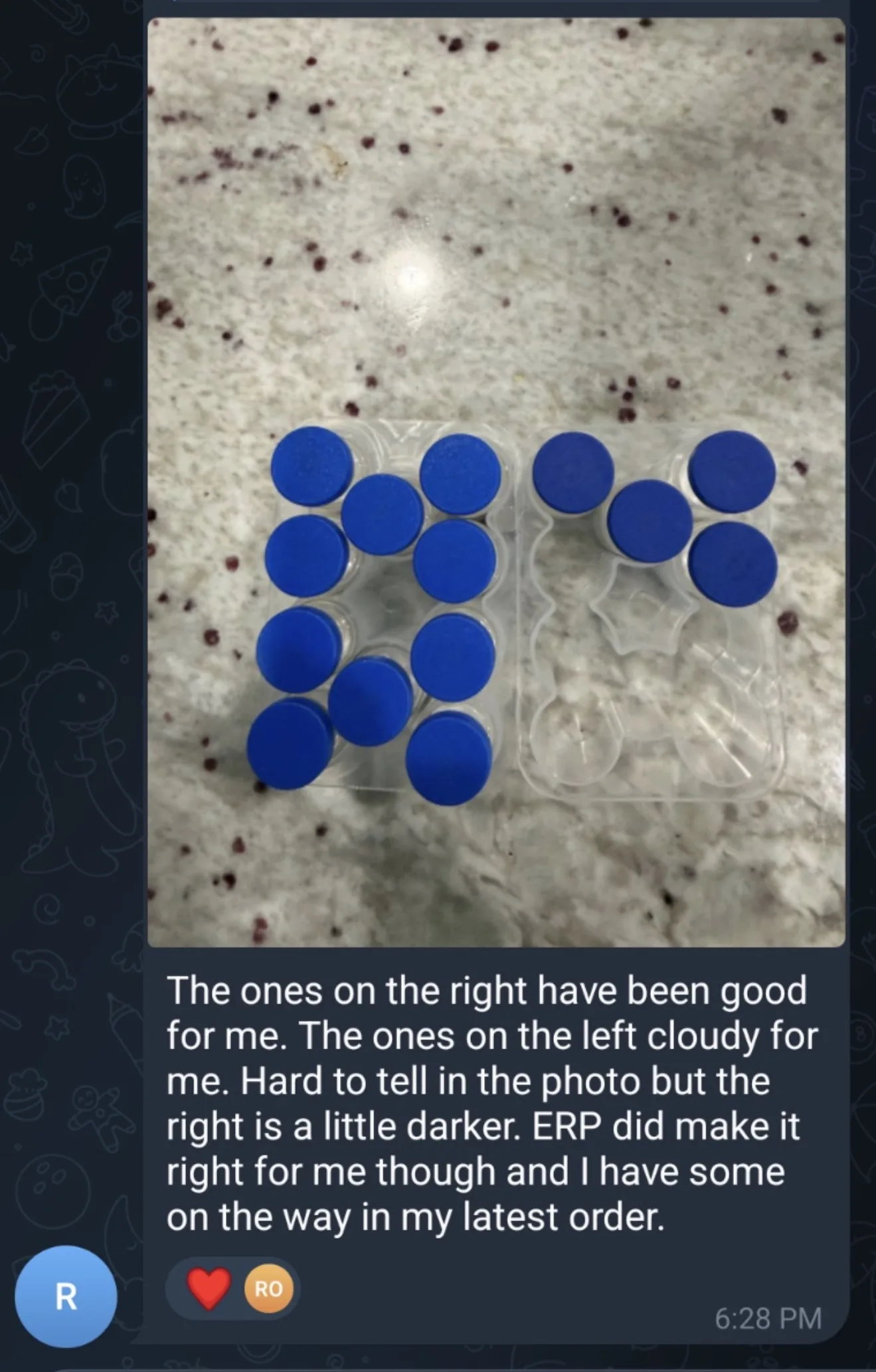
Users described vials that turned cloudy immediately with Hospira BAC, while others from the same broader source stream reportedly remained fine. The explanation circulating was residual TFA salts left behind during finishing, not a failed sequence, not a classic purity issue, but a compatibility problem that only reveals itself during reconstitution.
That distinction is important.
A product can still look normal if tested dry or reconstituted under lab conditions, while failing under real world use.
The same discussion also raised a broader supply chain point: if a small number of upstream manufacturers supply most downstream labs and vendors, then a single finishing-stage issue could propagate across multiple brands.
What looks like a scattered vendor problem may, in reality, be a shared upstream compatibility issue moving through the market.
Why Retatrutide Shows This More Clearly
Retatrutide is not a simple peptide.
It is:
larger
structurally more complex
chemically modified
That makes it more sensitive to:
pH
solvent
formulation quality
In other words:
It does not create the problem; it reveals it.
The harder truth is this
Cloudiness is not cosmetic
It is a sign that something in the system has broken down:
solubility
stability
compatibility
And most importantly:
It is a problem that standard COAs were never designed to detect.
If material is no longer fully dissolved, it is no longer behaving as a proper solution, regardless of what the original COA showed
Cloudy Reta is not one mystery with one answer.
It is what happens when multiple factors, salt load, pH mismatch, solvent incompatibility, and structural instability, collapse into the same visible symptom.
That is why one lab sees a clear vial while a user sees flakes.
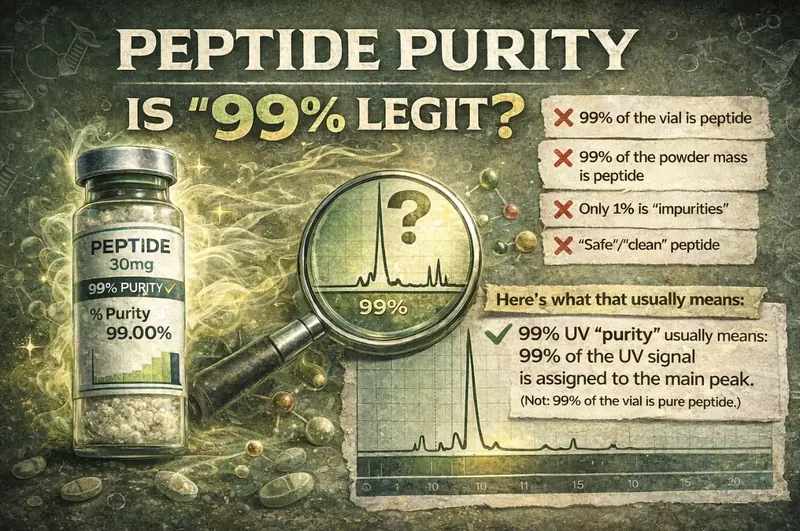
That is why “99% pure” tells you less than people think.
The harder truth is this;
A peptide can be chemically correct and still be practically wrong.
And right now, Retatrutide is forcing the grey market to confront something it has largely ignored:
Passing a lab test is not the same as performing properly in solution.
The lab says it’s fine.
The vial says it isn’t.
And right now, the vial is telling the more important story.

Comments