
When the FDA released its April 1 update on compounded GLP-1 restrictions, the reaction split instantly.
https://www.fda.gov/drugs/drug-alerts-and-statements/fda-clarifies-policies-compounders-national-glp-1-supply-begins-stabilize
On one side, panic with claims that compounding was effectively over.
On the other, reassurance, most clearly from the Alliance for Pharmacy Compounding, which insisted the April update was “nothing new” and largely a restatement of existing guidance.
https://a4pc.org/news/nothing-new-in-fda-clarification-on-glp-1-compounding-but-good-reminder
The Alliance was right that the April update largely restated existing policy. But that does not mean nothing changed in practice. What changed was the degree of scrutiny now being applied to the existing framework.
And that is the part both sides are missing.
It was never a hidden loophole. It was a narrow patient-specific exception that people tried to stretch into a repeatable model. Now the FDA is putting that model under greater pressure.
It’s also worth noting that commercial availability status matters here. Now that semaglutide and tirzepatide are off the shortage list, the “essentially copy” issue carries much more weight than it did during the shortage period, when compounding was more broadly permitted. That helps explain why the April 1 guidance landed when it did and why enforcement pressure is increasing.
What Social Media Got Wrong
Most of the reaction online fell into three broad camps. Panic that compounding is over, technical that there are still loopholes, and structural that this hits scale, not compounding itself.
The third came closest.
Because the real issue was never just whether compounding still existed in theory. It was whether the old GLP-1 model could still function once shortage status disappeared.
The Two Rules Most People Are Mixing Up
Much of the confusion comes from blending two separate frameworks which are not the same. There is a 503B problem, and there is a 503A exception and understanding the difference is everything.
503B: The Bulk Substance Problem
503B outsourcing facilities cannot compound freely from bulk substances. They can only do so if the substance is on the FDA drug shortage list, or it appears on the 503B bulks list based on clinical need.
Now that semaglutide and tirzepatide are off the shortage list, and not on the 503B bulks list, that pathway tightens significantly. That’s the structural shift. The model that expanded during the shortage no longer fits once that condition disappears.
503A: The “Loophole” Everyone Is Talking About
This is where things shift. Under 503A, a compounded product may avoid being considered an “essentially a copy” if a prescriber determines and documents that it contains a change that produces a significant difference for an identified individual patient. That sentence is what people are calling the loophole, because on paper, it appears flexible.
What the FDA Has Already Made Clear
The FDA has already addressed the most obvious workaround. Adding something like B12 does not automatically make a product different, if the compounded product;
uses the same API
is given by the same route
and is in the same, similar, or easily substitutable strength, including where the amounts are within 10% of commercially available doses.
In these cases, it can still be considered a copy, even if something has been added.
The Problem With the “Loophole” Argument
The weakness is assuming the difference only needs to exist on paper. It doesn’t. The standard is whether the product is meaningfully different for a specific patient. That becomes much harder to defend when the same combinations, doses, and justifications begin to repeat and at that point, the difference is no longer individual, but it starts to look standardised. And once it looks standardised, it stops behaving like an exception. That is where it breaks.
The 4-Script Reality
This is the part many missed. The “4 prescriptions per month” concept isn’t a safe operating zone. You can still operate, but you can’t scale and that’s the real shift. The rule doesn’t remove compounding. It removes the ability to build a business on it. This isn’t just a regulatory argument. It’s already visible in how the biggest compounders are repositioning.
The large compounders are not all reacting in the same way. Some are leaning on combination products, some on alternate dosage forms, and some on patient-specific prescribing arguments. The details differ, but the direction is clear: they are trying to keep operating inside a space that has become much harder to defend.
So What Are the Options?
The difficulty is obvious. The change cannot be so minor that the product is still treated as a copy, but it also cannot be so major that it becomes a new drug entirely and that leaves a very narrow middle ground.
Microdosing: One of the Few Real Pathways
Microdosing works because it creates something that isn’t easily substitutable.
The “10% rule” matters here.
If a compounded dose sits within roughly 10% of a commercially available strength, it can still be treated as similar, and therefore a copy. Microdosing sits outside that. If a patient cannot tolerate a 2.5 mg and instead needs 1.0 mg then that dose does not exist commercially, cannot be delivered by a pen and sits well outside the “similar strength” range. That is what creates a real clinical difference, but even this has limits. If the same microdoses start being used across multiple patients then it stops being individual and starts to look like a standard protocol
The Grey Area Isn’t New
None of this is entirely new, the grey peptide market has dealt with similar disputes for years. Once compounds start being altered, the same question comes up again, whether it’s still the same compound, or whether it’s something else being sold under the original name?
The Glycine Example
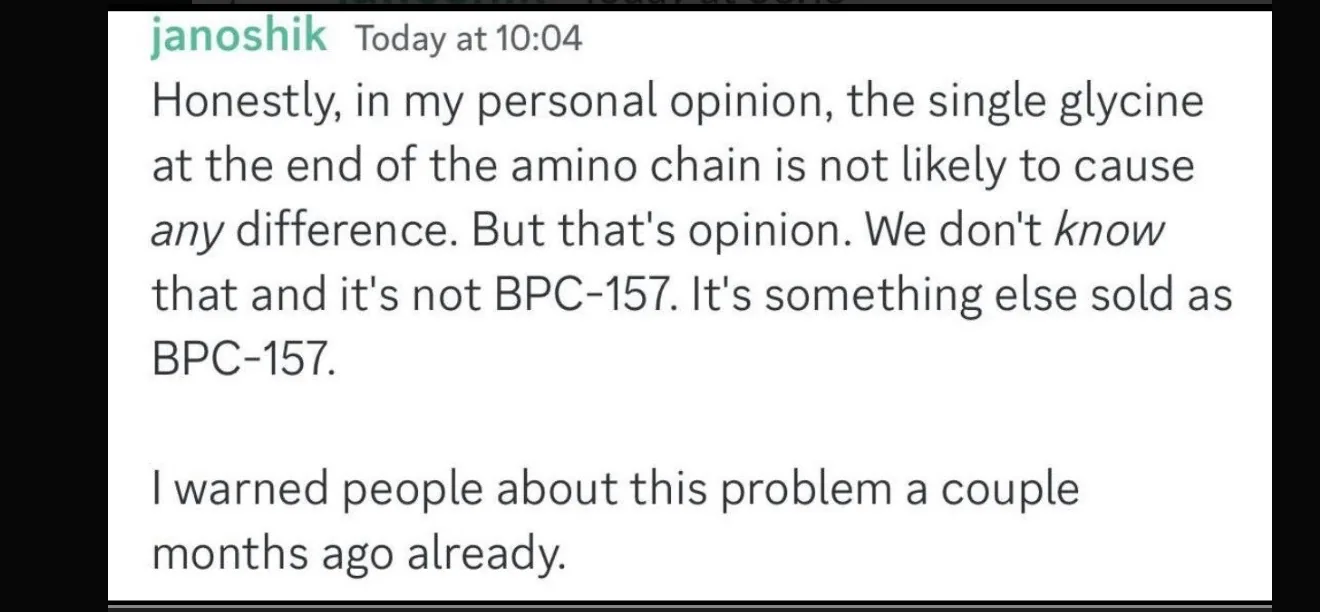
A clear example was Healthtide in 2024, who sold products as “BPC and Ipamorelin” which after subsequent testing came back as neither peptide detected and unknown peptides found instead.
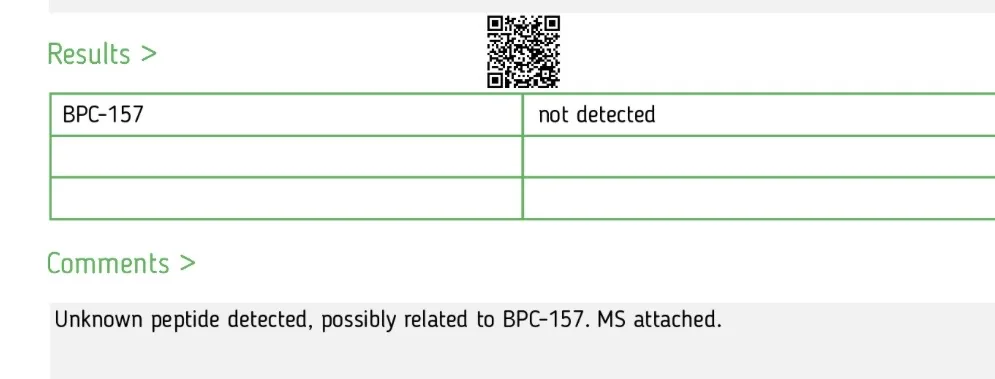
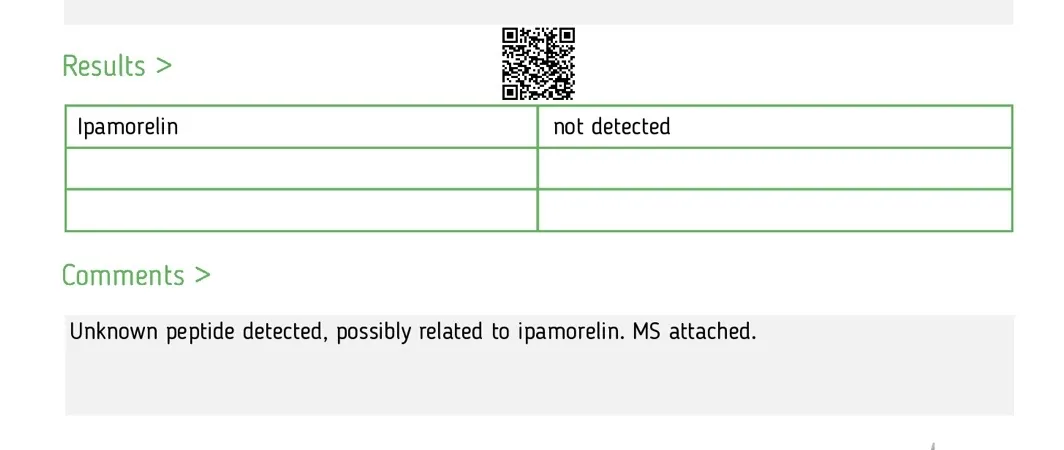
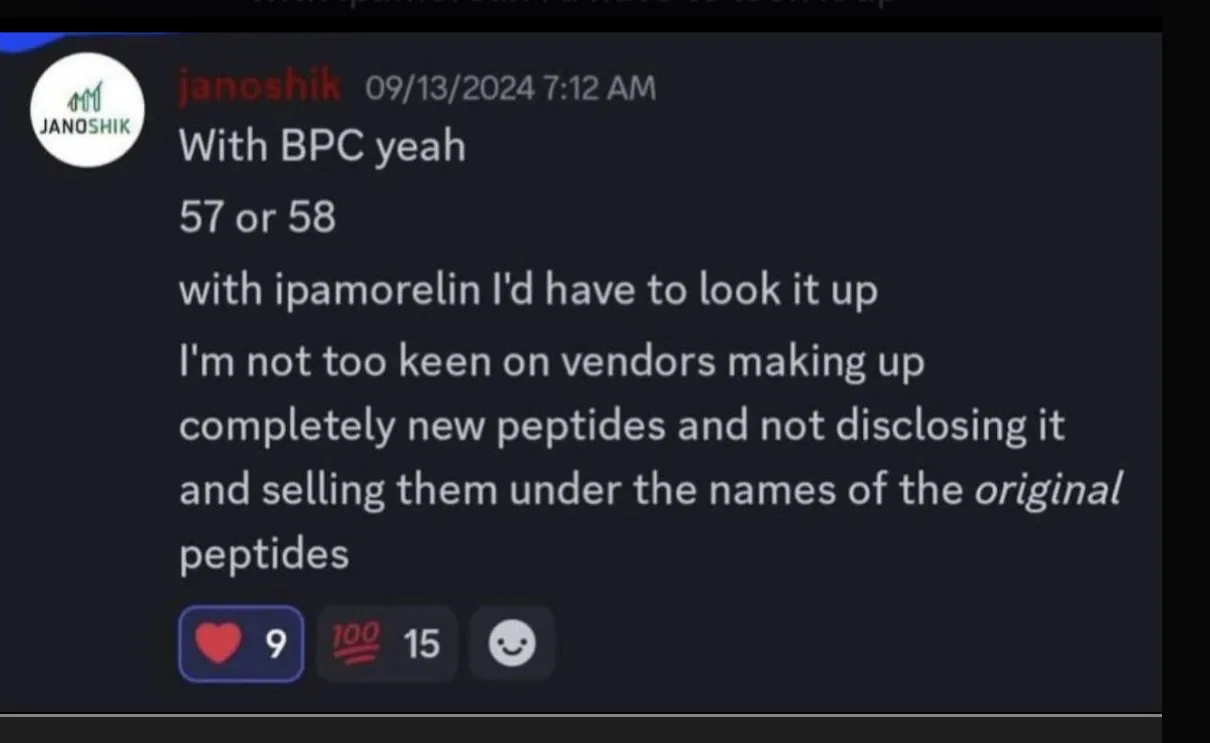
Healthtide’s explanation was that an extra glycine was added “to avoid risks”. They claimed that it had no impact on the product. The reality however, is that a peptide is defined by its sequence and once there is a change in the sequence, it’s no longer the same peptide. Even Janoshik’s position reflected the tension that it’s not acceptable to sell undisclosed new peptides, although he’s uncertain whether small changes affect function. In the end, the products were withdrawn.
Other Attempts at Modification
“Gliptide”, designed by Aminos Research, attempted to modify GLP-1 structure by switching the fatty acid side chains to create a “stronger” compound. It involved taking the fatty acid side chain from semaglutide and switching it with the fatty acid side chain of tirzepatide.
Diagram below shows Gliptide which is tirzepatide containing the fatty acid side chain substitution
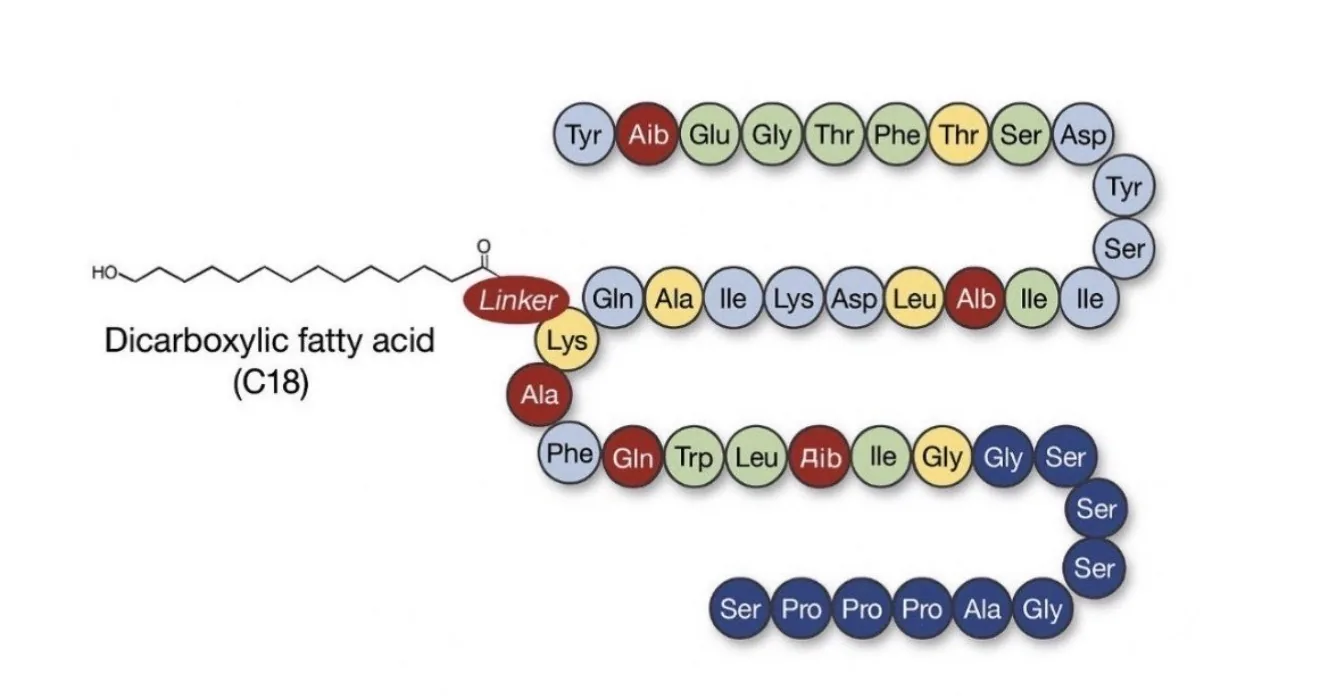
Fatty acid side chain modifications are known to extend GLP-1 half-life, but only when they are precisely designed and biologically validated and Gliptide was neither.
When it appeared in autumn 2024, the reaction was largely negative and nothing ultimately came of it and the product was withdrawn. At the time, it was seen as too speculative, too untested, and too far removed from anything with an established clinical basis. But it’s worth asking whether that reaction would be the same now. Back in autumn 2024, the market was still operating in a world where branded GLP-1 analogues were more accessible through existing grey and compounding routes. In that context, a modified analogue looked unnecessary and risky.
That may not be true forever.
If Chinese manufacturers were ever effectively blocked from producing branded GLP-1 analogues, this kind of modification could start to look less like an oddity and more like a workaround.
More current examples like “Metatrutide” (retatrutide + PEG-MGF designed by Disguised Research) show a similar thinking.
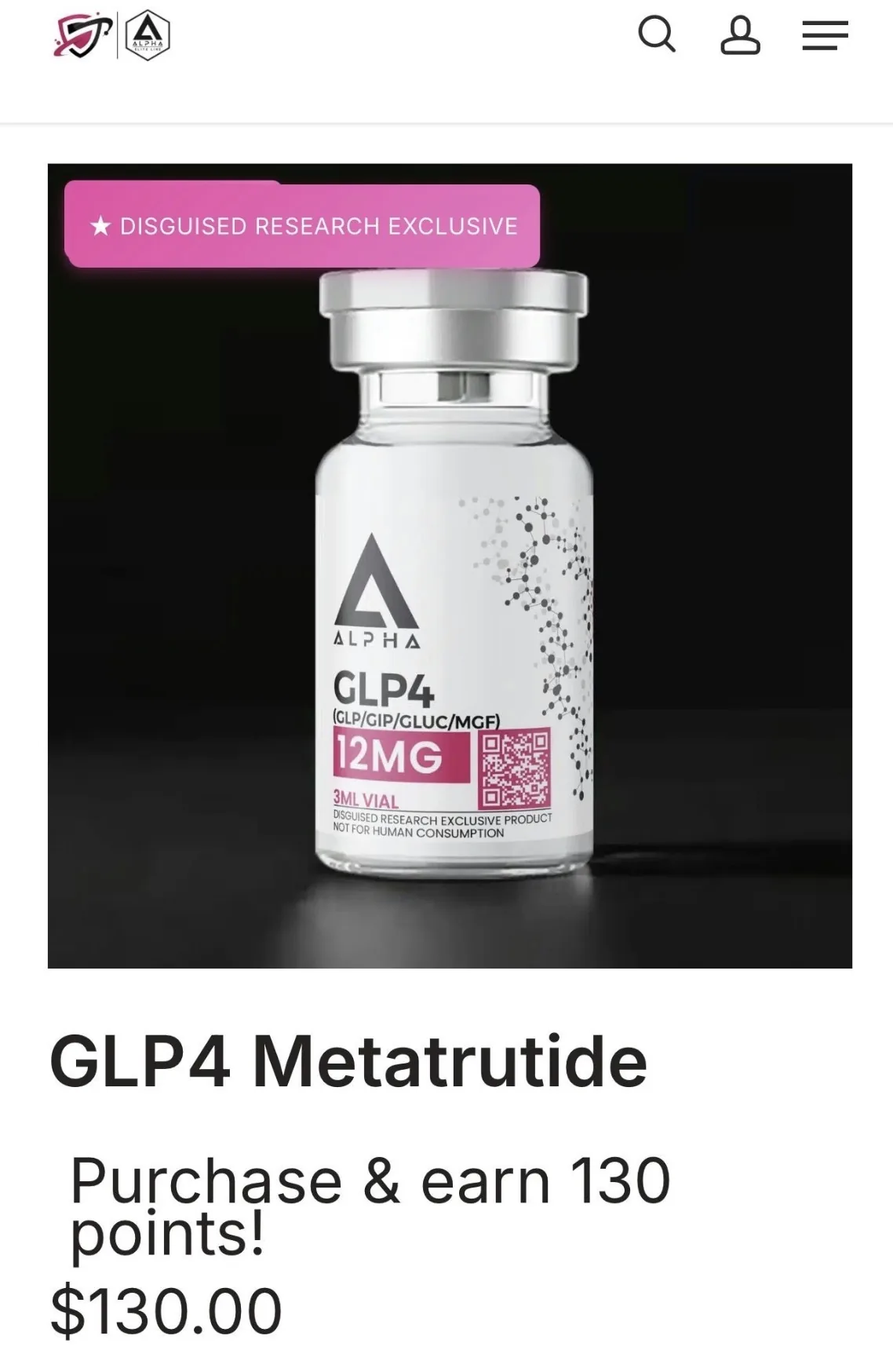
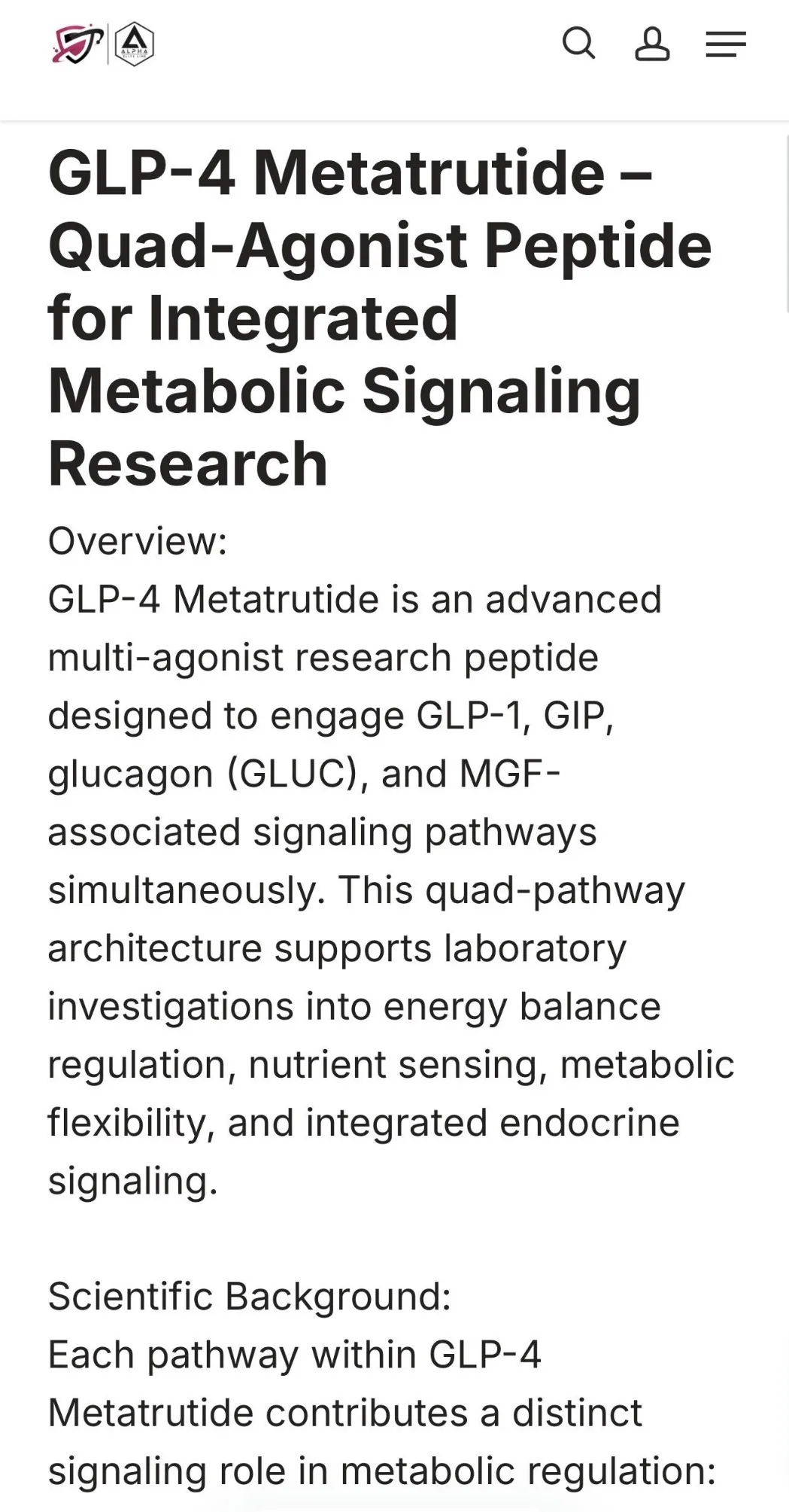
He’s combined pegylated MGF with retatrutide. Anecdotal results report it to produce stronger appetite suppression.
But both these examples are not a solution for compounding pharmacies as they would still be an entirely new compound, not an FDA-approved drug, and something that would require extensive clinical testing before it could be treated as legitimate medicine. So while they may become more attractive in the grey market under tighter restrictions, they don't solve the current pharmacy problem.
This approach to compound alteration is not a new concept to the grey market
What About Changing the Filler?
In the grey market, changing the filler is nothing new. Mannitol, trehalose, sucrose, glycine, arginine and different buffer systems have all been used to alter how a product behaves in the vial without changing the underlying API. The important distinction is that these are usually excipients, not new actives. So they may change stability, pH, cake appearance, or reconstitution behaviour, but they do not automatically make the drug meaningfully different from a regulatory point of view.
However, they may still be relevant where a patient has a documented allergy or intolerance to a standard filler.
What the Big Compounders Are Doing
This is not just a theoretical problem. The larger compounders are already adapting.
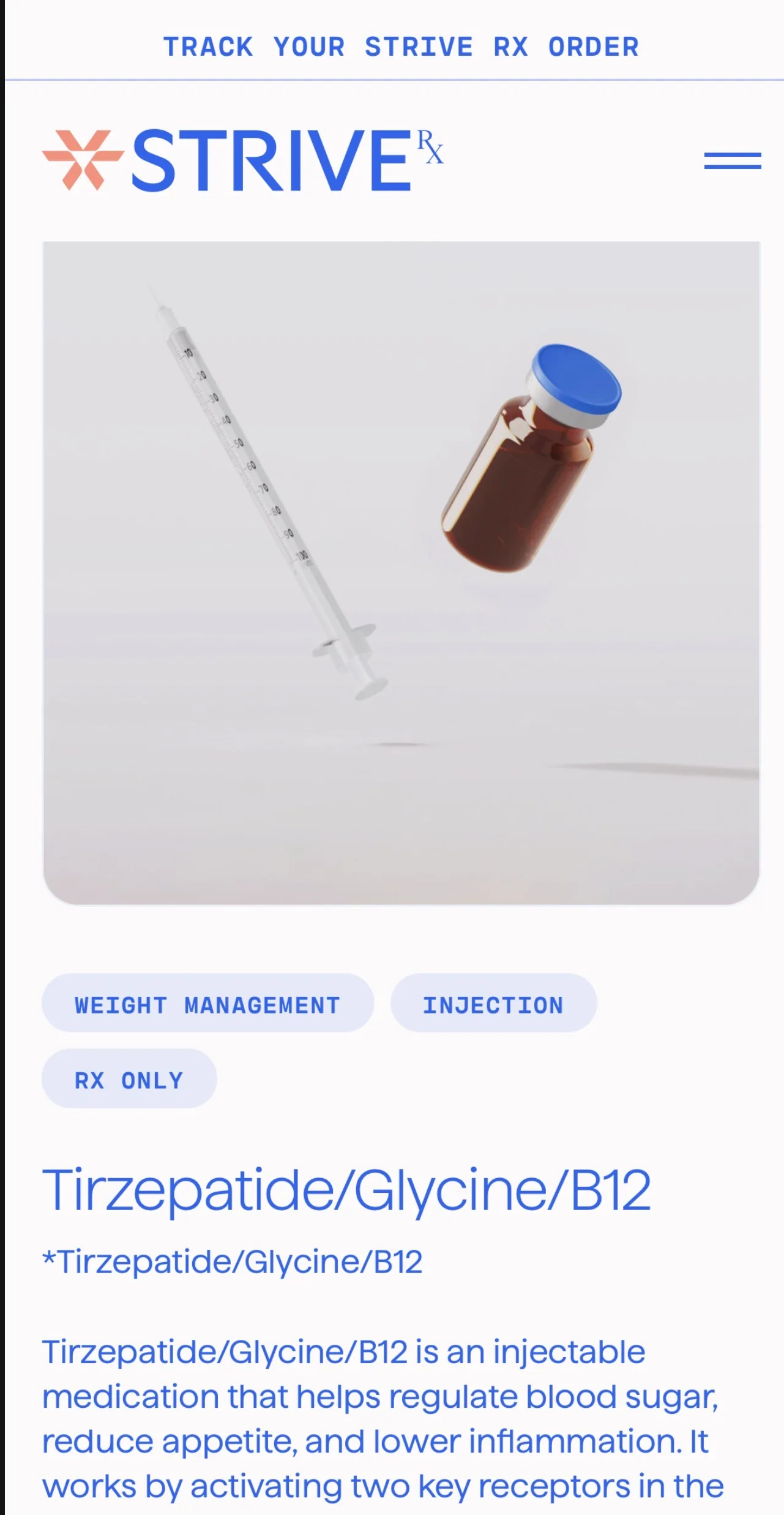
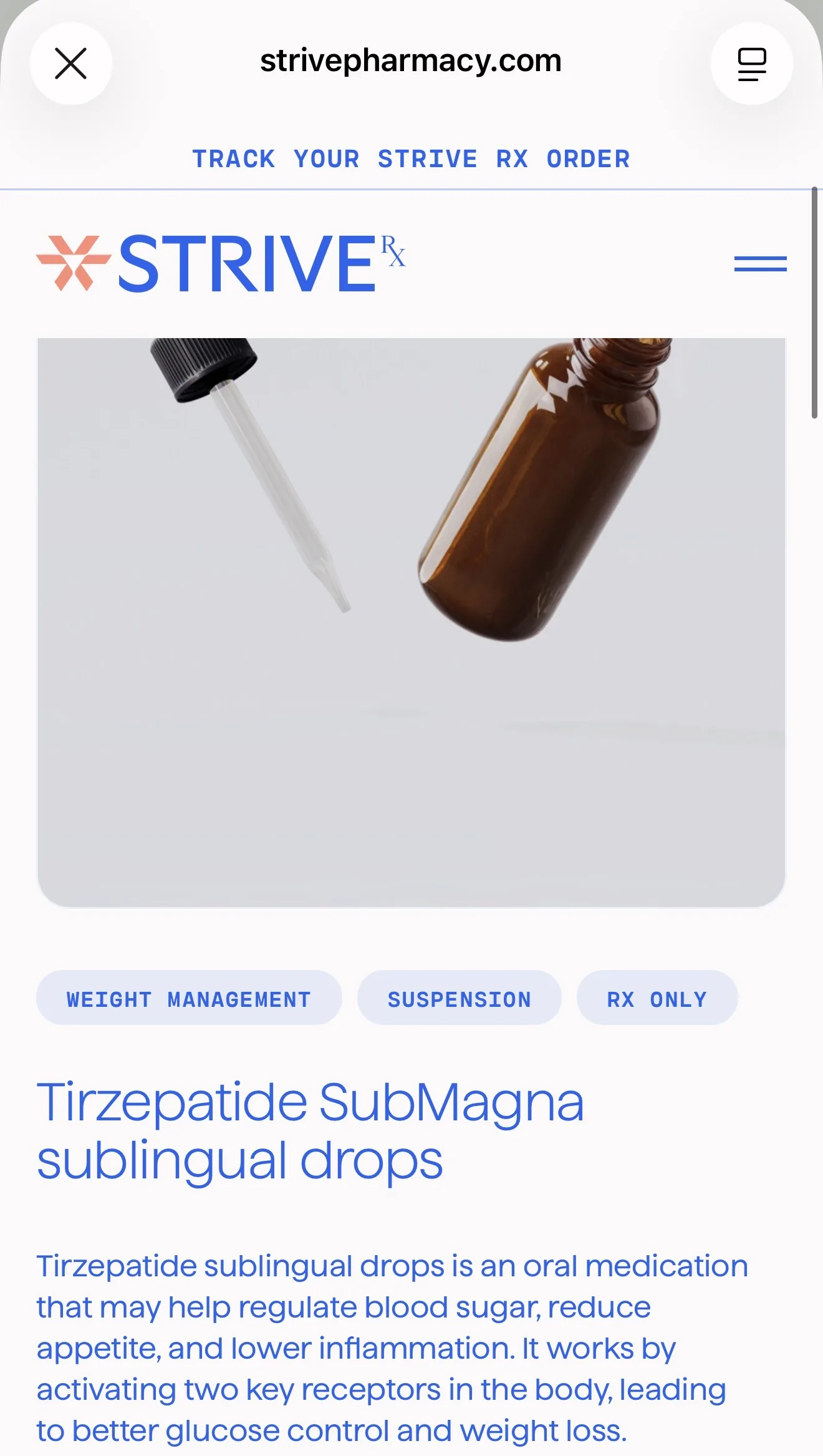
Strive is offering tirzepatide /glycine/B12 and semaglutide/glycine/B12, while also promoting sublingual tirzepatide as an alternative dosage form.
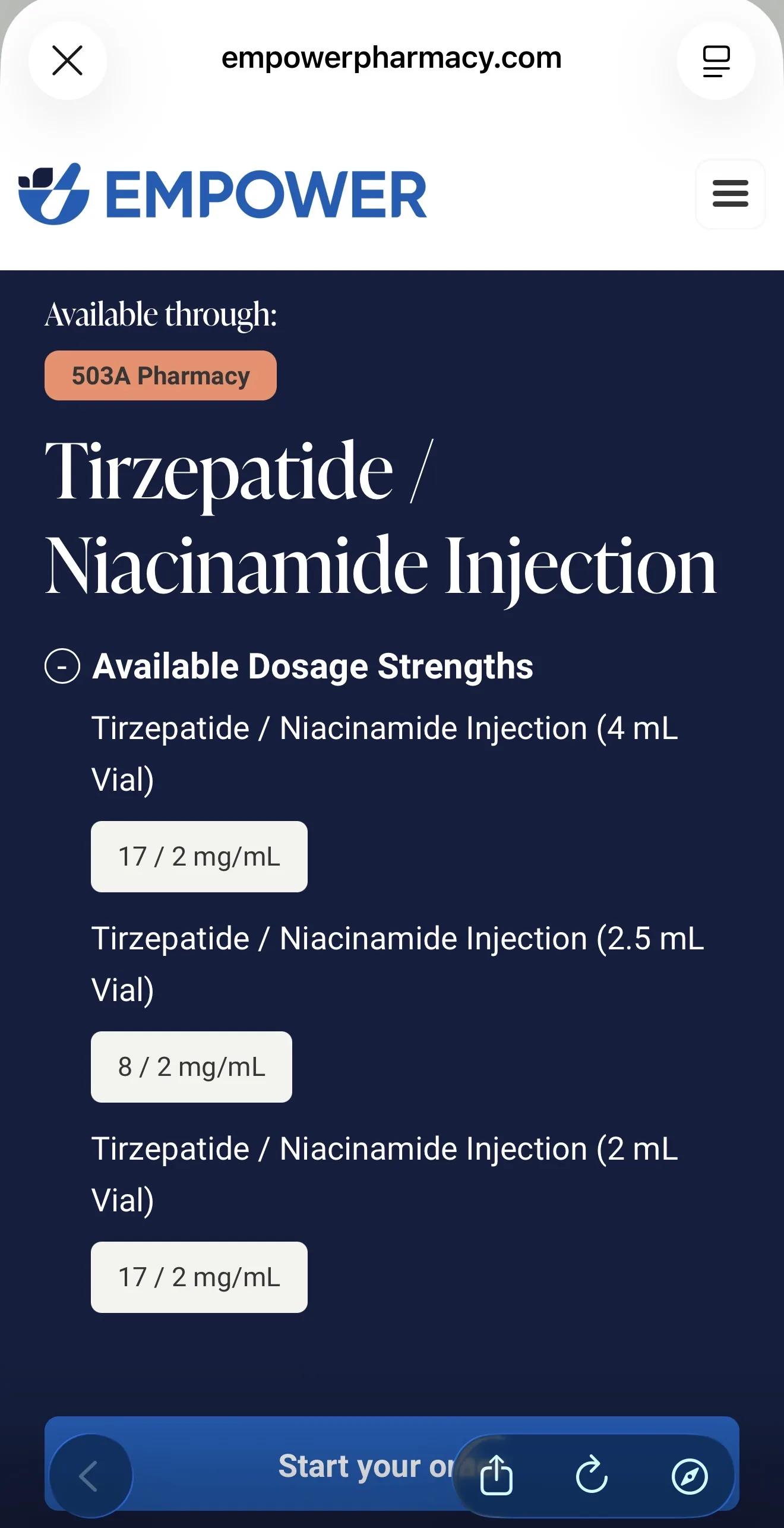
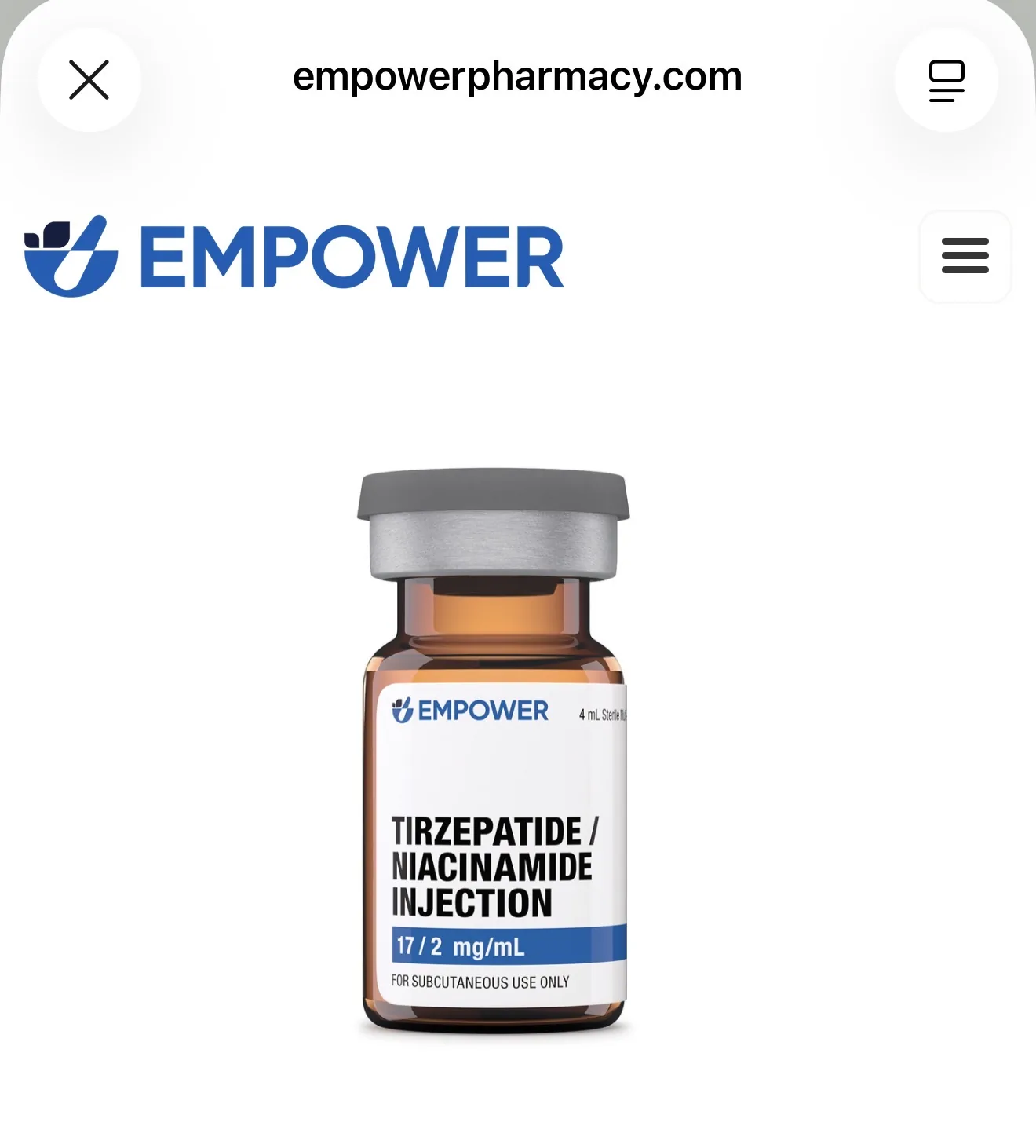
Empower, by contrast, has been offering tirzepatide/niacinamide injection and semaglutide/cyanocobalamin injection through its 503A pharmacy, explicitly tied to patient-specific prescriptions.
Taken together, that gives a fairly clear picture of what’s happening now. Some are trying to create distance through added ingredients, some are trying to create distance through different dosage forms, while some are leaning heavily on personalisation language and patient-specific prescribing. But the common theme is the same, create enough separation from the commercially available product to keep operating, without moving so far that the product becomes something entirely different.
The problem is that the FDA has already made clear that simply adding something like B12 does not automatically solve the “essentially a copy” issue when the API, route, and strength remain the same, similar, or easily substitutable. That is why these examples matter. They show that the loophole argument is no longer abstract. It is already shaping how major compounders are positioning their products in the post-shortage environment.
Common Practice vs Compliance
One of the clearest lessons in all of this is that something can be widely used and still not be fully compliant. Common use does not equal compliance, it often just means it has not been challenged yet.
Final Thought
This was never really a loophole. It was a narrow exception that people tried to stretch into something repeatable which worked for a while. But once the same ingredients, the same justifications, and the same prescribing patterns start to repeat, the exception becomes much harder to defend. and at that point, the issue is no longer whether the rule exists, it’s whether anyone can still pretend this is being applied the way it was intended.
Conclusion
There is no clean middle ground. Too similar and it’s a copy. Too different and it stops being the approved drug. The only realistic options are microdosing for patients who cannot tolerate standard doses, adding something like glycine or niacinamide where there is a genuine clinical reason, or changing the filler where the patient has a documented allergy or intolerance to the standard excipient.
Comments