
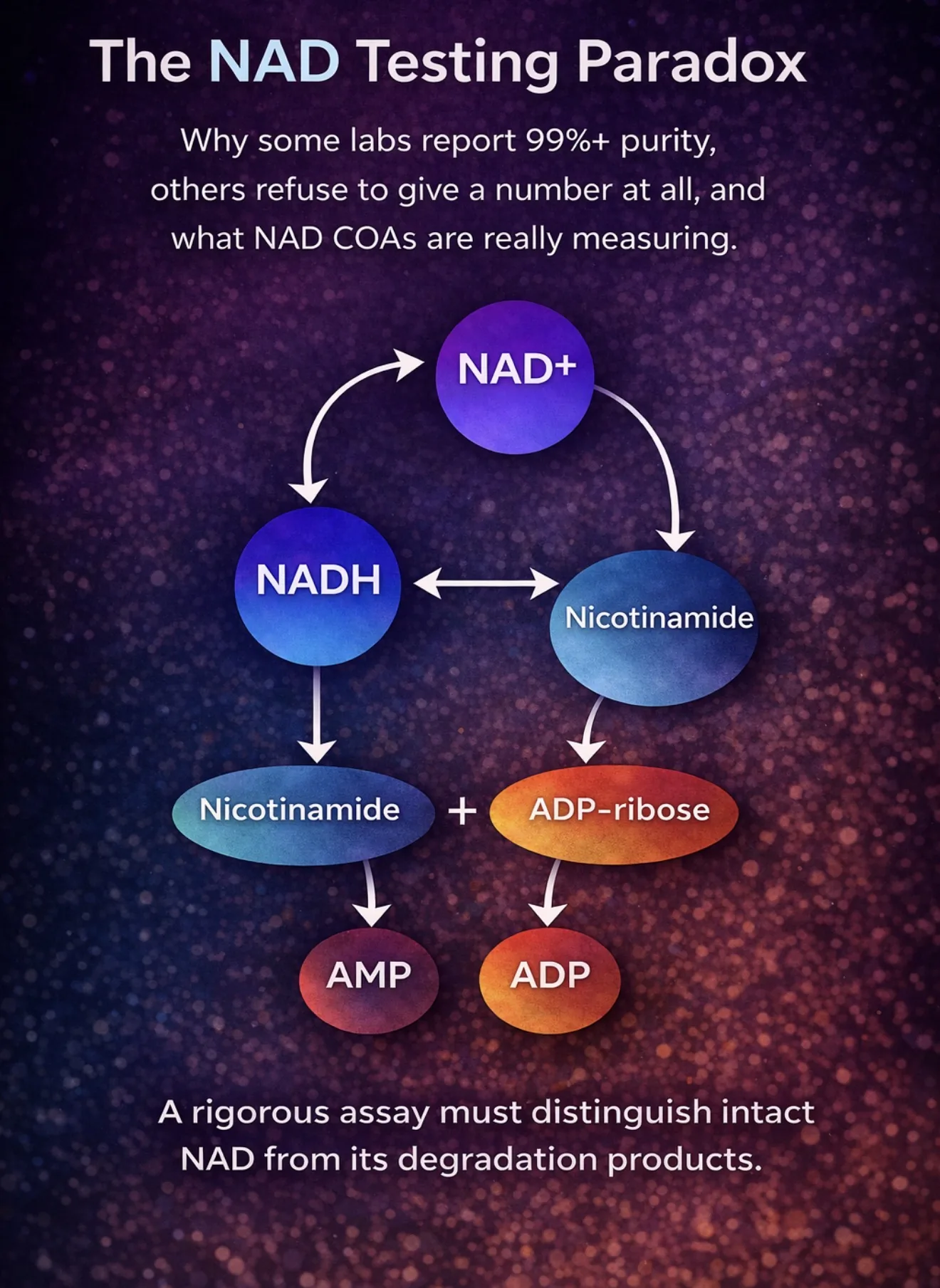
Why do some labs report 99%+ purity for NAD, while others refuse to give a purity number at all?
This episode unpacks what is known as the NAD Testing Paradox.
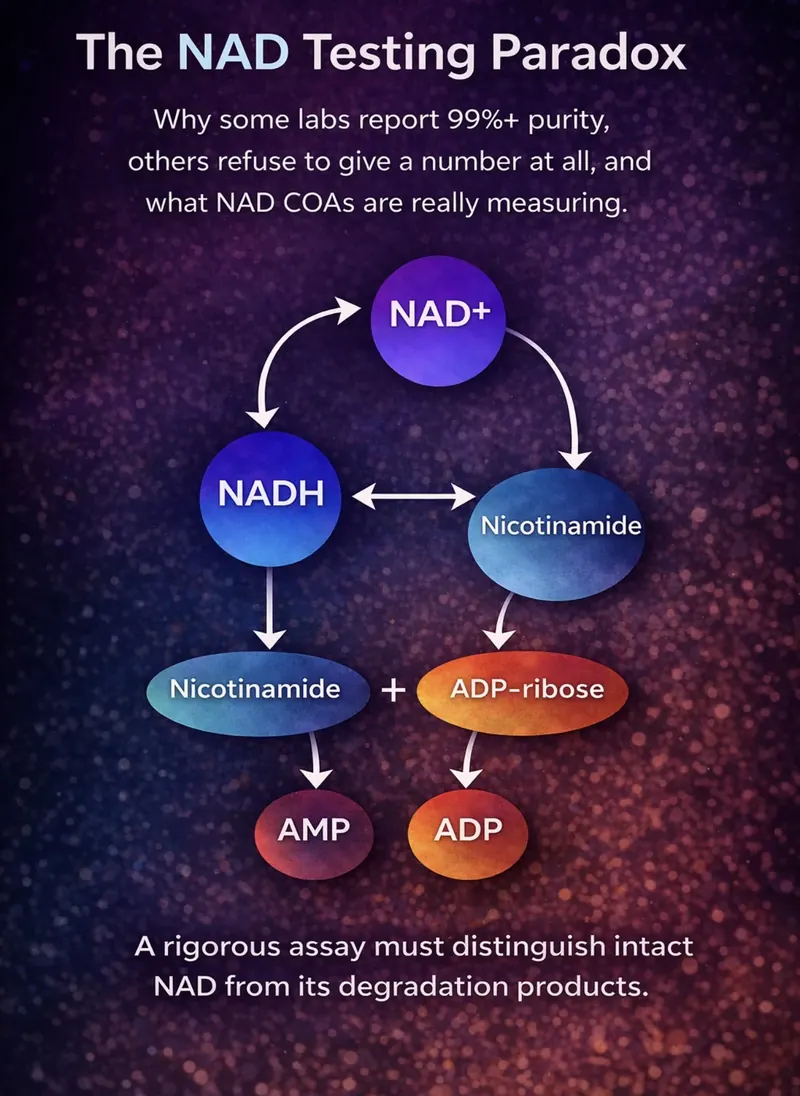
NAD is often analysed using methods designed for peptides, but chemically it behaves very differently. Because NAD naturally breaks down into related molecules like nicotinamide, ADP-ribose, AMP and ADP, purity numbers can sometimes reflect the analytical method used, rather than the actual chemical state of the molecule.
Using real COA examples, this episode explores;
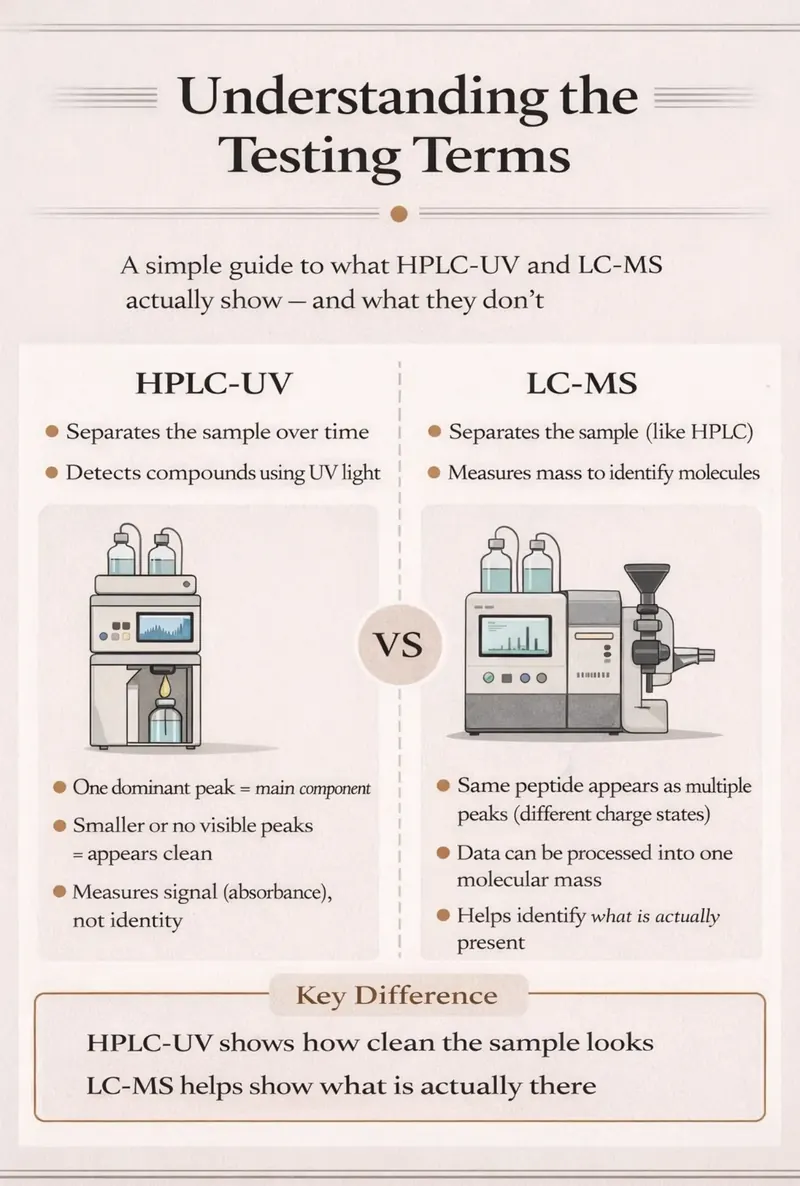
why peptide style testing can be misleading for NAD
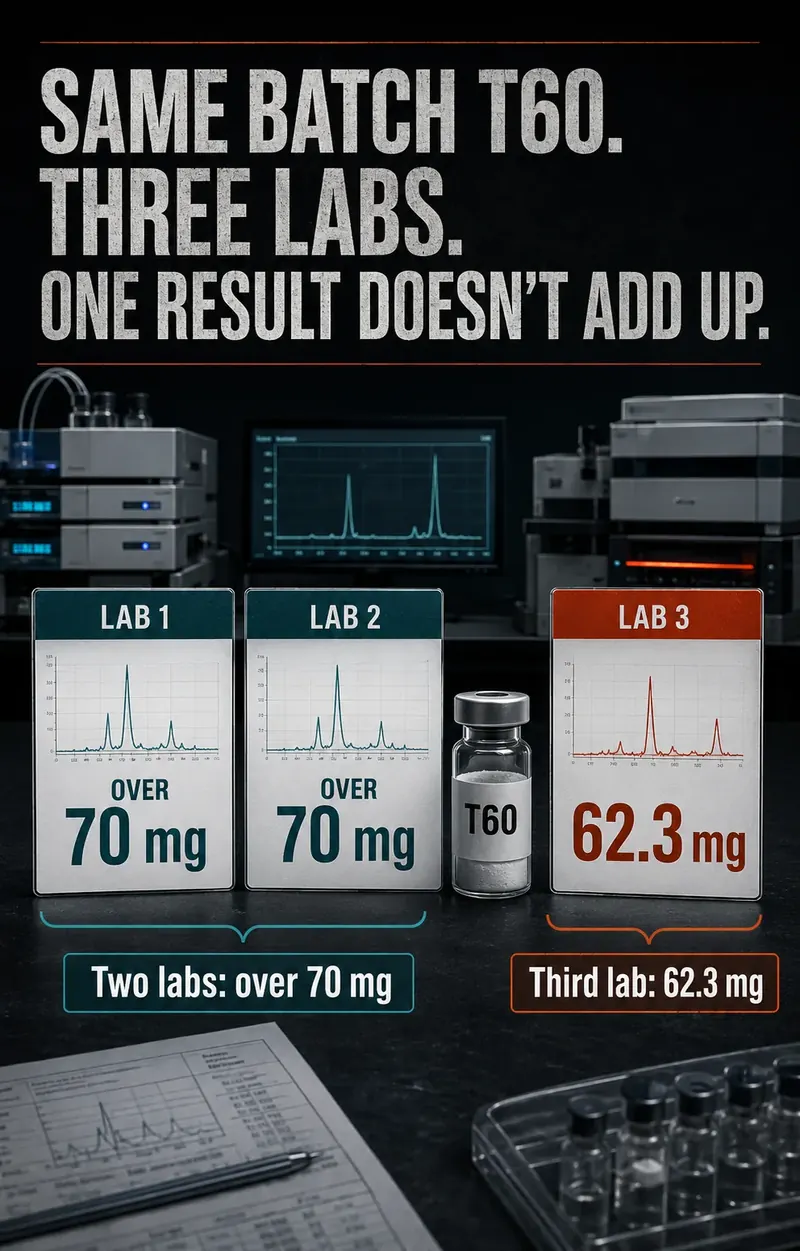
how different labs can end up reporting very different numbers
cases where laboratories even disagreed on the identity of a sample
what a properly selective NAD testing method actually looks like
The goal isn’t to criticise labs, but to explain why NAD purity numbers can appear contradictory, and what those results may actually be measuring.
Comments