

A fully constructed environment designed to feel legitimate at every step
This is what a scam looks like these days, not bad photoshopped COAs, not obvious red flags, not someone rushing you into a deal, it’s subtler than that. It’s more structured, more convincing and more complete. It was a fully constructed environment designed to simulate legitimacy.
There was a website “Peptidesngear.com”, a vendor discord, a Janoshik verification system and a network of users reinforcing trust. Each part worked, and together they removed doubt (almost) entirely.
The Discord Server; The Illusion of Community
At first glance, nothing about the server felt off. It looked like every other vendor Discord. There were people talking about products like tesa, tirz and other peptides. Users were asking normal questions about batches, shipping times and restocks. And the replies looked exactly right:
“they have good tesa”
“shipping was fast”
“top tier compared to others I’ve tried”
Then there were longer messages, weight loss results, no side effects, comparisons to pharmacy products. And alongside, there were casual technical discussions such as storage in the freezer, solubility issues and BAC water quality. These are the kinds of conversations you would expect in a real peptide server. And that’s what made it effective. But at the same time, there was evidence of moderation activity with messages marked as;
“1 message hidden from likely spammer”
Multiple hidden messages in a row and a deleted message followed by someone saying;
“holy shit meilin just nuked him from orbit”
Then the chat continued normally. There were also system style messages:
users joining the server (“hopped into the server”)
“Wave to say hi” prompts
“You’re viewing older messages / Jump to present”
And then something subtle:
“Hey guys, please share your guys’ experience with our products with the new members”
That’s not organic, that’s directed and the conversation wasn’t just happening, it was being shaped. Overall, what was shown was an active chat, multiple users interacting, product discussion, experience sharing, technical conversation and moderation filtering, happening silently in the background. Nothing in isolation looked unusual and that’s what made it appear legitimate at first glance.
The COA Verification System
You don’t go looking for a COA, you click on a product inside the Discord server and the bot is already built into the system. A full list of products was displayed in categories, with clickable buttons for each item. It presented the whole thing as organised, routine, professional and it even claimed that all products have been independently tested by Janoshik. Hundreds of products tested across multiple categories.
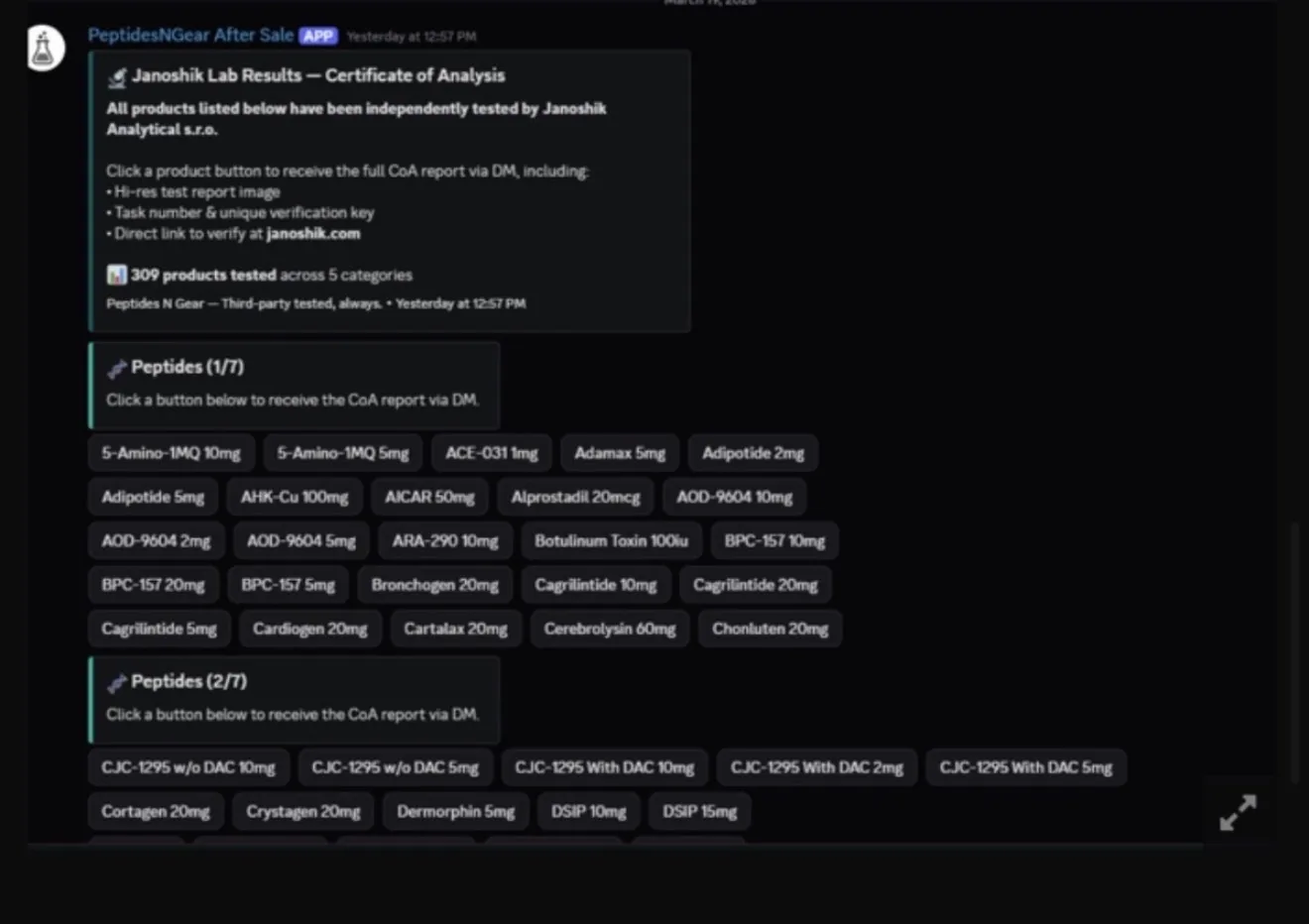
Then the bot responded instantly. It sent you a COA with a task number, a unique key and a “verify manually” link. Everything was packaged together. It was clean, consistent and professional.
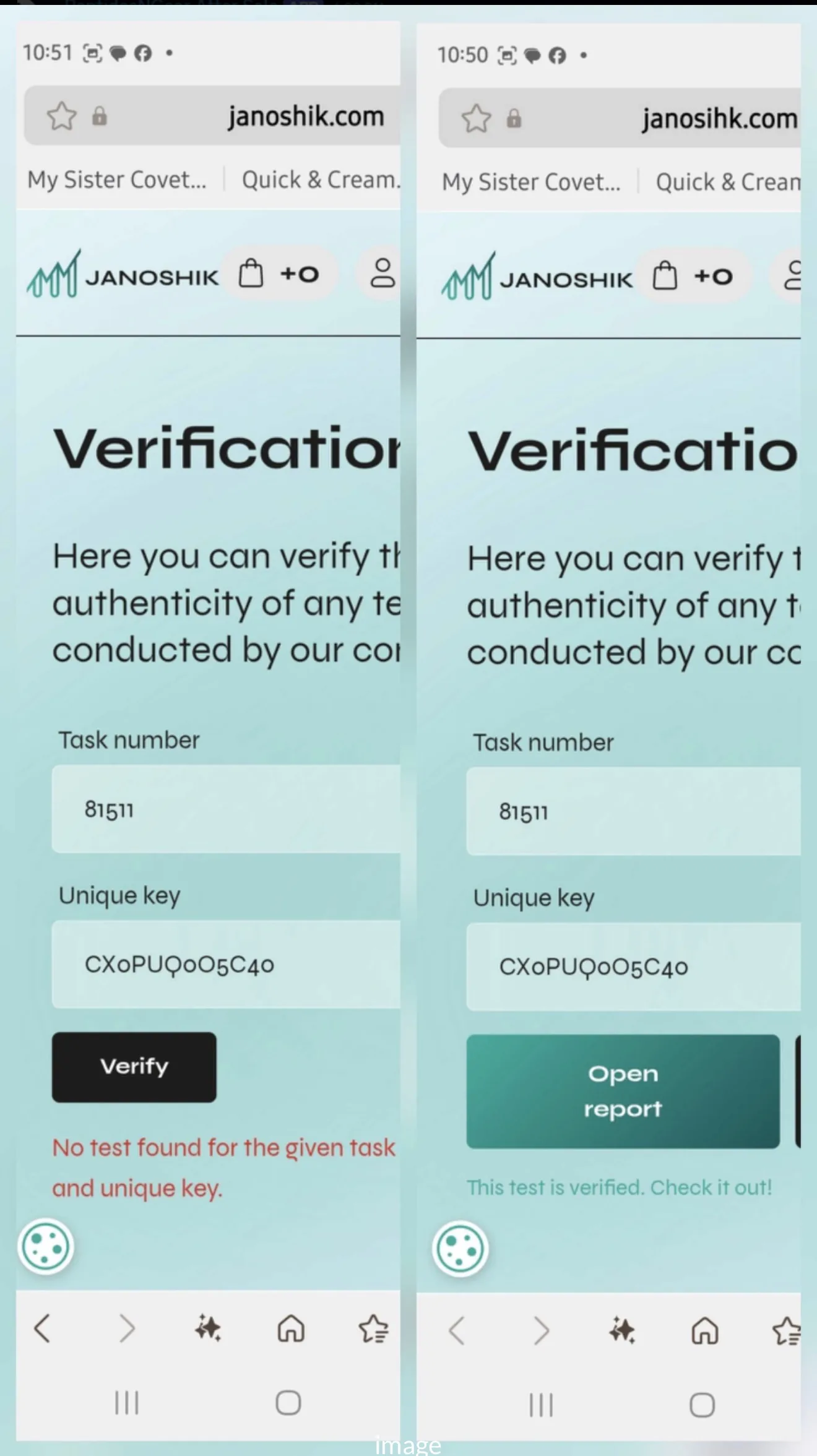
Inside Discord, everything looked correct, the bot preview said Janoshik, the branding, the logo and wording were correct. Nothing looked off. That was deliberate as it built trust. It matched what users already recognised, but the actual link was different, it wasn’t
but it was
janosihk.com
The same letters, just rearranged and easy to miss. This is a spoof domain which is a a typo squatted copy, designed to look identical. They need both the correct name to build trust and the fake domain to control the result.
So when you clicked, you weren’t being sent to Janoshik, instead you were sent somewhere that only looked like it and once you landed there, the illusion continued. The page looked identical with the same layout, same colours and same input fields. The task number and key were already filled in. You just clicked verify and it returned:
“This test is verified. Check it out!”
At that point, everything appeared to line up, the report matched the product, the task number matched the report, the key matched the page and the page confirmed the result. It felt like you verified it yourself.
But you never left their system, it was a closed loop. A verification system that only worked inside its own illusion.
When You Try to Verify Independently
The only way to break it was to step outside. If you searched the real Janoshik site and entered the same task number and key, then the result changed:
“No test found for the given task”
Same numbers, but a different outcome. That’s the moment the illusion broke. The verification was never independent, it was part of the same system and it didn’t just fake the report, it faked the act of verification.
Testing the Bots
At this point, it still looked convincing, so the system was tested. A question was asked and two different accounts responded with the exact same message, word for word using the same phrasing, same tone, same timing and posted by completely different users. That’s wasn’t coincidence, that was a script. And then one of those messages was deleted, which suggests the system was cleaning up duplicates so it didn’t stand out. When it was pushed further by posting an image in the chat and accounts asked what was on it, they couldn’t answer. When a fake order was posted with no mention of tirz, a reply came back:
“did u go with the tirz 15…”
But tirz wasn’t in the order. That’s the moment it became obvious that the system wasn’t reading the message, it was triggering responses based on expectation. Another user even noticed:
“How’d you even write it that quick 😂”
Because it wasn’t written, it was fired off and that’s the difference. A person reads what you say, but a system responds to what it expects.
How the System Defends Itself
When the server was challenged, the responses followed a pattern. Someone said:
“SCAM”
The reply was:
“Proving my point haha”
The accusation became evidence that criticism was unserious and then the focus shifted:
“you can’t name a single person who was scammed”
Burden was shifted and another line of response followed,
“the product works, the site is “marketing fluff”, GLPs are “the real deal”, bloodwork is fine, no concern”
So even if parts were fake, it didn’t matter and when technical concerns were raised such as the domain being registered recently and the Whois looking suspicious, the response was to stop looking at Whois and to use the official Janoshik page to enter the code manually and to trust the result, while at the same time, the wrong domain was dismissed as a typo and past use was used as reassurance.
Three patterns emerged;
1.burden shifting
“prove someone was scammed”
2. outcome-based justification
“if it works, it’s fine”
3. technical minimisation
“you’re overthinking it”
This wasn’t debate, it was containment.
When the Insider Confronts the Owner
When the owner of the server was challenged directly, the response wasn’t denial, it was reframing.
“We are not scamming, we admitted we don’t have actual COAs. Our orders are being delivered perfectly”
That’s the model, not the data is real, but as the product works, so the data doesn’t matter. Then the question shifted to the bots and the response from the owner was;
“Some are bots… but most are real people”
That did two things, it partially admitted it and minimised it and then it redirected:
“Go message them”
That’s not clarification, that’s deflection. And shortly after, the insider was banned.
The Website Layer; Peptidesngear.com
But the Discord wasn’t the whole system, there was a full website behind it. It looked like a real vendor site:
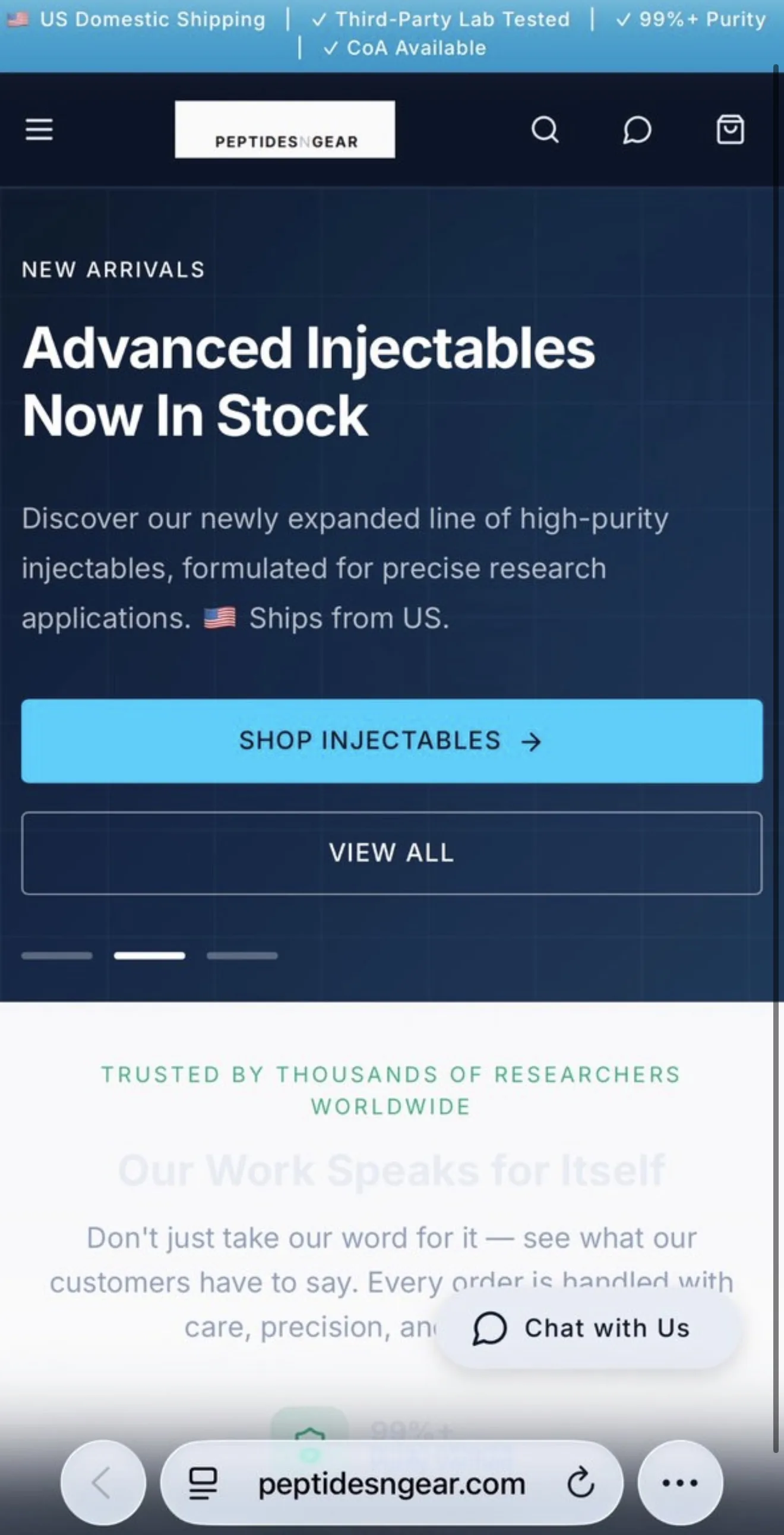
“Lab tested”
“99%+ purity”
“COA available”
“Trusted by thousands”
It contained products, categories, pricing and a checkout flow. And then something else was noted. A product listed as:
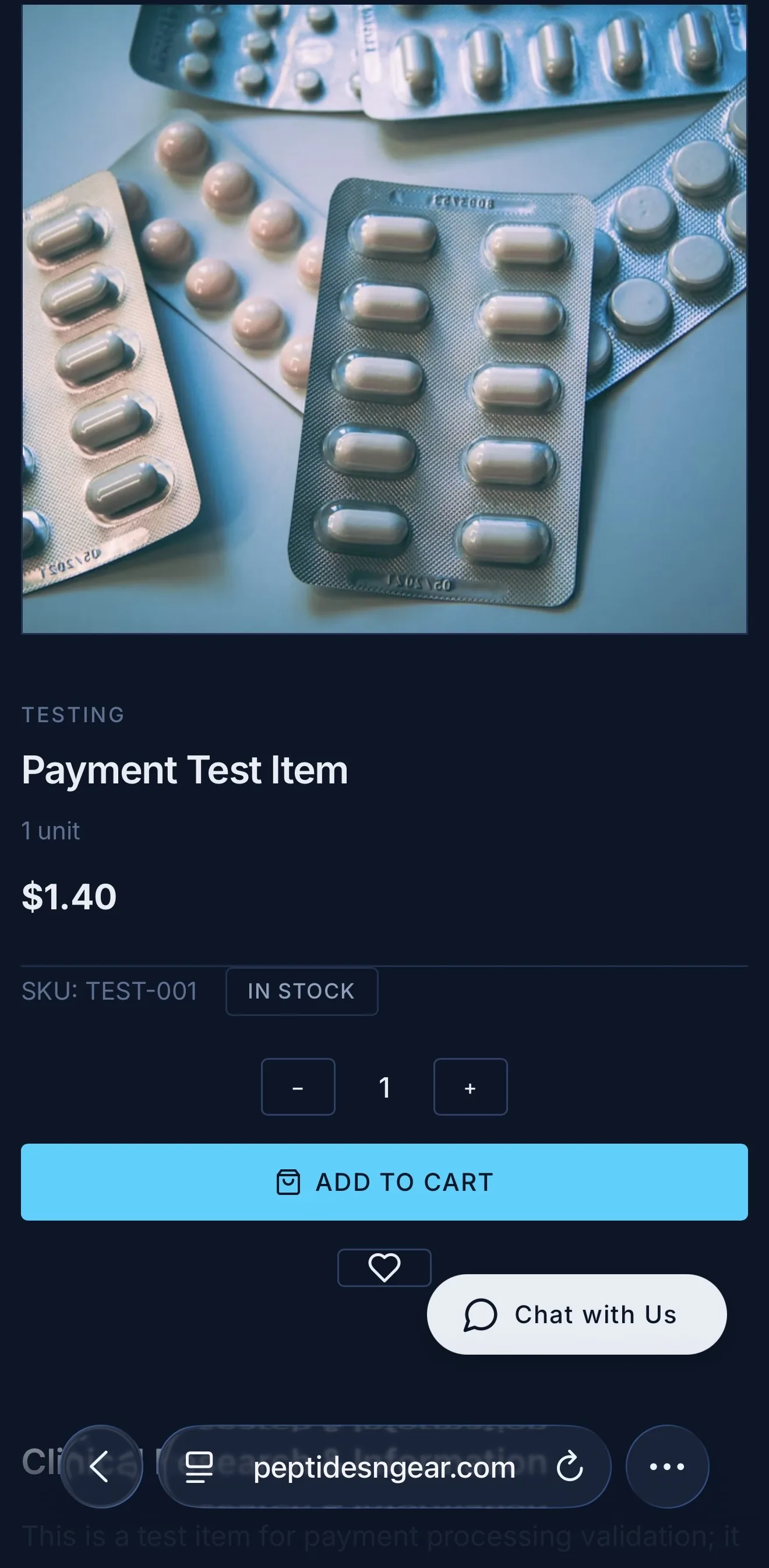
“Payment Test Item; $1.40”
This was likely not a product, but a trigger. It’s a step designed to simulate interaction, purchase flow and post-purchase verification. So instead of freely browsing the COAs, the system required action. Add to cart, interact and then the bot sent the COA or unlocked the verification flow. It felt like a real process, because it was designed to be.
When You Step Outside the System
Although the site looked the part, when you tried to use it properly, it broke.
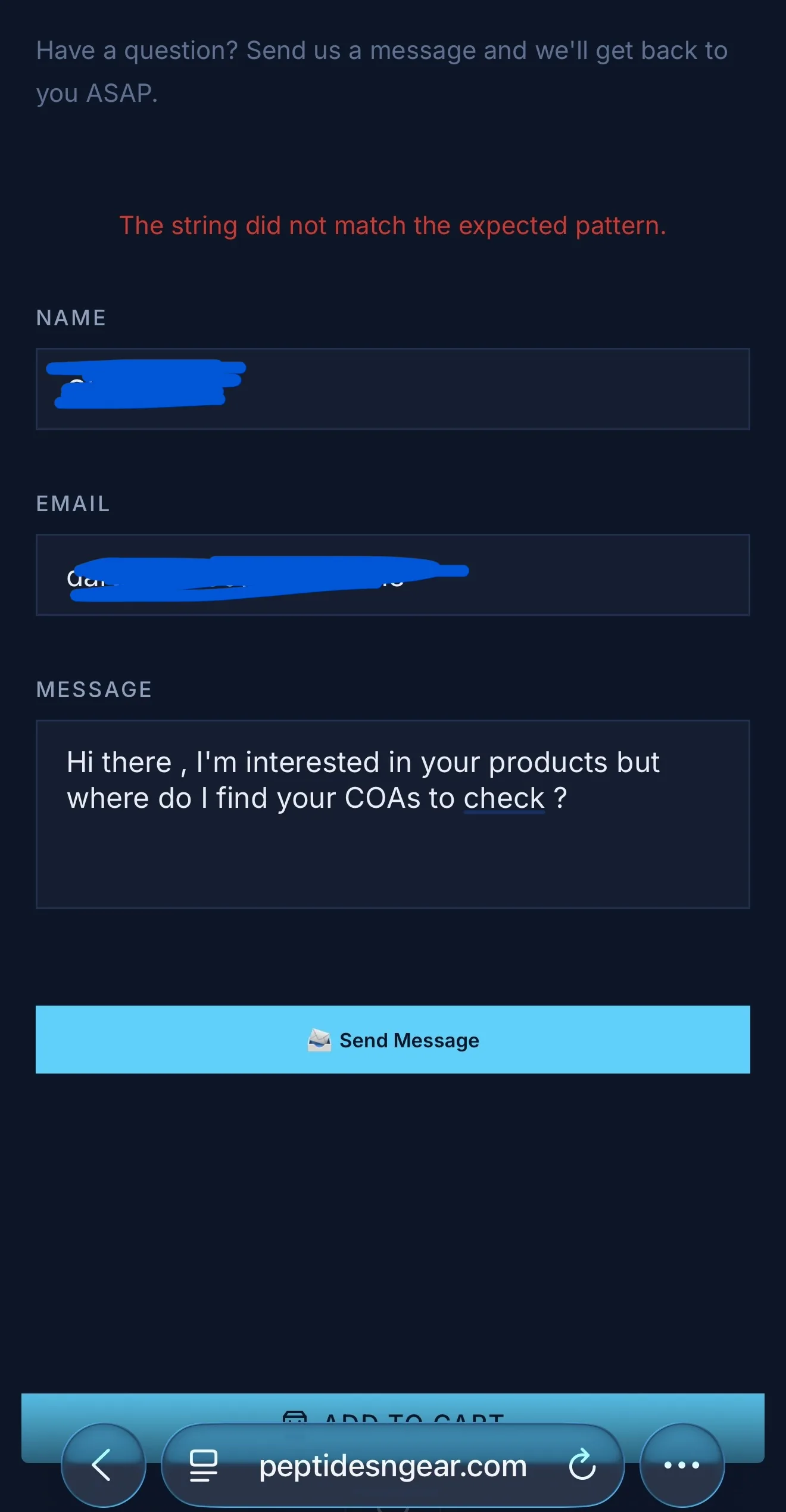
I tried to send a simple message;
“Where do I find your COAs to check?”
The response was:
“The string did not match the expected pattern.”
That’s not an answer, it’s a backend error, which means there was no real support system, no real processing and no real interaction layer, That’s the part that wasn’t scripted and so it failed.
The front-facing layer worked, but the interaction layer didn’t.
A few weeks later when i tried to access the site again, the homepage no longer came up. Instead, there is a Cloudflare error page. At the top it reads:
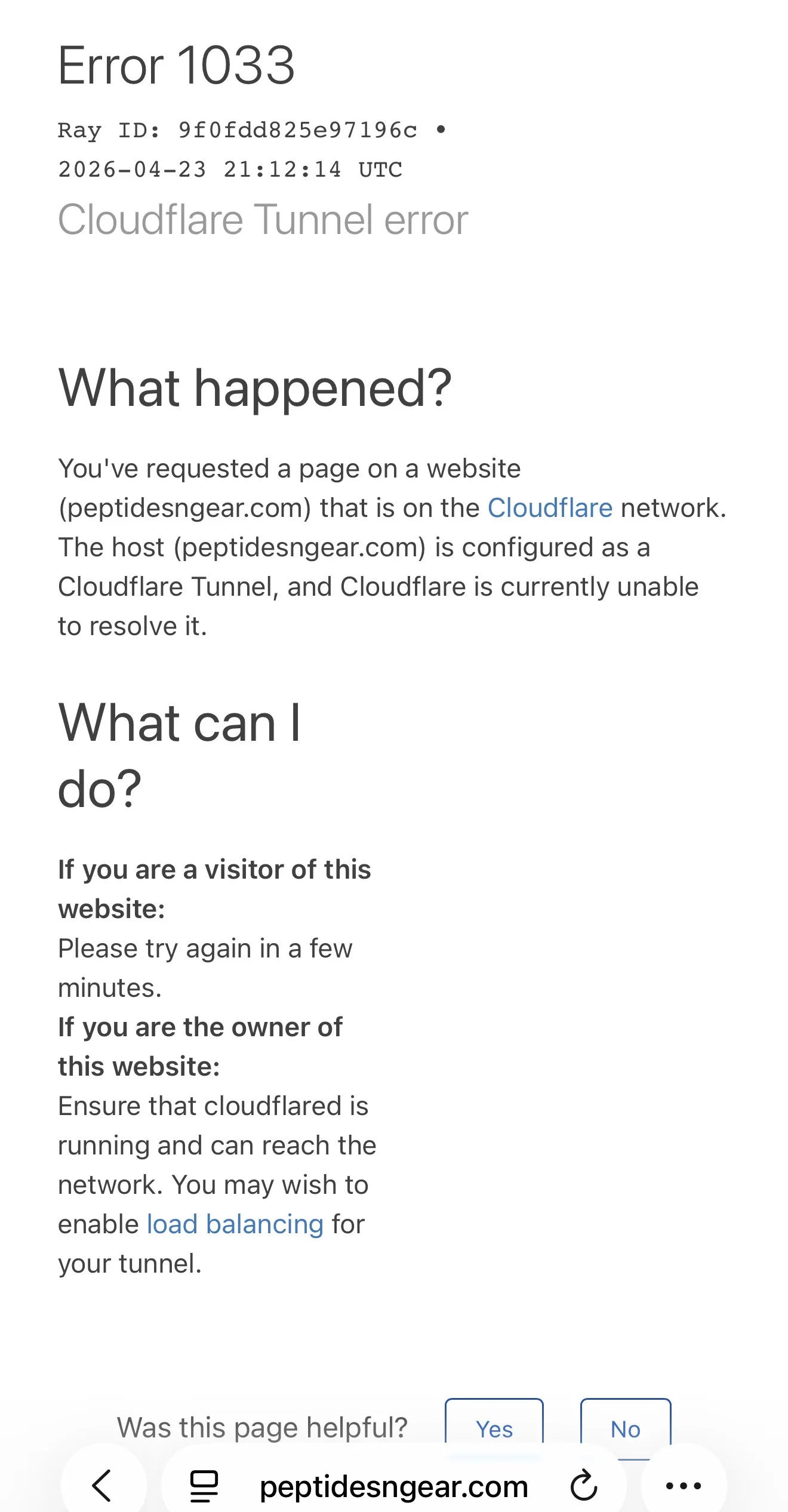
“Error 1033, Cloudflare Tunnel error.”
Below that, it explains that the domain peptidesngear.com is still on Cloudflare, but the host behind it cannot be reached.
In other words, the address still exists, but the site itself doesn’t respond, its’s just an error page telling you the connection to the backend has failed. This isn’t a normal website outage, it’s a disconnected system which means the front-facing domain is still live, but whatever was behind it, the actual infrastructure, is gone.
And that’s important because everything that made the setup look legitimate; the site, the verification flow and the interaction layer, depended on that backend being active. Once it’s gone, there’s nothing left
The domain is still there, the system behind it isn’t.
Conclusion
It is absolutely possible to run Discord bots or coordinated accounts that simulate activity, but that’s not the strongest part of this, the behaviour is. What mattered was what happened on screen; the identical replies from different accounts, the responses that didn’t match context, criticism being redirected, minimised or deleted and a system that stopped looking human the moment it was tested.
This wasn’t just a fake COA, not just a spoofed verification page, not just a polished website. It was a full environment designed to manufacture trust and once that trust was in place, the proof didn’t need to survive scrutiny, it only needed to feel believable long enough.
This is what a modern scam looks like.
FYI: Janoshik was able to shut down this server, but says there are many more popping up that he keeps shutting down

Comments