
For many buyers, trust is built over time. A vendor survives for years, orders arrive successfully, customers recommend them, and eventually they become viewed as “safe.”
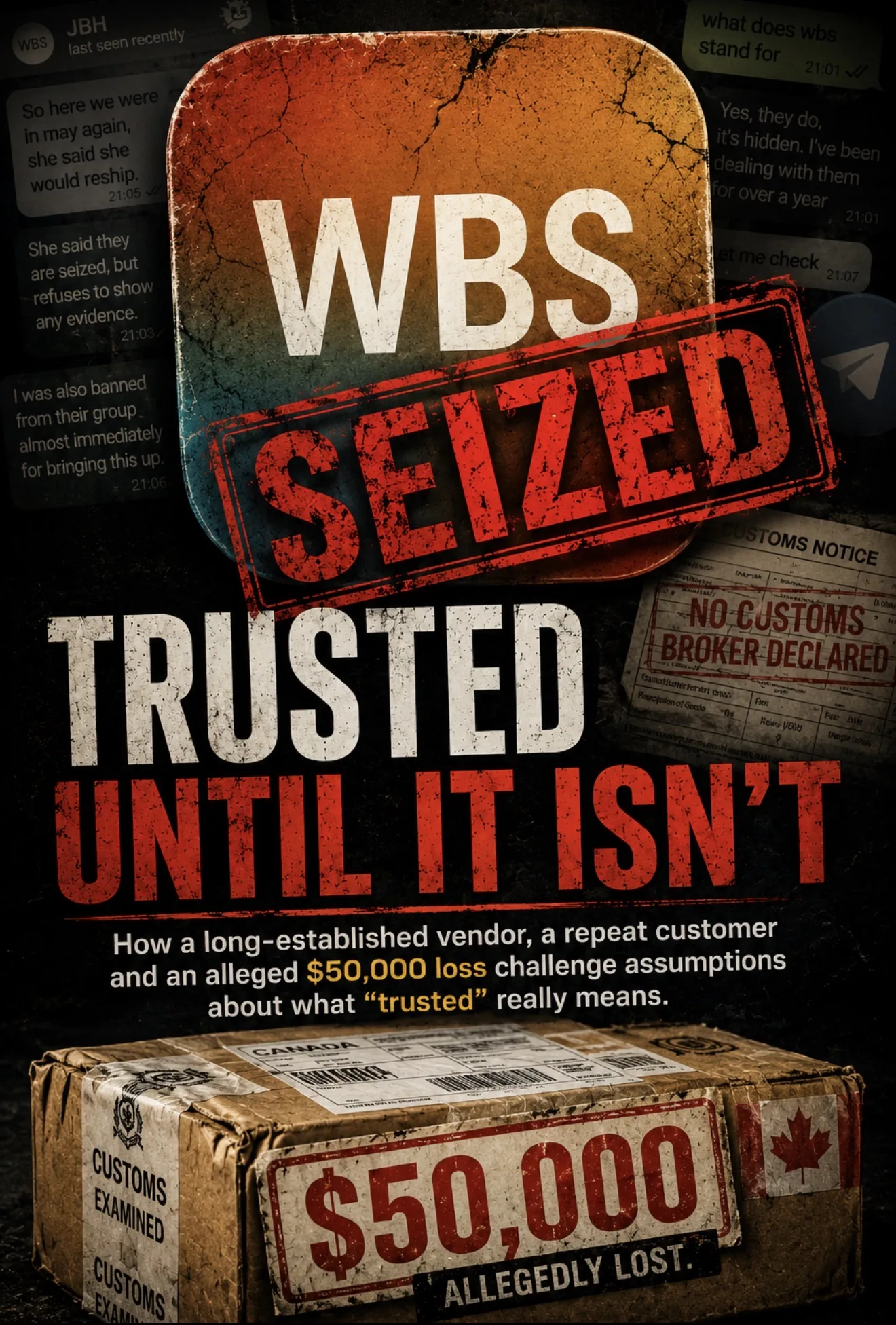
That was the situation described by one long-term customer, who says he’d been dealing with WBS for more than a year before a series of shipping disputes left him alleging losses of around $50,000.
His story serves as a reminder that in the grey market, reputation and protection are not the same thing. A vendor can be established, widely recommended and trusted by repeat customers, yet disputes can still arise that leave buyers with few practical options for recovery. And for those people who still think vendors on the GLP1 Forum are a safer option than elsewhere, this vendor is on that platform too.
A long-term customer says he ordered 400 kits of HCG via WBS in October last year, shipping to Canada. Before shipping, he says he gave clear instructions: 25 kits per package, not all sent at once, and not UPS. According to him, this isn’t his first time ordering at scale. He says he wholesales and moves around 10,000 kits a month, so the shipping requirements were not casual preferences. They were specific instructions from an experienced buyer who knew exactly what he wanted avoided.
According to him, WBS did the opposite. They sent 50 kits per pack, all at the same time, using UPS. Four packages were then seized. He says UPS emailed him stating that no customs broker had been declared, which he believes may have been why the shipments were flagged.
He says WBS refused to reship, claiming they didn’t offer reshipping to Canada, even though he says their own information stated that they did. After weeks or months of arguing, he says they eventually gave him only a 10% credit toward another order.
In February, he placed another large order: 250 kits of Glow and 100 kits of Klow to the USA. This time he says he specifically requested FedEx, because he regularly receives packages via FedEx without problems. He also says he paid heavily for shipping and wanted guaranteed delivery.
That order also went wrong. The kits were allegedly refused and sent back to China. He says the vendor then claimed they had reshipped them using SmartPost/USPS, after which they were taken by US customs. However, he says WBS never showed the freight-forwarder side of the tracking and only gave final-mile tracking numbers that showed nothing useful.
By May, he says WBS again agreed to reship. He made clear again that he wanted FedEx. Instead, he says he was handed six USPS final-mile tracking numbers. More than a month later, those numbers still had no updates.
WBS later claimed the shipments had been seized, but according to him, they refused to provide evidence. He says they then told him he was “shit out of luck.” He also says he was banned from their group almost immediately after raising the issue.
The customer estimates he is out about $50,000.
Unfortunately he no longer has much of the earlier evidence because the vendor’s Telegram and WhatsApp accounts were “nuked” several times, and he later wiped potentially sensitive material from his devices while travelling internationally.
According to him, the vendor doesn’t deny the situation, but argues that the company can’t lose money. He also claims that, during the short time he was in the group, he saw other people make similar complaints and then get removed and he says he’s also spoken to people in other groups who describe similar experiences.
So the wider story isn’t just one failed shipment or even about the vendor WBS specifically, as this sort of issue isn’t limited to them. It’s about the limits of reputation-based trust and what I keep repeating time and time again. No vendor should be viewed as “trusted” or “vetted. ”“Trusted vendor” isn’t a regulated status, a guarantee, or an insurance policy. It’s simply a reputation built on past experiences, which just takes one unfortunate customer to turn everything into a very expensive lesson.
When things go well, reputation feels like protection. When things go wrong, you quickly find out whether it actually means anything. And that’s the real issue here. Not whether a vendor has been around for two years, not whether they’re popular and not whether people have ordered successfully before.
The real test is what happens when something fails.
Disclaimer: This article contains allegations and customer claims that have not been independently verified. It is presented for informational and discussion purposes only. Readers should review the evidence and form their own conclusions.



Comments