
After the first negative Selank, the obvious explanation appeared to be proline. Selank is TKPRPGP, three of its seven amino acids are proline, and published research shows that proline can disrupt the copper coordination involved in the Biuret reaction. Proline-containing peptides can therefore give a reduced response. That part still stands.
What no longer stands is the simple explanation that Selank just doesn’t react with Biuret. The same customer has now tested Selank from three different sources/batches:
Uther SK10-0424, NEGATIVE / blue
Uther SK10-0126, NEGATIVE / blue
LiuDaily Selank 11 mg, POSITIVE / pink-purple
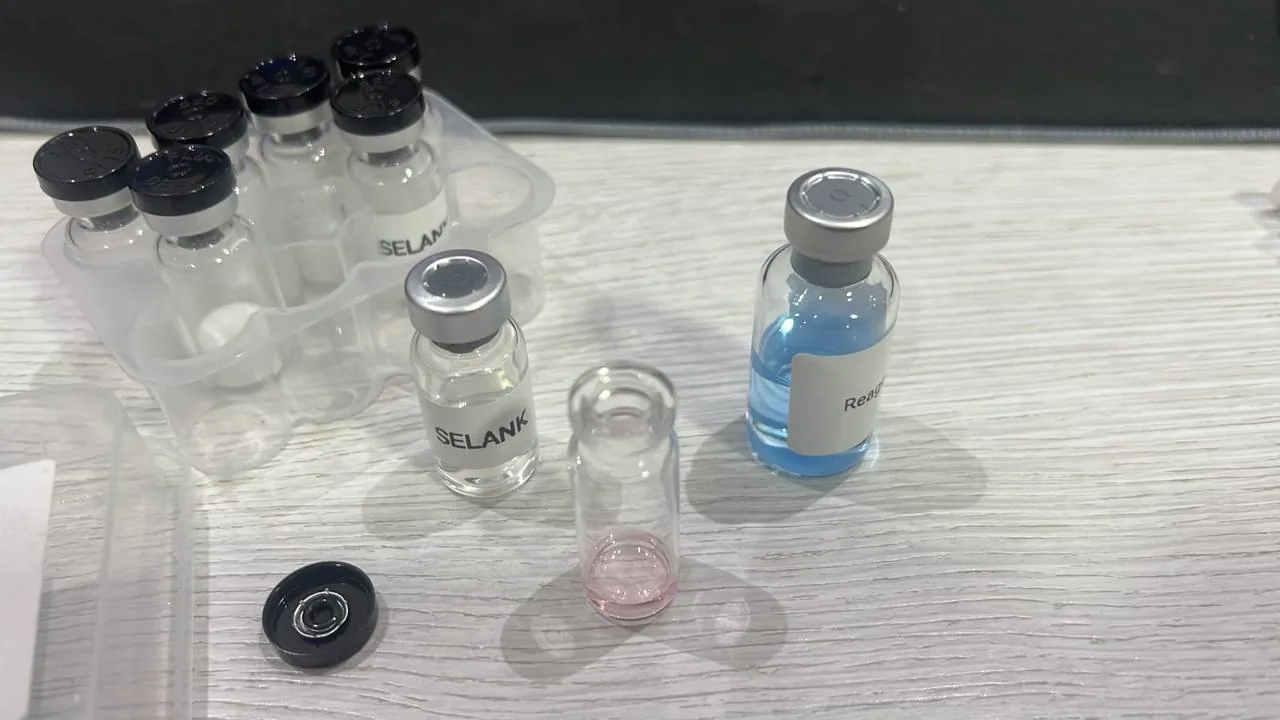
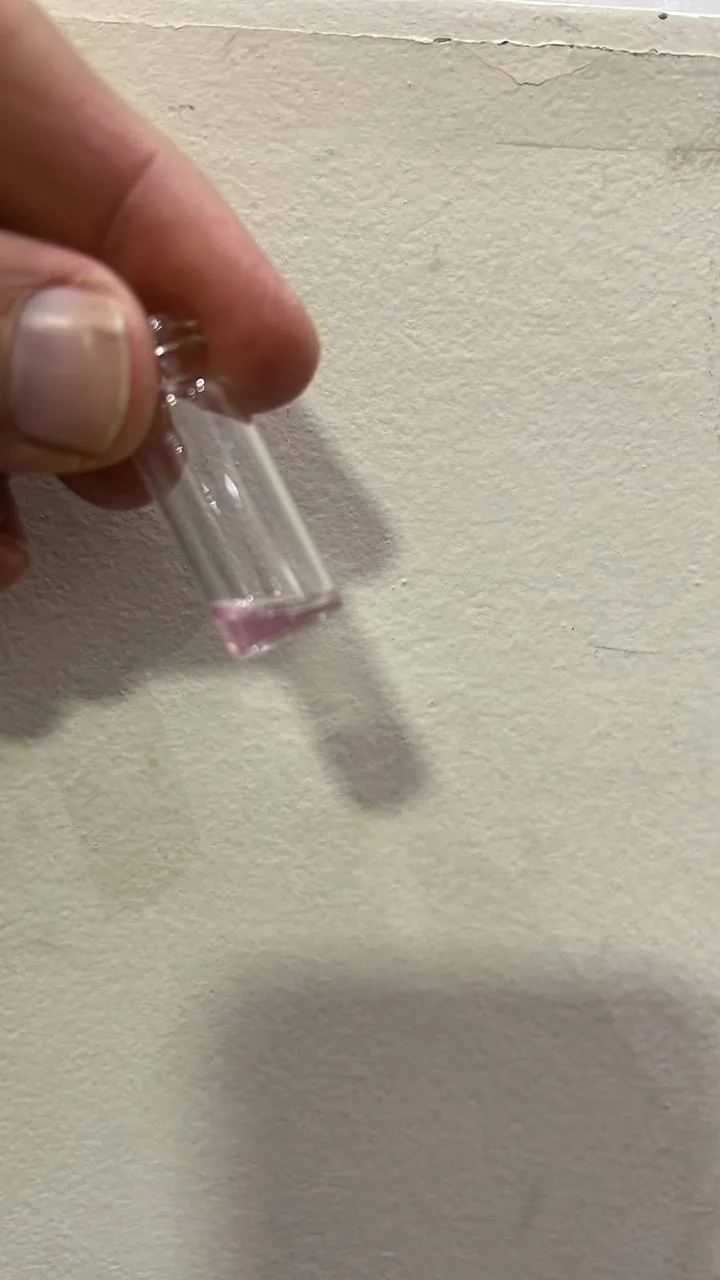
The video above shows another negative test for the Uther Selank from a different batch.
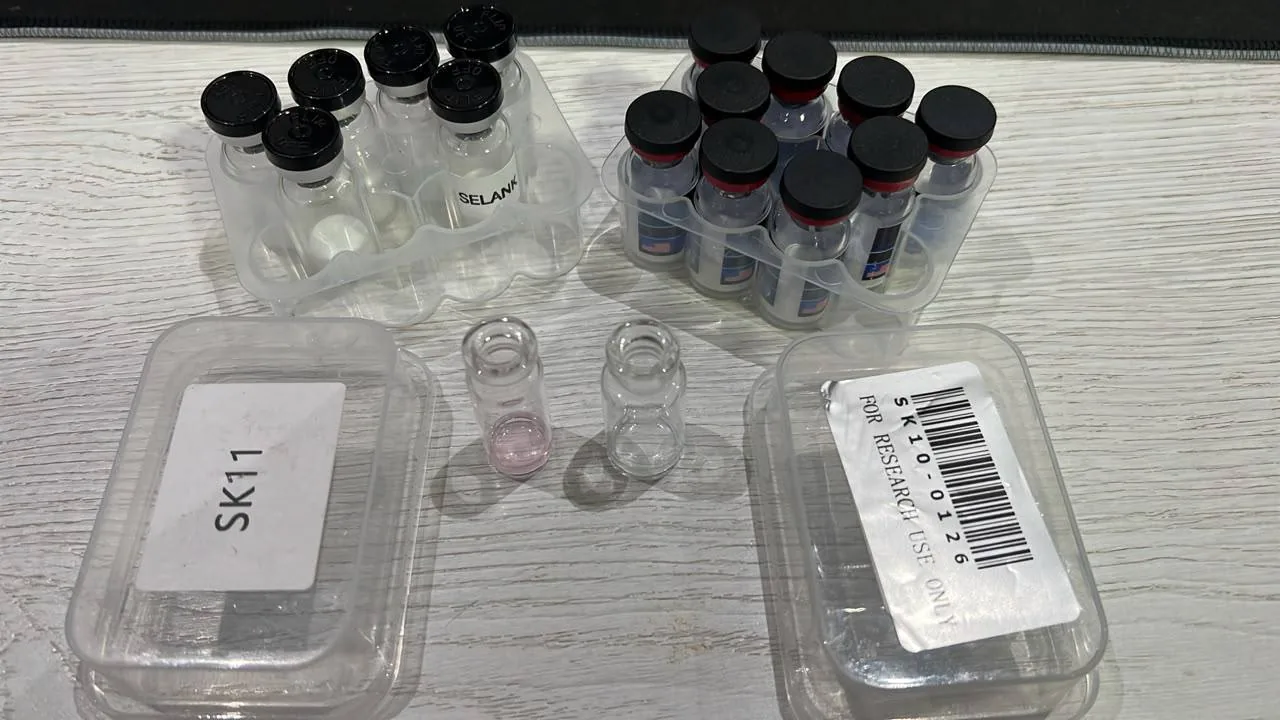
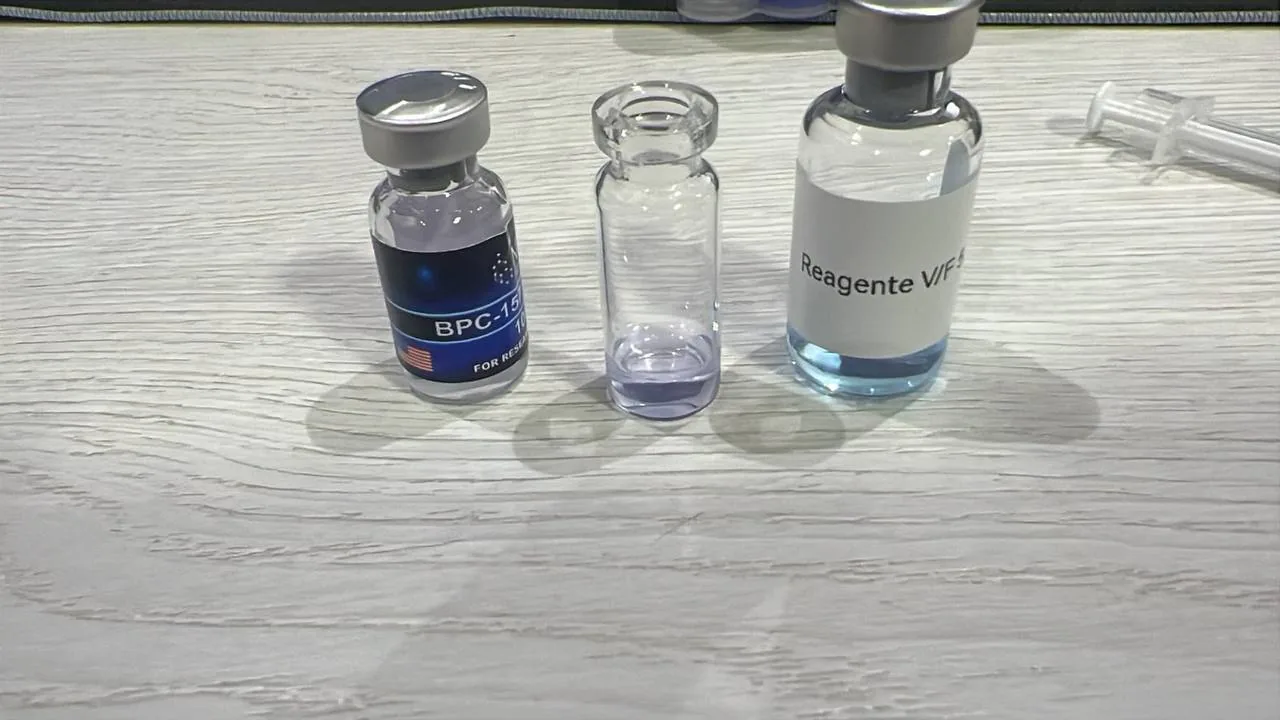
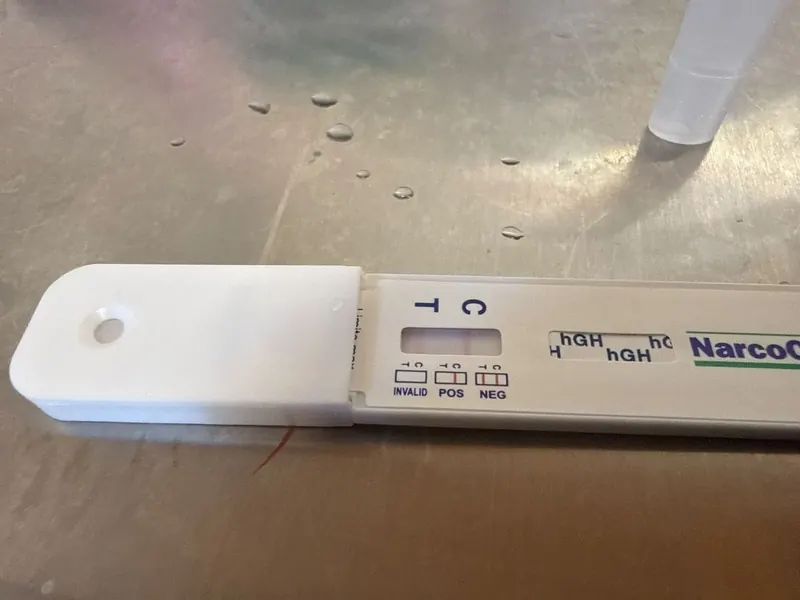
The photo above shows the positive pink LiuDaily Selank and the negative Uther Selank test.
The LiuDaily result is important because it demonstrates that a Selank-labelled product can produce a visible Biuret reaction. It doesn’t prove that Selank itself was solely responsible for the colour ( formulation, concentration or another copper-binding component could contribute) but it means we can’t dismiss the two Uther negatives simply by saying “Selank always stays blue.”
And there is another complication: time
The customer subsequently spoke to the chemist who supplies his Biuret reagent. According to him, proline can inhibit or slow the reaction rather than necessarily preventing it altogether. He suggested trying BPC-157, which also contains proline, and said the colour might take around 10 to 15 minutes to develop. So the customer tried it. The BPC-157 initially showed a very weak response and subsequently became more visibly purple.
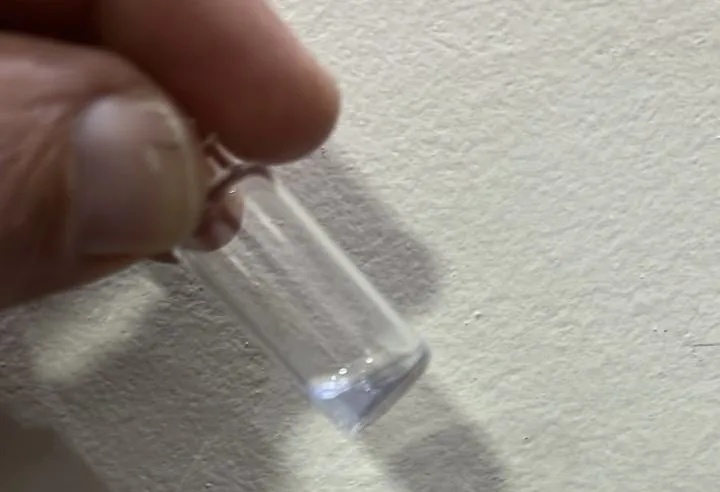
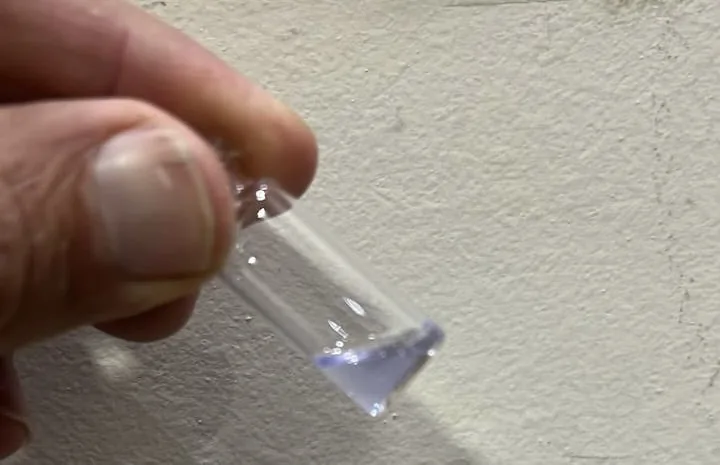
That observation fits the broader chemistry insofar as proline is known to interfere with normal Cu(II)-peptide coordination. However, I wouldn’t turn “wait 10 to 15 minutes” into a universal rule from one experiment. Published work supports altered/reduced Biuret behaviour in proline-containing peptides, but the exact kinetics will depend on the peptide, concentration, reagent and conditions.
This is another reason why a quick glance at a blue tube may not be enough.
So what do the Uther results mean?
At the moment, we still don’t know. Two separate Uther Selank batches have produced the same negative Biuret result, while another Selank product produced a clear positive. Possible explanations include differences in: peptide concentration, formulation, excipients, pH, dilution, reaction time, or what is actually present in the vials. The Biuret test can’t distinguish between those possibilities.
The customer also told me that a friend used the remaining product from the first negative Uther vial after 1 mg had been taken for testing and reported feeling nothing from the remainder. However, I wouldn’t use that as evidence of an empty vial. A “Feelz test” isn’t an analytical test, and absence of a perceived effect can’t reliably establish peptide content. The interesting evidence remains the chemistry: two Uther batches, two negative reactions; another Selank, positive.
So where does this leave us?
Personally, I think people should be careful about relying on Biuret as a go/no-go test for peptide vials. The attraction is obvious. It’s cheap, simple and accessible, especially in countries like Brazil where sending a vial for proper peptide analysis may not be a realistic option. I completely understand why this customer and others are using it.
But the wider Selank investigation has shown just how easy it would be to overinterpret the result. Peptide sequence can affect the reaction, proline can alter copper coordination and possibly the speed at which colour develops, and none of the recovered home tests used a fully controlled protocol. A blue tube does not necessarily mean an empty vial. That creates a real risk that someone could see no colour change, assume their peptide is bunk and throw away a perfectly good kit.
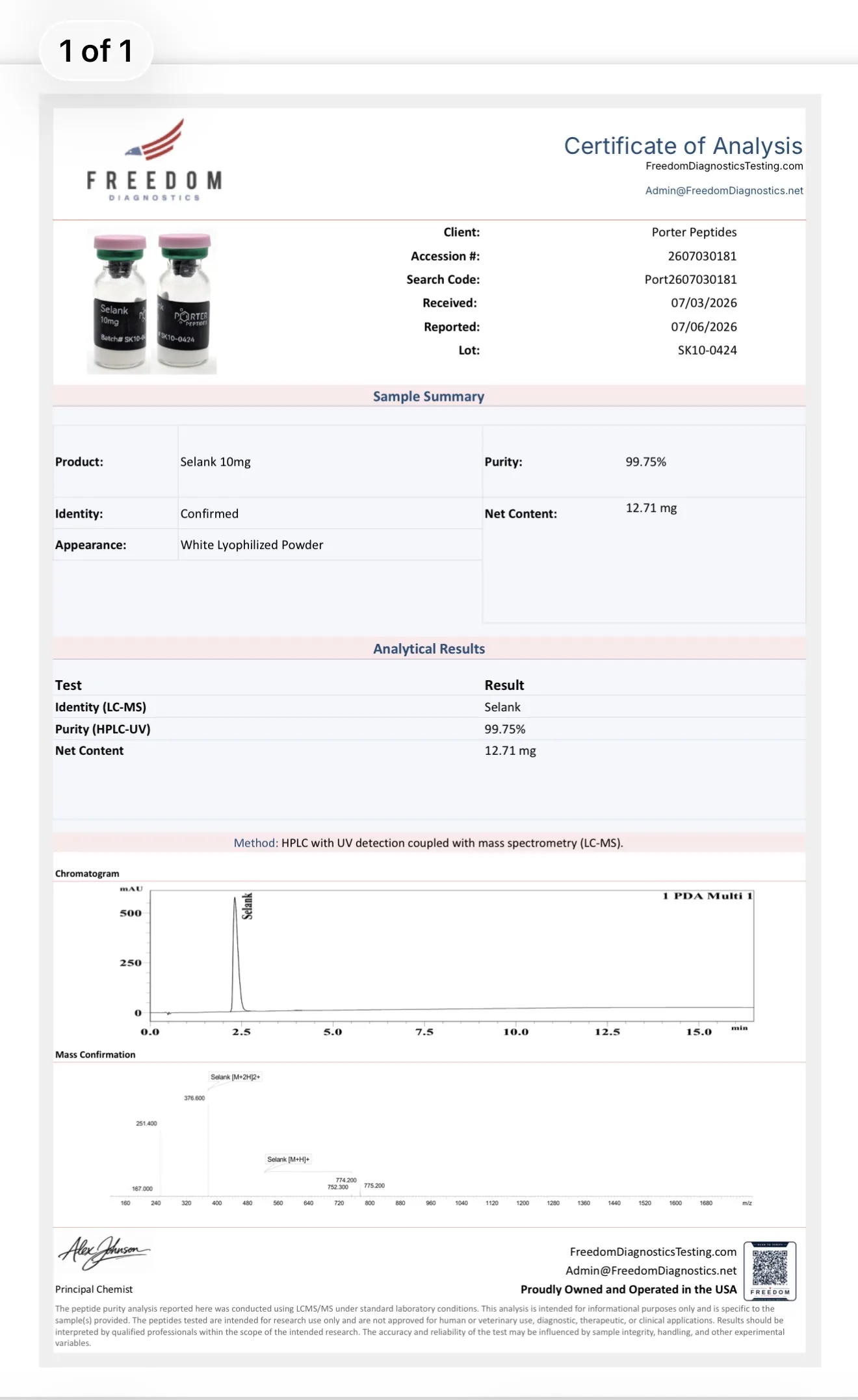
The Uther Selank is a good example. Two batches tested blue with Biuret, yet both batch codes have laboratory results showing Selank in submitted samples, and SK10-0424 also has a separate Freedom Diagnostics result from another sample carrying the same batch code. That doesn’t prove these individual vials were good, but it certainly gives us reason to be cautious before declaring them empty on the basis of Biuret alone.
The other side of the dilemma is that if proper testing simply isn’t available to you, some information may feel better than none. Used as a rough screening tool, with appropriate controls and an understanding of its limitations, Biuret may still have some value. I just wouldn’t make an expensive decision on the colour of that tube alone.
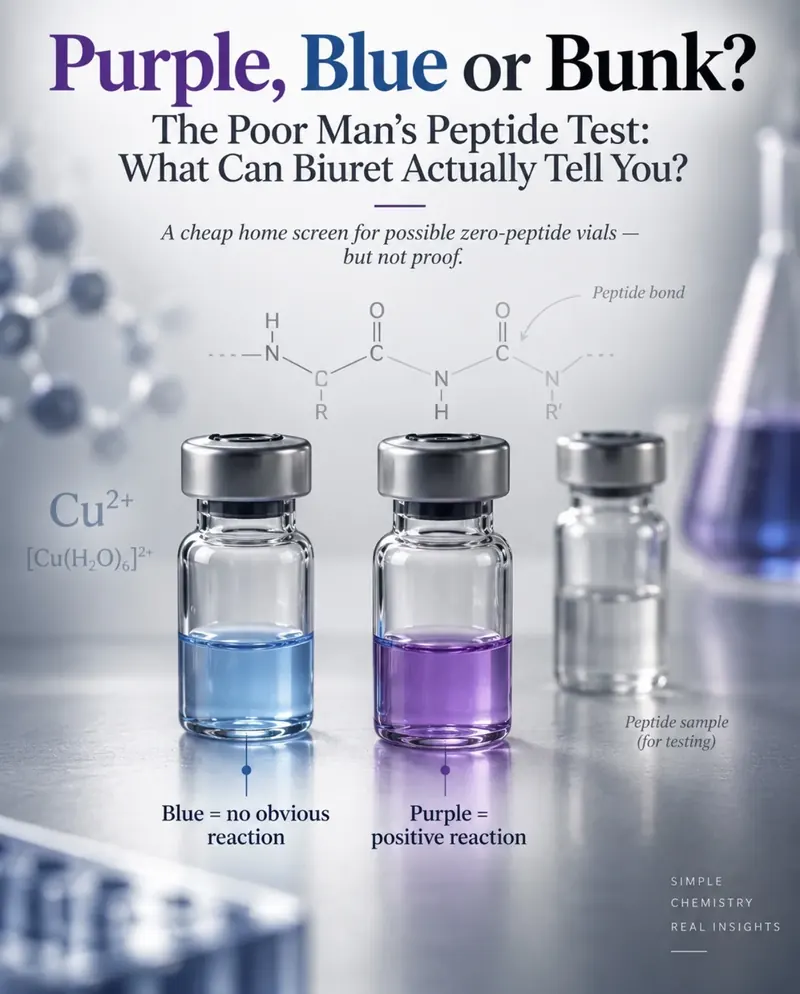
Purple doesn’t prove the peptide on the label is there, and blue doesn’t prove your kit belongs in the bin.

Comments