
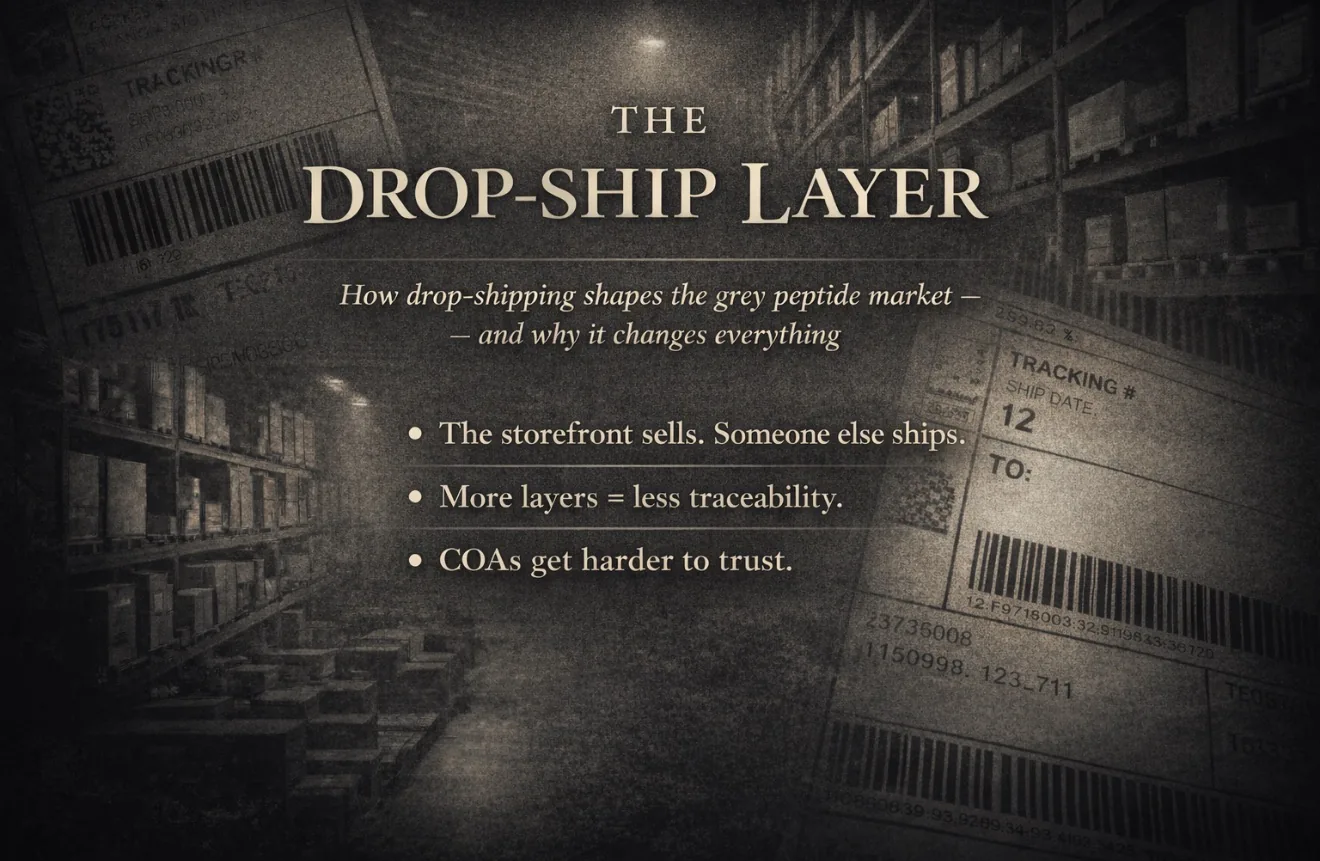
In this deep dive, we break down drop-shipping in grey peptide markets and why it’s not “just logistics.” In this world, logistics determines custody, accountability, and verification. A polished storefront that accepts PayPal or credit cards may actually be acting as a broker: taking fiat payments, converting to crypto, and routing orders to an upstream supplier the buyer never sees.
We also unpack how group buys can function as drop-shipping infrastructure, including direct ship models where organizers never physically handle inventory, and “reverse drop-ship” setups where resellers route customer orders through a group buy to avoid holding stock.
Then we connect the structure to the biggest practical failure point: COAs. In layered supply chains, COAs can become representative rather than batch specific, outdated, or disconnected from what a customer actually receives, especially when vials lack unique identifiers.
The key mindset shift: stop asking “is this vendor legit?” and start asking “who controls the batch?” Because in a drop-ship model, supply can change overnight, and buyers are often the last to know.
Bottom line: drop-shipping isn’t automatically evil. The risk comes from opaque structure, where trust is built on interface and reassurance rather than traceability.Who actually ships your peptides? Drop shipping explained
Comments