
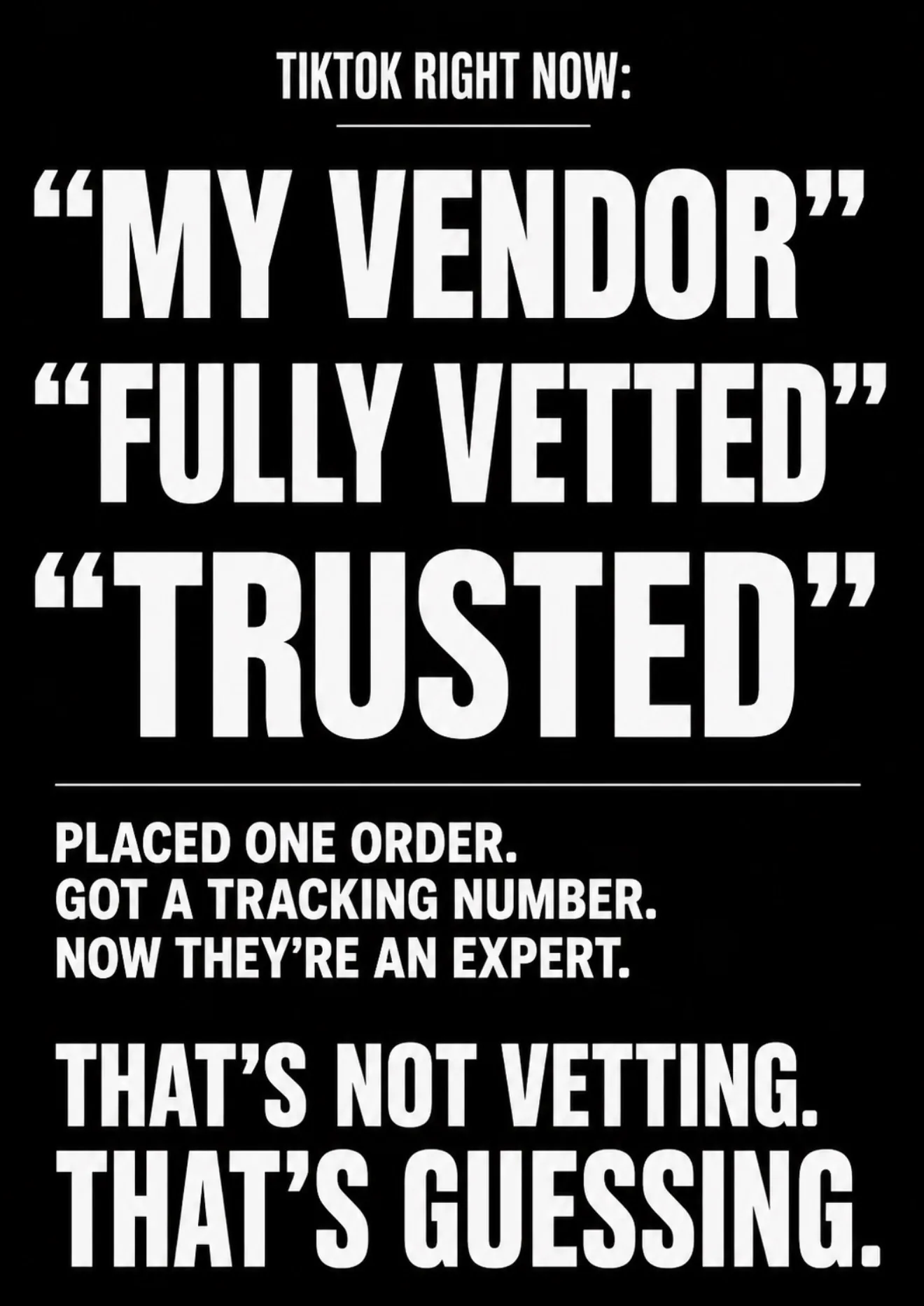
If there’s one thing that’s one of my biggest pet peeves, is it’s people claiming a vendor is “vetted,” or asking for “trusted vendors,” as if that label actually means something.
This is everywhere, especially on TikTok, where influencers call grey-market Chinese vendors “my vendor” and talk about how they’ve “vetted” them.
But how exactly has anyone vetted these vendors?
As far as I’m concerned, the only way to properly vet a vendor is for someone to go to China, tour the factory, inspect the manufacturing facility, look at the equipment, understand the process, and verify how everything is actually being produced.
And how many people have done that?
Because placing an order, even multiple orders, is not vetting. And doing a huge order with a new vendor proves even less than people think. Vendors don’t typically burn large buyers straight away. If anything, those are the customers they treat best. So using that as “proof” of trust tells you very little.
The Myth of “Vetting”
So how are people claiming these vendors are vetted?
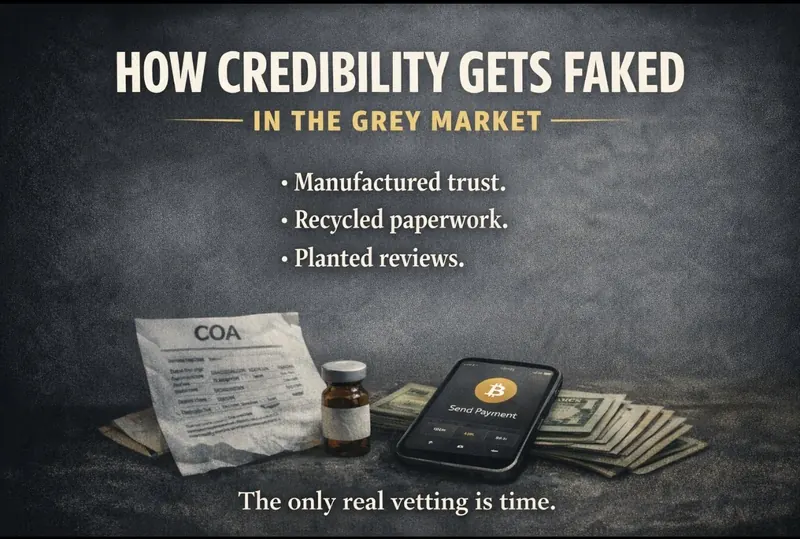
Looking at COAs?
Reading customer reviews?
Being told batches are linked?
Seeing a past track record?
All of that requires one thing, TRUST.
Even a long track record is not proof of anything beyond past performance and it doesn’t guarantee future behaviour either, as we’ve already seen “recommended vendors” with:
Batch inconsistencies
Contamination issues (including high endotoxins)
Poor handling when problems surfaced
At that point, what does “vetted” even mean?
The Reality: When Things Go Wrong
The real test isn’t when everything works, it’s what happens when something goes wrong. A seized shipment, a failed batch, a logistics issue, or a refund request. And at that point, there’s nothing stopping a vendor from shutting down, rebranding, or moving on under another name. Because as i’ve talked about in my previous posts, there’s no real accountability in the Grey Zone. The vendors are literally thousands of miles away, operating in another country, outside our legal reach.
We’ve seen it happen many times before. Vendors disappear. Vendors rebrand. Vendors stop responding. Buyers are left chasing refunds that never come.
The Pattern People Ignore
Time and time again, the same pattern plays out. A vendor is popular, they build a strong track record, people start calling them trusted and then something goes wrong, and it can go very wrong.
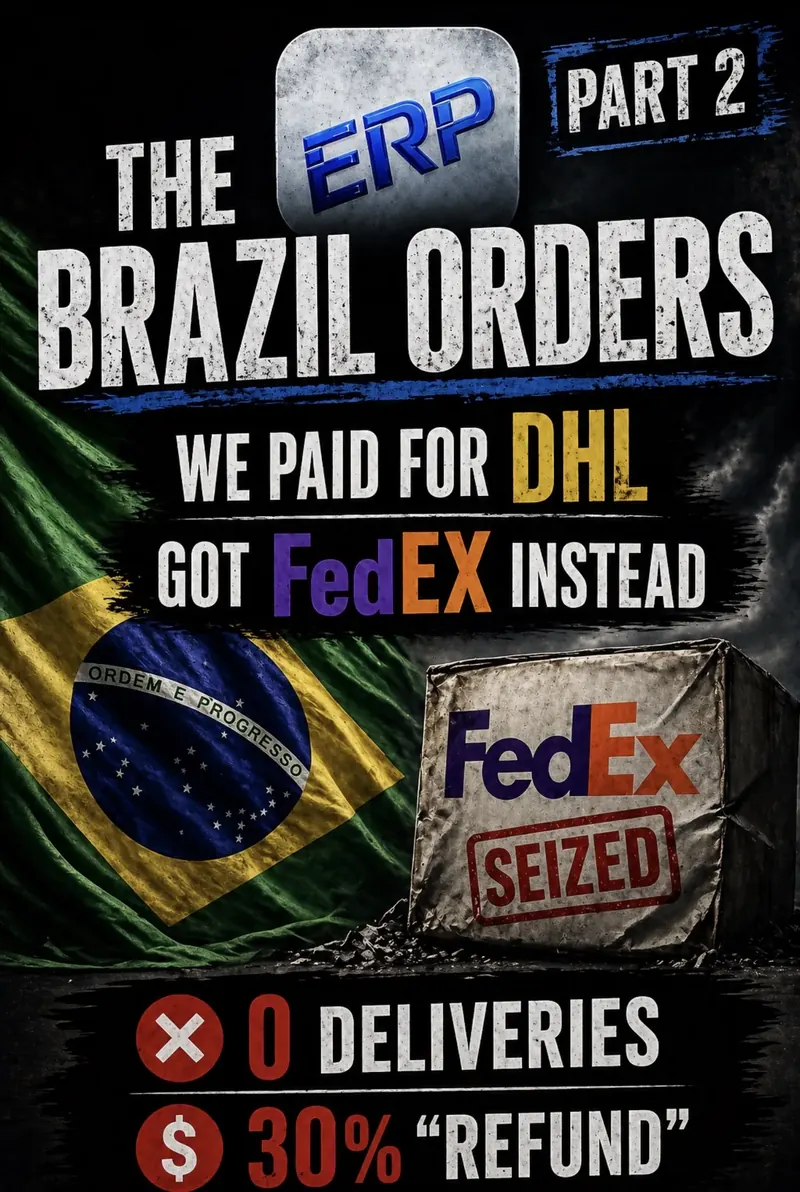
Take ERP.
They were extremely popular and had a strong track record. But when it came to the Brazilian group buy, they failed badly. Buyers were left out of pocket, and instead of resolving it cleanly, it dragged on and escalated. They continued taking orders while the situation was still unresolved.
CPB is another example. A vendor doing well until they lost a shipping line and took multiple, large shipment seizure hits. That’s when the behaviour changed, delays, excuses, and attempts to recover losses through new orders rather than fixing the original problem, leaving many GB organisers without product and without their money.
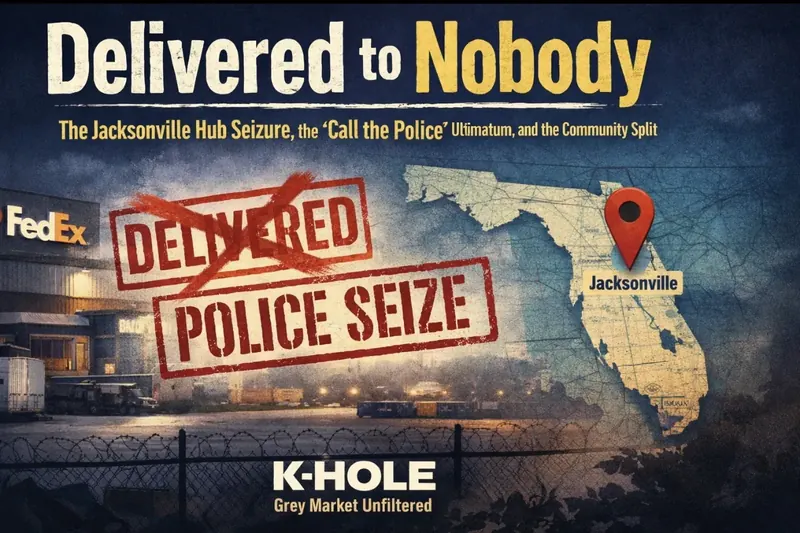
Then there’s Maggie Zhao. She was trusted by one GB, but when used by another GB and the shipment was seized, her response was to first to suggest reporting it to the police, followed by accusations that the courier or organiser had stolen it. Even after a CBP letter confirmed the seizure, she didn’t honour the reship and instead tried to poach the GB members to resell to them again.
Jeep is another case. They were on recommended vendor lists and still are in GLP1 Forum. But after record-high endotoxin levels were found, their response was essentially that you cannot expect quality from the grey market and should buy brand names if you want reliability. That’s not the response people think they’re buying when they hear “vetted.”
What People Don’t Want to Admit
So while some will argue:
“You can’t expect guaranteed quality in the grey market. If you want that, go to big pharma.”
Fine. But that’s the exact opposite of what “vetted” or “trusted” implies. You can’t have both. You can’t say:
“This vendor is vetted and trusted”
and at the same time
“Expect problems, that’s just the grey market”
Those positions don’t align.
Why Neutral Spaces Matter
So what actually helps? A neutral space, not sponsored, not controlled and not curated to protect vendors. A place where vendors can be discussed, but criticism isn’t filtered out. Because the moment a vendor is protected from negative feedback, the information becomes useless. And in a neutral space, patterns become easier to spot when there are multiple buyers reporting the same issue, repeated shipping problems, delays turning into excuses, refunds turning into store credit and pressure to spend more instead of resolving issues. Whilst one report can be dismissed, ten reports can’t and that’s where real value comes from, not labels, but consistent behaviour over time.
The Only Honest Position
This is the grey market after all and there’s going to be risk. At best, you can filter out the obvious scammers by doing a few basic checks, like Pepchat do, but that’s about the extent of it. Everything beyond that is probability, not certainty.
Vendors can change overnight, good vendors can go bad. Reliable vendors can fail under pressure and when things go wrong, you’re on your own.
So the only honest approach is this; share information, track patterns, learn from other buyers and avoid spending more than you can afford to lose.
This is not to stop people buying, but to make sure they understand what they’re stepping into, because the Grey Market isn’t a vetted system, it’s a risk system. And the sooner people stop pretending otherwise, the fewer people end up paying for it.
Comments